



Carbon fibre is widely used in many industries due to its strength, light weight and resistance to stress and corrosion, but its durability means that once it’s no longer needed, the material can remain without decomposing for a long time, so how green is your bike? We’re talking about its environmental credentials rather than its colour, but you knew that. We spoke with industry experts to explore the fate of carbon fibre bikes and components at the end of their lifespan, and the likelihood of your next bike being made from recycled carbon.
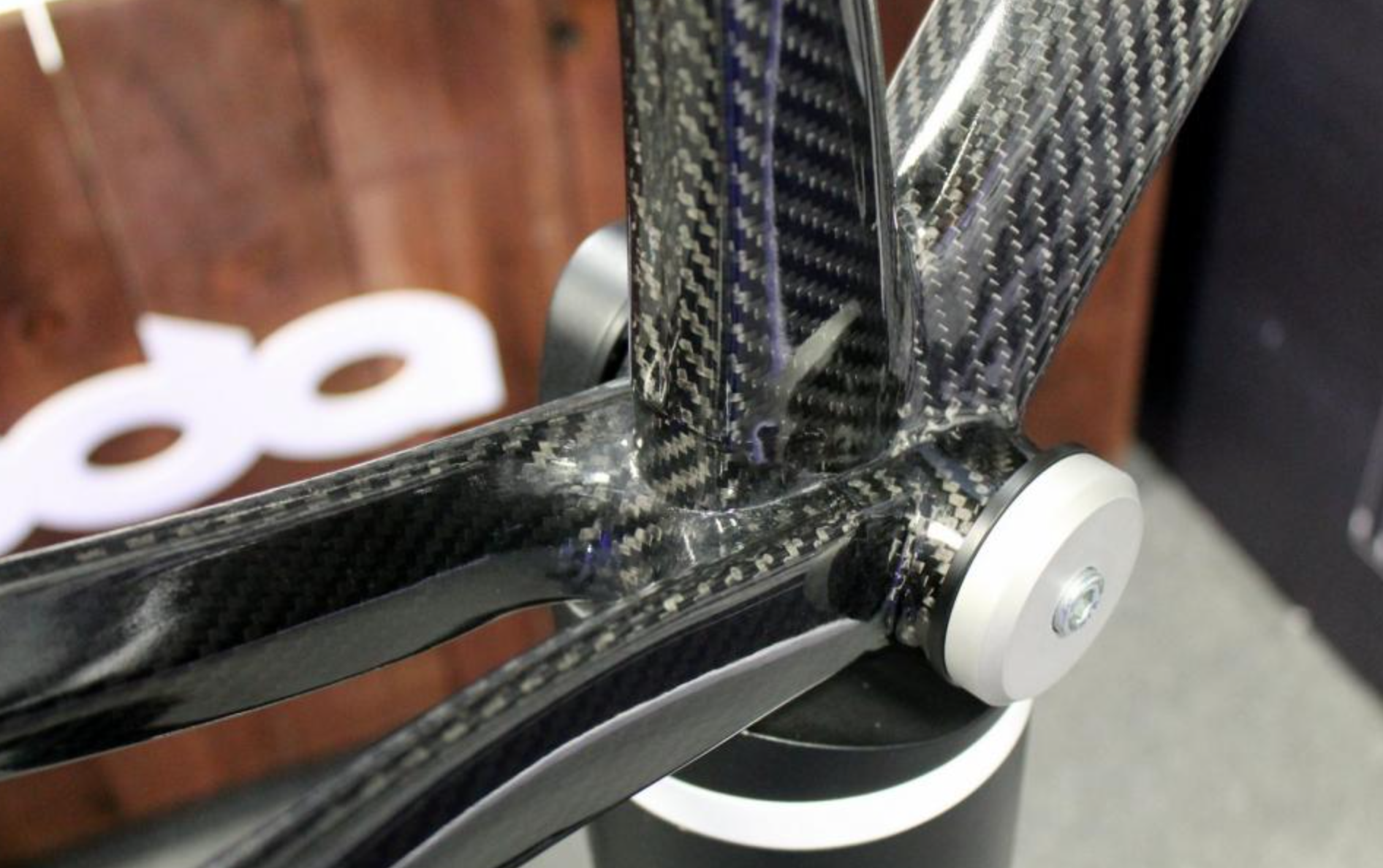
Despite cycling being greener than most other transport methods, the bike industry faces the same environmental challenges as any other global industry, particularly in terms of manufacturing processes, and there is growing concern for sustainability and eco-friendly practices in cycling.
Carbon fibre is strong, lightweight, and can easily be moulded into different shapes, making it a widely sought-after material in bike manufacturing. It has transitioned from an exclusive choice for professionals to a more accessible and, at times, affordable option that appeals to many cyclists.
This increase in carbon fibre usage has, however, resulted in the production of a significant amount of waste and a bike frame will not decompose when you dispose of it. Therefore, efforts to address and reduce this waste are crucial for maintaining sustainability in the cycling industry.
Environmental impact of carbon fibre
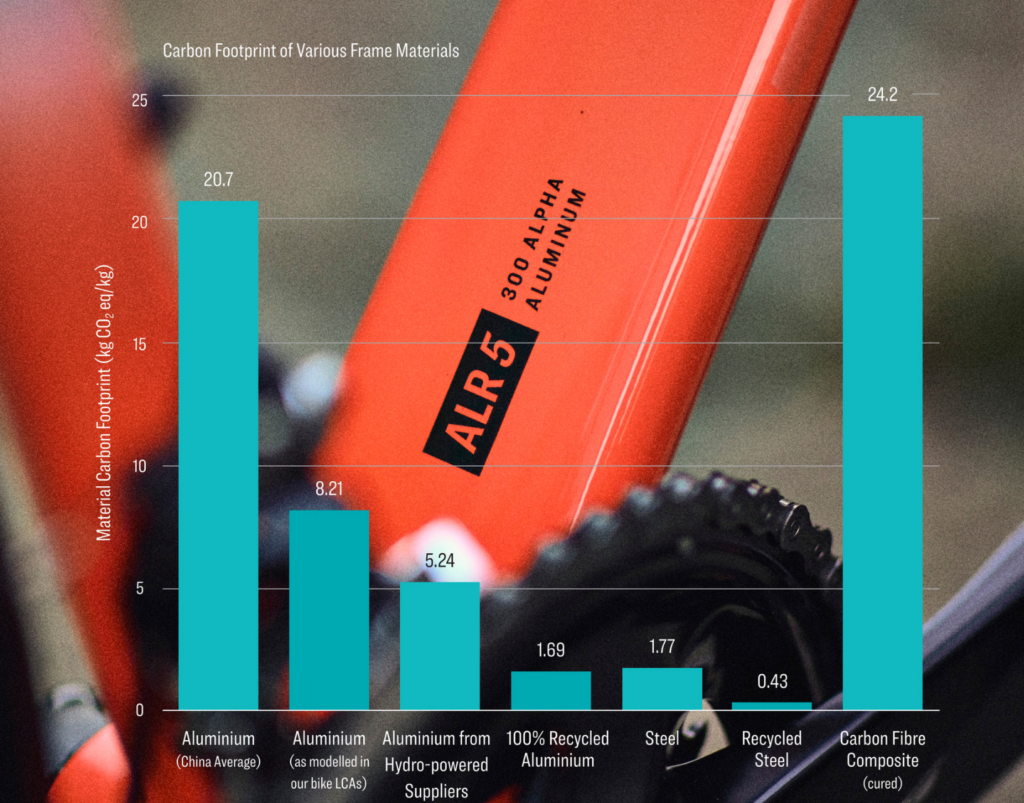
As well as its widespread use in the cycling world, carbon fibre is used in various other industries, including aerospace, automotive, energy and marine. According to the UCI (Union Cycliste Internationale, cycle sport’s world governing body), in 2021 the sports industry was the third largest user of carbon fibre worldwide, with most sports equipment using the material having an average lifespan of three years, and 90 per cent ending up in landfill at the end of its life.
Researchers from the University of Sydney say that carbon and glass fibre composites are expected to emerge as a significant global waste source by the end of this decade, with the total amount of such waste projected to reach 840,300 tonnes a year by 2050.
This raises a concern, and the consideration of what happens to a carbon fibre bike after it’s finished with becomes a crucial aspect in addressing sustainability concerns. Historically, recycling the material has been complex, and while the need for action has increased, there are encouraging signs of positive change and innovative strides being made.
> What is the carbon footprint of your bike?
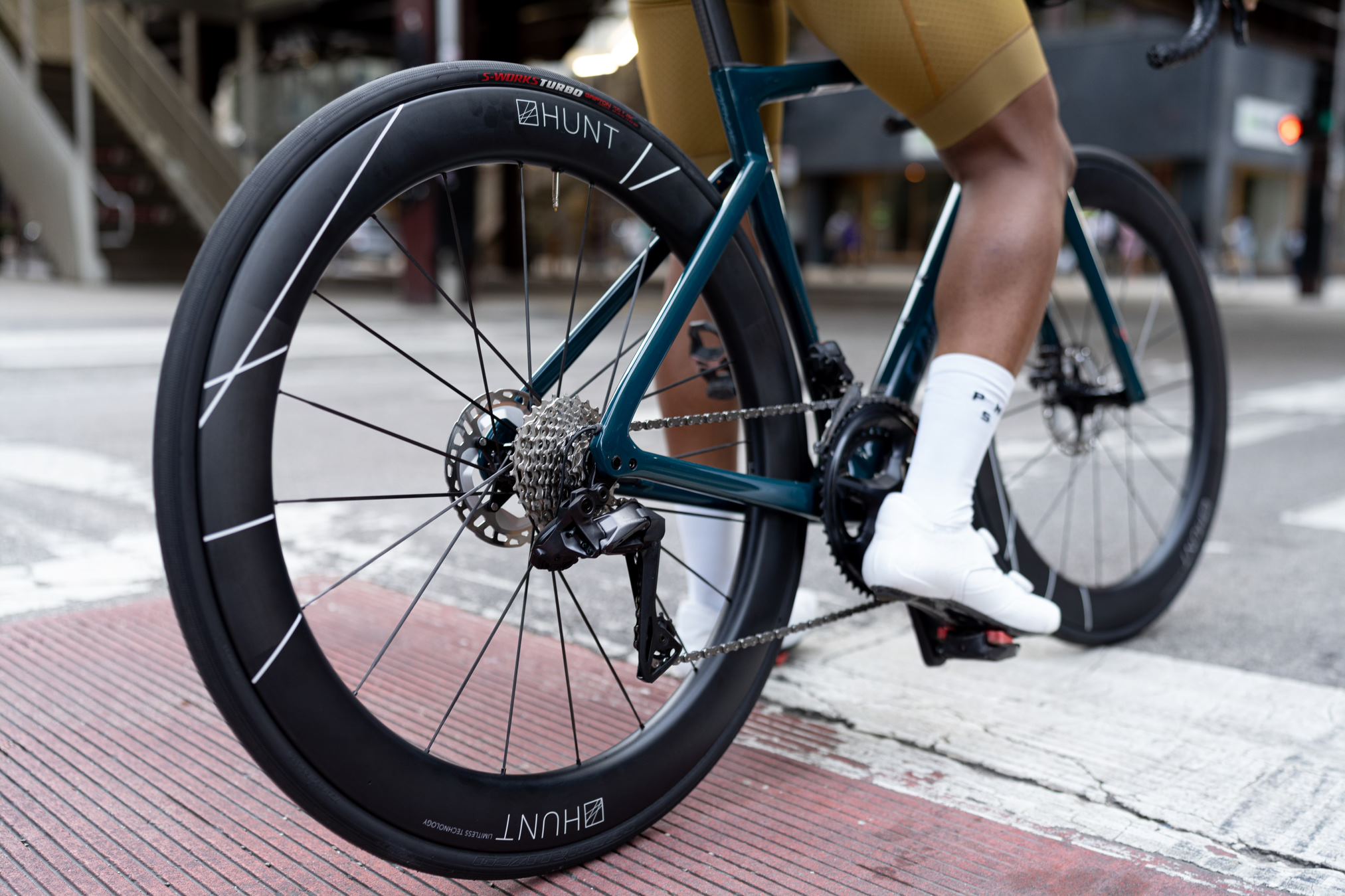
While carbon fibre has a long lifecycle, its creation demands significant amounts of energy, making it more energy-intensive than materials such as aluminium and steel. For example, Giant says, “The manufacturing process [of high-end carbon fibre bikes] generates high carbon emissions at 50 kg CO2e/kg or more”.
CO2e (carbon dioxide equivalent) is a measurement used to compare the emissions from various greenhouse gases according to their global warming potential (GWP). The figure converts the amounts of other gases to an equivalent amount of carbon dioxide with the same global warming potential.
Trek released a sustainability report last year outlining the cost in carbon emissions of every bike showing that their most popular model, the Marlin, comes at a cost of 116 kg CO2e/kg which they are hoping to reduce by 30% to 81 kg CO2e/kg by 2032.
As well as having a higher environmental cost during production, as previously mentioned, there are challenges to recycling carbon fibre. Aluminium and steel are both highly recyclable, with well-established, profitable systems that contribute to a reduced environmental impact.

However, there’s growing interest in alternative materials such as BioFiber and flax fibres, which promise strength and stiffness comparable to carbon fibre but with reduced carbon footprints.
BioFiber, an all-natural composite, has gained attention for being used in high-end technologies such as those used by McLaren Racing in F1. Similarly, flax plant fibres have been utilised in the design of products like Hummingbird’s foldable bike, with the flax model claimed to match the weight and strength of its carbon fibre counterpart.
The process of recycling carbon fibre
There are two main types of carbon fibre waste: virgin carbon-fibre offcuts that aren’t needed in production, and carbon-fibre composites from bike frames and components at the end of their lives.
> Academics in Australia develop new way of recycling carbon-fibre waste
Recycling of end-of-life carbon fibre bike frames and components should be prioritised for a more circular economy, and this focus is essential due to the larger volume of waste generated compared to offcuts during production. However, Giant highlights the issue with this saying, “These products are sold globally and returning them to their production site for recycling is also energy-inefficient, so we will collaborate with local companies for the recycling process.”
Trek announced the bike industry’s first carbon fibre recycling programme way back in 2011, and several companies have since announced their own recycling programmes, but untold thousands of carbon fibre bikes end up in landfill every year.
Most high-performance carbon bikes are made using thermoset carbon fibre composites, materials that, according to Giant, can only be recycled through pyrolysis or chemical methods.
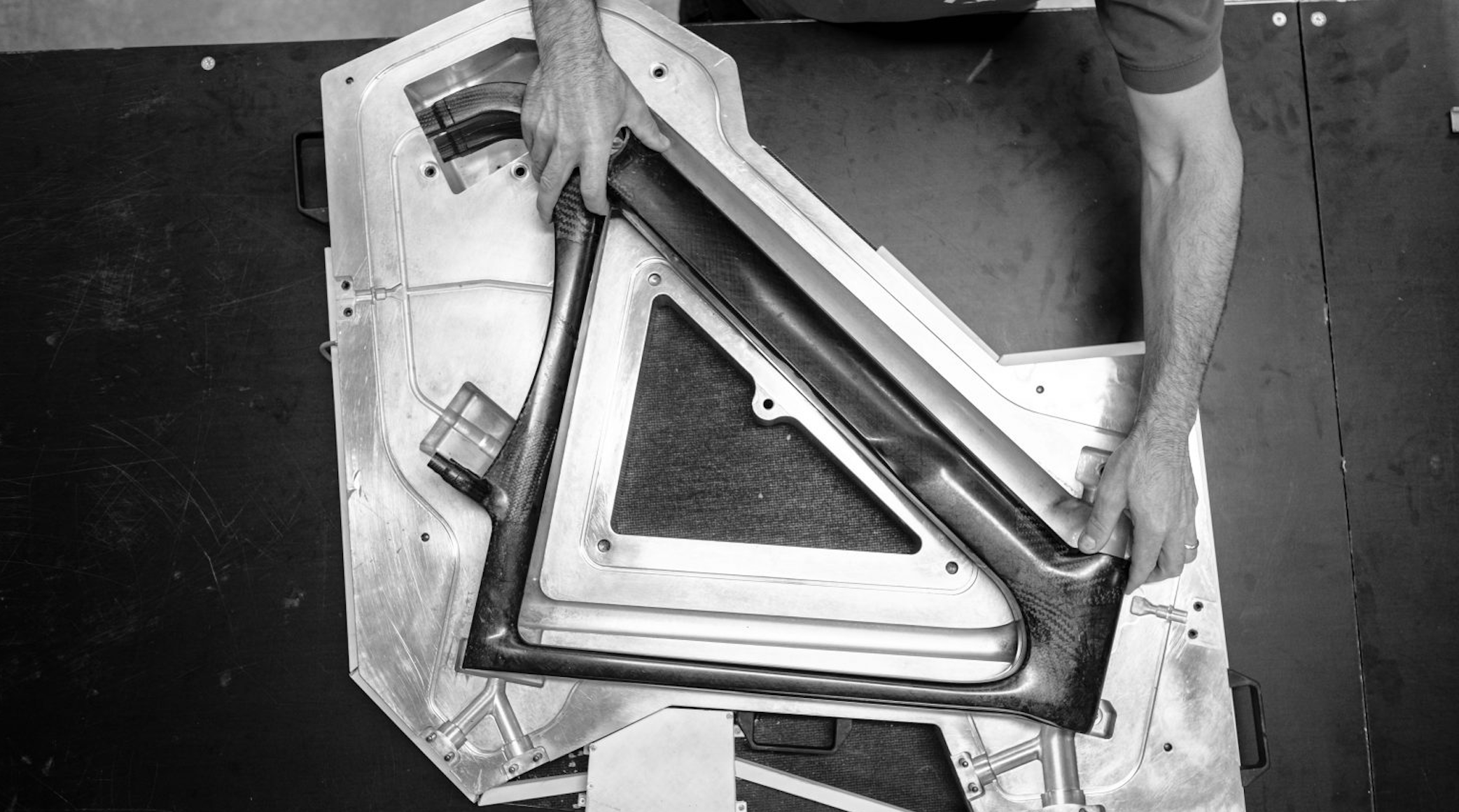
> What is an open mould bike frame?
Pyrolysis means subjecting carbon fibre composites to high temperatures in the absence of oxygen. At these temperatures, the resin matrix of the composite breaks down, leaving behind the carbon fibres. These carbon fibres can then be recovered and reused in various applications, which reduces the need for virgin carbon fibre production and minimises waste.

However, these processes are energy-intensive and often result in a significant reduction in performance, so Giant is actively exploring alternative, lower-energy recycling methods such as microwave-pyrolysis and chemical solvolysis.
Hunt also explain the two options they’ve been utilising to help produce viable recyclable and recycled carbon fibre products. One option involves thermoplastic carbon, which allows for the melting of the resin, albeit with a slight increase in weight compared to thermoset products to achieve similar strength in impact testing.

Another option is the recovery of fibres from thermoset resins, as mentioned by Giant.
“A thermoset resin is much more mature for producing the highest strength-to-weight ratio products such as carbon fibre bike frames and rims,” Hunt explains.
The advantages of recycling carbon fibre
The two major advantages of recycling carbon fibre are the reduced environmental impact and resource conservation as we strive towards a more sustainable and circular approach to carbon fibre usage.
Recycling carbon fibre reduces the demand for virgin carbon fibre production which is energy-intensive and generates significant greenhouse gas emissions, and also reduces the need for raw material extraction.
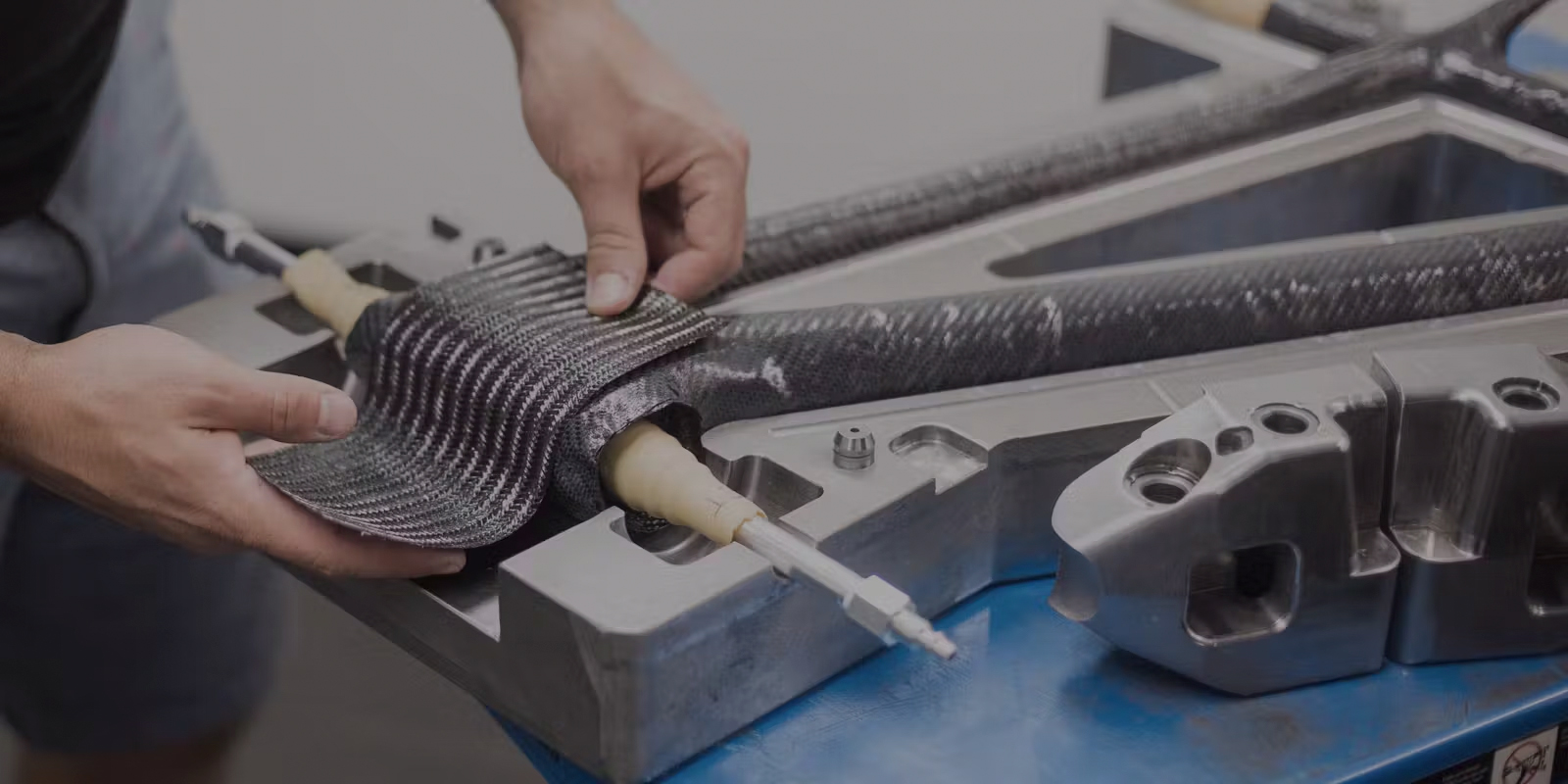
“Most of the environmental impact of products comes from the initial extraction and processing of raw materials needed to produce top-quality gear,” writes Trek, so by recycling carbon fibre and repurposing it into new products, we can significantly reduce this initial impact.
Another key advantage is waste reduction, and carbon fibre recycling minimises the volume of carbon fibre waste destined for landfill.
Brands now publish annual CSR reports (corporate social responsibility) detailing their sustainability efforts, and with an increasing emphasis on environmental regulations and sustainability goals, recycling carbon fibre has become a focal point for many companies striving to contribute to a greener future.
The challenges of recycling carbon fibre

Recycling carbon fibre and incorporating recycled carbon fibre into components presents several challenges. One arises from the use of carbon fibre composites in complex structures, where carbon fibres are combined with a polymer matrix. Recovering carbon fibres from carbon fibre-reinforced composites (CFRC) is difficult, energy-intensive, and costly.
Another significant challenge is maintaining the original performance of virgin carbon fibre, as recycling processes can reduce the strength and stiffness, leading to reduced performance.
“Currently, most carbon fibre products are recycled through pyrolysis process into injection pellets with extremely short fibre,” explains Giant. “It is both highly energy-intensive and leads to huge performance reduction.”
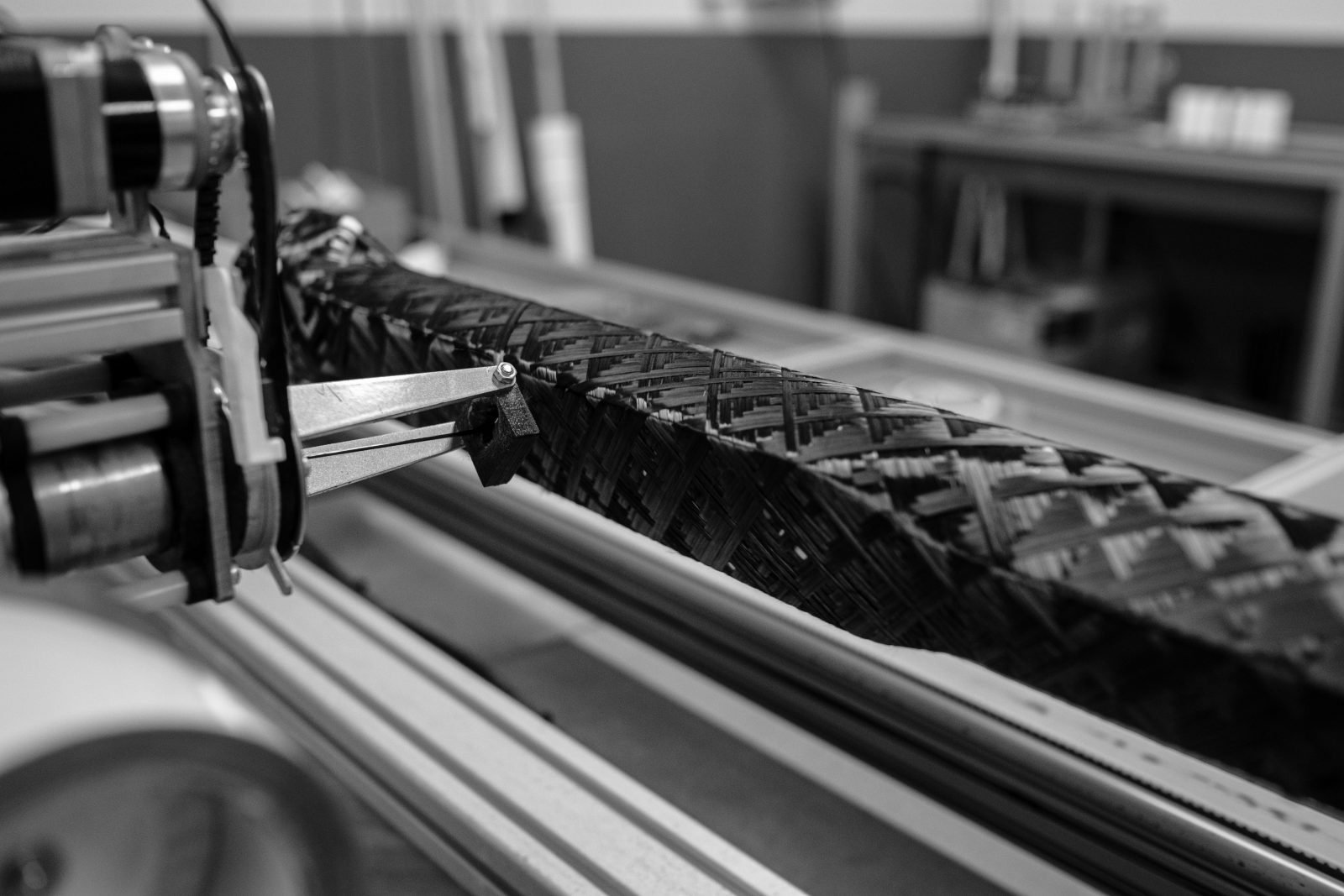
To address some of these challenges, both Hunt and Giant explore the possibility of utilising waste carbon fibres from elsewhere.
“We’ve been looking into the opportunity to utilise mid-length fibres which are the by-product of larger original use industries such as aerospace as these mid-length fibres are suitable for some bicycle/component applications”, Hunt explains.
Despite these challenges, finding effective and efficient recycling methods for end-of-life composites is crucial for sustainable waste management, and Giant emphasises the importance of the manufacturer’s involvement in the entire lifestyle of their products.
“We don’t see the bikes at the end of life, so we don’t have any control over what the owner does with the frame,” Giant states.
This highlights a crucial gap in the current approach to sustainability in the cycling industry.
Is recycled carbon fibre as good as virgin carbon fibre?

One of the main challenges of recycling carbon fibre is maintaining the original performance of virgin carbon fibre. According to a review published on carbon fibre recycling in PubMed, recycled carbon fibres generally exhibit a reduction in quality because the fibre length is significantly reduced.
As demonstrated by Hunt’s experience with carbon wheels, using thermoplastic carbon often means an increase in weight compared to standard carbon wheelsets to achieve equivalent strength levels. The weight penalty may not be substantial, but that’s not the only factor that needs to be considered.

> Your complete guide to bike frame materials
Giant emphasises the importance of composite quality to achieve performance comparable to virgin carbon fibre composites and explains that they have developed their own process for handling recycled fibres in a structured manner.
“Our approach aims to create structural parts, effectively dealing with the messy recycled carbon fibres and achieving performance comparable to composites made of virgin carbon fibres,” Giant explains.
While recycled carbon fibre may exhibit differences in mechanical properties compared to virgin carbon fibre, Hunt and Giant show that strategic approaches to recycling and composite manufacturing can help minimise these differences and ensure optimal performance in recycled carbon fibre products.
Could carbon fibre be recycled indefinitely in the future?
In the past, carbon fibre was challenging to recycle and the market wasn’t ready to use recycled carbon fibre. However, significant progress has been made in the last decade, and we can anticipate further advancements in the next decade as well.

While aerospace industries may lead in these developments initially, the bike industry could follow suit and both Giant and Hunt are optimistic about the potential for carbon fibre being recycled indefinitely in the future.
Giant says, “[We intend] to recycle carbon composite parts multiple times. Eventually, the lowest-grade carbon fibre form (less than 1mm length) can be indefinitely recycled without a significant reduction in properties in certain applications.”
Hunt says, “At the rate that we’re seeing this technology develop, we think it is quite possible that we could see carbon fibre recycled indefinitely.”
Will your next bike be recycled carbon fibre?
Establishing more robust recycling processes could prove to be one of the most effective strategies for mitigating the environmental impact of carbon fibre while meeting growing demands, and recycled content and the sustainability of carbon fibre are changing very quickly.

This isn’t a novel idea, and at the end of last year, New Zealand-based Vélos Advancements announced that they were taking pre-orders for their Holocene road bike. The Holocene frameset is 100% recycled carbon prepreg, rather than just a small proportion.
Brands are increasingly prioritising sustainability and industry experts like Hunt and Giant are optimistic about overcoming the challenges in the recycling processes of carbon fibre and offer hope for the indefinite recycling of carbon fibre.
Giant operates its own factories and explains that “significant quantities of testing frames (up to 25 tons) are generated each year during the production process. We are collaborating with partners to recycle them, aiming for 100% efficient reuse before 2030”.

Strategic approaches to recycling and composite manufacturing show promise in minimising performance differences and ensuring the viability of recycled carbon fibre products.
With commitments from industry players and ongoing technological advancements, the likelihood of your next bike being made from recycled carbon fibre is increasingly plausible, reflecting a broader movement towards sustainability in cycling and other sectors.
Would you consider choosing a bike made from recycled carbon fibre? Let us know in the comments section below…














17 thoughts on “How green is your carbon bike? And why your next one could be made from recycled carbon fibre”
You know what else uses a lot
You know what else uses a lot of carbon fibre? Cars as well as the aviation and boat industry.
There are a lot more cars with carbon fiber and fiber glass body parts and trim pieces then there are cyclists on the road. Yet nobody in the car industry is stepping back, looking at the amount of carbon fiber being used, rubbing their chins and saying “Are we the baddies??”
While im not saying the problem doesnt exist. I find this article completely blows the general premise of it well out of proportion.
Want to be more green? consider not owning a bike at all and taking up walking/jogging instead maybe?
Next thing you’ll know is the government will start a new ‘green tax‘ for cyclists or manufacturers start charging more for bikes because they are harder to recycle.
I thought Roadcc was supposed to be on our side?
(Maybe my response is a very hot take but thats how i see an article like this – You can label this article ‘Ragebait‘ or ‘clickbait‘)
Don’t entirely disagree, I
Don’t entirely disagree, I think it’s mostly “generate content on current topic” – but presumably some people are all over this kind of “marginal gains”?
That might not stack up! Lots of variables here (e.g. existence of some kind of hard-surface relatively smooth infra, without which cycling will be less efficient) but figures I’ve seen quoted have cycling using about 10 times less energy per distance than walking. Then add the global effects of the food we consume. Plus if you remain healthier on a bike (also a question) you may save vast emissions in the name of the health industry…
OTOH I suspect I’ve ended up moving about a lot more when equipped wth a bike…
RoubaixCube wrote:
And that has what to do with cycling? This idea that there is always someone/something worse to point at being any excuse at all is puerile.
What would be peurile would
What would be peurile would be to waste our time and energy worrying about carbon frames on bikes, when the emissions involved don’t even register on our own personal annual emissions, let alone those on a global scale, when there are much bigger gains we can make elsewhere in our lives. According to the article, my lovely high end carbon frame has a carbon cost of 50kg, and I am pretty sure that somebody, if not me, will still be riding it 20 years from now, so I make that 2.5kg per year. The average Brit is reckoned to have a carbon footprint of around 6T PA, making my carbon frame .04% of my own annual emissions. Talk about fiddling while Rome burns (almost literally)!
It is perfectly reasonable, as RoubaixCube has done, to compare our own activities with other ways we could be travelling, or other things we could be doing with our time if not cycling. Without such comparison, the numbers in the article have no context. I ride my 50kg carbon cost bike ~7000km PA. People tell me that travelling by bus is environmentally friendly, yet travelling by bus I would burn through that 50kg frame carbon cost in only 500km (Bus typically 97g / passenger / km). 50kg would get me half an hour flying in economy class, two and a half hours of a cruise (cruise liners ~470kg / passenger / day) or 300km by car. I’d say such comparisons were very relevant.
Will your ‘lovely high end
Will your ‘lovely high end carbon frame’ last 20 years? Just asking for a friend;)
Don’t see why not, my ‘cheap’
Don’t see why not, my ‘cheap’ one is 15 years old and showing no signs of degradation or wear.
Firstly, it’s not either/or.
It’s not either/or. Cycling does not have to wait on other industries before putting its own house in order, neither does its doing so prevent others doing the same.
Sriracha wrote:
It has nothing to do with cycling but it has everything to do with the bigger picture and the featured article is about things that people ride that are made out of carbon fiber/fiber glass so its sort of unfair to single out or call out the cycling industry is as polluting as it is when the use of carbon fiber is much much greater in other industries. Everything on a bike takes some sort of energy to make and that includes everything down to the resins they use that are concocted together with nasty chemicals in factories somewhere. Id like to see you ride a groupset made purely out of bamboo!
Not an excuse. Just an valid observation and valid point put forward or is nothing in this world made from carbon fiber/glass fiber apart from fancy bikes??
I personally couldnt care less if a bike is made out of recycled materials or not. if the price is right and the quality is good. I’ll buy it if I like the look of it. Not stand around umming and uhhring about its effects on global warming and eco-friendliness when there are things that are far more polluting on this earth than a carbon fibre bicycle being manufactured.
RoubaixCube wrote:
Sure. But there may still be people who, having already eschewed some of those more polluting things, would like to minimise the footprint of their bicycle too. When I choose my next bike, I’ll be weighing it against other bikes, not against a carbon fibre supercar or speedboat.
My only background in
My only background in psychology is having gone out with two Psychology undergraduates, but I am interested in how cars, and the rise thereof is routed along a number of common thinking fault-lines, of which bicycle manufacture is one example. I guess carbrain, windshield bias and motornormativity have covered a lot of this, but here goes with my amateur attempt.
Scale failure – Bikes are staggeringly efficient and take up minuscule resources to build and to operate – but drivers will tell you you need the oil industry to make bike tyres, CF for frames, etc. Oh, yes and all those calories cyclists consume are affecting the world food supply and producing CO2 etc
anecdote trap: “I’m against cycling because of [thing that might have happened to me three years ago]” or “I saw a pavement cyclist last December”.
Another example of this is drivers continually trotting out incidents like this from 21/12/21 as proof that unaccountable cyclists are a danger on the roads and should be taxed, insured, etc https://www.bournemouthecho.co.uk/news/23147462.cyclist-found-guilty-riding-bike-carelessly-fatal-crash/
off the scale background – cars consume resources, pollute, kill and injure – but the scale and continuous occurrence is such that it fades into the background. I guess it works the same way as with train derailments and aeroplane crashes.
expectations reset – “the cars go very fast along there (be careful)” followed by acquience to the unacceptable “that’s a bad area, what was he/she doing out on her own?”
troll memory – every bus is some ancient fume belching rust bucket, every train is late, cancelled or crowded, it rains every day, there is always a fridge to transport or a colicing horse to visit at 3 am. Yet the same individuals pitch into the same daily traffic jam on the off-chance it will be clear.
boiled frog syndrome – cars have risen at a pace that people are hazy about what has been lost. E.g. I cycled all around my town in school holidays without incident; an EBay copy of the local bus timetable of those times confirms my memory of buses passing my childhood home every few minutes.
too hard hopelessness – e.g. helmet and hi viz advocacy by road safety partnerships – I.e, a cop-out in relation to tackling driver behaviour. your 20 acre workplace has a health & safety regime, but get in a car to drive to another site and all bets are off. There is no process to learn from road violence incidents and to make meaningful changes to prevent it.
Privilege pitfall – drivers are among the most privileged and let-off groups in society – yet the self-image (for the fanatics, anyway) is of persecuted underdog in a world apparently dominated by cyclists and with spy cameras on every street corner. It’s easier to justify vandalising cameras if you’ve convinced yourself you are a victim.
life in a bubble – example here – driver literally lives in the the same council area, but is whining about local parking charges – it doesn’t add up:
https://www.devonlive.com/news/news-opinion/man-slams-absurd-charge-after-9098441 or over on Drivers and their Problems: “it won’t be a problem if I don’t buy a parking ticket because there’s a puddle by the machine (and I can’t possibly use the app)”
conspiracy theory / it’s all a plot – when drivers have lost an argument, finished with the playground name-calling of whichever local politician, got past making the vague (and not so vague death threats), thoughts can turn to a “what’s theory’s coming to?” vibe and then they bury themselves in the conspiracy stuff, which is self-fulfilling, so there’s no hope of rescue. All I can do is ask “where do I sign?” when all the Great Reset / no more cars by 2030 / 15 minute cities stuff starts coming out.
The curious thing about this is that they’re right to be worried about the future – if climate breakdown comes about as predicted, it ain’t gonna be pretty in terms of what governments are going to need to do and the closure to cars of one entrance to Poole Park will pale into insignificance.
A regular frame that most
A regular frame that most people will not have the joy of cycling enough to crack it in their lifetime, weights 2-3 kilos, it is the weight of daily trash of the average American. A carbon may weight less than one kilo.
I believe it is of minor importance how a lifetime trash of a couple kilos will be disposed.
I can confidently predict
I can confidently predict that my next one will not be made of recycled-or any other- carbon fibre
Will your next bike be
Will your next bike be recycled carbon fibre?
No, it will be 40 year old steel if past precedent is anything to go by.
That CO2 figure from Trek:
That CO2 figure from Trek: 116 kg per kilo of fibre. So presumably that’s roughly 116 kg for a frame. About the same as the production of 5 kg of beef (27 kg CO2 per kilo of product, I read). And from memory, about the same as 1000 km in my little car, or about an 80 minute flight.
So not trivial, but unless you buy a new bike a lot, there are other actions to take first.
I wasnt aware that ‘normal
I wasnt aware that ‘normal carbon fibre’ needs to be kept cold until it is used , GCN did a video on a new type of carbon fibre – fusion fibre, that does away with this and is fully recyclable.
search ”is this the next step for carbon fiber bike parts” on youtube and it should pop up (can’t add a link for some reason, probably cos I’m a computer idiot)
The most recent bike I bought
The most recent bike I bought wasn’t carbon fibre, aluminium or steel, it was titanium.
The reasons were many and varied, but boil down to about three main things. The environmental cost of carbon was a consideration, but not the biggest – others have made valid points about why that’s not as bad as it sounds. For me, it was between titanium and steel, simply because I remember from my materials science lectures that aluminium and carbon have fatigue lives. That is, from the moment you start putting stress into the material, you are hastening its demise, which is a certainty. Both materials have been engineered to mean that those lives may be longer than I would ever own a bike, but given that when carbon fails it generally fails big, I looked at steel and titanium, which essentially have limitless fatigue lives as long as their fatigue limits aren’t approached, then they’ll fail just like everything, but as long as you don’t approach them, the material isn’t going to fail.
So I chose titanium because I like the idea of a frame that will not rust or chip the paint, no matter what I throw at it. I also like the goldish-grey colour…
What I don’t know is, can titanium be recycled?
If anybody thinks that the
If anybody thinks that the drivers of those Audis, BMWs, 1.21 Gigaton SUVs, twin cab pickups etc. gunning it from 1 traffic light to the next ever give a moment’s thought to the environment, climate change or cyclists, they should think again. No cyclist should ever worry about the carbon footprint of whatever bike they choose, because there are hardly any of us and we’re already going far beyond the call of duty.