



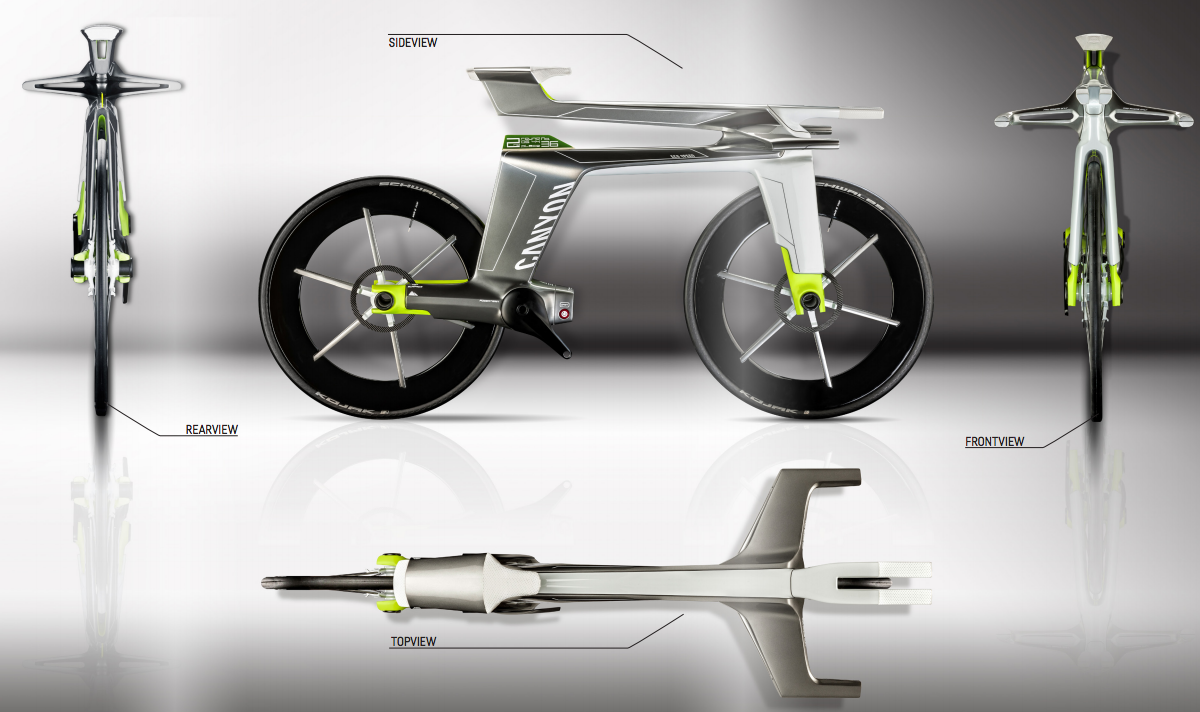
Alexander Forst was the man behind this crazy design, joining forces with Canyon in 2014 to conceptualise the Eco Speed. This concept bike is an e-bike powered by a hydrogen fuel cell, featuring disc brakes, a concealed drivetrain, and front and rear suspension. It’s full of potential, but is Canyon’s Eco Speed still a vision of the future?
German brand Canyon is known for its industrial design and visual aesthetic, and has always been keen to push the boundaries.
Hydrogen fuel cell technology represents cutting-edge advancements, and is considered a sustainable and low-cost alternative to current fuel sources. There are a few hydrogen-powered cars available for sale in the UK, but could we see this technology on a bicycle?

> Check out the best electric bikes 2023
Back in 2014, Forst predicted that by 2025 “alternative propulsion technologies will form part of everyday life. The resulting advances in e-bike technology will make them one of the most popular modes of personal transport.”
Electric bikes are the fastest-growing sector of the UK market, which is following a trend elsewhere. Take the Netherlands, where half of all bikes sold are now e-bikes compared to around 11% 10 years ago.

> Weird, wild, whacky & cool: 22 of the maddest, baddest and best concept bikes we’ve ever seen
The Eco Speed has a hydrogen fuel cell powertrain, which operates by mixing hydrogen with oxygen to power an electric motor. According to the concept brief, this will be sufficient to provide a 500 watt boost.
Another of Forst’s predictions was that by 2025, manufacturers would compete in a global cycle-racing series to showcase their latest innovation.
“This is the stage for which the Eco Speed concept has been created,” Forst explained. So, will the World Championships winner’s bike look more like this in a decade, rather than the more traditional-looking Canyon Aeroad that Mathieu van der Poel powered to victory at the weekend? It’s safe to say these predictions probably won’t materialise in less than two years, but maybe we’ll give it another ten or so!

Back to the bike – the Eco Speed ditches the UCI’s rules governing bicycle design. It maximises integration and the aerodynamic design is key for the high speeds this bike is intended to be raced at.
> Are expensive carbon road bike wheels worth the money?
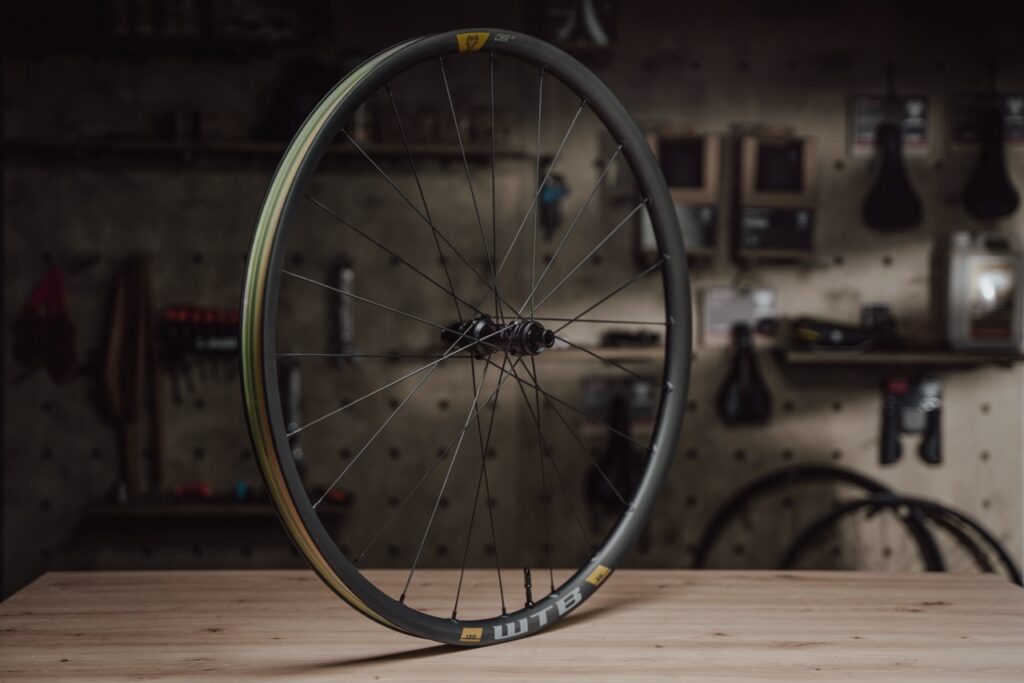
It features deep section wheels and aero spokes which are said to balance aerodynamics and weight, and the disc brakes are attached directly to the spokes of the wheels.
Up front is an “Up-Side-Down” suspension fork with all the working parts fully enclosed. The top tube is flexible and provides comfort, reminding those of a certain age of the Soft Ride mountain bike from the 1990s.
There is a fighter jet resemblance which is no coincidence since the handlebars have been replaced with aerodynamic wings. The wing profile of the handlebar is fixed and only the handles at the bar ends move when turning.
The handlebar position can be adjusted for height with an integrated air cylinder that, via the pressing of a switch, raises the handlebars so the position can be adapted to different riders.
If this bike went on sale, would you ride it? Let us know in the comments section below…







17 thoughts on “A bike from the future! Check out the hydrogen cell-powered Canyon Eco Speed”
road.cc wrote:
No.
Forst wrote:
It does time travel as well?
I knew cycling had a history
I knew cycling had a history of drug problems. I didnt expect it to extend to designers smoking crack.
Quote:
Given that there are no visible brake levers, nor any mention of them, probably not. Also, TT-style bikes are designed to eke out every last precious watt of human effort; if you’ve got a 500W power unit under the saddle, why do you need the uncomfortable riding position as well?
Speed?
Speed?
You still get more speed for a given power output irrespective of the power source.
Endurance?
You’ll get more distance for the same energy output too.
As I understand it the energy
As I understand it the energy density of hydrogen is less than that of a battery but it has the advantage of speedy refuelling.
If the intended use is long distance racing then, at this scale, I suspect replacing a battery would be just as quick as refuelling so I can’t see the advantage.
If it’s for long distance travelling then it would depend on hydrogen fuel stations which don’t exist at the moment.
A fuel cell seems an odd choice.
The only other consideration is that, as far as I can tell, fuel cells don’t have the same requirements for rare metals. I don’t know whether or not this makes it a better environmental choice in the long run.
Bungle_52 wrote:
It depends on how much you squeeze it. High pressure gaseous and liquid hydrogen have around three times the gravimetric energy density (around 120MJ/kg) of diesel and LNG and a similar volumetric energy density to natural gas. If you squeeze it really hard, you can get an extra energy boost from fusion, but you probably don’t want that on a bike.
Thank you for the education.
Thank you for the education. I’m still trying to figure out why batteries are preferred over hydrogen . In this application though I suspect the containment vessel for high pressure gas would weigh more than the bike and rider together.
Bungle_52 wrote:
Batteries are cheaper, more available and currently a lot easier to recharge.
hawkinspeter wrote:
Im not paying to have the tritium replaced every 7 years.
If aero and looking unusual
If aero and looking unusual are that important just get a recumbent or velomobile already. Even faster and more comfy.
http://www.m5-ligfietsen.nl/site/EN/Models/Carbon_Low_Racer
Oh, you want some kind of experimental powerplant too? Ask the guys you see with the triangle of metal tape and foil filling the frames…
I want one! It’s the coolest
I want one! It’s the coolest looking thing ever.
My 57 year old, overweight body squeezed into lycra will look absolutley ace on this!
For the dutch e-bike market,
For the dutch e-bike market, you would want to take historical “snorfiets” and “bromfiets” (50cc moped) sales into account too. Rules on those have gotten stricter over last 2 years (especially the bromfiets). The e-bike is taking sales from those too.
You wouldn’t buy this bike if
You wouldn’t buy this bike if it went on sale cause… it almost certainly doesn’t work. It’s a mock up. Which is one reason it wouldn’t be on sale.
The concept of a concept is
The concept of a concept is lost on you?
Would I ride it?
Would I ride it?
Yes.
But it?
Sadly, I fear the price would place it beyond almost everyone’s budget.
Because batteries are too
Because batteries are too cheap and work. Concept great but it’s never seeing the light of day