



Spain has reportedly joined France in banning bikes with disc brakes from road bikes in all road cycling events, including sportives.
El Periodico reports that sources within the national cycling federation, the RFEC, have confirmed that they are “absolutely prohibited” both in competition and in “marche ciclotiurista” – sportive rides.
Officials accompanying such events, whether of a competitive nature or not, will be able to expel any participant who turns up with a bike equipped with disc brakes.
Rafael Coca, president of the RFEC’s technical commission, told the newspaper: “Even if it is discovered once the event has begun [the rider] will be asked to leave for safety reasons, just the same as if they had started without a helmet.”
The move comes less than a fortnight after the UCI decided to halt the trial of disc brakes within the professional peloton after Movistar rider Fran Ventoso claimed to have been badly cut by one in a crash at Paris-Roubaix.
> Fran Ventoso: Disc brakes should never have been allowed in peloton
The following week the French cycling federation, the FFC, said that it would ban them from all events falling under its jurisdiction, which includes mass participation rides such as L’Etape du Tour, with El Periodico reporting that the action was taken in response to a request from the insurance industry.
> Disc brakes banned from French sportives including L’Etape du Tour
Coca told El Periodico that the regulations were “clear, precise and forceful,” and added that the RFEC would seek to send up to six officials to events to ensure that they were complied with.
“The official checks that everything is in order, that a doctor and ambulance are present if an accident happens, that participants who do not belong to the federation have a licence and provisional insurance for the day of the event, that all riders wear a helmet and, from now on, they will be rigorous about equipment and in particular disc brakes.”
While the RFEC’s rules relate only to organised events, the suggestion that insurance companies are behind moves to exclude disc brakes from them does raise a point that could be of relevance to many British riders who head to places such as Mallorca for training camps.
That is, will there come a point when the hotel operators and others hosting or leading such camps are required by their insurers not to let people participate in them on bikes with disc brakes?













56 thoughts on “Spain joins France in banning disc brakes from road events including sportives”
Farcical. No other word for
Farcical. No other word for it.
Well, that buggers up my
Well, that buggers up my plans and hotel bookings a bit.
Insane.
Insane.
Why have these cycling authorities/regulators become so paranoid about bikes equipped with disc brakes?
One pro rider gets a nasty cut in a crash that may or may not have been caused by a disc rotor. There appears to be no proof or substantive evidence.
Get on a bike with disc brakes and go ride it…better brakes and really not dangerous or unsafe.
‘…shakes head in disbelief’
MarkD03 wrote:
it does seem like some investigative journalism would be useful:
1) Is it just this one incident?
2) What do other riders say?
3) What is the link between the UCI and the manufacturing industry? i.e. is there some sort of shakedown going on?
This is just like a
This is just like a conspiracy. It is completely senseless and baseless. Is cycling regulated by trogolodytes, or are they all in someone’s pocket?
The pro cycling peleton, it’s
The pro cycling peleton, it’s the tail that wags the dog. I don’t care what they choose to ride, but it’s likely to start impacting again on what I’m able to buy. I thought the consumer was finally starting to get the bikes they want. The way it’s looking, next season you’ll see major manufacturers cutting back on disc equipped bikes and they’ll return to being a niche offering from smaller companies.
I’m waiting for my local
I’m waiting for my local train station to outlaw disc brakes from the bike racks…
I’m not sure why all the
I’m not sure why all the hysteria? There’s no compelling evidence that riding a bike with discs is inherently unsafe unless I’m missing something.
drosco wrote:
Since when did the UCI look for compelling evidence before making a ruling on anything? Heck, it’s not just the UCI, most decisions are if not evidence-free, then at least evidence-poor. Just take a look at the helmet debate: eff all evidence that they do anything yet the number of people and governing bodies that are prepared to swear that their head-woo saved lives is astounding.
It’s a tricky one isn’t it? I
It’s a tricky one isn’t it? I suppose with the disk being the sharpest item on the bike they’ve erred on the side of caution – whether the Roubaix injury was caused by a disk or not.
Disks are perfect for solitary mtb riding and racing. The riders are spaced more and even on mass starts there are more protective pads. For road events I don’t see why the risk couldn’t be acknowledged for a spaced field of competitors in a sportive. Whatever brakes you use you accept the risk when you sign up.
For pro racing it makes more sense to ban them. Can you imagine if the whole field had had disk brakes in that Cancellara pile up in last year’s TDF? With 10+ riders hitting each other at 40mph + with disks? Only a fool wouldn’t consider them an extra risk.
I am sympathetic to those that have chosen slightly firmer braking and now have to return to ‘troglodyte’ technology to ride the Etape. If we leave the EU in June we might all have to switch our front brake lever to the left to ride in France too!
Funnily enough the only time I’ve come off the bike on a hill in recent years was when ascending; getting blown into a ditch by a cross wind near the top of the Cat and Fiddle. If only I’d had the extra surface area of disks on my standard road wheels. I could have flown over the ditch completely. That’s the power of disk brakes for you.
WolfieSmith wrote:
They may have done, but it’s not.
WolfieSmith wrote:
I can’t agree that a disc is the sharpest thing on a bike. The front chain ring has Multiple sharp teeth and is totally exposed. Should chain rings be banned too?
neil60 wrote:
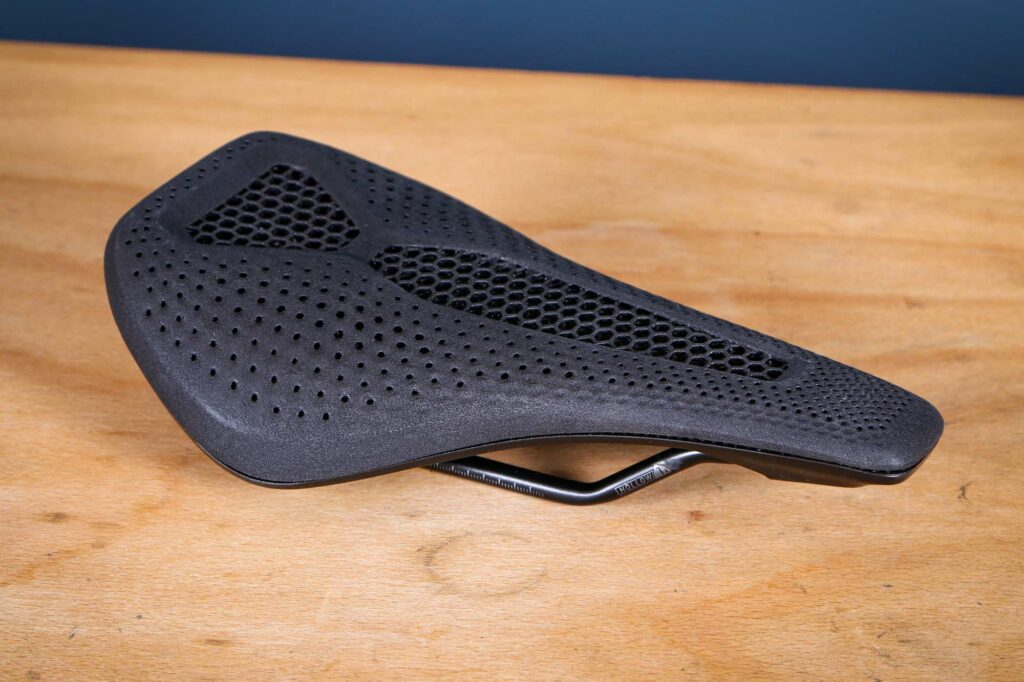
I think my seat is sharper than my discs: Fabric ALM
WolfieSmith wrote:
They erred on the side of the status quo. The side of caution would be the side of the better brakes.
Carton wrote:
No, they’ve erred on the side of their indigenous manufacturers, none of whom make disc brake equipment. The French and Spanish frame manufacturers have made disc-compatible frames, but have alternatives. The only European drivetrain/brake manufacturers – Campagnolo and FSA – don’t do road disc equipment. This smacks of opportunism.
TimC340 wrote:
That smells of the truth.
WolfieSmith wrote:
Have you actually looked closely at a disc? In which case you might tell us which manufacturers are using razor edged discs! I have disk brakes on my MTB, and I can push my thumb hard up against the disc edge and move it along the circumference with no problems. I certainly can’t do that with the cassette, which by comparison with the disc is like a pack of circular saws! The tips of my casssette are thinner in cross section, in addition to being pointed in the radial direction.
Add to that the now well quoted and implausible story of a rider who claims to have had his left knee contact the disc on the left side of the bike in front, without either rider falling, and we can all see how farcical this whole story is. Oh, and while he claims to know a disc did the damage, he doesn’t know what colour the offending bike was, and as only 2 teams were using discs, this might have narrowed things down somewhat. I am sorry the guy got hurt, it didn’t look at all nice, but his story just does not hang together.
This is farcical and is
This is farcical and is getting out of hand. The UCI need to show some leadership and get a grip. To date their only response has been a knee jerk reaction to a rant from Fran Ventoso, with unsubstantiated claims.
Come on UCI, sort it out!!!!
Maybe the bike manufacturers
Maybe the bike manufacturers should show some balls and threaten to sue?
Peloton muppets aside, a sportive?!?!?!?!?!??!?!!?!? Really??? Think of all the badly maintained bikes on a typical sportive (and all the stories you hear of idiots not doing up their QR properly) and they decide to ban discs??!?
I have quite a few bikes with
I have had quite a few bikes with disc brakes. I’ve ridden them for years. They aren’t sharp. Sure you could probably remove skin with them, but you could do that with brake levers, chains, chainrings, cassettes, caliper brakes, bottle cage bolts, quick releases, stem bolts, some saddles, light mounts, gear levers, etc etc.
This really is ridiculous. Some guy says he was injured on a disc brake, (but didn’t see it) after crashing into the back of another bike, who also says another rider was injured by brake discs, when it has been clearly shown on this website that none of the bikes in that collision had discs, and all the traditionalist institutions who have been resisting new technology for years, suddenly take the excuse to ban the brakes that lots of riders are already using.
Also, did I read somewhere that Ventoso said he has never seen anyone crash because of lack of braking performance? Presumably he deliberately rode into the back of the rider in front then?!
Not a particular fan of discs
Not a particular fan of discs but this is knee-jerk. Amateurs should be able to ride the braking system they want. The safety is being debated for the pro’s but that has no bearing on sportives, where there’s surely more risk arising from inexperienced riders, poor prepatation, ill health, weather, road conditions etc.
The problem is, with the UCI suspending their trial, how will they do a proper study to see if they’re safe or not for pros? There’s one alleged incident which has led to this action but that’s all the excuse the pro’s need, who weren’t supportive of discs in the first place.
The UCI and pro rider politics shouldn’t have any bearing on decisions made for amateurs.
I’ve worked in A&E for over
I’ve worked in A&E for over 14 years and I’ve seen people impaled by bike levers, bar ends and the odd velodrome wooden board but I’ve Never seen a disc brake rotor injury.
Just to illustrate my point
Just to illustrate my point that disc brakes are not actually that sharp, this photo may be of interest:
http://d4nuk0dd6nrma.cloudfront.net/wp-content/uploads/2013/10/shimano-ultegra-disc.jpg
They really aren’t giant knives, are they? I’d like to see anyone who says that they are try and cut potatoes with them.
Farcical, no evidence to
Farcical, no evidence to back up this hysteria.
If the UCI and all other cycle bodies were concerned about rider safety they would ban races on cobbled roads, ensure the road surfaces were cleaned of loose grit also remove all solid objects that riders might hit . Did you see how many riders fell on the recent classics. Hell you can get a very nasty road rash/burn from hitting the very substance you’re racing on. There are so many pointy bits on cycles that will cause injury. Disc brakes have been around for years on bikes. How many incidents have been reported were disc brakes caused serious injury, very few indeed.
These irrational knee jerk decisions will impact on the industry I am sure
The links are fairly well
The links are fairly well established I would have thought. The Peloton is both a testing ground and a shop window. It’s massively useful for selling us stuff.
Now, most of the time, there’s a benefit to the pro, marginal or otherwise. And that benefit may well benefit us.
And then there’s discs. There’s no doubt that the manufacturers want us to buy them and, even before the pro’s had them, we’ve been doing so.
But it’s perhaps the first true reverse in terms of the pro’s being told to use something that they don’t necessarily need for what they do, so that we can buy them in order to use then for what we do.
In other words, what we define as a road bike and road cycling is changing. We’re talking about over simplistic generalisation when it comes to discs and the pro peleton, in this regard, may be about to diverge from what some might call everyday cycling.
bendertherobot wrote:
This .. maybe.
Disc brakes are not being driven by the manufacturers, they are being driven by us, the consumers. The moment disc brakes went onto cyclocross bikes we lapped them up, as they were at the time the only thing close to a road bike with discs. As a result, sportive style bikes with discs started appearing and the manufacturers started pushing for discs on the pro scene.
Once rim manufacturers really start to play about with the fact that a braking surface is no longer required, it wouldn;t surprise me if disc brake wheels actually start becoming more aerodynamic than rim brake wheels.
Add in the fact that to deal with the current histeria, disc fairings will become required before discs are allowed back into racing, and there is suddenly another way for manufacturers to play with aerodynamics (or at least a legal way to more easily deal with the current relatively un-aero nature of the disc brakes themselves).
So … up shot … there will come a point when disc brake bikes are better not just for the brakes, but also for aero, and suddenly the pros will want them.
Meanwhile in 2010: http://www
Meanwhile in 2010: http://www.cyclingnews.com/news/uci-allows-disc-brakes-for-cyclo-cross/
This is a daft knee jerk
This is a daft knee jerk reaction with no evidence to back it up. Amateur riders will be safer with brakes in which they have confidence. There doesn’t tend to be a much in the way of large groups riding very close to make this kind of incident (Ventoso’s) very likely.
I saw a lot of crashes on decents at last year’s Etape Du Tour. Head injuries and collarbones, lots of skin lost. Some of them (either from talking to people or direct eyeball witness) was from tyre blowouts which are usually caused by dragging brakes and overheating rims: not a problem with discs. People should have choice.
We need more information on who in the insurance industry is forcing this madness on cycling on a nation by nation basis.
Pauldmorgan wrote:
Hahahahahahahahaha! What?
The Spanish authorities have
The Spanish authorities have had a few days to carefully consider their position and have had time to look at evidence and to consult expert opinion. I’m really looking forward to them publishing this as an explanation to an otherwise obtuse decision.
Boy am I going to have ‘doh’ moment when I find out that the brakes I thought were safer because they stopped me a little bit sooner with a little more control and a little less effort are actually psychopathic killers waiting to savage any cyclist they can reach.
Isn’t there a simple answer
Isn’t there a simple answer to this?
Surely it’s not beyond the wit of the disc manufacturers to put a rounded edge on the rotor, thereby reducing the risk of cuts??
Pipeyrw wrote:
Undecided. Two said they’d look at it, the other thought it might be more dangerous. We are talking about a thin edge here, rounded or square should make little difference.
Pipeyrw wrote:
Or even a soft plastic coating on the extreme edge of the rotter (sorry, rotor).
rjfrussell wrote:
My first double post. I always wondered how that happened.
rjfrussell wrote:
I mean, sure, whatever floats your boat. But a bike is a 7kg object carved out of pencil thin sheets of alloy or carbon fiber riddled with steel bolts, wires and teeth. If you miss it you’ll come a-cropper against solid asphalt, jutting barriers or the flesh covered bones of other human beings. Perhaps covering up 16cm2 out of the universe of sharp and rough edges you can hit if you lose control may be somewhat less important than even marginally improving the odds of not losing control in the first place.
Carton wrote:
My irony was obvs not sufficiently apparent. The decision and suggestion that discs are are a danger are both obvs insane.
I’m riding the Morzine Grand
I’m riding the Morzine Grand Trophee sportive in June, I have disc brakes and contacted the organisers to see if I could still ride it. They said that discs were only banned from pro races and not mass participation sportives. This is an FCC sanctiones race.
No banning of rim brakes
No banning of rim brakes after the fabio feline Incident? On the theme of worse brakes being safer they could all just wear shoes with a high friction surface and slow Dow gradually.
So what is British Cycling’s
So what is British Cycling’s stance on this? Is the UK going to follow suit? Has Road.cc asked for a statement?
Having just bought a steel frame with disc brakes this is not a story I’m comfortable reading.
If this decision had been made 6 months ago, would it have effected my choice between disc and calliper? Yes.
If BC were to ban disc brakes, there will be a lot of upset cyclists, event organisers and suppliers… Imagine if this is applied to the Prudential London 100!
Can we trust BC not to be swayed by industry? We have to consider the decision is made for reasons of safety and not to keep manufacturers happy after all, if this braking system were to be declared not fit for purpose, could this cause a legal precedent? Would there then be a recall/exchange program? The cost to the industry (or more likely the consumer) would be massive.
This whole argument is early days and full of knee jerk reactions (such as this comment lol)
What’s needed is some clarity please.
A proper analysis should have
A proper analysis should have been done on this bike and the wound in question. And even then, it is probably difficult to say the disc was the guilty party. Furthermore, the wound in question looked more like a laceration or jagged cut or gouge ie from a irregular shaped object like a cobble stone and not like a perfect slice that would be caused by a disc brake. Having been a paramedic for a number of years and having seen what happens when someone is toss through a car window into a field and the jagged edged wounds that are created, this leg wound looked very similar.
The Europeans love speculation.
The first disc manufacturer
The first disc manufacturer to bevel the edge of their discs wins.
I may be in danger of
I may be in danger of oversimplifying matters, but the biggest dangers are the motorcyles and cars accompanying the races, not disc brakes. Deal with the motorised hazards first.
Demand for discs is being led
Demand for discs is being led by marketeers. Not consumers.
Look at pro cross riders. 50% of them don’t even ride discs.
fenix wrote:
That conflates a few issues mind. One is that CX and road everyday use may not necessarily compare. The other is that it compares amateur and professional “need,” which is kind of why we got here in the first place.
fenix wrote:
Sorry, but that is almost completely the opposite of reality. Disc brakes are quite unlike most cycle technology, in that demand for them is being driven very specifically by consumers, rather than trickled down from the pro-peleton. Bike manufacturers want them adopted by the UCI because they’re already satisfying that demand for the consumers.
That said, there are far fewer good reasons for the pro-peleton to adopt them, in comparison to the wider public. Aerodynamics and wheel-change times are far more critical to them than to the rest of us; rim longevity is not an issue at all (whereas it’s moderately important for the rest of us); very few races are won on the basis of descending ability, so the improved control that disc brakes bring doesn’t rate very highly.
Finally, it is clear that cycling has a wide luddite streak that is prepared to make stuff up to support unsupportable arguments – and that tendency seems to be over-represented among the pros. With specific regard to disc brakes, I suspect this is partly because it is a technology that was not specifically developed for the purpose of making them faster.
fenix wrote:
Pro cross riders are even less relevant to me than pro road racers.
My demand for discs is led by having ridden bikes with discs. There’s no going back.
. . wrote:
Me too. I bought my first proper road bike 2 years ago after years on a disc MTB. First time on the road bike I was shocked by how poor the rim brakes are. 2 years and several thousand miles later I still don’t have a great deal of confidence in my road bike brakes. I just cannot understand why anybody would object to such a leap in brake performance. Until last week I was planning to upgrade my road bike, largely driven by discs. Now I am not sure which way to go. Are discs going to become obsolete before they are even established, or will common sense prevail?
fenix wrote:
Bollocks! Disc brake on road bikes have come about because of the way we consumers lapped up disc equipped cyclocross bikes for use on the road. It’s because of this demand that disc equipped endurance style bikes capable of taking mudguards started appearing, and then calls for more race orientated bikes to get discs started and thus from there the desire by manufacturers to get discs into the pro scene developed.
Absolutely no doubt that getting discs into the pro-scene is for a large part about marketing and overcoming the stigma that a significant section of the road scene has against discs, but it is also about R&D, as the pro-scene is a great place to test stuff.
This is awesome! It’s great,
This is awesome! It’s great, because it stops idiots like me deciding we need something that we really don’t.
All positive. If discs really are the future then the industry are going to have to rethink them (guards can’t be hard to create, can they?) and while they’re working it out maybe standardisation will come in.
Jonny_Trousers wrote:
For the non-racing user of disc brakes there are absolutely no issues to taking them now.
Standardisation – On your Sunday coffee-and-cake ride, do you have neutral service following you requiring all the riders to have the same wheels? No. You ruin a wheel, your ride is over unless you are near a shop
Guards – As mentioned before, in the world of nasty shit to hit when you crash a bike, covering a small part won’t have much effect.
I’ve ridden and crashed MTBs and road bikes for years, even to the extent of ending up in multiple bike pileups but have NEVER seen a disc brake injury. Broken bones, yes. Concussions, yes. Brake lever punctures, surprisingly frequently. Cuts requiring hospital attention from trees, roots, fences, etc yes. Grazes from gravel or road, of course.
I have a scar on my shin from a pedal strike, numerous puncture marks on my legs from flat pedal pins and a scar down the inside of one leg from a cable stop and the other knee from a stem bolt. And I have yet more scars from hitting the road surface.
Yet no maiming or murdering discs fulfilled their destinies and sliced off a limb. The only disc brake injuries I’ve seen have been idiot friends putting their fingers into a rotor when fettling on a workstand and they’d have had the same from the spokes I suspect.
Put more concisely, the whole disc brake sportive ban is bullshit and has ensured that whilst I may ride the route of several sportives in France this summer, I’ll do it outside the event so I can ride discs if I want to.
If this were April 1st I
If this were April 1st I would think this is a prank. Come on ride organizers, stop the madness!
They should ban chain rings
They should ban chain rings and cassettes too, those pesky things are really sharp…..likely to do all sorts of damage to a leg or two. Stupido….
This is the cycling
This is the cycling equivalent of “Reefer Madness”.
Merely a question. In the
Merely a question. In the advent of adoption of disc brakes by the pros, would they be the brakes of choice for time trials and hilltop finishes?
The Cycling Federation of
The Cycling Federation of Catalunya has decided that discs are OK to use. If this changes for the 2017 season they will give advanced notice.
La Mussara Gran Fondo also stated on their facebook page that they are not restricting the use of disc brakes.
So, all fine for me. But I still won’t register to any new sportives.
The only plausible argument I
The only plausible argument I can see here is that disc brakes are ‘better’ (i.e. more modulation) – thus mixed groups might be seen as a hazard. I can just about remember when some vehicles had a rear sticker ‘disc brakes fitted’.
To be honest I regard all group riding as a bit hazardous, so I generally avoid it and thus aren’t best placed to judge. But as UK events are almost all on open roads I don’t suppose there’s much organisers could do about ‘disc rebels’.