



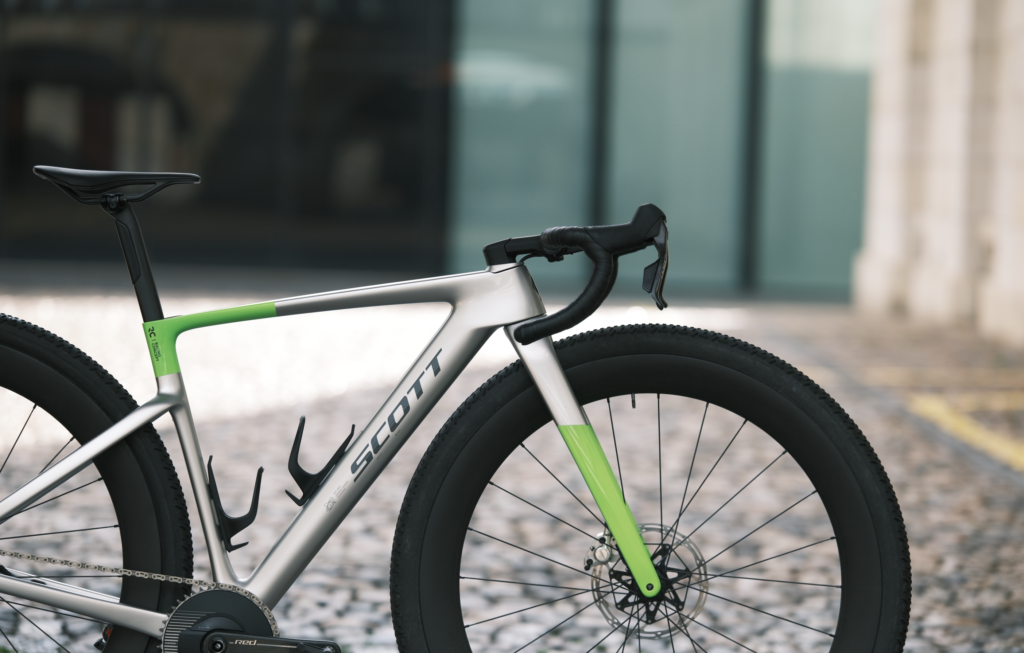
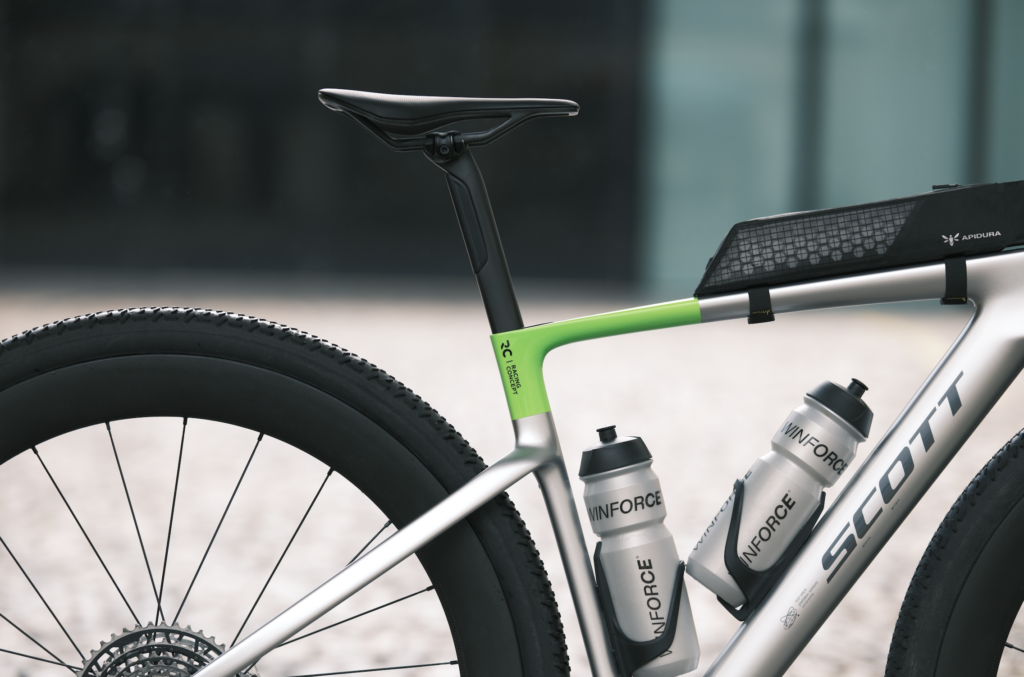
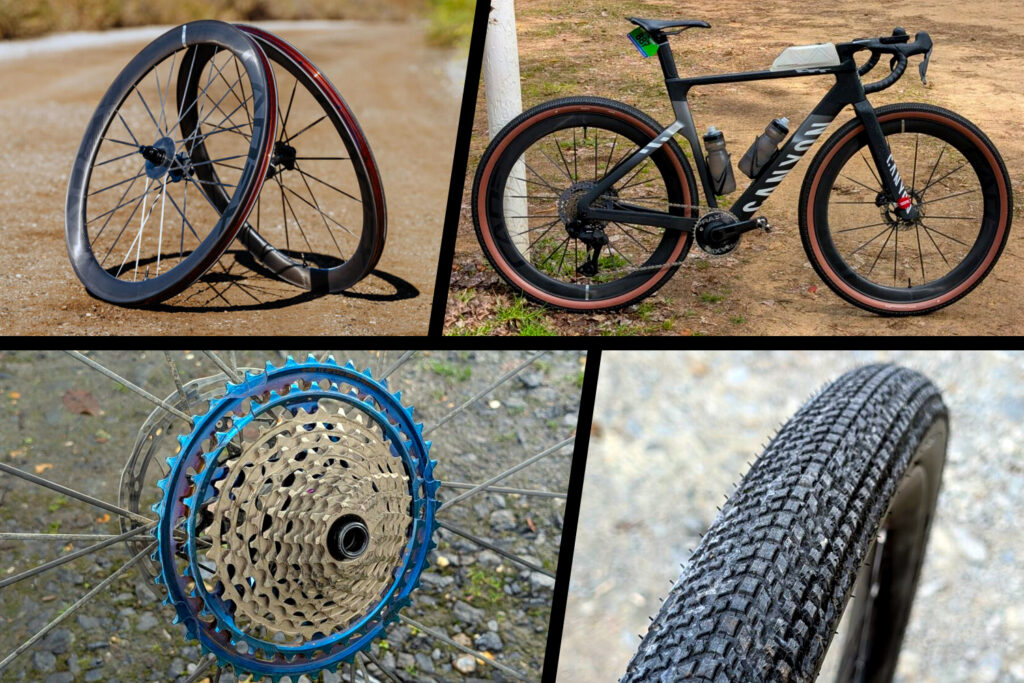
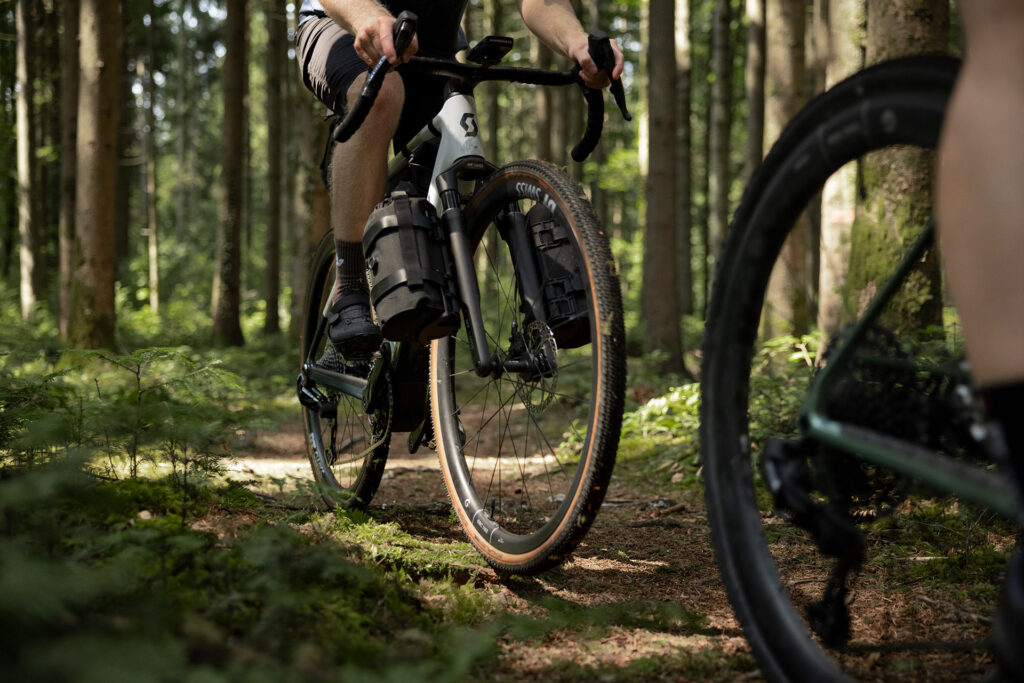
The emergence of 32-inch wheels in gravel racing is set to be tested at this year’s Unbound Gravel in Kansas, where the Scott RC Gravel 32″ prototype will make its competitive debut. Former winner Cameron Jones and ultra-distance specialist Robin Gemperle are racing Unbound 200 on the bike, which has already been ridden in development for over a year but remains a pure prototype with no commercial release planned so far.
Taking place from Thursday 28th May to Sunday 31st May, Unbound is now certainly the most prestigious gravel race on the calendar for riders, but has also become a crucial event for brands to pre-release and launch new products.
“Unbound gravel has proven to be the perfect proving ground to take innovation out of the lab and into real-world racing conditions”, says Scott.
The prototype bike is built around 32-inch wheels, a size that has seen widespread adoption in the mountain bike world over at least the past year, since first being spotted on a prototype BMC.
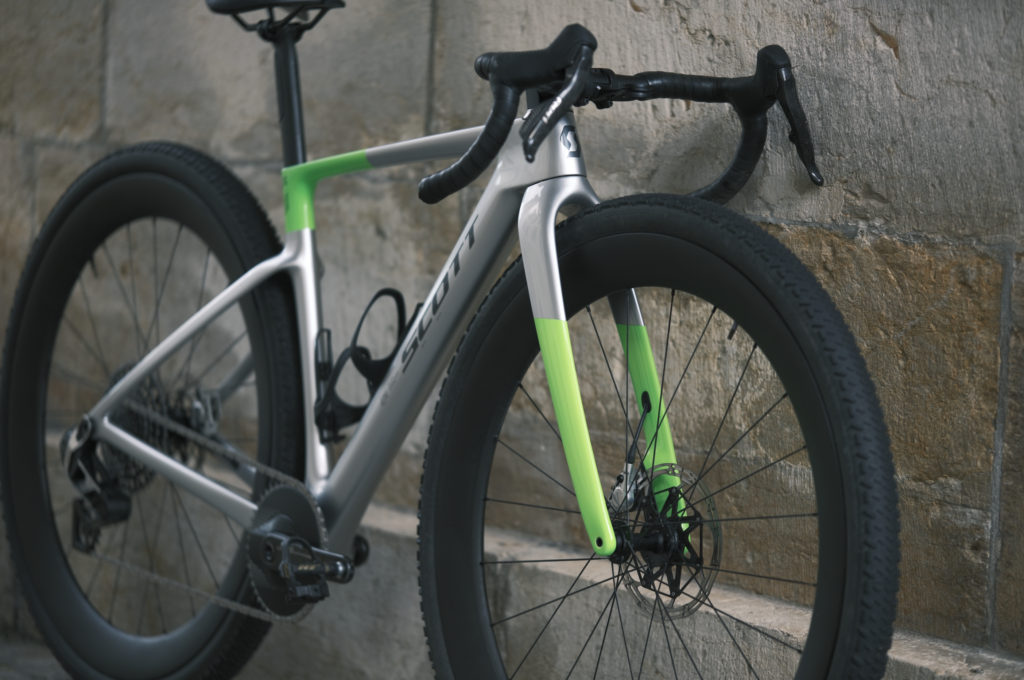
The benefits of 32-inch wheels on a mountain bike, such as improved efficiency at higher speeds, also suit gravel riding, while the drawbacks of the larger wheels, such as reduced agility, are less critical than they are on a mountain bike.
We have already seen a couple of 32-inch gravel bikes, including Genesis’s prototype Vagabond and the bike displayed on Schwalbe’s Velofollies stand – tech that our off.road.cc managing editor Liam felt had previously been overlooked until now.
Cameron Jones describes the wheels as making the bike feel like “you’re levitating over the surface”, adding that he’s “genuinely scared how fast [he’ll] be able to corner on a course with proper descents”.
Last year, Jones spent 150 miles in a breakaway, setting a new course record of 8:37:09, so this year he could be set to go even quicker.
Scott confirms that these bikes are purely prototypes and will never be released to the market. In road racing, we expect bikes raced in the WorldTour peloton to be made commercially available within 12 months, in line with the UCI’s rules. However, gravel racing largely exists outside the UCI’s governance.
The two riders have been racing the 32-inch prototype gravel bike for the past year, although both are running slightly different setups.

Jones has opted for road handlebars, using ENVE’s Aero Road Bars in a 37cm width, while Gemperle is using Scott’s in-house component brand, Syncros, with the HB-R 100 Alloy Handlebar featuring a flared geometry.
The groupset on Jones’ bike combines Shimano XTR with Dura-Ace shifters, GRX cranks and a 4iiii power meter. Gemperle’s bike, meanwhile, is equipped with SRAM Red AXS XPLR 13-speed, paired with a Red XPLR power meter crankset and a 46-tooth chainring.
Could 32-inch wheels become the new standard in gravel racing? Let us know in the comments section below.











8 thoughts on “‘Like levitating over the surface’: Scott announces prototype aero gravel bike with 32in wheels for defending champion at Unbound Gravel”
It’s worth nothing that the 46-tooth chainring is probably equivalent to around a 51 tooth on a more standard wheel size.
When I saw the photo my first thought was “Oh, someone made a cool bike for short people, how nice”
tt bikes with 32″ rear and 700c front, soon? just like the reverse mullet QR bikes of yesteryear
@the infamous grouse. The UCI limits wheel size in road races, and they tend to be pretty slow at changing their rules, so this is unlikely.
@Chris RideFar maybe the RTTCGB and kona folks will get in on the action first
So, Gemperle won. I’d be really interested to ride one of those bikes and see how they roll. My guess would be that they’re highly specialised tools, only suitable for riders who have the physique and stamina to maintain an aero optimised position over extended periods. As the results show, they have the potential to do very well in this type of event with long distances, mud but essentially not very technical/twisty terrain.
I don’t immediately see this 32-in tyre thing taking off in general gravel riding though.
I like the idea of the bike “levitating over the surface”. This will greatly reduce rolling resistance and tyre wear.
But what tyre width and pressure is used to achieve this ?
Presumably something like this?