



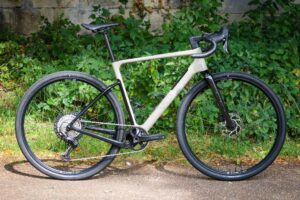
The Merida Mission 9000 is part of the company’s new range of gravel racer/allroad bikes – machines that blur the lines between where current gravel bikes are heading and high-speed endurance road bikes. The result is a stiff, nimble, grin-inducing all-terrain bike that is incredibly well specced for the money.
> Buy now: Merida Mission 9000 for £5,000 from Damian Harris Cycles
Merida Mission 9000: Ride
The Mission name isn’t new for Merida’s bikes. Back in the day they were cyclocross bikes, like the Mission CX Force Edition that we reviewed in 2020. The latest Mission has been brought up to date with current 2025 trends, most notably the growth of the ‘allroad’ category, giving versatility and flexibility to road riders who don’t want to be limited to the asphalt.

As you no doubt already know, with their crossover between road and mountain biking, gravel bikes are constantly evolving, and many new bikes are pushing towards the latter with ever increasing tyre clearance, more load-carrying capability and – horror of horrors (depending on your view) – suspension!
The Mission harks back to those early gravel days, with geometry not too far off what you’d find on an endurance road bike to give a ‘performance’ riding position and handling, but with tyre widths that make it capable of mixed terrain riding, all the while keeping the frame looking sleek and aero.
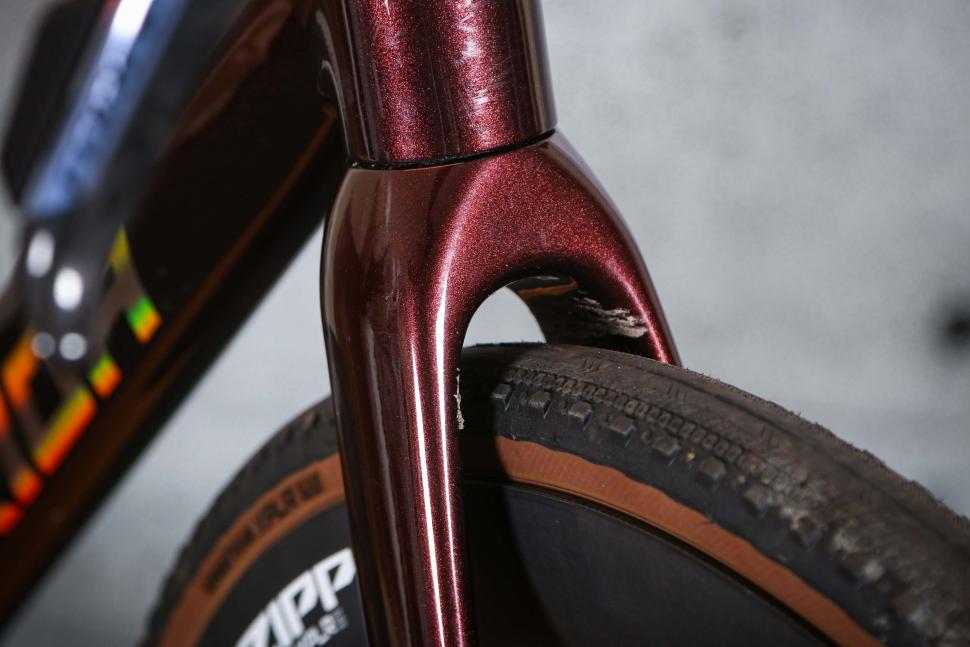
When I first set eyes on the Mission in the office I was under no illusion about its intentions. Its stance looks purposeful, and the deep-section wheels, one-piece cockpit and aero cues on the frame point to one thing – speed. And this is no exercise in aesthetics: swing a leg over it and the Mission delivers.
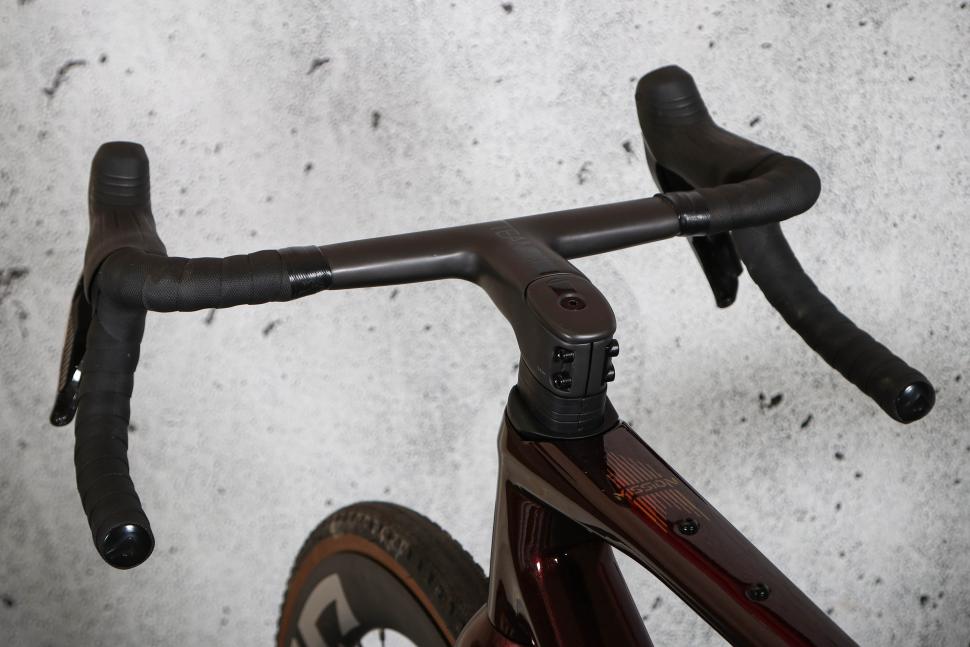
Few of us live within throwing distance of a gravel track, and I’m no different, so a trip on the road usually kicks the ride off. Straight away the Mission felt lively, partly down to its relatively light weight of 8.4kg but mainly due to the way the geometry has been laid out.
For instance, because of the larger tyre clearance the Mission’s fork is longer than that of its sibling Scultura Endurance road bike by 20mm, but its head tube is 40mm shorter, so you are getting a lower stack height on the Mission and the reach is also longer. That makes it feel slightly more aggressive by nature.

Add in a 73.5-degree seat angle for great power transfer and it’s no surprise that the Mission feels so dialled in. This medium model fitted me perfectly too, and with six sizes on offer it shouldn’t be too difficult to get a good fit for most people.
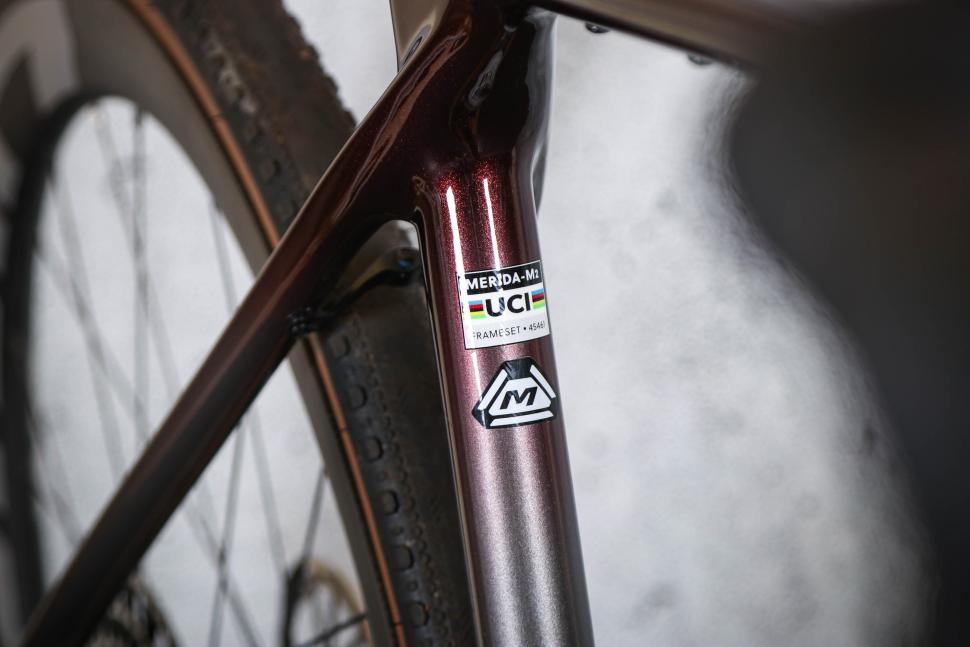
Instantly apparent also was how stiff the frame feels around the bottom bracket area and the lower half of the frame. Out-of-the-saddle efforts showed no signs of flex, and the front end felt just as rigid when descending or hauling hard on the brakes.

For the last few months I’ve been using a gravel bike as my all-weather machine, running it with a set of Pirelli’s 40mm P Zero Race TLR tyres. Sticking those on the Mission for pure road rides unlocked its potential on the tarmac. It felt just like a road bike, albeit a slightly heavier one (those tyres are 471g each), but that didn’t dull its responsiveness or take away from the fun factor.
The handling is quick without being so fast that it becomes a handful, very reminiscent of an endurance road bike, with good amounts of feedback through the frameset meaning I could feel exactly what the Mission was up to beneath me, which allowed me to push it harder than I expected on technical descents.
Chances are, if you are looking at a bike like this, you’re more interested in how it handles away from the road. I can safely say you won’t be disappointed.
I started riding gravel bikes a lot back in 2016, predominantly a GT Grade which I rode the 2017 edition of the Dirty Reiver on. With its 32mm tyres it was a fun, albeit sketchy ride. The Mission is a lot like that – the fun part – but minus the sketchiness, as being able to run 40mm tyres means it is much more capable.
It handles looser surfaces in much the same way as it does on the road. It feels planted, easily controllable, and nailed on between machine and rider. I found this a very ‘talkative’ bike – all that feedback I mentioned above really comes into its own on gravel and I could really let it fly.

The whole bike just feels really balanced and surefooted. On hardpacked sections it can be ridden very hard, the odd slip here and there is easily handled with a shift in bodyweight, and its responsiveness means it feels just like a race bike. If you do events, or just like to ride hard, then the Mission will definitely flatter and deliver. It’s a very efficient machine.
Merida has a history of making some great frames in terms of ride quality and the Mission is no different. And while everything so far has been about speed and performance, this bike also has enough compliance built into the frame to offer a comfortable ride, whether you are going flat out or more sedately. The tyres take the sting out of the ride anyway, but that hasn’t stopped Merida taking any harshness out of the frame and fork.
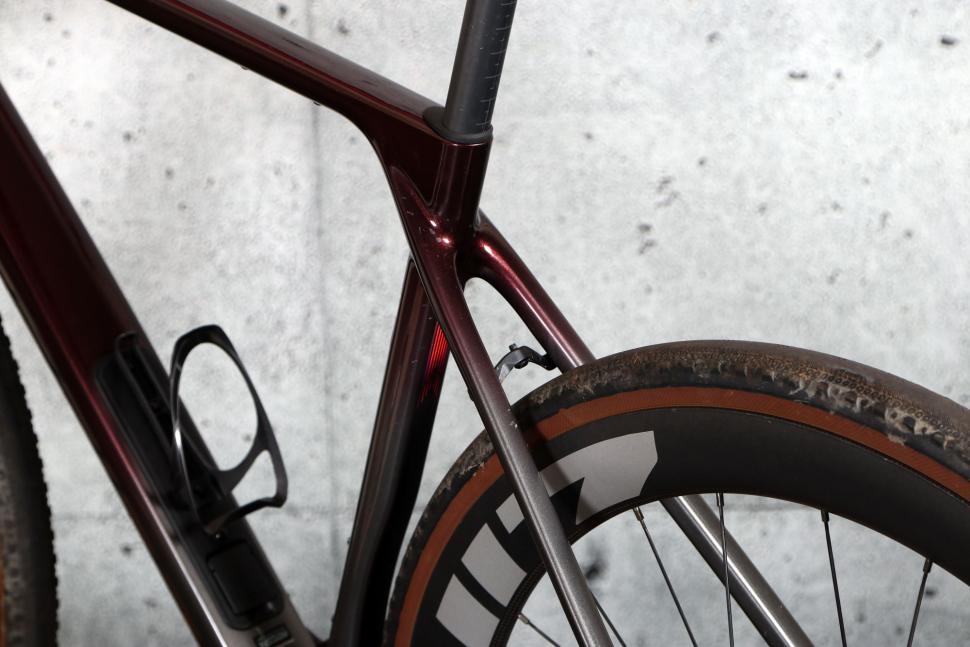
Overall, purely from a ride point of view, this is a very impressive bike indeed, taking the speed and performance of a road bike and the ruggedness and versatility of a gravel machine and blending them perfectly.
Merida Mission 9000: Frame & fork
Like many brands, Merida uses different grades of carbon fibre for its frames, with the high-end race bikes getting its CF5 grade, while others slightly lower down the pecking order use CF3. The Mission 9000 sits somewhere in the middle, with a CF4 frame and fork, giving a blend of stiffness and durability.

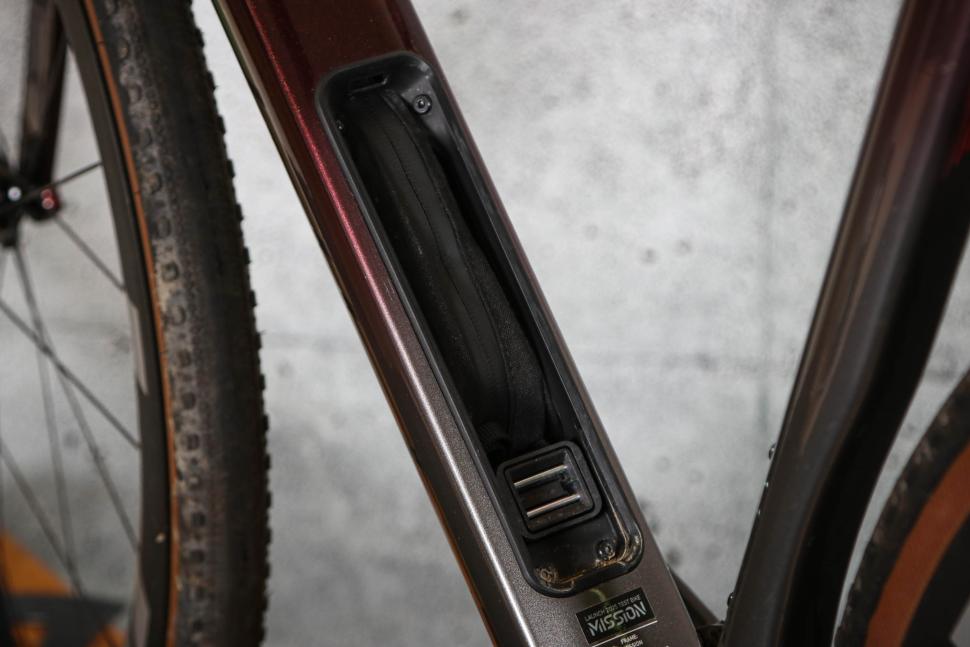
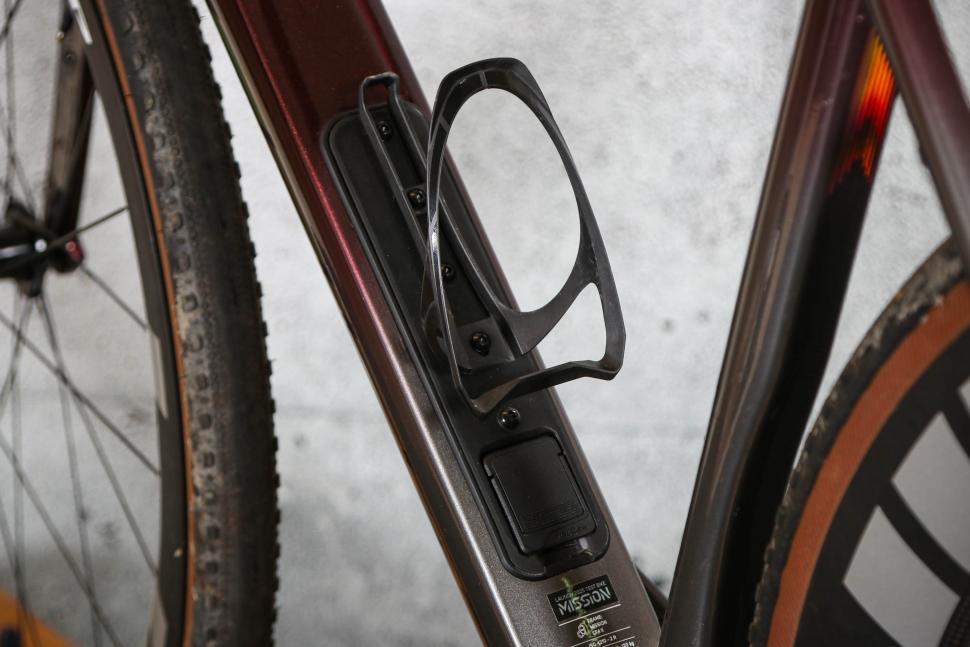
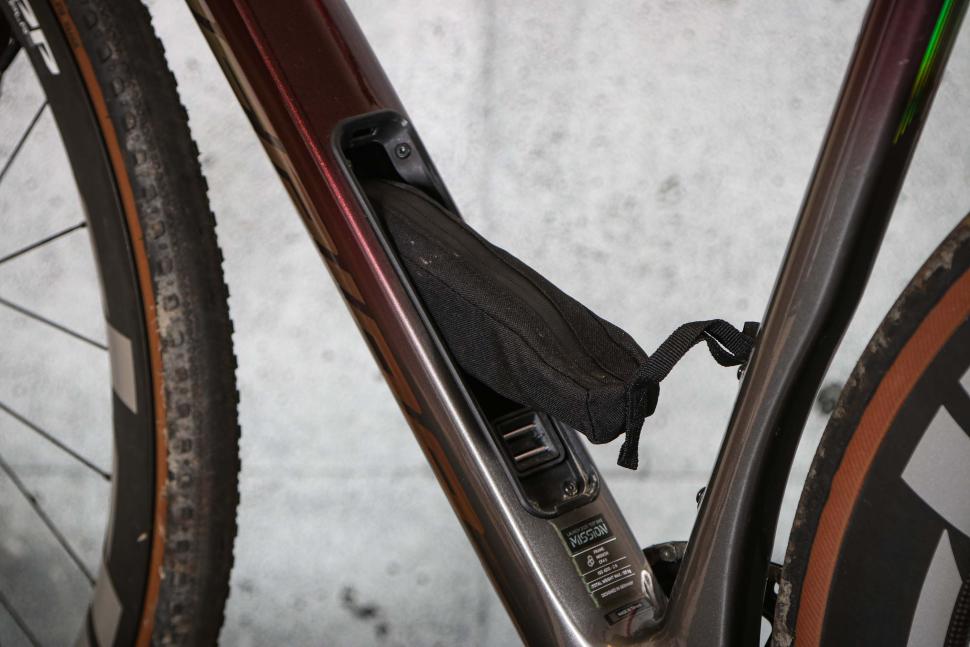
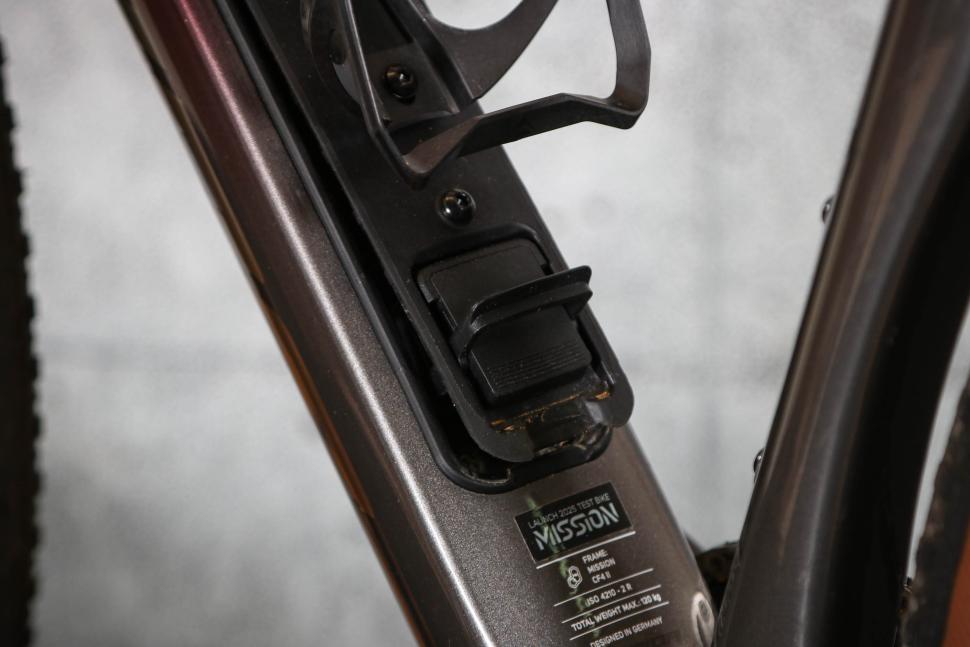
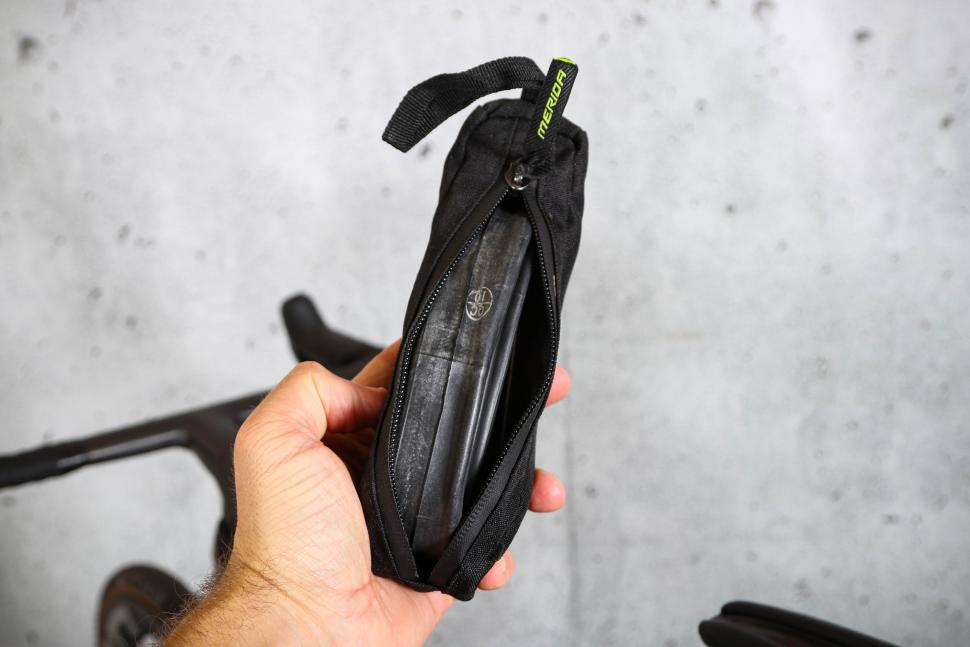
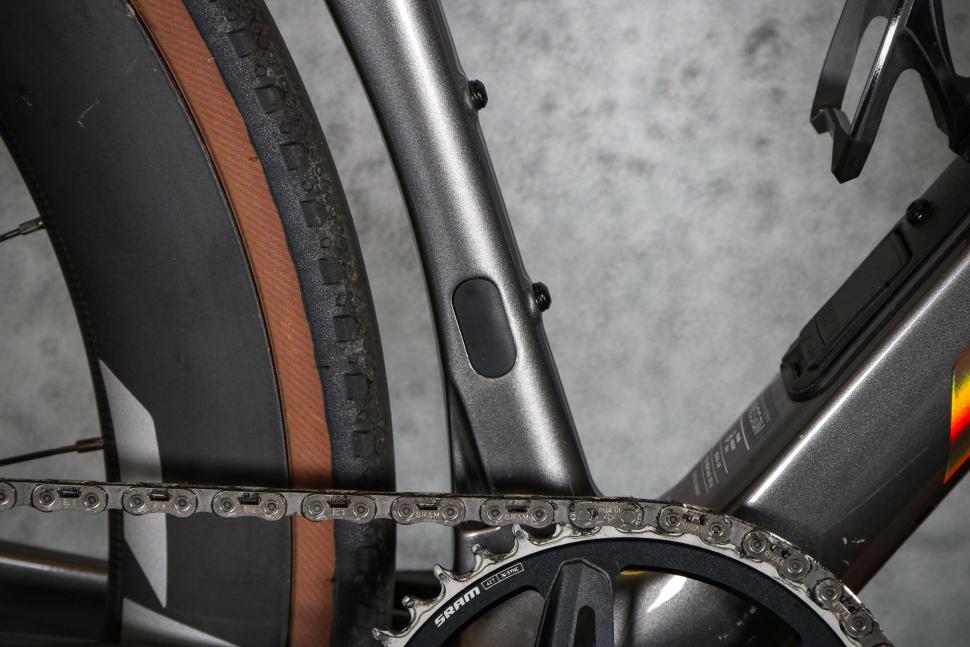
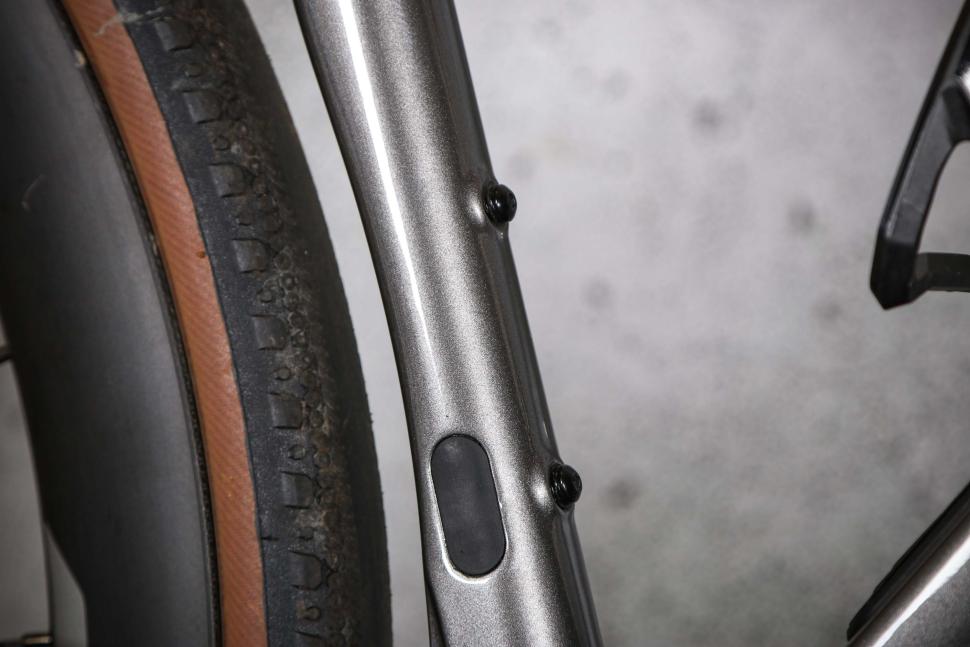
Merida has added some neat touches too, such as the G.U.T. storage system which is Merida’s name for the cubby hole inside the down tube. It’s not uncommon to see this on bikes now, but Merida has created a neatly finished solution which also incorporates a custom-made bag so you don’t get any rattling on rough trails.
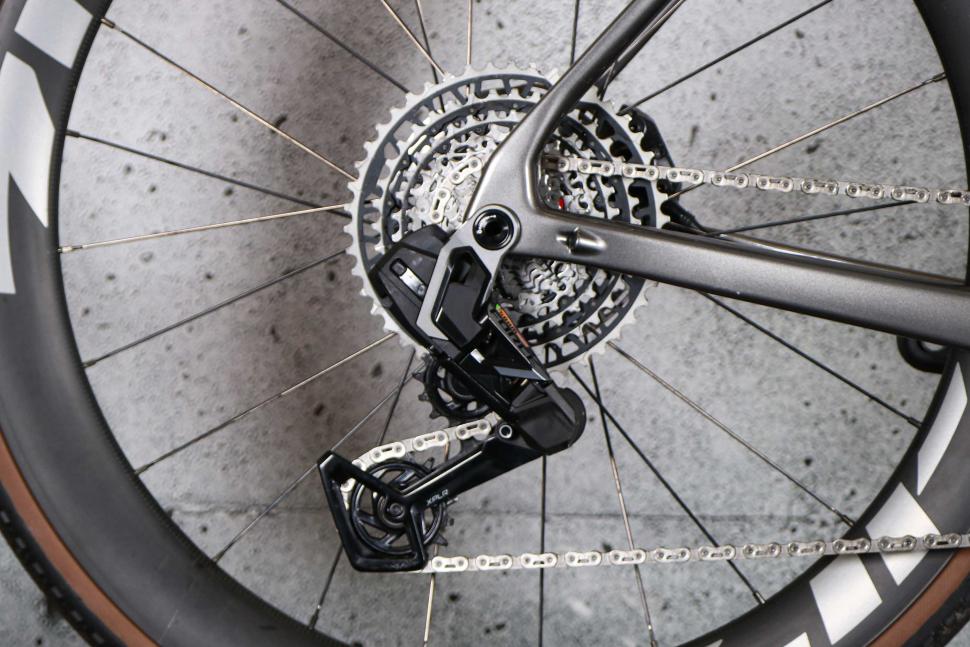
The frame is UDH compatible – universal derailleur hanger – and will accept both 1x and 2x groupsets. And among the frame mounts for bottle cages and the like it will also accept Merida’s own mudguard system, although that will reduce tyre clearance to 35mm. It’s a small trade-off for the extra versatility, though.
Everything has been well thought out, with the Mission fitting snuggly in between the Scultura Endurance road bike I mentioned earlier and the gravel-specific Silex. It takes design cues from both, which is what makes it so capable on mixed terrain.
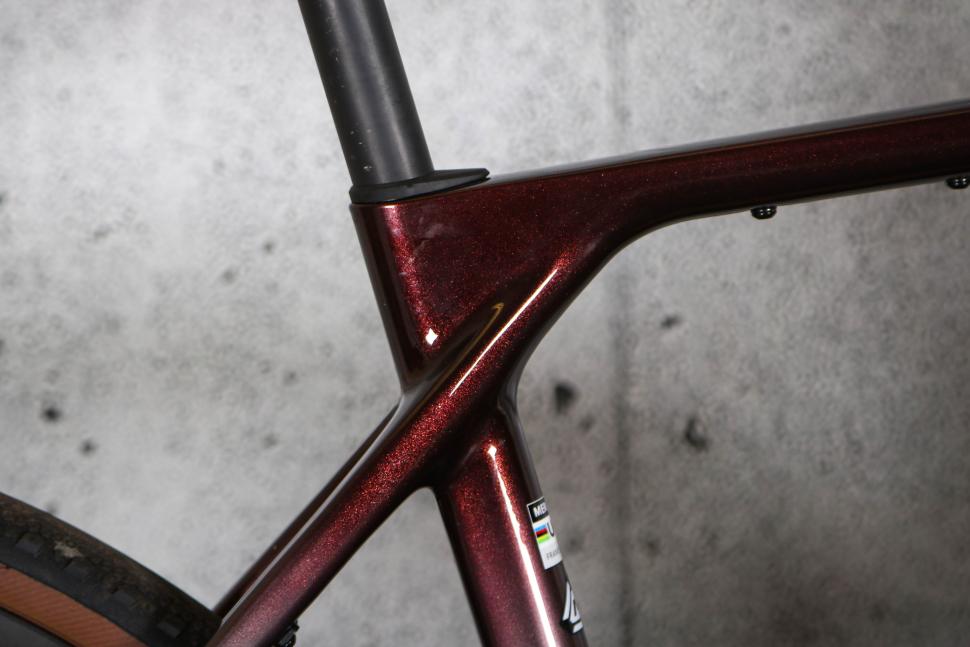
The quality of the frame and fork looks to be top notch throughout, and a quick look inside shows the carbon layup to be clean and tidy.
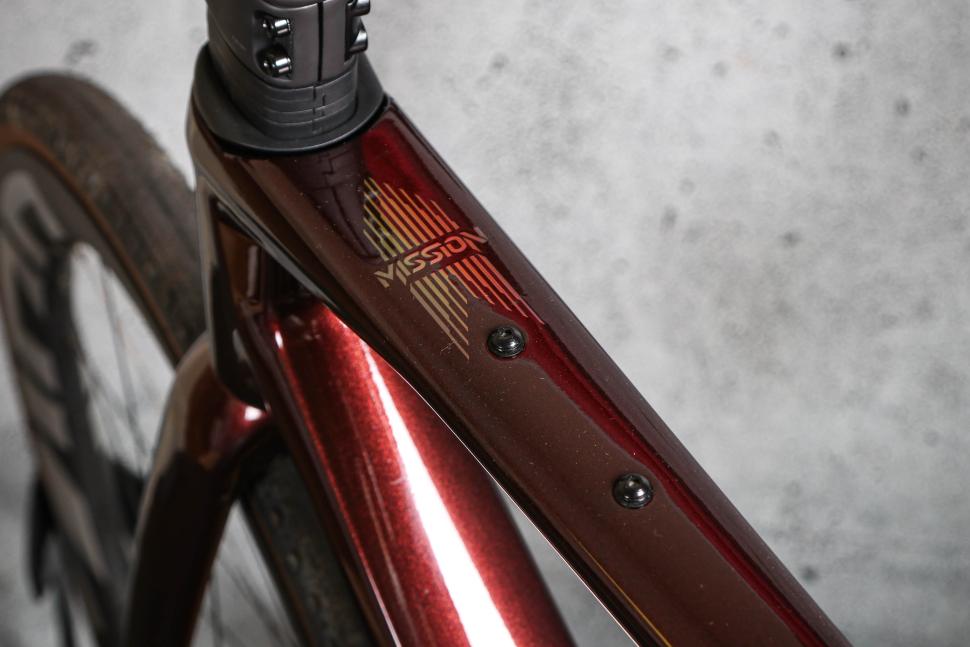
Other details include a BSA threaded bottom bracket, full internal cable and hose routing, and a hidden seat clamp for a smooth look.
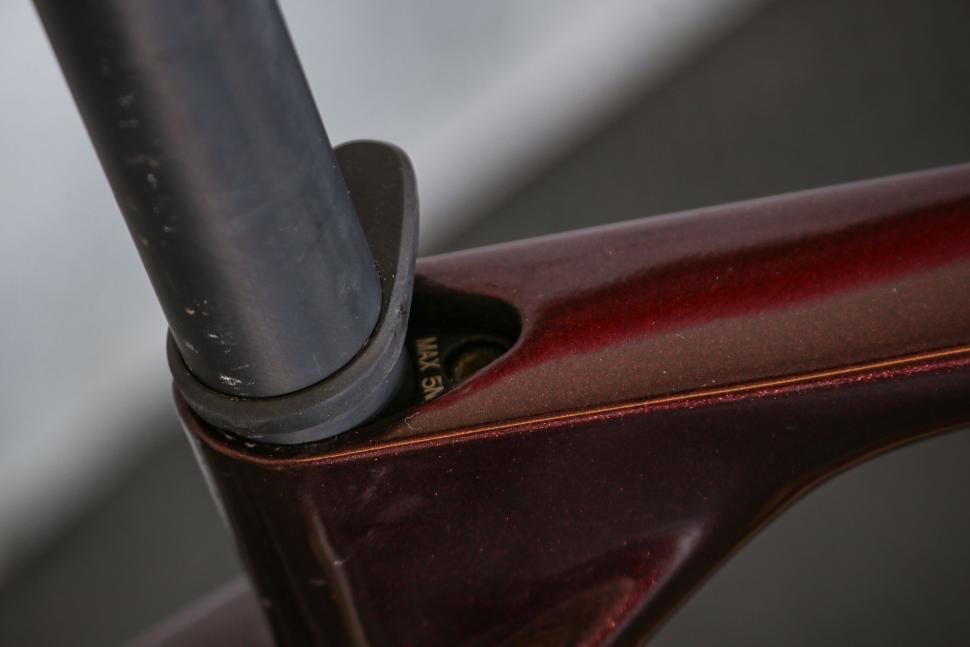
Sizing ranges from XXS to XL, with the medium here having a 560mm top tube and 137mm head tube. The seat angle I mentioned sits at 73.5 degrees while the head is angled at 72 degrees.
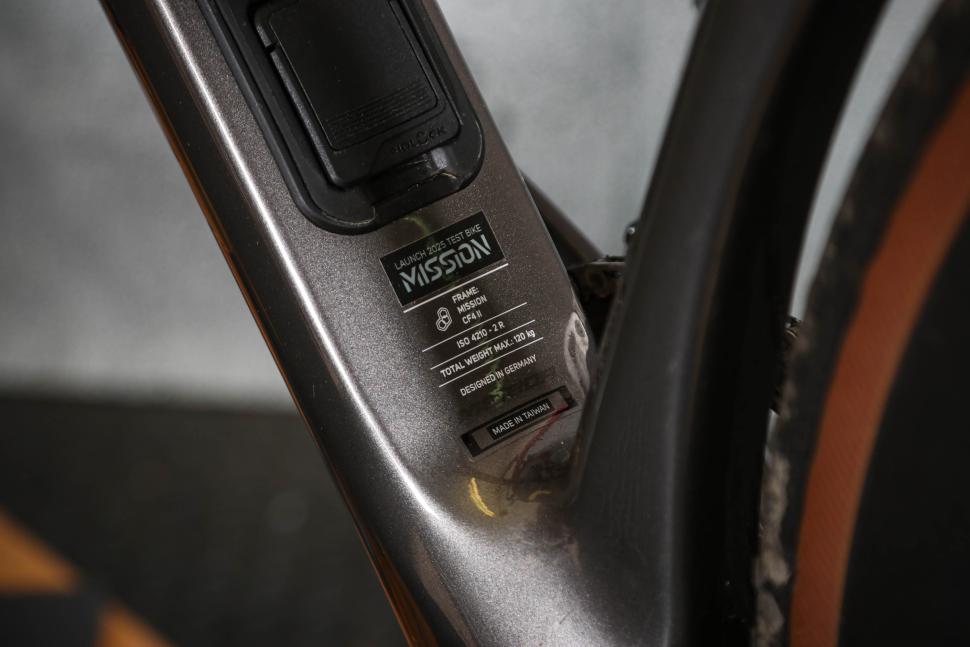
The fork is 400mm long with a 45mm offset, and when you add all of this together you get stack and reach figures of 569mm and 391mm respectively. It’s safe to say there are no surprises when it comes to the numbers.

The wheelbase is 1,013mm in total and the standover height measures 798mm.
Merida Mission 9000: Groupset
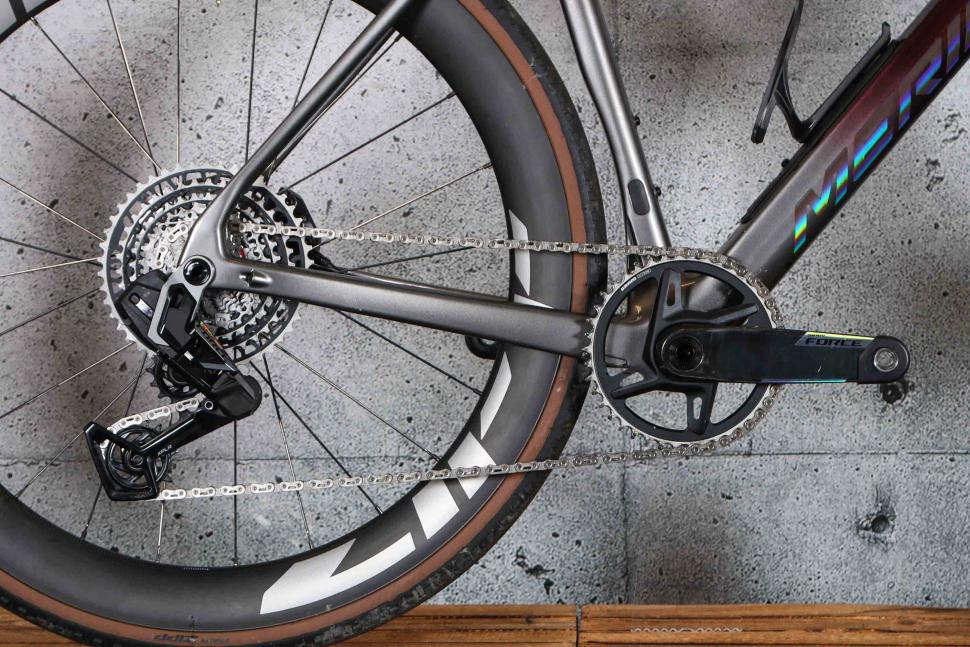
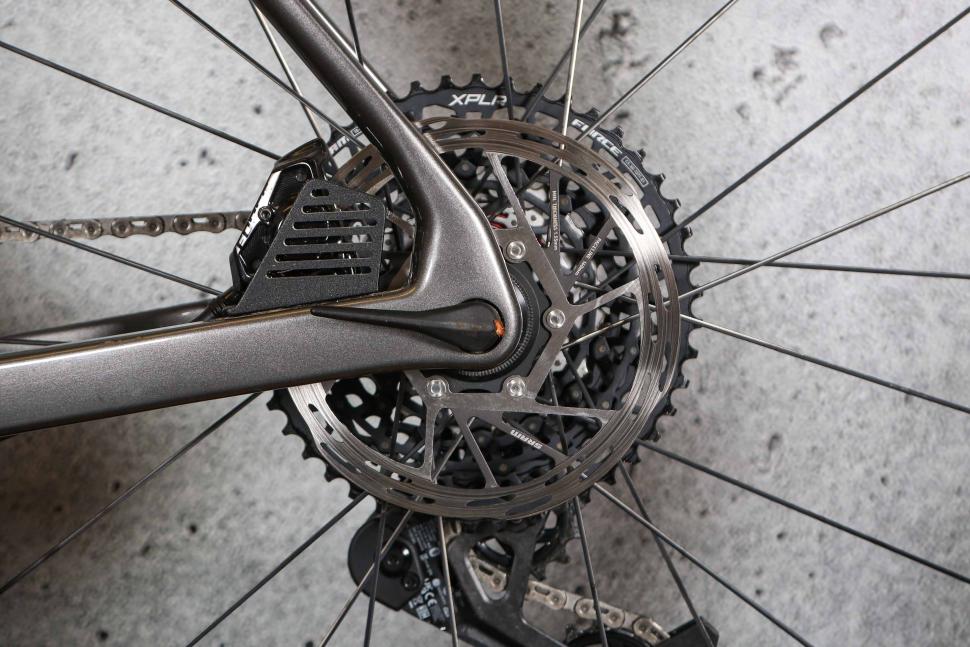
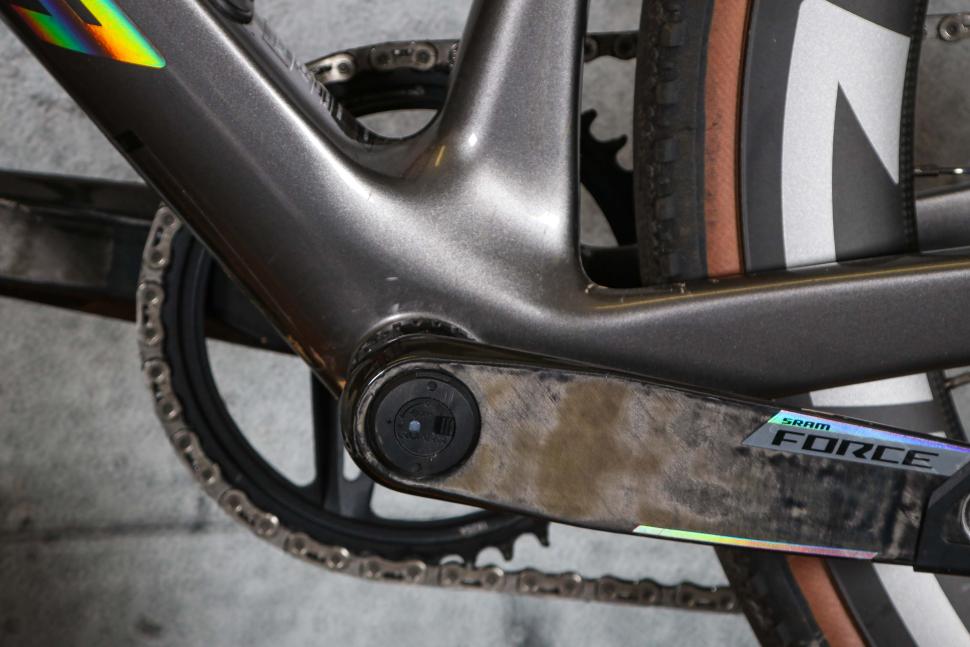
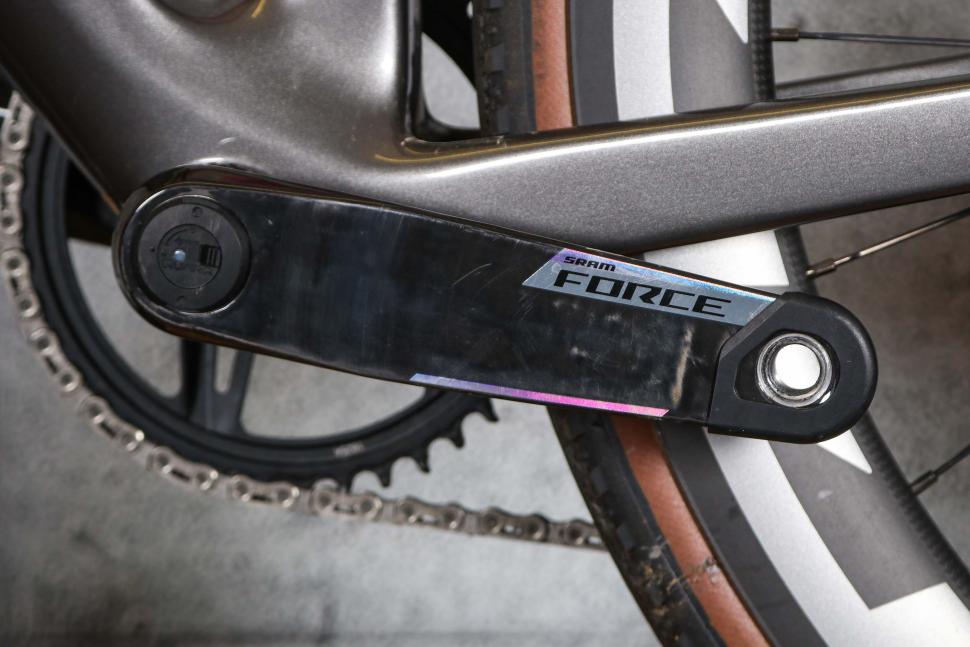
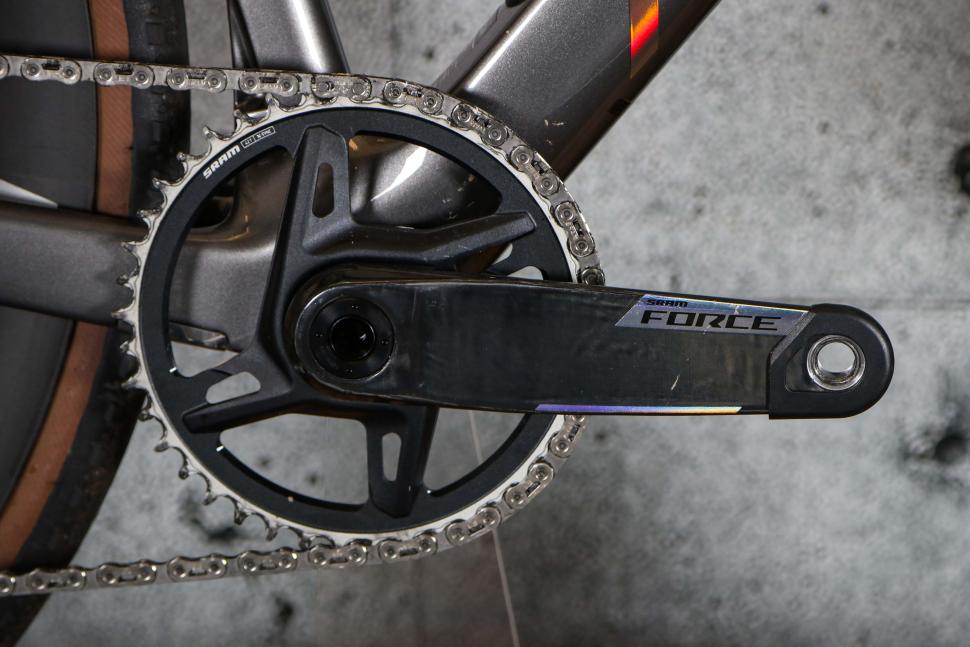
This 9000 model comes with SRAM’s latest 13-speed Force XPLR AXS gravel-specific groupset, upping the sprocket count of its 12-speed predecessor.
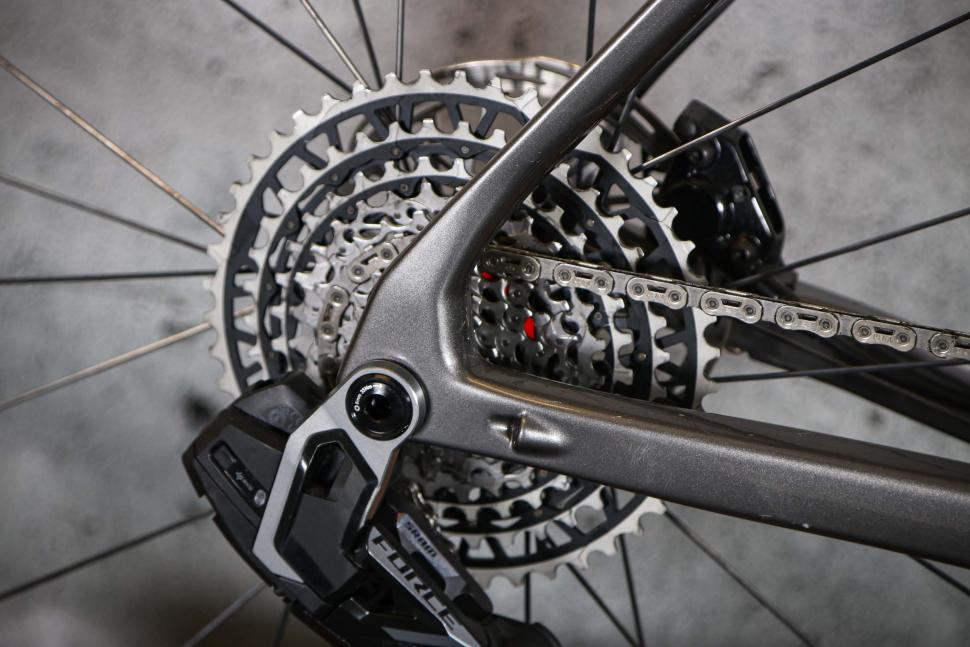
Here we get a 44-tooth crankset with a power meter included mated to a 10-46T cassette. That’s a big old spread of gears, and one well suited to the top-end speed achievable on the Mission without sacrificing climbing gears.
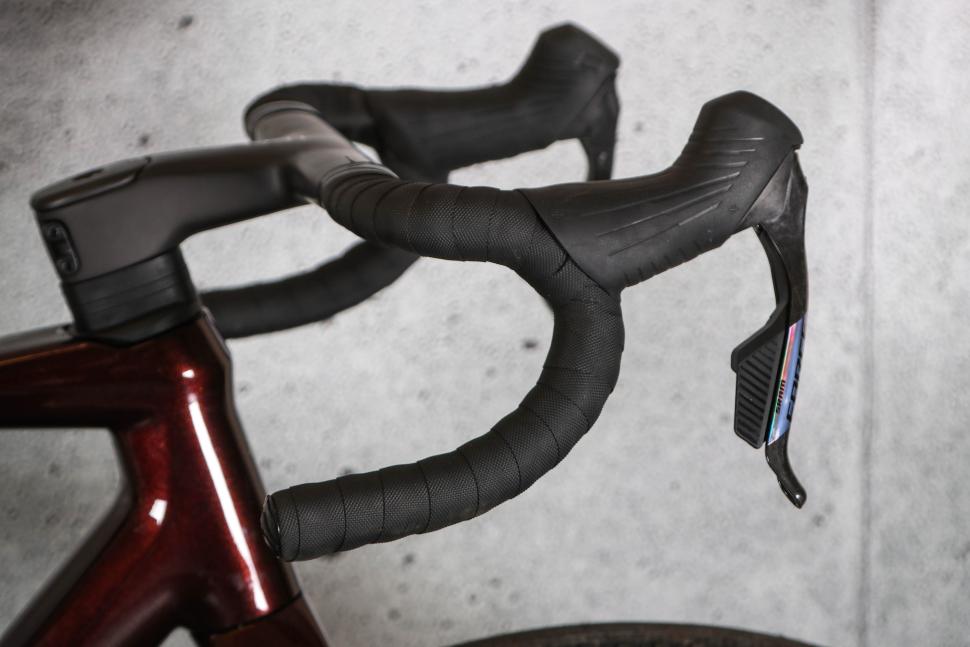
One of the biggest changes to this new Force is the ergonomics of the lever units, which are now much more comfortable and natural feeling in the hands.
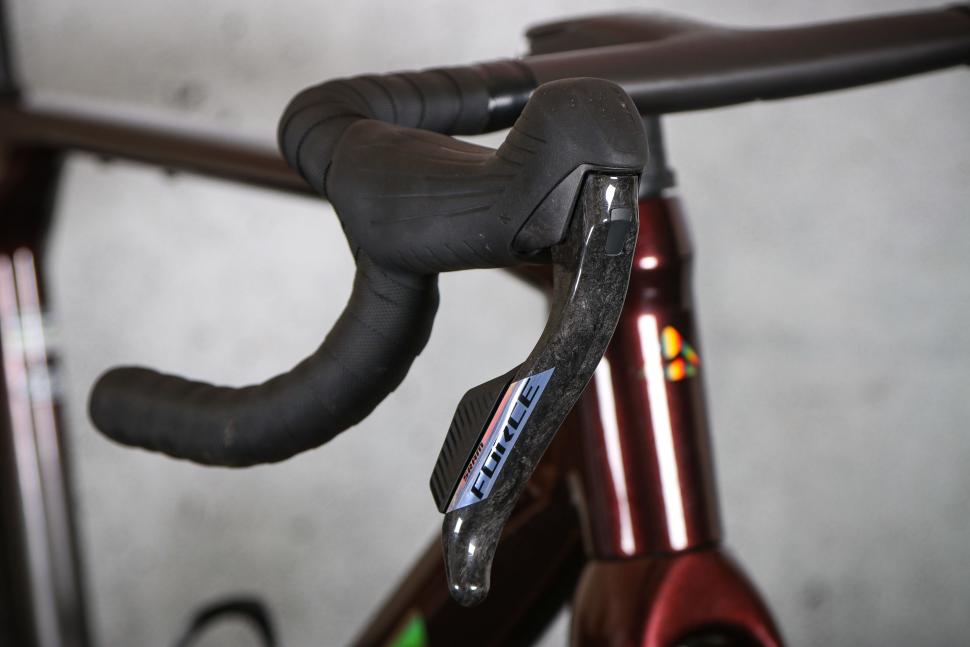
Braking power has also been increased through a new internal layout of the shifters, and the gear shifting remains crisp and fast.
I’ll be writing a full review on this groupset very soon, which will include a lot more detail.
Merida Mission 9000: Finishing kit
A lot of the finishing kit comes from Merida, like the carbon fibre seatpost and the integrated cockpit.

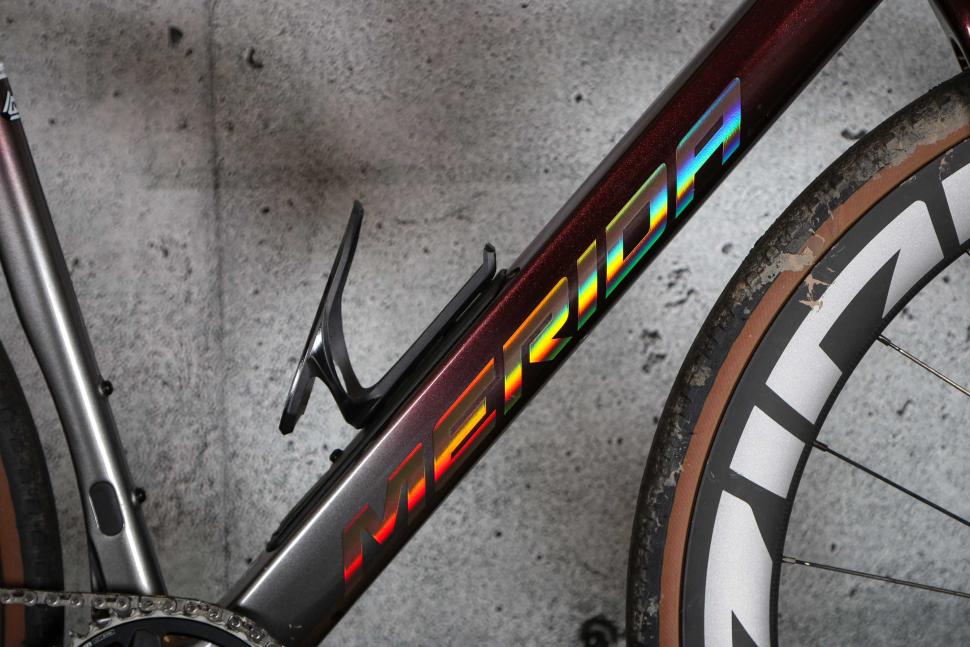
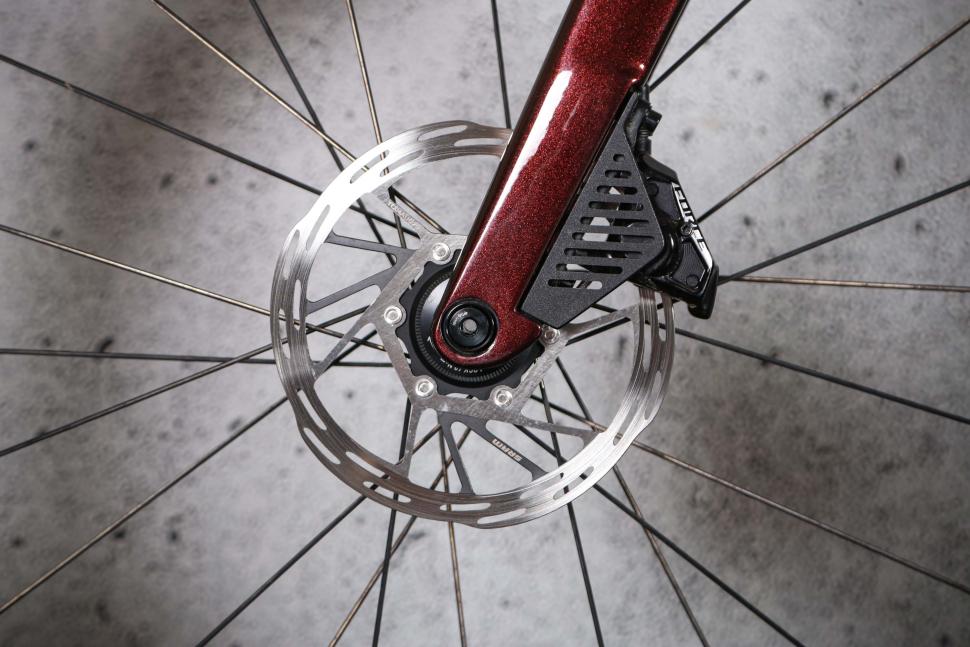
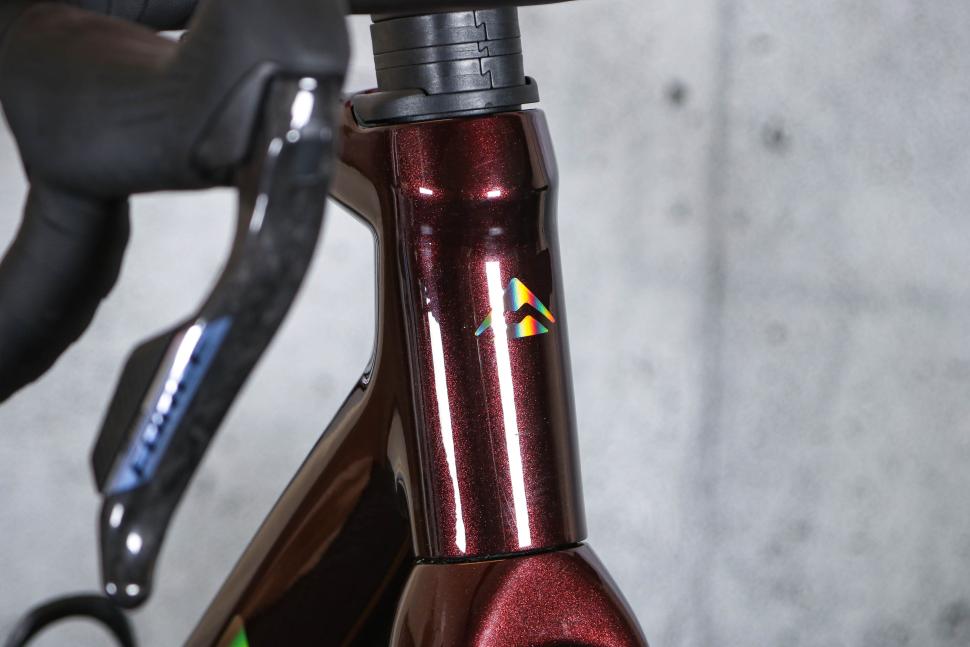
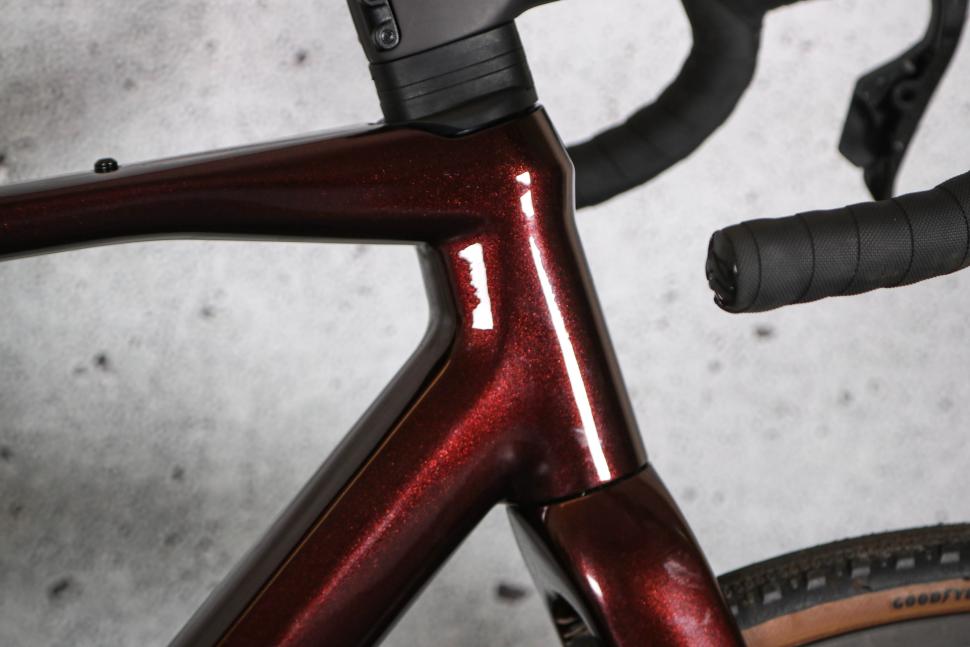
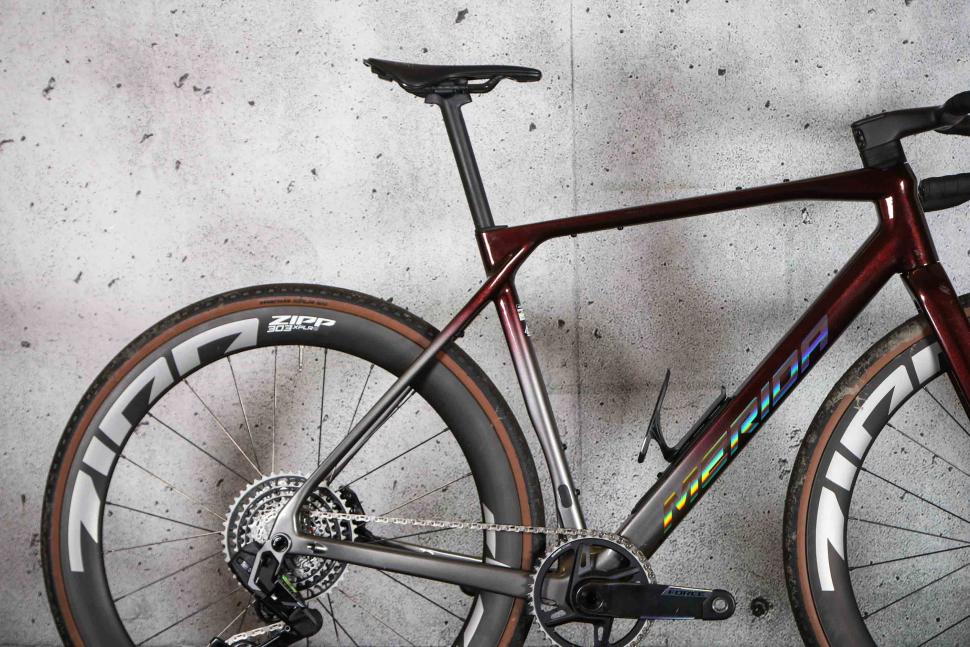

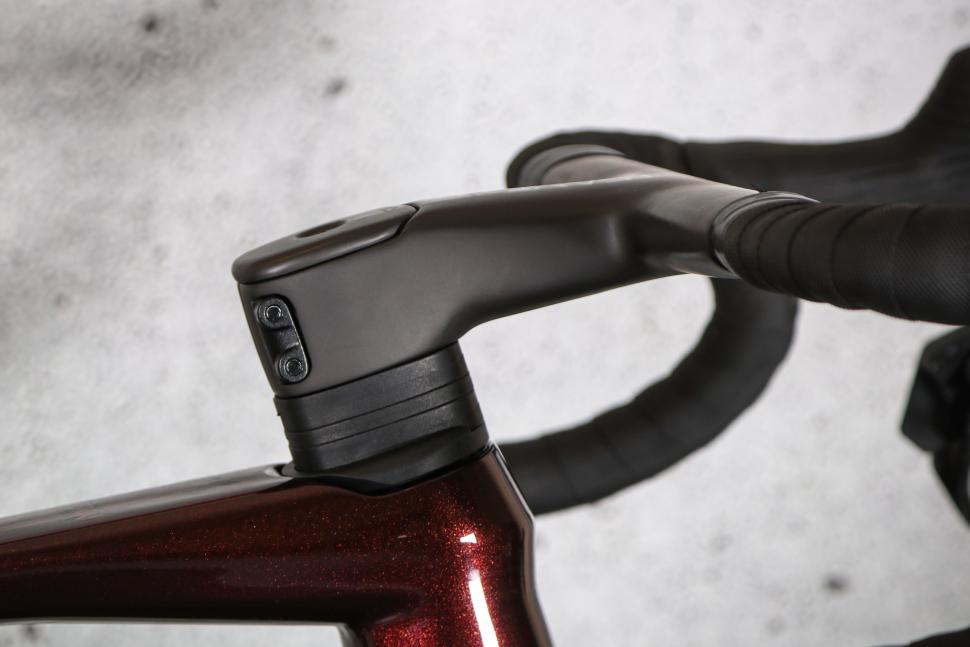
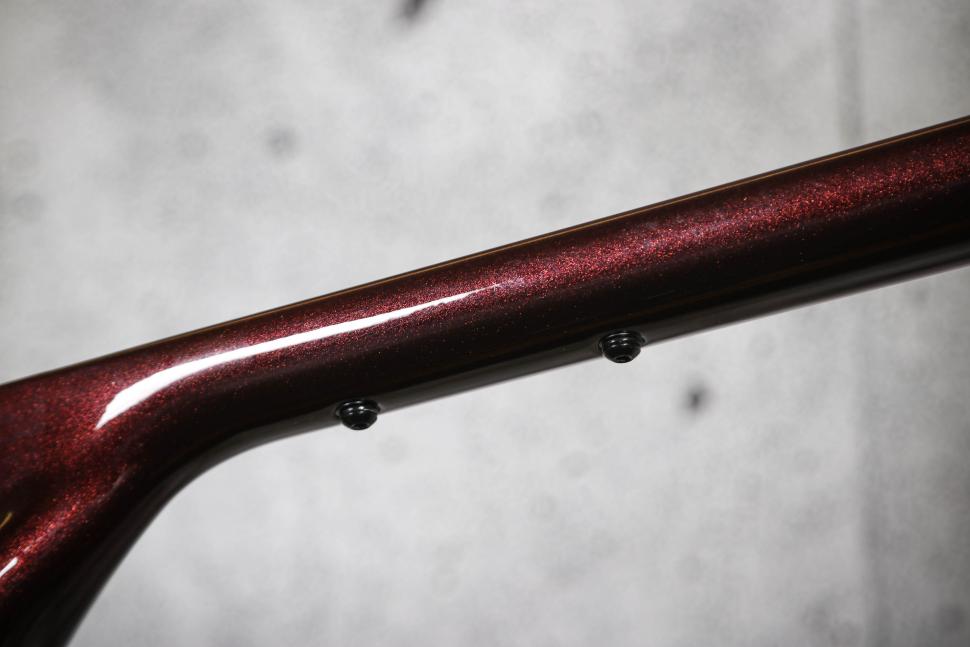


The one-piece stem and handlebar adds to the aero look and performance of the Mission, giving plenty of comfortable hand positions. The only time I find bars like this a bit of a pain is this time of the year, when they are generally impossible to fit a front light to, especially the ones I use from Exposure which require a completely round handlebar.
From a performance point of view, though, it can’t be knocked. Different sized bikes get different width bars: 380mm for XXS to S, 400mm for M and L, and 420mm on the XL. Stem length is 90mm, 100mm and 110mm over the same frame sizes.
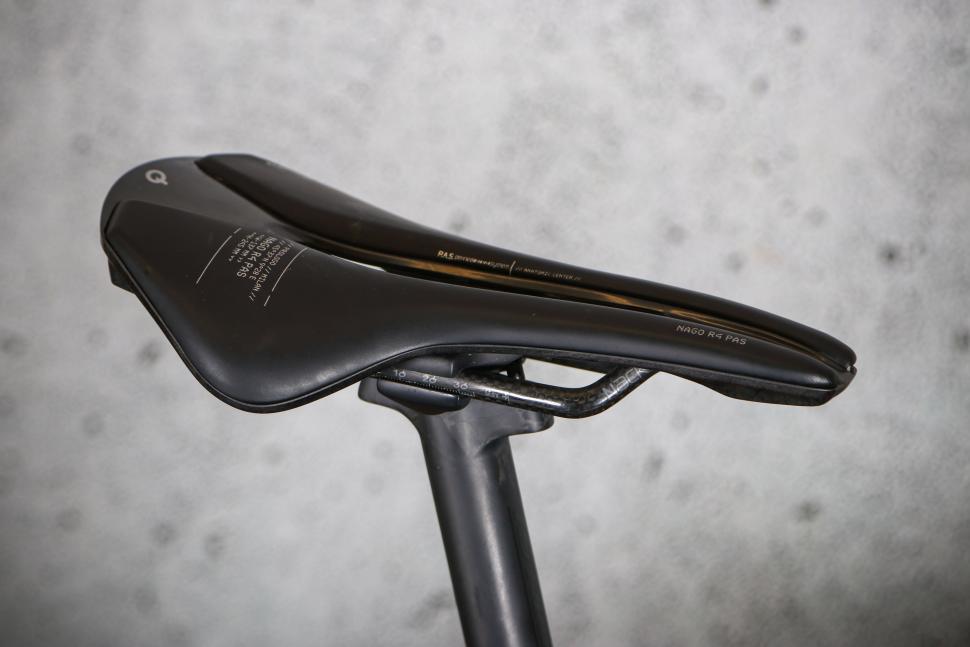
The Prologo Nago R4 PAS saddle is an excellent race seat, and one that I found very comfortable.
Merida Mission 9000: Wheels & tyres
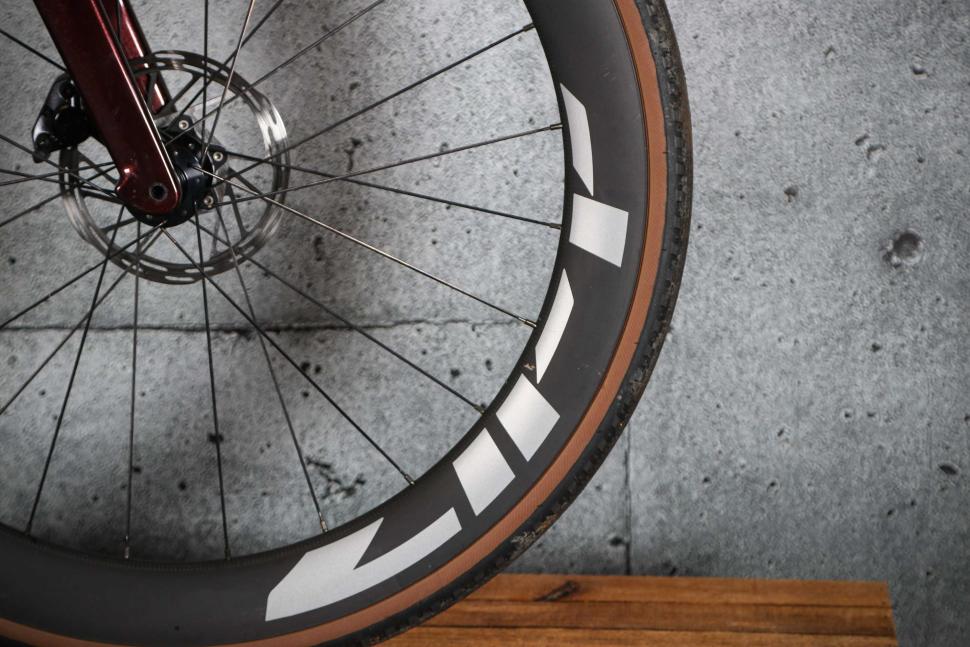
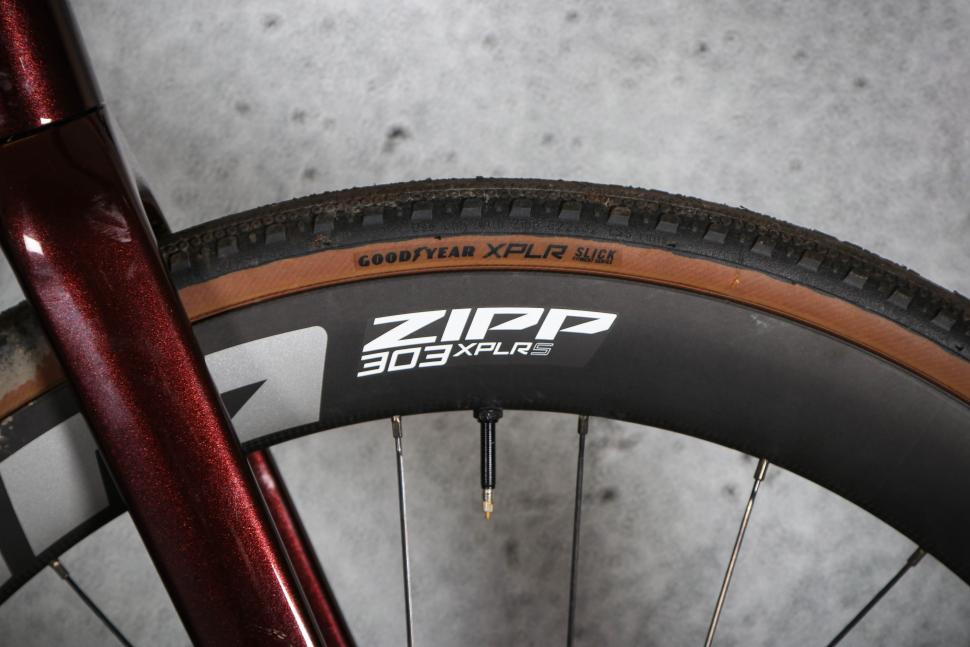
The wheels are Zipp’s 303 XPLR S which are gravel specific, with a 54mm-deep rim and an internal width of 32mm. Their claimed weight of 1,610g is decent for a set of deep-section wheels that need to stand up to some abuse, although not everybody will be enamoured by their hookless design.
In the early days of Zipp’s transition to hookless there was a limited number of approved tyres you could fit to them. But that has changed now, and Zipp’s list of approval covers pretty much all the main brands.
They ride very well, being comfortable for such a deep section design, and lateral stiffness is spot on for hard efforts.
Zipp has worked specifically with Goodyear to optimise tyre choice for the wheels, which is why we see the Mission come fitted with a set of XPLR Slicks. And very good tyres they are indeed – supple and grippy enough for road use, while robust enough for gravel.
Goodyear also offers a mid-treaded Inter model, and there are plenty of good 40mm gravel tyres on the market if you want something with a deeper tread for winter riding.
Merida Mission 9000: Value
The Mission range consists of five bikes, with the 1x models going from £3,400 for the Rival XPLR AXS-equipped 6000, to £5000 for this 9000, and £7,000 for the range-topping 10K model which gets SRAM Red XPLR AXS and Zipp’s higher spec 303 XPLR SW wheels. There are also two 2x models in the range, kicking off with the 4000 at £2,250 (Shimano GRX 400 2×10-speed mechanical) and the 7000 with GRX Di2 and Reynolds ATR TSS carbon wheels for £4,600.
While none of these are exactly cheap bikes, I do believe they represent pretty good value for money in the current market.
For instance, I’ve recently been riding the Vielo V+1 2.1 Race Edition which has much larger tyre clearances and is more gravel focused, though a race machine (clue’s in the name). With SRAM Force XPLR AXS and DT Swiss aluminium wheels it’s priced at £5,999, and you’d need to add a grand to that to incorporate the Zipp wheel upgrade and power meter. Even with Merida’s market scale (one of the largest manufacturers vs a small brand) that is still very impressive.
Cervelo’s 2026 version of the Aspero I reviewed last year is intended as a gravel race machine but can now take bigger tyres (45mm). For the same money as the Mission 9000 you can have the Rival XPLR specced model – a tier down from Force – with Reserve wheels and a carbon handlebar.
And Specialized’s Crux is designed as a lightweight gravel racer, but while it will take up to 47mm tyres, it coming with 40mm rubber as standard says a lot about its weight-saving intentions. The Pro model comes with the same SRAM Force XPLR groupset as the Mission and some carbon Roval wheels, but it will cost you £6,999. Our video ed Liam has also built up his Crux Pro as a do-it-all road, gravel and cyclocross bike.
A worthy mention on the allroad front is Boardman’s ADV range. I rode the 9.2 model in 2024 and was impressed with its ride quality and value. The range-topper is the 9.6, which uses the same C10 carbon frame and fork but comes with Zipp 303 S wheels and a 2x GRX Di2 groupset. It costs £3,800, which compares very well with the similarly specced Mission 7000 at £4,600.
For more options, check out our guides to the best allroad bikes, the best gravel bikes and the best endurance road bikes.
Merida Mission 9000: Conclusion
If you’re here reading this, I’m going to assume that you are a road rider, and if you want that kind of DNA in your gravel bike, or at least one that isn’t tied to the smooth stuff, then this is definitely the bike for you. It maintains the efficiency and ride style of a road racer, but with the versatility and poise needed for adventures on looser surfaces. Not only that, but it is well made, well specced and well designed while still managing to come in at a good price.
> Buy now: Merida Mission 9000 for £5,000 from Damian Harris Cycles
Verdict
A road racer’s gravel machine – versatile, fun and extremely capable
All the deals displayed on our review pages are pulled from a constantly updating database feed of the best affiliate deals available. The criteria for deciding on what are the best deals is who is offering the lowest, delivered price. In most cases we will be showing the very best deal available online, but sometimes you may be able to find an item cheaper. If you can please feel free to post a link in the comments box below. To find out more about affiliate links on road.cc click here.
road.cc test report
Make and model: Merida Mission 9000
Size tested: Medium, 560mm
About the bike
List the components used to build up the bike.
Wheelset: Zipp 303 XPLR S
Tyres: Goodyear XPLR Slick designed for Zipp 40mm
Crankset: Sram Force XPLR AXS Power Meter
Bottom Bracket: Sram DUB BSA Road Wide
Cassette: Sram Force XPLR XG-1371
Chain: Sram Rival
Shifters: Sram Force
Rear Derailleur: Sram Force XPLR
Brakes: Sram Force XPLR
Rotors: Sram Paceline RT-PLN-A2
Headset: MERIDA TEAM SL
Stem/Handlebar: MERIDA TEAM ONE-PIECE GR
Grip: MERIDA ROAD EXPERT
Seatpost: MERIDA TEAM SL II
Saddle: Prologo Nago R4 PAS
Seat Clamp: MERIDA EXPERT
Tell us what the bike is for and who it’s aimed at. What do the manufacturers say about it? How does that compare to your own feelings about the bike?
Merida says, “It’s fast and responsive yet highly controllable when the going gets rough. Our Mission 9000 features our newly created CF4 Mission frame with race-focused geometry that doesn’t Compromise on control when your next gravel race throws in a washboard descent for good measure. Our new Mission truly embodies its ‘fast on any surface’ intentions. It’s a gravel race bike that takes key geometry and frame elements from the Scultura Endurance and Silex and adds road racing DNA to deliver a fast and responsive ride on pretty much any surface.”
It’s responsive like a race bike but with a lot of added versatility.
Where does this model sit in the range? Tell us briefly about the cheaper options and the more expensive options
This model sits second from the top in the line-up. The range-topper costs £7,000 while the entry point is £2,250.
Frame and fork
Tell us about the build quality and finish of the frame and fork?
Excellent build quality and finish throughout.
Tell us about the materials used in the frame and fork?
The frame and fork are both manufactured from carbon fibre. The frame grade is called CF4 by Merida.
Tell us about the geometry of the frame and fork?
The geometry is race orientated, pointing to its road bike influence, while things like fork length and wheelbase are from the gravel side of things.
How was the bike in terms of height and reach? How did it compare to other bikes of the same stated size?
Reach and stack are exactly what I’d expect to see for this kind of bike.
Riding the bike
Was the bike comfortable to ride? Tell us how you felt about the ride quality.
Comfortable thanks to compliance being designed into the frame and fork.
Did the bike feel stiff in the right places? Did any part of the bike feel too stiff or too flexible?
The Mission has excellent stiffness where it needs it, most notably around the BB area and lower parts of the frame.
How did the bike transfer power? Did it feel efficient?
It’s an efficient bike thanks to a low weight and a wide-ranging groupset.
Was there any toe-clip overlap with the front wheel? If so was it a problem?
No.
How would you describe the steering? Was it lively neutral or unresponsive? Neutral overall.
Tell us some more about the handling. How did the bike feel overall? Did it do particular things well or badly?
On the road the Mission is fun to ride, with neutral handling; off road, that translates into quicker handling on the looser surfaces without becoming a handful.
Which components had the most effect (good or bad) on the bike’s comfort? would you recommend any changes?
I’m a big fan of the Prologo saddle shape, and the aero handlebar has many comfortable hand positions.
Which components had the most effect (good or bad) on the bike’s stiffness? would you recommend any changes?
Zipp’s wheels have impressive lateral stiffness and I found the handlebar firm enough to resist hard efforts out of the saddle.
Which components had the most effect (good or bad) on the bike’s efficiency? would you recommend any changes?
The SRAM Force groupset being 13 speed gives a wide-ranging groupset for a 1x setup.
The drivetrain
Tell us some more about the drivetrain. Anything you particularly did or didn’t like? Any components which didn’t work well together?
The latest version of SRAM Force XPLR has improved ergonomics, which is great from a comfort and usability point of view.
Wheels and tyres
Tell us some more about the wheels.Did they work well in the conditions you encountered? Would you change the wheels? If so what for?
Good quality wheels and a decent weight for the amount of material they incorporate in the rims. They do bring a decent aero advantage too.
Tell us some more about the tyres. Did they work well in the conditions you encountered? Would you change the tyres? If so what for?
Tough tyres that worked both on the road and away from it without too many compromises.
Controls
Tell us some more about the controls. Any particularly good or bad components? How would the controls work for larger or smaller riders?
A good choice of components that worked well with the bike’s purpose and design.
Your summary
Did you enjoy riding the bike? Yes
Would you consider buying the bike? Yes
Would you recommend the bike to a friend? Yes
How does the price compare to that of similar bikes in the market, including ones recently tested on road.cc?
It is well priced overall compared with the other bikes I mention in the review that I consider to have a similar riding style.
Use this box to explain your overall score
A stunning bike straight out of the box, especially for the price. It blends the ability to be used both on road and gravel without compromise, while being a lot of fun to ride.
About the tester
Age: 46 Height: 180cm Weight: 76kg
I usually ride: This month’s test bike My best bike is: B’Twin Ultra CF draped in the latest bling test components
I’ve been riding for: Over 20 years I ride: Every day I would class myself as: Expert
I regularly do the following types of riding: time trialling, commuting, club rides, sportives, fixed/singlespeed,


16 thoughts on “Merida Mission 9000”
It’s quite brown. I think
It’s quite brown. I think that in general, down-tube storage is a gimmick. One piece bars and stem are pointless on a bike like this. And where’s the third bottle boss gone? Other than that, this is probably as much gravel/winter bike as anyone needs. Although I worry about hookless rims, and as someone with a penchant for wrecking rear mechs whilst gravelling (3 and counting), having an expensive wireless mech out back bothers me.
SecretSam wrote:
As the proud owner of (amongst others) what I like to think of as one of the original gravel bikes before gravel bikes were invented, the Specialized Tricross, I’ve always thought that they should be robust, stripped back, ready for anything, takes a licking and keeps on kicking type bikes, loading a bike designed for the rough stuff with delicate and very expensive electronic levers and mechs has always seemed to me to be asking for trouble and big bills.
A lovely bike I’m sure but if
A lovely bike I’m sure but if it really does comes fitted with a 44×36 lowest gear, that’s really not low enough for a bike with off-road pretensions.
It was described as “A road
It was described as “A road racer’s gravel machine”, presumably they expect their gravel to be road like.
If they’re in the UK, it’s
If they’re in the UK, it’s probably more likely that they expect their roads to be gravel-like.
Most likely a typo, the
Most likely a typo, the largest rear cog is in fact 46, not 36.
Rendel Harris wrote:
Yes, a typo. It does indeed have a 46-10T cassette. I’ve edited the text to reflect that.
Sounds good, but the fork
Sounds good, but the fork crown height makes the bike look awkward. … I’d buy the Cervelo Aspero.
Good review. As Merida own
Good review. As Merida own and make Specialized, it is marketing that make us pay double the price for the big S. Any bike shops that work on both can see the sisterhood in brands with the same bearing and internals and dropout over the two brands.
Significant minority
Significant minority stakeholder. Not owner.
I’m not a Spesh fan by a long shot, but I think there’s considerably more than “marketing” separating the two brands. Sharing bearings and dropouts (which in most cases are catalogue items anyway) means nothing. Not sure what you mean by “internals”. My bikes mostly have air internally.
KDee wrote:
How they feel in themselves?
I don’t understand why, when
I don’t understand why, when paying £5k for a bike, you can’t even choose the colour.
I don’t understand why, when
I don’t understand why, when paying £5k for a bike, you can’t even choose the colour
Because: the people for whom that’s important don’t buy the bike!
That’s leaving sales on the
That’s leaving sales on the table. Odd.
Whilst as a customer, being
Whilst as a customer, being able to choose the colour appeals, I can see that for the manufacturer and retailers, more colours = more SKUs, and that’s a problem (see e.g. https://road.cc/content/tech-news/what-treks-rightsizing-plans-mean-bike-industry-307233)
This looks like the perfect
This looks like the perfect allroad/winter bike for me.
Racy yet sensible geometry, mudguard mounts and plenty of others, light, BSA bottom bracket and love the in-frame storage.
I’d have liked a frame only option so I can fit what I want, but the Mission 4000 is stonking value, just a horrible colour.
Definitely looking at one of these in 2026.