



Bikes are stupidly expensive these days, so some people try to maximise the amount of riding they can do with one bike. Which is exactly what I’ve done. This is my heavily customised gravel, cyclocross and road bike, all in one package. Take that, N+1!
As everyone has a different idea of what would be required from such a bike, I am of course quite prepared for ‘constructive feedback’ in the comments section. Without further ado, let’s get into my build…
Frame
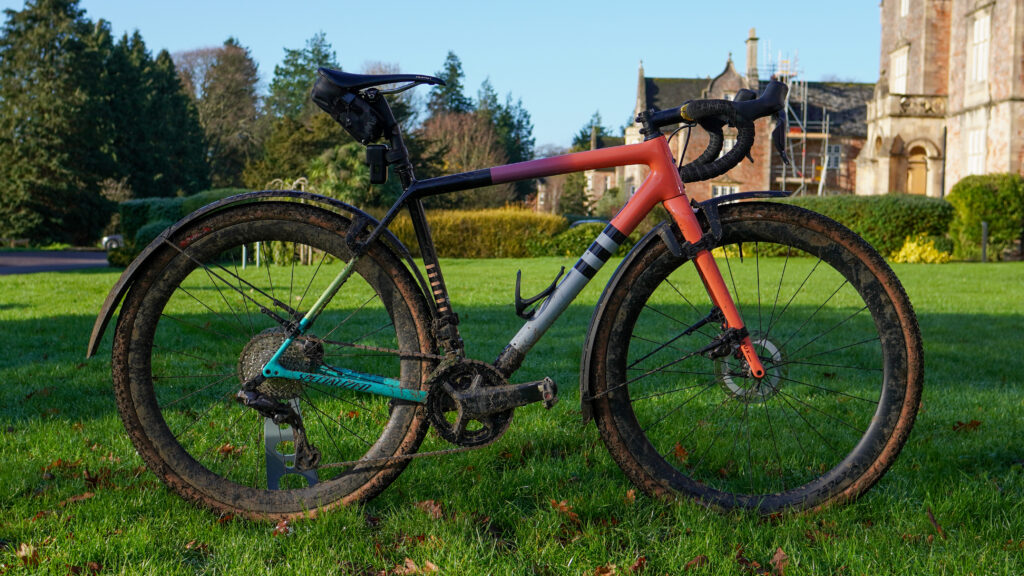
The bike starts with a Specialized Crux Pro. I had the S-Works model on test, and loved it, so with my road/gravel/cyclocross intentions, it was instantly top of my list.
I was, however, keen to avoid the S-Works frame. Firstly, the £4,499 price is out of my price range. Secondly, I prefer the ride of Specialized’s non-S-Works bikes.
The brand’s 10r carbon frames might be a little heavier and fractionally less stiff, but I find them to be noticeably comfier. I also liked the jazzy paint which, at the time, was reserved for this Pro frameset.
In terms of features, the Crux has little to cover, and I like that. 50mm tyres can be fitted (unofficially), there is only one addition mounting point located under the down tube, and you’ll find no internal frame storage.
Finally, with a geometry which doesn’t look out of place on some road bikes, the bike is great fun to ride, though things can get a little jittery on technical descents.
Groupset
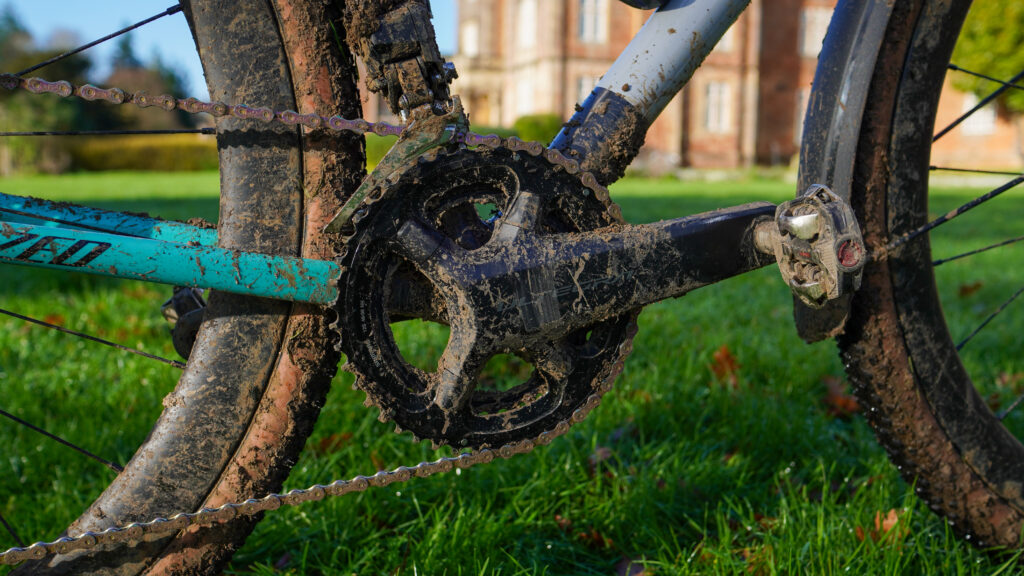
My groupset buying decision was largely influence by lever ergonomics. I prefer Sram’s 1X systems, but I chose my groupset before the new lever shape was released. Shimano’s GRX levers also feel funny in my hands, so it was time for the tamest rule-breaking of all time.
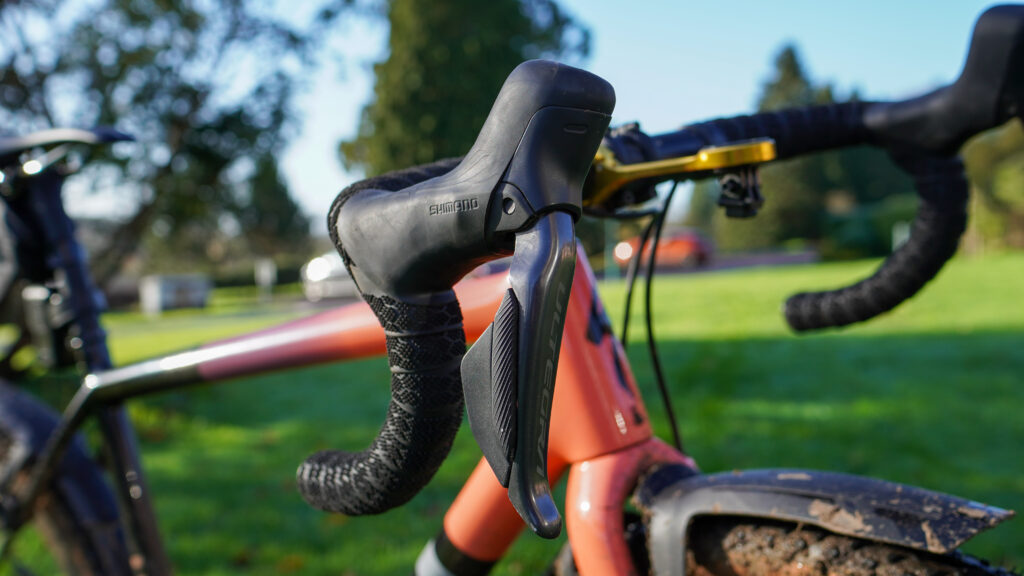
I have chosen to use Shimano 12-speed Ultegra levers with their GRX Di2 derailleurs. Before I’m locked away in HMP Shimano, I have my reasons…
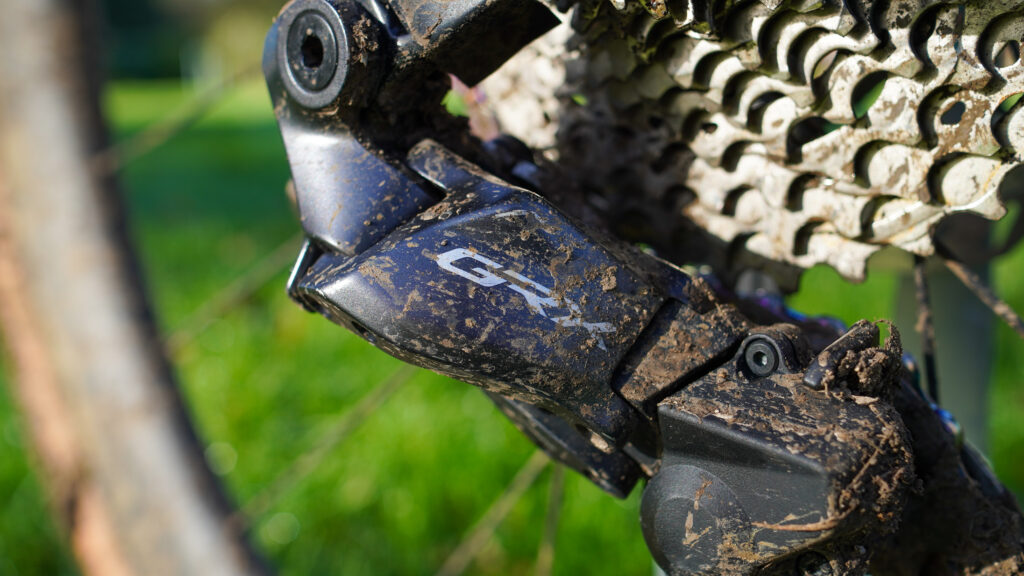
As mentioned, I prefer the ergonomics of Shimano’s road levers. But their gravel derailleur have two benefits. The rear derailleur features a clutch, which I’ve found to be excellent for chain retention and reducing chain slap.
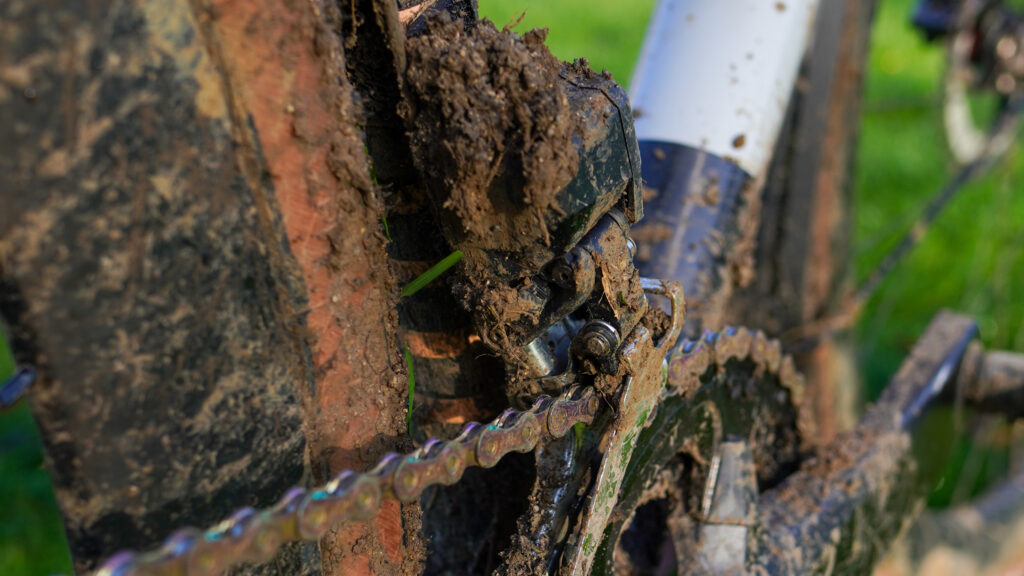
But the front derailleur allows for marginally more mud clearance on the rear wheel. At the back end of a muddy cyclocross race, I’ll take that.
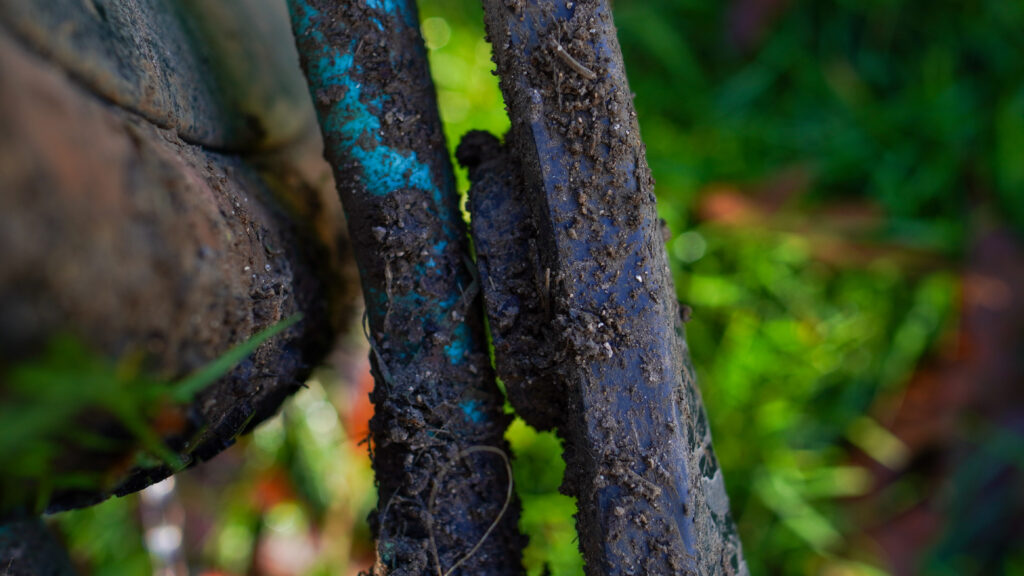
I chose a double chainring setup, mounted to an Ultegra 12-speed crank. On the non-driveside, I have a 4iiii power meter, though the clearance for the pod is super tight.
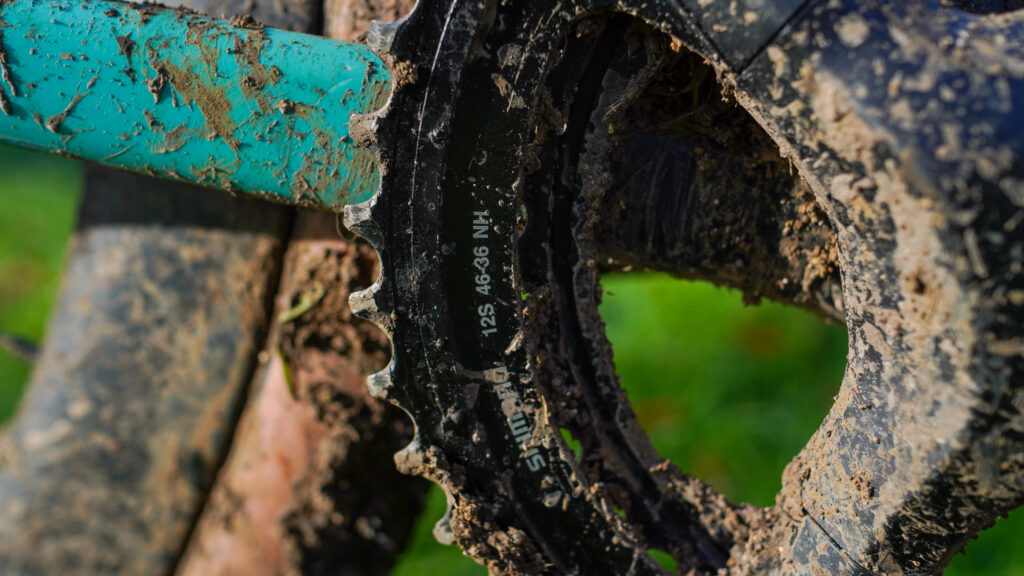
The only change I can see myself making to the setup is to get a 52T outer chainring for faster road and gravel rides.
Wheels
When it came to using one bike for multiple disciplines in the past, my main problem was always a lack of will to swap tyres. As such, I compiled three wheelsets with discipline-specific tyres.
For road duties, I chose Roval’s Alpinist CL II, mostly because I had them from another bike. Onto their 33mm deep rims, I mounted a set of 32mm Continental GP5000 AS TR tyres. It’s a great setup for the back lanes and mixed weather, both of which I tend to come across when commuting.
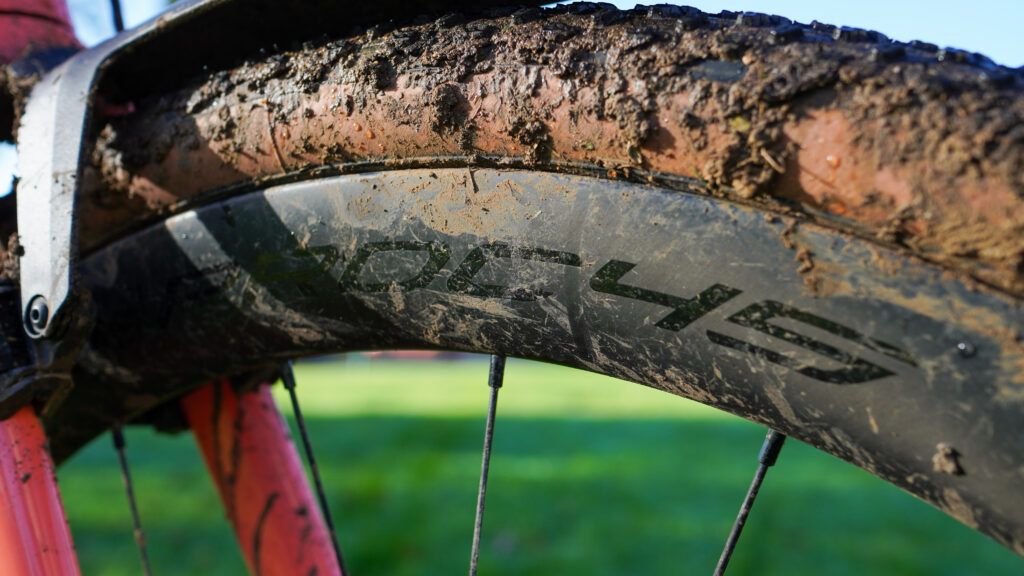
But my main setup has been the gravel wheels. The Yoeleo C45 DB Pro NxT have a 27mm internal rim width, supporting tyres from 35-53mm.
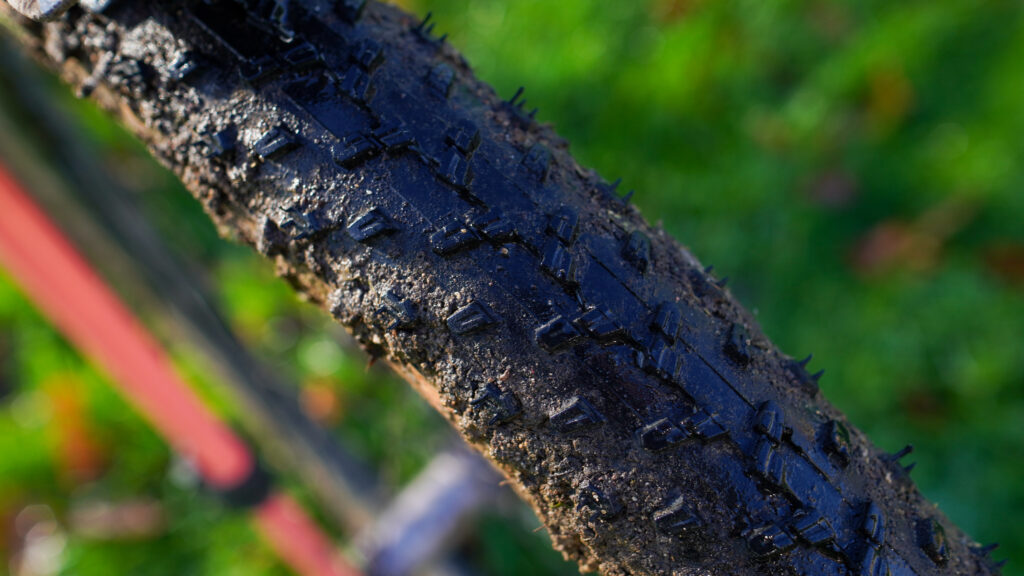
Set up with 40mm Vittoria Terreno T90 tyres, I’ve been happily riding muddy cyclocross races, loose gravel and even some roads without feeling the need to change tyres.
The least-used of my wheels are the WTB CZR i23 hoops with Dugast’s Typhoon and Rhino TLR tyres. While these are excellent wheels and tyres, I’ve found the gravel wheels and tyres to be better for local cyclocross races.
And if I headed to the National Trophy rounds, I’d fall foul of the 33mm maximum tyre size rule as the WTB wheels are rather wide internally.
Finishing kit
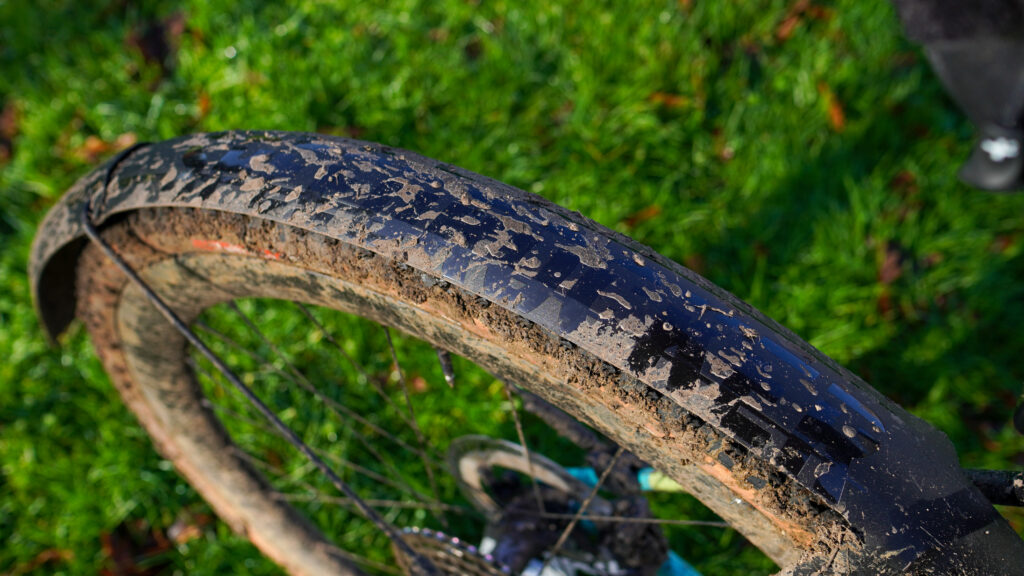
To wrap up this build, I’ll group everything else into the broad church that is finishing kit. Firstly, I have a set of SKS Speedrocker mudguards on test and I’ve been delighted with them. They cover up to 42mm tyres and do a great job keeping me relatively dry.
I won’t say more than that, you’ll need to come back for the full review; but so far, they’ve proven to be worth every penny.
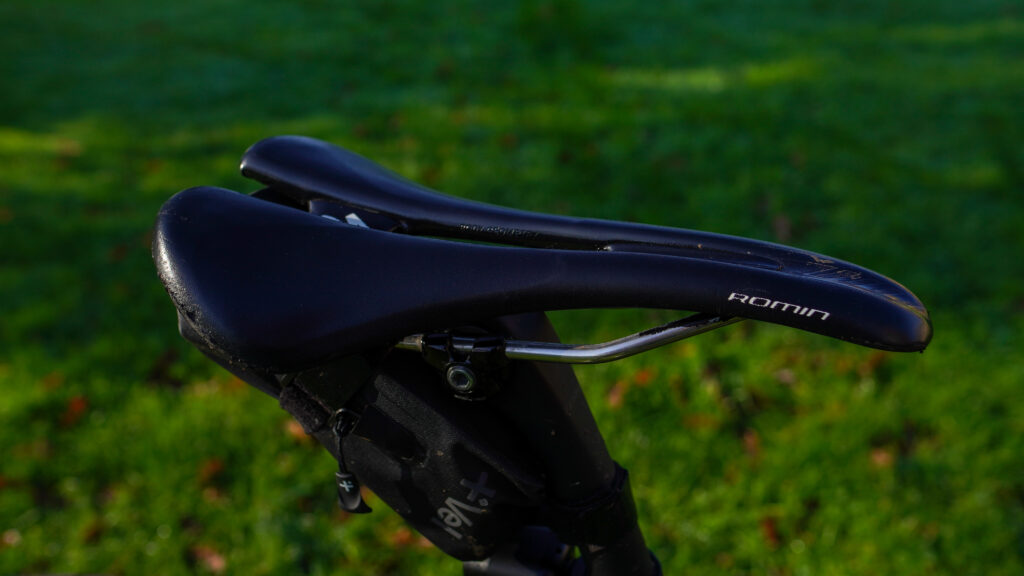
The Specialized Romin saddle has done over a decade of service and is still going strong. The Pro Vibe bar also came from my parts bin, having been purchased when I bought a Tarmac SL7 a few years ago.
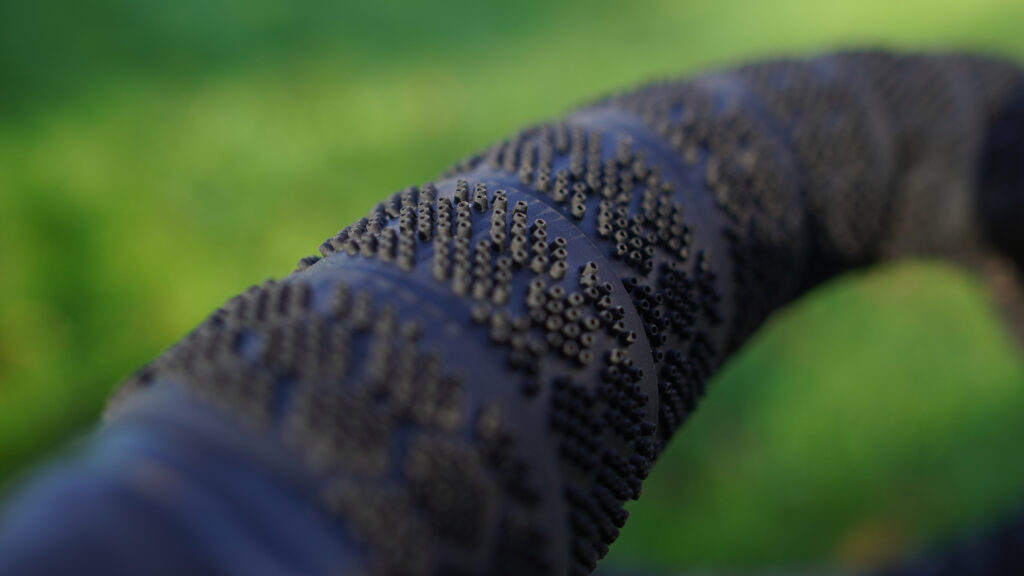
Wrapping the bars is Prologo’s 3D tape. It may not look the best, but the grip which it provides in bad weather is worth the weird aesthetic in my opinion.
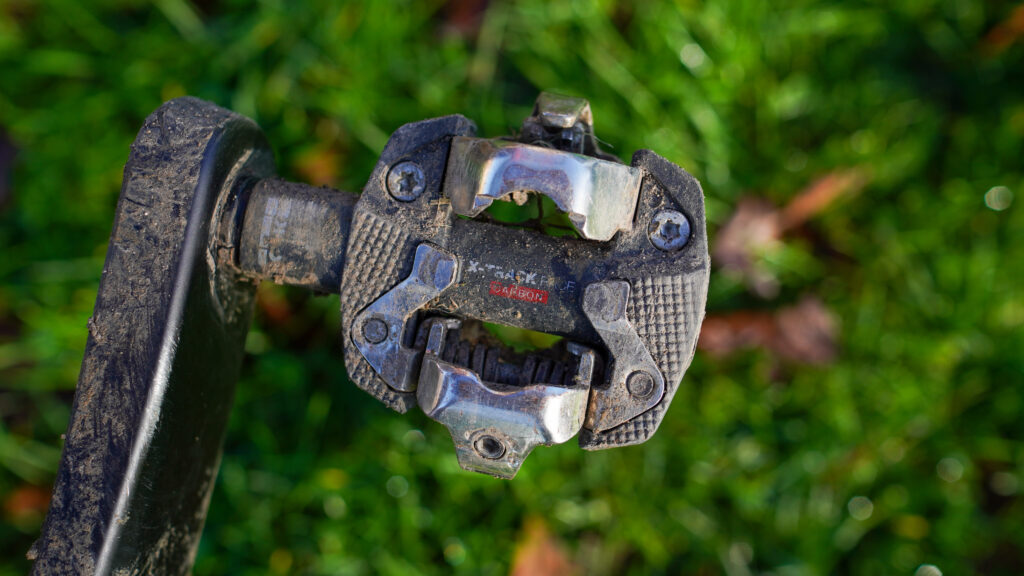
And finally, I’ve got a set of Look’s MTB pedals fitted. They clear mud well and go about their business of being pedals.
No suspension here
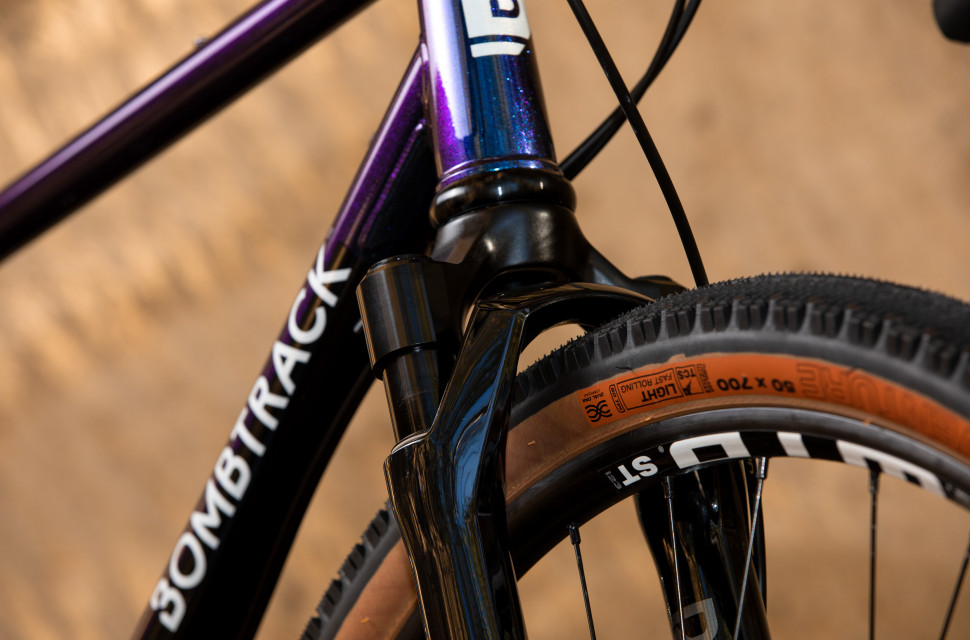
I must say that part of me was tempted to slap a suspension fork to the front end of this bike. As you can see, I didn’t, and I have two good reasons why.
Firstly, the practical benefit of a gravel suspension fork is limited to a very small part of my riding. They’re useless on the road and overkill on any gravel which is even moderately graded.
However, I will say that a suspension fork, as I rode on the Lauf Seigla and Canyon’s latest Grail, vastly improves my happiness over gnarlier terrain.
The second reason for avoiding a suspension fork is the price. If I wanted to fit one which looked good and didn’t add excessive weight, I’d be looking at spending around £1,000.
Add in smaller considerations, like weight, increased complexity and altered geometry and a suspension fork isn’t for me.
Price
Quite honestly, I’ve lost track of what this build, which has progressed over roughly three years, has cost me.
But I have done a breakdown of the build based on current market prices. These prices may be different in your region, but given this will do road, gravel and cyclocross, I wouldn’t say it’s too bad.
Frame – £2,500
Groupset – £999
Wheels
– Yoeleo SAT C45 DB Pro NxT Gravel – £760
– Roval Alpinist CL II – £1,200
– WTB CZR i23 – £900
Tyres
– Vittoria Terreno T90 Mud – £92
– Continental GP5000 AS TR – £130
– Dugast Typhoon / Rhino – £120
Bar – Pro Vibe – £197
Saddle – Specialized Romin – £30
Tape – £33
Pedals – £84
Total – £7,045
There are simple ways to make this build cheaper. Starting with a second-hand frameset or bike is an obvious one. The barrier to this is that you will have to do some mechanical work yourself, but when I was getting into the sport, this was the only way I could afford upgrades. It also taught me how to work on bikes, so in my eyes taking the scary plunge is worth it.
You could also easily economise on nearly every part. Alloy wheels over carbon, mechanical shifting rather than electronic and so on.
Having separate wheelsets for each discipline is certainly a luxury which could be sacrificed. You’d simply have to get good at swapping tyres.
Anyway, I hope you like my bike. It’s actually made my Aethos a little bit obsolete, and I’m about to buy a new frameset. Guesses in the comments as to what you think that might be…














20 thoughts on “I think I might have just made the perfect road, gravel and cyclocross bike all in one…”
Internal frame storage is
Internal frame storage is pointless and stupid. There, I’ve said it.
SecretSam wrote:
And yet other folk find it very useful. I hate to break it to you, but you don’t represent all humanity.
Internal frame storage is
Internal frame storage is great and beneficial. There, I’ve said it!
Liam, frameset only isn’t an
Liam, frameset only isn’t an option in the UK for a Crux Pro.
Not anymore, but that looks
Not anymore, but that looks like a 2022 frame, which was available as a frameset, e.g. https://www.certini.co.uk/bikes/bike-frames/2022-specialized-crux-pro-cyclocross-frameset–gloss-coral-lilac-fade-54cm__92083
A lovely bike no doubt but a
A lovely bike no doubt but a Specialized frame and wheels with Ultegra isn’t exactly radical or groundbreaking so calling it ‘unique’ is a stretch.
Perhaps not, but the mix of
Perhaps not, but the mix of Ultegra and GRX is probably a bit closer.
Pfft. In order to keep a 15yo
Pfft. In order to keep a 15yo CX bike (rim brake frame) reasonably up to date, I had a Tiagra RH brifter with a Deore disc brake on the front and Tiagra rear derailleur, 105 LH brifter, GRX front derailleur and cranks plus a TRP rear rim brake.
road.cc wrote:
If I were king, cycling journalists would be sentenced to one month of riding with no-show socks and spoke reflectors every time they make some nonsense comment like this.
Or, perhaps, make them do a blind test to see if they can really feel the difference between frames, the marginal difference in weight between tires/wheels, the way a 500 gram lighter bike accelerates like a rocket up a climb, the way aero wheels hold their speed, etc.
Lazy bike journalists riding
Lazy bike journalists riding blindfolded? Yes please
Or maybe just get off your
Or maybe just get off your high horse for a bit, and try some different bikes.
Yes, other parts have a big, and often easierly noticable influence on ride feel (like tires choice, tire pressure etc.), but that doesn’t mean differences in frame material, execution, design choices etc. can’t be noticed.
It’s easy enough to keep the other variants more or less the same, and still notice differences. I explcusively ride 90s mtbs, and I really do feel the differences between bikes. For example, a well made, good quality tubing steel frame feels lively and snappy, where a low tier, heavier, lower quality steel frame often feels ‘dead’, and just less fun to ride.
And an oversized aluminium frame usually feels harsh and unforgiving, compared to a thinner tubed bike – despite running the same type of wheels and tires etc.
I too sometimes fid it amusing hor some journalists claim to notice the tiniest of details, but that doesn’t mean that there aren’t any differences you can actually feel.
Don’t worry, I’ve got steel,
Don’t worry, I’ve got steel, titanium, and carbon bikes at home–in fixed gear, gravel, and race configurations–all of which I ride regularly. And I take my tire choice, inflation pressure, etc. very seriously. (And don’t even get me started on handlebars!) There certainly can be meaningful and perceptible differences in this stuff.
But I’ll go on the record stating that these journalists absolutely could not back up the vast majority of their subjective claims in blind tests. Like, really, if they could notice a 200g difference in component weights, they would be able to tell, just by feel, how much water is in their bottles while riding, which they obviously can’t do.
And, just to clarify: I too would choose the regular Specialized frame over the S-Works. Not because it feels better (I’ve got both and can’t tell the difference) but because it’s cheaper, the weight difference doesn’t matter to me, and it’s more durable.
I think we actually generally
I think we actually generally agree here; some/many journalists make claims that are a bit over the top.
What I don’t agree on, is that the criticism in your comment is warranted in this case. I don’t see anything here where the author makes dubious claims.
The example you gave, twice, about the auther claiming they can spot a relatively small weight difference (500gr or 200gr), just has no merrit. The author never claims that:
“I prefer the ride of Specialized’s non-S-Works bikes. The brand’s 10r carbon frames might be a little heavier and fractionally less stiff, but I find them to be noticeably comfier.”
He states he notices a difference in comfort, he does not claim he can feel the other bikes are lighter. If anything, he indicates the weight difference doesn’t really matter to him.
I think you’re right that we
I think you’re right that we’re probably more in agreement than not. But I’m still sticking to my guns in this case.
The weight references I made were all to journalists’ dubious claims in general, not to this article in particular. (Although, for the record, this author has made similar claims elsewhere, eg: “Upgrading to something such as Hunt’s 32 Aerodynamicist wheels would save you nearly 600g. In the context of a bike, that’s a significant saving you’re going to notice any time the road goes up.” Easily found that with just a few seconds of googling.)
And I maintain that, contra this article’s implied claim, the author would not reliably be able to tell a standard Specialized frame from an S-Works frame in a blind test where the bikes are otherwise built up exactly the same. Are there differences between those two frames that can be measured in the lab with precision equipment? No doubt. Will those differences translate into one frame being “noticeably comfier” in the real world? Not a chance. At best he’s conflating build differences with frame differences, and at worst it’s all just expectation bias.
(Does any of this really matter? Nah, it’s just bikes, after all. I hope I made my playful intent clear with my initial references to no-show socks and spoke reflectors as a sentence for journalistic misdeeds. I just think bikes would be even more fun if the folks talking about them took more care in the claims they made.)
To be honest I’ve landed on a
To be honest I’ve landed on a very similar system for myself but with a titanium frame rather than the Crux.
I run 36cm flared bars, 105 DI2 (moving to the GRX derailleur next season), some 165mm cranks on the way and then 3 wheelsets (one for road, one for cross, cheap alloy wheels for gravel/winter)
My only comment would be that
My only comment would be that if it was the perfect bike for those roles it would have mudguard eyelets and then you could fit proper ‘guards.
“Bikes are stupidly expensive
“Bikes are stupidly expensive these days…”
So I’ll buy one that costs as much as two.
Edit: On reflection, £7000 is about 14000 Australian fun tickets. My three bikes wouldn’t cost much more than that.
I arrived at something
I arrived at something similar via an indirect route.
In my case, this is just a gravel bike only, I don’t need a N=1 solution, and I have other bikes. However, if I really had to go to a single bike, this would be the one.
I got this in 2018, a Specialized Diverge (Comp E5 model, low to mid range). It was already comfortable with the first generation Future Shock sprung headset, but having predated Shimano GRX by over a year, it came with a 5800 105 groupset, average wheels, 32mm tyres, so despite its off-road pretensions at the time, it was still very road focussed. The brakes were on the average side, with TRP Spyre cable actuated discs, which kept the cost down, I paid £1350 for it new in 2018.
Since then over the years, it’s had Hunt 4 Seasons wheels, 38mm tyres, GRX800 groupset (hydraulic brakes, lower ratios, and I wanted to retain 2x), Hope floating rotors, Ergon BT Gravel bar tape.
This would be a great bike with multiple sets of wheels & tyres as an all year round single bike.
Pictured here just before starting a gravel sportive on Salisbury Plain.
This all boils down to the
This all boils down to the question: Is one bike with three wheelsets better than three bikes?
The answer is of course, it depends:
1. Price: At GBP7000 you could get 3 bikes. But one is more economical and environmentally friendly.
2. Compatabiliy: 3 x matching wheelsets and cassettes? No? Then forget it, the faffing when changing wheels will be a nightmare. 3 bikes sounds good.
3. How varied is your terrain? One bike might get frustrating. But if you choose the right one it could be good for everything. Just beware the trap of huge tyre clearance with skinny road tyres.
Crux is a good carbon option, but there are many others.
I ride my 3T Ultra with three wheelsets. 1. 700x32mm Road. 2. 700x44mm Gravel. 3. 650b with 2.1″ mtb tyres. It’s excellent.
I would like to introduce a
I would like to introduce a third option: three bikes each with three different wheelsets.