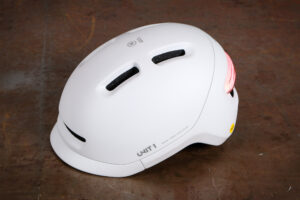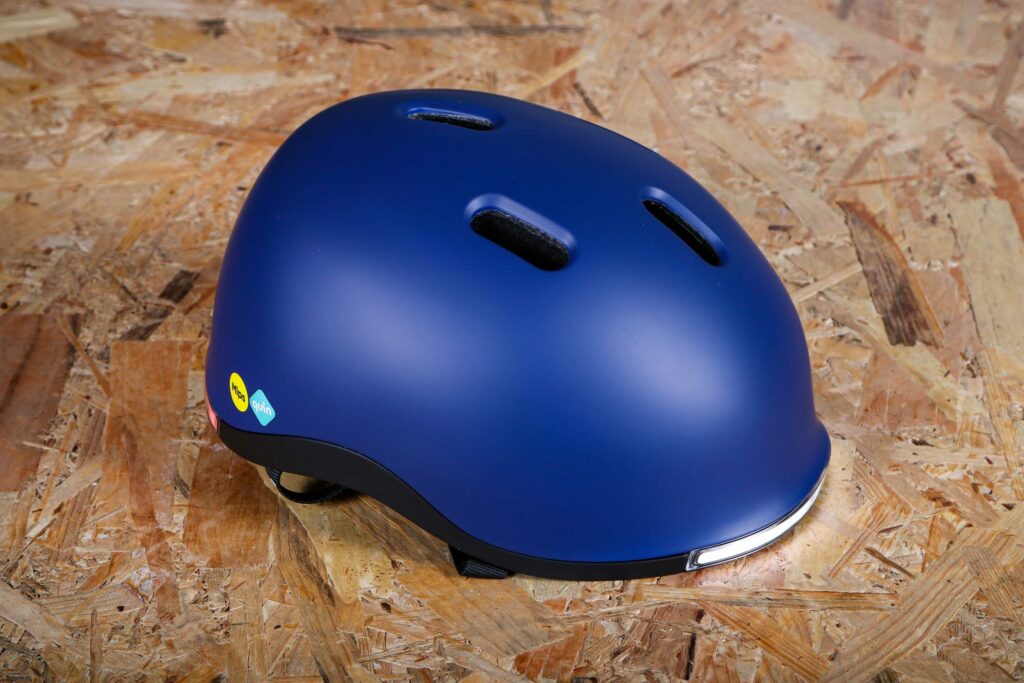

The Lumos Nyxel is a smart, connected helmet designed primarily for city commuters and casual riders who prioritize visibility and safety tech. Featuring integrated front and rear lighting, optional Mips, and Quin crash detection, it’s a high-tech “complete safety system” for urban riding.
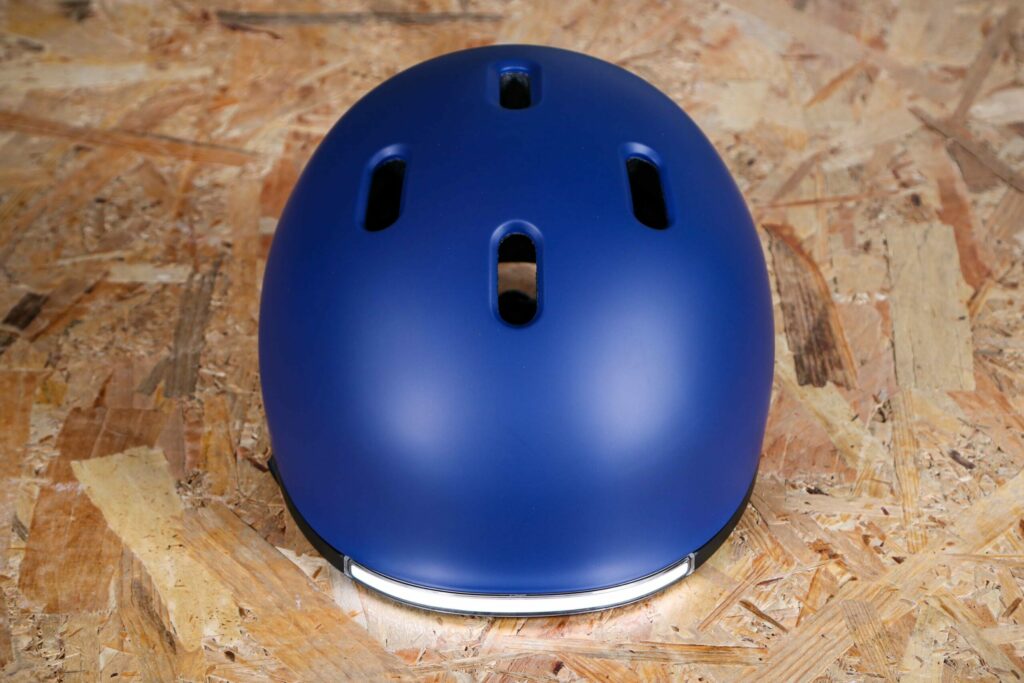
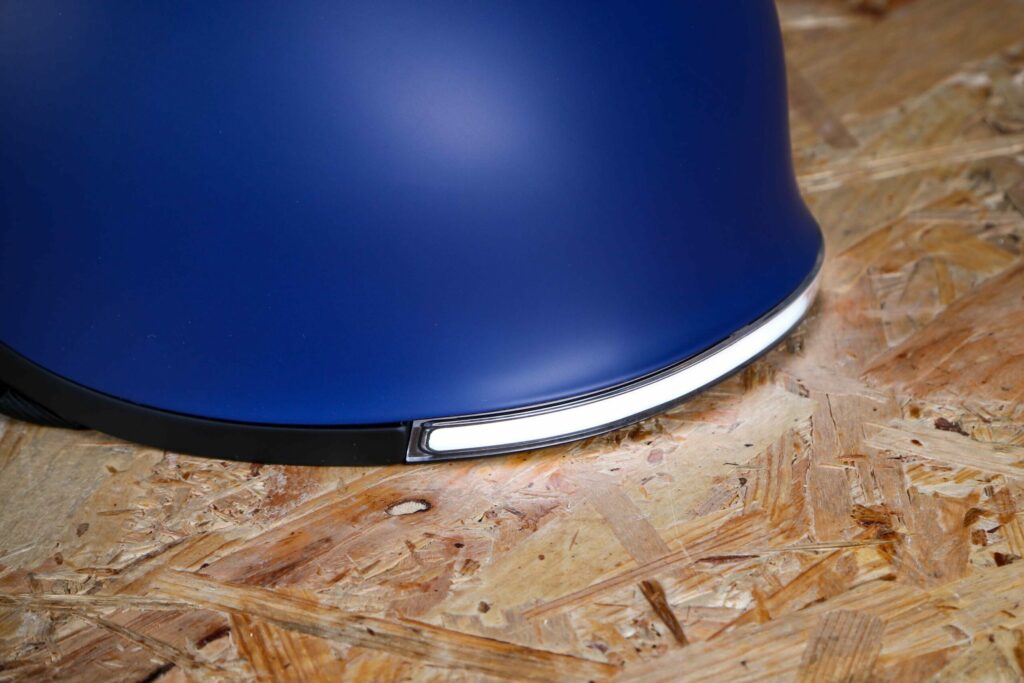
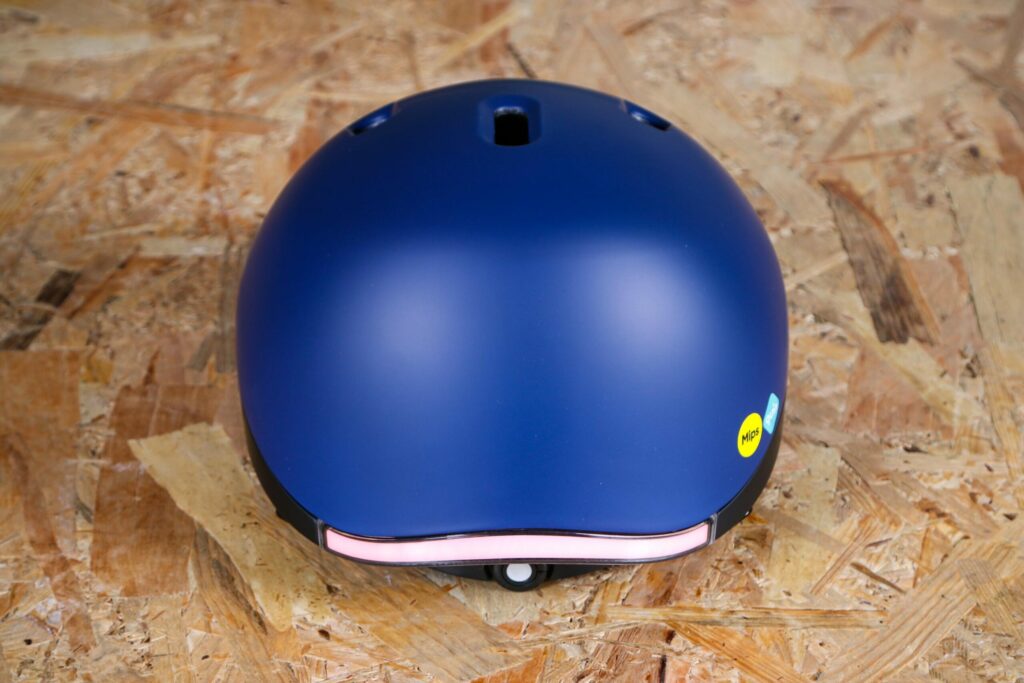
The standout feature of the Nyxel is its 360-degree visibility. It features 28 white LEDs at the front and 28 red LEDs at the rear, which are impressively bright and genuinely help you stay seen in heavy traffic or low-light conditions.
You get three standard light modes (solid and two flashing patterns). These are fully adjustable through the app, though I found the app experience isn’t the smoothest. Interestingly, there are different apps for different versions of the helmet, which can be hard to get your head around initially.



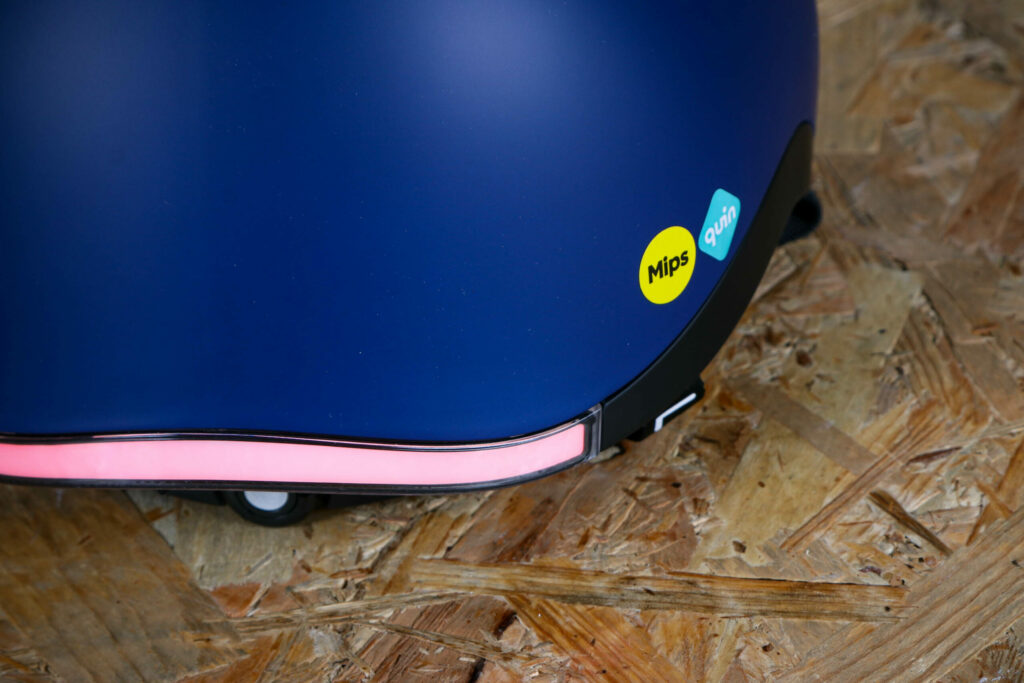


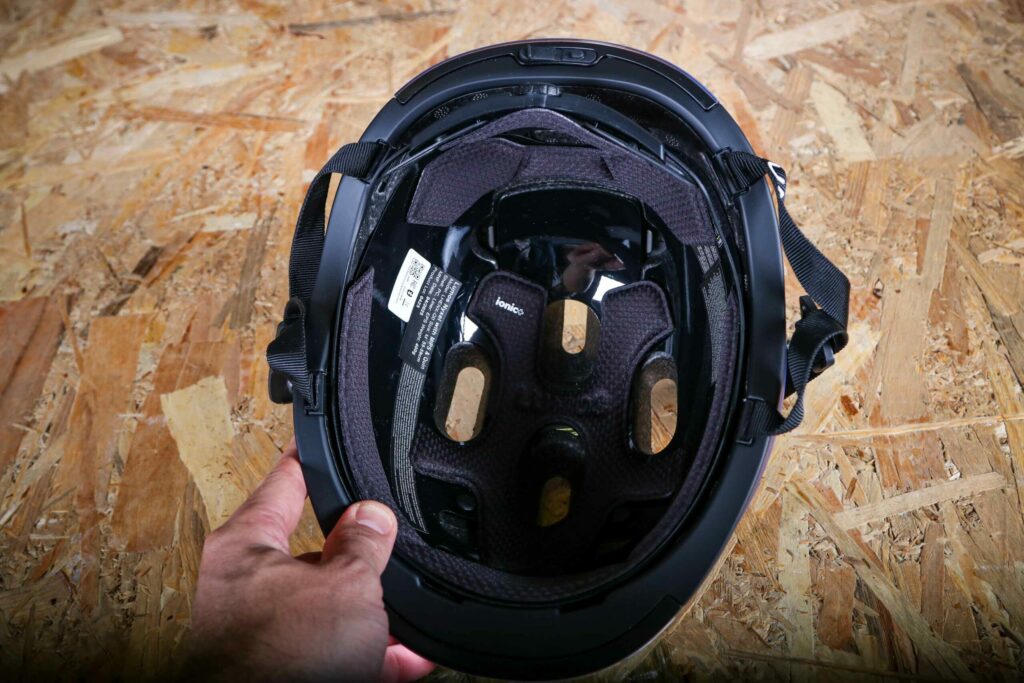
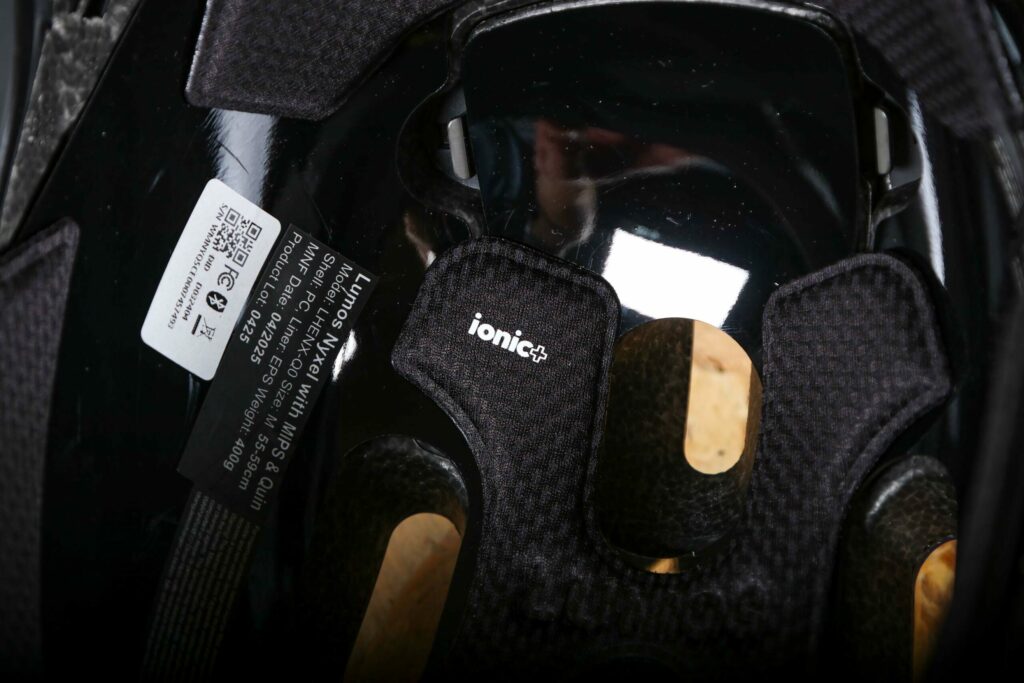
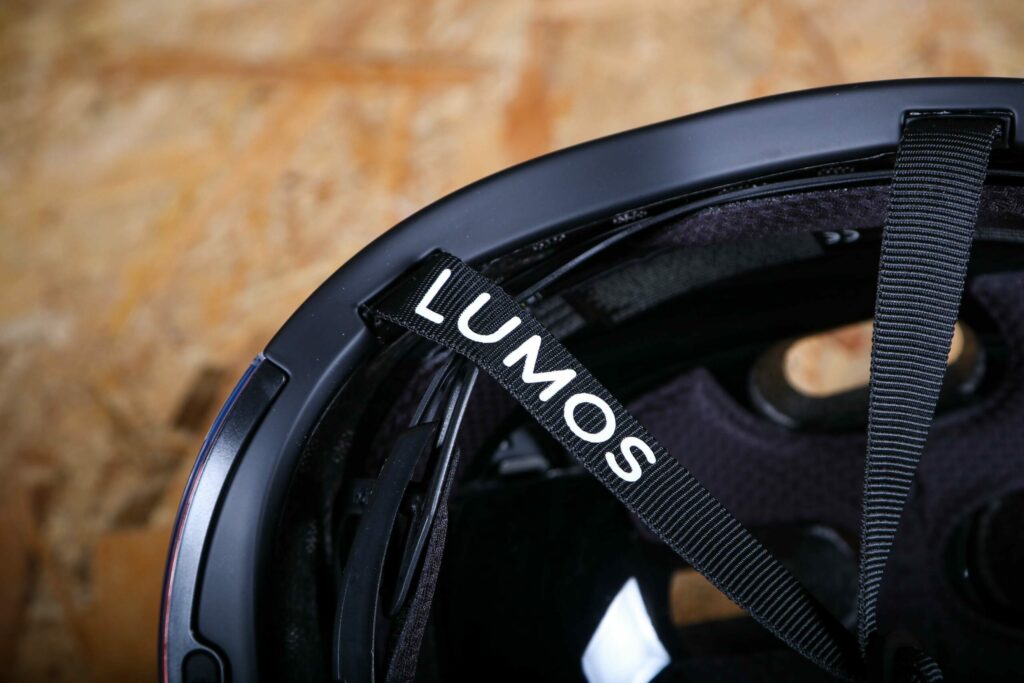


For example, this test helmet, which has Quin built in, needs the Quin Within app, but if you don’t have Quin, you’ll instead need the Lumos app.
The helmet comes with a paired remote that mounts to your handlebars. This allows you to use sequential turn signals – similar to an Audi indicator – to let drivers know exactly where you’re heading without taking your hands off the bars.
The remote also allows for an automatic brake light, which is quite sensitive.
Lumos offers the Nyxel in three tiers: Basic, Mips, and Mips + Quin.
Mips (multi-directional impact protection system) comprises a liner that is designed to reduce rotational impact during a crash, while Quin adds a crash detection sensor that connects to your phone.
The Quin system is a great piece of peace-of-mind tech, but it isn’t perfect. I experienced some false crash alerts, which can be annoying as they require you to cancel the alert on your phone, or the helmet, before it automatically notifies your emergency contacts. However, the safety benefit of having an automatic SOS trigger is hard to ignore for solo commuters.
While the helmet is adjustable and feels secure once dialed in, there are some trade-offs with regards to comfort.
It lacks significant airflow at the front. If you tend to run hot, this helmet gets very warm, very quickly. It’s definitely more suited to casual paced city riding than strenuous efforts.
I also didn’t find it the most comfortable helmet for long durations. Cycling glasses don’t sit particularly well with the helmet’s shape either. I think both of these are because it comes down quite far around your ears.
Furthermore, the helmet is pretty heavy at 438g, and this can fatigue your neck quicker than a lighter helmet would.
Charging is straightforward via a USB-C port located next to the power button. A nice touch is the battery indicator. Tapping the power button while the helmet is off shows the charge level before it turns on, and it does the same when you power it down. You can’t check the battery whilst the helmet is on though.
Lumos claims a battery life of 3-16hrs depending on the mode you use. In reality, I found that on the solid light output I got 2:40hrs, so definitely a bit less than claimed. The recharge time is four hours.
One nice positive for the Nyxel is the replaceable internal battery. In an industry where electronics usually mean a disposable product, being able to swap the battery if it eventually dies is a huge win for the environment and the helmet’s lifespan. That said, there isn’t currently an option to buy a battery on the Lumos website.
For the Quin and Mips option tested here, the helmet comes in at £190, with free shipping. The standard option is £110, and the Mips option is £140.
In my mind, the Mips option is the best as I’m not convinced that having the Quin is worth it.
Another helmet I’ve reviewed in the same kind of commuter sphere is the Giro Ethos Mips. This is £254.99, but can currently be had for £189. Either way, it doesn’t really offer anything more than the Lumos. I personally think it looks better, and it has better cooling, but nothing groundbreaking.
A more ‘stylish’ option is the POC Omne Beacon helmet which Paul thought was really good, albeit another expensive option at £220. It has better ventilation, and seems to be more aimed at advanced cyclists.
> Best cycling helmets 2026 — choose a bike lid that’s right for your riding
Conclusion
The Lumos Nyxel is a good option for the city commuter who wants maximum visibility and the latest safety sensors. The lighting is really bright, and the inclusion of turn signals makes urban navigating much safer.
However, it’s hard to recommend for more “serious” or high-intensity cyclists due to the lack of ventilation and the weight/comfort trade-offs. Personally, I’m not a huge fan of the aesthetics, but as a piece of safety equipment, it’s a very capable tool.
Test Report
What does the manufacturer say about this product?:
Lumos says: “Nyxel is our lightest helmet ever – so comfortable, you’ll forget you’re wearing it. Through extensive fit studies and a redesigned headform, we’ve crafted three new size ranges, making Nyxel the best-fitting, most comfortable helmet we’ve ever made.
“Our helmets don’t just protect, they think. Powered by Quin Crash Detection, they deliver real-time impact sensing and intelligent emergency alerts, giving you the smartest and most advanced protection on the road. Ride with confidence knowing your helmet has your back.
“When it comes to your safety, Lumos Nyxel Smart Helmet ensures you’re always visible, no matter the elements.”
Tell us some more about the technical aspects of this product:
Size
Length: 10.67″ (27.1cm)
Width: 8.19″ (20.8cm)
Height: 5.67″ (14.4cm)
S: 52-56cm | 20.5-22in
M: 55-59cm | 21.6-23.2in
L: 58-63cm | 22.8-24.8in
Weight
Nyxel Non-MIPS: 380g |M: 390g |L: 410g
Nyxel MIPS: 400g|M: 410g|L: 430g
LED Configurations
Front: 28 White LEDs
Rear: 28 Red LEDs
Turn signal capable
Automatic brake lights (Only MIPS + Quin Version)
Battery
Battery Life: 3-16 hours dependent on settings
3.7V 1000mAh Lithium Polymer rechargeable battery
4 hours charging time
Wireless
Bluetooth 5.0
Certifications
US: Complies with U.S. CPSC Safety Standard for Bicycle Helmets for Persons Age 5 and Older
EU: CE EN1078
AS2063
ASTM F1447
Other Features
Apple Watch (Apple Watch App along with its Gesture Recognition features currently in Beta. Read more here.)
LS3 Sync Compatibility
Team Sync
Lumos Firefly
If you have Remote Lite: Flashing Patterns sync, All Power Off
If you have Lumos Remote: Flashing Patterns sync, All Power Off, Turn Signals and Automatic Brake Lights
Lumos Kickstart
Lumos Matrix
Lumos Ultra E-Bike
Any further comments on quality?:
It’s a nicely made helmet which feels pretty well put together.
Any further comments on performance?:
The lights are impressively bright and help you to stand out in the darker days.
How does the price compare to that of similar products in the market, including ones recently tested?:
It’s a decent price. Lots of smart helmets cost a lot more.
Any issues with durability?:
The inclusion of Mips gives me confidence that this helmet will last well.
Did you enjoy using the product?
It was okay
Would you consider buying the product?
Not personally
Would you recommend the product to a friend?
If they commuted in a city, and weren’t a more competitive cyclist, then possibly
Use this box to explain your overall score
A nicely thought out, well made helmet, which suffers from being hot and not looking like a performance lid.
About the tester
Age: 25Height: cmWeight: 72kg
I usually ride: Storck AerfastMy best bike is:
I’ve been riding for: 10-20 yearsI ride: Every dayI would class myself as: Expert
I regularly do the following types of riding: Road racing, Commuting, Touring, Club riding, Mountain bike XC, Mountain bike Enduro, Mountain bike downhill/freeride