



The Giro Eclipse Pro Spherical Helmet is an excellent aero lid; light, comfortable and impressively well made, with performance that’s hard to fault. It’s not without its drawbacks though – especially if you like to stash your sunglasses in your helmet vents – but Giro has got far more right than wrong here.
Even at first glance, the Giro Eclipse Pro is very impressive. The low weight is immediately noticeable and the look of the ‘Spherical Technology’ is striking, and if the aero claims are true, you get a claimed 17% increase in speed over the old Eclipse.
Looks are, of course, subjective, but I find elements of this helmet slightly confusing. The Spherical design makes it look almost like one helmet stacked on top of another – not quite the sleek design I’d hoped for. However, if you feel the same way you can choose a colour scheme, such as Dark Sage Green, where both parts match.


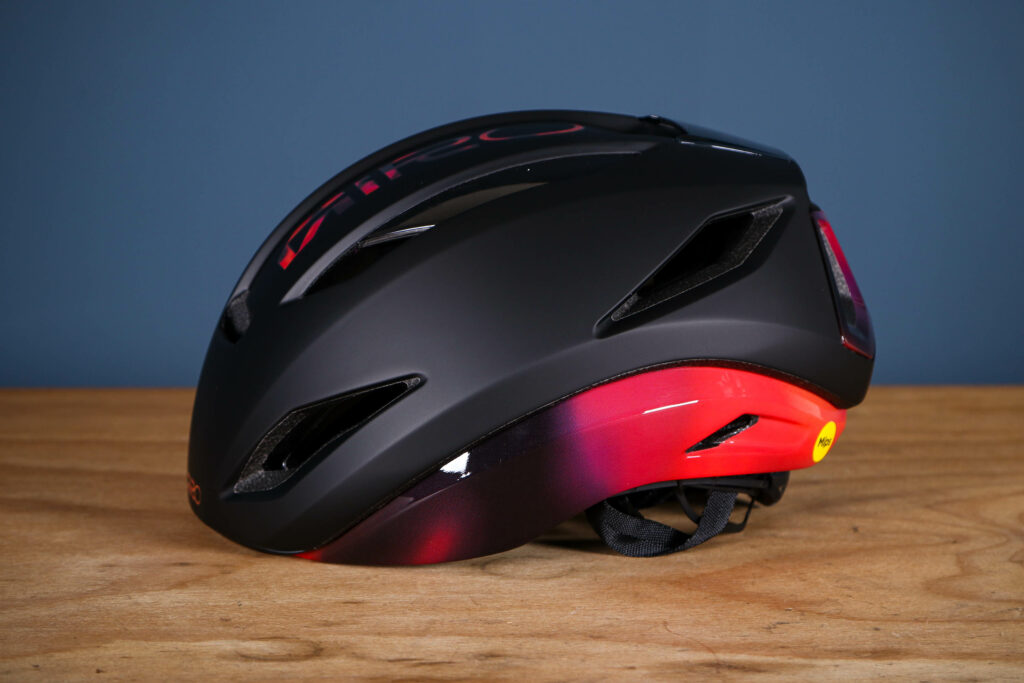


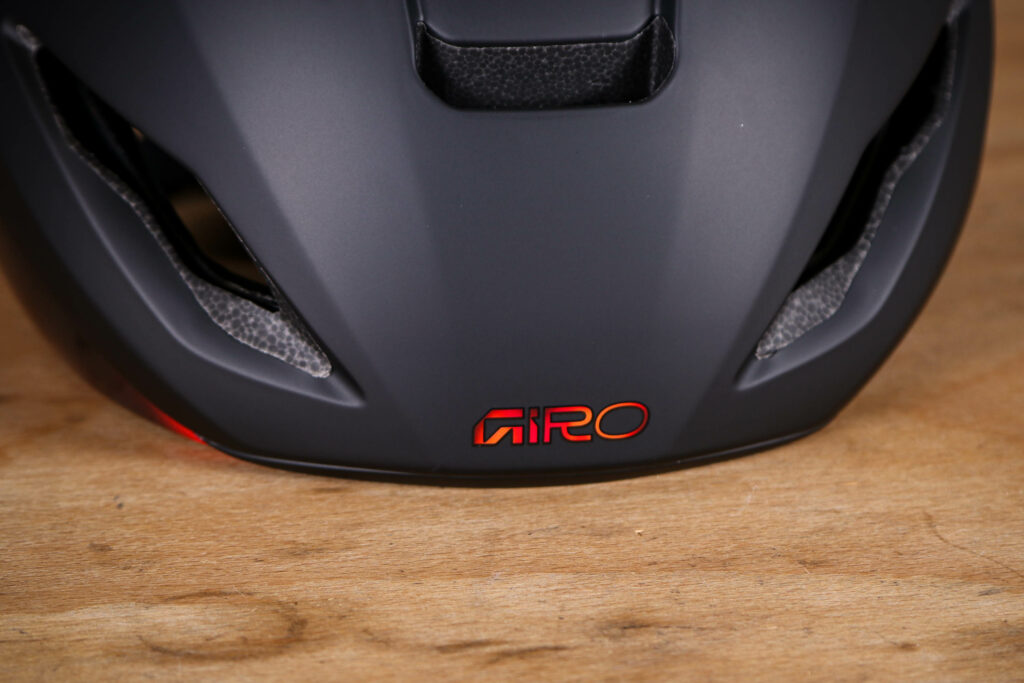
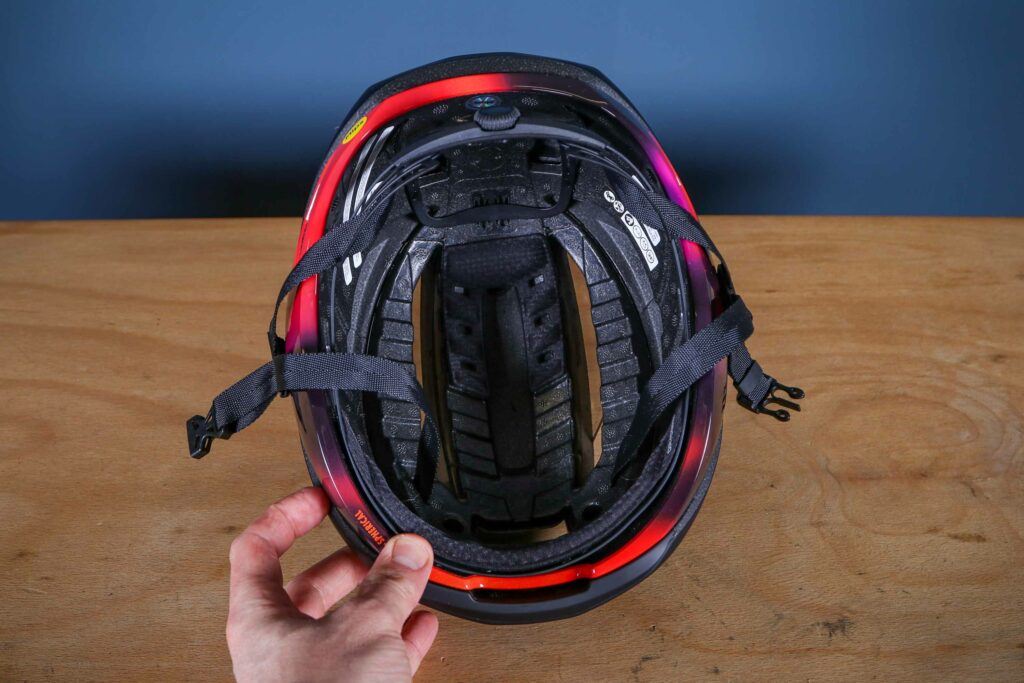


Having said that, I really like the detailing Giro uses around the lettering of the logo, and the mix of matt and gloss finishes is really classy.
Weighing in at 271g on my scales – nine grams under the claimed weight – this is extremely light for an aero helmet. My regular non-aero Abus lid is 290g, and whilst the difference sounds minimal, I was genuinely shocked at how much I noticed it on my first ride. The difference only more apparent thanks to just how comfortable and well designed the Eclipse Pro is.
It’s not flawless though, and my biggest gripe is its ability to store sunglasses…. or lack of ability. Whilst not the most important feature of a helmet, it’s an often forgotten one. Unfortunately, the Eclipse Pro’s vents (though well placed for cooling) didn’t fit well with any of the glasses I tried. The two on the front at least provide a secure fit, but leave your shades stuck out a long way. They’ll also interfere with the Spherical system.
As for the practicality of everyday use, the adjustability is simple but effective, with just a single dial at the back which provides a snug and easy fit. All pads are removable and can be cleaned, and Giro claims its Ionic+ system, which uses pure silver, provides lifelong odour-free comfort. The straps are comfortable too.
The overall build quality is outstanding. Not a rattle or loose thread in sight.
It comes in an impressive array of colours, from the classy looks of Matte White or Matte Black to the more vibrant style of Flame Red or Black/Frequency Orange. The colour options offer something for everyone, even those who want to emulate the Grand Tour-winning Jonas Vingegaard with the red and white combo.
Talking of Grand Tour success, it is worth mentioning the results this helmet has had – whilst I unfortunately can’t test the aero claims, it certainly didn’t prevent World Tour wins by the likes of Wout van Aert, Pauline Ferrand-Prévot, and many more. And for me, though this is by no means scientific or measurable, this lid felt slippery quick.
Value
At £295 the Eclipse Pro sits firmly in the premium bracket, and that’s a competitive place to be. Helmets like the Kask Nirvana and MET Trenta 3K Carbon excel in various respects, but neither clearly dominates as an all-round option. The Giro has them on price though, as they’re £320 and £349.99 respectively.
Meanwhile, options like the Uvex Surge Aero Mips highlight just how good the balance of aero performance, ventilation and comfort can be, and often at a slightly lower price too. The Surge is €249.95, which is currently around £216.
Overall
Against that backdrop, the Eclipse Pro feels well judged. It doesn’t lead in any one category, but it avoids the bigger compromises seen elsewhere, delivering a strong mix of low weight, high comfort and high performance. That said, it’s not without flaws, and when cheaper helmets offer similar real-world performance, it’s hard to call it a standout for value.
Ultimately, you’re paying for the balance, and that’s well judged. In an increasingly crowded premium market, it holds its own very well.
Test Report
What does the manufacturer say about this product?:
Giro says: “Engineered for riders obsessed with speed, the Eclipse Pro is designed to win, blending our most advanced aerodynamics with category-leading protection and all-day comfort.”
Tell us some more about the technical aspects of this product:
Giro lists:
17% faster than previous Eclipse model.
Designed using CFD to optimize aerodynamics.
Validated by wind tunnel testing.
15 vents optimized for cooling and aerodynamics.
Front center vent designed to split air to the forehead and over the brow for aerodynamic efficiency.
How does the price compare to that of similar products in the market, including ones recently tested?:
The Eclipse Pro sits at the upper end of the market.
Does the helmet incorporate any rotational injury protection? If so, what?:
This uses Giro’s ‘Spherical Technology Powered by MIPS.’
Does the helmet size up especially big, or small?:
Fits true to size, with excellent adjustability.
Any further comments about ventilation?:
As aero helmets go the ventilation is fantastic, but it’s still noticeably warm on long hot climbs.
Did you enjoy using the product? Yes
Would you consider buying the product?
Yes, but the price would make me think twice.
Would you recommend the product to a friend? Yes
Use this box to explain your overall score
This is a comfortable, fast and light helmet that’s made really well. It’s expensive, but so are many similar helmets at this premium level.
About the tester
Age: 28Height: 185cmWeight: 65kg
I usually ride: Argon 18 nitrogen discMy best bike is: Canyon grizl CF 7
I’ve been riding for: 5-10 yearsI ride: Every dayI would class myself as: Expert
I regularly do the following types of riding: Road racing, Cyclocross, Gravel riding, Indoor riding, Bikepacking, Club riding

7 thoughts on “Giro Eclipse Pro Spherical Helmet”
Knowing Virginia Tech’s rating will be vital once they’ve tested it, since similarly priced helmets provide very different levels of protection.
For example, the Eclipse Pro Spherical competes with the latest Trenta 3K Carbon MIPS (5-star rated for protection) and Specialized’s new Evade 4. The S-Works helmet comes in a disappointing 63rd place in Virginia Tech’s tests, showing that an expensive helmet can provide suboptimal protection.
@Another_MAMIL And another moronic comment…coming 63rd out of 297 does not indicate “suboptimal protection”, it indicates that in testing some helmets offered slightly better protection according to the Virginia test metrics. The Evade was given a four-star rating, if you look at the top of the ratings page it says “We recommend choosing a helmet rated 4 or 5 stars”. What do you reckon, are Virginia Tech actually recommending that you choose a “suboptimal” helmet or are you talking nonsense yet again?
Suboptimal means less than the best possible. Thus, a Virginia Tech rating below 5 stars is suboptimal by definition.
As the new Evade 4 helmet costs £279, I’m disappointed that it doesn’t achieve the best Virginia Tech rating.
Disappointment and unsafe are, of course, not the same thing. YMMV, but I’d want a 5-star rating if I were spending £279 on a helmet.
@Another_MAMIL No. “Optimal” can cover a range of options that are best, e.g. “The optimal tyre width ranges from 35mm-50mm.” Similarly, one can say the optimal helmets are those that achieve VT 4* or 5* ratings. Or do you think that every single helmet in the world is “suboptimal” apart from the single model that tops the VT ratings?
Indeed – doesn’t optimal always presuppose at least one constraint but almost always multiple. So “best that can actually be achieved in specific circumstances” rather than “perfect”?
In the case of the OP there appear to be at least 2 – “position at the top of this index” and cost…
And of course presumably all the ones which go with (most) cycle helmets like not being as heavy and restrictive as a motorbike helmet, not massively increasing aero resistance and not being illegal (“active threat protection” against approaching motor vehicles?)
I agree that a helmet has multiple desirable qualities (protective, lightweight, aero, etc.). I’m neither suggesting that we should buy only the helmet with the Number 1 Virginia Tech ranking nor that protection is the only criterion for choosing a helmet. But at the Evade 4’s £279 price, it’s reasonable to expect a 5-star rating. 52 helmets achieve a 5-star protection rating from Virginia Tech.
While Virginia Tech recommends helmets with a 4- or 5-star rating, it differentiates between them for a reason. A 5-star helmet generally reduces head acceleration more effectively than a 4-star helmet across the tested impacts.
The Evade 4 helmet ranks 63rd in Virginia Tech’s tests. It won’t be my new helmet for training and racing.
I agree that a helmet has multiple desirable qualities (protective, lightweight, aero, etc.). I’m neither suggesting that we should buy only the helmet with the Number 1 Virginia Tech ranking nor that protection is the only criterion for choosing a helmet. But at the Evade 4’s £279 price, it’s reasonable to expect a 5-star rating. 52 helmets achieve a 5-star protection rating from Virginia Tech.
While Virginia Tech recommends helmets with a 4- or 5-star rating, it differentiates between them for a reason. A 5-star helmet generally reduces head acceleration more effectively than a 4-star helmet across the tested impacts.
The Evade 4 helmet ranks 63rd in Virginia Tech’s tests. It won’t be my new helmet for training and racing.