


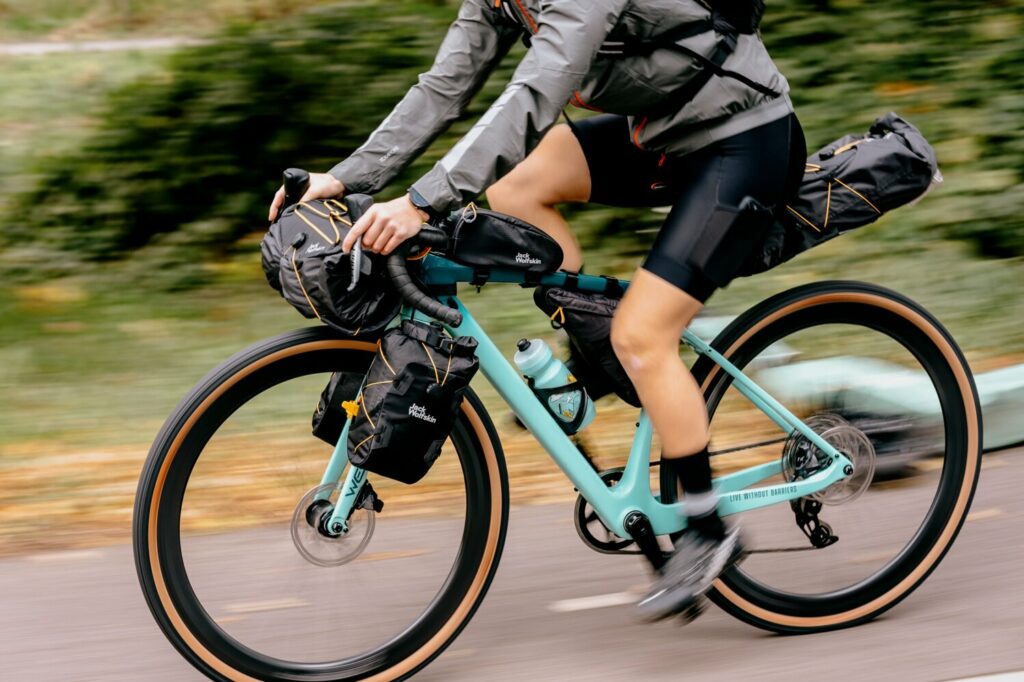

What is bikepacking?
Plan your route
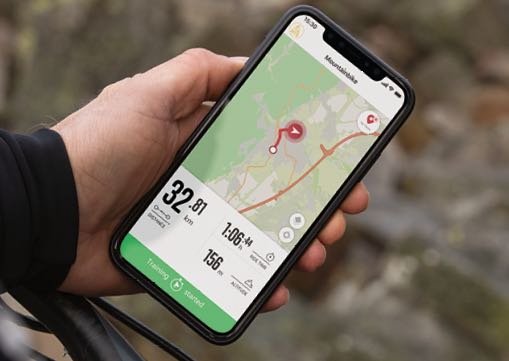
Planning the route is best done with some kind of navigation app, such as OS or Komoot. You can also research well known official routes and download a GPX file, which you’ll need to put on whatever device you choose to navigate with. Navigation devices tend to either be dedicated bike computers from brands such as Garmin, Wahoo and Hammerhead, or you can use apps on a phone. Be aware that mounting your phone to your bike is a little trickier; you may need to keep it dry, and battery life will deplete quickly, so if you’re planning to do lots of trips or hoping to spend hours upon hours on the bike, I’d recommend investing in a good, dedicated bike computer.
Some decisions need to be made on how you intend to travel. Going fully self-sufficient with sleeping and cooking equipment allows you to be more remote for longer and more flexible as to when you stop for the day, but it will result in a slower-going heavy bike. On the other hand, booking accommodation along the route will allow you to pack less and move more quickly, but you’ll be tied to a fixed timeline each day. If you plan to wild camp, research the laws and understand the legalities of where you may end up sleeping. It goes without saying that “leave no trace” and camping from dusk till dawn are good ways to go about it.
Whichever approach you decide on, some things to consider when planning your trip:
Plan your food stops/resupplies
Even the best made plans don’t always work out
Plan exit routes and build in contingency. It pays to have an idea of where the route can be cut short or where civilisation can be reached in the event of a mishap, poor weather or an overambitious day.
If you intend to use a train, bikes are typically free to bring aboard, however, you do need to book a space for them – don’t get caught out. If you intend to stay at pre-booked accommodation, it is worth calling ahead to check they’re happy with you turning up in a muddy mess with bikes. Secure bike storage is high on my priority list and not always fully understood by your hosts.
Get prepared for any eventuality
Devices
Do a dry run
Make sure you pack what you actually need
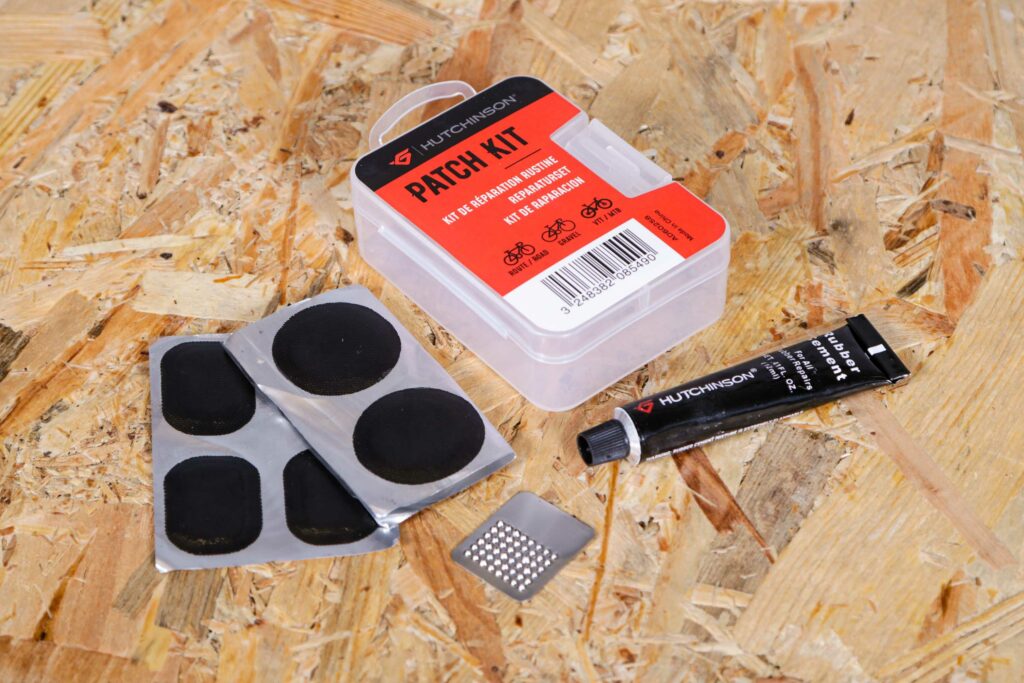
- You’ll never be able to cover every eventuality, but it pays to be prepared for punctures, broken chains and bolts rattling loose. On the puncture front, running tubeless is recommended, as is carrying tubeless repair plugs, but always carry at least one spare tube with some repair patches.
- A ‘get out of jail free box’ – a small tin or pouch with a selection of commonly found (or lost) bolts. Stuff like cleat bolts, seat clamp bolts, chain master-links, spare tubeless valves and valve cores, zip ties, and a gear cable all safely stowed away.
- A tiny backpack or spare shopping bag can be useful for dinner-time food runs.
- Always pack for rain (a thin coat even in summer)
- Always pack light, you never know how the day will go
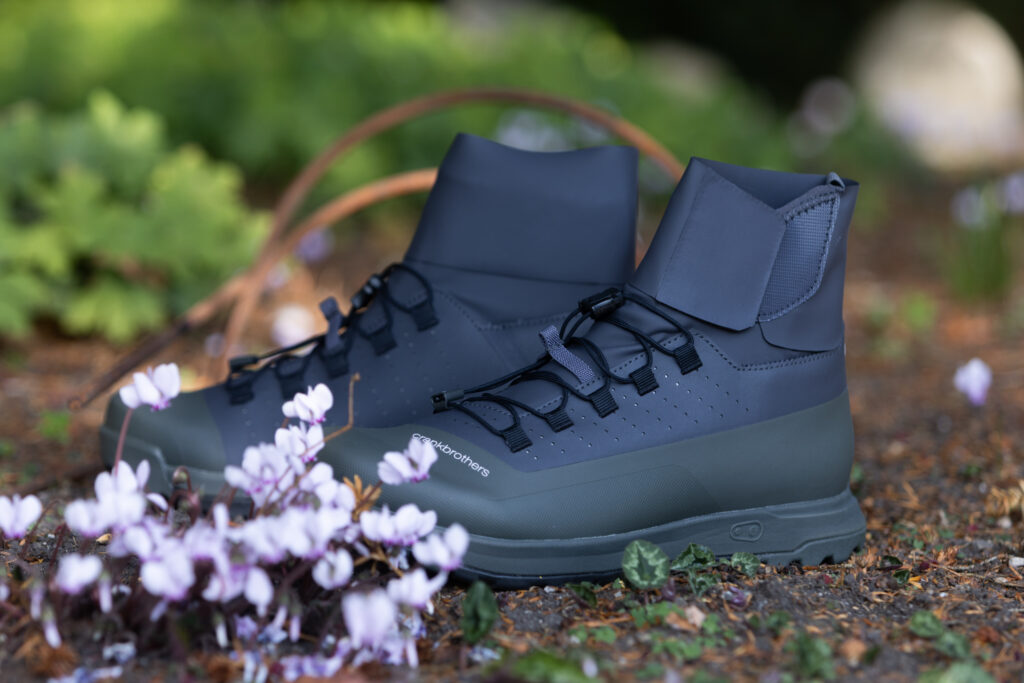
- Evening shoes are a nice little luxury – sliders, flip-flops or barefoot style shoes don’t take up much space
- Carry enough water but not too much – soft bottles and hydration vests can be good ways for extra water capacity
- Consider a water filter if remote enough, as finding fresh water could be a problem
- Pack spare straps for repair – things break! Ensure they’re good quality, such as Restrap Fast Straps or Tailfin Cargo Straps
- A small first aid kit is recommended. Carry pain killers, antihistamines, and fixes for personal niggles such as a knee brace or blister patches. A tiny pot of Sudocrem helps with chaffing repair overnight
- When packing, ensure easy access to emergency layers and food
- A small zip-tie style lock is handy if you’re riding solo and need to nip into the shops for quick resupply dashes
- One spare pair of bib-shorts, which can be alternated each day
Now it’s time to set off
Take it easy
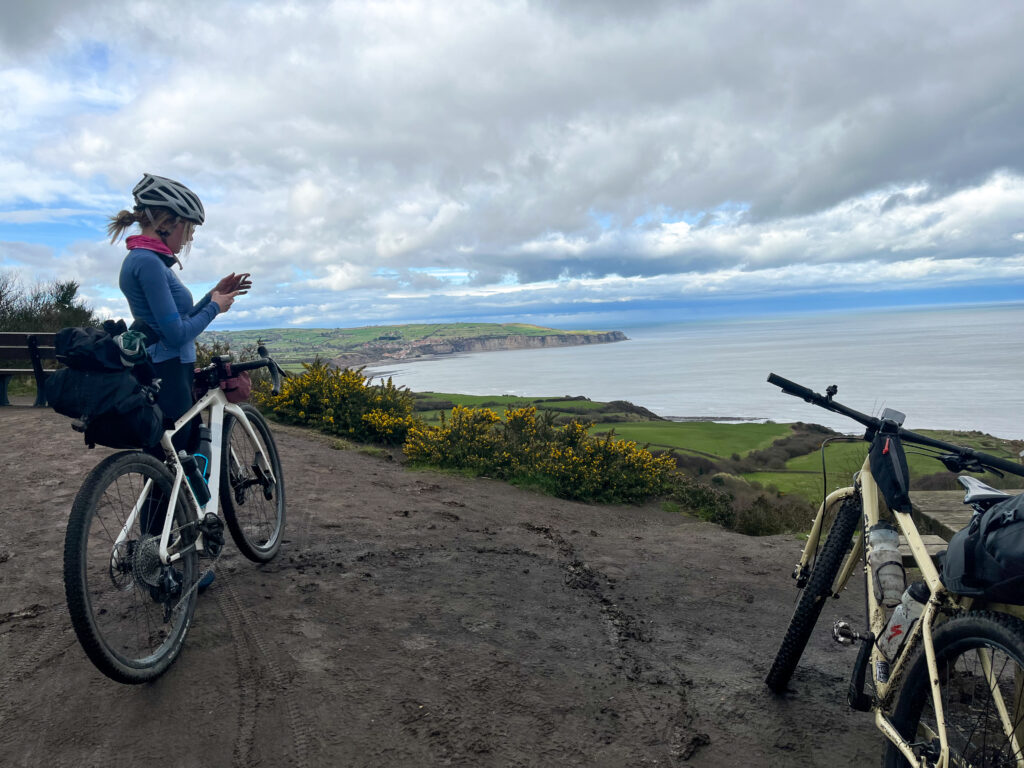
Don’t be a hero. Sometimes the terrain can be technical and regularly exceed the fair limits of a gravel bike (for example), whilst it can be tempting to try and ride these challenges, bear in mind the big picture. One wrong move can result in bike breakages or worse, and suddenly drop you into quite a predicament.
Don’t be disheartened by slow progress
Travelling through varied terrain is hard to predict, and whilst we all have a rough timeline for the day, don’t feel like you must keep up with it. Trudging through a bog with a heavily loaded bike will always be slow going, but this can work both ways with a smooth section of road feeling like a gift to gain some time – literally take the rough with the smooth.
Start early – always!
Even if you have a relatively short day in mind, it pays to get going with plenty of spare time. It can be easy to enjoy a nice breakfast and a slow start to the day, but the risk of something going wrong later in the day could suddenly make that day longer than initially intended.
Eat and drink regularly
Don’t underestimate the calorific cost of bikepacking. Aside from eating lots, be aware of your mood and morale because if it’s starting to dive, you may just need a little sugar pick-me-up. Hitting the wall, or ‘bonking’, is easier to deal with if caught early and can become a real problem if blood sugar levels start to drop.
Soak it up
Try not to be too task-driven. It’s easy to get lost in the task at hand, navigating and thinking about the next food stop or big hill ahead. Don’t forget to actually enjoy where you are. The views, the quiet, the wildlife and the simplicity of riding your bike are things to savour, and I’ve certainly been guilty of missing the point, getting wrapped up in the logistics of it all.
Don’t be afraid to change the plan
Things don’t always go as you expect, so don’t be too stubborn to deviate from the original path. If the daylight is disappearing or you’re running out of energy, being adaptable on the fly will help keep the trip alive.
And finally…
It pays to check your bike over at the start of each day. Assess brake pad life, check all bolts are tight and applying some chain lube will do wonders for maintaining a reliable bike.







8 thoughts on “Learn from my mistakes with these top tips for beginner bikepackers”
Don’t…after lengthy internal debate…take a heavy cable lock, only to realise, outside the pub at Ribblehead, that you’ve left the key at home.
Its still fcking CYCLE TOURING and not bikepacking. If i go bikepacking, it means I am packing my bike in a box or bag to move it somewhere.
I will die on this hill!
Replying to jo9090 (reply button not working):
If you go backpacking (which is presumably what ‘bikepacking’ riffs on), does it mean you are packing your back in a box or bag to move it somewhere?
If you’d had a pack on your bike, maybe you would have had the necessary supplies to survive.
I trust his answer to that is: we do not go ‘backpacking’, or ‘rucking’ or even ‘hiking’ except when Garmin etc. force us to acknowledge those terms, and we most definitely do not go in for ‘mountain climbing’. What we do is ‘walking’, ‘hillwalking’ and, in the proper circumstances, mountaineering. I also reject ‘bikepacking’, although I have trained myself to ignore the term and treat it with the contempt it deserves.
Personally, I reject ‘cycle touring’ – nobody’s getting me on a stage to perform after a long day of cycling.
Three, five days or even a week on a bike in Western Europe, this is the beginning of adventure. During this short trip across tamed landscapes, nobody will die of starvation, even on a Sunday or Public Holiday. Nobody will fight with a black bear to recover their caffeinated gels. Take it easy, enjoy the ride and have fun. My two-cent recommendation – travel alone.
I like traveling alone or in a group, but it has to be the right group. Not much slower or faster. No excessive morning rush. No stopping every half hour to faff with something.