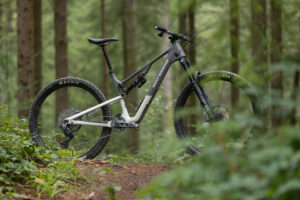
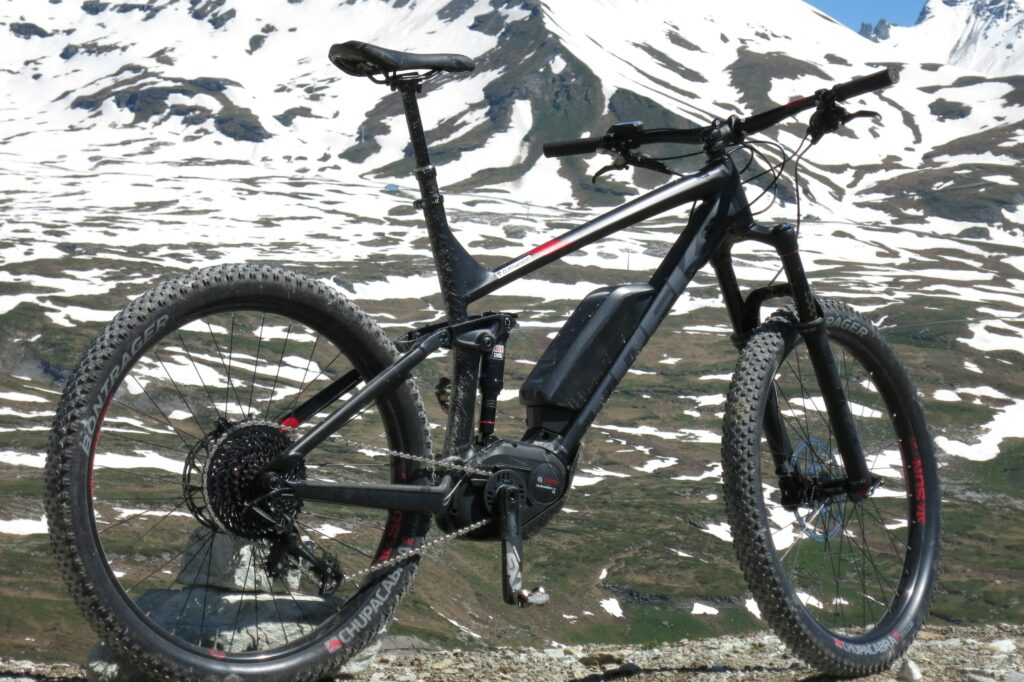
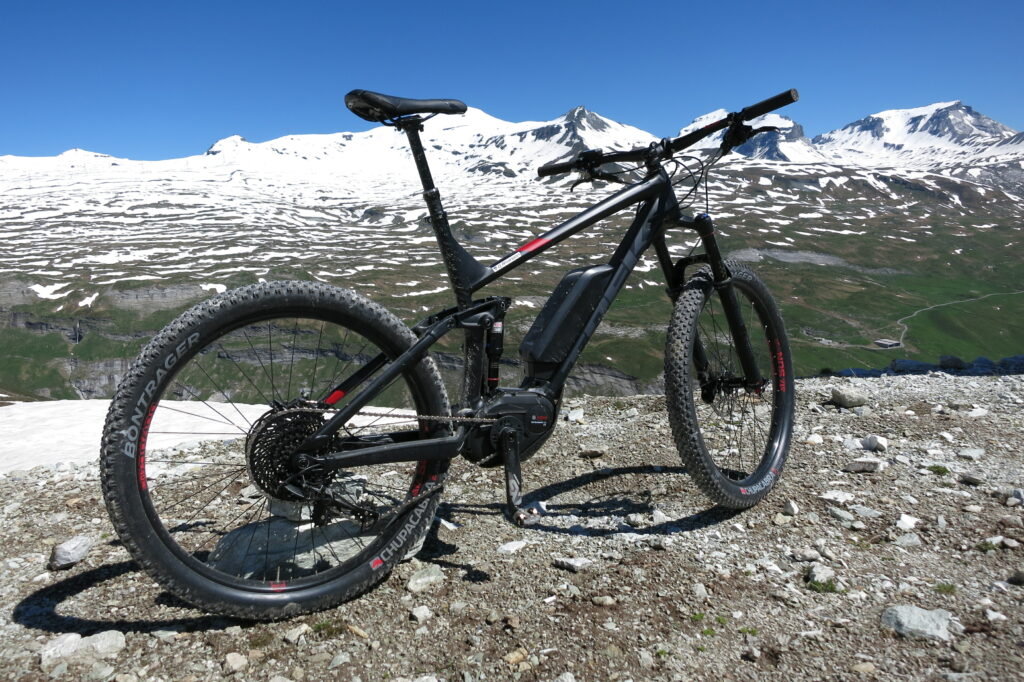
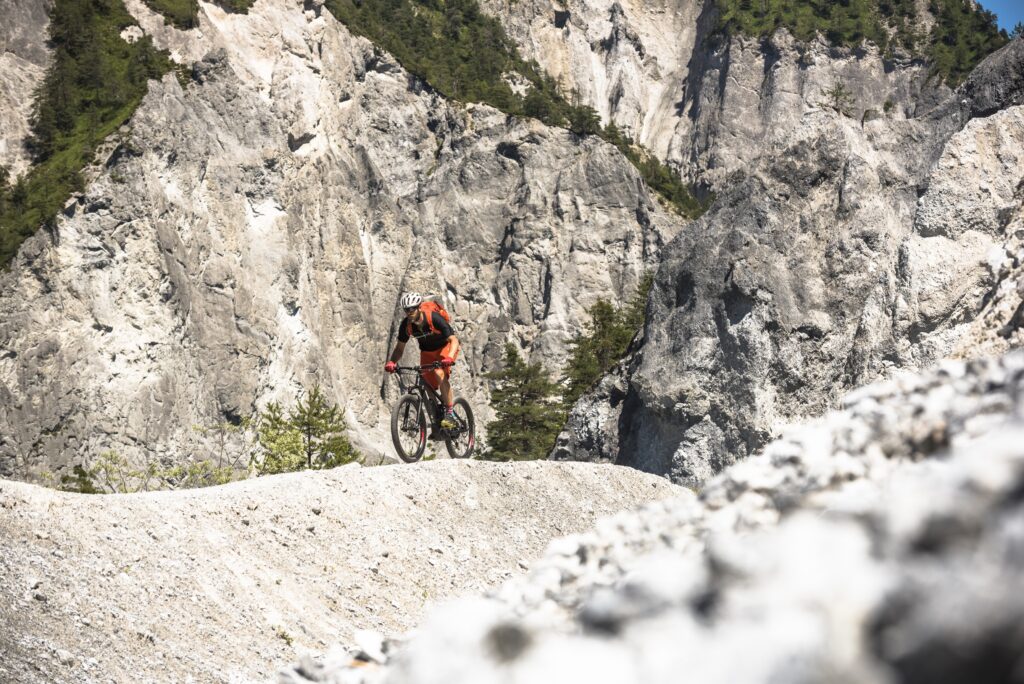

Trek’s new Powerfly range starts at £2,100 for the hardtail Powerfly 5 and this Powerfly 9 FS is the second-most expensive bike in the range at £4,275; only the long-travel Powerfly 9 LT (£4,350) is more. Four grand is a lot for a bike but you’re getting a lot of bike: This is a hugely capable mid-travel suspension mountain bike with Bosch’s top-tier motor and biggest battery. It’s fun to ride over pretty much any terrain and it has enough range for big rides. I have some minor reservations about the new Bosch Purion display and SRAM’s EX1 groupset, and also about why you wouldn’t spend the extra £75 on the long travel version of the bike, but it’s a great trail bike and a grin-inducing ride.
Trek have just launched the latest versions of their Fuel EX and Remedy trail bikes and the new Powerfly full suspension bikes have moved closer to those bikes in terms of geometry, as opposed to being a more upright riding position. There’s a whole stack of tech to talk about: let’s have a look at some of the details.
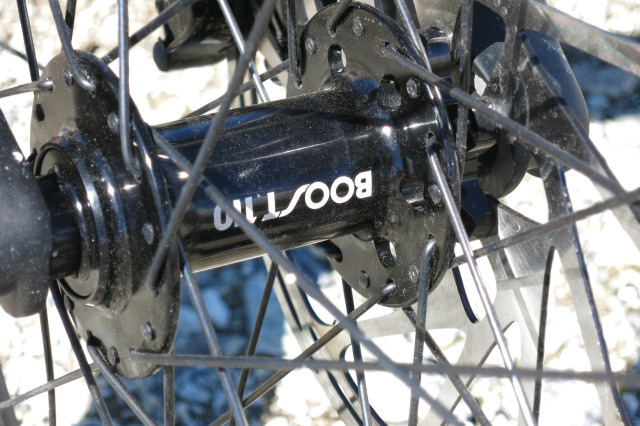
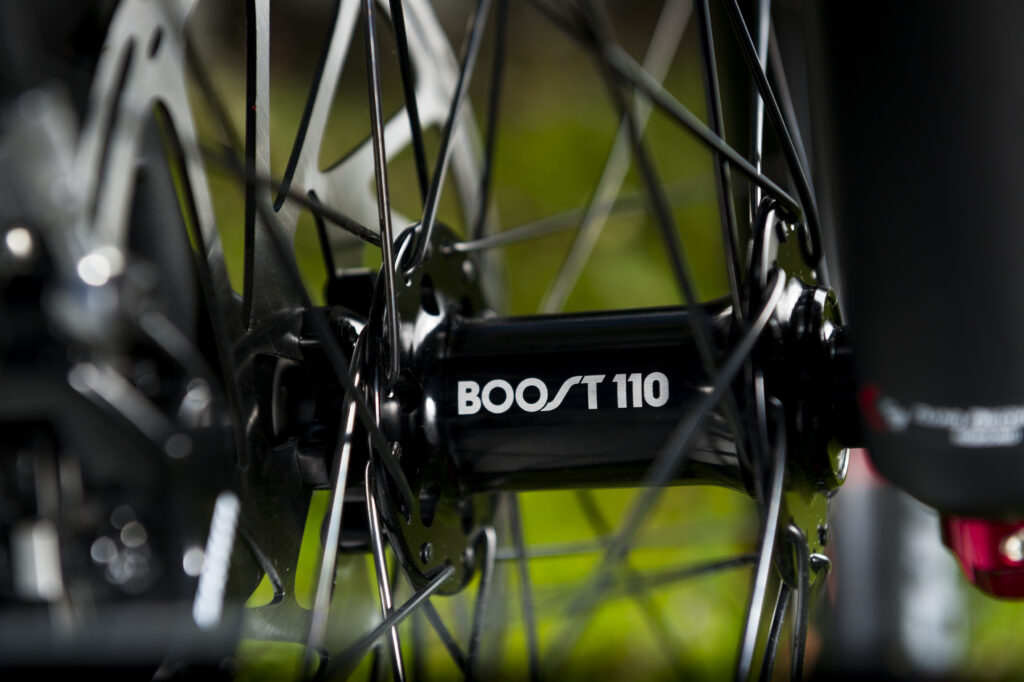
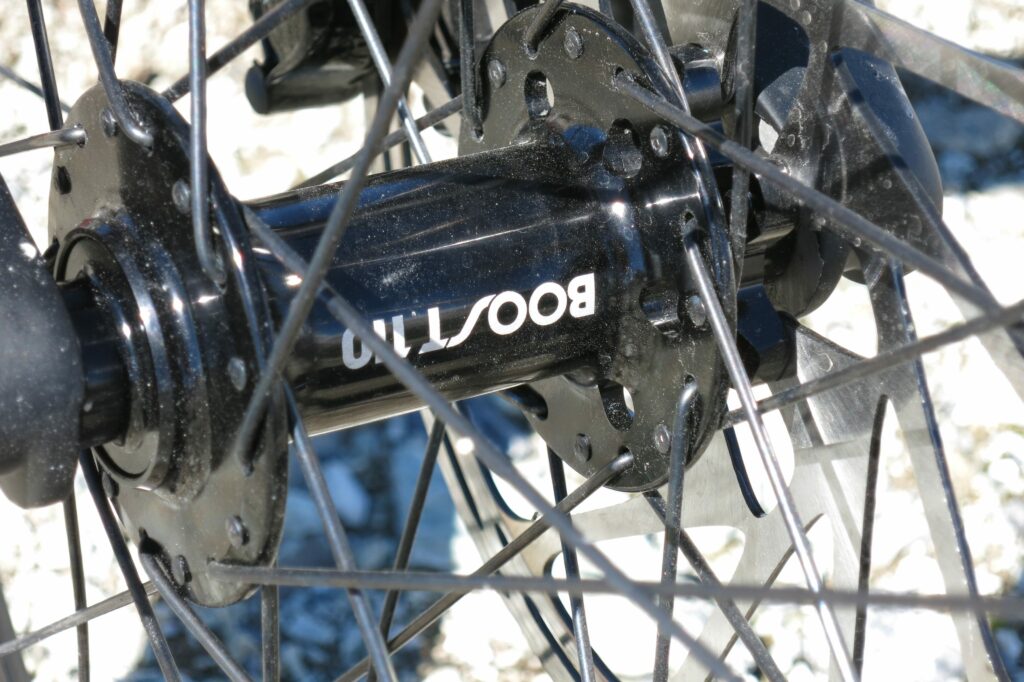
Boost148/110: Trek’s Boost axle standard is wider than a standard mountain bike wheelset. The wider hubs mean stiffer wheels, and that’s of particular importance on an e-bike: the bikes are heavier, and the drive torque at the rear higher. It’s a standard that’s been taken up by other companies too, with many component and bike manufacturers adopting the standard, especially for longer travel bikes.
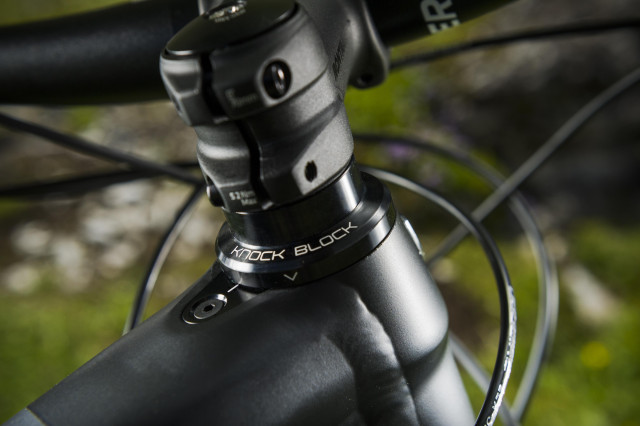
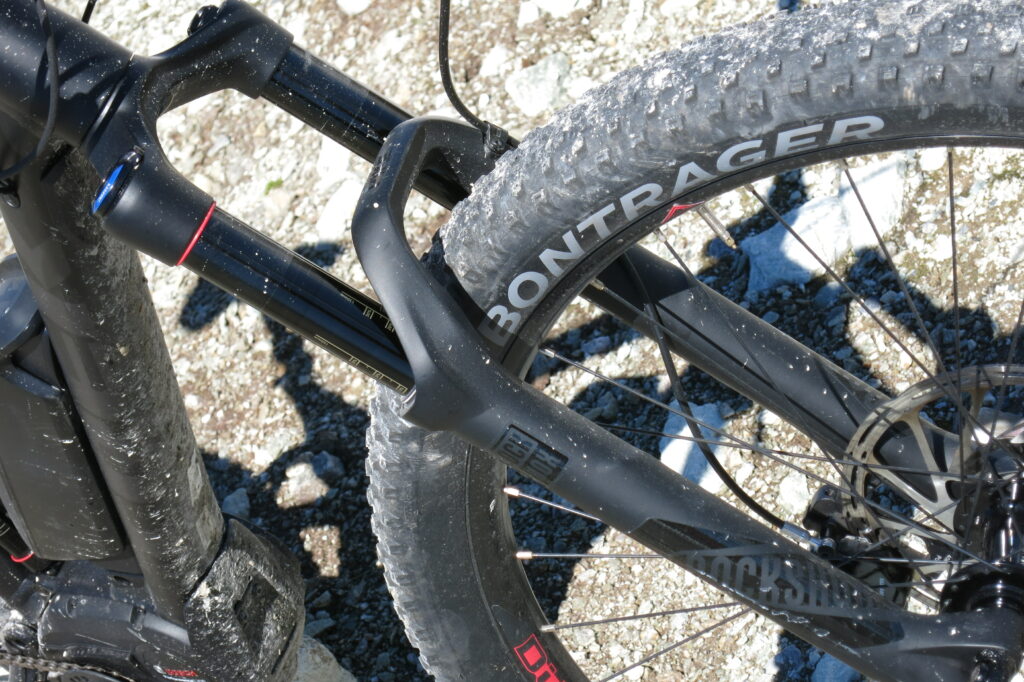
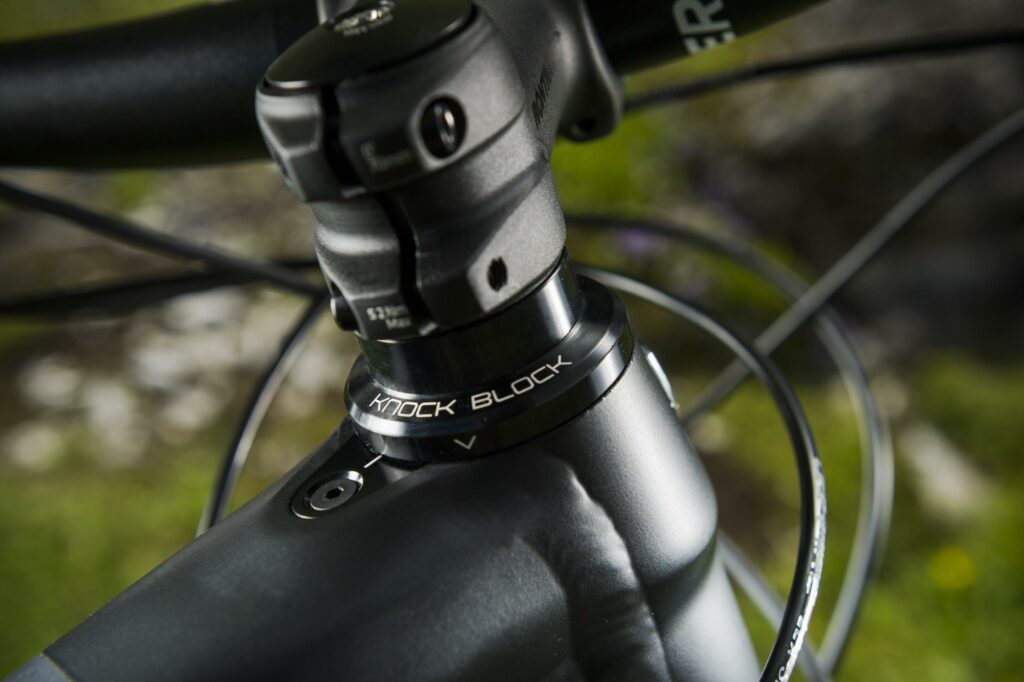
Knock Block: Trek’s Knock Block is a patented system that restricts the steering lock via a tabbed insert that’s a part of the headset. The tab locates into a notched spacer and stops the bars turning far enough for the fork crown to hit the down tube or the bars to strike the top tube. Because of that, Trek can make the down tube straight instead of curving it around the fork crown. That makes for a lighter and stiffer structure. It’s a proprietary system but will worth with stems and bars from other manufacturers too, if you want to swap out your cockpit. The Knock Block is designed to fail first in the event of a crash so that more expensive components don’t take the strain.
Active Braking Pivot: Trek’s ABP is designed to isolate suspension action from braking forces at the rear of the bike. This is especially important on an e-bike as the brakes come into play a lot more, with braking necessary on technical uphill sections, as well as downhill.
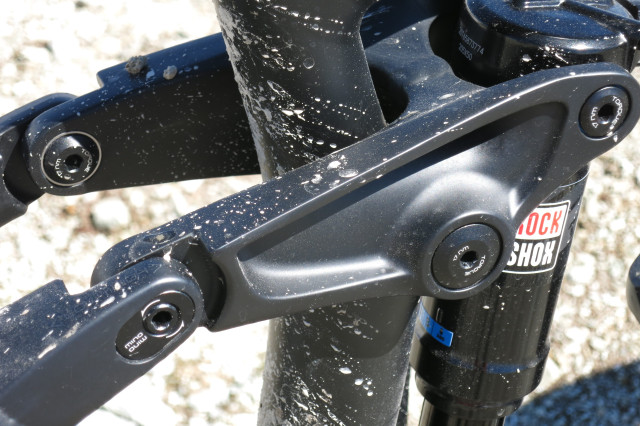
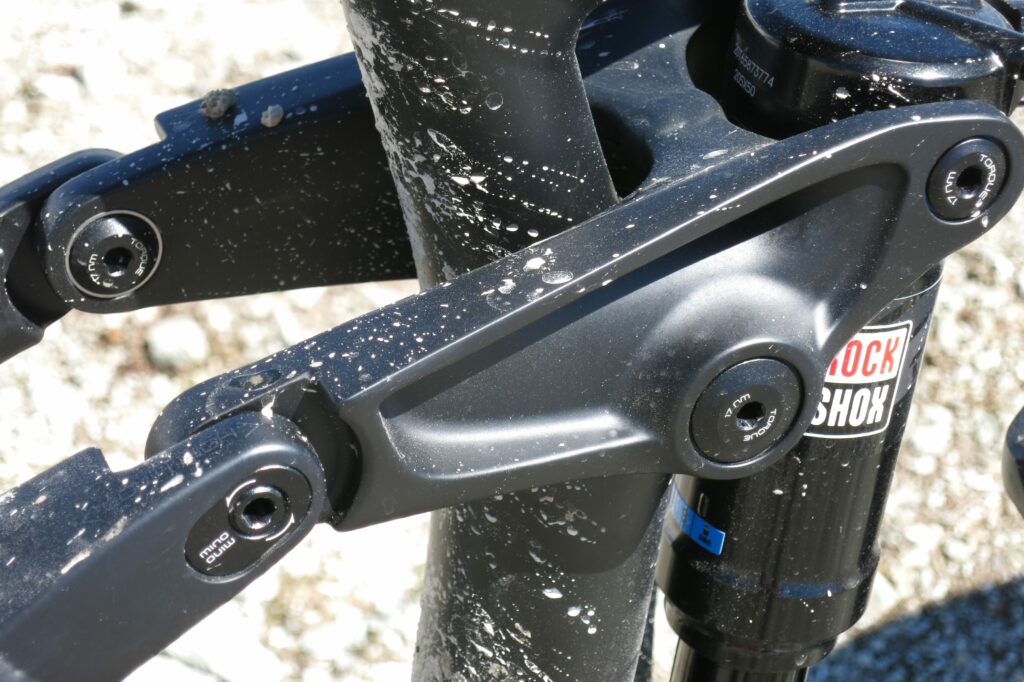
Mino link: The Mino link is an asymmetric pivot in the rear linkage with two positions. The stock position gives a 67.4° head tube angle and a 338mm bottom bracket height. You can swap the link around to slacken the head tube to 66.9° and lower the bottom bracket by 6mm. In previous versions the Mino link had a stock position and a higher position, rather than a lower one, but Trek told us that few people wanted to lift the bike from stock so for this year it works the other way round.
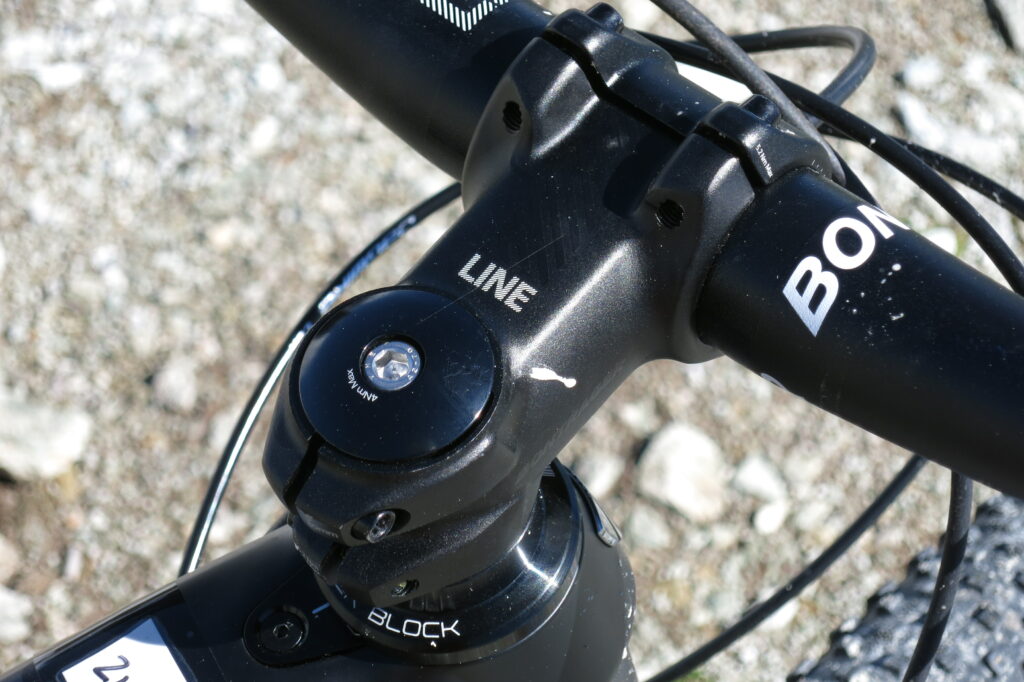
Line 35: The Powerfly FS and LT bikes have 35mm diameter bars with a matching stem. This allows them, they say, to make bars with similar characteristics to current 31.8mm units that are lighter. They’re also keen on the look of the beefier cockpit.
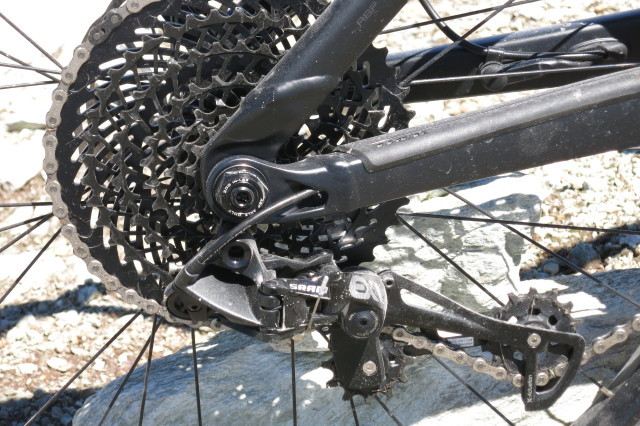
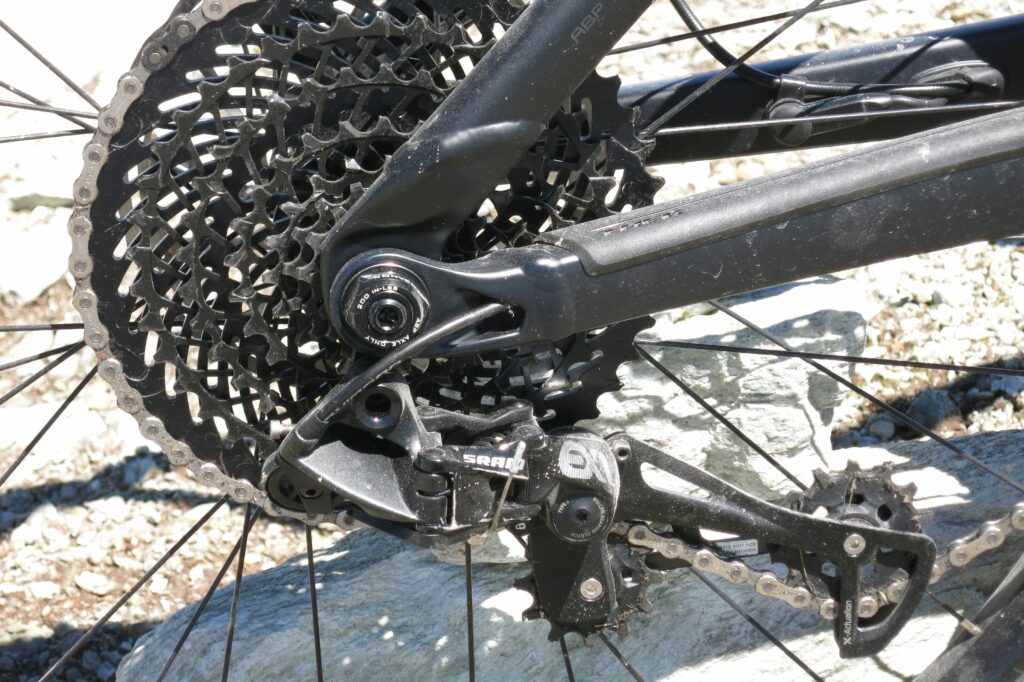
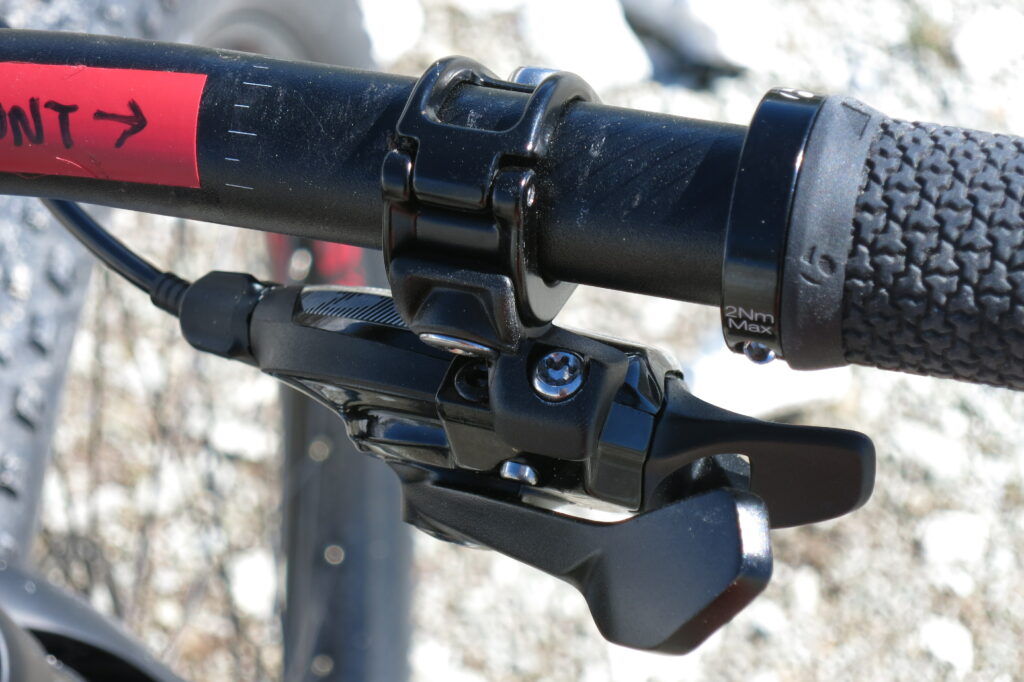
Sram EX1 drivetrain: Sram have developed EX1 as a specific e-bike solution and it differs from non-powered transmission components quite drastically. The groupset is designed for one shift at a time rather than multiple shifts: the power of a motor combined with the bending of the chain over multiple sprockets at the back is a common cause of chain failure in electric mountain bikes. The cassette has eight sprockets and they’re designed, like a thick-thin chainring, to accept the chain only in one position. There’s a special tooth on the sprockets that relocates the chain if it’s not correctly positioned. That allows SRAM to tailor the shifts specifically to that chain position and as such they claim they’re much better under power. The ratios on the cassette, and the gaps between them, are also designed to work in tandem with a motor.
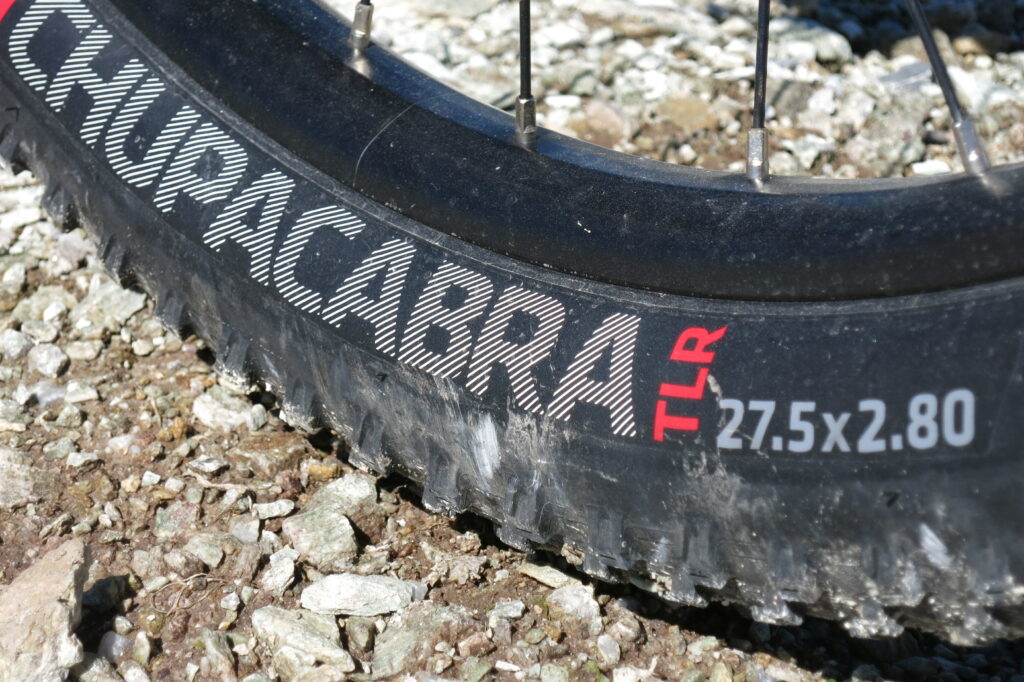
27.5+: I’ve said it before and I’ll say it again: 27.5+ is a great tyre format for electric mountain bikes. You get the benefits of extra cushioning and grip, and the only real downside is extra weight, and that’s hardly an issue on a 20kg bike with a motor.
The ride
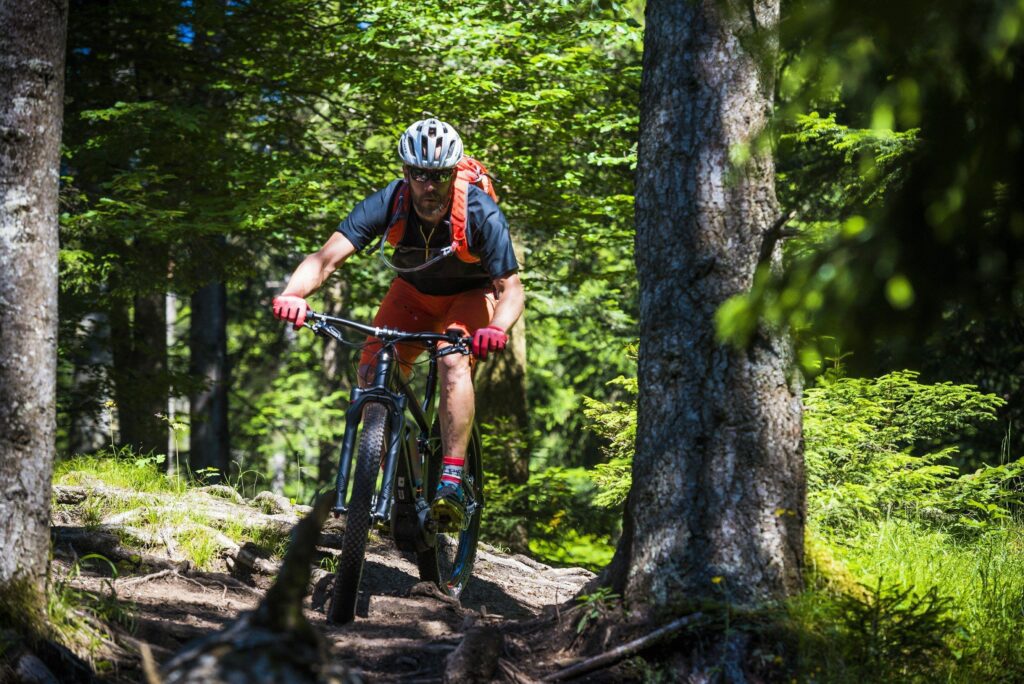
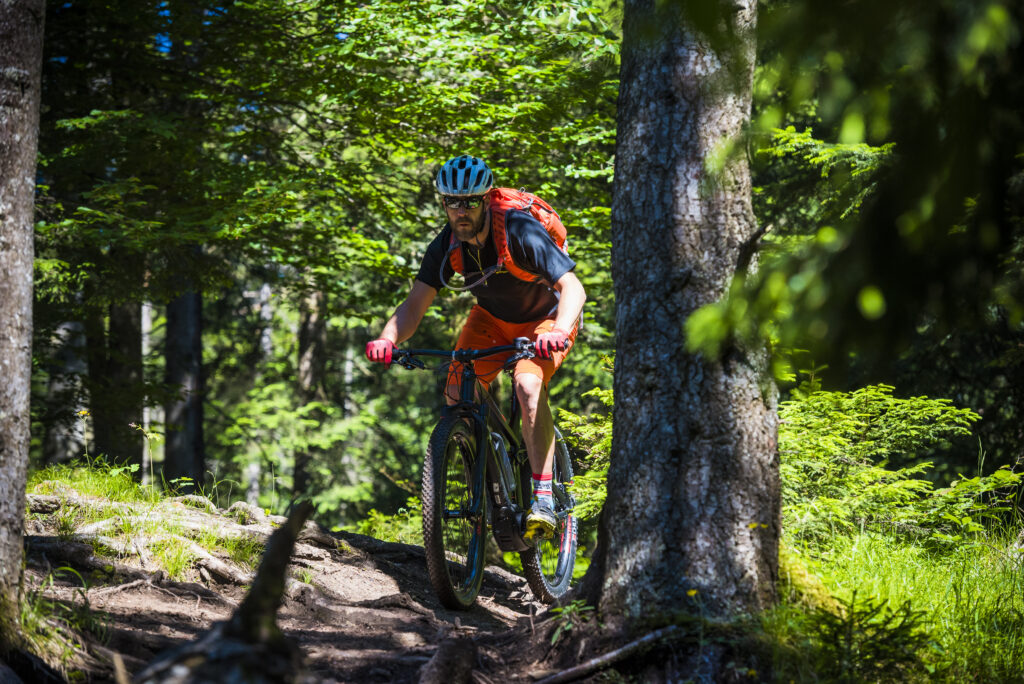
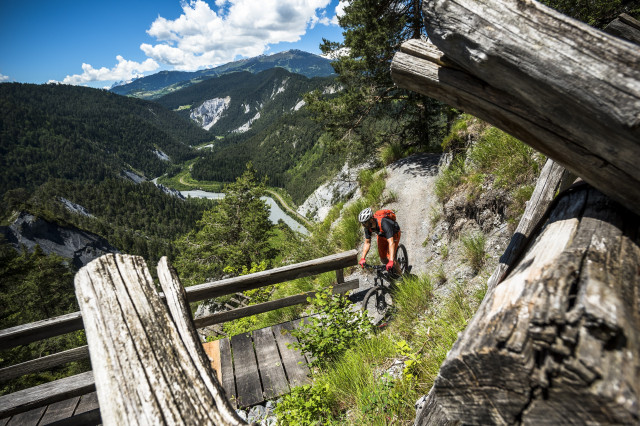
The Powerfly 9 FS is a very well-balanced bike and it’s extremely capable across varied terrain. With a 130mm Rockshox Pike fork and matching travel at the rear, it’s got enough capacity for some bigger hits and it’s very composed on lumpy descents. At times it feels like the bike has more travel than that; probably that’s down to the extra capacity of the 2.8” Bontrager tyres. I was running my tyres at about 25psi because I’m a heavy rider and didn’t want to shred them on the rocks, but I probably could have gone lower. The tyres struggled a bit at times, especially in the morning when the dew made rocks and roots slicker. They got better during the day as the trails dried and I wore the shine off them a bit, and were very good on the less technical riding on the second day. They’re a candidate for a swap, though, depending on your riding style; something tackier and more aggressive would certainly help with grip on the more technical uphills.
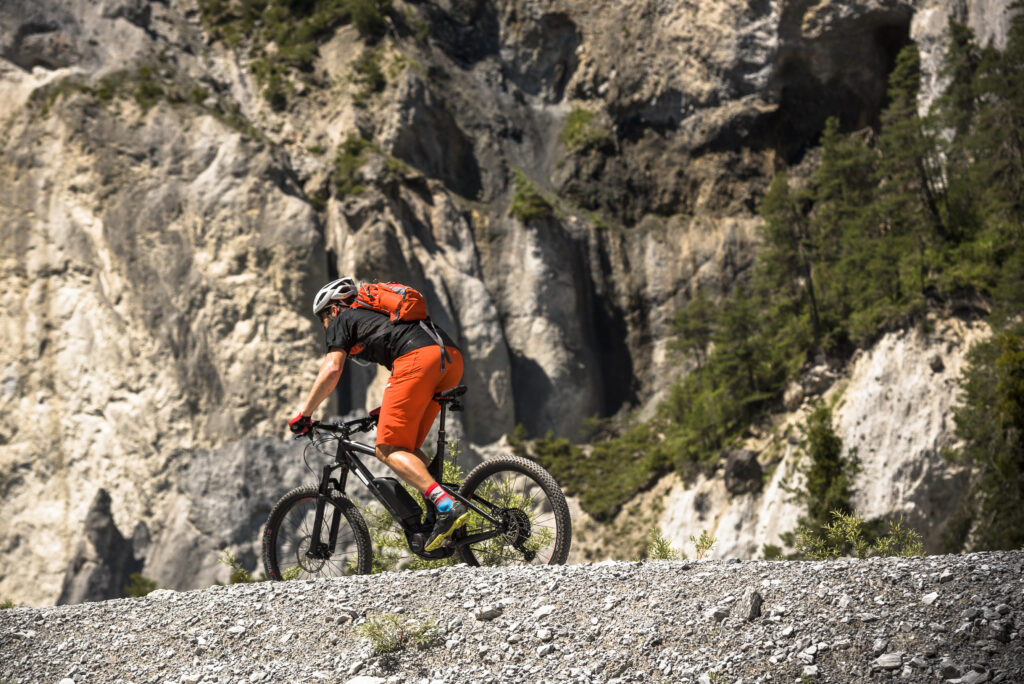
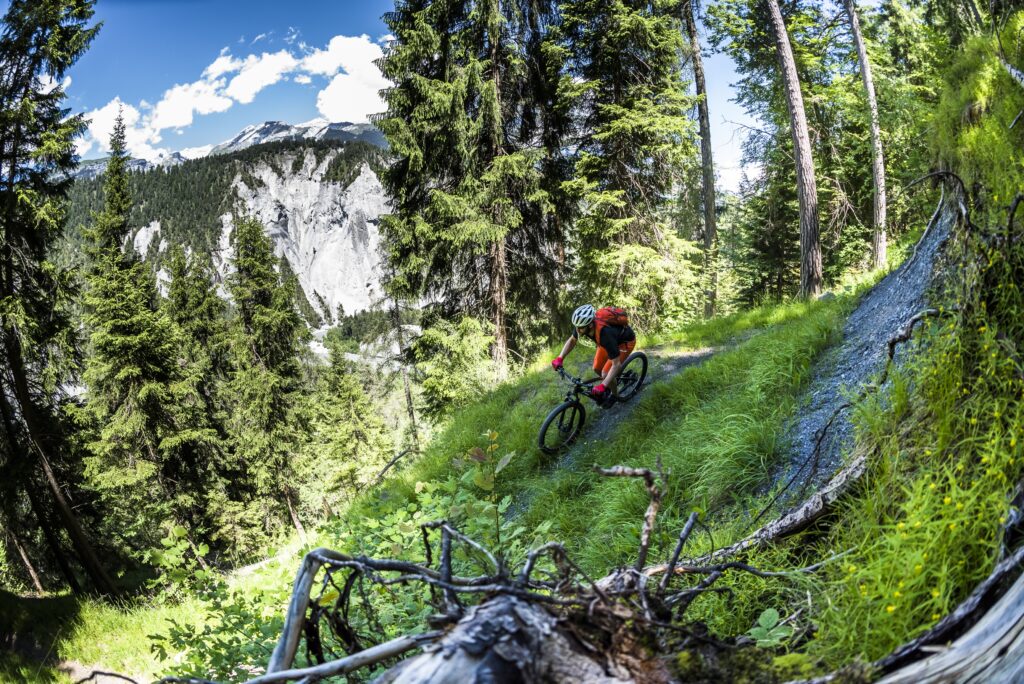
Climbing on the Powerfly is, for the most part, a joy. Even in Eco mode it’s significantly easier than trying to do the same job on even a super-light trail bike. There was one section on the first day of riding, right after a big lunch, that climbed 300m in 3km with some 20% off-road sections. With café legs on a standard bike it would have been purgatory; on an assisted bike it was, if not effortless, easy enough.
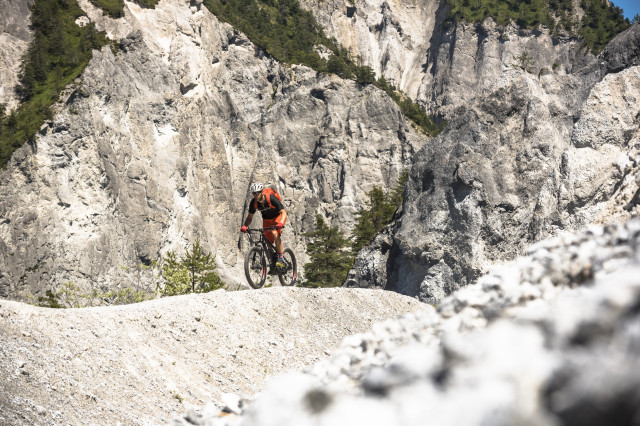
Having the power available changes the nature of climbing. Because you’re not on the limit the whole time it becomes more of a technical challenge, as opposed to a physical one. It’s still engaging to ride and you can concentrate more on your line choices. Your weighting on the bike is different: more needs to be over the back wheel to stop it spinning out. That makes keeping the front down more difficult at times; I found that at times I was lowering the seatpost a bit on climbs to keep myself nice and compact. With the extra help from the motor, getting maximum efficiency from your legs is not such an issue.
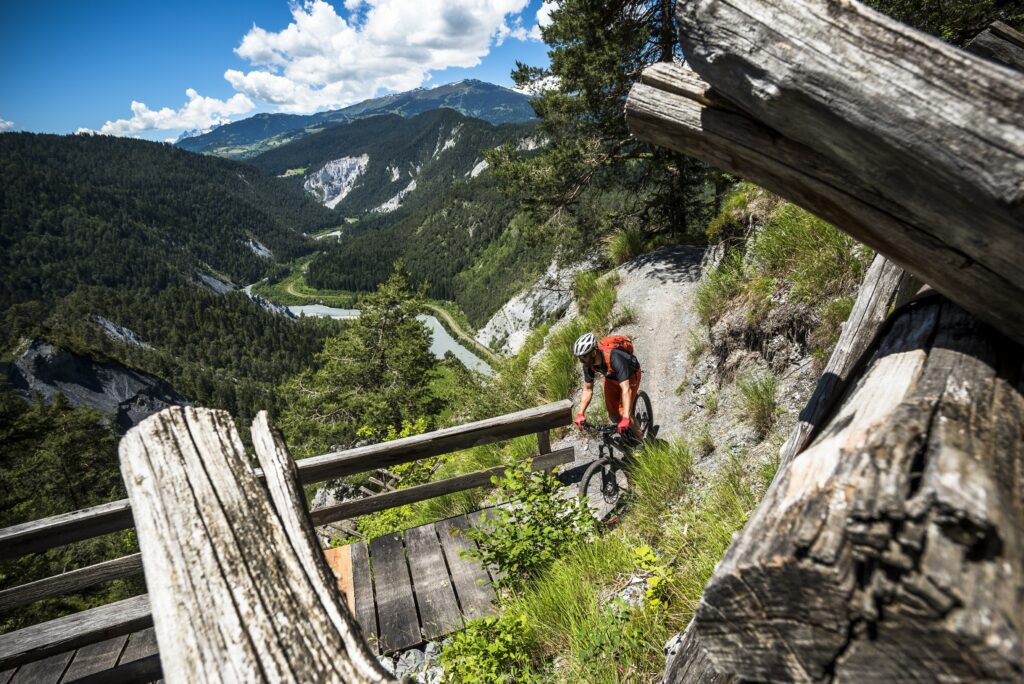
Certain things need care. There’s a tendency for the bike to surge a bit under power, which can lead to understeer on tight uphill turns. Often you need to be braking to keep the bike in line, and that takes a bit of getting used to. One one exposed section along a steep mountain face many people chose to turn the motor off entirely to make the bike as predictable as possible; I kept it in Eco mode and found it manageable.
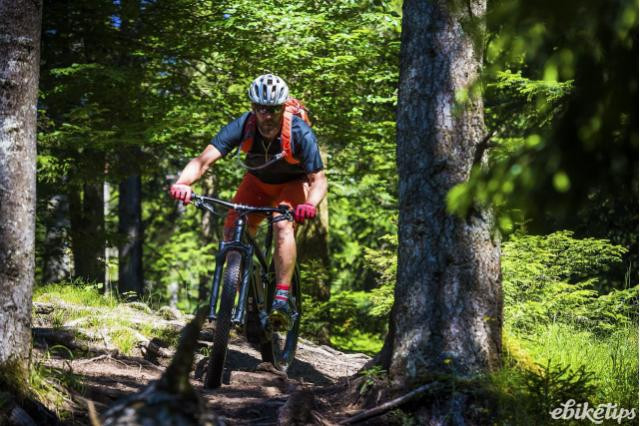
The variable assistance means that it’s easier to stay as a group when you’re riding. As a rule I used the bike in Eco mode and made myself do a bit of work. If you’re slipping off the back then you can bump the assistance up a notch to wind yourself back to the group. If you have a very mixed group then the weaker riders will use more juice, but there’s always the option to swap batteries between bikes to even things out.
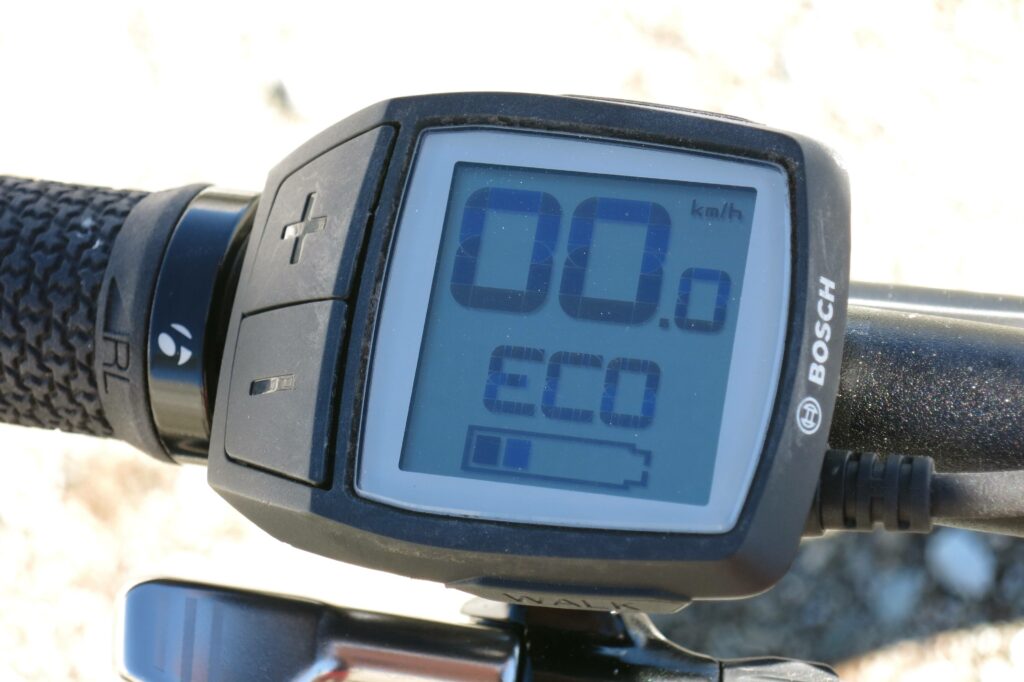
Changing modes is handled by Bosch’s new Purion display, which we’ve covered separately. It’s a neat and compact way of getting power modes and data accessible, but the mode switching isn’t as positive as the standard Bosch remote and it’s odd that’ve chosen not to have the current power mode always visible; that’s one of the two things (along with battery level) that you’ll always want to know.
SRAM EX1 will be getting a review all of its own but it’s worth laying down the basics here. The eight-speed system is notable for its very crisp shifts and good integration with the Bosch motor, and for climbing it gives a good range of gears and excellent power transfer. It’s not without its compromises though. Eight speeds over a 436% range means some big gaps, and the 33.3% jumps in the middle of the block – 18 to 24, and then to 32 – are especially noticeable. 18 to 24 is the worst: you’ll be using the 18 cog that’s when you’re cruising up shallow stuff, and when you just want to drop down to make the job a bit easier it’s much too big a jump. Further up the cassette, when you’re going more slowly and the riding is more technical, it’s less of an issue. The one-shift-at-a-time nature of EX1 is there for a reason: really clean shifts and not too much stress on the chain. It takes a bit of getting used to, and there are times when you need to anticipate dumping a few gears and get the job done before you need to.
Range
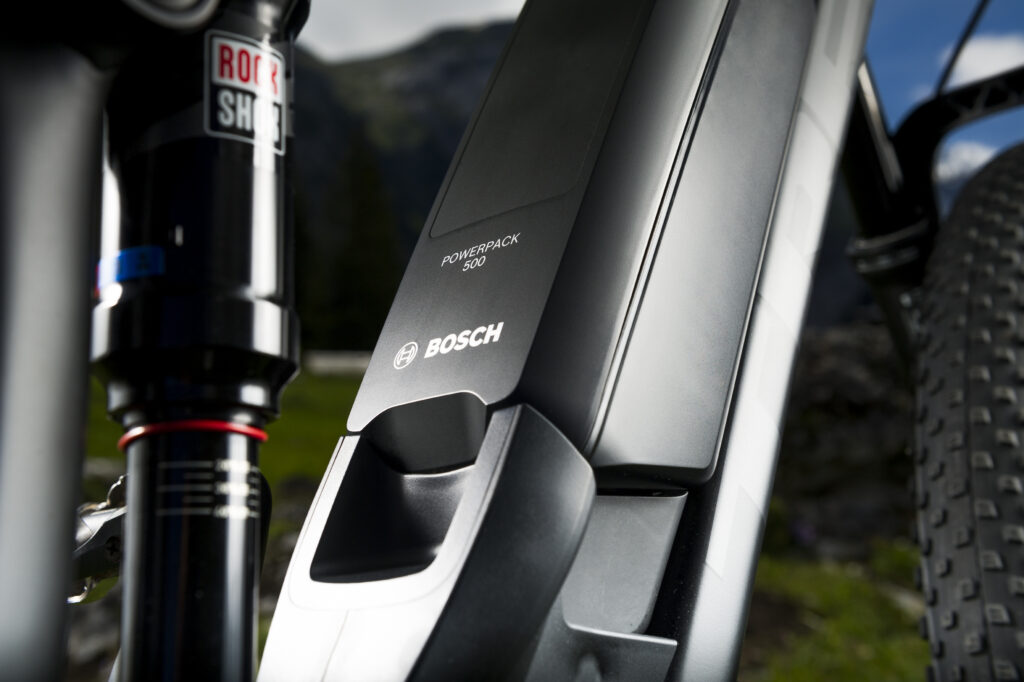
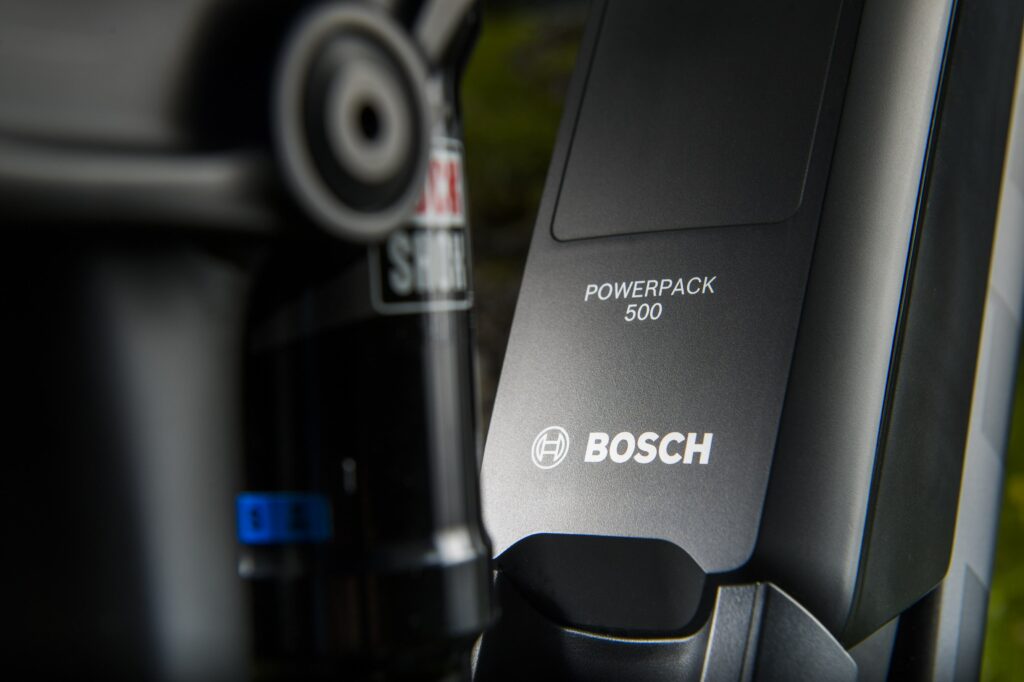
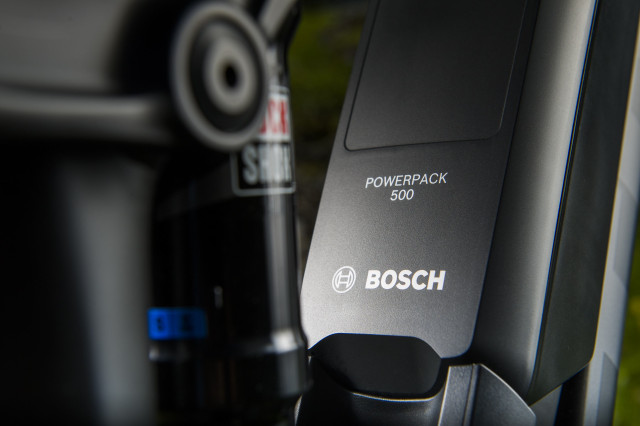
The 500Wh battery gives the Powerfly FS a very good range. You’ll hear figures over 100km bandied about, but realistically you won’t get anything near that if you’re doing something that would be considered ‘proper’ mountain biking.
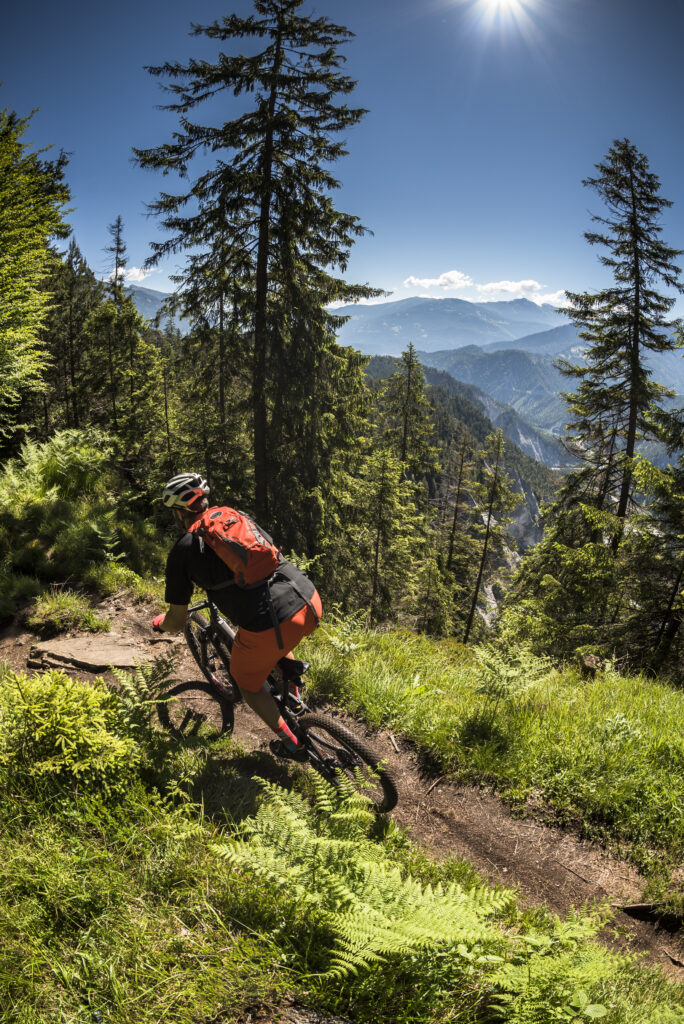
We were out in Flims, Switzerland, to ride the bike and I managed to get two big rides in on the Powerfly FS. The first was a 44km loop taking in some big climbs and plenty of varied and fairly technical terrain. I mostly used the Bosch motor in Eco mode and Tour on the steeper bits, with time in Sport and Turbo restricted to the very odd occasion when the ground was steep enough and also grippy enough to make it a viable option.
I made it round the ride, which included 2,200m of climbing, with just enough battery to roll back into town to the hotel. It was three and a half hours of riding over the course of the day, and although I certainly wasn’t having to work as hard as I would on a non-powered bike, it wasn’t a free ride either.
The second day I went out for a more leisurely ride on less technical terrain, 1,500m of climbing in total which included a 9km, 1,100m climb up to the ski station above Flims. That climb was partly on tarmac but mostly on a dirt road that got progressively steeper and more broken the higher it went. I was taking it easier than the day before and spent more time in Tour and occasionally Sport mode. After three hours and 37km I was back at the hotel with 2 bars of battery left and the Purion head unit saying it was good for another 15km.
At 92kg I’m hardly a lightweight; other more slender riders managed to make it back from the first day’s riding with more left in the tank, although the difference between my remaining charge and that of someone 30kg lighter than me was a lot less marked than you might expect. Obviously you can extend the range of the bike handsomely by carrying an extra battery or a charger, and either swapping halfway or plugging the bike in at a café at lunch. Bosch have just unveiled a smaller compact charger for that very purpose. The downsides to carrying a spare battery are that it’s heavy, bulky and very expensive: A spare 500Wh unit will set you back £700.
Overall
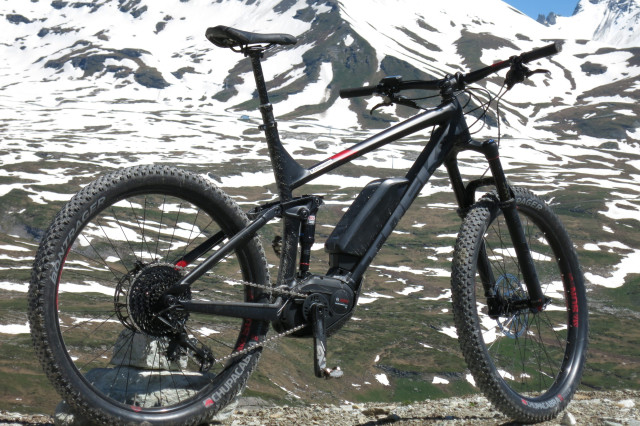
Overall the new Trek Powerfly puts in a very solid performance. It’s a fun bike to ride, and the motor’s application of power is progressive and easy to get used to. There’s enough capacity in the frame, fork and tyres to soak up some pretty big hits on the way back down again, and the battery capacity means long rides in the mountains are a possibility on one charge.
SRAM’s EX1 isn’t without its minor compromises, especially in the middle of the eight-speed block, and the Bontrager tyres aren’t aggressive enough for the more slippery stuff. But overall it’s a really well-considered bike. Is it worth the £4,275 Trek are asking? Well, that’s up to you. I’d have to say though that if it was my own money I’d probably fork out the extra £75 and get the long travel version, which ups the travel to 150mm at either end. There will be a minor weight penalty for that but with a motor that’s a penalty worth paying for the extra bump-soaking capacity.
About the bike
Tell us what the bike is for, and who it’s aimed at. What do the manufacturers say about it? How does that compare to your own :
“Powerfly builds on its success with a new full suspension line-up that borrows from Trek’s proven off-road legacy.
The full suspension Powerfly makes mountain biking even more fun. The Bosch Performance CX pedal assist system makes for a supremely capable bike that allows you to go further and have more fun.
Key features
Trek MTB legacy makes Powerfly a true mountain bike
Knock Block frame defence protects from spinning handlebars
ABP gives you more confidence and control on the trail
Powerful central-mount Bosch motor, for speeds up to 20 mph”
State the frame material and method of construction. List the components used to build up the bike.:
-
Frameset
- Frame
- Alpha Platinum Aluminium, ABP, Boost148, EVO link, E2 tapered head tube, Mino Link, Knock Block steerer stop, internal derailleur and dropper post routing, 130mm travel
- Front suspension
- RockShox Pike RC, Solo Air, Charger Damper, E2 tapered steerer, Boost110, G2 Geometry w/51mm offset, 130mm travel
- Rear suspension
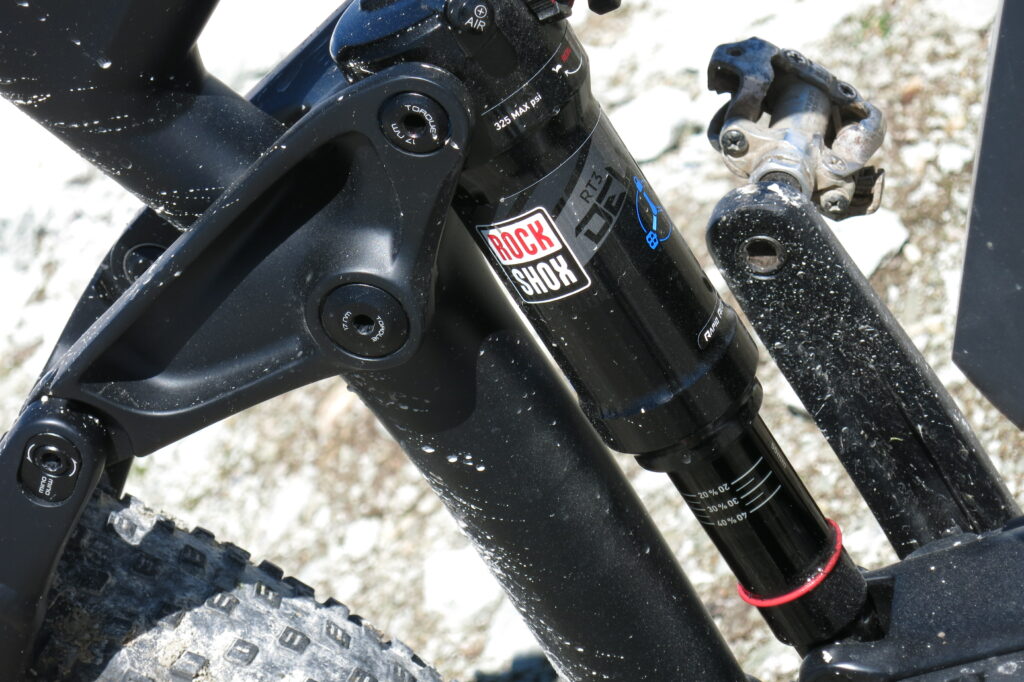
- RockShox Deluxe RT3, tuned by Trek Suspension Lab, 205x50mm
-
Wheels
- Wheels
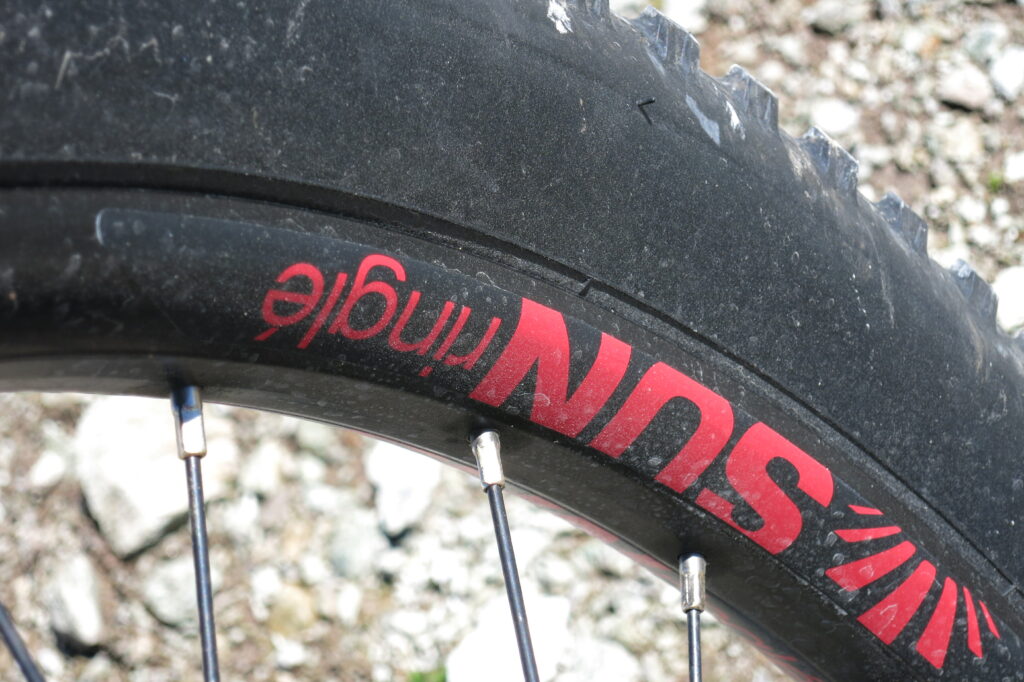
- Bontrager sealed bearing, alloy axle hubs, Boost110 front, Boost148 rear; SUNringlé Duroc 40 SL 32-hole rims
- Front Hub
- Bontrager sealed bearing, alloy axle, Boost110
- Rear Hub
- Bontrager sealed bearing alloy axle, Boost148
- Rims
- SUNringlé Duroc 40 SL 32-hole
- Tyres
- Bontrager Chupacabra, Tubeless Ready, Inner Strength sidewalls, aramid bead, 27.5×2.80″
-
Drivetrain
- Shifters
- SRAM EX1, 8-speed
- Rear derailleur
- SRAM EX1, Roller Bearing Clutch
- Crank
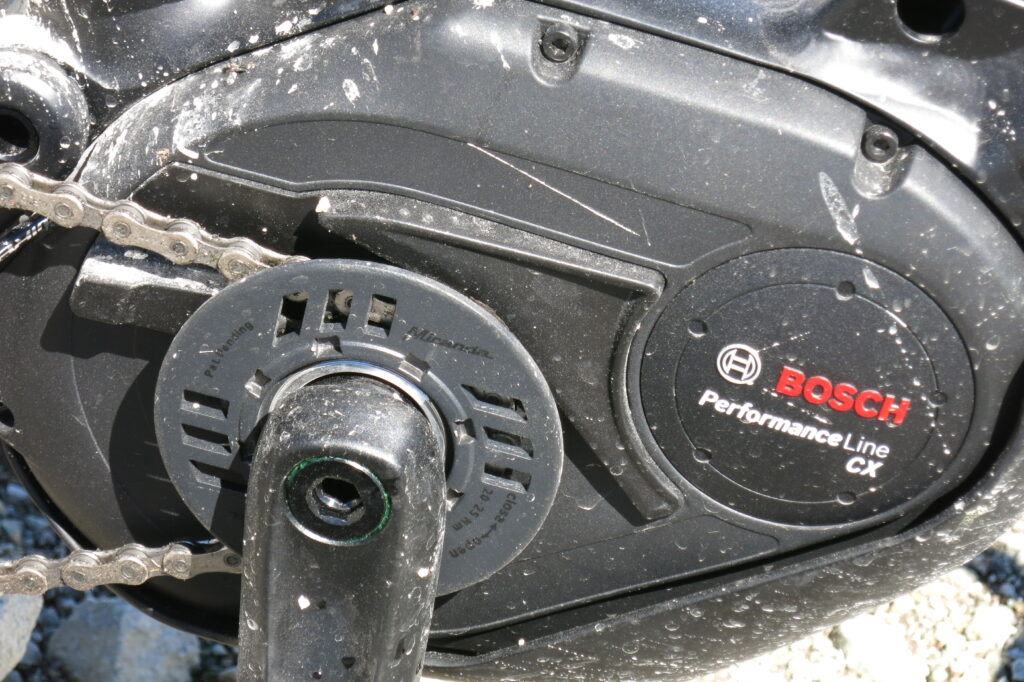
- SRAM EX1, 15T w/chainguard
- Cassette
- SRAM XG-899 11-48, 8-speed
-
Components
- Saddle
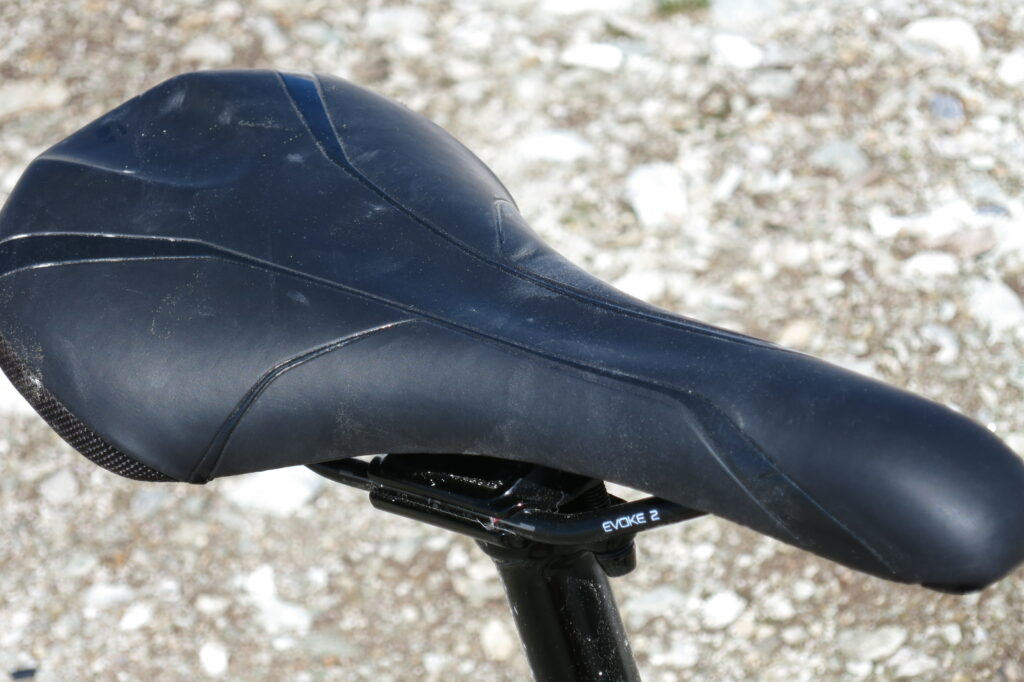
- Bontrager Evoke 2, chromoly rails
- Seatpost
- Bontrager Drop Line 125, under-bar remote lever, 2-bolt head, 31.6mm, zero offset, internal routing
- Handlebar
- Bontrager Line, 35mm, 15mm rise, 750mm width
- Grips
- Bontrager Race Lite, lock-on
- Stem
- Bontrager Line, Knock Block, 35mm, 0 degree
- Head set
- FSA Knock Block IS-2, E2, sealed alloy cartridge
- Brake set
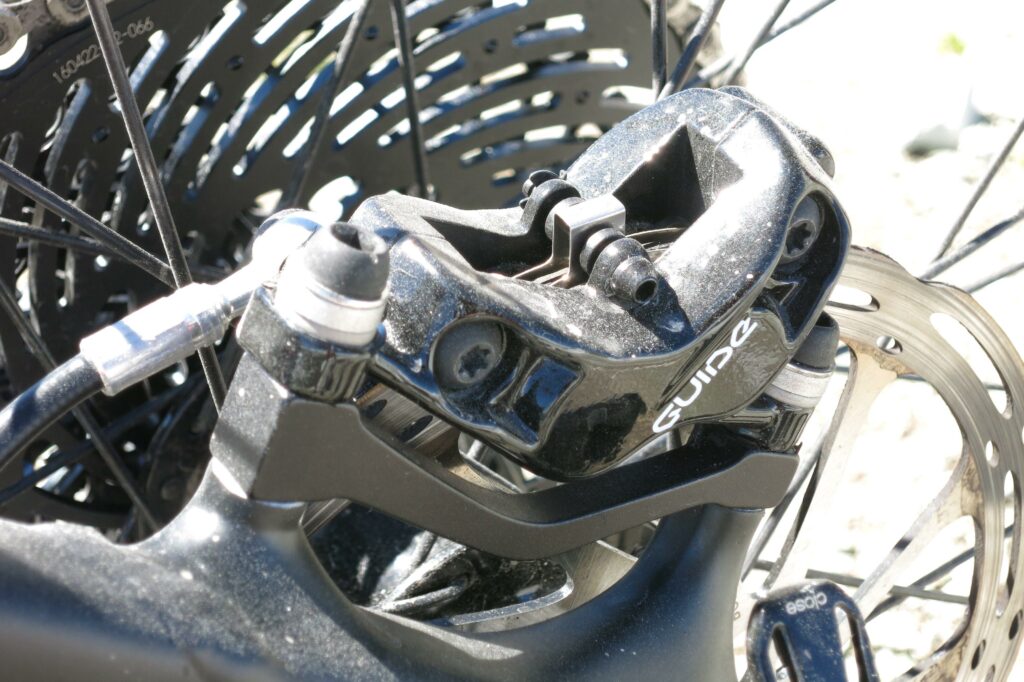
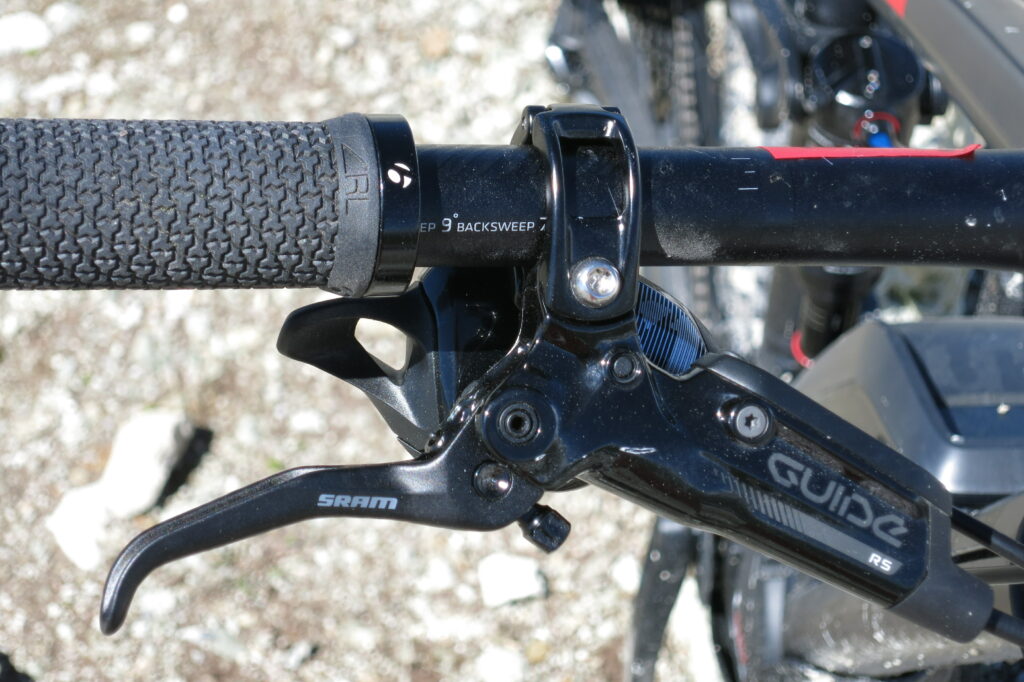
- SRAM Guide RS hydraulic disc, 200mm front/180mm rear rotors
-
Accessories
- Battery
- Bosch Powerpack Performance 500 downtube
- Controller
- Bosch Purion Performance
- Motor
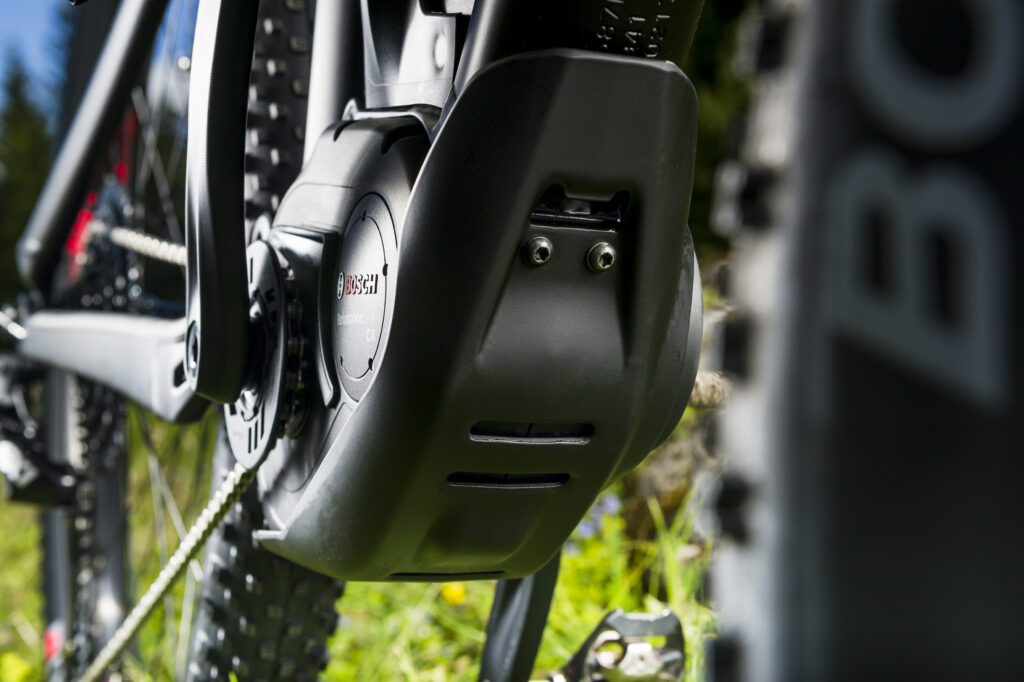
- Bosch Performance CX, 250 watt, 75Nm
Frame & Fork
How much suspension travel does the fork have?:
Was the bike comfortable to ride? Tell us how you felt about the ride quality.:
Overall rating for frame
How much suspension travel does the rear end have?:
Did the bike feel stiff in the right places? Did any part of the bike feel too stiff or too flexible?:
Tell us about the build quality and finish of the frame:
Tell us about the geometry of the frame:
Tell us about the materials used in the frame:
Riding
How did the bike transfer power? Did it feel efficient?:
How would you describe the steering? Was it lively, neutral or unresponsive?:
Tell us some more about the handling. How did the bike feel overall? Did it do particular things well or badly?:
Rate the bike for sprinting:
Rate the bike for high speed descending
Rate the bike for technical descending:
Any comments on technical descending?:
Rate the bike for flat cornering:
Rate the bike for technical climbing:
Any comments on technical climbing?:
Rate the bike for climbing efficiency:
Rate the bike for agility:
Suspension
Rate the fork for performance:
Any comments on fork performance?:
Rate the fork for durability:
Rate the fork for efficiency:
Rate the fork for value:
Rate the rear suspension for performance:
Rate the rear suspension for durability:
Rate the rear suspension for efficiency:
Rate the rear shock for value:
Rate the balance and performance of the suspension overall:
Drivetrain
Rate the drivetrain for performance:
Any comments on drivetrain performance?:
Rate the drivetrain for weight:
Tell us some more about the drivetrain. Anything you particularly did or didn’t like? Any components which didn’t work well to:
Rate the drivetrain for value:
Wheels & tyres
Rate the wheels for performance:
Rate the wheels for durability:
Rate the wheels for weight:
Rate the wheels for comfort:
Rate the wheels for value:
Rate the tyres for performance:
Any comments on tyre performance?:
Rate the tyres for durability:
Rate the tyres for weight:
Rate the tyres for value:
Tell us some more about the tyres. Did they work well in the conditions you encountered? Would you change the tyres? If so, what:
Controls
Rate the controls for performance:
Any comments on controls performance?:
Rate the controls for durability:
Rate the controls for weight:
Rate the controls for comfort:
Rate the controls for value:
Anything else you want to say about the componentry? Comment on any other components (good or bad):
Summary
Did you enjoy riding the bike?:
Would you consider buying the bike?:
Which components had the most effect (good or bad) on the bike’s performance? would you recommend any changes?:
Would you recommend the bike to a friend?:
Rate the bike overall for performance:
Rate the bike overall for value:
Use this box to explain your score:
All the deals displayed on our review pages are pulled from a constantly updating database feed of the best affiliate deals available. The criteria for deciding on what are the best deals is who is offering the lowest, delivered price. In most cases we will be showing the very best deal available online, but sometimes you may be able to find an item cheaper. If you can please feel free to post a link in the comments box below. To find out more about affiliate links on road.cc click here.