
Decathlon’s in-house bike brand is Rockrider and this RACE 900S is a full-suspension, cross-country bike with specifications that will have you double-checking the price. A carbon frame, wireless shifting and specs that wouldn’t be out of place on a bike twice the price. But, while it looks amazing on paper, can it deliver the ride of top options in the best mountain bike space?
Rockrider RACE 900S mountain bike – Technical details
The bike is classified as a cross-country bike and it is intended for racing in both XCO (cross-country Olympic) and XCM (cross-country marathon). Sponsored riders have already given the bike some pedigree, including top-ten results in the UCI MTB World Cup events and a win at Transvesubiene. As a previous Transvesubiene rider, I can tell you that it’s a crazy point-to-point race in the south of France, tackling super technical descents (I had to walk several) and challenging climbs (I had to walk some of these, too), pushing the boundaries of what you’d classify as XC and, in reality, it’s more of a blend of enduro and cross-country.
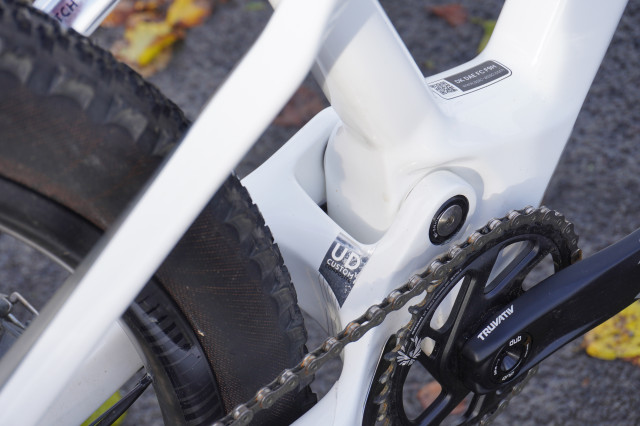
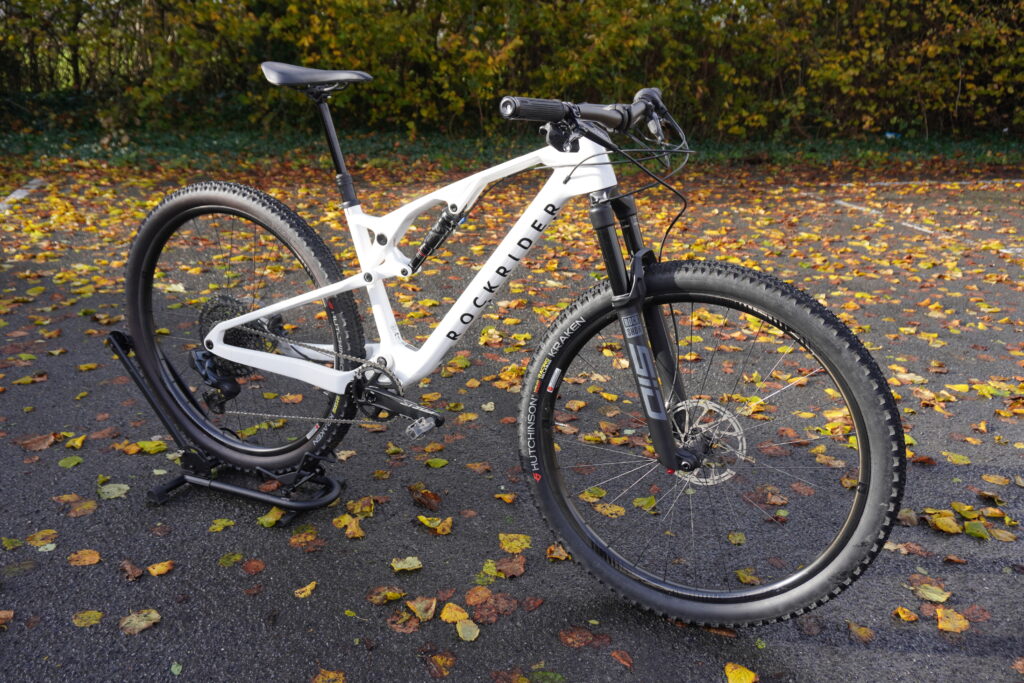
The frame is constructed of carbon fibre and has 120mm of travel with a linkage-driven single-pivot design. The brake and dropper seat post cables are routed internally and, while the model we have has wireless shifting, for cabled versions the rear routing would be external, with small clamps placed on the underside of the downtube. The cable ports at the front are quite small but the area near the bottom bracket offers greater access. However, it exits pretty close to the crank arms. While not everyone would agree, I am glad to see there is no internal headset routing. It does seem many bikes are heading towards an internal design but there are other ways to clean up your handlebars.
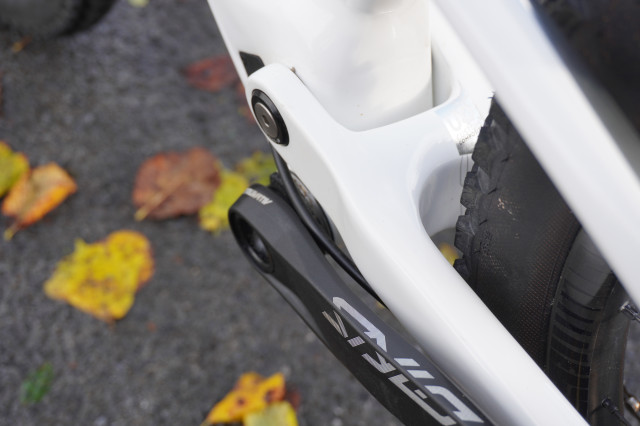
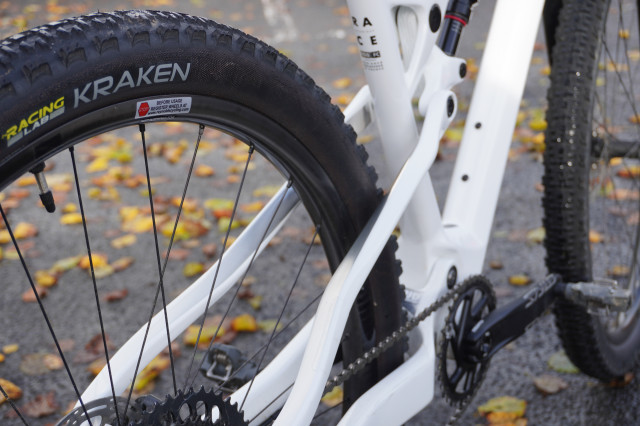
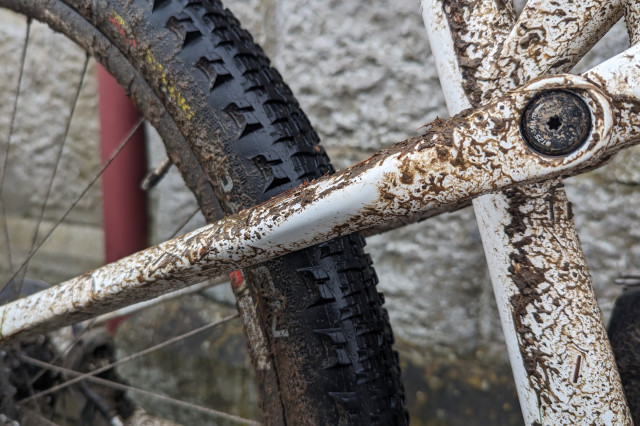
The chainstays in the rear triangle are very wide, while the seatstays have a flattened section, allowing the frame to flex slightly and eliminating the need for extra pivots. There is a press-fit BB92 bottom bracket shell, which may be a small contributor in keeping the price low, a single bottle cage mount, a 31.6mm seat tube offering plenty of dropper seatpost options and the rear derailleur is attached by an SRAM UDH derailleur hanger.
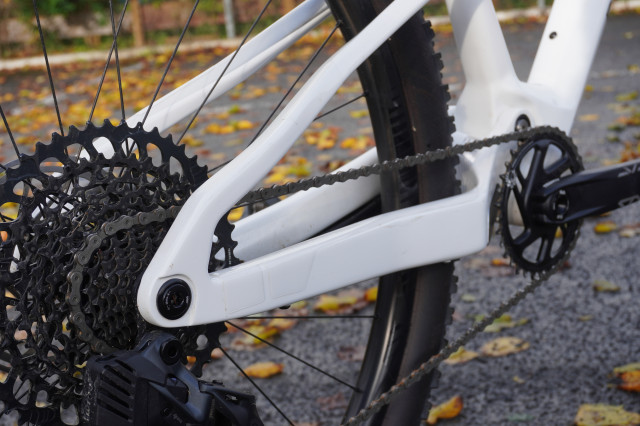
Rockrider claims a frameset weight of 1,980g, which does not include the Rockshox SIDLuxe Select shock. The overall weight of our test bike with tubeless tyres and no pedals is 12.2kg (26.9 lbs), showing that while it is targeted at racers, it is not a flyweight. The bike comes with a dual-lockout system that engages both the front and rear suspensions at the same time using the RockShox TwistLoc system.
Rockrider RACE 900S mountain bike – Componentry
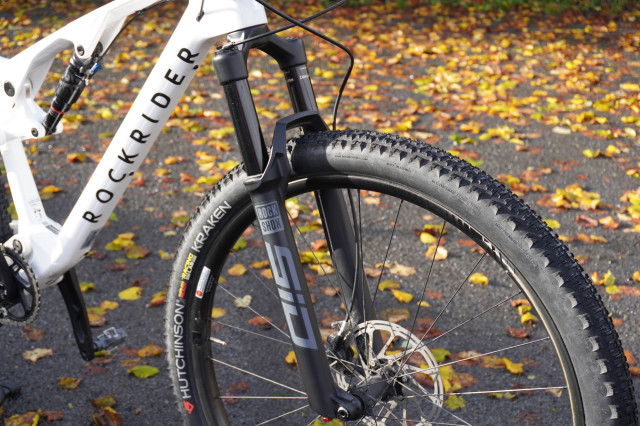
The version we have on test has some components that will be different to the UK market version. Mavic Crossmax wheels will be fitted in place of the Reynolds carbon wheels and a RockShox Reba in place of the SID seen here.
Other key parts, including the wireless SRAM GX AXS drivetrain, dropper seatpost, brakes and finishing kit remain unchanged.
Putting the GX AXS drivetrain onto a bike at this price point, at full retail price, is almost unheard of for the current bikes on the market and a very nice touch at that.
The aluminium Mavic Crossmax wheels that come on the UK spec have a narrower rim internal width of 25mm as opposed to 30mm front and 28mm rear on the Reynolds wheels.
The SID benefits from large 35mm stanchions and impressive performance, holding up well through mid-travel, with ample stiffness but still retaining speed for faster singletrack. Because there are several differences between the two forks, the Reba is likely to reduce performance in some ways, although hopefully not significantly.
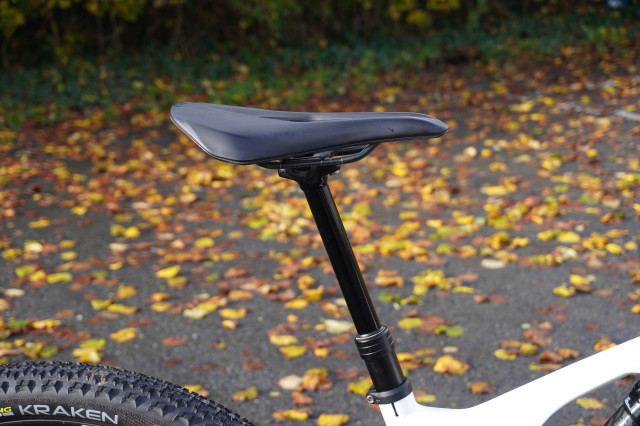
The dropper post that has been fitted is unbranded, and while it had a little more wiggle than the top brand options, it still operated well. The cable pull was smooth and it returned quickly.
The stem and handlebar are in-house items made from aluminium and the flat top stem looks great while also keeping the front end lower. The stem length varies with size from 60mm on the S to 90mm on the XL. The 720mm bar width was enough for me, however, many bikes will come with much wider bars. A wider bar would be better, as they are easy to cut down if needed.
Rockrider RACE 900S mountain bike – Performance
The substantial carbon sections in the rear triangle match the wide carbon sections in the headtube, which is one of the first things you notice when sitting on the bike. The stem has a negative 7-degree angle and a flat top for a race-like look. With a 120mm fork and 105mm headtube length, it has a higher front end than some other race-oriented XC bikes, so the position isn’t so low that it reduces confidence on steeper downhills. Some riders may prefer a lower riding position and as seen with some of the elite racers using the Rockrider RACE 900S, a 100mm fork can be fitted and there are several stems available with a steeper negative angle.
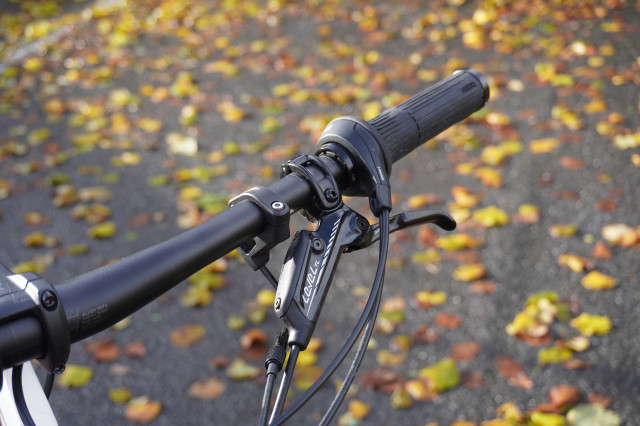
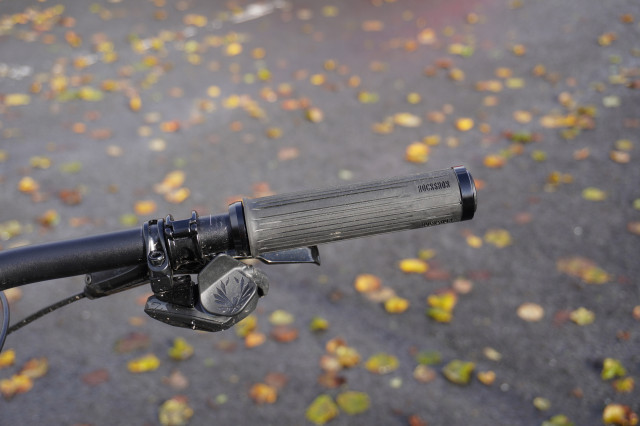
I found the riding position to be comfortable and the dual lockout, activated by the grip-shift style Twistloc, works well for both climbs and flats. The one drawback for me is the grips, which are narrow and firm – I assume this was installed to match the Twistloc’s diameter. It is possible to change the grips and several pro riders who use the 900S have done so but it will not have the same smooth aesthetic.
With a dual-lockout and cable-actuated dropper, the wireless AXS shifter eliminates one cable but there are still a few on display. External cabling makes it easier to work on and replace cables as needed.
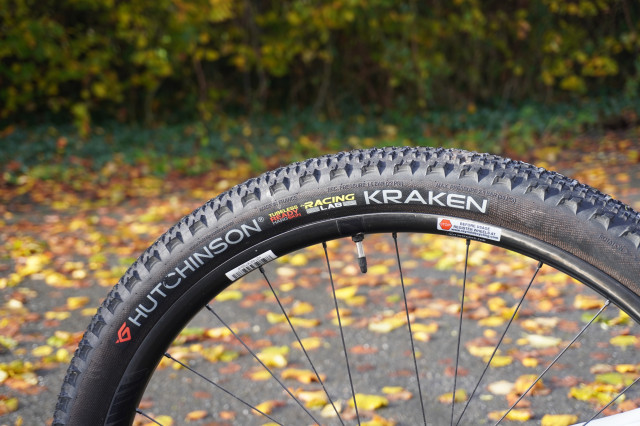
The 2.3in Hutchinson Kraken Racing Lab tyres offer good width and work well in a range of conditions and the bike rolls pretty well. They don’t match the best mountain bike tyres for cross-country when it comes to low rolling resistance and there are trade-offs on some surfaces.
They do well in the wet as long as the mud isn’t too deep. The carcass varies on both ends, with the back Hardskin shell being firmer and more puncture-resistant. The Krakens are suitable as a year-round riding tyre, but if you intend to race the bike, a more supple, faster rolling tyre would be a sensible upgrade.
The front end, when matched with the SID fork was great and was simple to set up and adjust. It holds up nicely during the mid-stroke and absorbs the blows well on heavier hits. If the Reba can provide similar results, it will create a confident bike to ride.

The rear suspension setup with SIDLuxe Select + shock was more difficult to set up. The 2.5mm bolt head was in an awkward place for setting the rebound damping making adjustments more difficult.
I had the bike set up with the recommended sag but I was blowing through full travel on every ride, even with no big jumps or impacts. Increasing the pressure will likely reduce small bump sensitivity but you could try volume spacers to increase the progression in the stroke. This is something we’ve seen on other Rockrider bikes, such as the AM 100S.
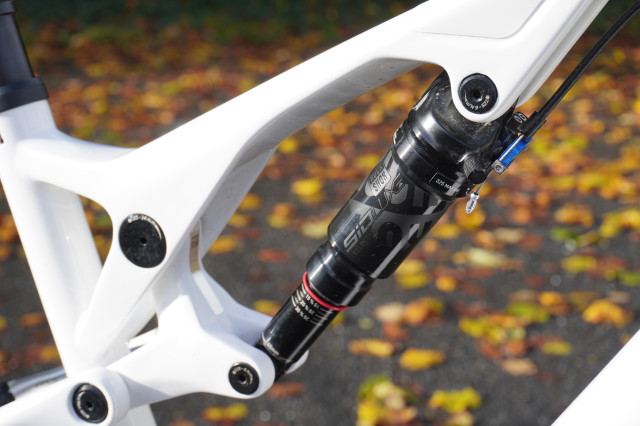
The bike’s overall geometry is not as progressive as some more recent cross-country bikes, such as the Berria Bravo we recently tested. The RACE 900S has a 68-degree head angle across all sizes and the medium has a 420mm reach, which is quite short when compared to other brands’ medium-sized bikes. The seat tube angle is 73 degrees and I ran the saddle at the farthest forward setting to help shift the weight forward when climbing. It did climb well, especially on steeper, more technical climbs.
Riding downhill on typical trail centre terrain, the carbon frame and wide tyres allow you to confidently push downhill and the Reynolds carbon wheels will help with this. It would be interesting to see how the Mavic Crossmax wheels compare, though an alloy rim with a 25mm rim ID paired with a 2.3in tyre is unlikely to give as much support on the corners.
Specific sizing changes are limited and the head tube and seat tube angles, as well as rake and BB drop are the same for all sizes. Crank length ranges from 170mm on the Small to 175mm on the other sizes. The stem length increases from 60mm on the small to 90mm on the XL.
My calf rubbing on the seat stay was something I wasn’t expecting to experience and it’s not something I’ve had on any other bike. The flattened seat stay widens where the leg passes during the pedal stroke. I don’t ride with narrow Q-factor pedals or inward-facing cleats, so I assume other riders may experience a similar problem. It is more of an annoyance than a performance issue but it can be frustrating nonetheless.
The SRAM GX AXS shifting was great, as you would hope and expect. It provides clean, accurate and quick shifting, even under power. One big difference between a cable derailleur and a wireless groupset is the effectiveness of shifting when dropping down to the 10T sprocket. Without any form of cable friction, it just works. Micro-adjustments on the fly while riding are possible and I like the rocker shifter, with the double button location for upshifts. You can also completely customise the button setup, should you wish to swap things around.
Decathlon suggests that the RACE 900S is suitable for cross-country marathon racing and the geometry should make it this way, however, having only a single bottle cage within the front triangle won’t work for a lot of marathon racers.
Rockrider RACE 900S mountain bike – Value and verdict
The SRAM AXS drivetrain will appeal to many interested buyers and there aren’t many other options that can compete on price – with some costing over double the price of the Rockrider. The Specialized Epic EVO Expert costs £6,250, while the Trek Top Fuel 8 costs £4,500, the Cannondale Scalpel Carbon SE1 is £5,500 and the Canyon LUX Trail is priced at £5,500.
There is more to a bike than the groupset though and if you are looking for a different build, the same models will be fitted with a mix of mechanical Shimano SLX, XT or SRAM NX drivetrain components and alloy wheels.
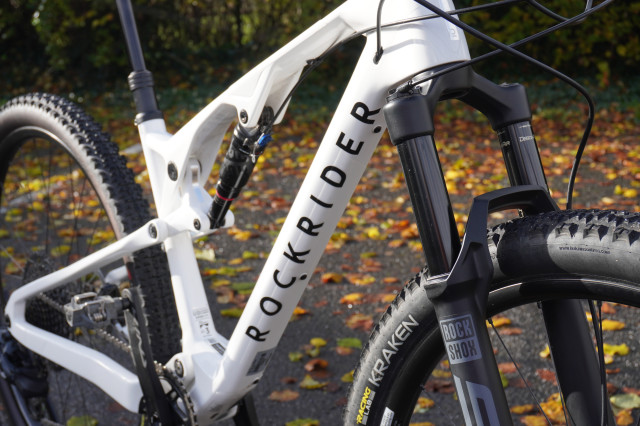
Even if the price element is removed, the Rockrider RACE 900S has a build quality that is competitive with other rival bikes. I can feel a little compromised at times, attempting to meet the demands of both racers and more general riders. For racers, the weight isn’t competitive and several aspects might be improved to boost performance. It also lacks an extra bottle cage. It doesn’t have the most extreme geometry, even for a cross-country bike but it still works well in both technical climbing and descending situations.
Riders sponsored by Rockrider have been seen riding a revamped version, which is expected to be released in early 2024. No pricing or geometry specifics have been revealed, however, it will have two bottle cages and a revised shape to the seat stay, which could stop the problems I experienced. Is it worth the wait and will it be more expensive? At this point, we don’t know but what we do know is that the RACE 900S provides value that surpasses all other options, and while there are a few areas that may not suit everyone, most do not have a substantial impact on performance.
Even after adding volume spacers to the rear shock, a thread-together press-fit bottom bracket, and a pair of carbon wheels, it will still be cheaper than most rivals. Although pushed as a cross-country race bike, I believe the RACE 900S appeals more to general riders and those looking for a fast-riding cross-country bike.
You might also like:
- How to set up your mountain bike suspension
- Cross-country mountain biking: everything you need to know
- Bike check: Nino Schurter’s Scott Spark
About the bike
Tell us what the bike is for, and who it’s aimed at. What do the manufacturers say about it? How does that compare to your own :
his frame was awarded a number of accolades in the 2022 season: 2 top 10 in XCO World Cup, France Marathon Champion and winner of the Transvesubienne
This mountain bike is designed to perform in XC and XC Marathon.
PRODUCT BENEFITS:
Efficiency
Sram Eagle GX mechanical or GX AXS drive train
Lightweight
Full carbon frame Weighs 1980 g in size M (gross without shock absorber)
Shock absorption
Rockshox Reba fork and Rockshox Sid shock with 120 mm travel
Precision
Sram Eagle groupset, 10/52 cassette and 34-tooth Stylo bottom bracket
Braking power
Sram Level T brakes with 180 mm rotor at the front and 160 mm at the rear
State the frame material and method of construction. List the components used to build up the bike.:
Rockrider specification list:
Weight
S: 11.7 kg
M: 11.8 kg
L: 11.9 kg
XL: 12.0 kg
Frame
Full carbon (frame and connecting rod)
1980 grams in size M with connecting rod and screws
120 mm travel
31.6 mm seat post
Compatible with telescopic seat posts (internal passage)
Thru axle
Boost format
PressFit 92 casing
Compatible with 1 bottle cage
Sram UDH derailleur hanger
Drivetrain
Sram GX Eagle 12-speed rear derailleur and Sram GX Eagle shifter.
Truvativ Stylo 6K aluminium crankset (170 mm in S and M, and 175 mm in L and XL)
32T chainring (compatible with 30, 32, 34 and 36T)
SRAM PG1275 10-52 cassette (520%)
Sram PF92 bottom bracket
Suspension
RockShox Reba RL 120 mm Fork
32 mm damping rods
Thru axle
Boost format
RockShox Twist Lock 2022 2-position remote lockout
Weight: 1670 grams
RockShox SidLuxe Select + 190 x 45mm shock absorber
Specific model suited to the kinematics of the bike
Weight 236 grams
Wheels
Mavic Crossmax 2022 Tubeless Ready
1760 g
Inner rim width: 25 mm
24 flat spokes
6-bolt rotors
XD freehub
Sealed cartridge bearings
Brakes
Sram Level T
Sram Centerline 180 mm front and 160 mm rear rotors
6-bolt rotors
Riding position
Rockrider aluminium stem
-7° angle
60 mm in size S
70 mm in size M
80 mm in size L
90 mm in size XL
Rockrider aluminium flat handlebar
720 mm wide
6.5° angle
256 g
Saddle
Fizik Argo Vento
230 g
Seatpost
31.6 mm carbon
Length: 350 mm (size S and M) / 400 mm (size L and XL)
255 g
Tyres
Front:
Hutchinson Kraken Racing Lab 29 x 2.30
Tubeless Ready
Race Ripost XC compound
127 TPI carcass
Weight: 700 g
Rear:
Hutchinson Kraken Racing Lab Hardskin 29 x 2.30
Hardskin protection
Tubeless Ready
Race Ripost XC compound
127 TPI carcass
Weight: 800 g
Frame & Fork
How much suspension travel does the fork have?:
Was the bike comfortable to ride? Tell us how you felt about the ride quality.:
How was the bike in terms of sizing and angles? How did it compare to other bikes of the same stated size and intent?:
Overall rating for frame
How much suspension travel does the rear end have?:
Did the bike feel stiff in the right places? Did any part of the bike feel too stiff or too flexible?:
Tell us about the build quality and finish of the frame:
Tell us about the materials used in the frame:
Riding
How did the bike transfer power? Did it feel efficient?:
How would you describe the steering? Was it lively, neutral or unresponsive?:
Tell us some more about the handling. How did the bike feel overall? Did it do particular things well or badly?:
Rate the bike for sprinting:
Any comments on sprinting?:
Rate the bike for high speed descending
Rate the bike for technical descending:
Rate the bike for flat cornering:
Rate the bike for technical climbing:
Rate the bike for climbing efficiency:
Rate the bike for agility:
Suspension
Tell us some more about the fork. Anything you particularly did or didn’t like? Any features which didn’t work well together?:
Rate the rear suspension for performance:
Rate the rear suspension for durability:
Rate the rear suspension for efficiency:
Any comments on rear suspension efficiency?:
Rate the rear shock for value:
Tell us some more about the rear suspension. Anything you particularly did or didn’t like? Any features which didn’t work well:
Rate the balance and performance of the suspension overall:
Drivetrain
Rate the drivetrain for performance:
Rate the drivetrain for durability:
Any comments on drivetrain durability?:
Rate the drivetrain for weight:
Any comments on drivetrain weight?:
Rate the drivetrain for value:
Wheels & tyres
Tell us some more about the wheels.Did they work well in the conditions you encountered? Would you change the wheels? If so, wha:
Rate the tyres for performance:
Rate the tyres for durability:
Rate the tyres for weight:
Rate the tyres for value:
Tell us some more about the tyres. Did they work well in the conditions you encountered? Would you change the tyres? If so, what:
Controls
Rate the controls for performance:
Rate the controls for durability:
Rate the controls for weight:
Rate the controls for comfort:
Rate the controls for value:
Tell us some more about the controls. Any particularly good or bad components?:
Anything else you want to say about the componentry? Comment on any other components (good or bad):
Summary
Did you enjoy riding the bike?:
Would you consider buying the bike?:
Which components had the most effect (good or bad) on the bike’s performance? would you recommend any changes?:
Would you recommend the bike to a friend?:
Rate the bike overall for performance:
Rate the bike overall for value:
Use this box to explain your score:
All the deals displayed on our review pages are pulled from a constantly updating database feed of the best affiliate deals available. The criteria for deciding on what are the best deals is who is offering the lowest, delivered price. In most cases we will be showing the very best deal available online, but sometimes you may be able to find an item cheaper. If you can please feel free to post a link in the comments box below. To find out more about affiliate links on road.cc click here.