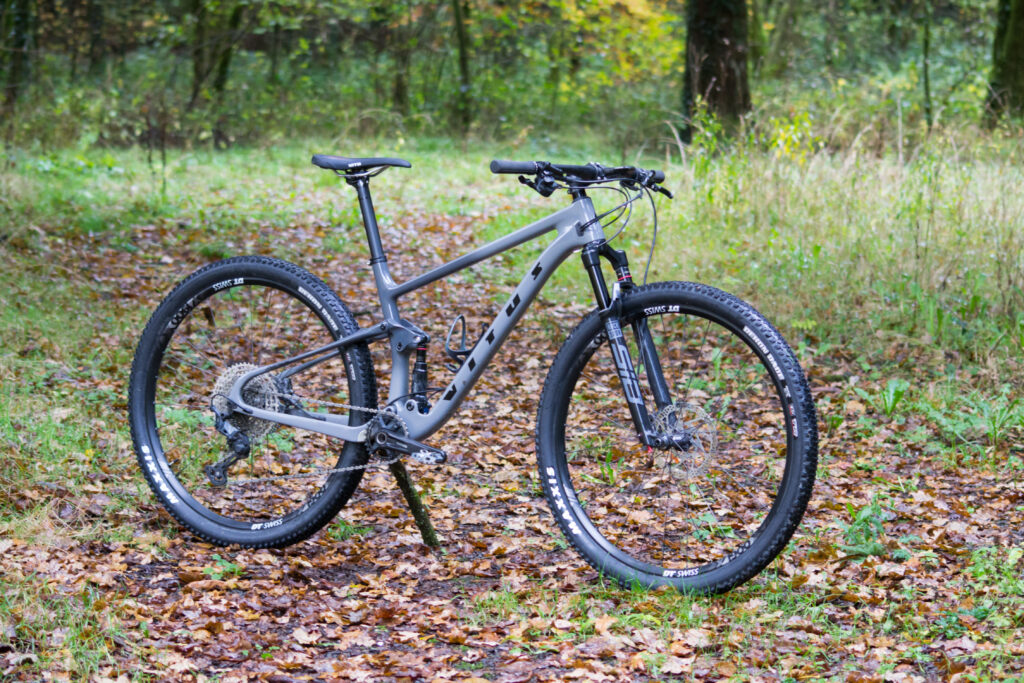

The Vitus Rapide FS CR is a new cross-country focused bike, with the CR being the lower of two models in the range, retailing at £2,499. It delivers impressive performance with geometry that makes it fun and capable downhill while still being quick uphill. The component selection also helps to keep the overall weight competitive. There are a couple of components equipped that prevent it from being perfect. Still, it offers excellent value with performance a match for bikes twice the price.
- Cross-country racing: Where next for the UK?
- Will your next bike be a gravel bike?
- The complete buyer’s guide to mountain bike handguards
Vitus Rapide FS CR: Frame & Suspension
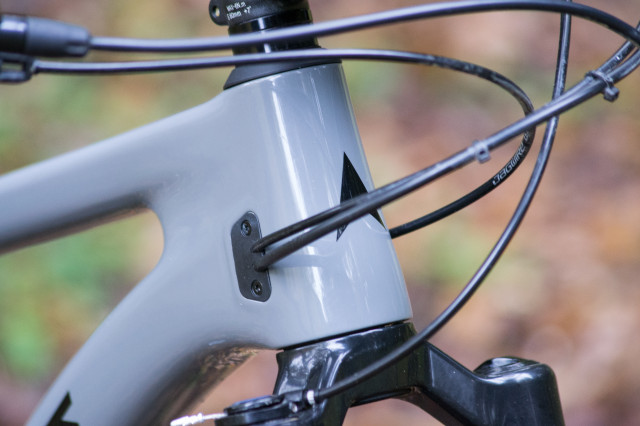
The Vitus Rapide FS is built on a full carbon frame with 100mm of travel from the Rockshox SID Luxe Select+ rear shock. It’s pleasing to see large cable entry ports in the frame for internal routing that makes cable routing easy when replacements are needed. Neither the CR nor the pricier CRX model (£3,299) features a dropper post as standard, but there is a free cable port to fit one in the future.
The only colour option for the CR is grey, or Burnt Nardo, as Vitus name it, and there is no claimed frame weight given, but the overall weight of the bike is 12.02kg (26.5lb), weighed set up tubeless. While this is not a super-light bike, it is competitive for the style and price. Compared to the Specialized Epic Comp tested earlier this year, which weighed 11.82kg (26.0lb) and retailed for £4,500.
The suspension performance on the rear is good generally on the downhills. Still, it feels too active while pedalling, even with more air in the shock at the lower recommended range of 20% sag for my weight. I feel the shock needs a more low-speed compression, given it is designed with at least one eye on racing. Pedal feedback gives a slower ride feel, and while bump response is good for smaller bumps, I would far rather have a shock with more low-speed compression damping to aid pedalling.
On descents, Rockshox SID Luxe Select+ rear shock offers good control on larger hits, rarely suffering from bottoming out despite the limited travel. One slight frustration is the location of the rebound adjuster, which requires a 2.5mm Allen key positioned in a way that needs the short end of a right-angled hex-key and is not possible with any multi-tool I had available. It was especially frustrating on earlier rides when attempting to tune in the setting to suit. You will likely be glad when it is done and hopefully not need to adjust often afterwards.
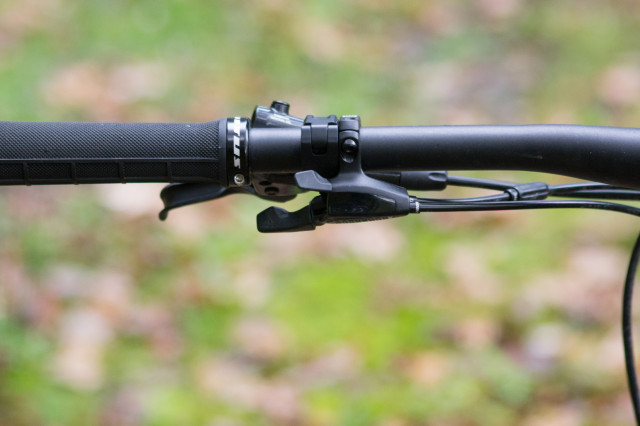
The saving grace to the issue with pedal bob is the Rockshox Onelock lever on the handlebar that locks the front fork and rear shock simultaneously with one push. The lever requires a little force to activate, almost certainly due to the friction within a two-cable setup. Still, I found myself using the lever more than on any other bike I have ridden. While that may be down to the overly active rear, having the ability to quickly lock the fork and shock simultaneously is very useful for racing or even faster trail riding. Unlocking requires very little force with the spring action of the lever, and it’s located in a good position on the handlebars for easy access.
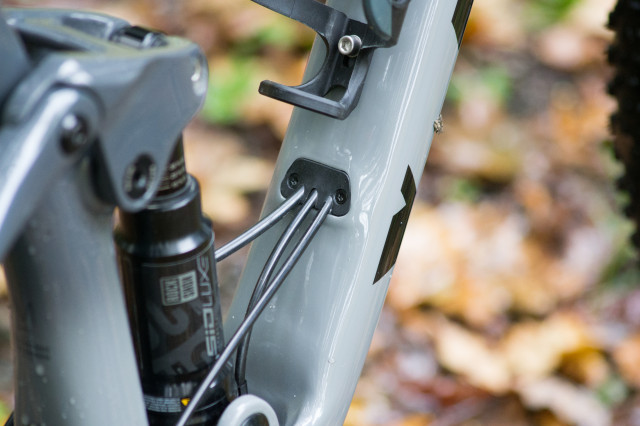
The medium size frame tested has a single water bottle mount using a 3-bolt fixing. The lack of a second water bottle cage might disappoint some racers, especially as there is potential to fit two cages on the downtube on a medium size.
The finishing on the bolt bosses is poor, with the thread slightly out of line. The bolts provided were too short to go through a water bottle cage and reach the threads. This is cheap and easy to fix, but a shame that it is needed at all. The only other potential issue on the frame is the cable routing around the shock, where the cables are in contact with the shock casing. Ultimately this will lead to wear, and I would strongly advise adding a thick layer of protection tape to the shock to prevent problems in the future.
The bottle bolt bosses and shock cable rub are the only real issue on the frame. There are many nice features, including a metal chainstay protection plate built into the frame to prevent damage in the event of chain-suck.
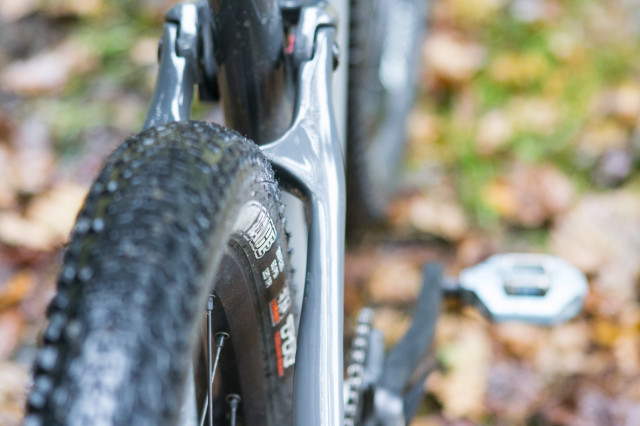
Tyre clearance is fair for a cross-country style bike with spare room around the 2.25” tyres fitted. I would suggest 2.35” or potentially 2.4” being possible in the rear. However, that would only be wise in dry weather as it will reduce the mud clearance.
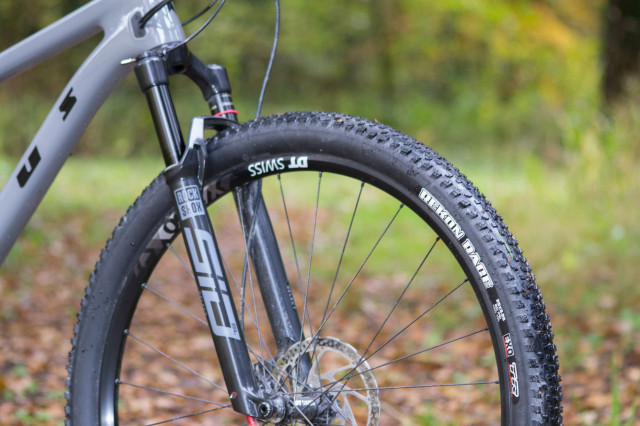
The Rockshox suspension continues at the front also, with the SID Select Charger RL fork with 100mm travel. I am sure there will be some people wishing for a 120mm version, but in my experience, the fork belies the limited travel on offer, handling larger hits incredibly well. The fork was also very simple to set up, requiring minimum adjustment to reach a point where I felt happy.
Vitus Rapide FS CR: Geometry
The Rapide follows in the path of several other cross-country focused bikes, including the Specialized Epic and Scott Spark. These bikes share a more relaxed, progressive geometry with stats that include a 67º head angle on our medium bike, making it slightly slacker than most well-known competition models.
While this might aim to improve stability and handling on the descents, for a bike focusing on cross-country riding, this can not be at the detriment of flat or uphill riding. A 77º seat tube angle gives an upright feel to put the rider in a reasonably economical riding position. The position makes the lack of a dropper seatpost even more glaring. The addition of one would likely further enhance what is already a capable bike.
For riders who like a low, aggressive position at the front, Vitus provides a short head tube (105mm on our medium frame), 100mm travel fork and zero-stack headset allows for a very low riding position should you wish.
Vitus Rapide FS CR: Drivetrain & Brakes
The Shimano Deore 12-speed set makes up for most of the shifting components. The only exception is SLX rear derailleur, with a screw-fit bottom bracket that will please riders who dislike press-fit. Shifting is clean enough through most of the range, with only the larger gaps in the final few gear changes causing any slight lag.
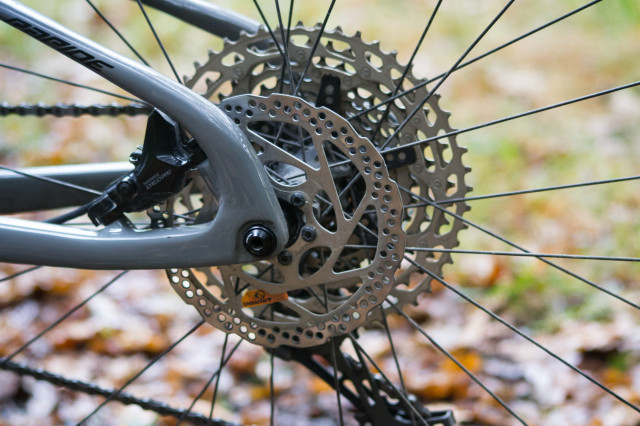
Braking is supplied by Shimano Deore with 180mm rotors front, 160mm rear that suit the style of bike, and I found power more than enough.
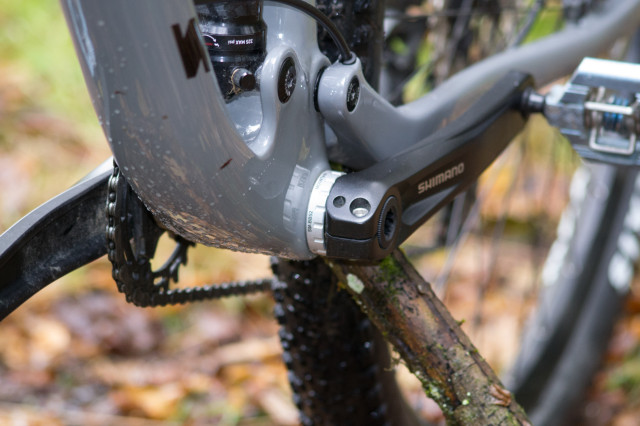
Our test bike was fitted with a 30 tooth chainring, which is small for a race bike, and I found I was spinning out even on relatively easy sections. Despite taking on challenging routes and climbs, I don’t think I used the largest 51 tooth cassette cog once. While I appreciate everyone is different and local trails vary substantially, as a bike designed for racing, there needs to be some emphasis on speed. I would question the selection of such a small chainring. Vitus doesn’t give a maximum chainring size, but there appears to be clearance for 36 teeth.
Vitus Rapide FS CR: Components & Wheels
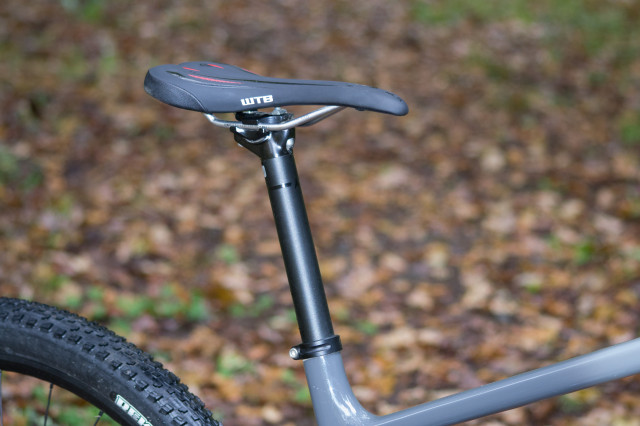
The finishing kit is mostly Vitus’ own brand with a 60mm stem on our medium test bike, 740mm handlebar width and a rigid 400mm alloy seatpost.
Fitting a dropper seatpost would be a worthy addition. The bike feels extremely capable of geometry and suspension performance, giving more confidence downhill than many other cross-country bikes.
The DT Swiss X1900 wheels are a reasonable all-around set that offers a balance of weight and strength suited to the spec and price point. The rims on the X1900 wheels are tubeless-ready but quite narrow with a 25mm internal rim width. The wheelset is made with reliable and durable DT 370 hubs laced with straight-pull DT Champion spokes that are regarded as the workhorse of the DT range with a basic plain gauge design.
Cassette pickup on the hubs is good, thanks to the DT pawl-free ratchet drive system matching the Microspline 12-speed freehub body.
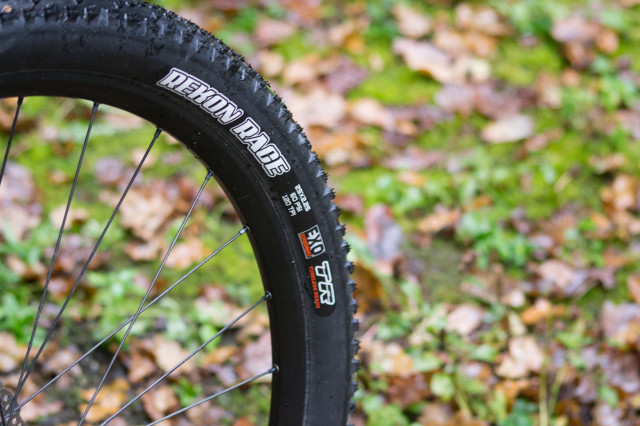
The tyres on the Rapide are Maxxis Recon Race 2.25″, and it is good to see no shortcuts here with the TR (tubeless-ready) and EXO sidewall protection casing chosen. As we move into winter, the grip on muddier tracks is not great, but for drier weather and race use, the tyre is a popular choice with good all-round ability on various surfaces without feeling like you are towing a train.
Vitus Rapide FS CR: Value & Verdict
The Rapide FS scores highly on value as there is very little on the market that can compete. Specialized has the Epic Comp that we tested earlier this year which was a fantastic and fun bike to ride. Still, at £4,500, you pay a premium for it. The drivetrain is predominantly Shimano SLX, just a tier above the Rapide FS.
Canyon has the Lux CF6, which also features 100mm travel front and rear but more traditional geometry. It is also aimed at cross-country and marathon racing with the cheapest model at £2,999 equipped with an SLX drivetrain and the same DT Swiss X1900 wheels as on the Rapide. Within the new Scott Spark range, the cheapest model is the RC Comp at £3,299 with SRAM NX drivetrain and Fox suspension.
While the bike name might be declaring the intensions for speed, the Rapide CR is a bike that is surprising in how much fun it can be to ride. The more relaxed, progressive geometry works well with parts selected that, on the whole, deliver the intentions of the design. There are some part choices I don’t like, such as the tiny 30 tooth chainring and a dropper post would improve things, but what can’t be altered afterwards is the geometry. This forms the heart of the bike, being fun downhill while also keeping a low front end to make steep, technical climbs possible and rewarding.
The Vitus FS CR is a fun, fast bike to ride and even though it is significantly cheaper than some of the other short-travel full-suspension bikes tested recently, this would be my pick. For racers and riders who simply enjoy the challenge of long days in the saddle, it offers all-around performance and at a price that undercuts all major brands.
About the bike
Tell us what the bike is for, and who it’s aimed at. What do the manufacturers say about it? How does that compare to your own :
New for 2021 is the Vitus Rapide FS, this is a bike made for all out speed on the roughest of courses. Whether it is an XC sprint, marathon epic, or all-day mission, this bike is designed to go fast. Equipped with Shimano drivetrain and brakes, Rockshox SID suspension, and Maxxis racing series tyres, it is ready to chase the top step of the podium.
For me, the bike is undeniably fast and lives up to what Vitus claim. It climbs well, feels stable and capable downhill but a few small component changes would really complete things.
State the frame material and method of construction. List the components used to build up the bike.:
- Full Carbon Frame for XC/Marathon racing
- Rockshox SID Select 100mm/Rockshox Sidluxe Select+ Suspension
- Shimano 1x12spd M700 SLX/Deore Drivetrain
- Shimano M6100 Deore Brakes
- DT Swiss X1900 Wheels
- Maxxis Rekon Race Tyres
Frame & Fork
How much suspension travel does the fork have?:
Was the bike comfortable to ride? Tell us how you felt about the ride quality.:
There are more active forks, but for medium and larger hits it worked very well.
The rear if anything was too active and soft for the style of riding it is designed for.
How was the bike in terms of sizing and angles? How did it compare to other bikes of the same stated size and intent?:
For me, this was the right decision as I personally like a longer reach – even when it is longer than a more typical bike. Standover was still plentiful for me at 168cm with 76cm inside leg.
Overall rating for frame
How much suspension travel does the rear end have?:
Did the bike feel stiff in the right places? Did any part of the bike feel too stiff or too flexible?:
Tell us about the build quality and finish of the frame:
Tell us about the geometry of the frame:
Key stats for our medium:
Reach – 475mm
Stack – 592mm
Headtube angle – 67°
Seattube angle – 77°
Headtube/seat tube angles are the same across all frame sizes.
Tell us about the materials used in the frame:
It is full carbon fibre, including all linkages
Riding
How did the bike transfer power? Did it feel efficient?:
This is thankfully easy to resolve given the Rockshox Oneloc remote lever that gives instant lockout front and rear.
How would you describe the steering? Was it lively, neutral or unresponsive?:
Tell us some more about the handling. How did the bike feel overall? Did it do particular things well or badly?:
It did take a little time to become accustomed to how it can handle uphill switchbacks as these did feel slow to start, but the bike trackstands very easily and I found it easy to adapt.
Rate the bike for sprinting:
Any comments on sprinting?:
Rate the bike for high speed descending
Rate the bike for technical descending:
Rate the bike for flat cornering:
Rate the bike for technical climbing:
Rate the bike for climbing efficiency:
Rate the bike for agility:
Suspension
Rate the fork for performance:
Rate the fork for durability:
Rate the fork for efficiency:
Rate the fork for value:
Any comments on fork value?:
Tell us some more about the fork. Anything you particularly did or didn’t like? Any features which didn’t work well together?:
Personally, I have no issues with this and found it excelled.
Rate the rear suspension for performance:
Any comments on rear suspension performance?:
Rate the rear suspension for durability:
Any comments on rear suspension durability?:
Rate the rear suspension for efficiency:
Rate the rear shock for value:
Rate the balance and performance of the suspension overall:
Drivetrain
Rate the drivetrain for performance:
Rate the drivetrain for durability:
Rate the drivetrain for weight:
Tell us some more about the drivetrain. Anything you particularly did or didn’t like? Any components which didn’t work well to:
The remainder is all excellent and for the money, good value and performance
Rate the drivetrain for value:
Wheels & tyres
Rate the wheels for performance:
Rate the wheels for durability:
Rate the wheels for weight:
Rate the wheels for comfort:
Rate the wheels for value:
Tell us some more about the wheels.Did they work well in the conditions you encountered? Would you change the wheels? If so, wha:
Rate the tyres for performance:
Any comments on tyre performance?:
Rate the tyres for durability:
Rate the tyres for weight:
Rate the tyres for value:
Tell us some more about the tyres. Did they work well in the conditions you encountered? Would you change the tyres? If so, what:
Controls
Rate the controls for performance:
Rate the controls for weight:
Tell us some more about the controls. Any particularly good or bad components?:
Summary
Did you enjoy riding the bike?:
Would you consider buying the bike?:
Which components had the most effect (good or bad) on the bike’s performance? would you recommend any changes?:
SID fork was excellent, plus simple to set up.
Bad:
Rigid seatpost
Tiny 30 tooth chainring. For anyone who wants to race, change this to a 34 or perhaps even 36 tooth depending on the course.
Would you recommend the bike to a friend?:
Rate the bike overall for performance:
Rate the bike overall for value:
Use this box to explain your score:
For the money, it is an excellent package that is hard to beat and while improvements can be made, they are at least relatively simple.
Product purpose:
The Vitus Rapide FS is a bike built with speed and performance in mind. This short travel 100mm ripper makes short work of climbing to the top of the mountain, snaps around the singletrack, and dances down the trail. This bike combines speed and fun and proves that bigger travel does not always mean better days out.
Build extra:
Features:
Frame: Vitus UD Carbon frame, 100mm travel BSA threaded BB, Boost hub spacing – 148mm x 12mm thru axle
Fork: RockShox SID SL Select Charger RL Remote 29” BOOST 15x110mm Stealth 100mm travel 44mm offset
Rear Shock: RockShox SIDLuxe Select+ remote 165×40
Remote: RockShox Oneloc Full Sprint Fork and Shock
Headset: Acros AZX-212-CO R5 Sealed bearings, OD44, 44/28.6 – 56/40
Handlebar: Vitus 31.8mm 5mm rise 9Deg S-720mm, M-740mm, L-740mm, XL – 740mm
Stem: Vitus 3D Forged 31.8mm 7Deg S-60mm, M-60mm, L-70mm, XL-80mm
Grips: Vitus lock on
Wheelset:
Front Wheel: DT Swiss X 1900 SPLINE 6 Bolt Black Front, 15x110mm, 29″
Rear Wheel: DT Swiss X 1900 SPLINE 6 Bolt Black, 12x148mm, 29” Shimano Microspline Driver Body
Front Tyre: Maxxis Rekon Race EXO/TR, 29×2.25 120 tpi
Rear Tyre: Maxxis Rekon Race EXO/TR, 29×2.25 120 tpi
Chain: Shimano Deore M6100 12 speed
Crankset: Shimano MT510 12speed 30T, S-170mm, M/L/XL-175mm
Bottom Bracket: Shimano SM-BB52, BSA 73mm BSA Threaded
Front Brake: Shimano Deore M6100
Rear Brake: Shimano Deore M6100
Rotors: Shimano SM-RT56 180mm front / 160mm rear, 6 bolt
Rear Derailleur: Shimano SLX M7100 Shadow plus, long cage, 12 speed
Rear Shifter: Shimano SLX M7100 Rapidfire plus, 12 speed
Cassette: Shimano Deore M6100 10t-51t, 12 speed
Saddle: WTB SL8 142mm Race
Seatpost: Vitus 31.6mm 400mm 6061 Black
Seat Screw: Vitus bolt, 34.9mm
Product construction
Product performance
Product durability
Product weight
Product weight extra:
Product comfort
product value
All the deals displayed on our review pages are pulled from a constantly updating database feed of the best affiliate deals available. The criteria for deciding on what are the best deals is who is offering the lowest, delivered price. In most cases we will be showing the very best deal available online, but sometimes you may be able to find an item cheaper. If you can please feel free to post a link in the comments box below. To find out more about affiliate links on road.cc click here.
Overall performance:
Product likes:
Well rounded specifacation