The Berria Bravo is a cross-country mountain bike with 28mm of rear travel. It blends the characteristics of a full suspension and a hardtail bike through engineered flex in the frame and seatpost. It provides benefits with improved comfort being one of them but falls short in other areas, including pricing. Even though the suspension may work well, and the geometry is designed with technical riding in mind, a dropper isn’t standard, and you will lose half of that 28mm travel should you choose to fit one. Read on to see how it places among the best mountain bikes.
- Giant Anthem Advanced Pro 29 1 review
- 2021 Vitus Rapide FS CR review
- Best mountain bikes for under £3,000 – capable trail bikes that won’t break the bank
Berria is not the first bike manufacturer to create a micro-suspension frameset. There are other examples of similar designs that incorporate a pivot or areas of flex into the rear triangle such as the Trek Procaliber mountain bike and BMC URS gravel bike, while some simply have flex engineered into a carbon frame such as the Cannondale Scalpel HT.
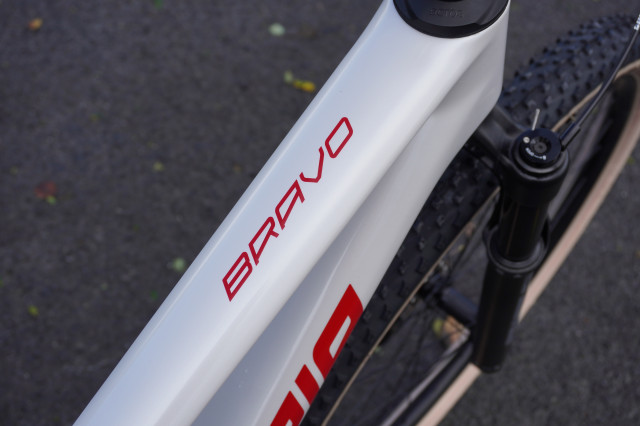
Although there is not a specific criterion for Berria’s classification of the Bravo as a softail, it may be stretching beyond the limit of what others would consider being a true softail. In my opinion, a softail should have limited travel using a damped suspension system, like the Trek Supercaliber (GEN 1 has 60mm of travel, updated GEN 2 has 80mm) or the new Specialised Epic World Cup with 75mm of travel.
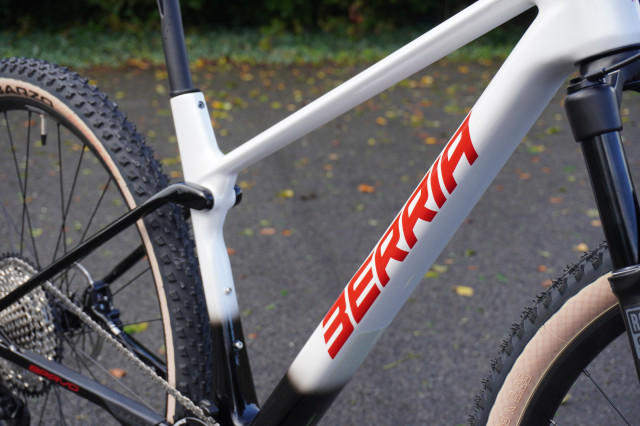
Although the Spanish manufacturer may seem relatively new to some, Berria has been producing road and off-road bikes since 2012. The Bravo was a more conventional hardtail before it was redesigned and included the SOFTEX Suspension System. The line consists of four models with varying prices and specifications. On certain models, Berria allows for customisation, allowing you to alter the wheelset, stem length, and colour of the frameset.
Berria Bravo 6 – Technical details
What Berria refers to as the SOFTEX Suspension System is made possible by the compliance that is integrated into the frame and the TIBIA carbon seatpost. With a maximum movement of 14 mm from each element, a total of 28 mm is possible. The rear triangle has a FullBall bearing pivot to allow movement, increasing compliance and traction, requiring no maintenance whatsoever.
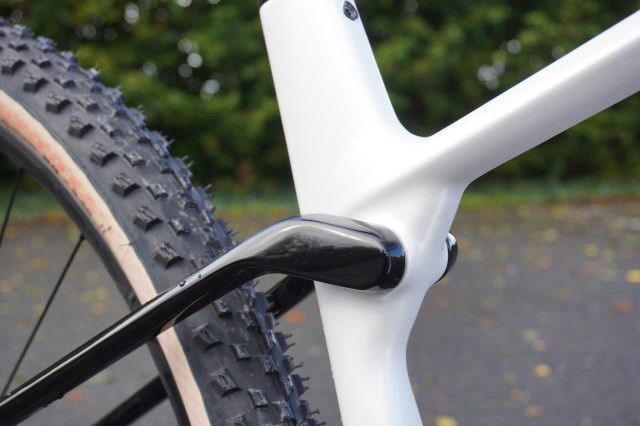
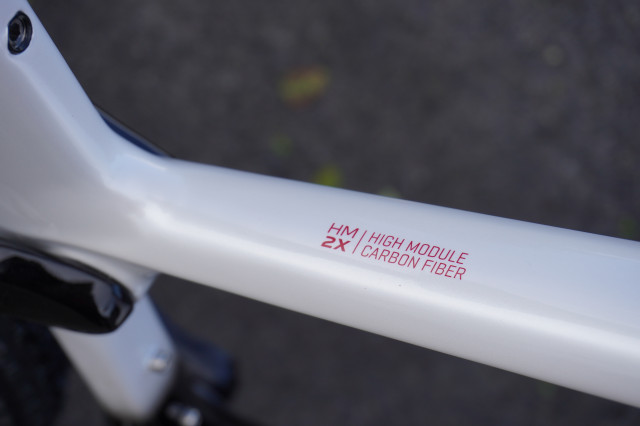
Using a combination of Toray T700 and T800 high modulus fibres, the HM2X frame on the Berria 6 model comes in at a claimed weight of 1,150g (without hardware). Our Berria 6 test bike, fully built weighed an actual weight of 11.97kg (26.38 pounds) without pedals.
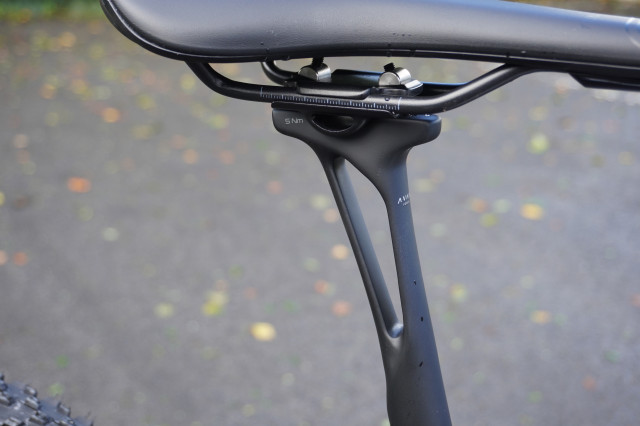
The Bravo is currently offered in four different spec levels: the Bravo 5 (£2,600), Bravo 6 (£3,150), which we are testing, Bravo 7 (from £3,350, depending on build choices), and the Bravo LTD. The LTD is the highest-priced model in the range at £6,100 and comes with an SRAM GX AXS groupset, SID SL fork, and Mavic Crossmax SL Ultimate wheels.
All frames have a press-fit BB92 bottom bracket shell, which might not be welcome for everyone. In addition, the frame incorporates an Anti-Mud System (AMS), which improves frame and tube form, decreasing the likelihood of mud accumulation and increasing tyre clearance.
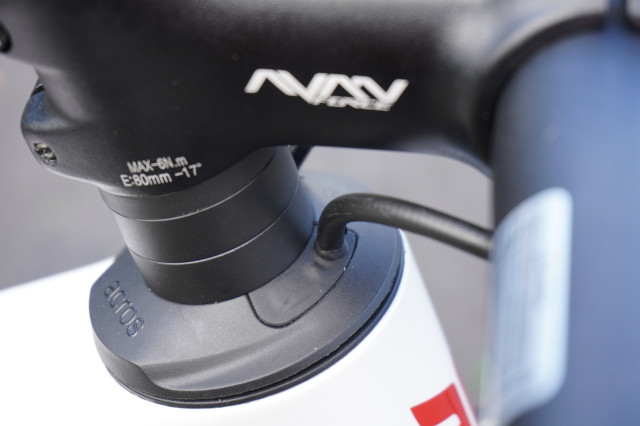
Opinions on the ICS2 internal cable routing are likely to be split, as this feeds the gear and rear brake cables into the frame through sections cut in the headset cups and pass within the headset bearings. This will require the brake cable to be removed and bled should you need to change the top headset bearing.
Berria Bravo 6 mountain bike – Componentry
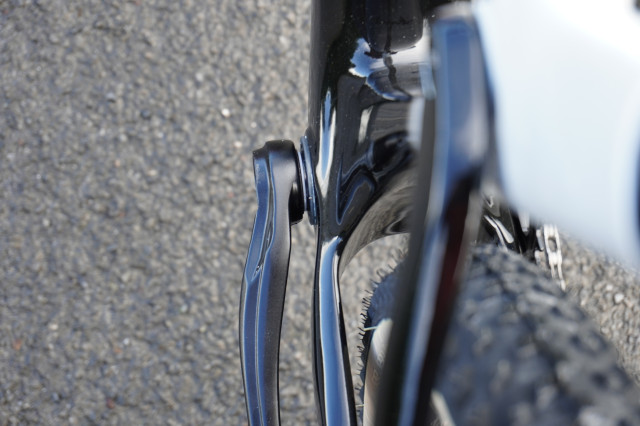
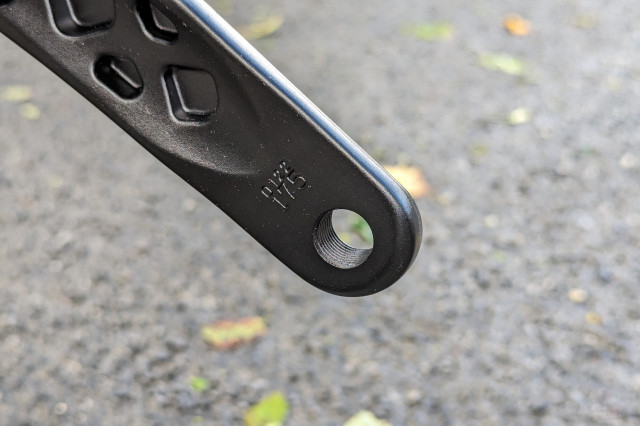
It may not be the most noticeable factor to some, but rider sizing tends to be neglected in one area that has a major effect on riding: crankarm length. All Bravo frame sizes have a 175mm crankarm length installed, with the exception of the XS, which is 170mm. According to Berria’s frame sizing guidelines, everyone between 160cm for the Small and 198cm for the Large ought to have the same crankarm length. There are four sizes available, and each has size-specific geometry values, such as the head tube angle and seat tube angle, which are often the same for other manufacturers across all sizes. Taking everything into account, having such a small variation in crankarm length seems like an oversight. Berria does have crankarm length as a customisable option, but you are limited to either 170mm or 175mm – despite the Race Face Affect crankset being produced with a 165mm option.
SRAM Level TL brakes come with 180mm front and 160mm rear rotors and a mix of Shimano SLX and XT gearing is used. It could make using a matchmaker-style clamp a little more difficult for anyone wishing to clear up the cockpit, but there are companies, such as Wolftooth who make mounts to cross between the brands.
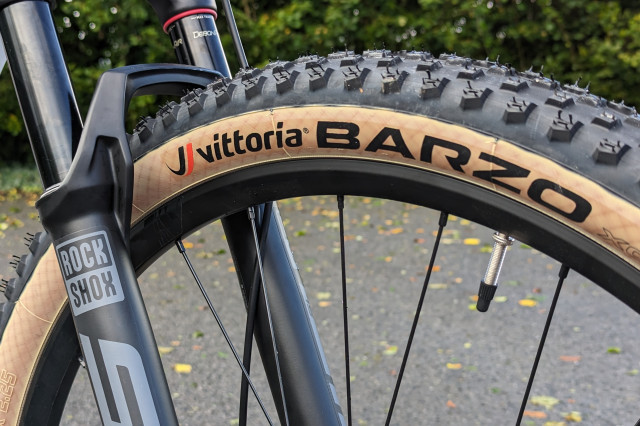
Berria has chosen the Fulcrum Red Zone 799 wheelset with two-way fit tubeless compatibility. The wheelset is not a standard wheelset in the Fulcrum range and features a rim with a very narrow internal width of just 23mm. The tyres are Vittoria Barzo 2.25in, complete with the lighter-weight XC Race TLR tan wall casing.
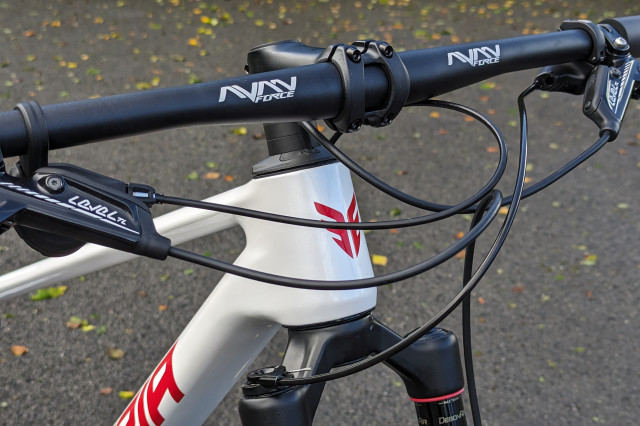
The cockpit is own-brand Avanforce and features a generously wide 740mm AF3 handlebar, a 27.2mm diameter TIBIA Flexpost seatpost, Fizik Taigo saddle, and a reasonably long 90mm stem on our size small model. The stem is quite long for a modern cross-country bike, especially one intended for competition but this is another part that can be customised when purchasing.
Berria Bravo 6 – Performance
Berria is not claiming the Bravo to go head-to-head against a full suspension bike; the brand has the 113mm travel Mako in the range as the primary cross-country full suspension, and this makes it better to compare to hardtails than full suspension bikes. As the test miles mounted up, I was able to get a feel of the different areas of movement and differentiate between them. The TIBIA seatpost has a similar feel to the Ergon Allroad Pro Carbon/Canyon VCLS seatposts and it is very effective over certain surfaces with very small bumps and forest roads. While it may be effective, it only delivers movement when the saddle is weighted.
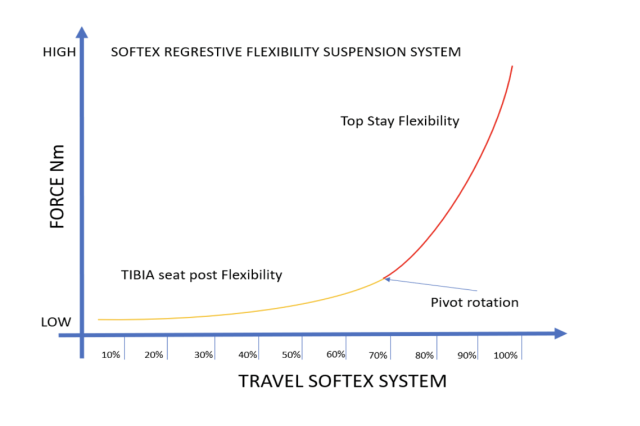
Although it may be relatively limited, the SOFTEX frame dampens impacts, providing riders who prefer the more rigid feel of a hardtail with no element of sag can still achieve some element of increased comfort. During the first few rides, it occasionally felt like I had a soft tyre, and, on several occasions, I stopped and checked mid-ride.
Compared to other hardtails with similar emphasis on racing, the Bravo features a slacker head angle that is different between frame sizes, ranging from 66.5-degrees on the XS to 68-degrees on the Large. In comparison to other brands, the Trek Procaliber is 68.8-degrees in all sizes, the Cannondale Scalpel HT is 67-degrees in all sizes, while the Specialised Epic Hardtail is 68.5-degrees, again across all frame sizes. While head tube angle is not the only geometry figure that impacts performance and downhill ability, it points towards a bike that is clearly designed with the ability to tackle modern cross-country courses that regularly feature technical sections.
The geometry makes for a fun bike on some downhills, aided by short 420mm chainstays that allow the rear of the bike to snap through twisting singletrack. It felt balanced and stable on typical cross-country trail centre tracks and other more open rocky byways. One challenge for riders hoping to improve their downhill performance will be the fixed seatpost that is supplied as standard. For riders, like me, who have grown used to riding with a dropper seatpost, this may lead to confidence issues on steeper descents, affecting speed. A dropper seatpost can be fitted with internal routing possible through the ACROS headset but it will reduce the amount of potential travel by half and eliminate the higher frequency comfort that the TIBIA Flexpost offers.
The bike feels quick and covers ground effectively on longer rides. When sitting for an extended period of time, the movement offered by the seatpost design provides a real level of comfort, even factoring in the wide 2.25in tyres. The Barzo tyres are superb, suit the bike well and retain a level of grip to tackle almost all situations.
The internal routing through the headset can create other issues. Cables must be fed through the headset bearing means you will need to replace the gear cable and bleed the rear brake should you need to change the headset bearing. The routing from the headset also creates a very sharp bend in the cable and may increase friction for the gearing. If you run the stem in its lowest position, the cables exit at very awkward angles, touching the stem and longer-term use will likely rub and wear the stem unless it is very well guarded with protective tape. During testing, despite trying to keep the cable port exits at a central point, they kept twisting, bringing one cable to exit directly under the stem.
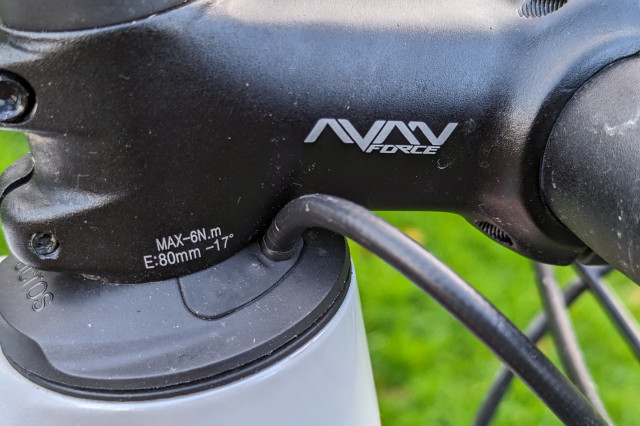
The rear derailleur cable and rear brake cables are still external from the handlebar to the headset, and the front brake and lockout are still fully external.
On the steeper climbs, I occasionally found the slacker headtube angle caused handling to drift and I had to unclip on sections I am able to ride up on gravel bikes. The issue was the slack headtube angle and wide 740mm bars which were causing the front end to wander. The seat tube angle is 75.1-degrees on the smallest two sizes and 74.4-degrees on the larger two, and I would have preferred something slightly steeper to get the weight further forward for steep gradients. With more gradual climbs and almost anything you will find at a typical trail centre, the Bravo feels great, tackling the tightest switchback climbs well.
With the exception of the wheels, which are an outdated design when compared to other options available and fitted on modern cross-country bikes, I had no problems with the groupset or other parts overall. The aluminium rim of the Fulcrum 799 wheelset has an internal diameter width of 23 mm, which is narrower than many gravel bike wheels. As good as the Vittoria Barzo tyres can be, the width and stability are affected by the narrow rim ID. The 2.25in tyre carcass measured 2.12in and, when riding downhills I know, they tended to wash out on occasion.
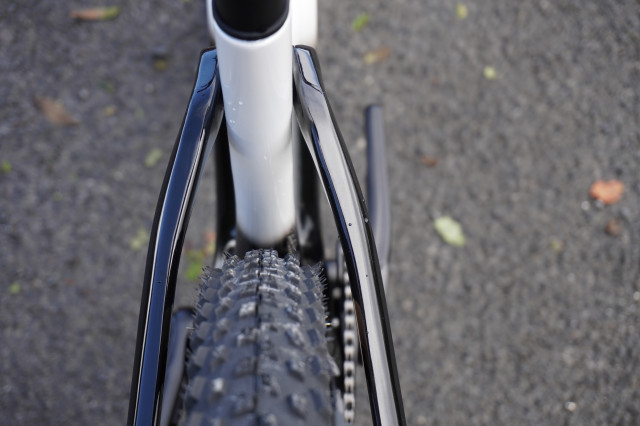
Official tyre clearance is 2.4in and I checked clearance using 2.35in tyres that inflated to the stated width. There was still adequate clearance and enough that I would happily keep riding with the larger width tyres through a typical British winter, boosted by the AMS (Anti Mud System), providing narrow chainstays at the seat tube junction and no shelf or area around the tube junction for mud to accumulate.
The Fulcrum wheels came with tubes and without a tubeless-ready tape fitted. Even after changing the tape and using an air compressor, the wheels continued to leak air and would not seal. The internal rim shape and narrow width may be the cause of this. Berria does have the option of purchasing the Bravo with different wheels. These include the Fulcrum Red Zone Carbon, which is a £1,150 premium, with a 28mm internal width, or the Mavic Crossmax SL, with a £300 premium, and a 25mm internal width.
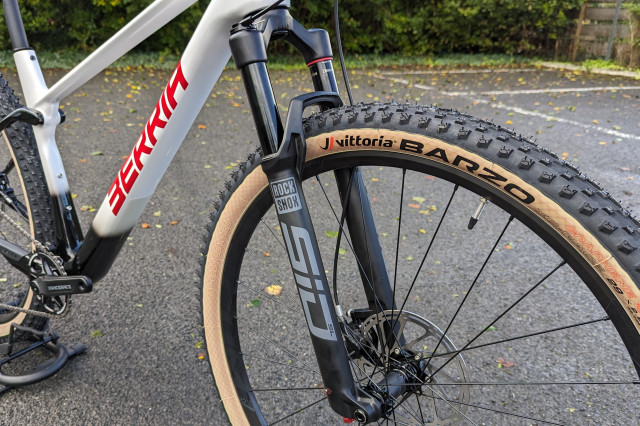
For those who want to race, the Rock Shox SID SL Base fork offers ample adjustment opportunities including the ability to use bottomless tokens to tune the compression, and there is a lockout with a handlebar remote
Berria Bravo 6 – Value and verdict
Priced at £3,150 with the specification tested, the Bravo with SOFTEX frame does offer some movement but is more comparable in terms of the ride to other hardtail bikes. The Trek Procaliber, with IsoSpeed decoupler, claims similar benefits of increased compliance and efficiency. The closest model on spec is the 9.8, originally retailing at £3,245 and built with a Fox Performance 32 SC fork, Shimano XT drivetrain, and Bontrager Kovee Elite 30 carbon wheelset, that features a significantly wider 30mm rim internal diameter.
Compared to hardtails without any form of pivoted movement, Cannondale has the Scalpel HT Carbon 3 at £3,400 and Orbea offers the Alma M20 for €3,499 (approximately £3,050). When compared with these options available the Bravo 6 doesn’t offer the same specification or value for money.
With the help of the TIBIA seatpost, Berria has produced a frameset that has noticeable travel (movement in the rear triangle) and that can be beneficial in certain situations. There are some sacrifices in the design, though. The most significant is that the travel is cut in half to 14mm should you wish to fit a dropper seatpost.
The Berria Bravo 6 is an attractive bike to ride for those who don’t wish to install a dropper seatpost, giving a smooth, fast and fun riding bike for trail centres and general cross-country riding but it is still not without other issues. The internal cable routing solution is difficult to work with, and although the frame has size-specific geometry, elements such as the crankset length appear to have been overlooked.
You might also like:
- Bike check: Nino Schurter’s Scott Spark
- Cross-country mountain biking: everything you need to know
- 5 Ways to tweak your mountain bike’s geometry – Frame
Product purpose:
We introduce the new Bravo, the evolution and revolution of hardtail bikes.
A new concept of bike that combines the best qualities of a hardtail with the most outstanding qualities of a twin. A revolutionary softail model that is the definitive answer to those looking for the perfect balance between speed and stability, agility and traction.
LIGHTNESS, AGILITY, AND ABSORPTION: THE PERFECT COMBINATION
The weight of the Bravo frame and its micro suspension system make it the epitome of a bike with Racing DNA. It is lightning-fast, reactive and much more capable than any other hardtail on the market, offering better performance on uneven terrain, where a certain amount of absorption capacity in the frame is essential.
High modulus carbon
Both versions of the Bravo softail frame feature high modulus carbon. The most advanced, the Bravo BR, weighs in at 999g and is constructed from a combination of Toray T700, T800, and T1000 fibers, better known as HM3X carbon. This arrangement of fibers optimizes the weight-to-stiffness ratio in the critical areas of the frame. The fibers run unidirectionally, thus increasing the lateral stiffness and performance of the bike.
The conventional option is the Bravo, with HM2X carbon, which combines Toray T700 and T800 fibers. Utilizing these fibers in different orientations achieves an optimal balance between stiffness, lightness, and frame absorption.
EPS
The Bravo frames have undergone a firing process during which an internal polystyrene expander is inserted. This expander increases the pressure exerted on the fibers, thus allowing optimal layering of the carbon and eliminating excess resin and air bubble formation. This system, called EPS, achieves a high quality frame with a much more compact and fatigue-resistant structure.
Triple Monocoque
The process of building the frame involves the firing of three separate parts. Firstly, the mold of the front triangle, then the mold of the chainstays, and finally, the mold of the seat stays. This technique improves the level of layering and arrangement of the material, enhancing the performance of the frame as a whole.
The Bravo’s frame is made entirely of carbon fiber and has a completely reworked geometry. There are two versions that differ in the type of carbon used in their construction, thus offering two different weights and performance levels. On the one hand, the Bravo BR option with higher modulus carbon built with three types of fibers and a final frame weight of 999g, and, on the other hand, the standard Bravo version, which also has high modulus carbon but two types of fibers, achieving a weight of 1,270g.
Build extra:
COMPONENTS
Frame
Bravo 6, XCO WC Racing Geometry BGC with 28mm travel SOFTEX Suspension System, Full carbon HM2X, Triple monocoque, resin Matrix Nanotech CNT, BB92 botton bracket, Full internal cable system ICS2, Integrated headset OH2S 1-1/2″, Post Mounted brake PMS, 29″x2.40 maximun tyre, BOOST Thru axle 12x148mm, UDH standar, weight 1150g (without hardware)
Fork
Rock Shox SID SL Base, Damper Rush RL, 15x110mm Maxle Stealth, Rake 44mm, Tapered steerer, 32 mm straight wall aluminium Fast Black, 2 Position Lockout remote, weight 1468g, 100mm travel
Material
Full carbon fiber HM2X
Handlebar
Avanforce AF3, Aluminum 6061, 31, 8mm, wide 740mm, weight 330g
Seat Post
TIBIA Flex Seat post, UD Carbon, 0 offset, 27,2 x 420mm, weight 195g
Saddle
Fizik Taiga alloy rail
Derailleur hanger
UDH Universal Derailleur Hanger
Transmission
Rear derrailleur
SHIMANO XT RD-M8100 SGS, Shadow Plus, 12 Speed
Brake lever
SHIMANO SLX-M7100-R, Rapidfire Plus
Cassette
SHIMANO SLX CS-M7100-12, 10-51T
Chain
SHIMANO M7100
Cranks
RACEFACE AFFECT 34T 170-175mm
Brakes
SRAM LEVEL TL Disc 180/F and 160/R
WHEELS
Tires
Vittoria Barzo 2.25″X 29″, Tubeless Ready, GRAPHENE 2.0 120 TPI, weight 660g
Wheel
FULCRUM RED ZONE 99, Alloy, internal width 23 mm, max. weight 120kg, weight 1850g
Product construction
Product performance
Product performance extra:
Product durability
Product durability extra:
Product weight
Product comfort
Product comfort extra:
product value
All the deals displayed on our review pages are pulled from a constantly updating database feed of the best affiliate deals available. The criteria for deciding on what are the best deals is who is offering the lowest, delivered price. In most cases we will be showing the very best deal available online, but sometimes you may be able to find an item cheaper. If you can please feel free to post a link in the comments box below. To find out more about affiliate links on road.cc click here.