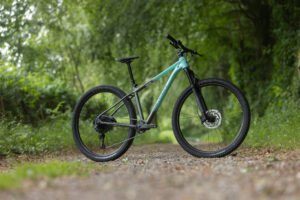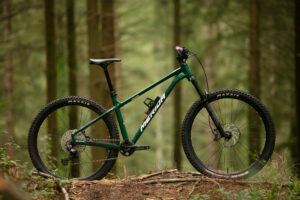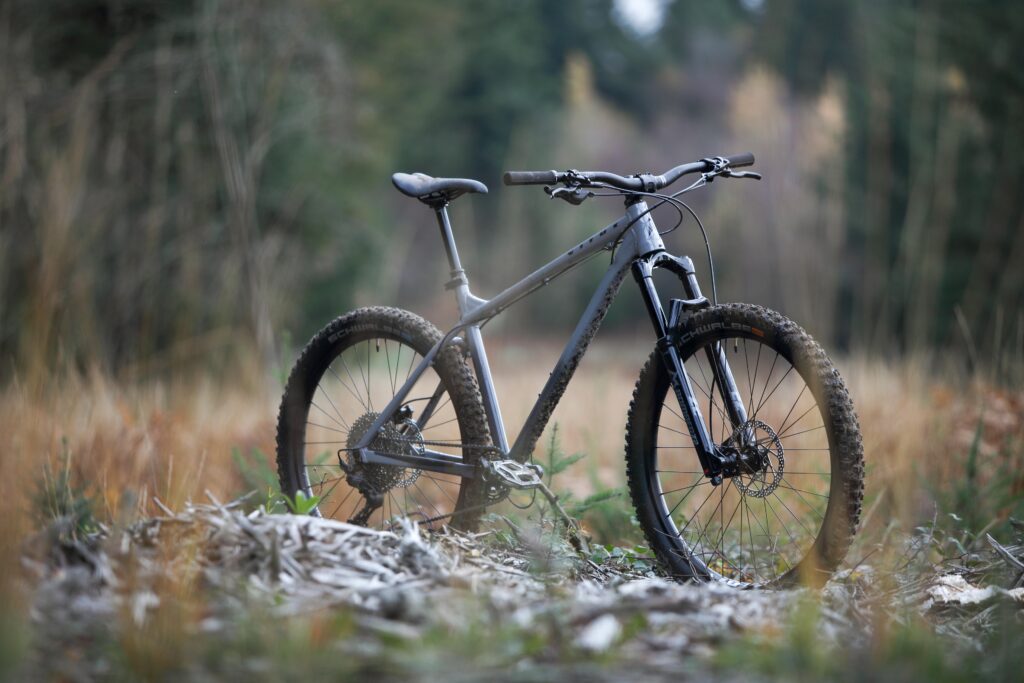

After testing a few budget-friendly hardtails this year, we’ve found that very few of them have come close to matching the apparent value of Vitus’ Sentier VR. It comes with a mighty impressive spec for the cash and a geometry that’ll please new riders. However, that same geometry offers a severe blow to the bike’s versatility.
- The best mountain bikes you can buy for under £1,500 – full sus and hardtails
- Ribble HT 725 Sport Build review
- Five reasons why you should have a hardtail
The Sentier VR comes in two models, one with 29” wheels and one with 650b hoops. The latter is the bike we’re testing here.
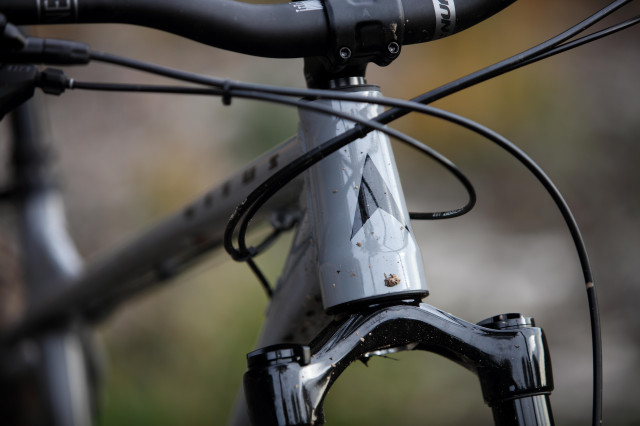
Although both frames get the same spec and features, the geometry changes slightly to accommodate each wheel size. On the subject of features, the Sentier VR’s 6062-T6 double-butted frame gets Boost spacing, a threaded bottom bracket and space for a bottle cage.
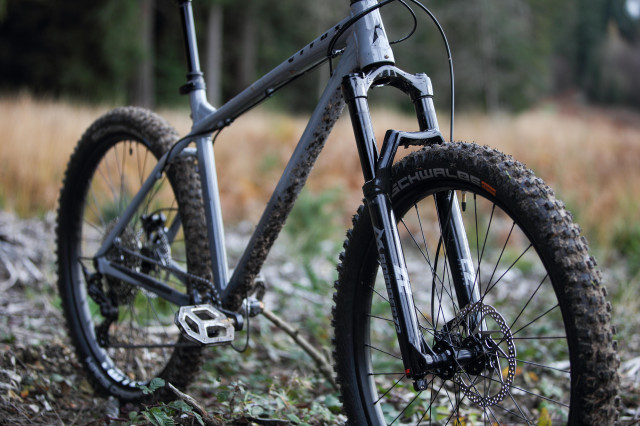
The fork is where things change as the 27 VR gets 140mm of travel delivered by a Marzocchi Bomber Z2. I’ve repeatedly said it’s tough to be disappointed by this fork. It’s stiff and very well damped for the money. However, the Bomber Z2 is a simple fork, but I reckon that’s a great thing, especially for new riders. This fork gets just a rebound adjustment and a compression dial, which allows you to dial the fork in reasonably quick, leaving you to concentrate on the riding.
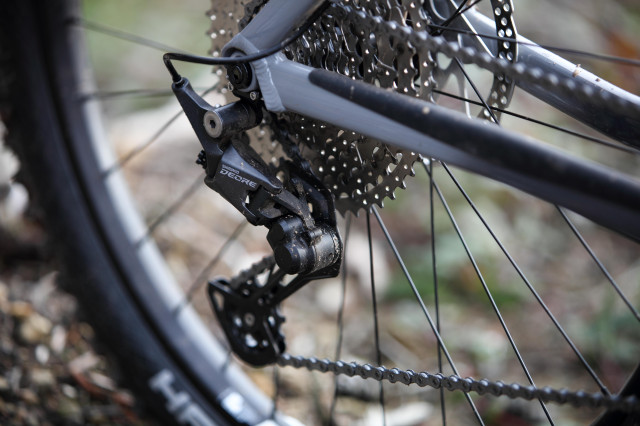
As for the drivetrain, we’ve got Shimano Deore M5100 11-speed shifting with an 11-51t cassette paired with Shimano MT410 brakes. While I’ve got absolutely no problem with the drivetrain, the brakes seem to be where Vitus has saved a bit of cash. Don’t get me wrong, they definitely work, but they’re not the most refined brakes in Shimano’s range.
I’ve found them to feel a little wooden during my time with them, and they’re a bit of a pain to adjust. There’s a very sneakily hidden Allen bolt nestled inside of the lever, which is a bit of a hassle to get to. Though, for this bike’s intentions, I’m definitely feeling the brake snob within making a bid to break free.
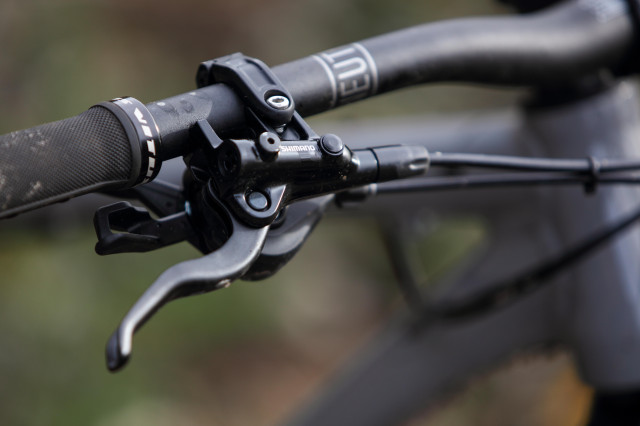
Thanks to Vitus’ choice to externally route the cables, for the most part, a brake upgrade, should you choose to, will be a straightforward procedure.
The dropper post on the Sentier VR comes in the form of the Brand-X Ascend, and it’s a top performer in its price range. This large frame (and on an XL) comes with 150mm of drop, whereas small frames get 100mm and mediums get 125mm. It’s externally routed too.
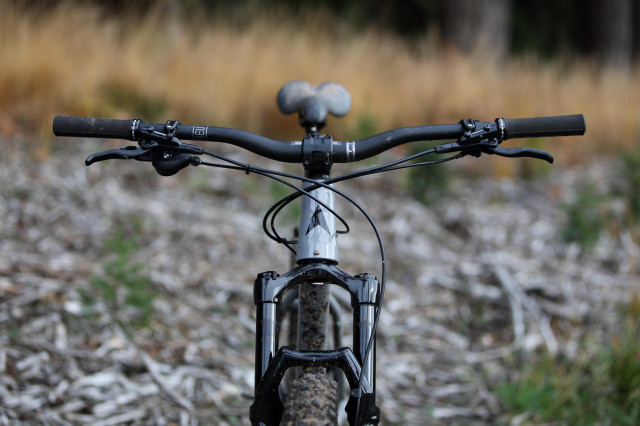
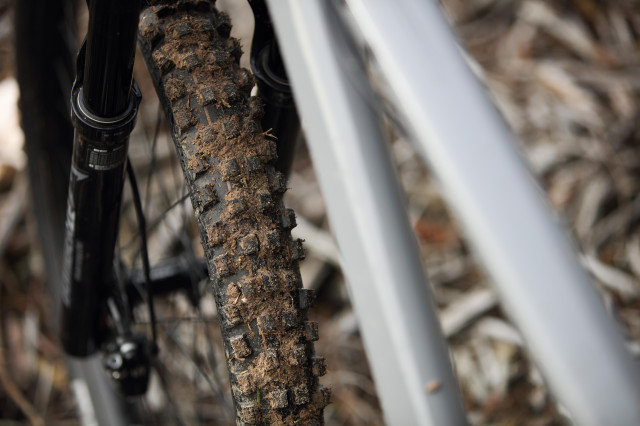
Wrapping the spec up, the bike’s graced with a modern cockpit consisting of a 780mm wide Nukeproof Neutron bar with a 50mm stem and the bike rolls on a pair of WTB ST i30 rims laced to Vitus hubs. They’re then very respectfully wrapped with a 2.6” Schwalbe Magic Mary in an Addix Soft compound and Snakeskin casing and a 2.6” Hans Dampf in an Addix Speedgrip compound and snakeskin casing.
It’s pretty impressive to see such aggressive tyres on a bike of this price, especially with full-fat compounds and casings. It’s a tyre combo you’ll find tonnes of riders using, especially throughout the UK’s typically wet half of the year and for very good reason.
Vitus Sentier 27 VR: How it rides
Onto the ride and the Sentier is a reasonably efficient bike to get up a hill; it is a hardtail, after all. Though, those aggressive tyres make a noticeable dent in its speed up a hill, adding a clear heft of drag. However, what’s added in drag is paid back in grip once the gradient drops; we’ll get onto that a bit later.
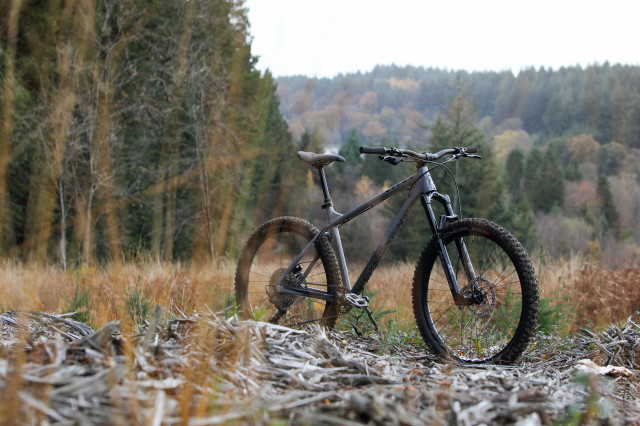
The riding position that the Sentier offers balances weight rather well for flatter ground. The 73° seat tube angle is edging towards the slacker side, but it places weight firmly over the rear wheel, whereas the short 445mm reach paired with the 50mm stem sends a good share of weight towards the front wheel. Those figures combined result in a spacious cockpit, regardless of the short reach.
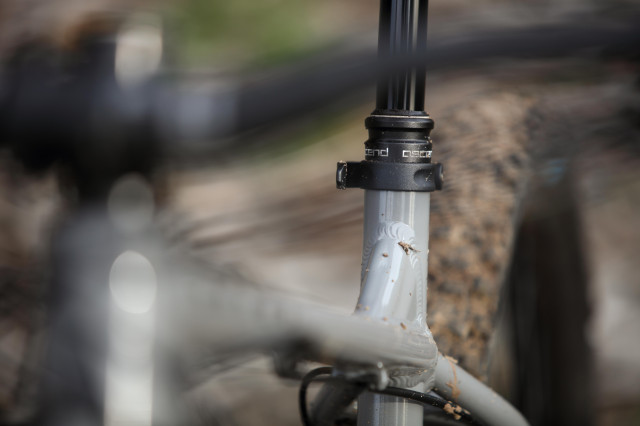
When you get the bike climbing, you’ll have to be wary of the front end lifting on particularly pitchy climbs. This is due to the slack seat tube and short chainstay, and combatting this can be tough as there’s not much scope for shifting weight about when seated, thanks to the 50mm stem unless you get out of the saddle. It’s totally happy tackling inclines that aren’t so severe, however.
Downhill is where the bike gets interesting, and that’s wholly down to its geometry. There’s a clearly defined line where the Sentier is superb fun, but if you were to tread over, it gets pretty nervous, and its capability gets limited.
Where the Sentier’s knees begin to tremble is when it’s faced with natural trails that have a bit more of a gradient to them. It’s purely down to the bikes more conservative shape. On the downhills, weight is shifted more towards the front of the bike, and while the fork is generally nicely supported, the extra front end weight leads to a touch of fork dive.
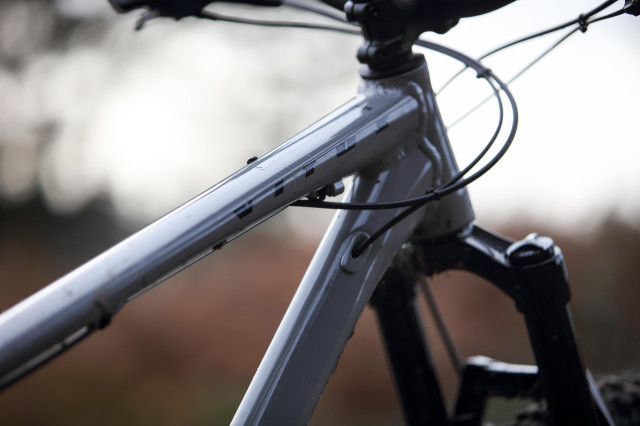
As a hardtail moves through its fork’s travel, its geometry naturally steepens, and that’s certainly the case with the Sentier. But as its geometry is already fairly conservative, the effect is much more noticeable, negating the handiness of the 66° head angle. It forces weight forwards, which becomes pretty tough to counter as the stem keeps a little too much weight towards the front. The saddle gets in the way due to the lengthy seat tube when you try to get your arse over the rear wheel.
The choice to fit fat 2.6” tyres also deserves a round of applause, though. Thanks to those tyres, drops, chunk and a good amount of rowdiness are well within the Sentier’s gamut. At the rear, the tyre gives the Sentier a level of much-needed compliance, making bigger hits and general trail chatter much easier to tolerate at speed, regaining some composure and confidence.
While the Sentier’s prowess down serious slopes leaves something to be desired, I am talking about the extremes here, and I’m likely riding the bike in areas where it’s not designed to be the most comfortable. It’s over mellow, well-groomed trails where this bike really comes to life.
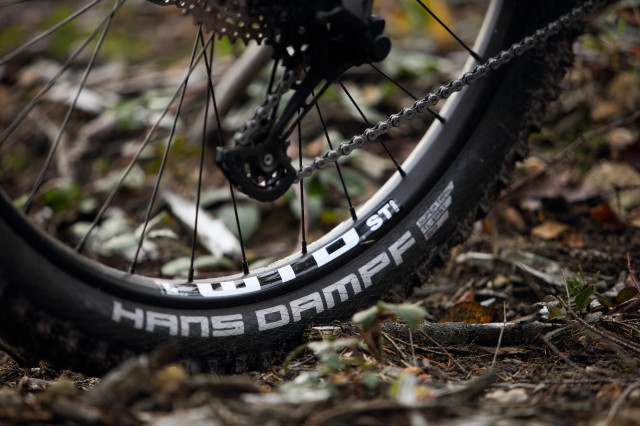
The short wheelbase combined with the smaller 650b wheels make for a bike that’s a doddle to shift through tight corners, making such sections serious fun. Then, that’s where those super aggressive tyres come into play, keeping the wheels tracking perfectly as you rail berms and flat corners with plenty of speed, agility and confidence.
Cornering is another spot where the bike’s tall seat tube becomes noticeable, but I’ve found it much easier to forgive here.
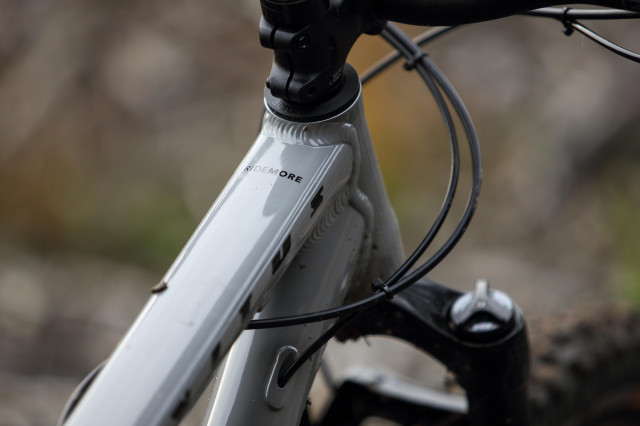
The Sentier is spritely on the pedals, and as a hardtail, it should be. Still, the Sentier 27 VR proudly wears its smaller wheels, delivering the absolute most it can get out of every pedal stroke. Even the smallest bit of effort rewards you with heaps of acceleration, which makes single, or double stroke efforts out of corners even more worthwhile.
Value & verdict
So it’s clear that the Vitus Sentier VR has a situation where it’s happiest, and I’ve already hinted on the bike’s bang for buck, but it’s slap bang in the firing line of the Ragley Marley 1.0.
The Marley 1.0 will set you back a little more at £1,400, and it gets almost the exact same build kit, save for the Shimano Deore brakes with a four-pot calliper at the front. Suppose that’s not a big enough giveaway that the Marley is primed for more aggressive riding. In that case, its geometry is a tad more progressive, and it fixes the issues that I’ve found in the Vitus’ shape.
It gets a 455mm reach, and while 10mm isn’t an awful lot, it makes the Marley that bit more confident downhill. They Marley’s seat tube length is also 23mm shorter, and a large frame gets a longer 170mm dropper post, meaning you can get the saddle well out of the way and get your weight properly over the rear wheel. While slightly more aggressively shaped, that in no way means it’s not newbie-friendly.
Priced at £1,400 again is the HT AL Sport from Ribble. It doesn’t quite stack up in spec, opting for a solid seat post and RockShox Recon Silver fork, but it gets a 12-speed SRAM SX drivetrain and a much more agro geometry. That includes a 473mm reach, 64° head tube angle and 74° seat tube angle. However, as cool as that may seem to the more experienced rider, it may not be as friendly towards any newbies out there.
So while the Sentier VR offers some excellent components for a relatively small sum, it loses out with a geometry that doesn’t quite live up to the likes of competing but slightly pricier bikes.
Suppose the Vitus Sentier 27 VR’s excellent value is something that catches your eye, and you’re mainly looking to ride mellow-ish trail centres. In that case, the Sentier’s exciting and quick handling is absolutely something that’ll keep you smiling. If you’re looking for a bike that you can keep with you as you grow and progress in the sport, it won’t be too long until you begin looking for something more progressively shaped.
You might also like:
- 7 trailside fixes every cyclist should know
- Buyer’s guide to mountain bikes – get the best MTB for you
- Best trail and enduro mountain bike tyres you can buy – tried and tested hard-hitting rubber
About the bike
Tell us what the bike is for, and who it’s aimed at. What do the manufacturers say about it? How does that compare to your own :
The geometry doesn’t quite meet what’s usually expected from one that’s designed for aggressive hardtail trail riding.
State the frame material and method of construction. List the components used to build up the bike.:
6061-T6 double butted aluminium
Frame & Fork
How much suspension travel does the fork have?:
Was the bike comfortable to ride? Tell us how you felt about the ride quality.:
How was the bike in terms of sizing and angles? How did it compare to other bikes of the same stated size and intent?:
Overall rating for frame
How much suspension travel does the rear end have?:
Did the bike feel stiff in the right places? Did any part of the bike feel too stiff or too flexible?:
Tell us about the build quality and finish of the frame:
Tell us about the geometry of the frame:
Tell us about the materials used in the frame:
Riding
How did the bike transfer power? Did it feel efficient?:
How would you describe the steering? Was it lively, neutral or unresponsive?:
Tell us some more about the handling. How did the bike feel overall? Did it do particular things well or badly?:
Rate the bike for sprinting:
Any comments on sprinting?:
Rate the bike for high speed descending
Any comments on high speed descending?:
Any comments on technical descending?:
Rate the bike for flat cornering:
Any comments on flat cornering?:
Rate the bike for technical climbing:
Any comments on technical climbing?:
Rate the bike for climbing efficiency:
Any comments on climbing efficiency?:
Rate the bike for agility:
Any comments on agility?:
Suspension
Rate the fork for performance:
Any comments on fork performance?:
Rate the fork for durability:
Rate the fork for value:
Tell us some more about the fork. Anything you particularly did or didn’t like? Any features which didn’t work well together?:
Drivetrain
Rate the drivetrain for performance:
Any comments on drivetrain performance?:
Rate the drivetrain for value:
Any comments on drivetrain value?:
Wheels & tyres
Rate the wheels for performance:
Any comments on wheel performance?:
Rate the wheels for value:
Any comments on wheel value?:
Rate the tyres for performance:
Any comments on tyre performance?:
Rate the tyres for durability:
Any comments on tyre durability?:
Rate the tyres for weight:
Any comments on tyre weight?:
Rate the tyres for value:
Any comments on tyre value?:
Tell us some more about the tyres. Did they work well in the conditions you encountered? Would you change the tyres? If so, what:
Controls
Rate the controls for performance:
Any comments on controls performance?:
Rate the controls for comfort:
Any comments on controls comfort?:
Rate the controls for value:
Any comments on controls value?:
Summary
Did you enjoy riding the bike?:
Would you consider buying the bike?:
Which components had the most effect (good or bad) on the bike’s performance? would you recommend any changes?:
Would you recommend the bike to a friend?:
Rate the bike overall for performance:
Rate the bike overall for value:
Use this box to explain your score:
All the deals displayed on our review pages are pulled from a constantly updating database feed of the best affiliate deals available. The criteria for deciding on what are the best deals is who is offering the lowest, delivered price. In most cases we will be showing the very best deal available online, but sometimes you may be able to find an item cheaper. If you can please feel free to post a link in the comments box below. To find out more about affiliate links on road.cc click here.