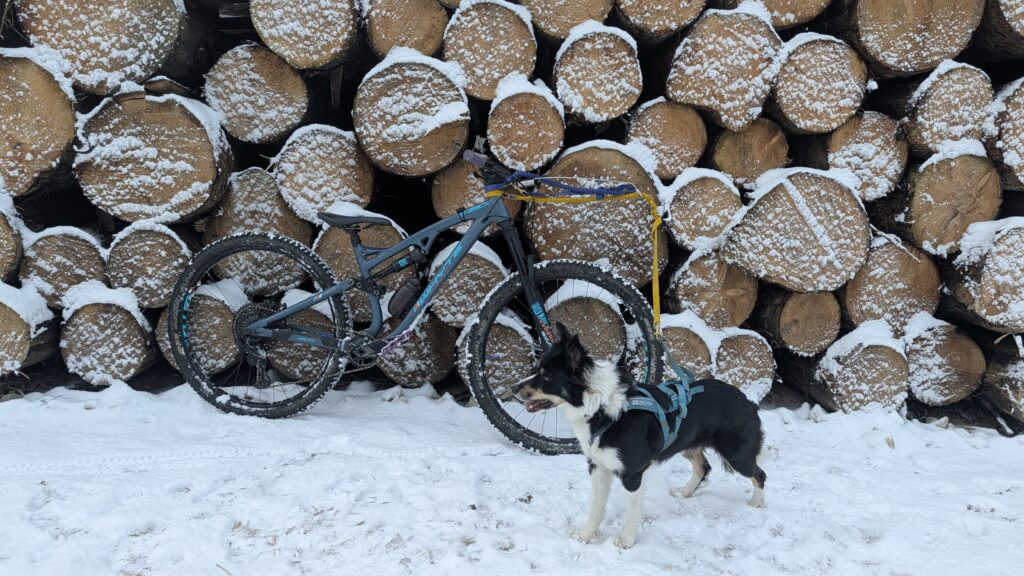

Dogs and mountain bikes have always been a glorious mix. For some, there’s no greater joy than taking your hound out and having them follow you as you ride along a trail. But beyond the traditional trail dog dynamic, there are other ways to get your furry friend involved. And in particular, there is an emerging dog sport called bikejoring, or canibike, that lets them take the lead. Quite literally…
- Is the hardtail the best winter mountain bike?
- Best mountain bike brakes 2025
- Winter mountain biking 2025 – your guide to riding in the cold
Bikejoring, or canibike as it’s also known, is essentially where you attach your dog and lead it to the front of your mountain bike, and have them tow you along singletrack and forest roads. It can be a bit more technical than that, but it’s an activity that’s suitable for most breeds, and the humans don’t need to have technical bike handling skills or lots of fitness.
It has origins in mushing, which is where dogs pull you along while you’re on a sled. But, bikejoring works well in environments where there isn’t snow, and you don’t have a need for a sled.
What do you need to start bikejoring?
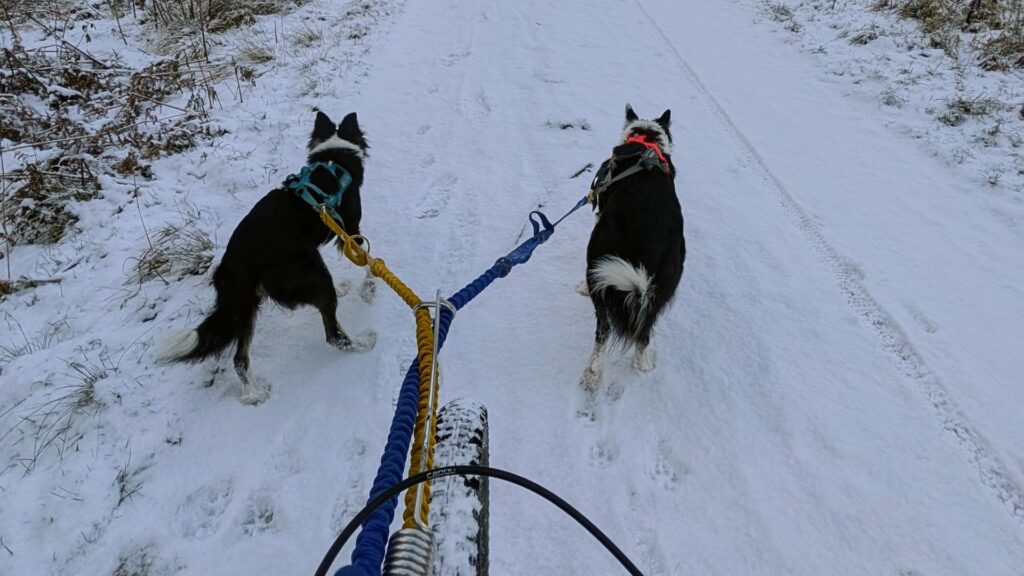
First up, you need a dog that likes to run. Which, let’s be honest, is most dogs. Unless you’ve got a dog with joint issues or a brachycephalic (flat-nosed) breed, in which case extra care should be taken, as they might not be able to cope with the aerobic load.
Once you’ve got your dog, or dogs (you can run up to two in a race), you need to kit them out. A well-fitting harness designed for pulling is ideal, as it will help to distribute the load across the dog. There are plenty of websites that can help you find the right harness for your dog, including K9Trailtime, SportyPaws and DogFit.
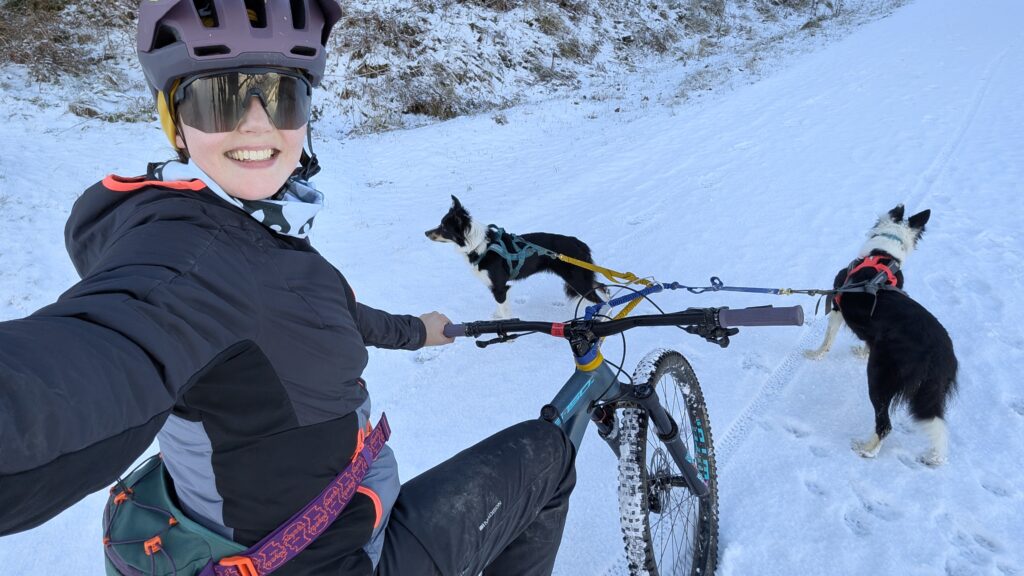
Then you’ll need a bungee lead, which is basically a stretchy lead that absorbs the energy from your dog stopping, starting, etc. There are different lengths you can buy, but the typical bikejor lead is around 2.5-3 metres when stretched.
To connect the lead to your bike, ideally, you should use an attachment (called an antenna) that keeps the lead above the front wheel. Speaking from experience, this is really important, otherwise one wrong move can lead to the lead getting tangled up in the bike. There are a few different types, some more permanent than others. So bear that in mind if you plan on using your bike for riding without your dog, too.
Then there’s the human. You don’t need a fancy bike, just a hardtail will do. Decent brakes and tyres are a must, and the usual riding kit, including a helmet, too. I’ve even done it with a gravel bike, so if your dog is predictable and won’t be darting into the side or stopping suddenly, that could be an option too.
Where can you bikejor?
-1024x576.jpg)
Bikejor races are typically held in forests on wide tracks and occasional singletracks on the more technical courses. The typical distance is usually between five and seven kilometres, although it depends on the event.
Although it’s a growing dog sport, there aren’t that many races in the UK. So it can be a little tricky finding a race series to take part in. The official ‘season’ for bikejoring (and canicross, too) is September to May, although this may be shortened if the weather is too warm.
-1024x576.jpg)
The best resources I’ve found include the British Sleddog Sports Federation (BSSF), which organises the national series events, and the Canicross.org race calendar. Facebook groups are also great for finding local riders and events, too.
Of course, you don’t need to race to start bikejoring. Simply getting out on the local forest roads and quiet bridleways is a great start. I like to pick places I know are likely to be quiet, not just because one of my collies is pretty reactive to everything that moves, but because I can relax a bit more and enjoy the ride.
You don’t need to go really far or really fast, either. It’s better to start off slow and teach your dog the necessary verbal commands than to just go in guns blazing and not be able to stop.
What else do I need to know?
-1024x576.jpg)
Your dog should be at least 18 months old before you start bikejoring. This is to protect the dog’s joints as they grow, as there is a lot of load going through them as they run.
Make sure your setup is safe. Are your brakes working? Are the dogs comfortable in their harnesses and breathing okay? If you’re not sure, it’s definitely worth getting a professional harness fit via one of the websites mentioned above, or even at a club.
We’d also suggest building up your sessions. Don’t just start off with a 10-mile bike ride – particularly if your dog isn’t used to running long distances. You want your dog to enjoy it, too. So if you see your pup not having a great time, make sure you take a break.
To make your life easier (and safer), it’s also worth teaching your dog some verbal cues, so they know when to turn left, right, or go straight on, or stop. Different clubs might have different cues, but it doesn’t really matter what you use as long as your dog understands. For instance, I use ‘left left’, ‘right right’ and ‘hike on’ for my directional cues. And ‘woah’ for stopping. And about 80% of the time, it works. Depending on the dog.
And finally, have fun. Riding with your dog is a fantastic way of getting you both out and into nature, and it can really help to strengthen your bond. Plus, if you’re feeling lazy, and you have strong pulling dogs, it’s almost like having an electric bike…that poops…and sometimes darts off to chase a squirrel.