



Cyclists in Mallorca have been accused of “reckless behaviour” by the island’s coach drivers, who claim “hordes” of riders are blocking buses and causing crashes every day, amid calls for tighter regulations on popular roads like the famous Sa Calobra climb.
The influx of cycling tourists to Mallorca over the past two decades has become a focal point of the wider tourism discourse that has hit parts of Spain in recent times. 150,000 cyclists visit the Balearic Island every year, bringing with them an estimated €150 million to the local economy.
However, these cyclo-tourists have come in for criticism in recent years from local politicians and residents, who accuse them of littering, driving up costs, and clogging up roads they believe are not suitable to withstand the popularity of cycling across the island.
> One cyclist dead and three seriously injured after being hit by bus driver in Mallorca
And now, the local coach drivers’ association ACTUA is calling for a ban on cyclists riding on certain roads within a specified time period, so they don’t clash with coaches, particularly on the narrow twisting roads of the Serra de Tramuntana mountain range.
The drivers’ union has raised concerns about what it dubs “reckless behaviour” from cyclists on the road between the Coll de sa Batalla and Sa Calobra, one of the island’s most popular destinations for riders.
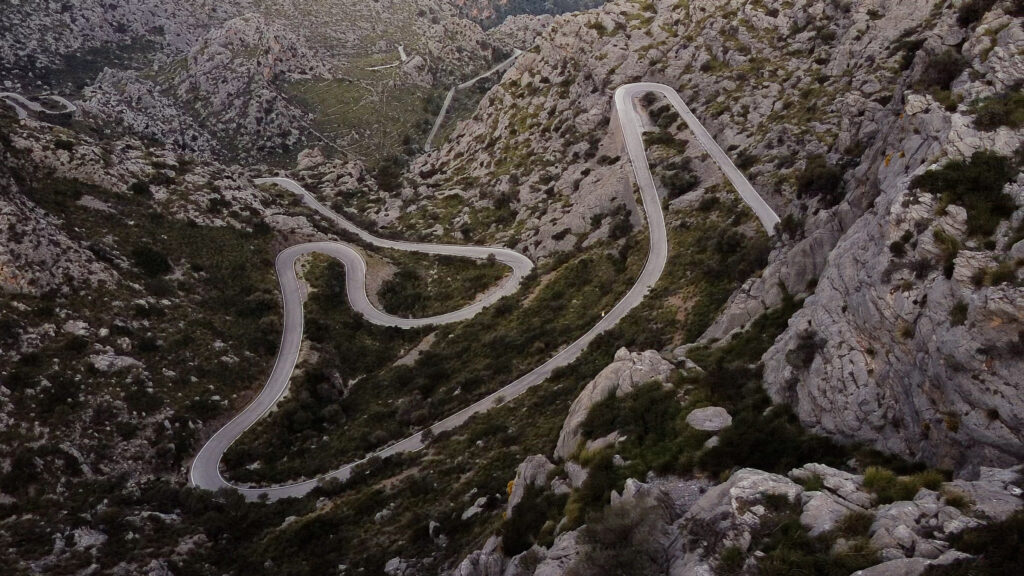
Currently, coach drivers are limited as to when they can drive down to, and back up from, the village of Sa Calobra, a port village extremely popular with tourists, accessible via a twisting ribbon of tarmac that has become a must-ride for cyclo-tourists.
“Every day, hordes of cyclists speed down a narrow road with no shoulder or occupy the centre of the road, blocking buses and causing accidents,” the union said in a statement this week, reported by the Majorca Daily Bulletin.
The apparent danger posed by cyclists on the climb is compounded by motorists in hire cars, ACTUA says, a problem it claims is replicated on Cap de Formentor, the northernmost part of the island. After 15 May, coaches and private motorists are banned from venturing beyond Formentor Beach, though cyclists are currently exempt from this ban all year round.
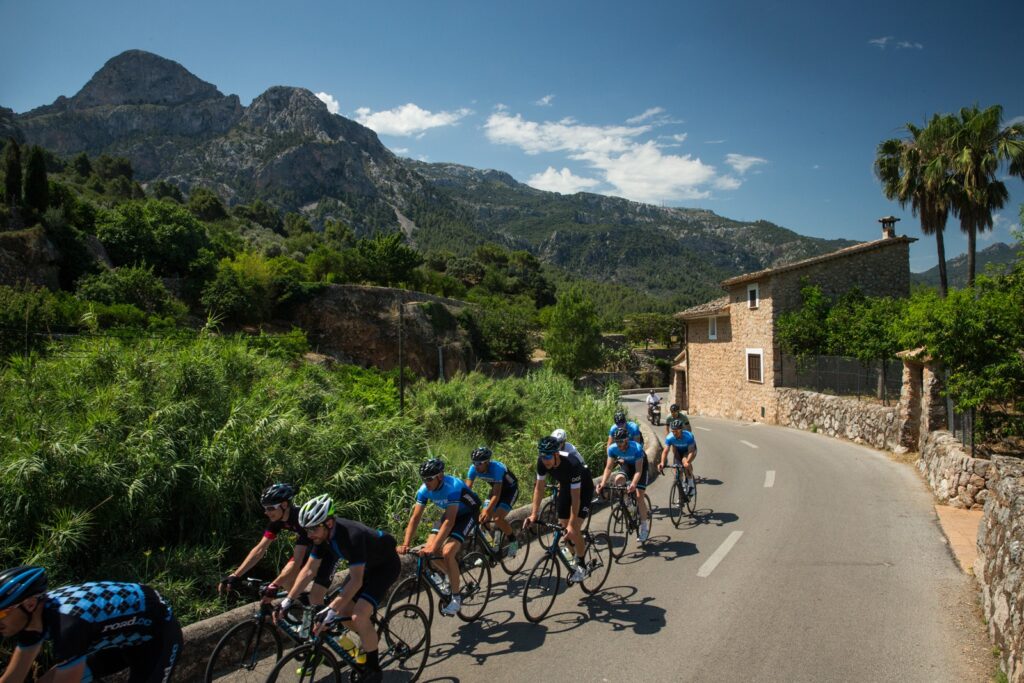
Meanwhile, on the Col de sa Batalla, at the bar and petrol station located just before the Lluc Sanctuary, the union claims cyclists overcrowding the area have made it difficult for its drivers to manoeuvre their coaches.
“It’s impossible to work with this stress every day, some of my colleagues are going crazy,” one coach driver told the local news outlet.
Last month, following a renewed wave of anti-tourist hostility in Mallorca, the island’s minister for tourism, culture, and sport insisted that cycle tourism was “not a problem” and instead represents an “opportunity” to benefit inland villages.
Marta Carrió, a member of the left-wing, pro-environment party Més per Mallorca, had previously told the Balearic parliament that cycling tourism “clogs up every corner of the island all year round”, while regionalist party El Pi called for improved cycle routes to increase safety.
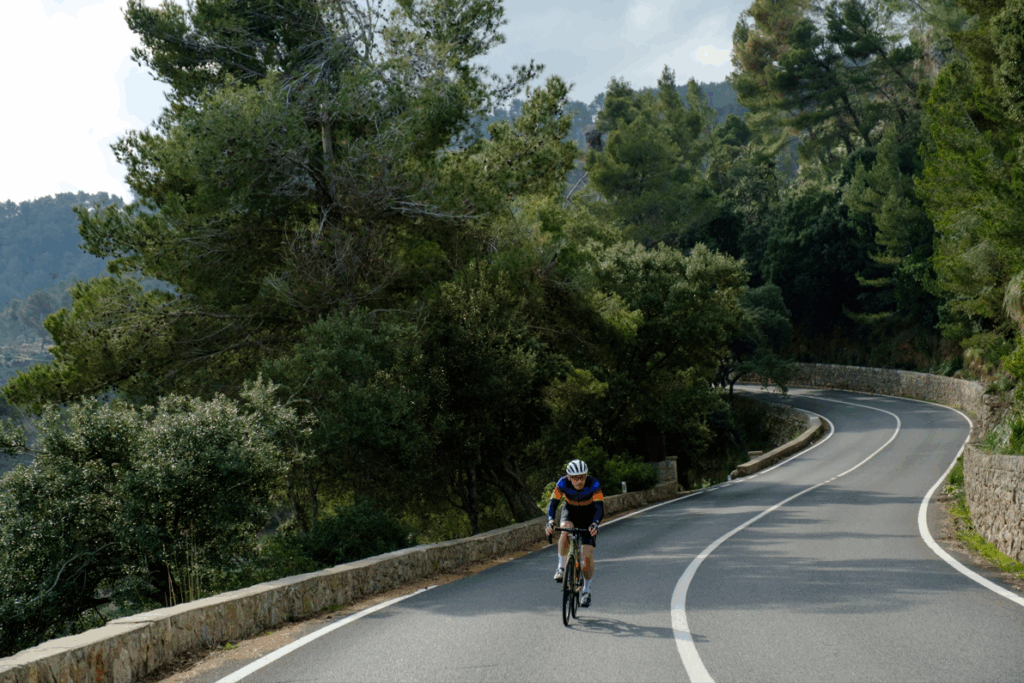
In the lead-up to the flagship Mallorca 312 sportive in late April, the president of a hotel association praised the event for attracting investment to the island and generating revenue for those in hospitality.
“Cyclists spend more than people realise and generate longer stays,” Pepe de Luna said, before explaining how the start town’s hotels are at 99 per cent occupancy the week of the Mallorca 312 as a result.
“It is one of the most important events on the cycling calendar, it positions us globally, and since we started working with them thirteen years ago, time has proven right all of us who believed in it,” he said.
However, despite De Luna’s praise for the event, last year saw a dozen groups, ranging from environmental activists to anti-tourism campaigners, issue a joint statement urging the Council of Mallorca and the Spanish government to cancel the 2025 edition of the Mallorca 312.
These groups argued that the event’s “abusive” road closures violate the “fundamental rights” of locals to leave their homes, while also harming the environment and “intensifying” tourist overcrowding.



















19 thoughts on “‘Hordes of reckless cyclists’ in Mallorca are speeding in middle of the road, blocking buses, and causing crashes, coach drivers’ union claims”
Now I’m not the most hardened veteran of Mallorca but I’ve been there twice now and I can see why the bus drivers are complaining. They fly around the hairpins far too fast and give zero fucks about anyone but themselves.
I have little doubt that there are cyclists riding like bellends. I also have little doubt the drivers are just as bad and one group is going to come off worse.
I’ve cycled in Majorca half a dozen times or more, the first time been in 2012 and the last 2023. The last couple of times I’ve been the sheer number of riders and the complete lack of awareness of a good proportion of them has had me shaking my head. If I lived there, I’d be pretty hacked off too.
Mallorca has become a theme park now. Yes, the roads in the Sierra Tramuntana are lovely but people lack imagination. Look at a map of Europe and there is wonderful mountain scenery and favourable weather to be found from Spain to the Balkans. If you’re willing to take your bike with you then there is so much more than Pollenca, Girona and Calpe. Spain alone has some incredible roads and scenery all over the mainland. And beyond Spain, there are literally at a least dozen or so countries in Europe with fabulous scenery, roads and culture ripe for exploration.
Alternatively your local roads could be gridlocked by twats in badly driven two tonne machines.
I know which I’d prefer round my way.
Not surprisingly the moaners overlook the fact that their roads are overrun by vehicles – tourist buses, cars and vans – for many months and they cause more delays, frustration and potentially harm than cyclists.
How exactly did you conclude they overlook that? And how exactly did you quantify the trouble caused by each means of transport?
I do find it amusing that cyclists are somehow unsuitable for the (glorious) roads there, huge coaches? No problem.
One thing I always look out for when I’m cycling/motorcycling on alpine roads is coaches coming round tight blind bends on the other side of the road.
I’ve nearly been taken out on a few occasions by them. But sure, cyclists are the problem.
Ah, good old whataboutism. Except this time, it just isn’t accurate.
The law actually allows drivers of large vehicles to cross the center line if they are unable to stay entirely within their lane.
They must begin the maneuver only after ensuring that they will not obstruct traffic or endanger anyone, but it is obviously impossible to predict who might appear a second later. That’s why every road user is required to slow down before entering a blind turn.
Regardless of what vehicle you drive, you share responsibility for road safety and are expected to anticipate foreseeable hazards. On a twisty mountain road, you have to think ahead and assume that something or someone may be in your path, especially around a blind corner. That’s just common sense, and traffic laws generally reflect that.
“They must begin the maneuver only after ensuring that they will not obstruct traffic or endanger anyone, but it is obviously impossible to predict who might appear a second later.”
So what you are saying is that all these coaches should carry a banksman who can jump out when the driver stops at the blind bend and positions himself to indicate to the driver that it is clear to proceed, otherwise to obey the law they would be stopped forever at the first blind bend!
Re: coaches and banksmen – you’re just being silly! No, they should just slow down to, say, 10mph or less, depending on the “blindness” of the bend…
TBH after some experience operating any kind of conveyance (bus, cycle…) people learn the *feeling* of “the speed I can get away with” (for given circumstance). And will continue that pattern until they don’t…
You’ve never actually driven a car, have you?
I have driven a car and currently have 43 years of no claims at an average of 20k miles/year so I feel fairly qualified to discuss what drivers should and should not do.
Are you responding to me? If so, did you actually read what I said? Did I say at any point that large vehicles couldn’t cross the centre line?
That’s why I said you have to look out for them when you’re going round tight bends. Quite often though, said large vehicles aren’t driving appropriately for the conditions.
Maybe the appropriate action would be to ban big heavy buses driving tourists round small mountain roads.
@theslowcyclistxx that is just so obvious, the tighter more scenic roads (as opposed to the MA10 are not suitable for larger vehicles and they should be restricted to essential use only (like maintenance of said road).
Cyclists should fill every road, just as cars and trucks and buses do. We cyclists are legally entitled to use roads just as vehicles do. Slowing them down is irrelevant.
Obeying the road rules is important for all road users. This includes cyclists riding safely. As well as motor vehicle drivers driving safely, which includes slowing down to allow space for cyclists, regardless of how many cyclists are using the road.
@GravelIsNothingNew “fill every road”? Given you can fit more cyclists into the space used by motor vehicles we’ll not only need the kids and old folks out, we’re gonna have to import all the Dutch!
Reduce the number of motor vehicles overall but mostly send them somewhere different from cyclists for their longer-distance trips.
Everyone starts next to their houses at 20mph or less; the motorists then can use some distributor road to get to the ring road (and perhaps onto a motorway). The cyclists just keep going in a fairly direct line to their destination (having more choice because they can go *through* some LTNs, bypass traffic lights etc)
Separation of modes by speed (and sometimes mass) is good safety practice and allows each to be used efficiently.
I’m in Alcúdia right now with my bike, no issues at all, riding every day. Maybe if my clubmates and I looked over our shoulders more often we’d see all the coaches piled up behind us that we’ve undoubtedly caused.