


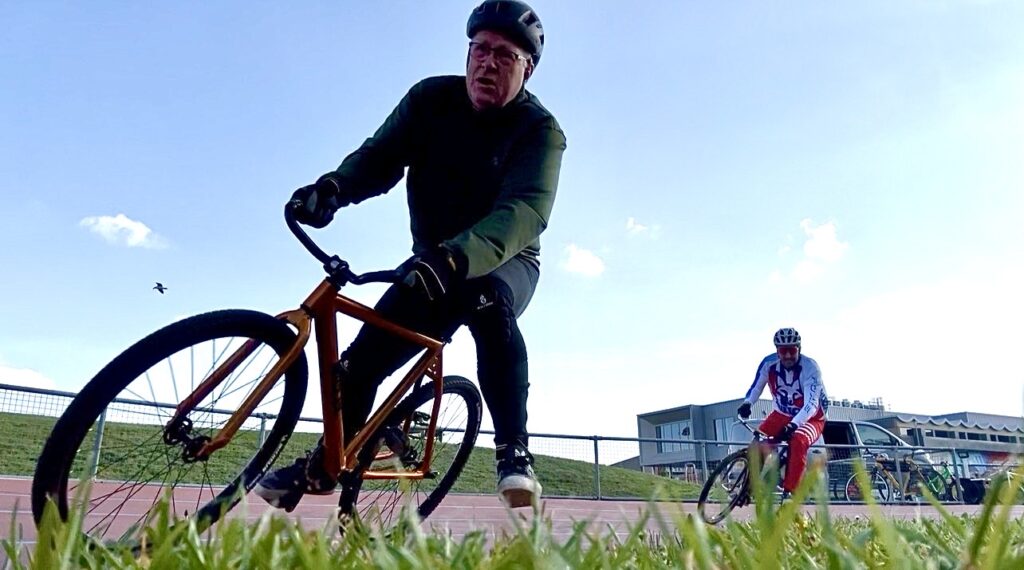

Cycle Speedway is to disassociate from British Cycling after the chair of the newly-formed breakaway federation accused the governing body of relegating the discipline to a “poor second place”.
road.cc were first alerted to a possible split between British Cycling and cycle speedway last week and approached British Cycling for comment. In a statement, Sport and Participation Director Amy Gardener said that they “have been working closely with the Cycle Speedway Commission to identify how we can best support the long-term success of the discipline, and conversations are ongoing.”
One cycle speedway session and event organiser confirmed that an “amicable” meeting to formalise the split from British Cycling occurred in January. He added the sport is now beginning to flourish again thanks to outside investment, with clubs being able to operate with charitable status.
But Mike Hack, who has been Chair of British Cycling’s Cycle Speedway Commission and is now Interim Trustee of the Cycle Speedway Federation, told road.cc that the split has been instigated in order to arrest the sport’s “continued, steady decline.”
In a rebuke of British Cycling’s governance Hack says that, since cycle speedway came under the governing body’s umbrella in 1999, “little progress has been made.”
“As a “non-medaling” and grassroots discipline, it took a poor second place to the more glamorous high profile disciplines such as road and track. Increasingly, British Cycling was simply providing some day to day administration and little else. Increasing fees and the enforcement of inefficient and burdensome processes, which were designed for other cycling disciplines, added to the problems. Without action, the sport was in danger of further decline.
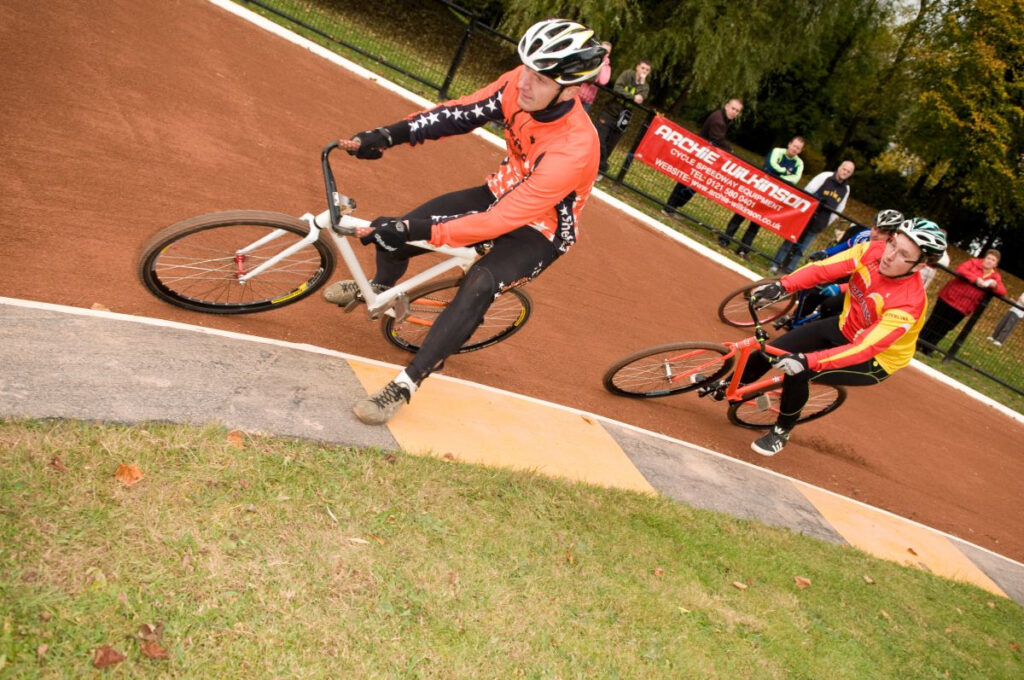
“Around 12 months ago, discussions were initiated with BC management to see if we could find a better way of working together. A more devolved model was agreed as a worthwhile objective. Unfortunately, by the end of 2025 a satisfactory arrangement for both parties could not be found and devolution has subsequently become “decoupling” and the newly formed Cycle Speedway Federation has taken up the reins.”
The split is a blow to cycling’s governing body in the UK after reports of declining membership numbers and controversial sponsorship deals that have damaged British Cycling’s reputation. However, a new partnership with Lloyd’s Bank for the men’s and women’s Tour of Britain mean it is no longer recording financial losses.
Hack pointed to broader structural issues affecting cycle speedway’s viability, including the loss of land to new development and past associations with its motorcycle equivalent, but also said that cycle speedway had suffered due to “the lack of investment and promotion” in the sport. British Cycling’s website currently lists 22 clubs and 37 cycle speedway tracks in Great Britain, though it is unclear when the web page was last updated and the Elite National Grand Prix series used only a fraction of these venues for racing.
The split, which is due to take effect on the 30th June, is intended to enable cycle speedway to develop courtesy of much lower administrative costs. The newly-formed Federation is applying for charitable status and will be directly owned by cycle speedway clubs who will elect the Federation’s Trustees. Hack estimates the new organisation could reduce operating costs by as much as two thirds compared to under British Cycling’s management.
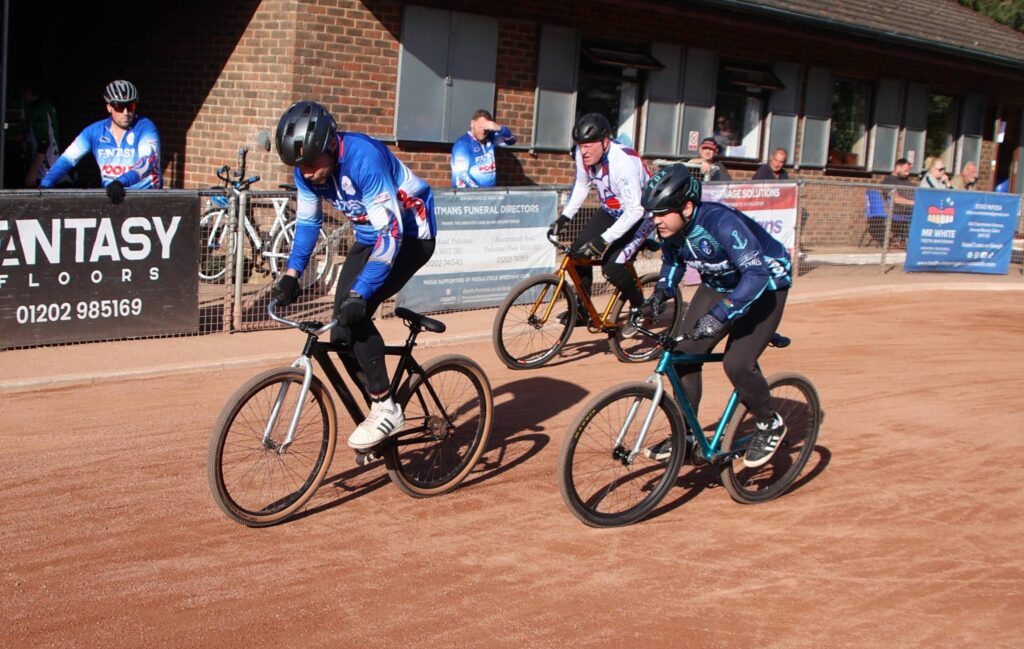
Despite the “slow decline” of speedway’s popularity compared to its heyday in the 1960s and 70s, there is optimism that the sport is growing in pockets of the country, which Hack attributes to the sport being “highly accessible and low cost”. Some clubs are “really thriving,” he added, having “become much more inclusive, particularly of women and children from the age of three.”
Organisational dependence has also not prevented development occurring without British Cycling’s assistance in recent months, with the sport self-financing the development of tracks that can also be used for other activities. New tracks have also opened in Filton, Gloucestershire and Tweedbank in the Scottish Borders.
Hack, who is also the founder and secretary of the Astley and Tyldesley Cycling Club in Greater Manchester, added that negotiations with British Cycling were helped by knowing “something had to be done, rather than just another strategy paper. We knew the winning formula and just needed to get on with it.”



















13 thoughts on “Cycle Speedway to “decouple” from British Cycling, as governing body accused of treating sport as a “poor second place to more glamorous disciplines””
Mr Hack has been exceptionally generous to British Cycling here. If the full story ever comes out, BC members should be outraged by the approach the organisation has taken, though, given recent history, perhaps they won’t be. British Cycling has made it effectively impossible for the sport to remain under its governance. With such a convoluted and opaque democratic process, holding this organisation to account is all but impossible. That cannot continue, someone needs to hold their feet to the fire.
And it’s not just cycle speedway that has been poorly governed, I think every discipline has been stifled by BC’s control over the sport’s facilitation.
What was particularly frustrating to see is how, having dragged their heels for years around gravel racing, their first foray into the sport was to undo hard work undertaken by well established individuals and groups, as BC looked to force their failing governance model onto – what to date has been – thriving discipline.
I hear your comments about an inability to hold the organisation to account. It is very poor indeed; I hope other disciplines follow suit and walk away.
They are a bunch of Desperate Dan’s hitching their wagon to anything that allows them to produce a polished powerpoint to demonstrate they are growing and “on trend”. Grass roots road is flat on its backside, they are chucking out Cycle Speedway, but are happy to invest their time and resources in Nigeria. The article is no longer on the BC website, I believe Gardener and others were on the trip. What the hell is that about? https://www.naijanewsbreak.com.ng/2026/01/nsc-british-cycling-association.html
Well it says right there in the article you’ve linked to:
and
which all seems like perfectly decent things to do (particularly when they’re being criticised elsewhere in this thread for not being interested in anything that doesn’t bring them medals).
[Also, “ensuring a culture of winning fairly in both the Olympics and Paralympics” – though it’s not entirely clear who’s learning from who in that respect…]
These are perfectly reasonable initiatives, and I don’t disagree with them in principle. However, this is an organisation that is arguably failing its own membership. This article focuses on cycle speedway, yet you reference gravel; meanwhile, the UK road scene is in a dire state, and mountain biking has long had an uneasy relationship with British Cycling. The IT transition has also been handled very poorly. When will they start putting their own house in order?
Er, nope – wasn’t me.
The clue’s in the name. British Cycling.
I have no objection to British Cycling running outreach programs in developing nations but by God it’s ironic that an organisation sponsored by Shell should be running such an initiative in Nigeria, a country that has been ravaged by the aforementioned petroleum company with multiple apocalyptic oil spills in the Niger Delta and an infamous history of corruption and colluding with the state government that has led to severe repression and in some cases murder or state executions of those protesting against the company. I wonder if anyone mentioned Ken Saro-Wiwa while BC’s reps were there?
Ironic? Surely that’s ‘synergistic alignment’?
Good on them
Nobody expects the British Cycling governance approach
“It took a poor second place to the more glamorous high profile disciplines such as road and track.”
“A poor *third* place. To road, track, cross-country…”
“Among the things it was placed behind…”
don’t forget freestyle BMX
I have to laugh at the statment from British Cycling, “talks are ongoing” clearly they are not! If they were remotely interested in the success of the discipline they’d have occasionally turned up to things like, the National Championship Finals, the World Championships held in the UK last year, but no; unless it’s got a shiny Olympic medal attached to it, or they can rub shoulders with the “stars” there is a cohort within BC who are not interested. Just my opinion 👍