



Besides producing bicycle components, Shimano is also the neutral service provider for the Tour de France – taking over from Mavic in 2021 – along with other major Amaury Sport Organisation (A.S.O) races such as Paris-Roubaix, Critérium du Dauphiné and Liege-Bastogne-Liege. Everyone sees the blue cars following the race, but who and what are in them, and what do they do?
Shimano has been running its neutral service since 2001, and in 2021 began providing neutral service at the Tour de France. Shimano now has six neutral service teams across Europe, covering the biggest professional road races in the world.
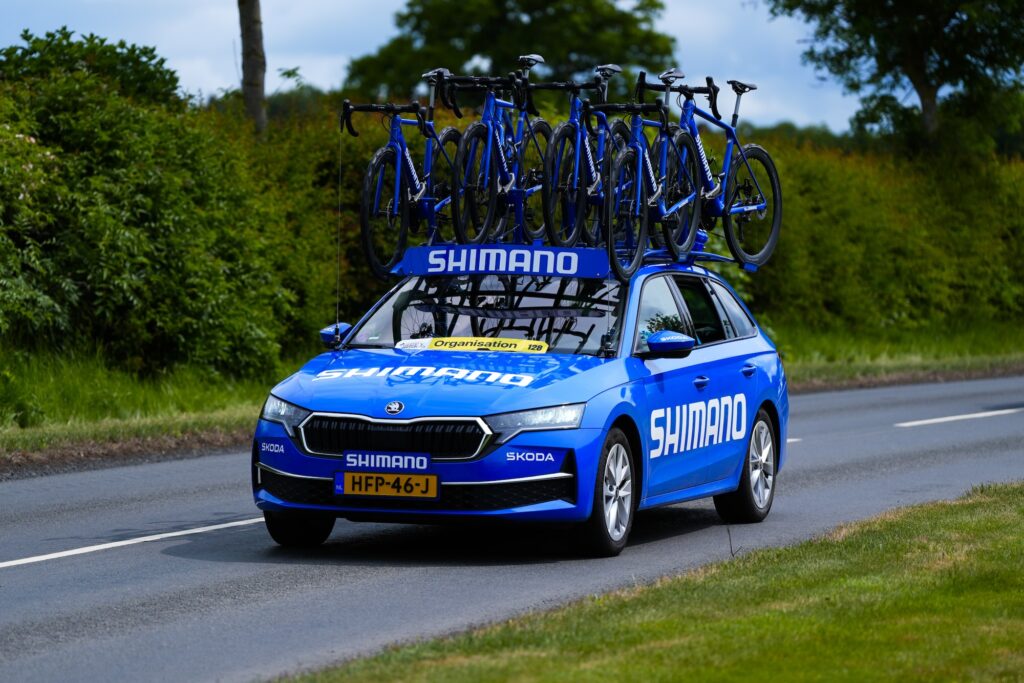
The blue neutral service cars are present at all three Grand Tours, the Tour de France Femmes, the World Championships, all five cycling monuments, and many other races on the UCI men’s and women’s calendars.
In the Tour de France, each team has two cars following the peloton that are able to assist the riders throughout the race with a mechanic in the back seat and spare bikes on the roof.
One car will stay near the team’s GC contenders and the second car will stay further back. The team cars are assigned a specific number based on the overall GC rankings to keep them in order at the rear of the peloton.
So, where do the blue Shimano cars fit into this?
The blue Shimano cars and motorbikes that you see amongst the team cars are also support vehicles that provide assistance to riders during the race, regardless of their team or equipment sponsors.
The Shimano squad in every race is made up of three cars and one assistance motorbike, making up what we refer to as the neutral service, with the primary purpose of ensuring all riders have access to support so they can carry on racing without too much interruption.
> Psssssst! What happens when a rider punctures in the Tour de France?
Two cars and the motorbike will be at the front of the race, with the other car at the back behind the riders.
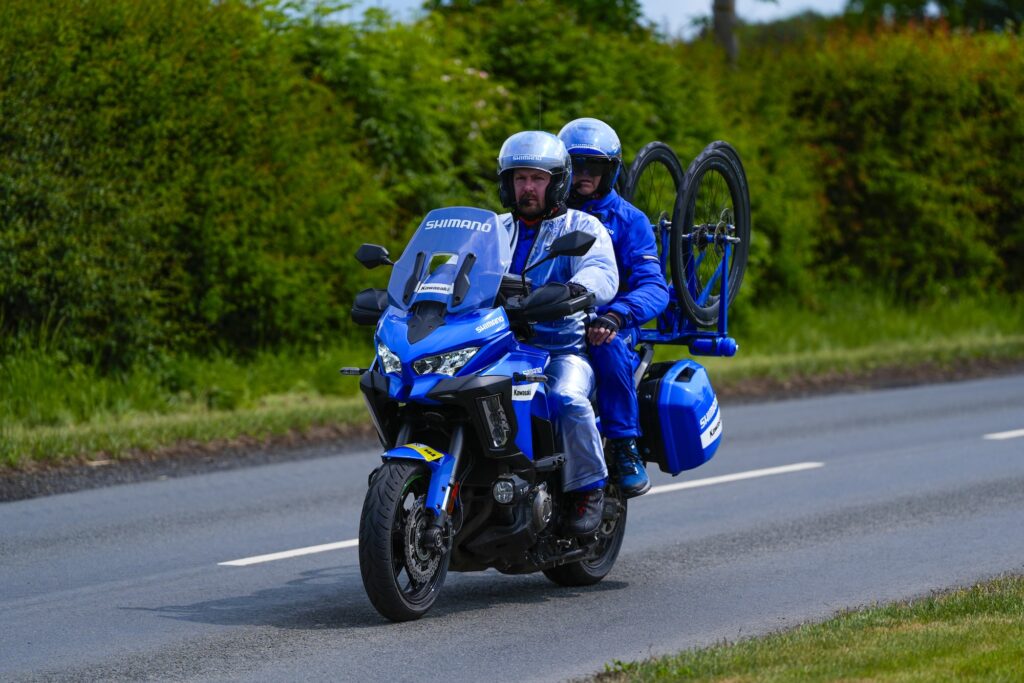
In the event of a breakaway, the Shimano motorbike will follow first and when the gap is more than 35 seconds, one Shimano car will join the breakaway so the motorbike can return to the peloton.
The responsibility of supporting riders falls primarily on the teams themselves and if a rider in the peloton gets a flat or needs water, their team car is radioed and allowed to drive to the front to help the rider.
This system doesn’t always work, though, and when the race is split into multiple groups, Shimano’s neutral service can help and act as a backup option to ensure rider safety and fair competition.
A closer look…
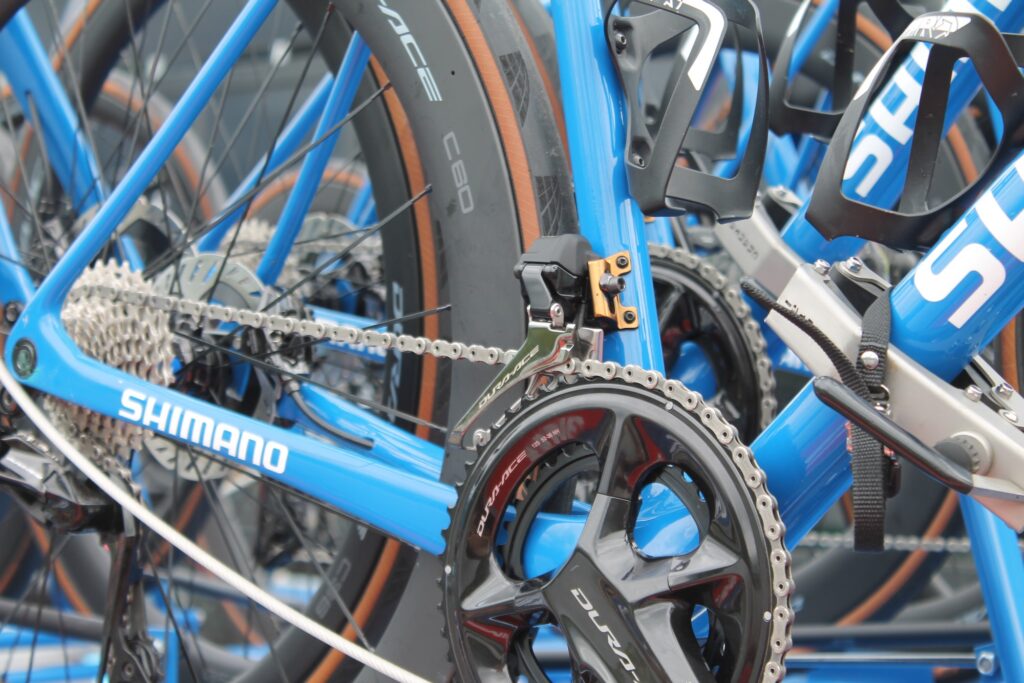
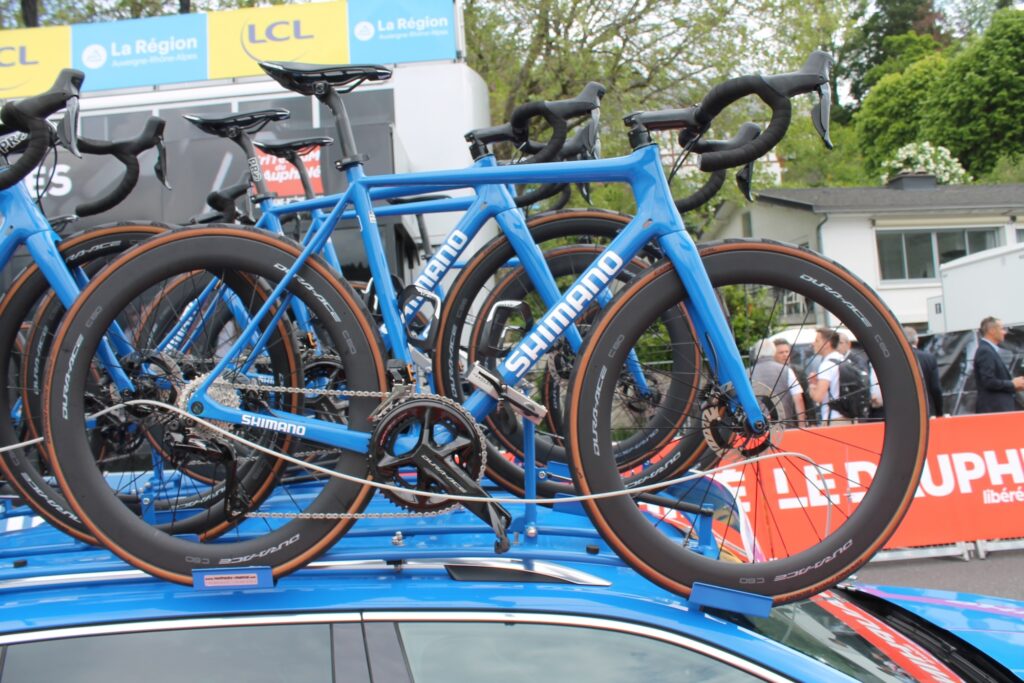
The neutral service cars are essentially a mobile workshop and you’ll see them with multiple bikes on the roof and spares inside the car too.
Today’s peloton sees arguably the largest number of standards that there has ever been, with various brake types, different drivetrains and numerous integrated components, so providing help is no easy task.
Shimano’s mechanics carry spare wheels, including 140mm and 160mm rotors, as well as two to three sets made for use with other manufacturers’ drivetrains.
> Should you run a 1x set-up on your road bike?
The motorbike is also equipped with extra wheels and Shimano’s neutral service cars carry four to six spare bikes on the roof, covering four different frame sizes.
Right now, most teams race on 12-speed groupsets, although Cofidis is sponsored by Campagnolo, which has just introduced 13-speed Super Record.
> Campagnolo launches overhauled Super Record and revives iconic thumb shifter
Some teams use 140mm disc rotors, some use 160mm, and some combine both. Different teams also use different cleat systems – Look Kéo, Shimano SPD-SL, Time, Speedplay – so neutral service bikes are equipped with different pedals.
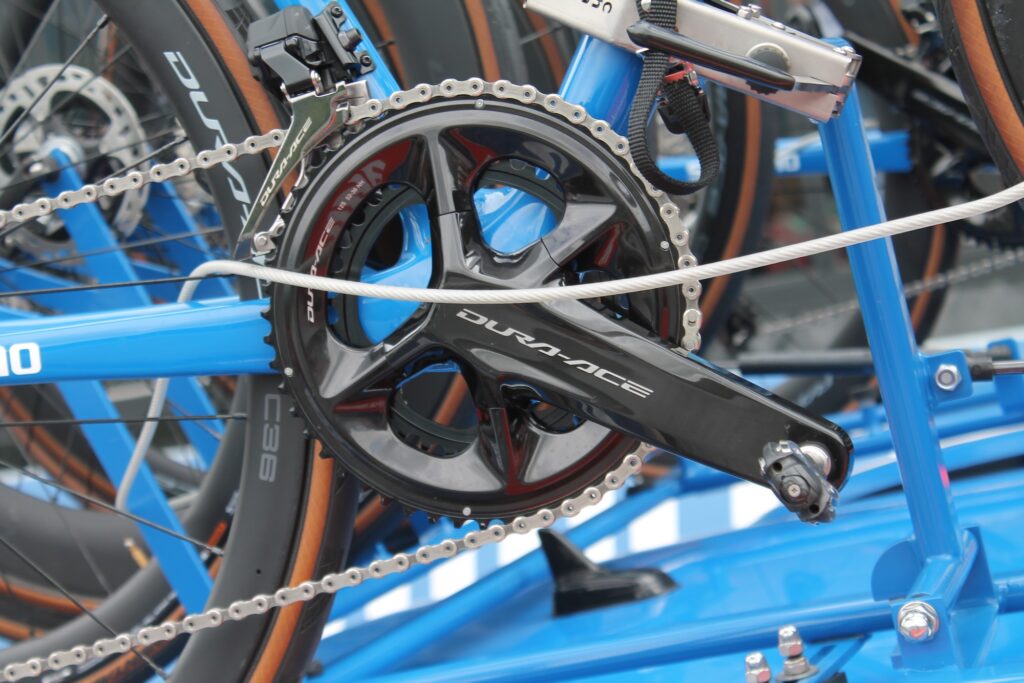
Shimano doesn’t make bike frames, so all of the bikes that you’ll see at races with neutral support provided by Shimano are made by another brand and rebadged.
The current crop of neutral service bikes is from the little-known French brand Origine, (you can find them on the UCI’s list of approved models of framesets). All bikes come fully equipped with Shimano Dura-Ace Di2 groupsets and Dura-Ace wheels, with the option of different wheel rim depths.
During the Tour, one spare bike will always be set up for the GC leader and will be placed on the corner of the roof rack to ensure maximum accessibility. The other bikes have quick releases so that riders can adjust their saddle heights.
Of course, riders would prefer to have access to their spare bike rather than waiting for a repair, but they’ll use neutral service if they’re unable to get immediate assistance from their own team vehicles in order to carry on racing as soon as possible.
What support can neutral service provide?
Mechanical support
As mentioned, neutral service vehicles provide mechanical support to riders who have been isolated by their team cars. If a rider experiences a mechanical issue during the race, neutral service is equipped with tools, spare parts, and experienced mechanics to help with bike repairs and adjustments.
Shimano’s mechanics are some of the best in business, with decades of experience in the sport. They include some ex-pro racers.
Wheel changes
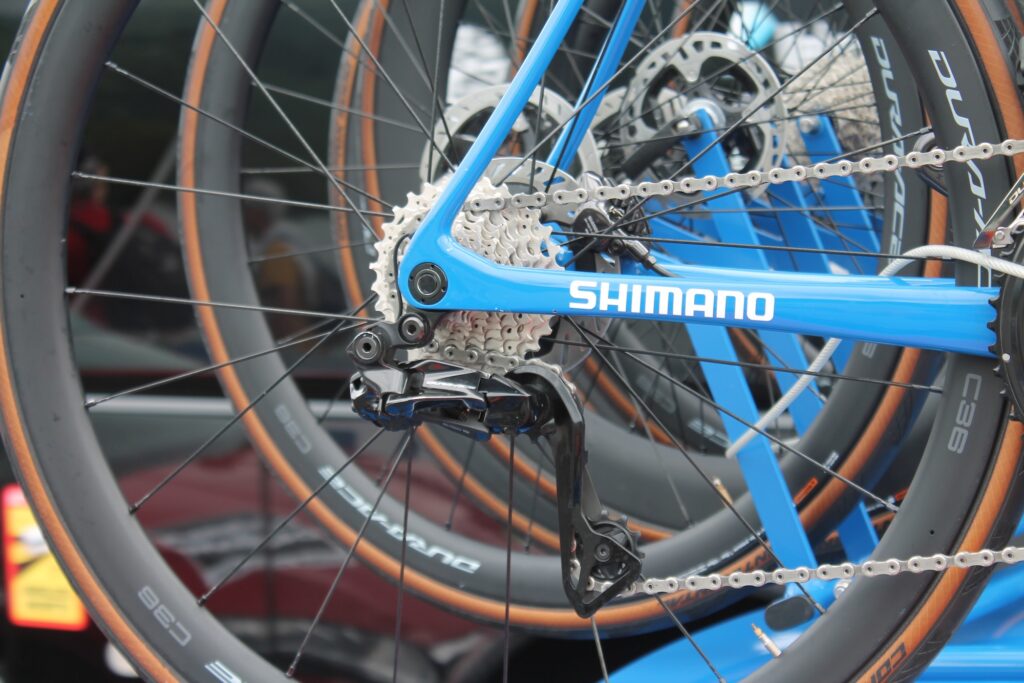
With the many wheels loaded up onto the motorbike and inside the cars, riders can use neutral service to request a wheel change.
Shimano’s mechanics can change a wheel in less than 30 seconds, allowing the rider to continue without losing much time.
Spare bikes
In some cases, a rider may need to have a complete bike change to continue the race, and the neutral service bikes cater for all of the riders.
We don’t often see riders on the blue Shimano bikes from neutral service and when we do, riders will often only use it for a few miles or until they can get a bike from their team car.
Food and water supplies
Team cars can also provide nutrition and bottles to riders, and neutral service cars provide essential supplies too.
There are designated areas in a race where riders can collect food and drink to replenish their energy, which they would ideally get from their team cars.
In the case of emergencies, neutral service often carries extra water bottles and energy gels that they can distribute to riders who require them. But, if you’re anything like me, I like to know that I’ve trialled and tested the gels that I’m using.
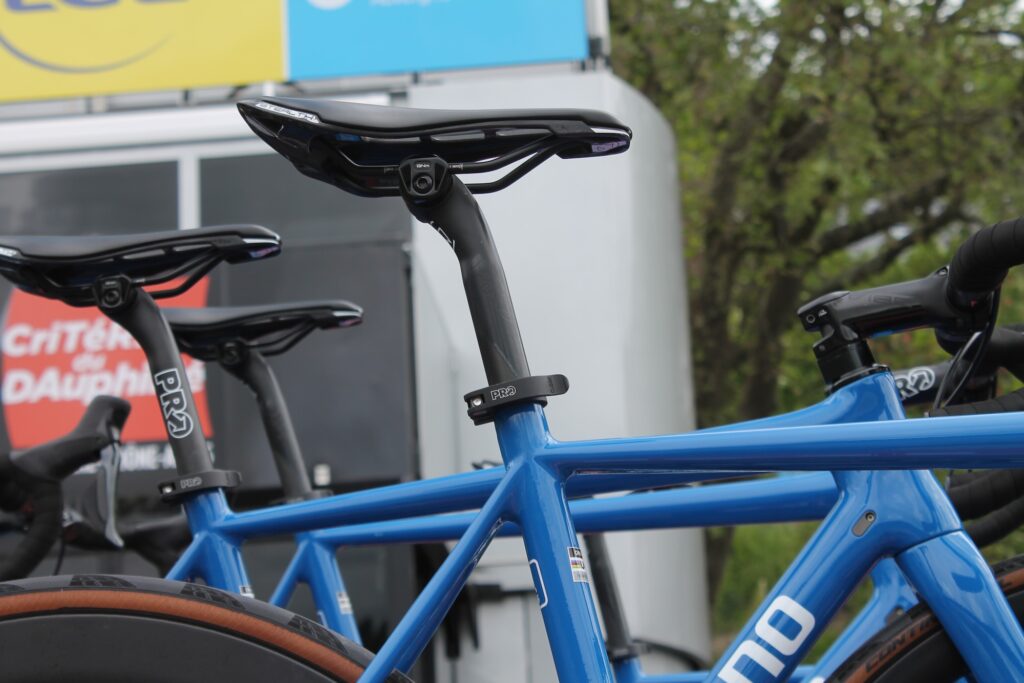
Neutral service vehicles may be important for riders but they’re important for all of us fans because they keep the action going.
They are also useful for team mechanics who can go to Shimano’s neutral service if they encounter problems they can’t fix.
Have you noticed Shimano’s neutral service at the Tour? Let us know in the comments section below…








2 thoughts on “What the hell is neutral service at the Tour de France?”
As manufacturers diverge from
As manufacturers diverge from universal standards, I wonder how often this neutral service service can’t help a rider in distress. For example, if the rider is using Speedplay pedals but the bikes are equipped with Shimano pedals.
PoorInRichfield wrote:
See the article: “Different teams also use different cleat systems – Look Kéo, Shimano SPD-SL, Time, Speedplay – so neutral service bikes are equipped with different pedals.”