



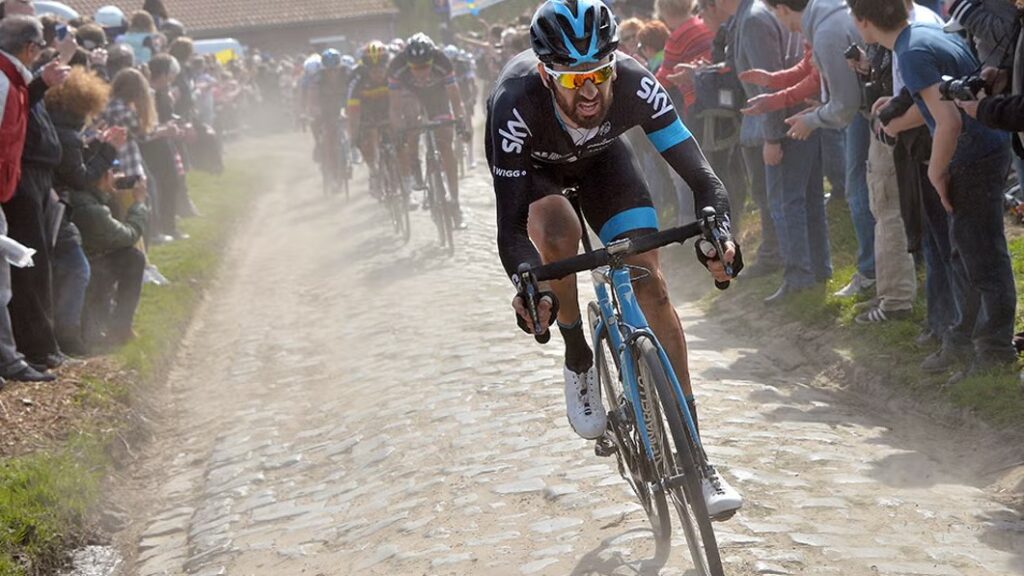
It’s very difficult to argue against Paris–Roubaix being the toughest bike race of the year for riders, staff, and their equipment. Few other races push bikes to their limits like the “Hell of the North.” Riders must tackle around 55km of cobbles without sacrificing speed on the roads, and even in good weather, the race tests equipment more than almost any other on the calendar. In this article, we’re taking a closer look at whether innovations in bike tech over the past 50 years have outpaced those of the previous half-century.
1926-1976
From the very first editions of the race, riders and teams have been hunting for any mechanical edge over their rivals – or, at the very least, ways to keep their bikes from falling apart on the brutal cobbles.
During this period, frames were almost exclusively steel, evolving from heavy lugged Columbus tubing to lighter Reynolds 531 models. Reinforced tubing reduced the risk of frame breakage, while more relaxed geometry and longer wheelbases helped absorb shocks from the cobbles.
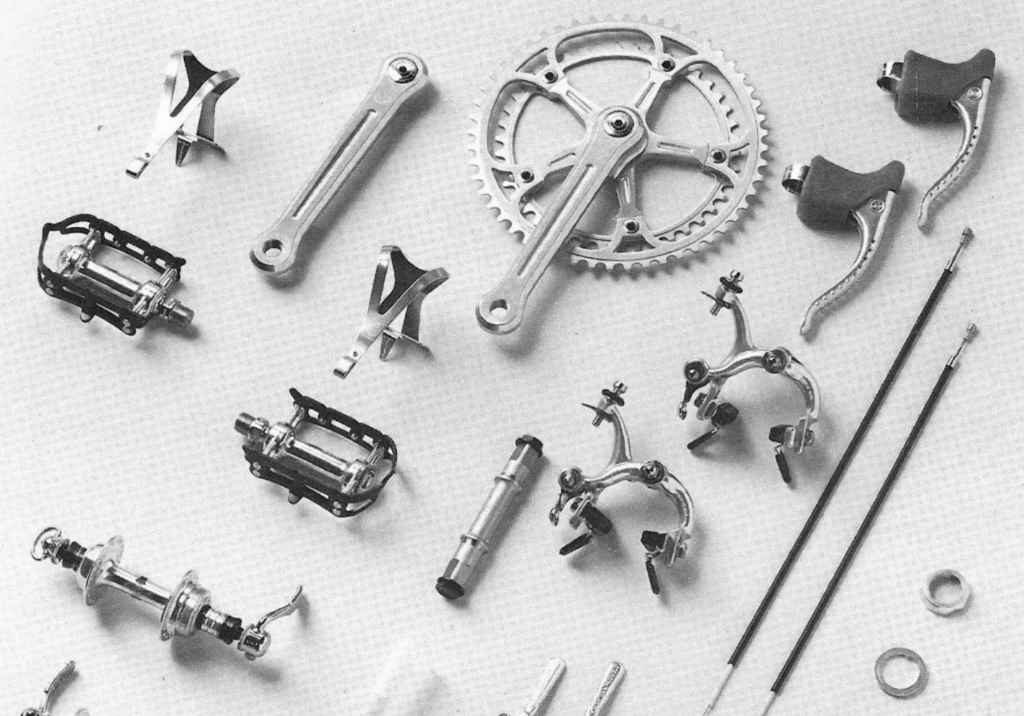
Component technology also advanced, with early riders relying on single-speed flip-flop hubs. By the 1970s, riders had access to multi-speed systems, such as the six-speed Campagnolo Super Record groupsets.
Shifting was handled via down-tube levers, braking through traditional centre-pull or side-pull caliper rim brakes, and double-layered handlebar tape provided extra cushioning for riders’ hands. Foot retention relied on leather toe clips and straps.
Tyres were narrow tubulars – as narrow as 21mm – and riders would sometimes carry spare tubulars in case of punctures mid-race. As the years went on, manufacturers such as Michelin and Continental experimented with rubber compounds and pressures, recognising that lower inflation could improve grip and comfort on the cobbles. Four-time winner Roger De Vlaeminck was among those to take advantage, deliberately running lower tyre pressures – around 65 psi compared to the typical 100 psi in the 1970s – to better absorb the impact of the pavé.
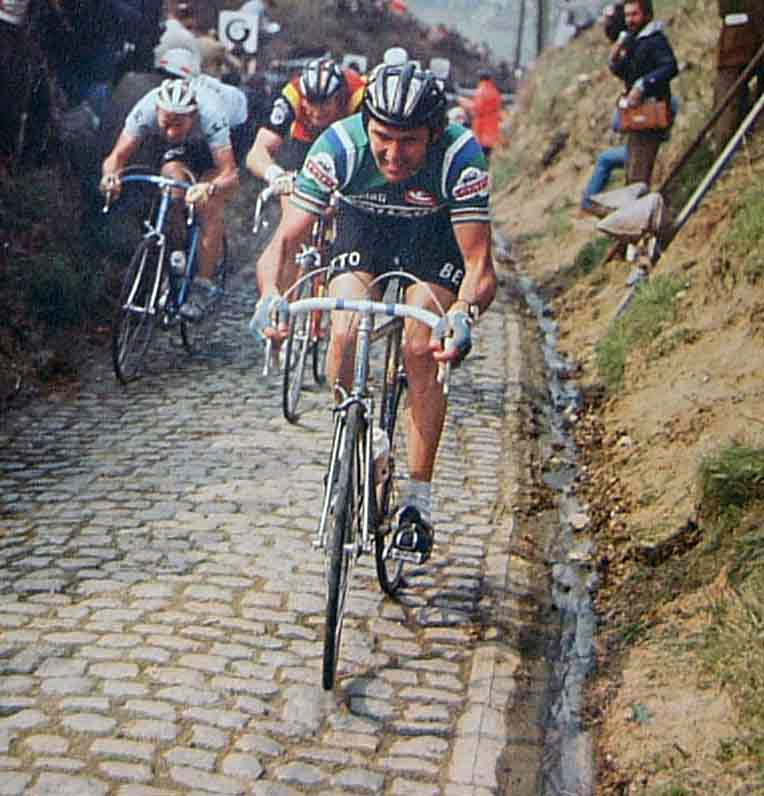
By 1965, race organisers had also begun to modernise support, allowing wheel changes between teammates and introducing team cars and motorcycles carrying spare wheels to follow the race – a significant shift from the self-sufficient approach of earlier editions.
Between 1926 and 1976, bike technology in Paris–Roubaix evolved gradually. For the first 100 years of the race, teams focused on durability, creating bikes to survive the brutal cobbles, rather than comfort or aerodynamics. Riders were tackling the same pavé as today, with little to soften the impact.
1976-2026
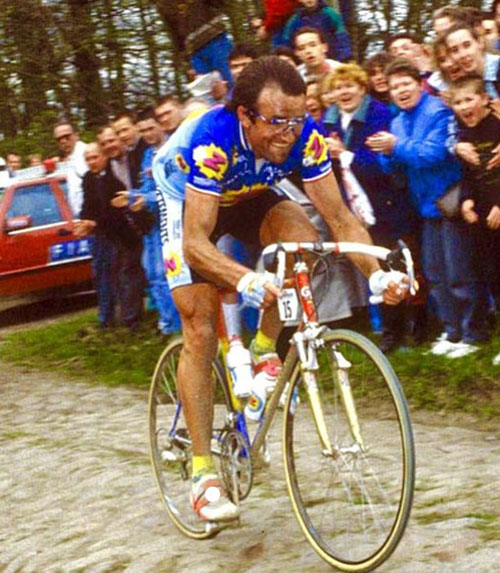
From the 1990s onward, bike design began evolving rapidly to meet the specific demands of Paris-Roubaix. Manufacturers experimented with suspension with Greg LeMond using a RockShox 30mm-travel suspension fork in 1991 and Duclos-Lasalle winning the 1992 and 1993 editions with front suspension.
Suspension was also seen added to bike frames in some cases, with Bianchi pairing a suspension fork with an alloy frame and single-pivot rear triangle and coil spring, though this bike didn’t make it to the finish of the race.
Groupsets have evolved considerably over the years. From 1926 to 1976, riders moved from single-speed setups to six-speed systems, and in the past 50 years, road groupsets have expanded further to 12 speeds. More recently, 13-speed gravel groupsets have also made appearances at Paris–Roubaix.
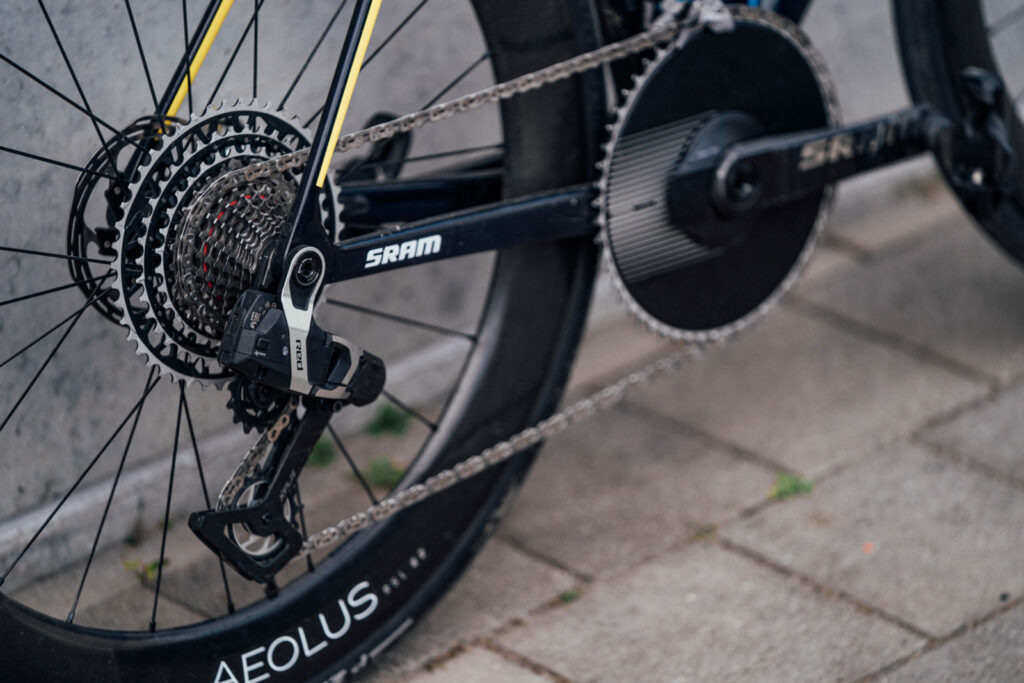
Groupsets have also changed from mechanical to electronic systems, although the transition was gradual. Even after electronic shifting was introduced, some riders were still using mechanical setups. Multi-time Classics winner Fabian Cancellara was among those who stuck with mechanical shifting longer than most, while Peter Sagan won the 2018 race on mechanical Shimano Dura-Ace with rim brakes. By 2023, however, mechanical shifting had all but disappeared from the peloton.
Braking power has also improved massively with the switch from rim to disc brakes. The first win on a disc-brake bike was that of Philippe Gilbert on a Specialized S-Works Roubaix in 2019.
Between 1926 and 1976, narrow tubular tyres were the standard, but over time, tyre technology has evolved dramatically, with widths steadily increasing and riders now prioritising tubeless setups.
By the early 2000s, riders were experimenting with 28mm tyres for Paris–Roubaix, while 25mm remained the standard for most other races. In more recent editions, however, tyres have ballooned to around 32mm, offering greater comfort and grip on the pavé.
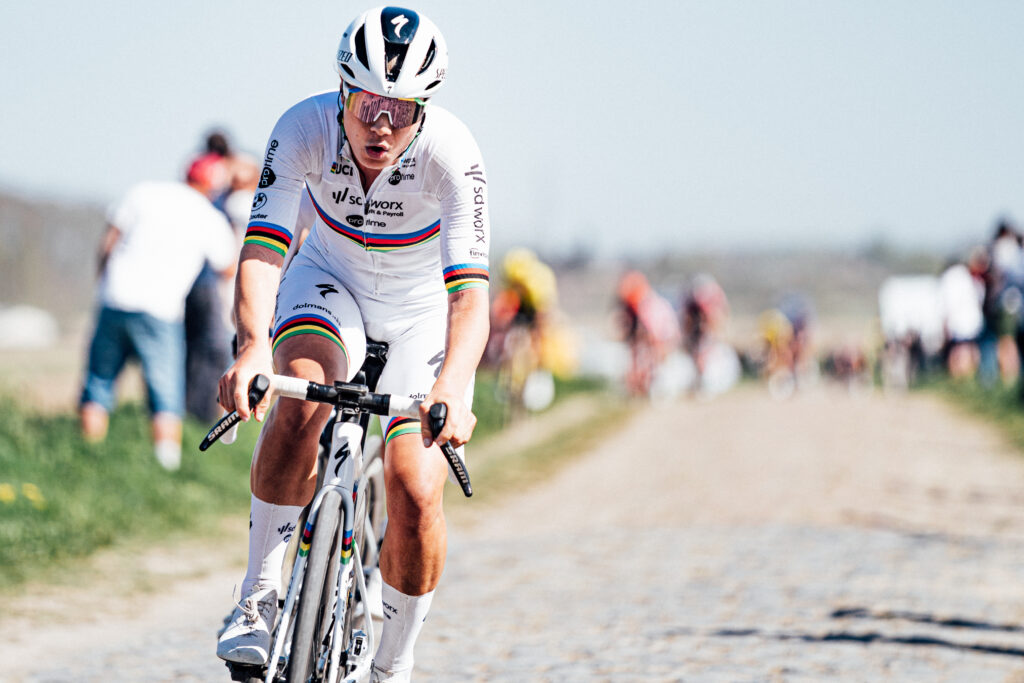
In recent editions, Lotte Kopecky, Taco van der Hoorn, and Fred Wright all rode massive 35mm tyres, yet still averaged speeds of over 40kph.
Today, tyre innovations have even ventured into self-adjusting pressures. In 2025, Pauline Ferrand-Prévot won Paris–Roubaix Femmes on a bike equipped with Gravaa’s self-inflating and deflating tyre system, though the Dutch company has since filed for bankruptcy.
While today’s riders can place shifters in multiple positions on the handlebars, riders in the 1970s had to rely on down-tube shifters, meaning they had to take a hand off the bars to change gears. Today, shifting has become faster and more versatile, with options such as sprint shifters (also known as Blips) for quick gear changes during attacks.
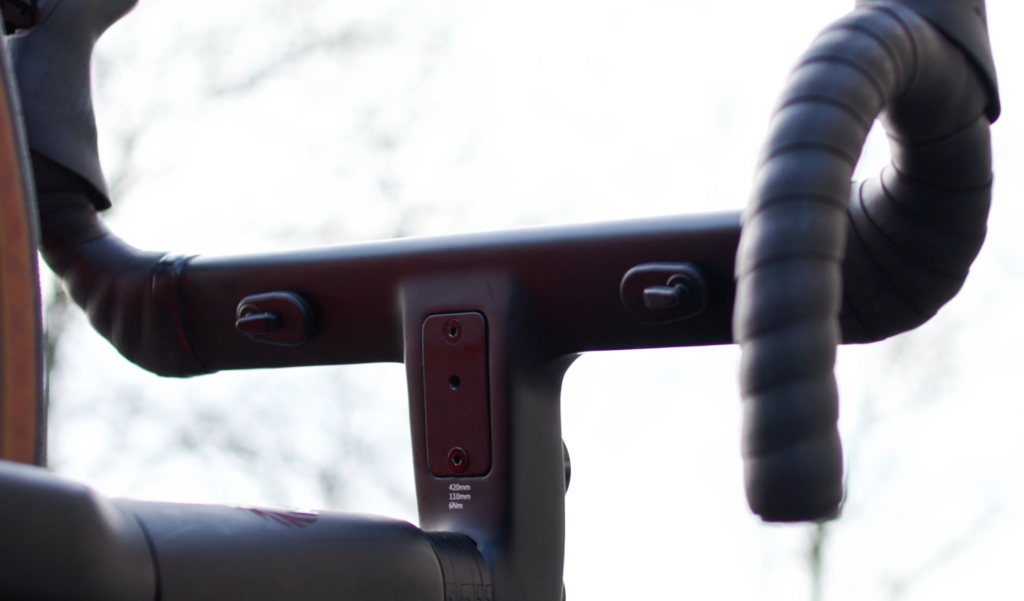
Some riders also prefer to shift from the tops of the bars during cobbled sectors, and many spec additional shifters on the front or underside of the handlebars.
Despite these advances, some traditions have endured. Double-wrapped handlebar tape has been a staple for decades, providing extra comfort and grip. While not universal, it has long been a common feature.
Speed

Paris-Roubaix has gradually become faster over time. The 2024 edition is currently the quickest on record with Mathieu van der Poel averaging 47.802km/h.
In 1926, the 270km race took 7:34:42, giving an average speed of 35.6km/h. Fifty years later, the 1976 edition, averaged 40.81km/h – a 14.6% increase. Over the next 50 years, the pace increased again by roughly 13.2%, with recent editions averaging around 46-47km/h.
Completion rates show a similar story. In 1926, 86 of 147 starters finished (around 58.5%). The 1976 edition was a particularly brutal race with only 38 of 154 riders finishing. Last year, 117 of 175 starters finished (around 66.9%).
This shows that modern bikes and equipment have not only increased speed but also improved reliability, playing a part in allowing more riders to complete the race despite its difficulty.
In conclusion…
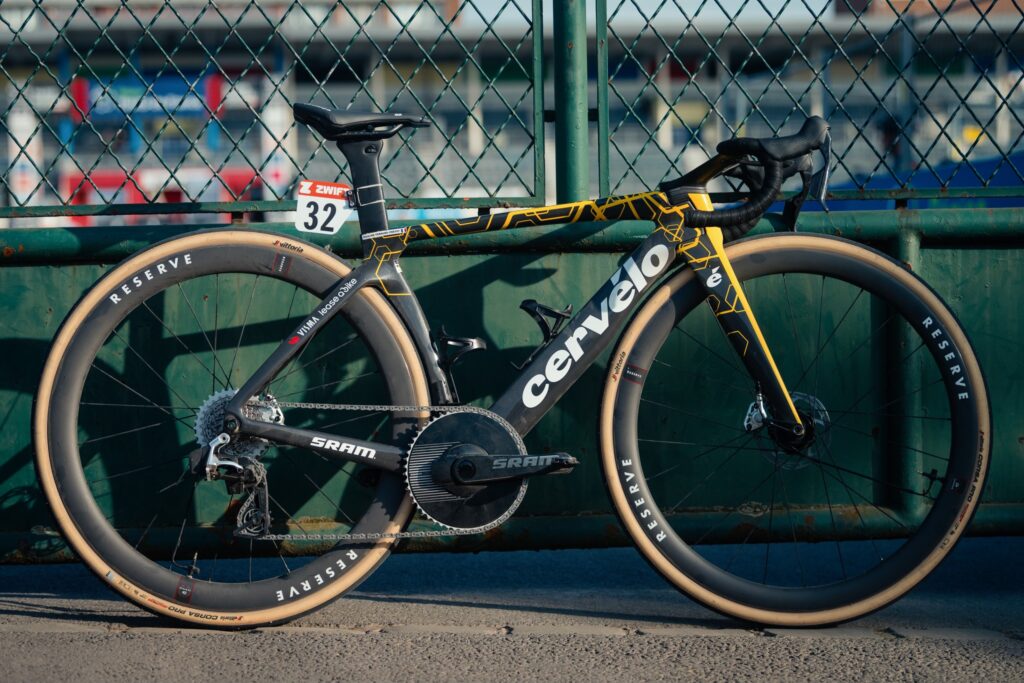
So, have the bikes used at Paris-Roubaix progressed more in the last 50 years compared to the previous half a century? The answer is a resounding yes, and much of that acceleration has come since the 1990s.
While the period between 1926 and 1976 was defined by gradual, durability-focused changes, the past five decades has brought rapid innovation, from suspension forks and wider tyres, to gravel-inspired technology and even self-adjusting tyre pressures.
Yet despite these advances, the core challenge remains the same, and the same unforgiving pavé continues to test both rider and bike to their limits.



















3 thoughts on “Have Paris-Roubaix bikes progressed more in the last 50 years compared to the previous half-century?”
1926 to 1976 covers a lot of territory, including the adoption of derailleurs and the evolution of the general-purpose road bike. As road bike frames got shorter, steeper, lighter, and more responsive, and wheels and tires lighter, teams spec’ed more conservative gearfor Paris-Roubaix and other cobbled northern classics–more conservative frames and heavier, fatter wheels and tires.
I don’t really see where your conclusion comes from “So, have the bikes used at Paris-Roubaix progressed more in the last 50 years compared to the previous half a century? The answer is a resounding yes, …” The article seems to almost completely avoid most details about the bikes of 1926, and gives a very brief mention of how they changed up to 1976. It seems that this period was barely given any attention. The stats about the speed improving by a larger percentage difference in the first 50 years than the previous 50 is presented, but then ignored. This feels like very poor journalism – only really discussing one half of the argument and then concluding that it’s the obvious winner. Maybe you should get a 2nd journalist to argue for the other point of view before making any conclusions.
There seems to be a confusion between “progressed” and “changed”; you could argue that bikes have changed more in the last 50 years than the previous 50 but that doesn’t necessarily equate to progress. Some of the features mentioned like suspension forks are no longer used and self-adjusting tyre pressure devices haven’t exactly taken the peloton by storm or indeed won much, apart from Ferrand-Prévot in ’25.