


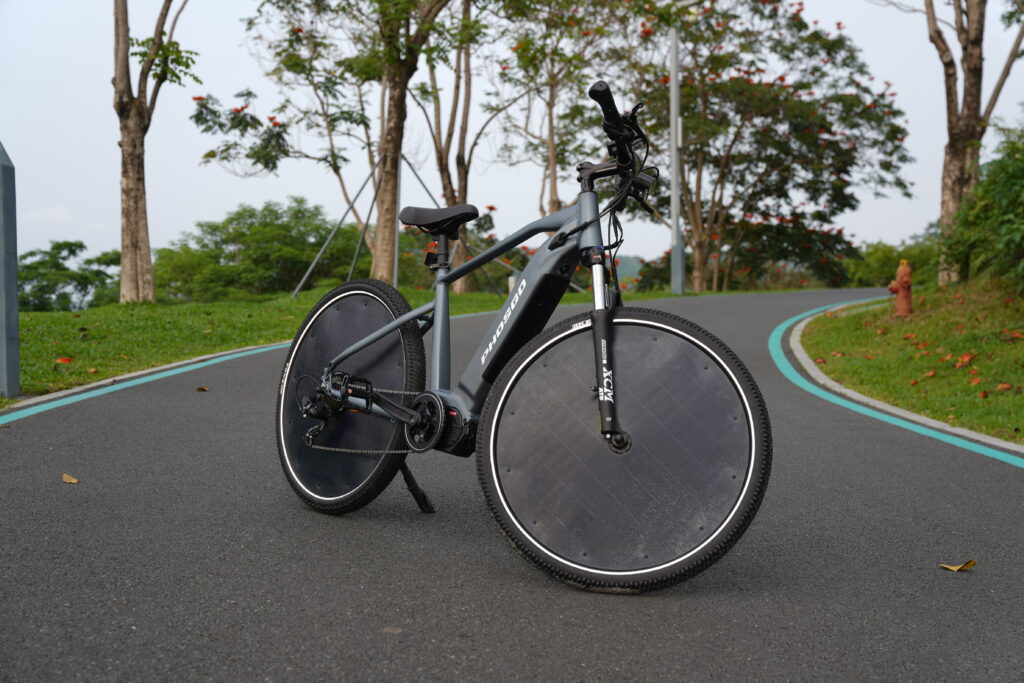

If you’re after a long-range electric bike but are also a fan of the velodrome, fledgling Chinese e-bike manufacturer Phosgo may have just the thing for you. It claims the Go5 Ultra Solar Bike is the “world’s first” that can self-charge using the power of the sun, via solar cells housed within those somewhat sketchy-looking rims.
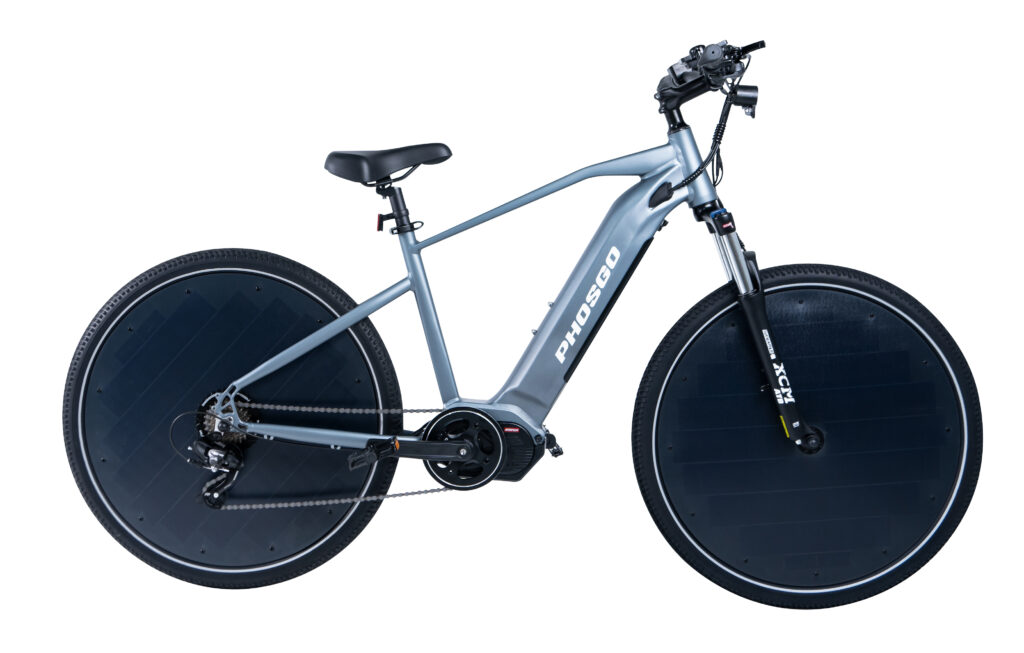
It’s perhaps a bit of a stretch to say this bike is the very first e-bike to use solar power – we’re reported on a few concepts made by enthusiastic inventors, and some Ikea delivery riders in the Netherlands use the furniture giant’s SunRider solar-powered electric cargo bike for making quick deliveries, that provides up to 70% of its charge via solar panels on the rear cargo box and up to 100% on sunny days. What Phosgo may be able to claim is the first solar-powered e-bike for personal use whereby the solar panels are integrated inside the chassis of a regular bicycle (we can appreciate that’s not as snappy though).
The headline claims are up to 30 days without having to charge the electric battery with normal use, and that the solar can provide up to 17 miles of extra charge each day for a continuous range of up to 120 miles (193km). Phosgo says it uses “the world’s most efficient solar cells” integrated into the wheels for “continuous power generation”.
We asked Phosgo about the bike’s handling in the wind with those completely covered wheels (sadly there are no aero claims attached) and received a detailed reply:
“Wind performance is one of the most common concerns we hear when people first see the Phosgo Solar Wheel Charging System”, Cassie Liu from Phosgo told ebiketips.
“While the wheels appear more [completely, we’d say] enclosed than traditional spoke wheels, the impact of crosswinds is much smaller than many people expect.
“The key reason is that the solar panels are integrated within the wheel area rather than mounted above or beside the bicycle like many external solar solutions. This keeps the system compact and maintains a low centre of gravity, which helps preserve stable and predictable handling.
“During our testing, the bike has demonstrated stable handling in normal riding conditions, including moderate windy environments. In fact, compared with solar bike concepts that use large external panels, PHOSGO’s wheel-integrated design minimizes wind exposure while still allowing the bike to harvest solar energy efficiently.
“We are also conducting dedicated crosswind testing and look forward to sharing real-world test footage and data with the community in the future.”
We suspect the weight of the bike may also help with the handling: Liu says the current prototype is a chunky 31kg, with Phosgo claiming weights of 20kg for the finished City version and 27kg for the Hybrid.
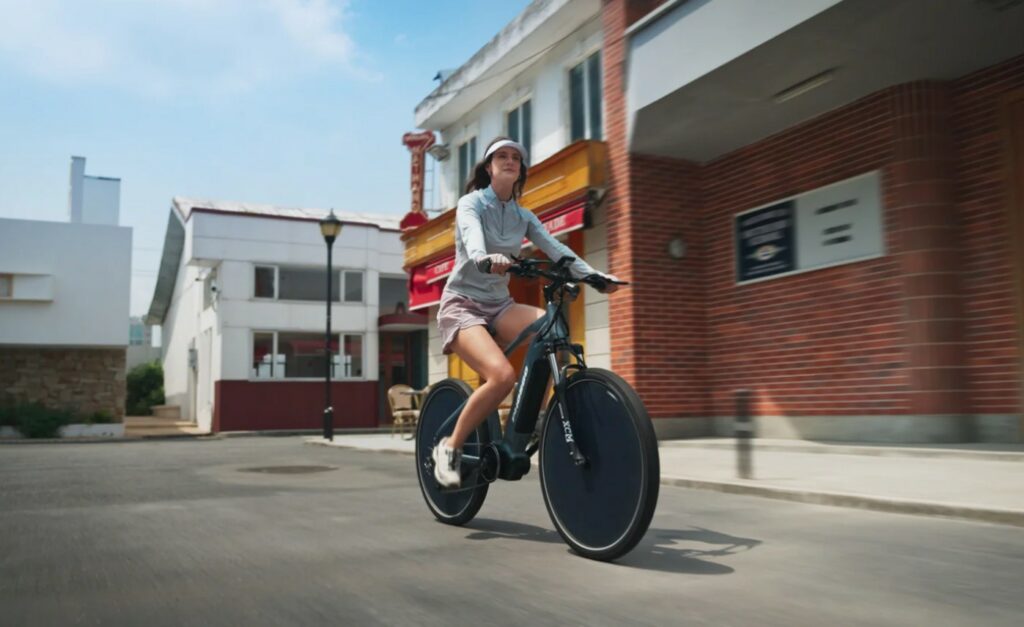
As well as the solar power, of course there are some AI features touted. The Go5 bikes will come with an AI voice assistant that “enables real-time voice interaction throughout your ride”. On the Phosgo website, we see the rider asking her bike where the nearest burger joint is, and it can also handle navigation, weather updates, and built-in entertainment. This is nothing you can’t do from a modern smartphone with Siri or Gemini, but the option to do it all from your bike means you can leave your phone safely stowed away while you ride instead.
Away from the AI, the solar power and those wheels, the Go5 Ultra looks like a very ordinary hybrid e-bike with a suspension fork, which is entry-level in places but less so in others according to what we know so far. There will be a Go5 Ultra and slightly cheaper Go5, but we’re not told exactly what the differences in specification will be.
Phosgo hasn’t provided a detailed specification either (it’s unlikely to be fully confirmed until the crowdfunder ends and shipping commences), but we know the bike is built around disc brakes, and is shown with an entry-level Suntour XCM front suspension fork. We’re told that there will be an ‘electronic derailleur’ for better shifting, unusual for an entry-level e-bike – Phosgo hasn’t stated the brand or how many gears the bike will have.
US customers get a Bafang M430 mid-drive motor system, capable of pumping out 750 watts of assistance up to 28mph (45kph). In the UK and EU, you get the street legal version of that motor capped at 250 watts and 15.5mph (25kph) instead.
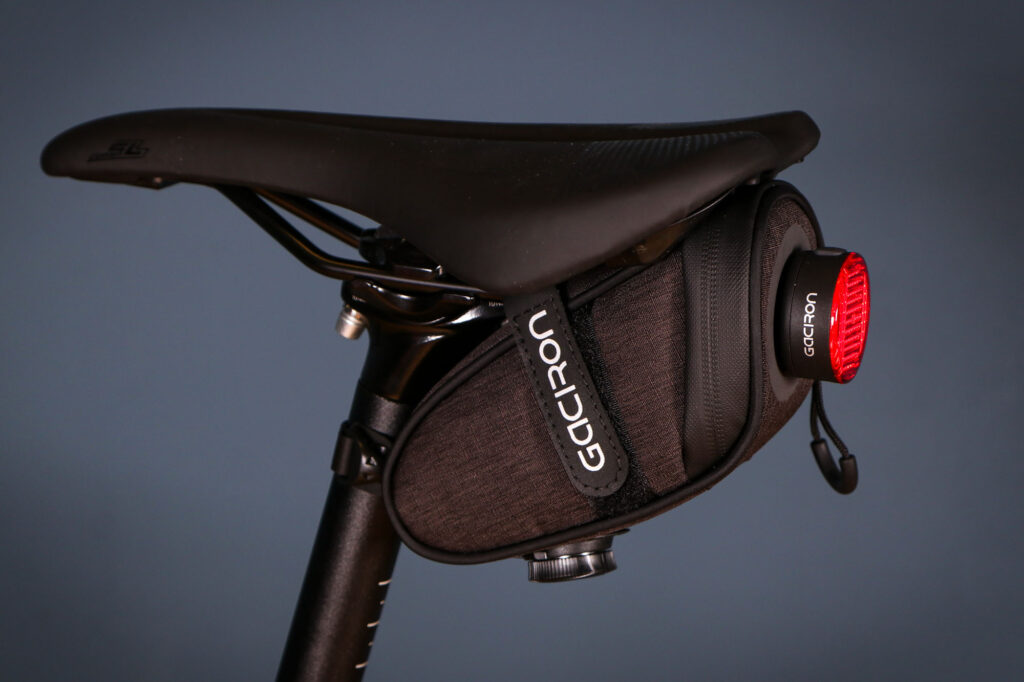
While a front light is shown, there’s only a reflector on the seatpost, which suggests the bike isn’t guaranteed to come with a full front and rear lighting system.
Interested? The bike will hit Kickstarter on 27 July, and you can already reserve one with a $50 deposit via the Phosgo website. This deposit gives you access to huge 63% discounts off the RRP, which is even lower than the super early bird pricing on Kickstarter: with the $50 deposit it will be $1,499 for the Go 5 (RRP $4,099) and $2,199 for the Ultra (RRP $5,999).
As always, we’d advise proceeding with caution as we would with anything that involves crowdfunders and the promise of very large discounts, because we’ve seen them go wrong before and it will happen again – the full super early bird amount (just over 50% of the RRP) needs to be pledged via Kickstarter on top of your $50 deposit when it goes live, and only after the campaign ends will you be refunded $250 to reflect the ‘reserve VIP’ pricing.
Will Phosgo’s creation be the first commercially successful solar-powered e-bike? We’re a tad sceptical, but perhaps it could become the starting point for other manufacturers to explore ways to reduce range anxiety by harnessing the power of the sun.








7 thoughts on “The “world’s first AI solar e-bike” is coming to Kickstarter, with double-disc wheels featuring integrated solar panels for extra range”
You’d have to be mad to back this
Charging an e-bike battery doesn’t cost much. So what is the advantage of solar power on a bike? The cost of the battery is very expensive – usually the most expensive component on an e-bike. But how much are the solar panel wheels and don’t they have to store the energy in a battery anyway?
Seems like a great way to expose your solar panels to regular damage from chippings and such.
@Rome73 The solar panels top up the battery. A battery is still needed especially when there isn’t enough direct sunlight onto the panels to provide assistance. Brings a new meaning to fair-weather cyclist.
Try it on top of the Itchen Bridge and tell me it copes with the wind.
Well, people have done versions of this kind of thing… (see World Solar Challenge)
… but I note the solar panels are at a different angle. And it’s in Australia.
On the plus will you be better able to charge the battery when you’ve been blown / knocked off and the bike is flat?