



Lezyne has introduced a new front and rear bike light system that uses vehicle detection radar tech and built-in visual and audio alerts to tell you when traffic is approaching from behind. Radar React is available as a rear light or as a combined front and rear light system, and can warn you of approaching vehicles via a compatible head unit, a companion smartphone app, or without either of those things.

“The system greatly improves rider visibility, awareness, and safety,” says Lezyne. “It’s incredibly powerful and extremely simple to use, with its variety of ways to connect and receive alerts.

“The system is highly versatile yet easy to use. The Radar Drive [rear light] on its own provides added visibility with a special flash pattern that’s triggered when it detects a rear-approaching vehicle. This greatly improves visibility independent of the need to connect to any other devices.”

What’s really new is that Lezyne has integrated real-time visual vehicle detection alerts into the React Drive front light using a rider-facing LED. These alerts, plus audio cues, activate when the React Drive is paired with the Radar Drive rear light. This means you can be warned of traffic approaching from behind without the need for a GPS bike computer or a smartphone (aside from a one-time setup).
“It’s a complete visibility solution with just a front and rear light: riders benefit from daytime visibility via disruptive flash modes, improved awareness through radar detection and alerts, and a front light bright enough for advanced night riding,” says Lezyne.
The system can also be used with Lezyne’s Radar Ally phone app and compatible GPS bike computers for more vehicle detection alerts.
What’s on offer here?
Radar bike lights have been around for a few years now, detecting vehicles approaching from behind and letting you know via visual and audible alerts. Garmin has been a major player, and brands like Trek, Bryton, and Wahoo have followed suit in recent years.

> Read our review of the Garmin Varia RTL515
Now Lezyne has entered the market with its Radar Drive rear light (£170), and the React Drive front light (£120) that connects with it. You can also buy the two together as a package, the Lezyne Radar React System costing £260.
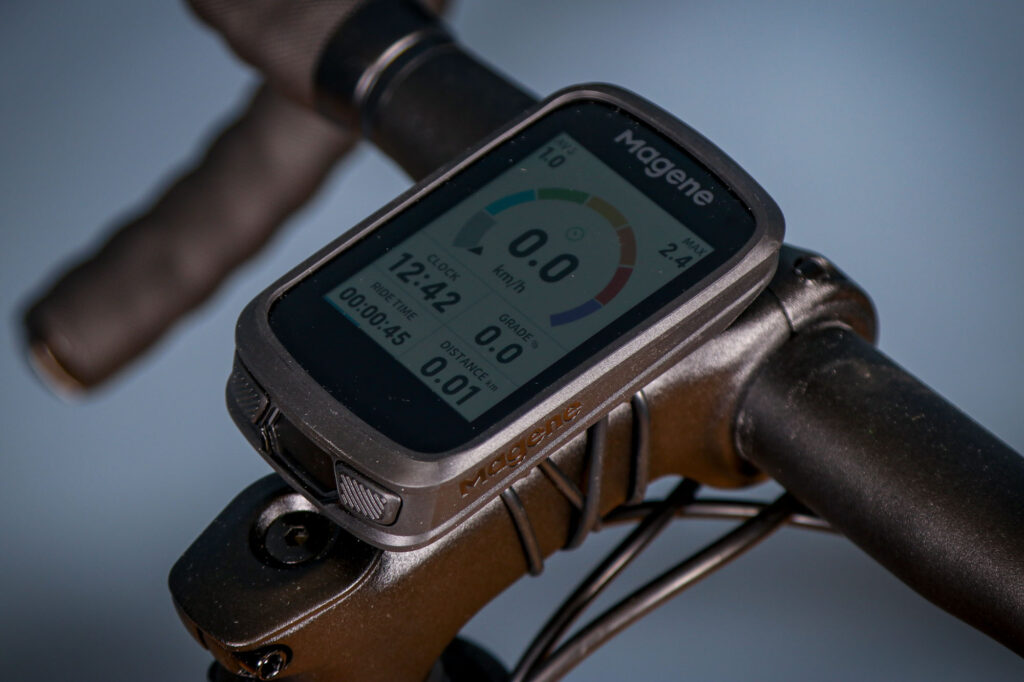
Lezyne’s Radar React System can send visual and audio alerts of approaching vehicles to a companion app on your smartphone or to a connected head unit. Lezyne’s own GPS bike computers are compatible, as are third-party models from Garmin, Wahoo, Hammerhead, and so on. As with other brands, the exact form of those alerts is governed by the computer you use.

Lezyne’s Radar Ally app allows you to track rear-approaching vehicles visually and/or audibly. You can also use the app to customise system alerts, control the lights, and check for system firmware updates.
Lezyne Radar Drive
Lezyne says that the Radar Drive rear light can detect vehicles approaching from up to 150 metres away. For comparison, Garmin claims up to 140 metres for its Varia RTL515, and Trek quotes up to 240 metres for its CarBack, but Lezyne says that anything over 150 metres is unreliable with current tech.

“This is on par with current industry standards,” says Lezyne’s Dillon Clapp. “We’ve done hours and hours of side-by-side testing with existing radar systems and this is the sweet spot. It’s comparable with what’s out there.”
> Check out our review of the Trek CarBack Radar Tail Light

Although it will function as a standalone taillight featuring its own unique flash pattern that’s triggered when a vehicle is detected, the Radar Drive can communicate wirelessly via a dual Bluetooth and ANT+ wireless system, connecting to Lezyne’s Radar Ally app (available for iOS and Android) on your smartphone, multiple ANT+ head units, and the brand’s React Drive front light (see below).
Lezyne says that the Radar Drive offers 270° visibility. You can choose between seven output modes, including a daytime visibility option, giving up to 300 lumens.

Lezyne claims the battery runtime is up to 20 hours. It charges via USB-C and is rated IPX7 waterproof (meaning there’s no ingress from being immersed in a metre of water for 30 minutes).
Lezyne React Drive

The React Drive front light connects wirelessly to the Radar Drive rear light, and built-in LED indicators and audio cues alert you to vehicles approaching from behind without the need for a GPS bike computer or smartphone (a smartphone is required for the initial pairing of the system).

Essentially, the back of the React Drive – the side that’s facing you as you ride – is a translucent cap, and an LED inside lights up when traffic comes closer. Changing lighting patterns indicate the distance to the approaching vehicle.
In normal alert mode, the back of the React Drive flashes – a slow blink – from the time it detects a vehicle approaching until that vehicle is 50 metres behind. Any closer than that and the LED glows solid. There’s a different flash pattern when a vehicle is approaching at a higher speed.
The React Drive front light is CNC-machined from aluminium and, like the rear, offers seven output modes. As the name implies, the output is up to 1200 lumens. Lezyne claims a runtime of up to 70 hours, and charging is via USB-C. Again, it is IPX7 rated.

“It’s a powerful front light that’s plenty bright enough to use at night,” says Dillon Clapp. “It’s got a daytime flash mode, and then when you’re connected to the Radar Drive, it gives you visual and audio alerts when it senses cars.
“After it’s connected, you can just use the front light to get radar vehicle approaching alerts, without the need for a GPS bike computer, without the need for a phone, which is super cool. This is unique to Lezyne, and this makes it more accessible to more cyclists. It’s easier to use and it’s less expensive.”

As mentioned, the Radar Drive rear light is priced at £170 and the React Drive front light is £120, although you can buy them as a system for £260.
The Lezyne Radar Drive and the Lezyne React Drive have both arrived here at road.cc so stay tuned for a review.
ride.lezyne.com/pages/lezyne-radar-react-system
Leyne’s UK distributor is Upgrade Bikes.











14 thoughts on “Lezyne’s Radar React light system warns you of traffic approaching without the need for an app or bike computer”
Not sure why you’d need a
Not sure why you’d need a front facing alert.
I prefer to know the approach speed and distance on a head unit rather than just a light pattern.
It’s not doing front-facing
It’s not doing front-facing detection. It’s detecting stuff behind using the rear light, and then displaying the information about that using the front light. So you can choose to use it with or without a head unit in the mix.
Ok, I clearly misread a para.
Ok, I clearly misread a para.
You aren’t the target market.
You aren’t the target market.
Think about commuters who dont record their every journey on a GPS unit.
Or imagine this tech built into the next generation of Boris bikes.
Except they are (or at least,
Except they are (or at least, part of it):
Yep.
Yep.
Or integrated into Brompton’s
Or integrated into Brompton’s
On the other hand, I find
On the other hand, I find these radar systems close to useless when commuting in a city environment. There’s simply too much happening behind me and I get constant alerts, which are mostly a distraction – I have to look behind me or in the mirror before making a turn or changing lanes anyway. Where this technology really comes into its own for me is in the countryside where traffic is not as frequent but potentially much faster.
In traffic (happens a lot in
In traffic (happens a lot in Surrey), they’re pointless – I know there’s a vehicle behind me or one is coming in a few seconds. But, as you say, I can see some benefit in the countryside. Not enough to push me to fork out that sort of money though.
See my earlier comment and
See my earlier comment and results of speaking to people who got one (as gift or impulse) then realised they are far more useful than expected. I don’t have one yet but I am saving up. My cycling is now SE London and Kent so radar would be more obviously useful than in previous decades of East End to Chelsea, Oxford Street, or similar routes
Agreed. Which is why I want a
Agreed. Which is why I want a radar, as and when I can afford it. I’ve seen them in action twice: once on Shooters Hill in SE London, and once on Rochester Way. Both times were very impressive so I asked the Rochester Way chap about it and he said he was delighted with his. They’d both be commuters in London, but away from the centre. Shooters Hill westbound is horrible – narrow, a major route, trees and shrubs overhand the road with no footpath or other escape space, several islands for pedestrians to cross but which incline cars to accelerate past bikes then cut in as they realise they’re about to hit a traffic island. I walk it often in the early morning and see numerous nasty close shaves. While you’d expect cars to be coming up behind you, you’re riding up a steepish hill that’s rutted so you have to watch where your wheel goes (makes looking back tricky), and some of the cars are going far more than 30 mph in order to nip past the car immediately behind you and then past you before getting to the traffic island.
1) You don’t need a front
1) You don’t need a front facing alert. The rear light communicates with the front light to tell you something is coming up from behind you.
2) You might prefer the data on a head unit but not everyone can afford a head unit (by which I assume you mean a bicycle computer) or a mobile phone that is up to the job of being mounted on handlebars. With smart lights, smart bike computers, heart rate monitors, watt monitoring pedals, etc, the modern bicycle must have several £thousand of gear in addition to the bicycle and the rider’s high tech clothing.,
The big advances in bicycles since 1970s have been Shimano 105 dual-pivot brakes; LED lights that have got ever more powerful for less money (shudder at Wonder Lights but they were just about adequate when cars and streetlights were less powerful than nowadays); clipless pedals for riding in built up areas; and clothing. Wider rims and fatter tyres are also good – because today’s roads are so knobbly, rutted, and cracked. I’d love to have additional tech that’s not necessary (even if it is useful) but, on a pension and having helped our children buy houses, I can’t afford it.
It’s a shame the front light
It’s a shame the front light needs an app for the first pairing which means it won’t sync with a non-lezyne radar (even though the ant+ radar spec is an open protocol). I already have a rear radar so I would have been tempted to look at this front light the next time I needed a new one if not for that. I have to wonder if it needing bluetooth for that first pair has something to do with EU RED.
Very interesting.
Very interesting.