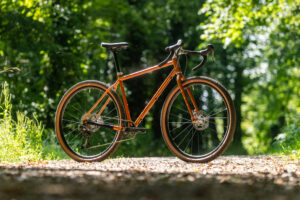
The Windover Beacon is a frameset that seamlessly merges the worlds of mountain and gravel bikes, built with a hand-crafted Reynolds 853 DZB steel frame in Sussex. While its specification and geometry lean heavily towards a mountain bike, the abundance of mounts makes it ideal for adventurous outings. However, the fork can make the ride quality uncomfortable at times.
- 2021 Salsa Cutthroat Carbon GRX 810
- Sonder Broken Road ST SLX review
- Surly Bridge Club off-road touring bike review
Windover Bikes was founded by three passionate riders with backgrounds in engineering and design. The brand takes its name from Windover Hill, a landmark along the South Downs Way, and fittingly, it was in a nearby pub that the idea for the company was born. Windover offers two models: the Bostal, tailored for general gravel and alt-road riding, and the Beacon, which we’ve got on test – a bike described as “an MTB-inspired all terrain mega machine“. This emerging category is gaining momentum, with ATB (All Terrain Bike) becoming a popular, easily relatable acronym to describe such versatile machines.

Windover Beacon Race gravel bike – Technical details
The Beacon is available in a frame only option, a frameset or a fully-built bike with several specification levels. We tested the frameset, which includes the frame, fork, bottom bracket, headset and seat clamp, priced at £1,999. Full builds start at £2,699 for the Tour version, £3,249 for the Race, and £4,999 for the XTR-equipped Ultra.

Our test bike is the Race spec, featuring a Shimano SLX drivetrain, Magura MT4 brakes, SQ Lab finishing kit, DCR Handbuilt wheels with 30mm internal width alloy rims, Vittoria Mezcal tyres, and a £140 upgrade option with the PRO LT Dropper seatpost fitted. Windover offers flexibility with its builds, allowing riders to customise individual components or sizes.

Included in the frameset package are the Hope headset and seat clamp, both of which perform flawlessly. The headset is particularly robust, with bearing seals that hold up well in harsh British weather. The frameset’s design embraces its adventure-ready character, with clean external cable routing along the down tube and a single cable entry point at the base of the seat tube for the internally routed dropper post. The bottom bracket is a T47 with a wide 92mm shell, which, although another ‘standard’, is a threaded design and accommodates almost all crank options. The frame also features rack and mudguard mounts and three bottle cage positions.

At first glance, the Windover Type 3 carbon fork may resemble a standard rigid carbon fork, but its geometry sets it apart. With a 415mm axle-to-crown measurement, it’s specifically designed for the Beacon. The fork has three bolt mounts on each side, internal cable routing for the brake, dynamo light cable routing and mudguard mounts. For context, a 100mm suspension fork would typically utilise a 500mm axle-to-crown length, while a rigid gravel fork, like the one on the recently tested race-orientated Orbea Terra M20iTeam, measures 390mm.

Key geometry figures for the frame include a 67.5-degree head angle and a 74-degree seat tube angle across all sizes. There are four sizes available, catering to riders between 159cm (5’3”) and 191cm (6’3”). One instantly noticeable feature is the short headtube, starting at 130mm in the smallest size and increasing by 20mm per size up to 190mm on the XL. The chainstay length, at 445mm, is relatively short for a bike designed for longer adventures, placing the rear tyre close to the seat tube – a clear indication that the frame is also designed with technical terrain in mind.
The medium-sized bike, with Race specification and Pro LT dropper seatpost, weighs 11.57kg without pedals. This weight is competitive, given the price point. For comparison, the Salsa Cutthroat is only slightly lighter, despite its full carbon frame, though it comes at a higher cost. The Sonder Broken Road, which shares similarities in style, is available with a 4130 chromoly or titanium frameset and the titanium frame XT model has a claimed weight of 10.7kg. While the Broken Road is comparable in many ways, it is suspension-corrected for a 100mm fork, though rigid fork options with a 500mm axle-to-crown are also available.
Windover Beacon Race gravel bike– Performance
While you could fit a gravel suspension fork, such as the MRP Baxter 2, RockShox Rudy or Lauf, the Beacon is designed as a rigid bike. This might seem surprising, given its mountain bike-like appearance, but the philosophy behind this choice is to keep the design simple, reduce weight and enhance efficiency.
At 168cm, I sit on the cusp of small and medium frame sizes. I opted for the medium. Compared to most cross-country mountain bikes, there’s less standover clearance, but the trade-off is extra space within the frame for mounting bags – ideal for bikepacking.

One of my initial impressions was how slack the head tube felt for this style of bike. I was sceptical about how it would handle, particularly off-road, as the Beacon is designed for long rides, not purely technical trails.
During testing, I took the Beacon on a variety of rides, from shorter trips usually reserved for my gravel bike to an extremely challenging 240km/6,000m non-stop adventure across Mid Wales and southern Eryri. The challenging 240km route echoed the Beacon’s intentions and felt purpose-built for such demanding terrain.
I made a few personal tweaks, such as switching out the SQ Lab saddle and removing the dropper seatpost, but overall, the kit selection is well-suited to the bike. The drivetrain ratio deals with steep climbs, even when fully loaded, and still provides a high enough gear for efficient road riding – it has a 34T chainring as standard. The standout component, however, was the Magura brakes, which delivered impressive stopping power and excellent modulation. A small yet significant detail is the Rideworks bottom bracket included with the frameset, which spins incredibly smoothly and has survived several wet and muddy Welsh rides. At £114, this part alone accounts for much of the price difference between the frame and fork package and the full frameset option.

The Vittoria Mezcal tyres, already well-regarded within the bikepacking community, lived up to their reputation. They roll fast and smooth on all surfaces, offering decent grip in most conditions – although they struggle on wet grass and slippery mud. Overall, they seem like an excellent match for the Beacon.
The bike’s upright seated position, thanks to the 74-degree seat-tube angle, makes pedalling feel efficient, and I was able to test my technical climbing while testing the bike. Despite the relatively slack head angle, the short fork counteracts any tendency to wander, even on steep climbs, making the Beacon very capable. The multiple mounting points, including the ‘anything cage’ mounts – on the fork – proved useful.
However, while the frame can accommodate full-length mudguards, they’re unlikely to fit with mountain bike tyres. The frame’s tyre clearance is rated at 2.4in, but even with the 2.35in Mezcal tyres, mud clearance was minimal, especially on the rear wheel.

Despite the mountain bike-sized tyres, the main issue I encountered was a lack of comfort from the front end. While the wheels, with their stiff build and wide alloy rims, may have contributed, I suspect the fork was the biggest factor. Throughout testing, I found myself continually lowering the front tyre pressure to improve comfort, but even at mid-teens psi, the harshness remained. I eventually fitted a suspension stem, which helped, but this isn’t a perfect solution given the positioning of the pivot in relation to where your hands sit on wide, flat handlebars.
A rigid fork will always be a compromise, but its simplicity will undoubtedly appeal to some riders. However, if you frequently ride technical terrain, I’d recommend opting for a mountain bike rather than fitting a short-travel gravel suspension fork. That said, the Beacon handled steeper, more technical descents remarkably well. The slacker head angle gave me the confidence to tackle tricky downhills, such as the rocky, rutted descent to Pont Scethin in southern Eryri. While it wasn’t a fast descent, I managed to ride down, something I hadn’t expected.
Although I found the front end harsh – at times – the rear was a different story. As you might expect from a steel frame, it provided a smooth, comfortable ride, even on long, gruelling days in the saddle.
Windover Beacon Race gravel bike – Verdict
The Windover Beacon delivers on its promise, proving to be a capable and enjoyable bike for tackling big rides and bikepacking adventures. While it may have a relatively niche appeal, it excels in the environment for which it was designed. The geometry makes perfect sense when ridden as intended, offering impressive climbing ability, reasonably low weight, and well-matched components.

While the Sonder Broken Road may appear similar, there are key differences in geometry, most notably the fork and the lower front end. Although the Beacon can accommodate a gravel suspension fork, it’s not designed for a mountain bike suspension fork. The Broken Road is a more affordable option but steel-frame enthusiasts will likely point to the difference in tubing – 4130 Chromoly versus Reynolds 853 DZB steel, the latter being regarded by many as the best available.

At first glance, the Salsa Cutthroat might seem like a completely different bike, with its carbon frame and drop bars, compared to the Beacon’s steel frame and flat handlebars. However, both bikes sit on the fringes of their respective genres, designed for big adventures and similar in weight, although my memories of the Cutthroat, I would say it is slightly faster and more ultra adventure race-orientated.
The fork is the standout feature of the Beacon and, while it contributes to its uniqueness, it’s also the main reason I believe the front end provides a relatively harsh ride. There are ways to improve comfort, such as experimenting with different grips, handlebars, and tyres. I did try a suspension stem, which made a noticeable difference, though it’s not an ideal solution for all riders.

The Beacon frameset is priced at £1,999, with a frame and fork option at £1,799, and a frame-only option for £1,499. These prices seem fair for a custom-designed, steel frame, hand-built in the UK.
If you’re in the market for an all-terrain bike capable of taking on major adventures in the UK and abroad, the Beacon’s geometry and mounting options make it a strong consideration. I can see it excelling in events such as the Atlas Mountain Race or even more remote challenges like the Silk Mountain Race in Kyrgyzstan.
You might also like:
- Gravel bike vs mountain bike: what are the differences?
- How to go bikepacking: a beginner’s guide to getting started
- off.road.cc adventures: Elan Valley bikepacking bothy trip
About the bike
Tell us what the bike is for, and who it’s aimed at. What do the manufacturers say about it? How does that compare to your own :
MTB inspired all terrain mega machine
This bike offers mountain bike capability at gravel bike weight and efficiency – the perfect choice for off road touring and racing
The Beacon is built for when you’re heading deeper off road; gravel tyres, road derived geometry and gearing are no longer enough, and you need something you can depend on whatever the terrain.
Most gravel bikes are developed from traditional road bike standards. The geometry, handling and gearing are not miles apart from a standard road bike, but the larger tyres allow more versatile riding styles. The Beacon looks at gravel bikes from a different perspective. It’s inspired by the mountain bikes we grew up riding, where you might spend all day traversing terrain that doesn’t need suspension or dropper seatposts (though you can fit these if you wish!).
We developed our own fork – the Type 3 – to offer MTB tyre clearance at road/gravel bike weight. It is shorter than a typical rigid MTB fork (415mm A-C), meaning you can still fit a full length mudguard if you wish. This also means you have greater room within the front triangle for your frame bag, and can achieve a better fit on smaller frame sizes and bikes designed for female riders. Another advantage is it simply looks better, avoiding the ugly gap above the tyre and awkwardly curved tubes sometimes used to get around the excessive length of a rigid MTB fork.
If you do decide to use a suspension fork then the Beacon/Type 3 is compatible with the latest gravel forks from brands such as Rock Shox, Fox and Lauf, but we are firm believers that dialing in your handlebar position, tyre choice and pressure will get you all the comfort you need. A typical weight saving of 1kg over a suspension fork with the durability and versatility to carry whatever you need is an advantage for those covering serious distances.
Hand built in our Sussex workshop with specific geometry for either drop or flat bars.
The Beacon excels at off road touring / bike packing, gravel, classic single track, rocky double track that pushes the limits of a regular gravel bike.
State the frame material and method of construction. List the components used to build up the bike.:
Windover specification:
- Reynolds 853 DZB steel tubing
- 29×2.4″ Tyre clearance
- Dropper seat post routing
- T47 92mm BB
- 15×110 and 12×148 ‘Boost’ Bolt Thru Axles
- Rack and mudguard mounts
- 3x bottle mount positions on frame
- ‘Anything Cage’ mounts and dynamo routing on fork
- Windover Type 3 Carbon fibre fork
- Progressive, off road specific geometry
- Handbuilt in Sussex, England
Frame & Fork
How much suspension travel does the fork have?:
Was the bike comfortable to ride? Tell us how you felt about the ride quality.:
How was the bike in terms of sizing and angles? How did it compare to other bikes of the same stated size and intent?:
Overall rating for frame
How much suspension travel does the rear end have?:
Did the bike feel stiff in the right places? Did any part of the bike feel too stiff or too flexible?:
Tell us about the build quality and finish of the frame:
Tell us about the geometry of the frame:
Tell us about the materials used in the frame:
Riding
How did the bike transfer power? Did it feel efficient?:
How would you describe the steering? Was it lively, neutral or unresponsive?:
Tell us some more about the handling. How did the bike feel overall? Did it do particular things well or badly?:
Rate the bike for high speed descending
Any comments on high speed descending?:
Rate the bike for technical descending:
Any comments on technical descending?:
Rate the bike for flat cornering:
Rate the bike for technical climbing:
Any comments on technical climbing?:
Rate the bike for climbing efficiency:
Any comments on climbing efficiency?:
Rate the bike for agility:
Summary
Did you enjoy riding the bike?:
Would you consider buying the bike?:
Which components had the most effect (good or bad) on the bike’s performance? would you recommend any changes?:
Would you recommend the bike to a friend?:
Rate the bike overall for performance:
Rate the bike overall for value:
Use this box to explain your score:
All the deals displayed on our review pages are pulled from a constantly updating database feed of the best affiliate deals available. The criteria for deciding on what are the best deals is who is offering the lowest, delivered price. In most cases we will be showing the very best deal available online, but sometimes you may be able to find an item cheaper. If you can please feel free to post a link in the comments box below. To find out more about affiliate links on road.cc click here.