



A proposed blanket ban on the use of e-bikes in Coventry’s pedestrianised city centre will “bring unintended consequences” for active travel, discourage cycling, and “penalise responsible cyclists”, the West Midlands’ walking and cycling commissioner has claimed.
A planned amendment to Coventry’s Public Space Protection Order (PSPO), which will prohibit the use of e-bikes and e-scooters in pedestrianised zones, is set to be approved at next week’s city council meeting, and comes as a response to what the local authority has described as the “visible increase” in e-bikes, scooters, and bikes in the city centre, prompting concern from locals for their safety due to “reckless” behaviour.
The ban, which if ratified by the council’s cabinet on Tuesday will come into force on 20 November, will not apply to pedal cycles or those using cycles as a mobility aid.
The exclusion of standard cycles and mobility aids from the ban comes after campaigners opposed the council’s initial proposed amendment to the PSPO, which would have stipulated that all people using cycles should dismount in the city centre – a proposal described by local active travel campaigners as “counterproductive” and one that could “send out contradictory messages about how cyclists are treated in the city”, while also penalising disabled people who use cycles as mobility aids.
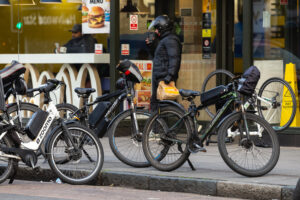
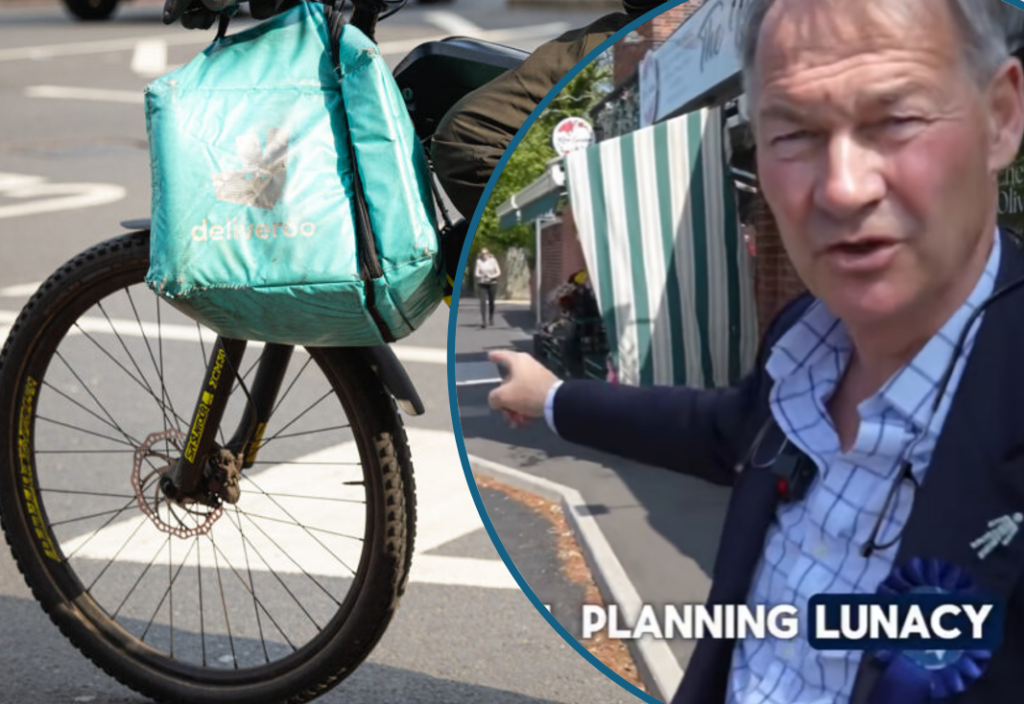
According to a report by Coventry City Council’s community safety officer Liam Nagle, concerns have been raised by locals “particularly due to the volume of e-bikes and motorcycles that look like bikes being used by delivery teams” in areas of the city centre.
In July, officers from West Midlands Police said that they would begin “engaging with delivery riders” in the city centre due to riding complaints from locals, though councillor Nagle insisted at the time that the issue relates to “quite a niche cohort of people”.
The report continues: “Some people have also been observed to be riding recklessly and in a dangerous manner and the speed of some of e-bikes, e-scooters, and cycles makes some pedestrians feel unsafe.
“The council wants to ensure that people feel safe when visiting the city centre and to mitigate against any potential accidents whilst also recognising the importance of enabling cyclists to travel around the city.”
While the current PSPO allows authorised officers to order cyclists to dismount “if it is felt that their riding is reckless or dangerous”, the report also notes that such a provision “requires a continuous presence of enforcement officers in the city centre to monitor behaviour” and affords the council “limited powers to address cycling generally”.
The council launched a public consultation in September concerning the proposed banning of all cycles, e-bikes, and e-scooters in pedestrian areas.
Of the 1,158 respondents, most of whom the council noted are regular city centre visitors, 79 percent agreed that the PSPO should be amended to ensure that all cyclists should dismount when entering pedestrianised areas. West Midlands Police and the area’s business improvement district also expressed their support for the plans.
Nicholas Mansell, the police’s anti-social behaviour co-ordinator in Coventry, said that city centre officers have noticed a shift in public opinion towards cyclists, claiming that more people are now asking how the police are handling “certain aspects” of cycling behaviour and are calling for “decisive” action against “dangerous” cyclists.
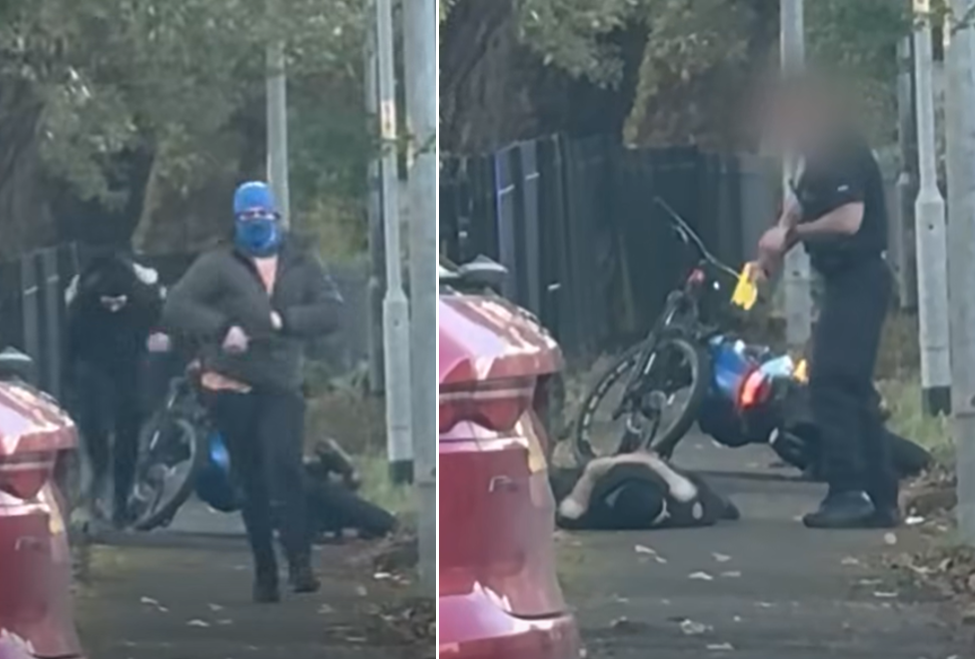
“We have seen incidents within the city centre where offenders on bicycles have carried out robberies against the person or used bicycles to get away from incidents, so not being able to ride their bikes in the pedestrianised areas will help address this,” Mansell claimed.
However, the local authority also received formal responses from Adam Tranter, the West Midlands’ walking and cycling commissioner, as well as opposition councillors, Transport for West Midlands, and cycling disability charity Wheels for Wellbeing, asking whether a “blanket ban on all bikes was necessary or proportional to the current issues”.
In particular, Wheels for Wellbeing expressed concerns that any proposal may disadvantage disabled cyclists and deter them from using the city centre, a factor the council says it has considered and addressed in its newly amended plans.
The council also noted in its report that those respondents to the consultation who opposed the blanket ban on all cycles commented that the amendment “should target only e-bikes as they cause the majority of the problems”.
Following the response to the consultation, the council is now recommending that its cabinet approve an amendment to the city centre PSPO which would require e-bike and e-scooter riders to dismount when within the designated pedestrian zone.
“Unintended consequences”
However, while the new proposal sees the council walk back on its initial plans to ban all cycles from Coventry city centre, walking and cycling commissioner Tranter has nevertheless responded to the report by arguing that prohibiting the use of e-bikes – and not just illegally modified or non-pedal-assist forms of electric bike – will also “bring unintended consequences for active travel overall”.
“In September 2023, I wrote to Coventry City Council to highlight my concerns that their original proposed amendment to their Public Space Protection Order would discourage cycling and penalise disabled people who use cycles as a mobility aid,” Tranter, who also noted in his earlier letter that stopping cyclists from using the city centre would “sever” important cycle routes, forcing cyclists to navigate less safe roads, said in a statement.
“In my role, it is my priority to work to protect pedestrians but I do not feel that the proposed amendment to the PSPO will achieve this and will bring with it many unintended consequences. As a regular visitor on foot to Coventry City Centre, I too know that there are problems particularly relating to the anti-social use of illegally modified e-bikes.
“But throughout this process, I have been clear that the council and police already have the powers to enforce against this as the existing PSPO states that any person cycling or skateboarding must do so in a careful and considerate manner.
“The police have powers to deal with any person riding illegal vehicles, such as e-scooters or powerful e-bikes which do not conform to the Electrically assisted pedal cycle regulations 1983, and which are likely to be the cause of much of the public’s concern.”
He continued: “I am grateful to the council for taking some of my feedback on board as part of the consultation… The exemption from the PSPO of people using standard cycles and those using cycling as a mobility aid is welcome, however, the current recommendation for the approval next week will still ban the use of all e-bikes in the city centre core.
“This week I have again written to the council urging them to amend the draft PSPO wording to only include e-bikes that do not require pedalling to operate and/or have the ability to be electrically assisted to a speed greater than 15.5mph.
“I believe this would achieve the council’s stated objectives and ensure responsible cyclists using EPACs (electrically assisted pedal cycles) are not unduly penalised.”

PSPOs, which allow councils to crack down on anti-social behaviour by enabling officers to issue fines to those who break rules on matters such as dog control, street drinking, or in this case cycling in a pedestrianised area, have become an increasing point of contention for local authorities in recent years.
Criticising the influx of town centre cycling bans across the country, Cycling UK’s Duncan Dollimore has argued that “some councils have used PSPOs as a geographically defined version of an ASBO to restrict the use of public space and criminalise behaviour not normally regarded as illegal”.
One such controversial PSPO, in Grimsby, has seen over 1,000 fixed penalty notices issued since 2019, with council officers accused of targeting “old and slow” cyclists and one woman ordered to pay £1,100 after refusing to pay the fine for riding her bicycle through the town centre.
The lack of clear signage in Grimsby concerning its cycling ban also prompted the aforementioned Wheels for Wellbeing, a campaign group for disabled people who cycle, to criticise a councillor’s “just get off and walk” advice to cyclists who want to avoid becoming the latest person on the end of a fine.
The charity said that such an attitude “only works for people who can” walk their bikes and called on North East Lincolnshire Council to accept a more inclusive approach, rather than preventing disabled people from accessing their local amenities.
However, the council replied to a road.cc request for comment by insisting that the PSPO does not prevent disabled cyclists riding into town.
Last year cyclists in Bedford protested a similarly “discriminatory” town centre cycling ban, with more than 3,200 tickets handed out to people, including around-the-world cyclist Josh Quigley, caught breaking the rules.
And just last month, police in Nuneaton asked the council to introduce a no cycle zone to cut out “really dangerous” cycling and “anti-social behaviour” in the town’s shopping area, saying that “we get a lot of kids wheelie-ing through and it sets the wrong tone”.












22 thoughts on “Proposed city centre e-bike ban will “discourage cycling and penalise responsible cyclists,” says cycling and walking commissioner”
Strange – we can’t have
Strange – we can’t have change which gives us nice things (eg. more mobility for disabled people, kids, older people) because some bad cyclists. Plus cycling’s obviously new.
But we must have *no* change affecting driving (and accept bad drivers) because … disabled people, kids, older people. And because driving is established.
Hmm…
Coventry is the town of my
Coventry is the town of my birth, but I have lived in West Sussex for more than half of my life, now, and hardly ever visit Coventry.
However, having looked at the maps, and the PSPO, the restricted area isn’t particularly large and, apart from the mobility factor, I don’t see a great demand to cycle through it, as the road routes around it aren’t particularly longer. Given the bike security issues, I doubt whether many people ride into town to go shopping (it would be nice, though, if people felt more able to do this, everywhere)
The thing that does bother me, is the pattern that is emerging, of the confusion over what constitutes an e-bike, and the risk of this confusion leading to unwarranted demonisation of EAPCs (as per Adam Tranter)
If we take the section…
‘Nicholas Mansell, the police’s anti-social behaviour co-ordinator in Coventry, said that city centre officers have noticed a shift in public opinion towards cyclists, claiming that more people are now asking how the police are handling “certain aspects” of cycling behaviour and are calling for “decisive” action against “dangerous” cyclists.’
…and replace cycling/cyclists with driving/drivers, then the powers that be may realise where their attention would be better placed.
Can I still ride my ebike
Can I still ride my ebike through if the power’s off? Because I can easily get up to 30 kmh on it without the power on. Or can I ride my unpowered road and gravel bikes through, both of which I can (albeit briefly) get up to 40 kmh plus?
I know there are plenty of folks on here who think ebikes are cheating or not bikes or whatever, and you’re entitled to that opinion, though I still don’t understand why they bother you so much, but we should all be careful: ebikes are going to be used by some as a Trojan horse, once they’ve banned legal ebikes that can do 15.5 mph what’s to stop them banning unpowered road bikes that don’t need a particularly fit rider to do 20mph plus?
Reading it word by word, I
Reading it word by word, I don’t think that’s what it says (see my comment).
I’m not sure what their intentions were or are. Did they intend to ban riding of EAPCs considerately? Or not?
There’s some confusion as it seems to me to go against some of the recorded partner-body comments, but perhaps the partner body comments were made before they made modifications to respond to the WM Cycling Commissioner and WfW.
I might be inclined to take a trip to Coventry Centre during the “advice not enforcement” period, to see what happens.
Does anyone have an Amazon pedelec-minivan I can borrow?
(IIRC they have not restricted motorised delivery vans.)
I’m sure you’re right in the
I’m sure you’re right in the strict legal interpretation if one took it to court but also pretty sure that the intention is to ban any bike with an electric motor – after all why would they only want to ban illegal ebikes? They’re already illegal. I’d lay odds that the police/wardens have been told to stop anything electrically powered and will not be receptive to an explanation of the difference between an ebike and an EAPC, so at the very least it’s going to be lots of hassle for EAPC riders arguing about why they’re legal and probably ultimately hours of work appealing any ticket given. When the council discover that they’ve worded their application ambiguously/incorrectly they’ll proably just apply for a variation in the terms of the PSPO anyway.
I’m sympathetic to that, and
I’m sympathetic to that, and that afaics all PSPOs I have read are unlawful and fail to meet PSPO Guidelines around eg Proportionality and Reasonableness (there is no evidence whatsoever about cycling or e-cycling in Coventry), and that every Council relies on their ability to bully alleged offenders as it is impossible effectively to hold them to account absent a High Court Action.
The thing is so confused I genuinely do not understand their intentions.
I don’t think I mentioned that they use about 5 different terms to refer to the area of application, none of which are identified on the map, and eventually come up with a list of streets buried in a sub sub paragraph – but it’s a dog’s breakfast with the encouraging development of an attempt at exception clause.
It is incredibly tempting to go and do a safari during the introductory period to explore what’s going on. I have a hidden disability (chronic disease) so I am excepted anyway.
Thank-you for this piece,
Thank-you for this piece, Ryan. It’s good, but can I try and clarify a I a couple of points of detail?
(Sorry – this is quite intricate and needs close attention)
According to me, what we want in PSPOs is approval of considerate cycling in pedestrian areas on a bicycle or a pedelec (EAPC – 250W max while pedalling, power cut out at 15mph), and strong enforcement against E-motorbikes / E-Mopeds (anything which is not an EAPC). In the long term we want inclusive infra wih mobility tracks etc, but that comes when a sensible Govt has reformed PSPOs.
This PSPO is imo far less worse than the Laurel & Hardy style slapstick dogs’ breakfast produced by Hammersmith & Fulham wrt the Thames Path, but is still confusing and complicated. And as we know the entire PSPO process is an abuse, since there is no objective test of justifying evidence, merely a Council’s self-certified reasonable belief, only 6 weeks to react for very limited groups of people, and no way to hold a Council to real account without a legal budget in the £10s of k.
On the details:
1 – The Coventry one is not going to the full Council, just to Cabinet ie a committee of heads of areas of work.
2 – They still seem to me to have their categories in a bit of a twist, and are not clear whether their intention is to ban normal pedelecs (ie EAPCs defined in law as pedal cycles).
Their wording of Clause F allows “pedal cycles” but Clause G bans “E-bikes and E-scooters”, with a strange exception clause allowing anyone ‘to ride an ‘E-bike’ (not defined in law) with the permission of the landowner’.
So EAPCs are double allowed by (1) Clause f as the Council gives permission for pedal cycles, and even if the Council Officer says “it’s an E-bike” (2) Clause G.2 gives explicit permission.
The PSPO text is here:
https://edemocracy.coventry.gov.uk/documents/s58393/Appendix%201%20-%20City%20Centre%202023%20Public%20Space%20Protection%20Order%20for%20Coventry.pdf
3 – The Street Enforcement Manager commentary seems strange, and ignored by the wording in the PSPO:
We have been asked about our opinion on the possibility of allowing pedal cycles but banning ebikes. From an enforcement point of view this would be very difficult for my officers. Modern ebikes do not differ greatly from pedal cycles in terms of how they look, especially from a distance.
Underneath all the confused terminology (“E-bikes” etc) have they actually given us what we want in their PSPO?
Or have I misunderstood something such as the interaction of clauses?
The full text of the Coventry PSPO is here:
https://edemocracy.coventry.gov.uk/documents/s58393/Appendix%201%20-%20City%20Centre%202023%20Public%20Space%20Protection%20Order%20for%20Coventry.pdf
The page linking all the documents going to Cabinet (Agenda Item 3) is here:
https://edemocracy.coventry.gov.uk/mgAi.aspx?ID=39567
The relevant clauses of the PSPO to my argument are attached as a pic.
Considerate eapc good,
Considerate eapc good, illegal emotorcycles bad. Neatly hit nail on head.
That which Parliament has
That which Parliament has joined together (EAPCs and pedal cycles), is it lawful for any Council to put asunder?
Thank god someone with common
Thank god someone with common sense at last .mthe ebikes and scooters are a menace .I’m only allowed 4mph on my scooter but these fools go 10+mph on the pavement.make them ilegal and stop putting in cycle ways untill they learn some commonsense and ride responsabily
Wheelywheelygood wrote:
What’s that faint noise I can hear? Oh yes, that’s it, it’s the world’s smallest violin.
And I still can’t tell the
And I still can’t tell the difference between Sonic blue and Daphne blue.
What it actually needs is for
What it actually needs is for Coventry Council to think about their policy carefully, rather than indulge in kneejerks in response to yelling Captain Mainwarings – in the absence of any actual evidence whatsoever.
It’s not really clear who or what you want to “ban”. Why should careful and considerate doers of any activity be banned because of a few antisocial individuals? Why should people such as yourself who choose to need to use an e-tricycle as their mobility aid be denied access to the town centre? At least Coventry have an exception – which is a win for inclusive mobility.
What we need is for Coventry to have clearly indicated mobility provision through the centre for mobility scooters >4mph, cycles, trikes, e-scooters, and pedelecs – so these use them and it is clear where everyone will be.
Faster “e-bikes” (which are actually motorbikes or mopeds) need to be enforced against, of course. Which is fine.
Wheelywheelygood wrote:
You’re concerned about scooters on the footways, and you’ve got a mobility aid – are you sure that will be a help to you?
Would be far less of an issue
Would be far less of an issue if a large number of fellow cyclists didn’t think that the new heirachy of road users simply ended at “cyclists”
Adam Sutton wrote:
Yeah – but how would that happen? I guess you could bring it up at our annual meeting…
I’m sure commentors on road.cc will be as quick as any to call a selfish idiot a selfish idiot. I’m sure many people in general will join you in calling for snotty kids to be less snotty, and antisocial / criminal types to be less antisocial and criminal, and entitled, aggressive men to be less entitled and aggressive.
I’m just doubtful that culture / human nature will suddenly change because we exhort people to be “better”. And while “cyclists” are seen as a minority out-group that is self-reinforcing. (Perhaps – on the other hand – if we continue to stir up “bloody cyclists” views though we could e.g. encourage more people to block, shout at, or even attack cyclists – that might supply the necessary feedback to change things?)
Even if cyclists miraculously all “behaved” though I doubt that cyclists would be universally loved – we’re “going too fast” or “going to slow”, startling people or getting in the way. Expecting people to “share the space nicely” when mixing any modes – without a lot of extra controls – is just too optimistic. Separate space for each. Only exceptions are where there are few people full stop (countryside between small towns) or unless one mode predominates by a wide margin (and essentially blocks / bullies the others out of the space). See e.g. BicycleDutch’s video of the centre of Utrecht showing how that works.
Righto.
Righto.
Pitch us your plan then!
Pitch us your plan then!
Why. It is an observation
Why. It is an observation into cause and effect.
I thought you might have some
I thought you might have some ideas about what to do with that, was all.
You’ve made an observation. You’ve shown cause and effect in yourself. I’ve certainly heard some anecdotes of the kind “and then this cyclist did x!” I just disagree that’s the main cause of other people being irked at cyclists. And taking it further, that “more considerate cyclists” (and how would that happen?) will change things / get more people cycling.
Sounds like in Coventry it’s as much about street crime not getting addressed.
When the average road.cc’er
When the average road.cc’er can acknowledge that while cyclists are a minority, they are a minority that causes problems for others particularly in shared spaces, rather than regurigate the same old links and nonsense to excuse the behaviour, then it might be worth it.
Adam Sutton wrote:
What would be “worth it”?
I think facilitating more people cycling would be worth it – for everyone. Including pedestrians and motorists. I think having separate space for cycling in (including e.g. use of wheelchairs, mobility vehicles etc.) is an essential part of bringing that about and it would definitely reduce “conflict”. (It would reduce “problems” for pedestrians and it would reduce casualties for cyclists).
That’s as opposed to “the roads are perfect for cycling on, people just need to stop worrying” or “let’s have shared use paths” – in the UK the latter is almost invariably penny-pinching “nonsense”.
You say “cyclists” and “they”. But are you not a cyclist yourself? Good luck convincing people at large you’re not one of “those” cyclists. Or changing people’s perception that you’re not “in their space” or “in their way”.
Anyway, calling out specific idiots is hopefully something you’ll find agreement with – on average – here. There are even some who are prepared to criticise Jeremy Vine (for his cycling, not just for his strange persona)! If not it’s definitely one to bring up at the cyclists’ (“our”) annual meeting. Have an old link for your trouble! And another while you’re at it!