


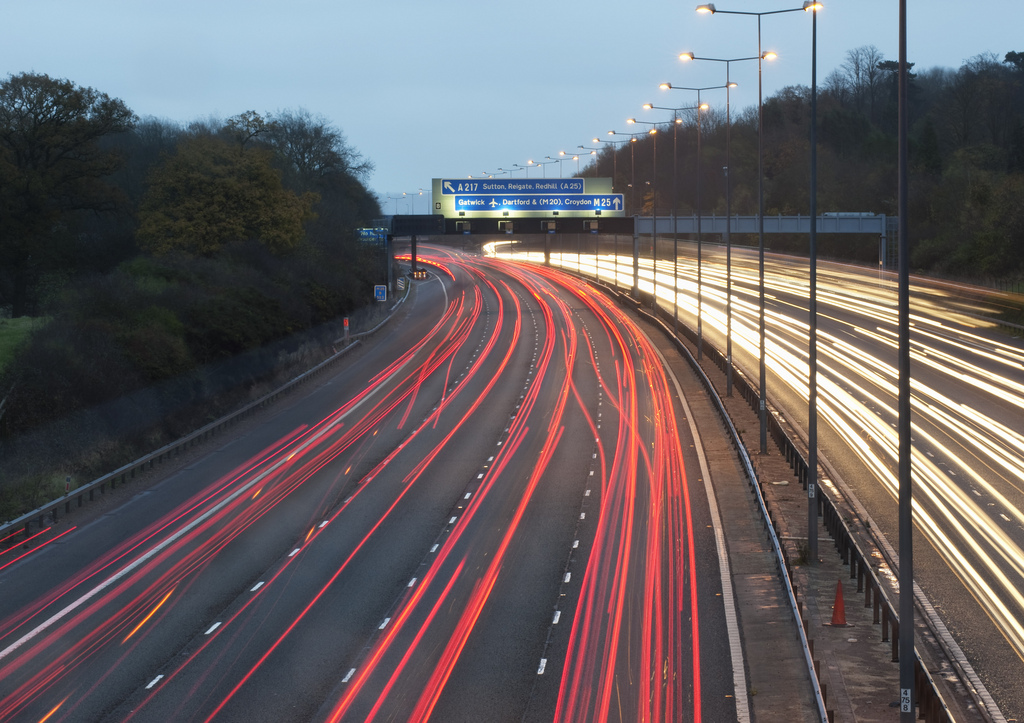

National cyclists’ charity CTC has slammed Chancellor of the Exchequer George Osborne, saying his 2016 Budget unveiled today “squanders squillions on road schemes” while making no cash available for cycling.
Among projects green-lighted by the Chancellor in his statement to the House of Commons today are a tunnel beneath the Pennines that will link Manchester and Sheffield that will reportedly cost £6 billion.
The Tory politician also froze fuel duty for the sixth year in a row, unveiled plans to cut by half the toll to cross the Severn Bridge from England to Wales, and committed £161 million to plans to widen the M62 to four lanes and £75 million to upgrade roads in the north of England.
Roger Geffen, policy director at CTC, said: “Britain has illegal pollution levels, an obesity time-bomb and a climate change strategy which is officially failing.
“Yet the Chancellor responds by squandering squillions on road schemes, ignoring all the warnings from experts about the lack of clear economic benefits.
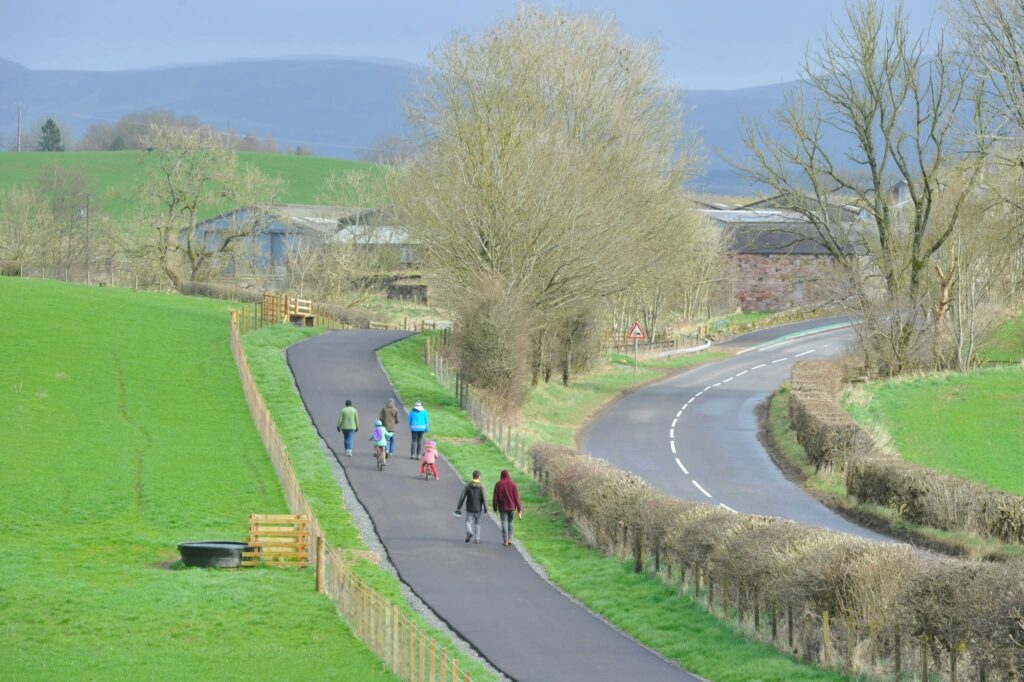
“Meanwhile, walking and cycling remain cash-starved, despite mountains of evidence that they are incredibly cost-effective investments.
“His cabinet colleagues need to remind him that he’s supposed to be part of the ‘greenest Government ever’ and urge him to reallocate some of the £15 billion earmarked for road-building to invest instead in walking and cycling.
“That would be far better for our economy, our streets, our environment and our quality of life,” he added.
CTC noted that the government has yet to commit funds to the Cycling & Walking Investment Strategy for which it successfully lobbied, with others, to have included in last year’s Infrastructure Act.
It added that current spend on cycling in England equates to £1.39 per person a year, well below the £10 minimum that it and other campaigners have called for.













48 thoughts on “Budget: Osborne “squandering squillions on road schemes,” says CTC”
There was talk of an 18 mile
There was talk of an 18 mile tunnel from Manchester to Sheffield under the Peaks. I imagine the cost of that would be staggering.
But George WANTS the voters
But George WANTS the voters to all be unhealthy, so that the NHS will collapse and he can snip it into bits and sell them to his mates.
How else can he arrange to pump public funds into their wallets?
severs1966 wrote:
The NHS is already mostly privatised and on the brink of collapse. Most people are already unhealthy but the obesity crisis will only increase. Air quality is already so bad that London reached its defined limit within 7 days of this year.
He already has.
Wake up, you’re already dead.
zanf wrote:
Like most people I treasure the NHS and firmly believe in the concept of most treatments being free at the point of delivery. It is one of the great achievements of our society and we should be proud.
But, also like most people, I don’t much care whether NHS employees are in public or private employment, or whether the laboratories are publicly or privately owned. What I want is a service that is efficient, effective and offers good value for money.
I have worked extensively in both the public and private spheres, both have their good and their bad characteristics and neither could claim to be the holy grail of operating practice. But they each have a part to play in UK plc and we should beware of sneering, even obliquely, at the private sector.
All the motorcar hate really
All the motorcar hate really annoys me.
1: 85% of passenger miles are in cars, similar proportion of freight tonne miles. For the short and medium term the answer is road transport, anything else is tinkering around the edges. We aren’t going to stick everyone on a train anytime soon.
2: The cycling Meccas of the low countries don’t have substantially different % of car ownership or passenger miles than the UK.
3: Most road improvements have excellent payback ratios. Not investing in our roads will screw the economy, reducing the money we can spend on everything including cycling.
4: In most cases provision of road improvements have absolutely zero negative consequences for cyclists. So it’s not a debate either cycling infrastructure or road improvements, both please.
5: The only places where there is direct conflict is congested city centres and unfortunately our debate on transport is heavily skewed London.
6: Most of the negatives of road transport are sorted by autonomous vehicles and their cousins electric vehicles, so investment in R&D in that please as well.
Advocate for cycling and cycling infrastructure but lay off the car hate.
Nuclear Dan wrote:
Here here.
I got used to the fact a long time ago that the vast maority of commenters are zealots that never ever use any form of mechanised transport, nor do they ever buy a product that has been delivered by said product.
They are all avid recyclers too as to produce garbage would mean it being collected by a pollution spewing machine, nor do they ever leave our fair isle as that too is almost impossible unless one contributes to fouling the atmosphere.
This site is a cycling site at first glance, but from reading comments here you would never know that as every article is picked apart in order to throw vitriol at any other road user than a cyclist, that often includes dog walkers and pedestrians too.
I don’t have a car as I can no longer afford one, nor do I use public transport as I can’t afford that in my town, so for daily stuff like a trip to the supermarket, I walk, an almost 10km round trip.
If it is for a single item, or a bike friendly load of course I ride.
And I do wish the provisions for cyclists here were better.
But, if I had a car, you can bet I’d use it…
(Sits back and waits for the flaming, which will be ignored with a wry smile)
Cumisky wrote:
Here here.
I got used to the fact a long time ago that the vast maority of commenters are zealots that never ever use any form of mechanised transport, nor do they ever buy a product that has been delivered by said product.
They are all avid recyclers too as to produce garbage would mean it being collected by a pollution spewing machine, nor do they ever leave our fair isle as that too is almost impossible unless one contributes to fouling the atmosphere.
This site is a cycling site at first glance, but from reading comments here you would never know that as every article is picked apart in order to throw vitriol at any other road user than a cyclist, that often includes dog walkers and pedestrians too.
I don’t have a car as I can no longer afford one, nor do I use public transport as I can’t afford that in my town, so for daily stuff like a trip to the supermarket, I walk, an almost 10km round trip.
If it is for a single item, or a bike friendly load of course I ride.
And I do wish the provisions for cyclists here were better.
But, if I had a car, you can bet I’d use it…
(Sits back and waits for the flaming, which will be ignored with a wry smile)— Nuclear Dan
I’m you’re typical raving anti-car cyclist – I’ve never learnt to drive (didn’t have the money for it when younger and can’t be bothered now) and get everywhere by bike or public transport (or if my wife drives me!).
The issue with the huge amount of money spent on road infrastructure is the ridiculous amount spent on cycling/other infrastructure which undoubtedly offers a better return on investment. Personally, I rarely use cycle paths as most are poorly designed and it’s quicker for me to just use the roads (which is where I encounter the small percentage of motorised asshats – most motorists are reasonable people) so I can definitely see the benefit of investing in road infrastructure. The investment should follow some kind of cost/benefit analysis and that should mean more money for cycling/walking – at least £10 per person is a recommended figure.
What annoys me is the politicians claiming to be ‘green’ and talking lots about improving people’s health by increasing cycle use, but their actions are completely opposite.
hawkinspeter wrote:
Yes, but a real cost benefit analysis, taking proper account of the social costs of additional motoring, not just some fantastical pish counting all the benefits and completely ignoring most of the costs.
hawkinspeter wrote:
In fairness to George Osborne, I don’t think he’s ever really claimed to be very green.
Cumisky wrote:
Here here.
I got used to the fact a long time ago that the vast maority of commenters are zealots that never ever use any form of mechanised transport, nor do they ever buy a product that has been delivered by said product.
They are all avid recyclers too as to produce garbage would mean it being collected by a pollution spewing machine, nor do they ever leave our fair isle as that too is almost impossible unless one contributes to fouling the atmosphere.
This site is a cycling site at first glance, but from reading comments here you would never know that as every article is picked apart in order to throw vitriol at any other road user than a cyclist, that often includes dog walkers and pedestrians too.
I don’t have a car as I can no longer afford one, nor do I use public transport as I can’t afford that in my town, so for daily stuff like a trip to the supermarket, I walk, an almost 10km round trip.
If it is for a single item, or a bike friendly load of course I ride.
And I do wish the provisions for cyclists here were better.
But, if I had a car, you can bet I’d use it…
(Sits back and waits for the flaming, which will be ignored with a wry smile)— Nuclear Dan
You know, there’s more to cycling than just the sporting aspect of it. I presume that it’s just the latest sport cycling news that interests you? In which case, I suggest that you back off from the discussions about cycling as a mode of transport in the real world, m’kay…?
brooksby wrote:
Except I have zero interest in sport, never have, never will.
I cycle to maintain a certain level of fitness on the advice of my doctor, being severely asthmatic it helps with my breathing, it also helps with my cardiovascular system and to maintain a healthy weight, all things I have been advised to keep on top of as there things killed both my parents at a young age.
I ride 50 miles a day, everyday, regardless of weather to do this.
So I suggest you back off, fool.
Cumisky wrote:
I thought you were ignoring the flaming… which you can’t really object to if you set out to call anyone who expresses frustration at the car culture of this country a hypocrite because, you know, vans and planes and stuff.
Cumisky wrote:
“Fool”?
OK, fair enough, it had seemed like a reasonable assumption that you were into the sport not the transport, and I now stand corrected. However, please note that it wasn’t I that resorted to childish name-calling.
I appreciate that you are riding then as a recreational pursuit and for health reasons – and you actually ride more miles per day than me – but cycling is used as a mode of transport by many people (tax paying people) and they don’t all necessarily hate cars (myself included). What they do see is a society and political – er – thing which is massively skewed toward the use of the motor vehicle. What they think is that cutting back on that use might help toward the environment, toward health, toward cutting air pollution…
My household owns two cars but do not use my car unless I have no alternative (hierarchy of commuting: cycling, bus, car). I even openly buy goods which are delivered to shops in motor vehicles.
Its not hypocrisy to then also think that the use of motor vehicles ought to be cut back to when there is no alternative, nor to complain that cycling receives the crumbs left over from all the real government spending.
Nuclear Dan wrote:
Problem is cycle campaigners have realised even if you build good cycle paths no one is really interested in using them unless the road alternative is horrific. So they need to push the agenda to remove space for driving to ‘encourage’ people to cycle. Spending on roads (even though the budget is all about motorway improvements) is competing against their hopes to force more people to cycle.
STATO]
Where are those good paths? I haven’t seen one yet. Apparently there aren’t the funds to be spent on them. Sustrans is even reduced to begging for charitable donations to cope with flooding.
Nuclear Dan wrote:
Meh. Relax and enjoy your massive car infrastructure. You’ve got it good. A vast amount of money and space is expended on you. So please: keep the whining down. It’s undignified when it’s justified, but just disgusting when it’s not.
I hate cars and all they
I hate cars and all they represent.
No, no, no – you
No, no, no – you misunderstand… Are you against making Britain great? Mumble mumble Austerity mumble mumble mumble No money mumble mumble All in it together mumble mumble Austerity… And that’s why there’s no money available for cycling! 🙂
Can’t they just fix the roads
Can’t they just fix the roads we have already?
Although, will this tunnel have a cycle path along it?
Leviathan wrote:
Not sure I would want to spend 18 miles in an exhaust fume filled tunnel, but if it gets the traffic (especially the thundering HGVs) off the Woodhead and Snake passes then they would be much more pleasant to cycle on.
Tunnels connecting regional
Tunnels connecting regional cities to world class cities are fine but the first and most useful fix would be cheaper.
Trains between Liverpool Lime St and Manchester Piccadilly take 50 minutes to cover 35 open flat miles. That’s the line that needs improvement. It might save them having to widen the M62 if people can travel between the two cities in 25 minutes.
There’s already a tunnel
There’s already a tunnel under the peak district between Sheffield & Manchester. It was built in the 1950s alongside an older tunnel. What’s more, it contained a proper European mainline spec, electrified railway which operated into the early 80s, although passenger services stopped in the late 60s. Not at all linked to transport ministers having hands in the road hauliers’ pockets, or part of a deliberate political tool to kill of manufacturing industry and thereby the unions at all. Oh no.
The A66 & A69 are going to be ‘upgraded’. But of course, they’ll still shut whenever it gets a bit windy, or covered in snow. Rather than encourage freight to be moved on the railways, they’re also trialing semi-autonomous lorry trains on the M6 North of Kendal, a few yards from the mainline. Whilst an alternative east-west connection is cut off for months (possibly years).
Most of these infrastructure
Most of these infrastructure projects are for movement of people and goods over a distance that you would not consider using a bike for.
Let’s stop the car bashing and concentrate on getting additional investment to encourage people out of their cars for shorter joirneys.
Dr Mcr wrote:
I agree that people should not be using cars most of the time. Two miles down the road type journeys when walking/cycling/scooting/rollerblading would have the job done and be far better for them. I live in town and work just outside of town. We have three kids two dogs and don’t have a car. I can afford one, but I choose not to have one because of the abhorrent costs associated with car ownership. My families well-being has been greatly improved since choosing a car-less life.
I recently put it to my club about a few of us doing the Dunwich Dynamo. One of the more committed members suggested riding to london the day before. We ride with the Penzance Wheelers. How far would be considered inconsiderable?
I think the point CTC is
I think the point CTC is trying to make is that in their view the government is not prioritising money in a way that matches even the government’s stated long term objectives. You can’t arrive at a point where more people use non motorised transport (with all its NHS saving and environmental benefits) if you don’t start to make a shift in the prioritisation of your spending. You don’t get there overnight but you also won’t get there by merely paying lip service to it and continuing to prioritise your transport spending as you always have. It’s not about car hate etc but about questioning the government’s priorities and desire to meet their own stated long term goals. Personally, I shudder to think what the future in 50 years looks like in this country because at the moment reality (rather than words and plans) seems to indicate that it’s almost entirely focused around personal motorised transport. A “plan” that just doesn’t seem infinitly sustainable to me. And related to that, I am fearful of the strain the NHS will be under merely on account of “exercise deficient diseases” (to use my own term).
This government claims to be all about fixing problems now so future generations don’t have to deal with them, hence its austerity mantra. If that’s the case then surely it’s capable of making the necessary hard decisions wrt transport that are for the long term good of the country. My guess is that they realise it took European countries decades to get where they are and they just don’t see a political horizon that stretches that far – there’s not enough immediate political payback in doing it (and past governments have been equally culpable).
No-one should be complaining
No-one should be complaining about the investment in jobs and growth for the North. Quite apart from the obvious benefits, if you create prosperity and connection in the North, you stem and possibly reverse the gravitational pull of London and the South East. The population density of London is what causes a lot of the problems – construction traffic, taxi drivers being in a rush, sheer numbers of buses and the number of people cramming onto them meaning they’re hard pressed to meet timetables.
Assuming decent broadband speeds, in a modern digital economy there is simply no need to locate next door to everyone else; on a daily basis I speak to people in China and Poland more than I speak to people in my own office. Even though I sometimes visit customers and suppliers in London, there’s actually no reason for my office to be here. 90 mins on a train from Leeds or Manchester would be more than acceptable.
The problem is not that billions are being spent on these schemes. The problem is that only the very smallest crumbs are falling from that table to support genuinely good planning, development and improvement for good quality, modern, sustainable transport. That’s a scandal.
Gizmo_ wrote:
People have been saying that since the internet came to prominence but what’s happened is often the reverse. Now that everyone can connect to everyone else electronically, the premium on face-to-face contact and informal encounters has actually increased. Hence why people and firms are prepared to pay huge costs (and not just £) money to located themselves and their activity in London.
Agreed.
Cycling and walking schemes
Cycling and walking schemes generally deliver very good Benefit Cost Ratios (BCRs), at low cost. Which in turn means that the magnitude of benfits is relatively small.
Large road schemes generally deliver lower BCRs but both the costs and the benefits are much larger in magnitude.
Rail schemes are, generally, as costly or more so than road schemes and deliver lower BCRs. Transport infrastructure investment is disproportionately skewed to rail on a £/passenger (or freight) kilometer basis.
I think the point is that it is possible to do all three, the argument should be about the relative priority and proportions of the spend. Afterall, you can build an awful lot of segregated cycle route for the cost of a kilometer of motorway and even more for the cost of a kilometer of railway. To not spend a small but significant proportion of the transport budget on city centre cycle infrastructure seems to me both against common sense and the stated intention of this and previous governements.
However, anyone who thinks you can stop investing in roads, spend the money on rail and cycling and still have an economy left is frankly deluding themselves. Rail carries about 1/6th of the journeys of road and still less of the freight, there is no realistic prospect of rail replacing road as the principal mode of transport in this or any other developed economy.
Nixster wrote:
But, the transport budget does not pay for roads in England, it pays for the “strategic road network”, which is Motorways and trunk A roads and others have observed the difference is the distance that is involved.
If I am communiting within a city, I will go by bike. If I am travelling from London to Cambridge, I will not be cycling. Heck, owing to the cost of public transport let’s be honest I am going to drive up the M11 as it is cheaper.
The question is, why are local councils not spending more on cycling infrastructure? Their budgets are mostly not ring fenced, most cities have serious problems with the morning and evening peaks bringing standstill the road network, at which point everything on the road suffers. But they don’t do it.
We’ve seen how these local governments have squandered the cycling city cash what makes people think that other handouts by the government won’t be wasted or used to create parking spaces…
Nixster wrote:
You make interesting points about benefit magnitude versus costs.
And you may be right that there is no realistic prospect of rail replacing road as the principal mode of transport.
But if your argument to support that last point is simply that currently rail carries 1/6 of the journeys compared to road, then that’s unconvincing. It’s like saying “I don’t have a sandwich now, so we can’t have sandwiches”.
Also, it’s a mistake to lump freight and passenger rail together. Large scale, moderate speed, electric rail over urban areas is ridiculously energy efficient compared to automobile use. Individual car use in such scenarios seems less and less like a cost any society can bear, both in terms of pollution, noise and greenhouse gases and before you even factor in subjective costs.
Ush wrote:
However, anyone who thinks you can stop investing in roads, spend the money on rail and cycling and still have an economy left is frankly deluding themselves. Rail carries about 1/6th of the journeys of road and still less of the freight, there is no realistic prospect of rail replacing road as the principal mode of transport in this or any other developed economy.
— Ush You make interesting points about benefit magnitude versus costs. And you may be right that there is no realistic prospect of rail replacing road as the principal mode of transport. But if your argument to support that last point is simply that currently rail carries 1/6 of the journeys compared to road, then that’s unconvincing. It’s like saying “I don’t have a sandwich now, so we can’t have sandwiches”. Also, it’s a mistake to lump freight and passenger rail together. Large scale, moderate speed, electric rail over urban areas is ridiculously energy efficient compared to automobile use. Individual car use in such scenarios seems less and less like a cost any society can bear, both in terms of pollution, noise and greenhouse gases and before you even factor in subjective costs.— Nixster
Electrified urban rail may be energy efficient – but it just isn’t practical for most journeys. For commuting into London and a few other city centres, yes, but in most other places, and for most other purposes, it’s simply not an option.
It should be part of the mix, and indeed a larger part – but even doubling or tripling it, it would still be a small player outside London (e.g. 4% of Greater Manchester commuting residents got to work by rail and train in 2011). Cleaner, safer, more appealing road transport – including cars, buses, bikes and Shank’s pony – will be far more important.
Duncann wrote:
Again, this is a variant of the sandwich fallacy. Current diversion of funding to expand the road network leads to reduced opportunities to take light, electric rail, which in turn is cited in arguments such as these as a proof.
Ush wrote:
Electrified urban rail may be energy efficient – but it just isn’t practical for most journeys. SNIP (e.g. 4% of Greater Manchester commuting residents got to work by rail and train in 2011).
— Ush Again, this is a variant of the sandwich fallacy. Current diversion of funding to expand the road network leads to reduced opportunities to take light, electric rail, which in turn is cited in arguments such as these as a proof.— Duncann
It’s nothing to do with road funding. It’s simply that rail cannot hope to ever have the network coverage and connectivity that road has. Even if you diverted all road funding and doubled it.
Duncann wrote:
So, out of the limited pot of money available for developing public infrastructure, if we spend it all on roads then there will magically be more money available for other infrastructure?
Rail doesn’t need to have the same network coverage and connectivity. It needs _more_ of both to be sure, but all that’s needed is that it within easy bicycling and walking distances of more people. That will require maintaining quieter, lower speed roads. As the main damagers of roads (heavy goods trucks) are displaced by goods rail networks the maintenance of pothole-free surfaces will become easier.
All of that will require a lot of money: money which is currently going into maintaining a system which has evolved into an expensive, unsatisfactory, GHG emitting, and most importantly cyclist-hostile one.
Ush wrote:
It’s nothing to do with road funding.— Ush So, out of the limited pot of money available for developing public infrastructure, if we spend it all on roads then there will magically be more money available for other infrastructure?— Duncann
It isn’t to do with road funding! The only roads which are directly funded are those motorways and A roads run by the Highways Agency and they have dedicated a pot of cash to build cycling infra, even though they are an inter-urban network.
The local roads are funded by your local government budget. It is your local government that chooses not to spend it’s budget on cycling infra. It is they who should have the best interests of the local economy (which is to keep traffic flowing) but again and again they do not. Or they play for easy victories which are short-sighted like the removal of bus-lanes in Liverpool.
If this is a health issue why is money not diverted from NHS or Public Health?
If it is for the local economy, why isn’t the local council funding it?
I would love to see more frieght moving on the rails I really would but at the moment the cost is prohibitive and even then you still have to move the items from the rail terminal to a local distribution point and as these HGV vehicles become cleaner and more efficient the less attractive moving goods by rail is. Heck, we have a massive canal network, most of the major cities are connected so why don’t goods be moved on that?
Wolfshade wrote:
Ahem… government funding and budgets don’t always make the most sense…
I wonder how much transport funding would be freed up if we stopped pretending HS2 was going to happen.
Wolfshade wrote:
You’re absolutely right that only the SRN is directly funded. Local roads are funded by local authority spend, which (in large but declining proportion) comes from central government. Indeed, the LA funding for local roads from central governement is determined on the basis of a formula set by central government. That money then goes into a pot to fight it out with things like adult social care, libraries and schools. As the amount of central government grant has declined over time, local authorities have for some reason prioritised not turfing grannies out of care homes above fixing potholes or building cycleways.
Central governement does from time to time fund ‘pots’ of money for specific issues, which they have done for cycling in the past, for LAs to bid for. So while its true that local government, guided by their locally elected representative councillors, does make some interesting decisions regarding spending priorities, it is not true to suggest that central government is not able to directly fund cycling infrastructure improvements in towns and cities.
Nixster wrote:
Libraries? Probably not for much longer (they’re closing left, right, and centre, or being kept open by volunteering elderly folks). Schools? Ditto (academies). Basically, give it 5-10 years and the only thing central government will let local authorities fund is adult social care. Everything else will be run by corporates and funded/controlled directly by central government. Although I’m sure central government will still let local authorities take the blame for anything going wrong…
brooksby wrote:
The picture is much more complex than that: those authorities that have the will and the wherewithal (Greater Manchester being the obvious case) are seeing major shifts of power towards them.
Ush wrote:
It’s nothing to do with road funding.— Ush So, out of the limited pot of money available for developing public infrastructure, if we spend it all on roads then there will magically be more money available for other infrastructure?
— Duncann Rail doesn’t need to have the same network coverage and connectivity. It needs _more_ of both to be sure, but all that’s needed is that it within easy bicycling and walking distances of more people. That will require maintaining quieter, lower speed roads. As the main damagers of roads (heavy goods trucks) are displaced by goods rail networks the maintenance of pothole-free surfaces will become easier. All of that will require a lot of money: money which is currently going into maintaining a system which has evolved into an expensive, unsatisfactory, GHG emitting, and most importantly cyclist-hostile one.— Duncann
“all that’s needed is that it within easy bicycling and walking distances of more people”
Not so. Sure, it’s nice to have an accessible rail station but there’s a good chance that the lines won’t actually be going in the direction you want. I live next to a railway station with several routes passing through. The route to work isn’t bad (although it’s still as quick to cycle when you add the walk at either end) but mostly they don’t actually take me where I want to go without further connections and delay. It’s almost always quicker to use flexible, door-to-door private transport – in my case a bike but in most people’s case, a car.
And most people don’t, and won’t, live close to a rail stop.
We’re in a country where
We’re in a country where getting primary school children to run a mile each morning – after being driven ¼ mile to school is being rolled out as a ground breaking idea with no sense of irony.
If you time-travelled someone from the 1930’s to now and presented the mess we have made of the nation’s public transport and it’s fitness they would weep.
WolfieSmith wrote:
My nan does!
WolfieSmith wrote:
I imagine someone from the 1930s would be disappointed that we still use public transport. They’d probably have aspired to owning a car.
I think it’s a shame that
I think it’s a shame that this thread has been hijacked by a strawman argument about car hate. It’s not hate, it’s a rational analysis of the detrimental effects of cars, and the lack of funding for cycling.
Osborne has found millions for road projects, and next to nothing for cycling, and a lot of us strongly disagree with that.
Cycling is not necessarily for long journeys, it’s for short, local journeys. There are many very convincing reasons for not making our towns and cities unliveable for people by allowing them to be completely dominated by cars travelling very short distances. We should do ourselves a favour, and make the place where we live, places for people.
I have no objection to the M62 being dominated by cars, but I do not want my local High Street to be dominated by cars, which create danger, congestion, and pollution.
An early commenter wrote that road improvements have ‘absolutely zero negative consequences for cyclists’, but this is completely missing the point. Road expansion creates more traffic, and more traffic has extreme negative consequences for people, on bikes or not.
We know from survey after survey that a large percentage of British people think the roads are too dangerous to cycle on, and that is exclusively due to motorised traffic. There was more traffic than ever before in Britain in 2015. Measures to create ever more traffic, and no measures to create safe, good quality cycle infrastructure, is what CTC is rightly complaining about.
HarrogateSpa wrote:
Thank you. A clear statement of the problem. There are massive externalities for increased private car use. It’s just an inefficient, non-engineered solution to the problem of a huge tranche of transport needs. It’s also so heavily propagandized that most car users find it difficult to detangle the dream from the reality and the effect that it has on us all.
Ush wrote:
The massive externalities of car/truck use are however massively out weighed by the positive economic contribution that they make to the economy. As it currently stands we are willing to pay taxes on their use which easily exceed the cost of those externalitites. (e.g. we pay more fuel duty than even the most zealous economist would price CO2 at)
For the last 20 years we let our road infrastructure crumble with the mantra that cars are evil and we should be using trains and to a lesser extent bikes.
To vastly over simplify, we haven’t invested enough on our trunk roads, this is having a drag on our economy. At the same time we are becoming more urbanised, those roads in cities need reduced traffic flows and better provision for cycling. The CTC should be supporting road schemes that take traffic off these roads.
And we should all unite against the blood stupid idea that is trams…..
Nuclear Dan wrote:
Citations needed please. Especially for the first. The latter sounds like weird weasel wording “we are willing to…”.
Nuclear Dan wrote:
An early commenter wrote that road improvements have ‘absolutely zero negative consequences for cyclists’, but this is completely missing the point. Road expansion creates more traffic, and more traffic has extreme negative consequences for people, on bikes or not.
— Nuclear Dan Thank you. A clear statement of the problem. There are massive externalities for increased private car use. It’s just an inefficient, non-engineered solution to the problem of a huge tranche of transport needs. It’s also so heavily propagandized that most car users find it difficult to detangle the dream from the reality and the effect that it has on us all.— Ush The massive externalities of car/truck use are however massively out weighed by the positive economic contribution that they make to the economy. As it currently stands we are willing to pay taxes on their use which easily exceed the cost of those externalitites. (e.g. we pay more fuel duty than even the most zealous economist would price CO2 at) For the last 20 years we let our road infrastructure crumble with the mantra that cars are evil and we should be using trains and to a lesser extent bikes. To vastly over simplify, we haven’t invested enough on our trunk roads, this is having a drag on our economy. At the same time we are becoming more urbanised, those roads in cities need reduced traffic flows and better provision for cycling. The CTC should be supporting road schemes that take traffic off these roads. And we should all unite against the blood stupid idea that is trams…..— HarrogateSpa
TU Dresden report from 2012 suggests around £50 bn external costs of cars in the UK, at least £10bn more than taxation yield. They don’t necessarily include all the costs – yes, I know that’s not ever done really – but it does make this probably a conservative estimate of society’s losses.