


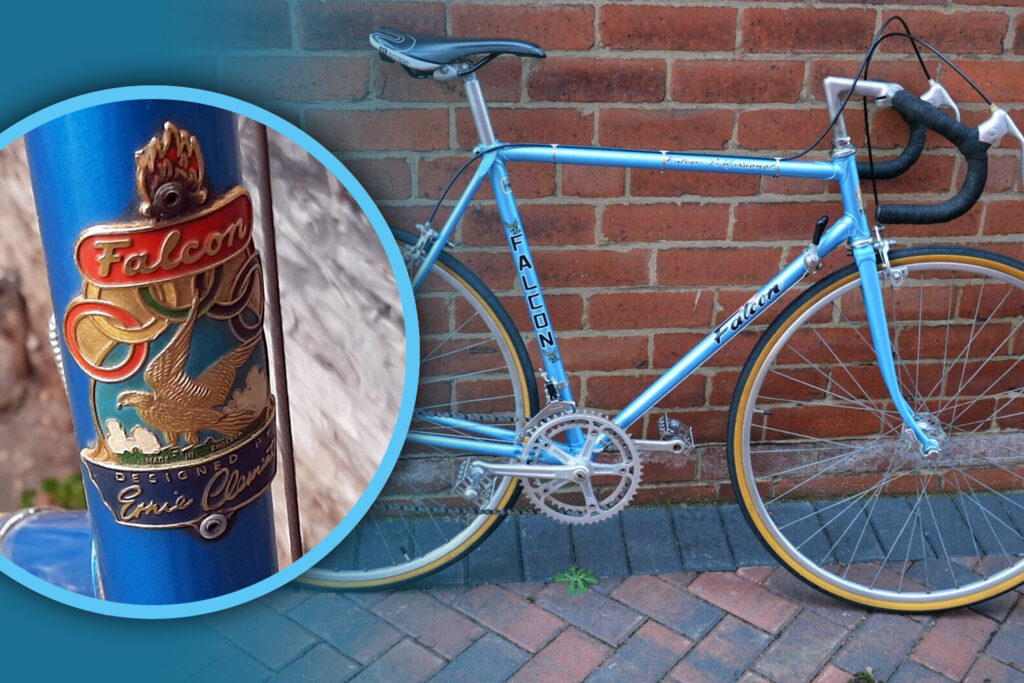

From the 1950s right through to the 1990s, Falcon Cycles were a force to be reckoned with in the UK. Be it in road races, on the time trial course or meandering through country lanes, the chances are that if you rode a bike during that time then you either had a Falcon, or knew someone who owned one.
If you also happened to follow the UK’s professional road race scene during that time, then you would also be very aware of the numerous Falcon-backed professional teams in that time period, and of course the legendary riders that got to pull on the prized Falcon team jerseys.
Where Eagles dared and Falcons followed
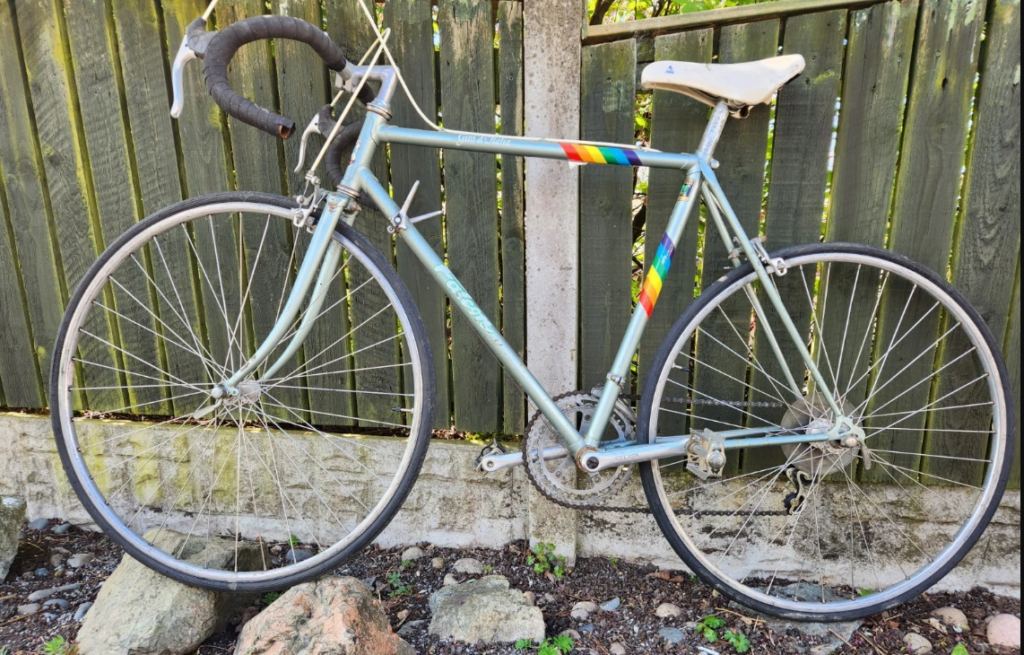
To say that the tale of Falcon is a twisted one shrouded in myth and mist would be fair, so I’ll go with the majority and garnish it with dash of personal experience of the brand and its once great bikes…
Way back in the 1880s, a bicycle manufacturing company named Hotchkiss, Mayo & Meek Ltd was established in Coventry, West Midlands. Some 17-18 years later Mr Meek left the company and they rebranded as Coventry Eagle. They soon moved more towards selling small, two-stroke motorcycles than they did bicycles, although it is believed they also marketed a range of racing bikes branded Falcon during the 1930s too.
> Why I still miss the huge Falcon Professional I got for Christmas way back in 1978
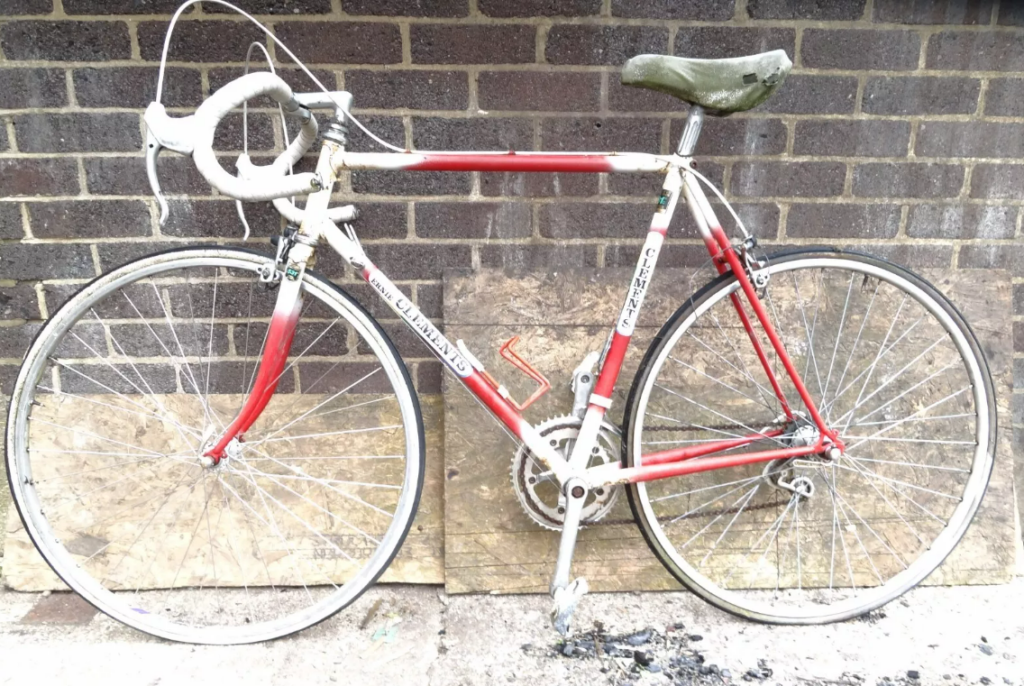
A few years on and a young racing cyclist from what is now the town of Telford was starting to make a name for himself: enter Ernie Clements (RIP), a man who was to become synonymous with the Falcon Cycles brand in the decades that followed.
Ernie was a British Road Race Champion during the late WW2 years, and was also an Olympian in 1948 (where he won a team silver medal in the road race). Towards the end of his racing days he opened a bike shop in Old Park, Telford, which fell on hard times in the mid 1950s, and that led to Ernie taking a job with the Smethwick-based RCI (Roberts Cycles Industries).
Ernie soon rose to managerial status at RCI, and then persuaded the company to produce their own branded high quality race bikes. Quite by chance (it is believed) he found a box of old transfers with Falcon on them, and he thought it sounded like a good name for their new bikes – which is allegedly how the brand as we came to know it was conceived.
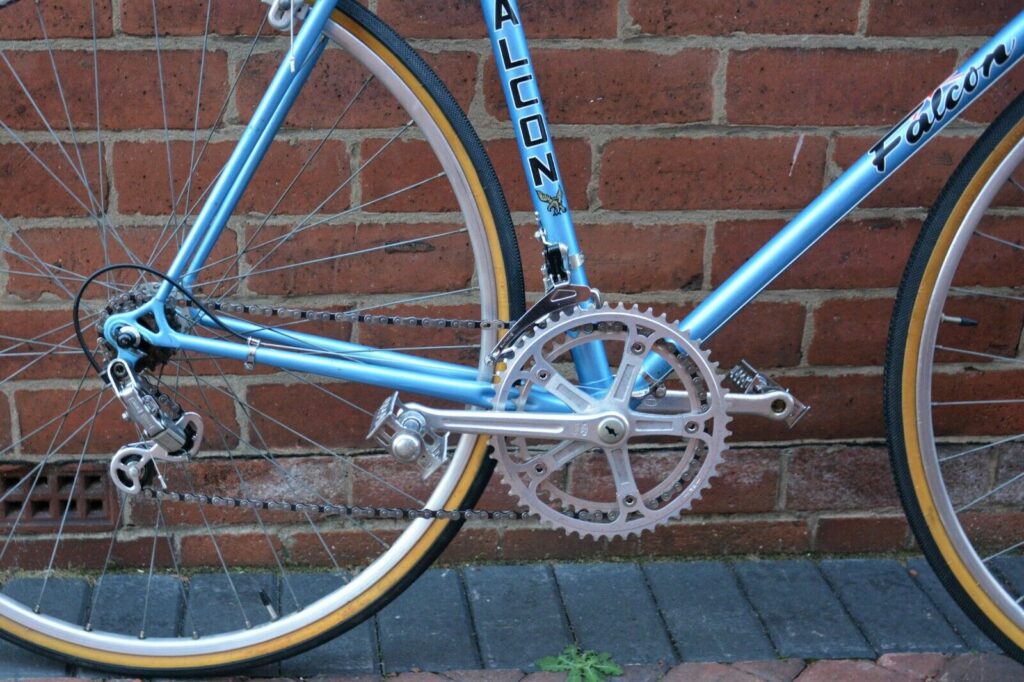
Some time later Coventry Eagle moved to a new premises nearby the RCI facility, and then also took over the RCI company. They employed Clements to manage the bike manufacturing part of the company under the Falcon brand name.
Falcon as a brand thrived under the new ownership, and in the late ’60s they moved to Barton-upon-Humber and into a larger factory. After the company’s managing director was involved in a serious car crash, Clements took over leadership of Falcon Cycles and later moved to a newer factory in Brigg. This was to prove a financial stumbling block for Falcon, and it was sold to the Elswick-Hopper group. Clements remained as a board member.
> 10 of the best 20th century British bike builders from the North and Midlands
During this time, the company also built a new factory in Newtown, Wales, and in the early 1980s Ernie sold his shares in the factory and business. We understand that Clements also owned the Coventry Eagle brand name at that time, and he worked closely with Barry Hoban and the Newtown factory, with some bikes also carrying the Barry Hoban name as well as Coventry Eagle & British Eagle, for a while.
The Newtown company stopped trading in 1994, by which time Clements had moved to Ledbury in Herefordshire and opened a bike shop.
By this time the market had changed rapidly, and the Far East had become the manufacturing option of choice for most of the bike industry. The Elswick-Falcon company was later taken over by Casket Plc, and is now part of the Tandem Group, who own the rights to numerous classic old British bike brands.
Very basic Falcon branded bikes are still sold by Tandem (who also own the British Eagle brand) – although they are a far cry from the bikes from Falcon’s glory years, a story that is all too familiar with the bike UK industry, and manufacturing in general.
A racy past
With his passion for racing bikes, Ernie was renowned for making some the fastest bikes in the West (Midlands), and he was a long-time supporter of both professional and amateur teams throughout the great days of Falcon.
The first official Falcon team rode out in 1956, starring Harry Reynolds (whose son Keith would also ride for Falcon many years later), Geoff Bye and John Perks. They raced alongside Frank Clements, the younger brother of Ernie.
> Classic 20th century bike builders from the South of England
From then on, and right through until the early 1990s with the likes of the PMS-Falcon and Banana-Falcon teams, the brand was pretty much a permanent fixture on the UK professional scene. Those of us who grew up cycling during that era would surely of had our great Falcon team heroes: from the early team stars such as Bill Holmes, Albert Hitchin and Shay Elliot (who came briefly out of retirement to race a season for Falcon), through the ’70s and ’80s with stars such as Bill Nickson, Keith Lambert, Sid Barras and the great Barry Hoban.
In the later years, Falcon’s final racing chapters were closed superbly with the likes of Chris Lillywhite, Chris Walker and Shane Sutton. Falcon teams were always at the fore of the UK pro peloton, and were arguably the most successful domestic teams during the long era they reigned over.
What about the bikes?
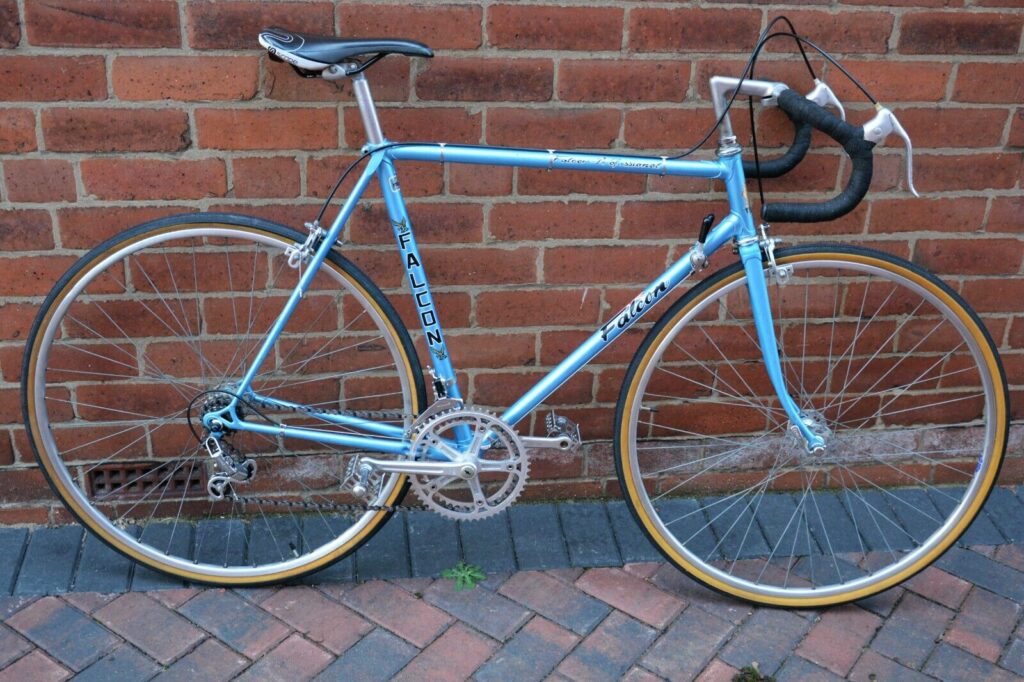
Although manufacturing and technologies changed lot over the years, Falcon were always considered a relatively high-end brand, a step above many of the mass market opposition names in terms of quality and affordability.
Having ridden and raced many Falcon bikes and frames from the late 1970s and beyond, I can vouch for their reputation as speed machines. They also handled really well.
Clements already had good personal frame building knowledge before Falcon came about, and had a huge input in the design of the frames. For many years his name also appeared beneath the Falcon name on the head badges, and on some of the seat stays (‘designed by Ernie Clements’).
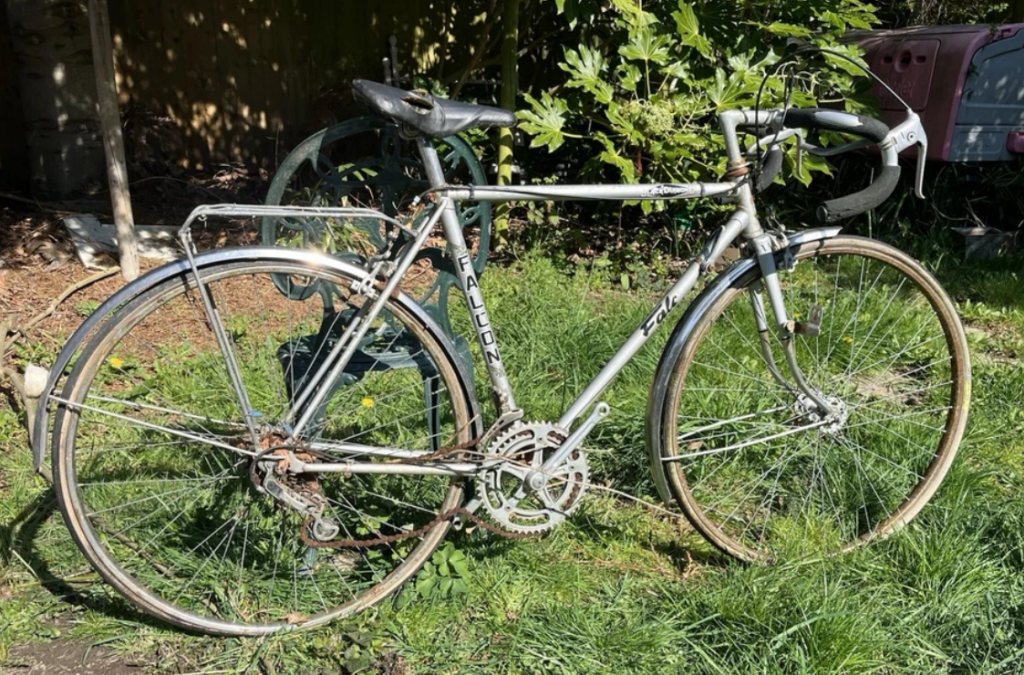
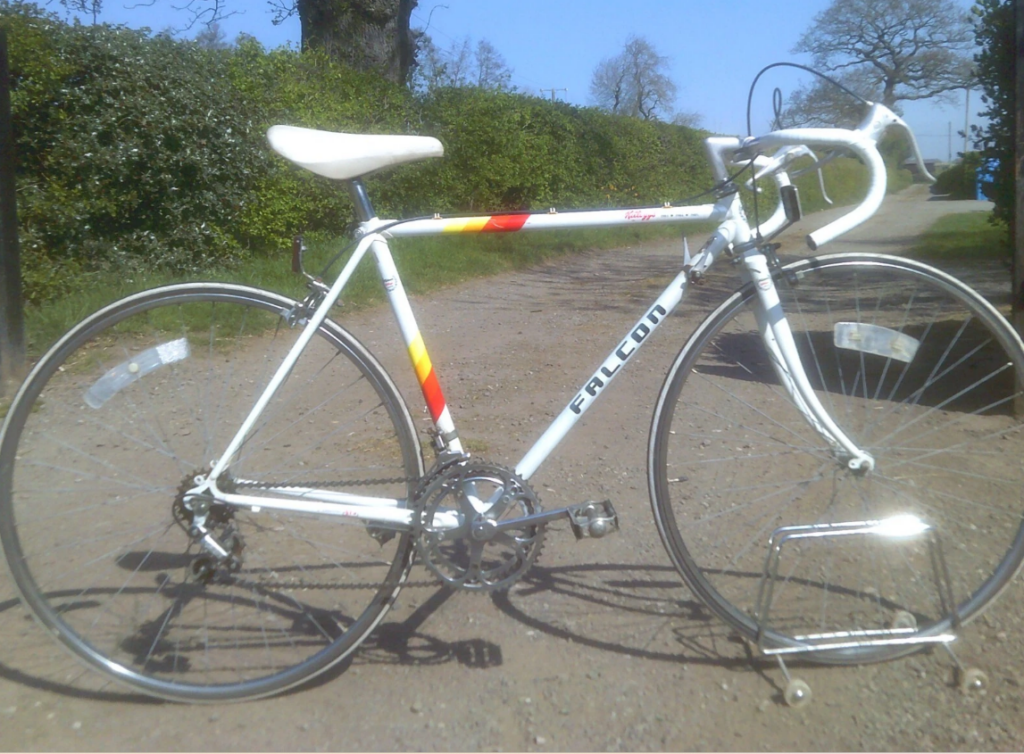
One of the most common Falcon bikes locally was the Black Diamond, a claret- coloured ‘club’ or touring bike, while the sporty Olympic was also popular, and with the professional being a great entry level bike for those racing – of which I had 2 over the years.
The iconic and glistening Falcon colour scheme was a trademark of the race- orientated bikes, while the top-end San Remo Equipe went through various colour schemes over the years. The claret red with chrome trimmings was perhaps the most prominent during the early ’80s.
Those top draw bikes truly were something, and were as well built and designed as any other British-made frame out there. They were easily a match for the Italian brands, and some were even finished a little better in my opinion.
Sadly, Falcon didn’t quite have the chic Italian image of a Colnago or a Rossin, or even the custom appeal of the small frame makers out there. During that time, mass- produced bikes were losing their appeal at the higher end of the sport. This custom ‘build’ trend no doubt impacted the numbers of top end Falcon bikes in the amateur pelotons of Britain during that era, despite the various Falcon teams dominating the pro scene on them/bikes branded as Falcon.
During the 1970s, Falcon also had a manufacturing and branding rights deal to produce bikes under the Eddy Merckx name, distributing them to the US and elsewhere. Although their top end Merckx models were rather good, their reputation perhaps suffered due to the lower end models, as the colour schemes were very similar on these less prestigious bikes.
The Falcon history and detail here may well be patchy and gapped in places, and there are many more facts and myths out there about the brand – it all adds up to part of the great aura surrounding the flight and fall of Falcon Cycles. We hope you enjoyed the ride down the Falcon nostalgia lane, with all its twists and bums thrown in along the way.
An ode to Barry Hoban
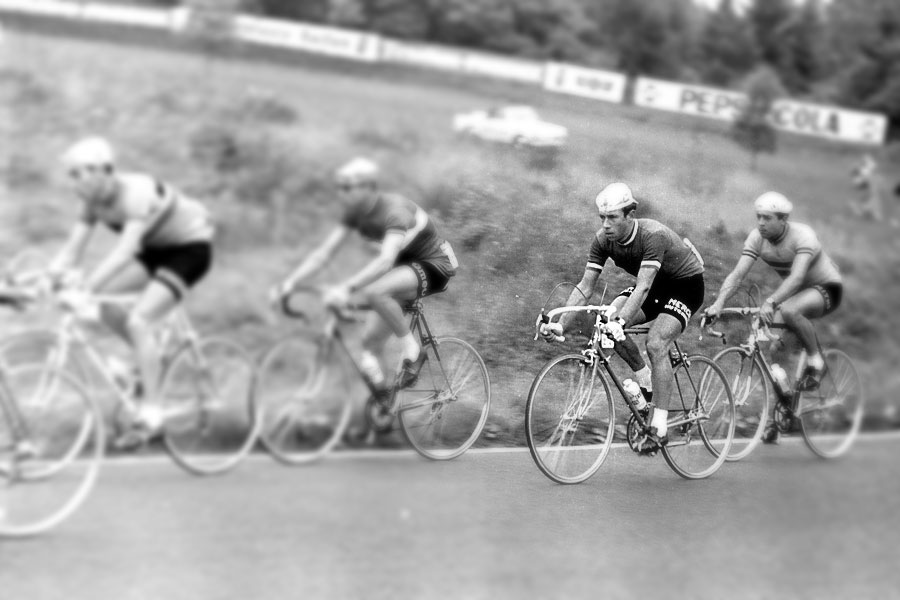
Sadly, since I first penned this article, the great Barry Hoban passed away at the age of 85. Of course, his great legacy and spirit will live on, especially with those of us of an age who were fortunate enough to have encountered Barry personally.
This is a brief extract of one particularly poignant encounter with Barry in May 1981, following the scariest crash I ever had on a bike. Luckily I survived, mostly intact!
Defiantly (with a race coming up two days later), I got up the morning after the crash and rode 13 miles out to a local bike shop. As I was walking in, I saw the owner and Barry (who had just started working with Falcon, and had just been told the story of my near-death experience), who both stared at me in a state of shock, because they were told it wasn’t looking good for me the evening before. After filling them in on the rest of the story, Barry looked me up and down in disbelief, cocked his head, then shook his head, and then in that uniquely blended accent of his, grinned and said: “Huh, trackies eh. A tough breed.”
That was my first conversation with him, and you can imagine the impression it made on a 15-year-old bike racer. Thank you, Barry. Rest in peace.



















12 thoughts on “When Falcon Cycles soared high — remembering this legendary British bike brand that once ruled the club ride”
Bought a Falcon Eddy Merckx
Bought a Falcon Eddy Merckx in 1976 to replace a Raleigh Flyer 5-speed I bent by crashing after giving blood at University of Nottingham. I went into Sid Standen’s (spelling?) shop in Beeston and asked for cheapest bike to get me the 10 miles from Sutton Bonington to Beeston in all weathers as fast as possible several days a week. He went straight to the 10-speed FEM. First time riding, the right crank snapped as I put pressure on a small rise in Gotham as a car was passing me – scary! Trundled back to the shop where he replaced with a different brand. Hammered that bike hard but maintained it well till it was stolen from inside a ramshackle house a few of us rented in Newcastle-upon-Tyne in summer 1982. You’d see a lot of those bikes around and, even now, I still see them very occasionally l. Cheap, horrible on rough surfaces as the forks had no spring in the metal. But it, and Richard’s Bicycle Book got me into keen cycling
I am currently restoring a
I am currently restoring a Falcon. I think it was from the mid 1980’s, as it had shimano 600 arabesque on it. Doe anyone know how to tell what model it is?
“All modern bikes look the
“All modern bikes look the same”, says fan of 1980s steel bikes, that, errrr, all looked the same…
SecretSam wrote:
?
This doesn’t appear to have anything to do with the article.
Most of the Falcons pictured
Most of the Falcons pictured are low-end clunkers, which was their main market (even more so than Raleigh). As a teen, their Black Diamond model was a staple ‘first proper bike’, but their love of what was then odd components (Shimano gears (!), Tange frame tubes) made them a bit of a left-field choice, a bit like Peugeot.
MTBs came along and stole that younger market, and Falcon didn’t react well enough. History followed.
If you want something innovative from the ’80s, look at Viscount, who tried something different.
I wonder how many riders of
I wonder how many riders of these (and similar) bikes abandoned cycling as soon as they could as a result of the awful brakes, ridiculous gears, uncomfortable riding position, etc.
It was bikes like these that
It was bikes like these that got me into cycling. I rode to school on a cheap Raleigh, with steel rims that wouldn’t brake in the wet. And I loved it.
I’ve got a ’70s Falcon track bike in the collection now. It’s a lot better than the clunkers in the photos above.
I think we’re the exceptions
I think we’re the exceptions though!
I had a Falcon Black Diamond.
I had a Falcon Black Diamond. It was good for the time. I rode that bike all over for years. It was stolen from outside the Landor pub in S London in the late 80s.
First road bike I ever owned
First road bike I ever owned was a 1988 Sky Blue and white Coventry Eagle. I was always very envious of my dad who had a Peugeot Fibre de Carbone which unfortunately got nicked.
Saw this example at lunchtime
Saw this example at lunchtime…
(Sorry – not sure why the
(Sorry – not sure why the picture is turned on its side…)