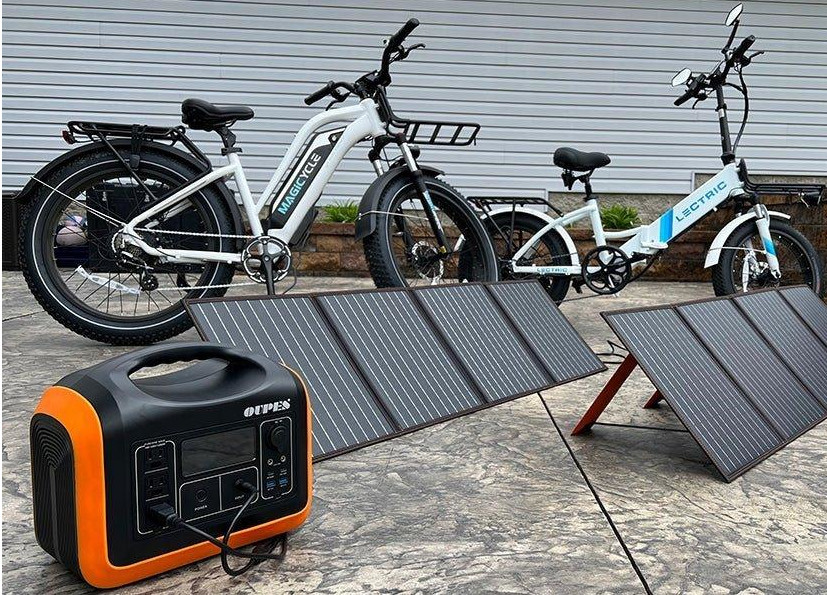

There’s something a bit magical about generating electricity from the sun. By the simple act of the sun coming up every day there is energy just arriving on earth ready for us to convert to usable electricity. The good news is that the solar industry is now big business so that means some pretty cost-effective prices and that the products themselves are more efficient than ever before – meaning it’s easier than ever to get a meaningful amount of energy from a home setup.
I’ve run through what I think are the three main broad approaches home generators might choose to make of all that lovely green energy that’s available just about every day (if you have a large enough panel setup even on dull days you will get some solar energy).
A final note before we dive into a bit more detail; the solar panels I’m talking about here are photovoltaic (PV) panels that generate electricity when the sun’s rays hit a semiconductor in the panel (usually in the form of silicone cells).
The options
On grid
These are the panesl you see Expert installation of solar panels on your house roof which are then wired into the mains system (a so-called ‘grid-tied’ system) can provide large amounts of solar power that comes straight out of your house’s plug sockets (when there is enough light – they don’t need direct sunshine to work but do produce more energy in it).
Solar Battery Storage | A Comprehensive Guide – Atlantic Renewables
Pros
A neat an easy solution that is portable, flexible and generally cost effective. Such a unit
Cons
Powerba
Off grid ‘buy’
https://www.solarwaypoint.com/off-grid-solar-system/
Ecoflow are one of a number of firms that make so-called ‘powerbanks’ (amongst much else).. Whilst these sound like no more than battery packs they are much more; they can be readily charged by solar panels and the biggest capacity ones like the EcoFlow Delta 3 Plus that I tested can power not just e-bike chargers but much more power hungry domestic devices and even smaller power tools.
Pros
A neat an easy solution that is portable, flexible and generally cost effective. Such a unit
Cons
Powerbanks are not modular as DIY systems are; if out of warranty and a component breaks then it cannot simply be swaped out as it can with a DIY system.
Egs Jackery, Growatt, Anker, Bluetti
Off grid ‘build’
Replace individual parts if break ie modular
Can scale up if easier with more batteries and higher Watts potential
Basic Theory for a simple system
How to Design an Off-grid Solar Power Array Wire Configuration – YouTube
Series good for overcast situations so higher voltage better eg 36 x 2 = 72v OCV
How to Connect Different Solar Panels Together – YouTube
Off-Grid Energy Course – YouTube
Pure Sine Wave Vs. Modified Sine Wave Inverter – YouTube
What type / size battery ?
LiFePO4 storage (heavier more durable with ten year quoted life for 3000 cycles) vs 500 cycles of LiIon battery
Eg to charge 750Wh battery…….with efficiency losses around 1000Wh.
In practice – off-grid buy vs off-grid self build
The Anker 767 claims a sizeable 2048Wh and initially I trialled it with a 200W soalr array (4 x 50W panels). 2300watts AC power output…
Test = 14 hours > 40% showing dimplex heater drawing 23W extrapolated to a day or so for total discharge – in 2048 / 23 = 90 hours or 3.75 days – so something not quite right…..maybe recharge to full and try again…..
Solar charge test = 21% start 9.45am – max power in in full sun is 120W…….not 200w….
34% by sundown at 4pm – sometimes showing 160W charging very occasional peak
Egs of spec and prices – ALLPOWERS,
Select solar or other
Low light warning – don’t expect much when it is very overcast but you might be surprised by how much you get on a bright day when there is no direct sun (especially with a good panel so put this section under how to pick a good panel?)
eg1 very low level light on overcast morning Emley system = circa 190W from 4kw panels
and with lighter conditions but still overcast up to 850W