



Indoor cycling is sometimes solely seen as a back-up to outdoor riding in the event of bad weather and dark roads. Old-school road cyclists might even call it a soft option.
While unsuitable conditions outside are a valid reason to jump on the turbo, we should regard indoor cycling more positively.
The quality and precision possible in any length of indoor workout means we should use it to hone our fitness through the season, not just when it’s dark, wet and cold.
To explain why and how, we’ve spoken to Kelly Murphy PhD, former Olympic track cyclist and current coach at Velocity Performance Coaching, Marco Cavallin, sponsorship and product innovation manager at Elite Cycling, and Ric Stern, performance director and senior coach (UK) at Rouvy indoor cycling app.
Quality over quantity
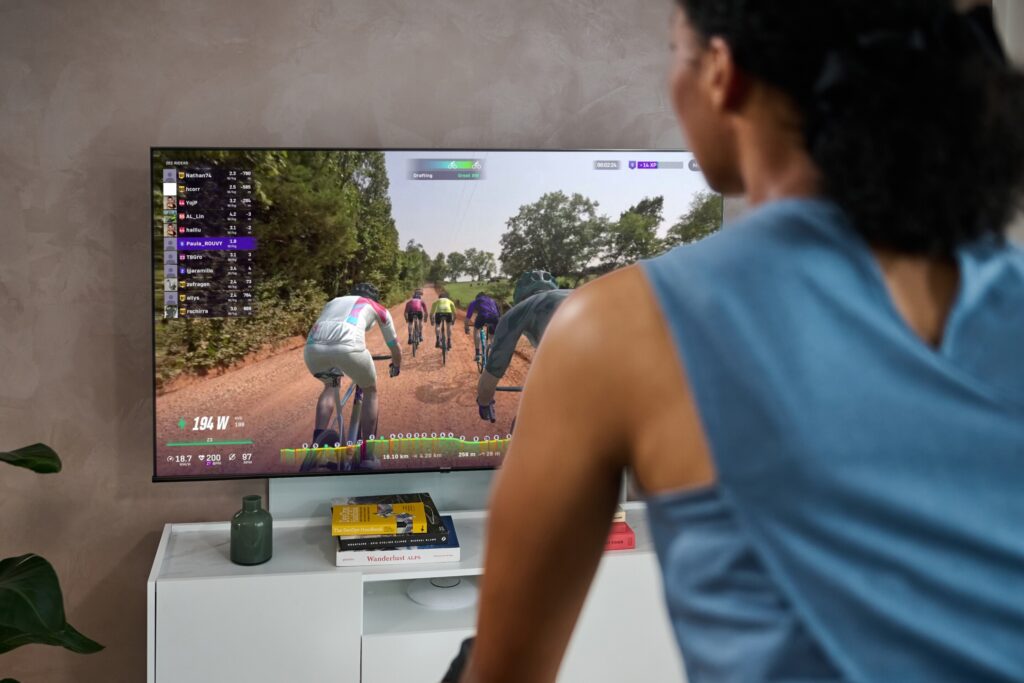
Performance in endurance sport positively correlates with training volume, ie the best cyclists ride the most. But time constraints, which are compounded in winter, pose a conundrum for ambitious amateur cyclists: how can I get fitter if I can’t train more?
The answer is to maximise the time you have available by training indoors. “If we just look at fitness, the point is simple; on the trainer you can get more quality in less time,” says Cavallin.
So why is riding indoors more time-efficient? “Out on the road you constantly have ‘dead time’: traffic lights, roundabouts, long descents where you’re barely pedalling, sitting in the wheels, sections where you have to slow down for cars or safety,” he adds. “Indoors, an hour of training is a full hour of work, with no interruptions.”
Rouvy coach Stern says he spends nearly a third of his outdoors rides coasting at zero watts. Whereas indoors, he says: “Every pedal stroke is productive.”
This is why many coaches consider 60 structured minutes on the turbo as equivalent to the training load of a much longer outdoor ride in terms of Normalized Power and time in target zone.
“A 90-minute indoor session can deliver the same training stimulus as two to three hours outdoors because you’re controlling every variable,” adds Stern. “For time-crunched athletes juggling work and family, which is most of my clients, this efficiency is transformative. You’re not training more, you’re training smarter.”
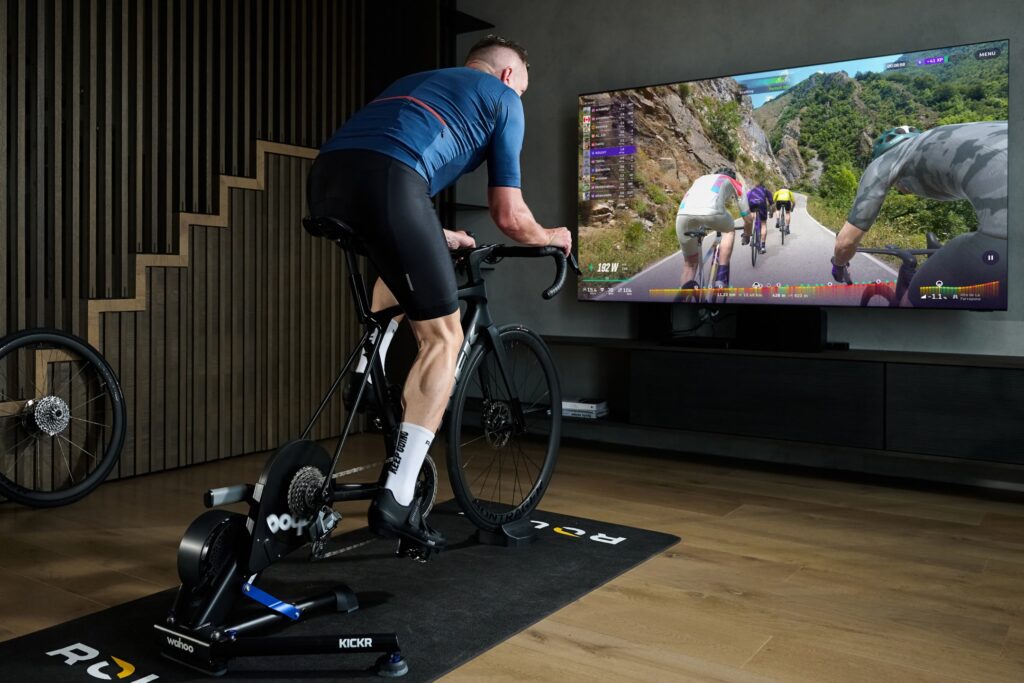
The following example of an endurance turbo session shows how Stern’s indoor-outdoor time conversion stacks up. Indoors, you could spend nearly all of an hour ride at the right intensity stimulating the desired physiological adaptations. On the road, it’s hard to spend more than 70% of the total time in zone 2. So you’d have to ride about 90 minutes for the same benefit, and budget for more pre- and post-ride faff.
Like many coaches Murphy generally favours doing endurance rides on the road, while acknowledging the benefits of ‘clinical’ indoor rides.
She says: “Outdoor endurance rides trump indoor training because the road undulates and where you’ve got reasons to stop and start again you get little bursts of activity. And so your power will weave a little bit more than it would indoors.”
That variation has positives and negatives. “Your overall training load will probably be better indoors,” she adds. “It’s more clinical, more controlled and your pedaling is more consistent, which is great for adapting your nervous system to your pedal strokes. But then also it can be very monotonic.”
As a result, she advises using your outdoor endurance rides to adapt to a variety of cadences and powers. “When you’re working at higher intensities you don’t need to think about it as much,” she says.
Nonetheless, to complete the perfect zone 2 ride, indoors might win out, according to Murphy.
“In terms of just pure fitness you would get better physiological adaptations, I think, by training inside if you could mentally cope with it – it could be dull as hell,” she says.
Thankfully for those of us daunted by longer indoor rides, we have interactive cycling apps to stave off boredom, which Stern calls the “silent killer of consistency”.
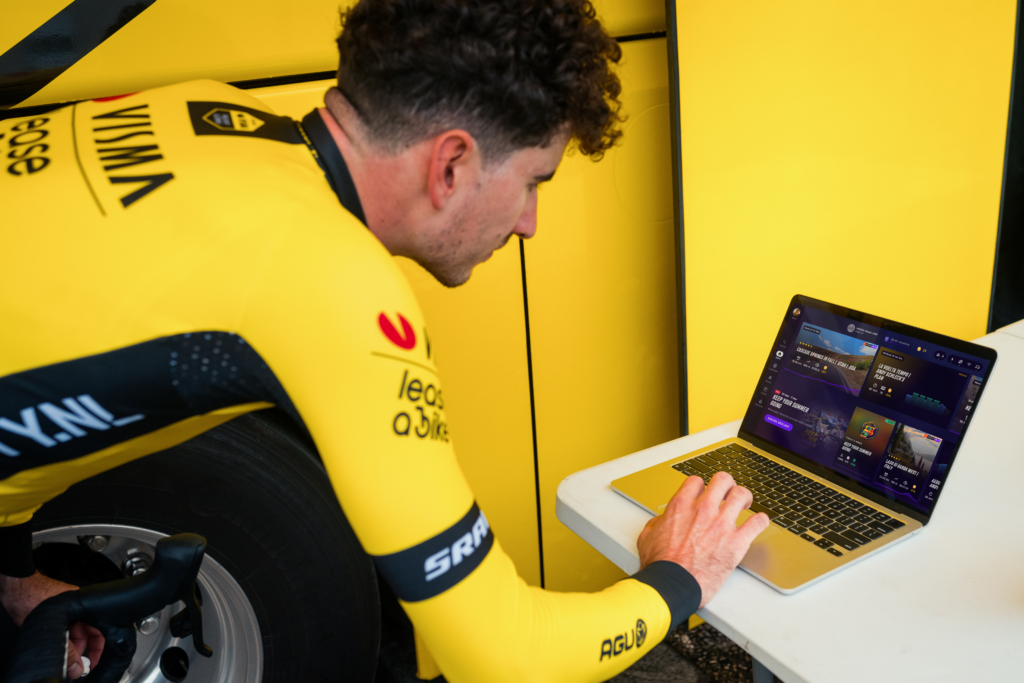
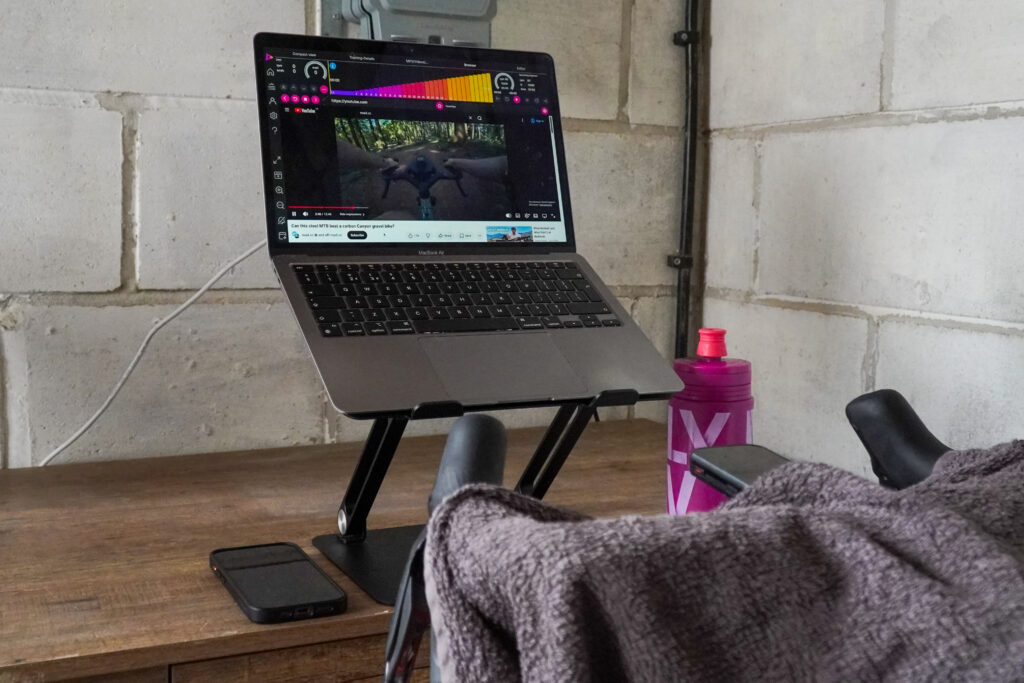
“What Rouvy does brilliantly is provide visual stimulation and route variety that keeps your brain engaged while your body adapts,” he says.
“The augmented reality routes mean you’re not just staring at power numbers. You’re experiencing actual roads you might ride or race on.”
Mental engagement helps you maintain quality intervals for longer by distracting you from the discomfort, argues Stern.
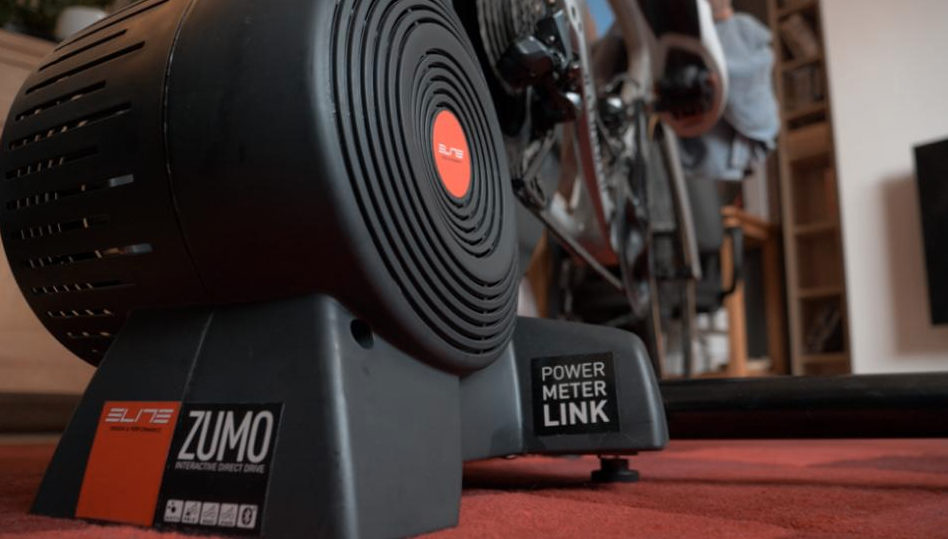
The increasing realism of riding modern turbo trainers (Elite’s top-end trainers can mimic gradients up to 24%) can also keep us interested and productive.
“For me, gradient simulation is the essence of smart trainers,” says Cavallin. “It’s the ‘wow’ factor, the part that simulates reality, makes turbo sessions more fun and gets you much closer to the feeling of a real climb.”
Optimal intervals
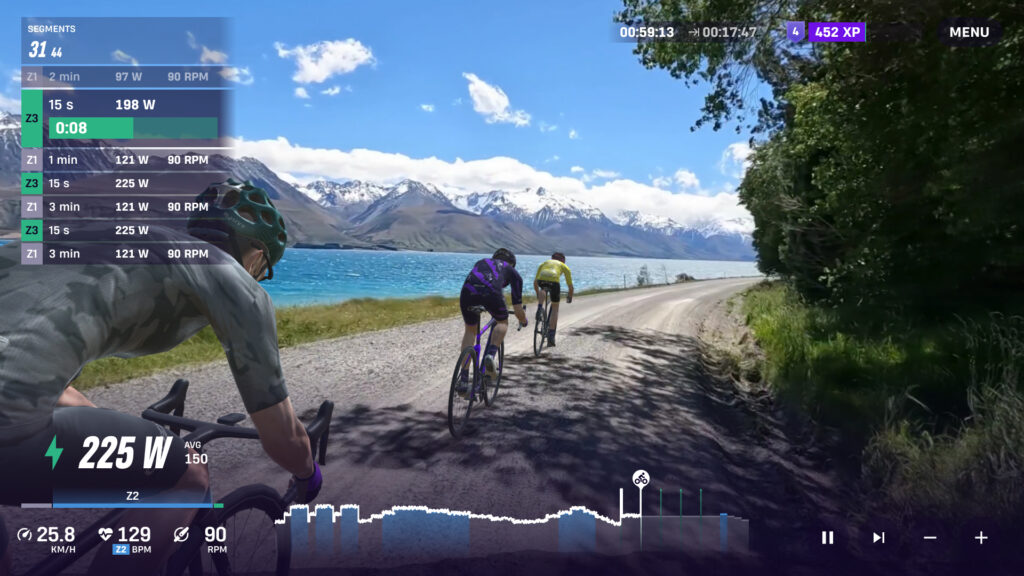
Being in a controlled environment can also help your training be more targeted, which is vital when time is scarce.
“The trainer both removes all the micro-pauses of riding outside – you stop pushing only when you decide to,” says Cavallin. “It makes it easier to do specific work because you’re not dependent on finding the right climb, dealing with junctions, traffic, etc.”
He argues intervals work better on the trainer than on the road. “Indoors you can control them to the watt, with exact recovery times and no external disturbances,” he adds.
And when it comes to hitting the numbers, a smart trainer’s ERG mode provides “quality you don’t get outdoors”, according to Cavallin. ERG mode maintains your power at the target value, automatically adjusts resistance to match cadence changes and works in any gear.
He says: “If you need to do 3×10 minutes at 250W, the trainer holds you right there: you don’t ‘drift’ above because you feel good, and you don’t sag below because you lose focus in the recovery intervals, power actually drops to where it’s supposed to be, without you getting carried away.
“You can focus on pedalling, posture and breathing instead of constantly changing gears to chase the right wattage.”
On the road, Cavallin says the same workout nearly always gets “contaminated” by downhills, junctions and roundabouts that cause a drop in power, or excessively steep climbs that lead to a watt spike.
What’s more, on your road bike you might not have a power meter, or the one you have might not be as accurate as your smart trainer.
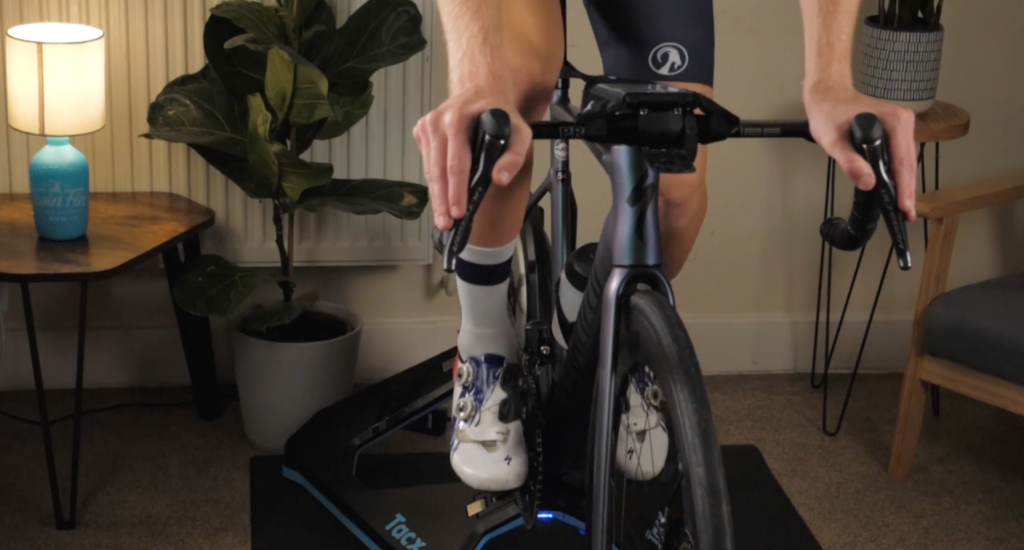
“Without precision, all those beautifully structured, watt-based training plans (and your FTP) rest on a shaky foundation,” says Cavallin.
You don’t always need to be that precise though, as changes to heart rate, oxygen uptake and lactic production occur over a wattage range and not at a single number.
With this in mind, Murphy says simpler intervals such as sweet spot and tempo efforts “are totally appropriate to be outside. And if you’re very even, your VO2 efforts too.”
She adds: “I think the ones for outside are less complex ones, where you’ve got three or four very memorable blocks to do. I wouldn’t want to give anyone anything too complicated.”
On the other hand, the indoor trainer is better for workouts with multiple reps within a block, like pyramid-style intervals. “Remembering what you have to do and looking at the time could take someone’s attention off the road,” adds Murphy.
You don’t need to worry about deriving less fitness benefit from an indoor workout, explains Cavallin.
“There are several studies comparing indoor and outdoor performance that show, at the same power and duration, the physiological responses are very similar: what changes is the environment, not what your body ‘sees’,” he says.
In fact, lower levels of heat dissipation and mental stimulation can make indoor cycling feel physically and mentally harder.
Peak indoors
With all the time available in the world to train, you might think that professional cyclists would rarely touch the turbo outside of the winter off-season.
But Murphy actually frequently used one for specific goals in preparation to represent Ireland in the team pursuit at the 2024 Paris Olympics. “I found indoor training so invaluable for practising my cadence,” she says.
Murphy would turn the huge gears used in team pursuit’s explosive efforts in her aero position. “It’s almost like a different pedaling style and there’s absolutely no way you could train that on the road. It would be too variable,” she adds.
Low-cadence efforts are beneficial for amateurs too (because they build muscular endurance and the ability to grind up steep climbs). Your turbo trainer is the ideal place to start doing them.
The multiple Irish national time-trial champion would also ride more indoors closer to a key event.
“The three weeks preceding an A-Race are really critical. That’s when I switched to the turbo because that’s when you can do your heat sessions, your VO2 sessions and be specific about what you need to do. But you would have ridden enough on the road prior to that,” says Murphy.
You could apply this approach to your training for a big sportive or a century ride. Having ridden outside a lot in the spring to develop endurance, handling skills and a sustainable position, in the peak phase of our training plan, you could maximise the quality of higher intensity intervals by doing them indoors.

In this crunch time of your training plan, it’s crucial to replicate the demands of your course. Unless you live in the mountains, this will be unfeasible on your home roads.
“Specificity is everything in endurance training. If you’re preparing for a hilly sportive or race, riding flat roads, even at the right power, won’t prepare you properly,” says Stern.
Using Rouvy’s route simulations, you could virtually recce your upcoming course’s climbs to learn where gradient changes, where you’ll have to dig in and where you can ease off.
Stern adds: “I’ve had clients use this to recce events like the Etape du Tour or UK sportives without the logistical nightmare of travelling weeks in advance.
“You develop muscle memory for the terrain, psychological familiarity with the challenges, and tactical awareness of pacing strategies.
“When race day comes, you’re not surprised by anything. And that confidence is worth watts.”
Mix it up
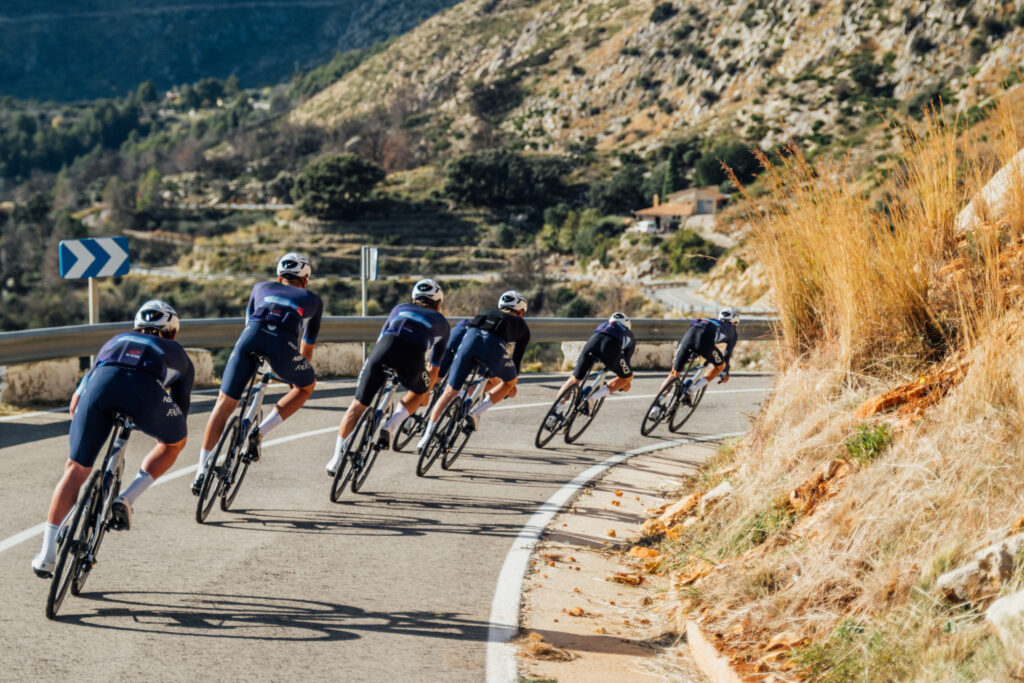
For all the fitness gains indoor cycling can deliver, in a training plan, it’s best combined with outdoor cycling. This keeps things fresh, develops bike handling and maintains specificity – most of our cycling events will be in the real-world.
According to Murphy, the ideal mix is individual. “It depends on who you are and what it is that you enjoy doing, because you have to enjoy riding your bike at the end of the day,” she says. “But I think a blend, especially over the winter, is absolutely the best.”
Elite’s Cavallin agrees while underlining indoor cycling’s unrivalled fitness benefit. “Outdoor riding is irreplaceable,” he says. “But if we’re talking about the engine – pure fitness and conditioning – winter training on the turbo trainer, especially with a well-used smart trainer, is anything but a compromise: it’s one of the most effective ways to build form.”
And whether we mainly train in your warm house or on the wet, cold roads, we’re lucky to have the options we do today.
“I think there’s never been a better time to be a cyclist. We have so many luxuries that make training so accessible and easy for us,” concludes Murphy.






8 thoughts on “Indoor cycling is a fitness hack, not a soft option”
Totally agree. A turbo is
Totally agree. A turbo is often much better than the road for interval training. If you want a really tough workout, try one of the criteriums races on Zwift. Time trials and road races also available.
Being able to train indoors
Being able to train indoors on day like today (50-70 mph winds) is marvelous. Being able to do structured workouts is a real boon but Zwift, Rouvy et al, no thank you, they just remind me of what I’m missing – the outside with the breeze in what’s left of my hair. I use Trainerroad and catch up telly, a good workout and the programs I actually want to see.
DO NOT CALL IT CYCLING! It
DO NOT CALL IT CYCLING! It might be great for fitness, blah blah blah, but it is NOT actual cycling.
Cycling noun
Cycling noun
1. The act of riding a bicycle [check]
2. going through a repeated process or causing (something) to go through a repeated process [such as rotating a pair of pedals – check]
So, yes – it is cycling.
mdavidford wrote:
I’m no expert but as far as I can tell indoor trainers only have the front wheel so not a BIcycle. I would suggest the term indoor cycling. I was going to suggest spinning but apparently that is different again.
https://www.cyclingnews.com/features/indoor-cycling-vs-spinning/
Daveyraveygravey wrote:
Cycling is riding a bicycle (or tricycle or handcycle etc). The activities described above involve riding a stationary bicycle. Ergo they are cycling. Cycling is a very broad church covering everything from the Tour de France to a toddler pushing their balance bike around the back yard, why do you want to be exclusionary?
Personally I like to say that
Personally I like to say that I drive my bike.
Drive: verb
If something drives a machine, it supplies the power that makes it work.
Is it cycling – pointless
Is it cycling – pointless argument.
Fitness hack?
Idiotic use of language.