


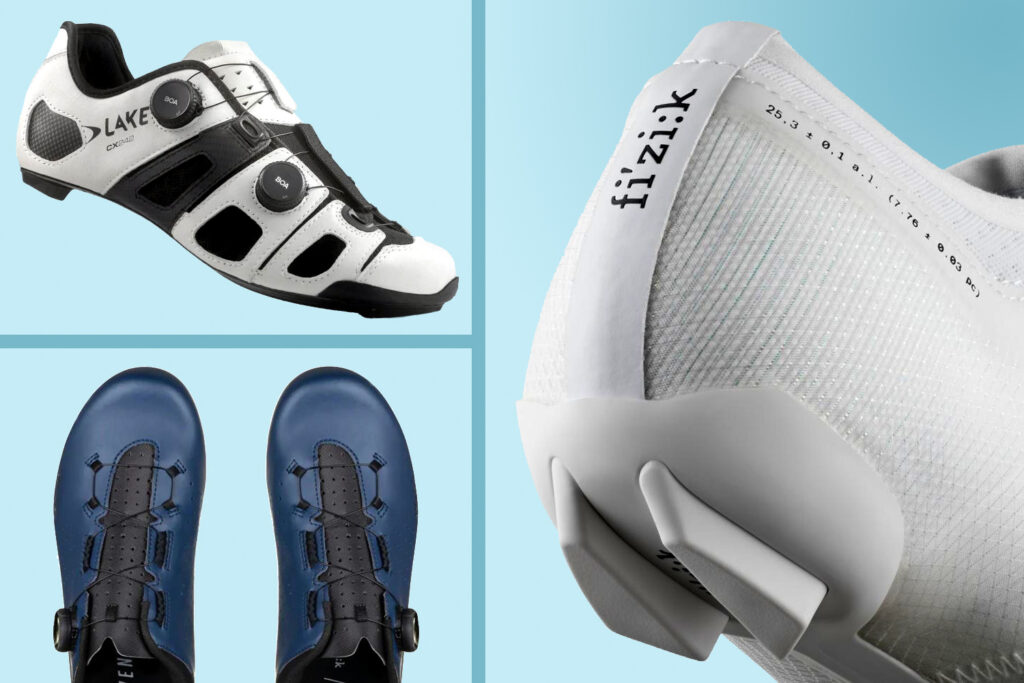

Getting cycling shoes that fit properly can be exasperating for riders with wide feet, but we’ve got some great news: there’s always a solution. No matter how wide or unusually shaped your feet are, you can get the comfort you’re looking for. We’ve spoken to bike shoe brands, leading bike fitting service CycleFit, and even The Bunion Doctor to find out everything you need to know.

Getting the right cycling shoes is vital to your comfort on the bike – that’s obvious. And comfort and performance are inextricably linked; you can’t perform at your best if you have a nagging pain in your feet, especially if it gets worse when you crank up the power. What is surprising is the number of us who are using inappropriate shoes.
“At least 50% of folk are riding around in shoes that are the wrong size, shape or style,” says Phil Cavell, co-founder of CycleFit, the London-based bike fitting and custom bike company. “Foot pain is the one thing you can’t ride around.
“Every shoe manufacturer has a philosophy that they express in their shoe last – a three-dimensional model that best mimics the shape of the cyclist’s foot. But there are many different foot types, so inevitably, not all shoes will suit every foot.
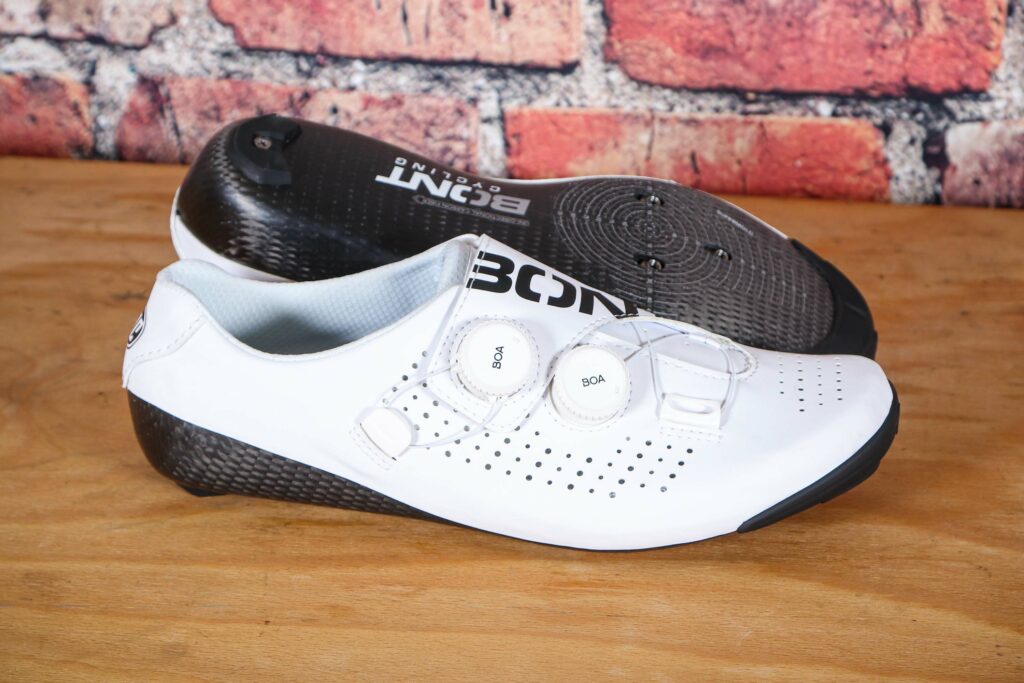
“For example, Fizik used to use a quite exaggerated offset from the heel to the toe-box, that suited a particular foot-type (met-adductus or ’banana-foot’), whereas both Specialized and Bont [pictured above] make a feature of a straight last shape. If you put a foot into the opposing last, the result will be pain and loss of performance.”
That’s the crux of the matter. You need shoes that work with the shape of your feet, and that’s especially difficult if your feet are wide, high volume, or unusually shaped, such as if you have a bunion. If you have feet like these, you might well experience foot pain. It’s the number one type of pain that causes people to call on the services of CycleFit.
“The most common foot pain or discomfort that people present with is lateral pain on the outside of the foot – the fifth metatarsal,” says Phil Cavell. “A big cluster of foot types, if they’re not treated appropriately, will present with that pain.
“But you can also get numbness across the metatarsals, you can get a burning sensation between the first and the fourth metatarsal. That could be something called a Morton’s neuroma.”
This is a damaged and enlarged nerve leading to your toes, which causes a sharp, burning pain in the ball of your foot.
Is any of this sounding familiar to you?
“You get other clusters of issues, but essentially, we’re looking at loading problems, and sometimes it’s just because the shoes are constricting,” says Phil Cavell. “Sometimes it’s because the shoe isn’t tight enough on the heel, and the foot just comes forward in the shoe, or it’s not holding the foot appropriately, so the foot’s just moving in the shoe, and that’s causing problems.”
Different issues have different causes, but the bottom line is that you need shoes that are appropriate for your feet. Whatever the exact scenario, riding in the wrong shoes is bad news, so what can you do? One thing Phil Cavell suggests is a simple task you can do at home.
“Get a pencil and a piece of paper and just draw around both feet,” he says. “You’ll see that they’re probably not quite symmetrical in one way or another. Then just look at the shape of the foot and look at the shoes you’re interested in. Does that shoe resemble your foot in any way? And if it doesn’t, it probably isn’t going to work long term, because what you want is all of your foot contact – the front of the foot – on the sole of the shoe.
“What we often see is someone coming to Cyclefit with a wide foot, narrow shoe, and most of the first metatarsal and all the fifth metatarsal are off the sole of the shoe. Okay, so you’re now pedalling on three and a half metatarsals, and that’s why you’ve got a problem. And notwithstanding, there are other issues with the shoe being too tight.”
Last orders
As mentioned, not all shoes will be right for your foot type. You might have your heart set on a particular model and colour, but the last might not be suitable for you. Sorry. If you want comfort and performance, you need to be guided by fit.
Lake, for example, has some of its professional riders using its mid-range 2 Series shoes rather than the top-of-the-range 4 Series shoes you might expect them to wear, simply because the fit is wider.
Whenever we talk about wide feet on road.cc, you can guarantee that readers will steam into the comments and extol the virtues of Lake shoes, so we contacted the brand for this feature. Let’s take a second to talk you through the various Lake fits.
“Our shoes are 1 Series to 4 Series,” says Lake director Richard Williams. “The 1 Series shoe is a Sport last that we do in regular and wide fit. Our regular and wide are wider than everyone else’s already, and they’ve got more volume [we’ll come back to volume in a bit]. The 2 Series comes in regular and wide too.
“When you get to the 3 Series shoes – the higher-end – it’s a different last. It’s called a Race last, and it’s got three widths, and the narrow is probably as close to a Shimano or a Sidi as any other shoe.
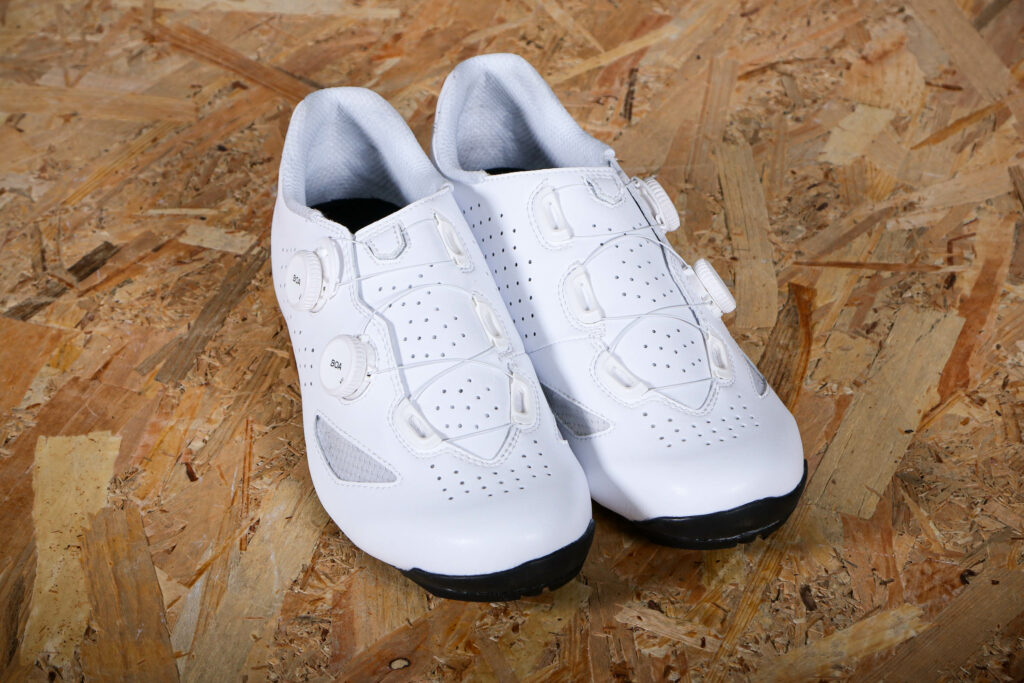
“The idea is that we’ve got shoes for everyone. Our most successful is the 2 Series. It’s called the 239 now [the model number goes up with every release]. We launched it at Rouleur Live [in November 2024], and it’s been really successful. It’s a higher volume shoe, and it’s wider, and many people need that.”
Let’s hop over to Fizik. You might think of Fizik shoes as being narrow, but brand manager Alex Locatelli says that perception is out of date.
“Fizik is an Italian brand, and at the beginning, the fit of the shoes was traditional and very narrow. But the fit has changed, and even the current standard versions of our shoes are completely different – definitely wider.
“Nevertheless, five years ago, we introduced the first wide shoe from Fizik. It was a mid-range road shoe. And now, year after year, we are increasing the offer that we have in wide fits from the premium shoes to the entry level, and most recently, even off-road.
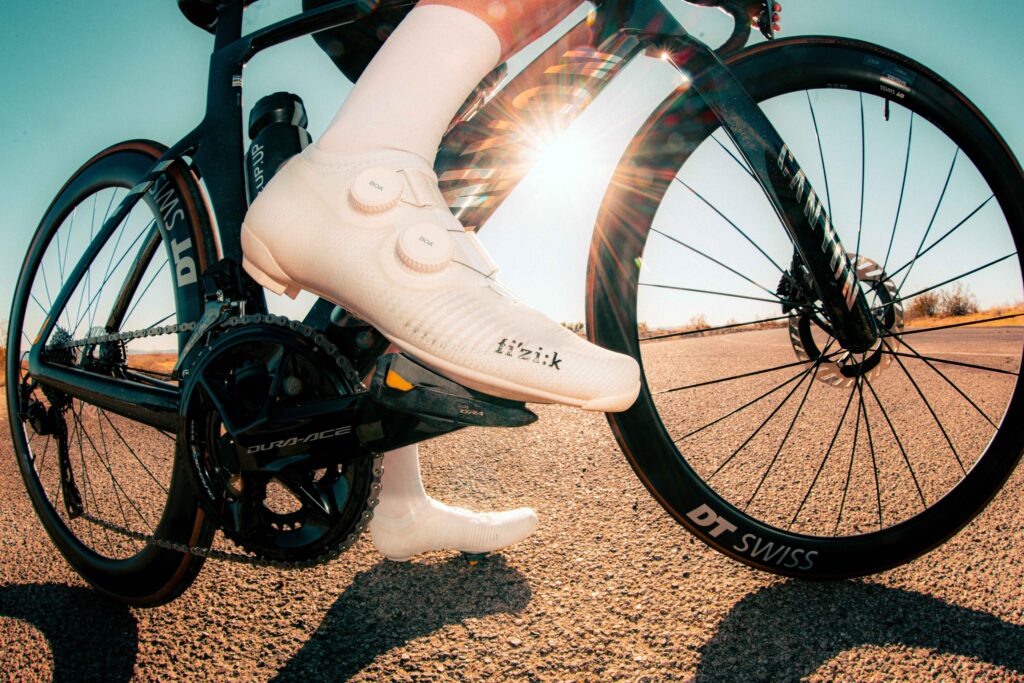
“Additionally, this year, we have launched a premium road shoe called Vega. It has a different last compared to our standard one. It is wider at the toebox. The comfort that you get on a wider, more open toebox, and the axis of the outsole – straighter and less like a banana shape – completely changes the perception of the shoe.”
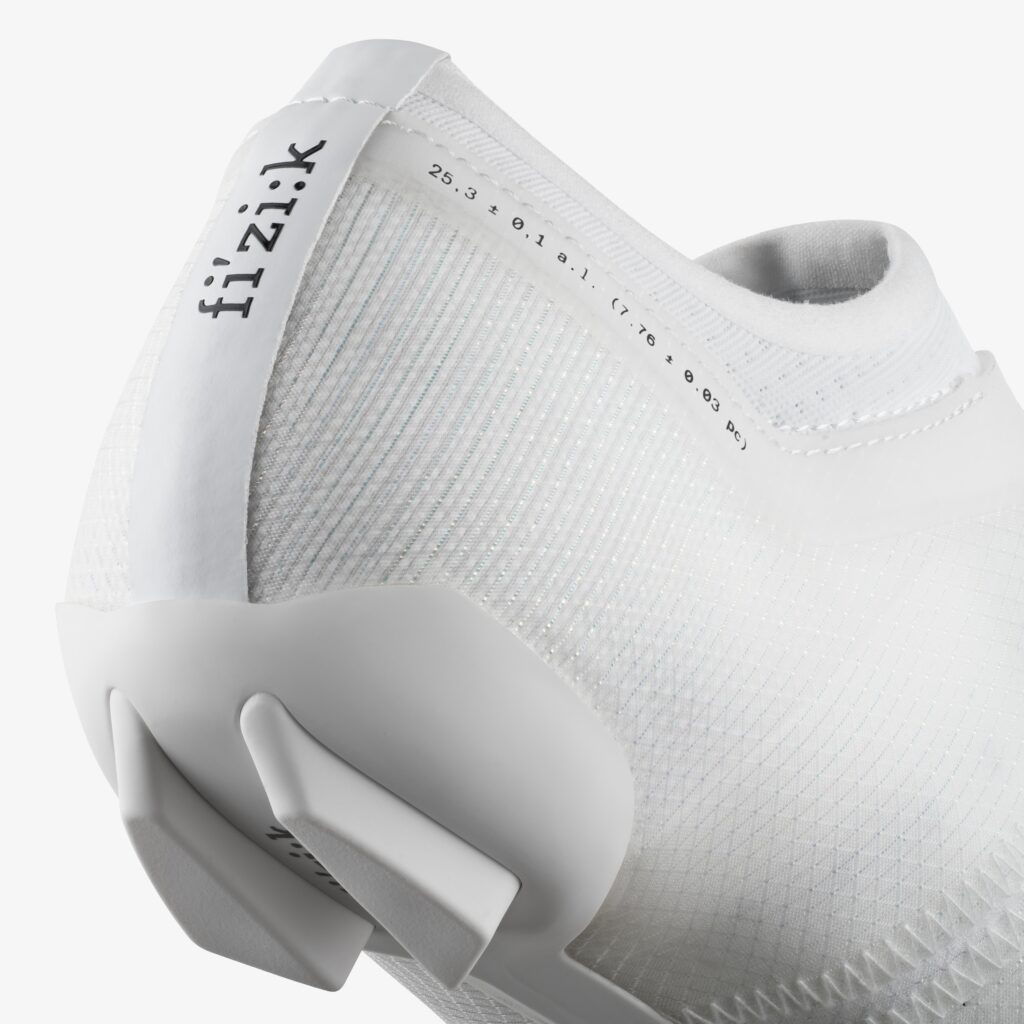
The point is simply that different lasts suit different people, and it’s worth putting in the legwork to find out what’s right for you.
Wider versus higher volume: what’s the difference?
That brings up an interesting issue: what’s the difference between a wide fit and a higher volume shoe? Essentially, width is the crossways measurement, and higher volume relates to the circumference of the last. They’re two different – but related – things. A high-volume foot is deep or tall, meaning it takes up a greater amount of vertical space in a shoe. You could have high-volume feet that aren’t wide, feet that are wide but not particularly high volume, or they could be both.
Let’s go back to Lake’s Richard Williams.
“In our 2 Series shoe, the sole [used for the regular and wide fits] stays the same, but the upper gets wider because it’s such a wide sole anyway. In the 3 Series shoe, the sole gets wider, and the volume gets larger.
“If you’ve got a high volume foot and a wide foot, look at a Lake 2 Series shoe in a wide, or a 3 Series shoe in a wide, not a regular.

“The best shoes for really wide, high-volume feet are the 239 and 242. The 242 is the one that we designed with bike fitters for abnormally shaped feet, for any tenderness, any problems. We call that shoe the ultimate solution.”
Separated panels in the different regions of the upper are designed for fine-tuning the fit, the idea being to relieve pressure from any sensitive or painful areas.
Fizik’s Alex Locatelli says, “Some brands just use the same outsole on a wider last, so the shoe is wider in the upper material, but you lack support from the bottom.

“All our [wide fit] Fizik shoes have a wide outsole specifically designed for that shoe because we want to provide the same amount of performance as the standard version of the shoe. A wide outsole helps us make the shoe wider.
“In general, the wide last is about six or seven millimetres wider on all sizes, and the volume is much bigger, especially in the toebox area. For example, in size 42, the perimeter is 30mm bigger than the standard one.”
What foot width is considered wide?
Foot width can be given as a letter – so you might be told at a shoe shop that you need a 44D shoe, for example – but that’s not something that’s commonly communicated in the cycling world. You’ll usually just be given the number, and occasionally the choice of a standard or wide fit.

Pic: Ser Amantio di Nicolao, CC BY-SA 4.0, via Wikimedia Commons
It can be difficult to find width information for cycling shoes, although brands like Lake and Bont put that information (in millimetres) online, along with instructions for measuring your feet at home. That said, everyone we spoke to for this feature suggested that going to an experienced dealer is a better bet.
Wide forefoot, narrow ankle: what now?
Just when you think you’re getting across this whole wide-fitting shoes thing, it becomes more complicated. For a start, having a broad forefoot doesn’t mean that your foot is wide elsewhere. It’s not necessarily uniform.
Fizik’s Alex Locatelli says, “Probably more than 90% of cyclists who have wide feet don’t have wide heels, so the heel construction in our wide shoes is very similar to the standard last. It’s not wider, because it’s important to have the heel [of the shoe] stuck on your feet. Otherwise, you might feel the shoe coming off, especially when you’re pushing or pedalling out of the saddle. Also, if you engage on your heel, the compression that you have, the stability that you have on the pedal, is much nicer.”
Another option is to go for mouldable shoes from the likes of Lake and Bont.

“Some people might have a high-volume foot, a wide foot, but a narrow ankle, especially women, and that is why we use the heat moulding in the Lake 2 Series and the 3 Series,” says Richard Williams. “The moulding with these is around the Achilles to grip the heel. The process is quite simple. It’s just a normal oven. You put it in, and then just work from there.
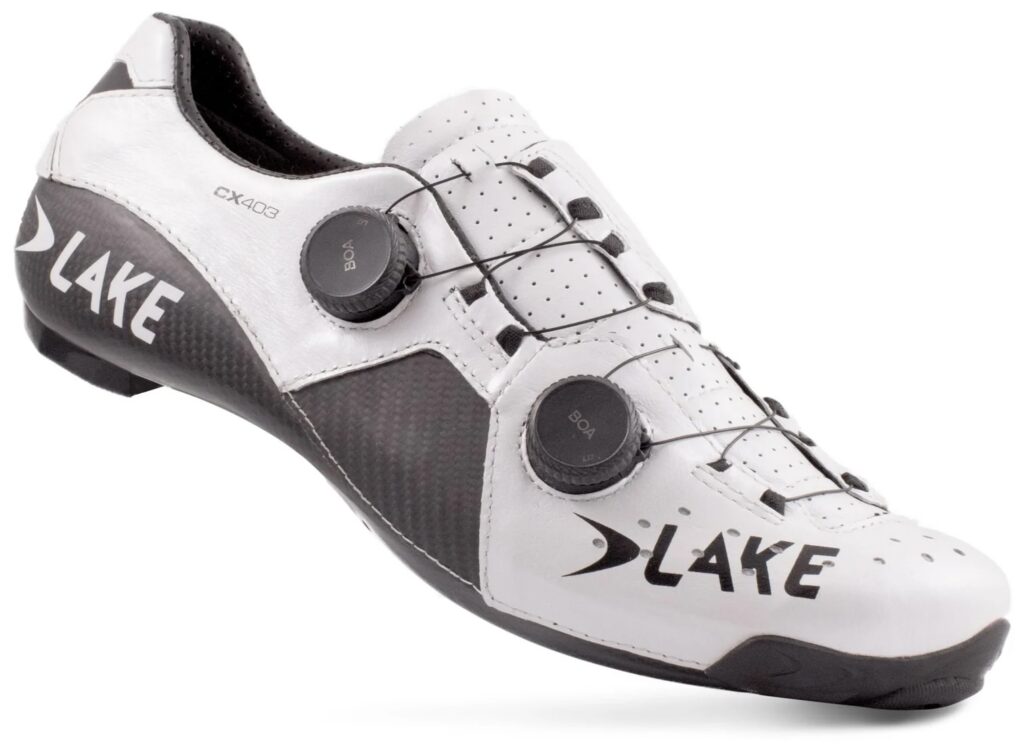
“With the 4 Series, you’re moulding all the way around the ankle and the whole of the heel cup. The moulding does need training. It is only bike fitters that offer this level of fit, because if you cook it too long, it’s a lot of money to throw away.”
…and another thing
Another complication is that your feet might not be the same size as one another. We all have slight differences between our two feet, but what if they’re different shoe sizes?
“If you’ve got one foot that’s a 44.5 and one that’s a 44, don’t get 44 shoes because the foot that’s a 44.5 is going to be uncomfortable,” says Phil Cavell. “Never size down with a cycling shoe.”
Even if your feet are the same size, you might be tempted to go up a shoe size to get a comfortable width, but that goes back to our earlier comments about choosing a shoe that’s made around a last that’s right for you. It might take a bit of doing, but you’re better off finding the right shoe shape first.
Lake’s Richard Williams says, “People go to bigger sizes in our competitors’ shoes so they can get the width and volume of their feet into the shoe. The problems this causes are that the cleat position is in the wrong place, the power transfer is in the wrong place, and they’re not as comfortable. This is why we’ve got all these lasts with different fits.”
An element of personal preference comes into it, too.
Alex Locatelli says, “Every one of us is different in what we are looking for. Maybe I like a very compressed shoe because I want to feel it more, especially when I am going to push on the pedals. Others want more room to move their toes, even if their foot shape is very similar to mine, so in the long run they feel much better.”
Changes over time
If all that’s not enough, one final issue to bear in mind is that your foot shape and size might well alter over your adult life.
“Your foot tends to change over time – life, gravity, injury, etc,” says CycleFit’s Phil Cavell. “The foot tends to get longer, the arch tends to get lower.
“The foot takes a lot of load. There are 28 bones in the foot, and they’re always under load and so there are compensations that go on all through our life. If your mum or dad’s got a bunion, you’ll probably get a bunion.
“Your perfect shoe may also change. It’s not easy. I used to ride Shimano S-Phyres until they suddenly started to provoke agonising pain on the outside of my foot.”
So what’s the answer?
Okay, getting the right shoes can be complicated, so what should you do? This is something that everyone we’ve spoken to for this article agrees on: go to a dealer and get your feet measured. Granted, a lot of brands have instructions online for measuring your feet, but they all encourage you to go into a store or see a fitter where possible.
Lake’s Richard Williams says, “The first thing we would say regarding shoes is: get measured up, like when we were younger and we’d go to Clarks. It’s exactly the same process. We’ve got a sizing tool. We measure you up – length and width – and find a shoe that fits.”
“We have an online presence, and people like buying from the brand, but as a company, we encourage you to go and get yourself measured. You’re making an investment – shoes aren’t cheap – so surely you’ve got time to go to a store and get measured up. It takes 10 minutes.”
Fizik’s Alex Locatelli agrees.
“We have a size chart and yes, it’s an indication, but eventually you might go to a dealer and feel the shoe. That’s what I like, to be honest, because when you have the perception of having something on your feet, you better understand your needs, especially if you have extremely wide feet. I recommend going to a dealer that can support and help the customer to choose the right fit and give advice, especially if they are newbies and they don’t have experience with how a cycling shoe should feel.
“If you want to invest a little bit more, go to a bike fitter with your bicycle. They will adjust your position and the cleat on the shoe, and can also recommend a good fit. There are also ways to measure the pressure that you generate on the shoe. We use the gebioMized system, where you can measure the pressure on the saddle, and there are also sensors on insoles that you place inside the shoe, so we can see what happens when you are pedalling, in a more dynamic way.”
And now for some good news
We know that some of you wide-footed riders are at your wits’ end when it comes to finding comfortable cycling shoes. You tell us about your frustrations whenever we mention the subject, and we feel your pain, but we’ll leave the final word to CycleFit’s Phil Cavell.

We asked him whether there’s always a solution to foot pain on the bike.
“Yes, always. Absolutely always. I can’t remember a time in 25 years where we’ve given up with somebody in terms of foot pain. That’s just never happened. Some problems are harder than others, but they’re always solvable.”
Check out Phil Cavell’s wisdom via his Cycling Substack.
Dealing with bunions…
A bunion is a very particular problem that affects comfort and shoe fit, so we asked David Gordon, aka The Bunion Doctor, about how it might affect your cycling. David is a keen cyclist himself and here’s what he told us.

Pic: Lamiot, CC BY-SA 4.0, via Wikimedia Commons
Could poorly fitting cycling shoes cause bunions?
No, cycling shoes won’t in themselves cause bunions, but they certainly will make an existing bunion worse. Cycling shoes tend to be on the narrow side because a tight fit may improve power transfer to the pedal as it ensures there is minimal movement of the foot in the shoe which would otherwise transfer as downward force onto the pedal.
Might a bunion require a wide-fitting cycling shoe?
Absolutely! I’ve treated many cyclists with bunions, both non-surgically as well as surgically, and some do go to extremes. For example, cutting a circular hole out of the shoe where the bunion resides.
Rather than butcher a nice-looking shoe, far better to get a wide fit, and there are certain makes that do this.

Pic: Malmstajn, CC BY 3.0, via Wikimedia Commons
What physical impact will a bunion have on feet?
A bunion alters the biomechanics of the foot, and given that biomechanics are integral to cycling efficiency, this can have a detrimental effect on a cyclist.
Power transfer from the foot to the pedal spindle occurs under the forefoot, and the first metatarsal is the predominant driver for this in a normal foot. With a bunion, the metatarsal moves medially (toward the bottom bracket). Therefore, power transfer moves laterally to the second and third metatarsal head area, which is less efficient and could cause pain.
The intrinsic foot muscles change their vectors due to splaying of the foot, making them less efficient and potentially causing pain, and the flexor tendon moves laterally, angulating the big toe and reducing the efficiency of this muscle.
An expert bike fit considering cleat position and shoe type is essential for someone with a bunion, and this would need to be undertaken on a one to two-year basis as bunions are progressive and the foot shape will change over time.

For more info, head over to www.thebuniondoctor.com.










11 thoughts on “Finding the right cycling shoes for your wide feet”
Be aware that AFAIK, Lake
I was going to comment about Lake having a multitude of lasts, but that’s covered – the problem with most cycles shops is they only sell brands x, y and z. Is there such a thing as a dedicated shoe fitter in cycling?
Oh – final point – the other thing is cleat placement. Following my bike fit, I was advised to instal cleat plates on my Lakes to move the cleat back. Most shoes have the cleat too far forward, apparently – and this is another reason for not sizing up to get more width
SecretSam wrote:
CycleFit in London offer a new Shoe Fitting service (£40 for a 60-minute consultation).
Albeit not cheap, Mick Habgood is a podiatrist who focuses solely on cycling, with Grand Tour and Olympic experience. You can book a consultation with Mick via CycleFit.
Are there other podiatrists in the UK who specialise in cycling? The London Podiatry Centre offers a cycling-specific foot analysis, but I’ve no firsthand experience of them.
Finally, a comprehensive
Finally, a comprehensive article on cycling shoes and foot health that’s more than just, “Heres a list of awesome(ly expensive) bike shoes that will destroy your feet”!
An issue in the bicycle industry is that cyclist, including myself, think that if a shoe doesn’t fit like a vice on your foot, it’s no good. That, and we’ve all been indoctrinated to believe that a cycling shoe shaped like a men’s dress shoe is attractive, even if that is a horrible shape for a human foot (i.e., pointy toed shoes destroy your feet.) Thus, people intentially buy shoes that will harm their feet over time and scoff and shoes that are actually shaped correctly.
What frustrates me to no end is that none of the shoes shown in the article are actually good for one’s foot if you actually have wide feet (including the Fizik Vegas). The problem is that 99.9% of bicycle shoes are wide across the ball of the foot, but then taper severely into a pointy toe area, which is done for the sake of style and NOT foot health. One’s big toe should be allowed to point straight forward, not be forced inward as nearly all cycling shoes do. Look at the picture of the foot with the bunion and notice that the big toe is permanantly pushed inward… just like what happens in your cycling shoe, not only to the big toe, but also the small toe on the outside of the foot. Is it any wonder that women usually have more issues with bunions than men? That’s because women wear high healed shoes that have pointy toes that force the toes into an unnatural position.
The only wide road shoes I’m aware of that actually promote a healthy foot because they actually have properly shaped toe areas is the Lake CX201 and the Leviathan by Strong Feet Athletics in Colorado. I currently wear the Lake’s 242 shoes, but the toe area is way too narrow despite the rest of the show being wonderfully wide and adjustable. I hope someday Lake corrects the last on these shoes and makes it so the shoe doesn’t force the big and small toes into a point under the narrow toe-cap for the sake of style. I also own the Lake CX201s and the toe area is wonderfully wide, but they are definitely a high-volume shoe, which doesn’t work so well for me.
How can you easily tell if a wide shoe is actually wide? Look for photos of the shoe from a top-down photo. If the shoe comes to a point in the middle of the foot (point is where your middle toe would be) in the toe area, it’s going to cause toe issues. Look at the shape of walking shoes like Altra, Xero, or Vivibarefoot and you’ll see how shoes SHOULD be shaped if you don’t want to ruin your feet.
End rant.
Absolutely agree.
I have had to give up cycling shoes, and now a cycle with my wide running shoes on flat pedals, which I’m used to for my mtb anyway.
My wide feet were destroyed by cycling shoes. Could hardly do everyday walking without pain. I kept getting corns. All now solved without cycling shoes.
I would like to just find some nice wide trainers that have spd clips.
Can’t find any.
My issue with Lake is their
My issue with Lake is their size consistency, I currently own 4 pairs of Lake shoes but have previously owned a further 3. All of them different sizes to get the right fit. And before you say it, they were all the Series 2 last, infact of the 4 pairs I own they’re 3x 237s and 1x 238s and they all fit differently.
I’m lucky enough to be
I’m lucky enough to be currently working with CycleFit and having custom orthotics made for me. I have the opposite problem to this article: very long, very narrow (48B), and off-the-scale flat feet (hence needing the orthotics – the Sidas innersoles are very insufficient). Because they’re also very straight, all the banana shoes are out. Not many brands even bother to make a 48 and if they do they’re sometimes in limited colours.
I really really wish all the shoe reviews on road.cc would report what size ranges are available, including widths.
I have [imperial] 8.5h feet.
I have [imperial] 8.5h feet.
It is a bloody nightmare trying to get cycling shoes to fit, as while there seems to be a direct metric length equivalent, there seems to be no direct width equivalent.
It doesn’t help that my local cycling shops only stock a few sizes – none of which are wide – and the local Decathlon is the same. (Get any size of running shoe or walking boot, but maybe 2 sizes of cycling shoes.)
The ‘last’ section doesn’t
The ‘last’ section doesn’t talk about toe spring, flat v curved, etc. All of which impact the fit and feel.
https://www.strongfeetathletics.com/ with their Leviathan shoe is something refreshingly different. No toe spring, non-curved last, proper wide toebox, etc. I’m trying to find myself an excuse to buy a pair of these to try.
FYI, I’m currently on Bont double wide, widest I’ve found on the market, with a non-curved last…. but a tad $$$$ as they are special order only. Also, a little Spanish company call ‘Luck’ do extra wide and extra volume shoes. Small brand so never seen in mainstream articles.
I bought a pair of the
I bought a pair of the Leviathans, they are massively wide compared to anything else I’ve tried, and completely flat footbed. I can now ride all day, and not have any foot pain. Definitely transformed my riding.
Which model Bont shoes
Which model Bont shoes specifically do you own? I didn’t know there was a “double wide” available.
Thanks for this.
Thanks for this.
Wondering if the team are closet ‘Barefoot’ footwear users?
It’s all I wear on my feet most of the time these days 🙂. My specialist footwear isn’t available to me yet, eg winter mountaineering with crampons, hard-rock climbing (there is a shoe available recently in Europe) and my road cycling shoes…
Nice to see cycling making some progress 👍🏻