


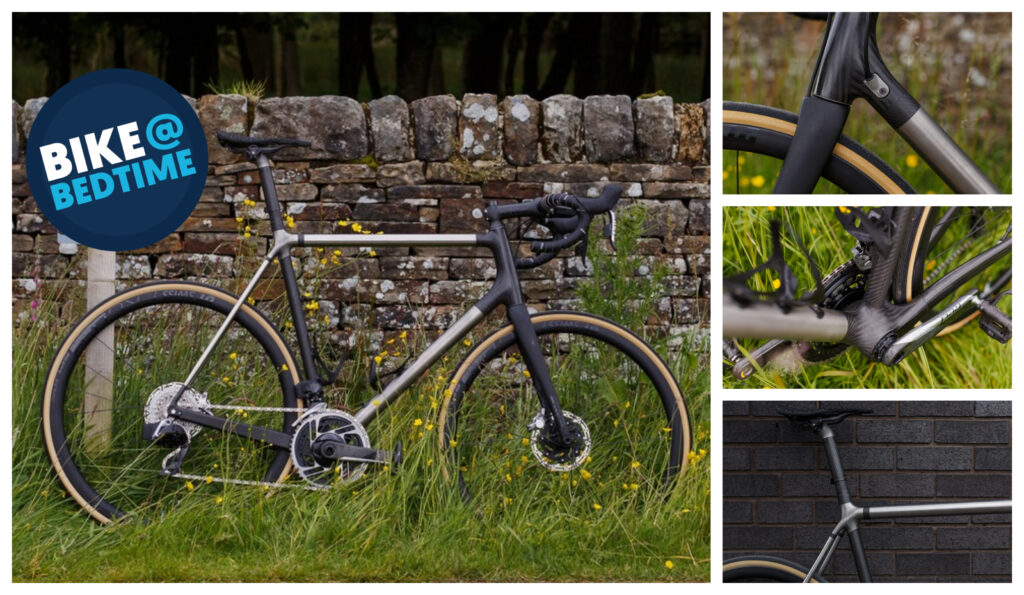

In a cycling world that’s packed with identikit carbon-fibre frames, Sheffield’s Field Cycles has a new road bike on the way that stands out, made using bonded carbon, titanium, stainless steel, and printed titanium.
Company founder and CEO Harry Harrison says, “Field is here for something different: designed, engineered, and made in the UK. Properly.”
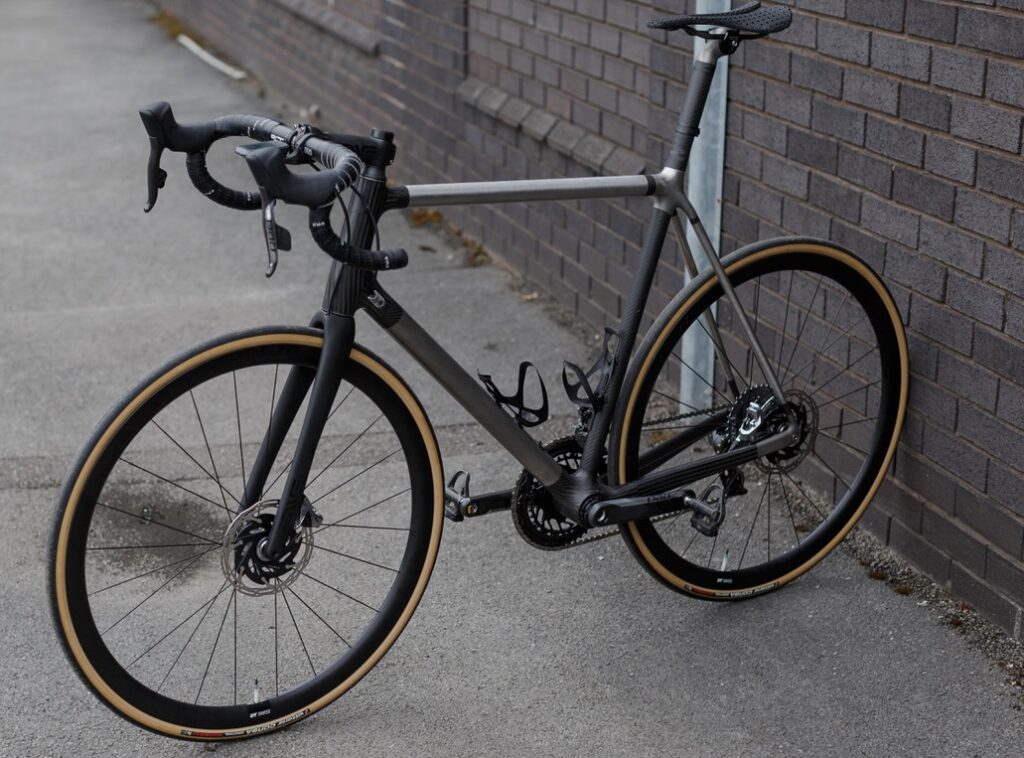
Field Cycles builds custom frames in Sheffield – exclusively from steel to begin with, and then more recently using other metals and composite materials like carbon fibre.
“Field is heading in a new direction,” says Harry. “It’s still very much grounded in the same principles – attention to detail, proper engineering, furthering the craft of frame building and a lot of hands-on time — but with a new kind of frame joinery that brings together high-value materials and UK-based manufacturing in a way I don’t think anyone else is doing in the bike industry.”
This new prototype frame, with a release planned for 2026, uses carbon, stainless steel, and titanium – both tubing and printed.
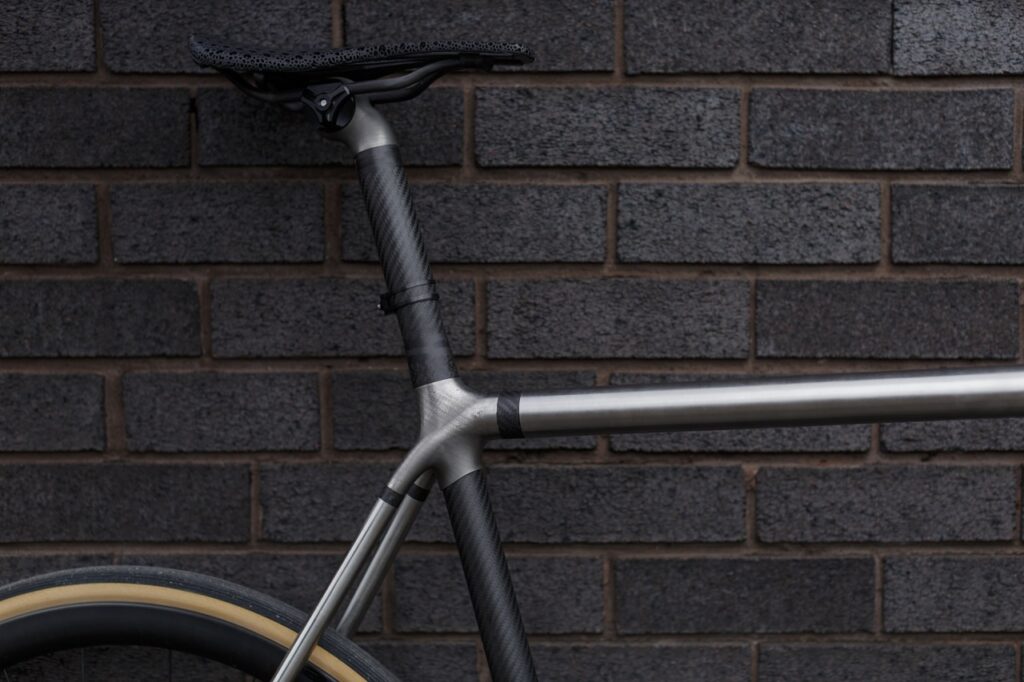
“The construction method is about putting the right material in the right place, and making sure each part is doing exactly what it should — structurally, visually, and in terms of ride feel,” says Harry.
“I’ve personally built hundreds of steel frames by hand, one at a time. Well over 10,000 hours invested in my craft. That time at the bench has shaped how I think about detail, proportion, and how things should come together — and it’s something I’ve carried over into this new design. The transitions between carbon and metal are smooth, deliberate, and refined. No clumsy overlaps, steps or ‘add-on’ lugs. Everything meets cleanly and is properly resolved.
“A lot of the new modular bonded frames look unresolved to my eye. There’s often plenty of engineering, but no feel. No sense that someone thought about how the materials actually want to meet. This prototype challenges that.”
It’s the use of various materials that intrigues us.
“Different materials behave differently,” says Harry. “Each one has its place — and when you use them where they work best, you get a frame that doesn’t just ride lighter or stiffer, but is alive. It delivers a ride quality you’d struggle to find in any one material alone.”
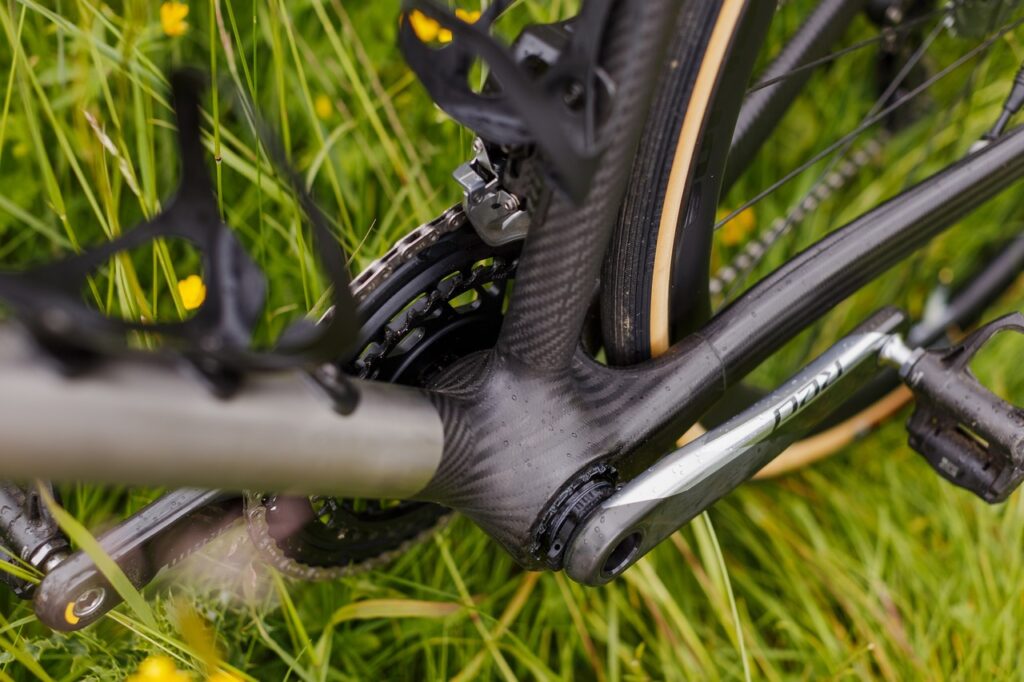
Carbon is used to provide stiffness and efficiency in the chainstays and around the bottom bracket, for example, while steel and titanium are used elsewhere to provide “damping and elasticity”, the idea being “to smooth the ride without dulling the feel”.
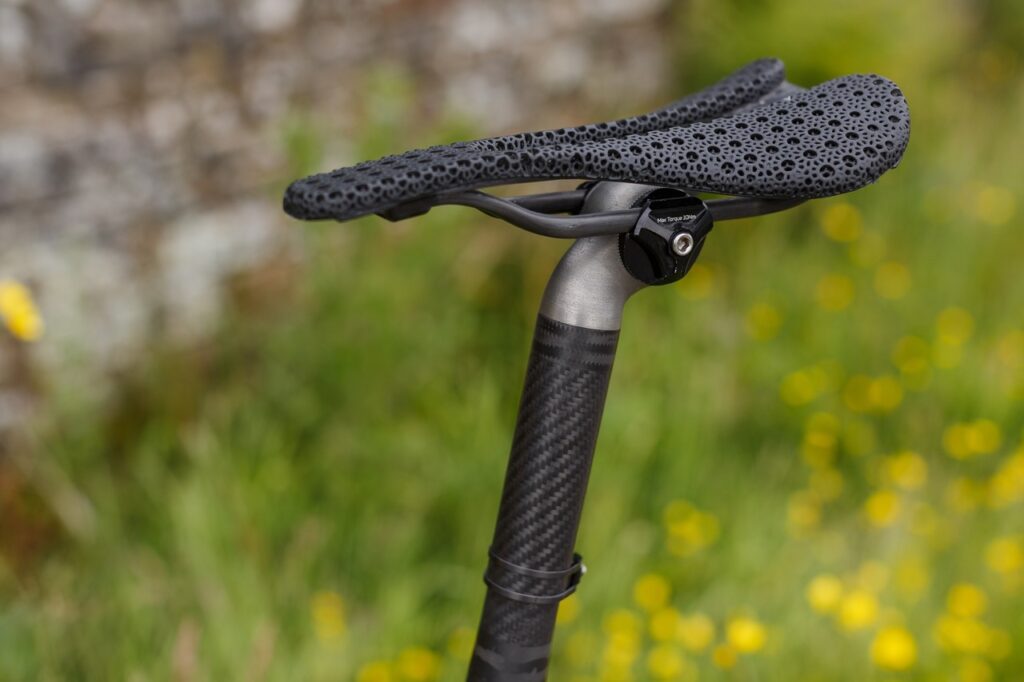
The frame will be made in six base sizes with the option for custom-printed components for bespoke fit. It’ll be made to order by Field Cycles in small production runs with no outsourcing.
The photos shown above are the first prototype, designed as a proof of concept that’ll help shape what comes next. Harry is currently developing the version 2 production prototype, along with a specific fork.
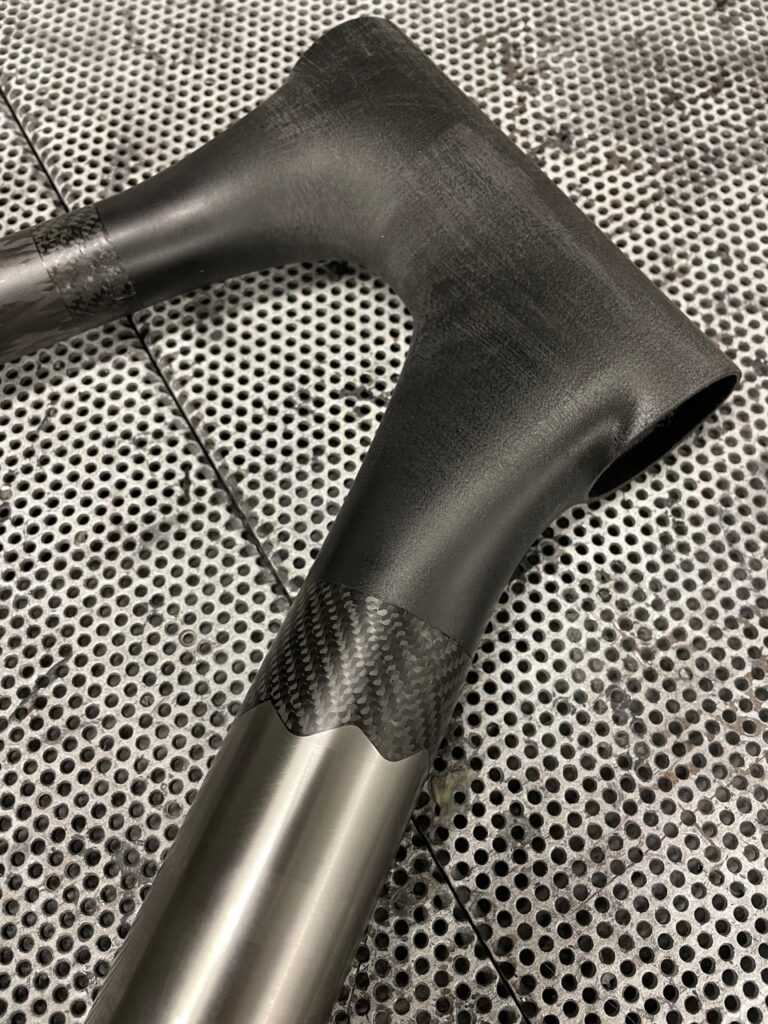
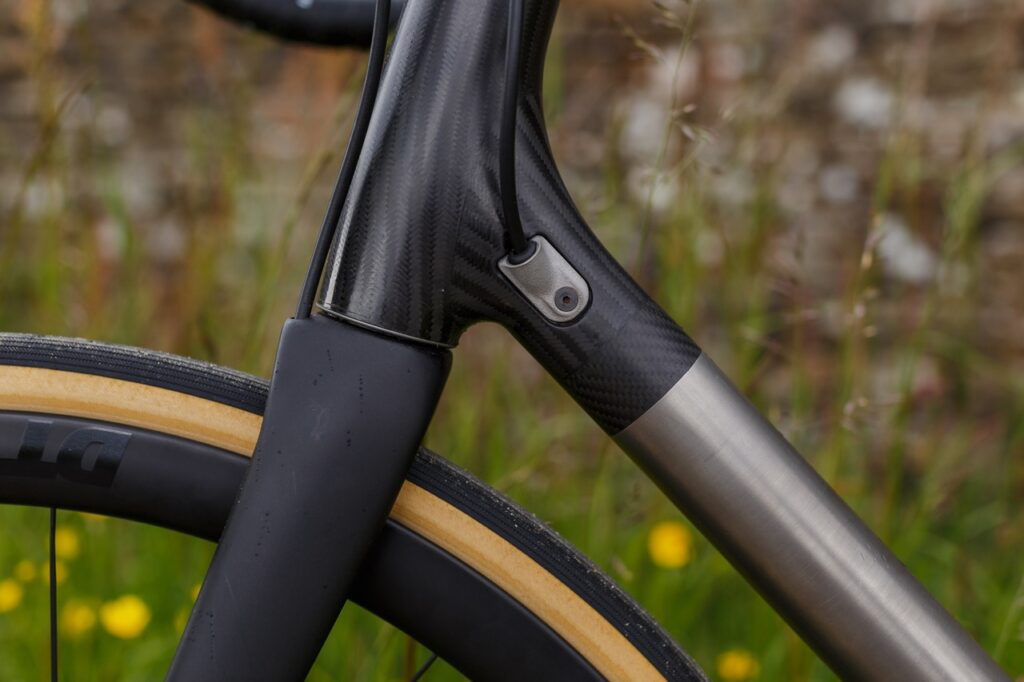
The join between the carbon head tube and the titanium down tube on this frame (above) is interesting.
“The waveform overwrap isn’t just aesthetic—it’s structural,” says Harry. “It creates a double lap joint, spreads loads, and avoids the sharp transitions that cause stress risers and failure points.
“This is the continuation of our legacy in handmade steel frames—where precision, care and finish matter. Lugged construction doesn’t have to look like lugged construction.”
We’ll let you know how it goes. In the meantime, you can follow the evolution of the design by following Field Cycles on Instagram.
Find out all about Field Cycles.














9 thoughts on ““Designed, engineered, and made in the UK. Properly.” Take a look at Field Cycles’ multi-material prototype”
On the fence on this.
On the fence on this. Normally hate lugs (but these are ok), but unconvinced so much material complexity is needed for a simple bike frame.
Also bonded frames dont necessarily have the happiest of cycling histories.
A bonded frame does seem like
A bonded frame does seem like introducing another design element which could go wrong. Or to put it another way, I’m not convince that the benefits of this ‘hybrid materials’ approach outweigh the added complexity and risk in its manufacture
Had a Lemond Tete de Course
Had a Lemond Tete de Course titanium and carbon spine frame since about 2005. Done 10s of thousqnds of miles. Zero issues. Bonding is fine, if done properly. As Field clam.
Had a Lemond Tete de Course
Had a Lemond Tete de Course titanium and carbon spine frame since about 2005. Done 10s of thousqnds of miles. Zero issues. Bonding is fine, if done properly. As Field clam.
Sounds beautiful but can it
Sounds beautiful but can it be made for a price anyone can afford?
Peak Torque has one of these
Peak Torque has one of these prototypes for testing, worth watching on YT.
as for comments below about bonding, its a technique that has been used for a long time across all sorts of products, from planes, to cars to bikes so not sure why there is a perceived problem. Weak or poor welds are equally troublesome – its when things are done poorly or inappropriuately rather than the technique itself.
plenty of progressive brands exploring materials and 3d printing now to good effect. looking forward to more info.
Are you sure Peak Torque has
Are you sure Peak Torque has one of these? He’s definitely got a Framework for long-term review which looks roughly similar but is constructed differently from the Field frame.
sorry, my mistake…..you’re
sorry, my mistake…..you’re right…memory and similar name messing with my head
A few sceptics here plenty of
A few sceptics here plenty of 80s bonded frames out there still going strong vitus being the better ones apart from those carbon versions