



We may earn affiliate commission from some of the links on this page
Apple’s AirTags weren’t originally designed for tracking bicycles, but as soon as they came out, some clever cookies started hiding them on their bikes. So, are AirTags really worth it for cyclists? Let’s have a look at the pros and cons of using an AirTag – or similar tracking device – as a viable option for locating your bike.
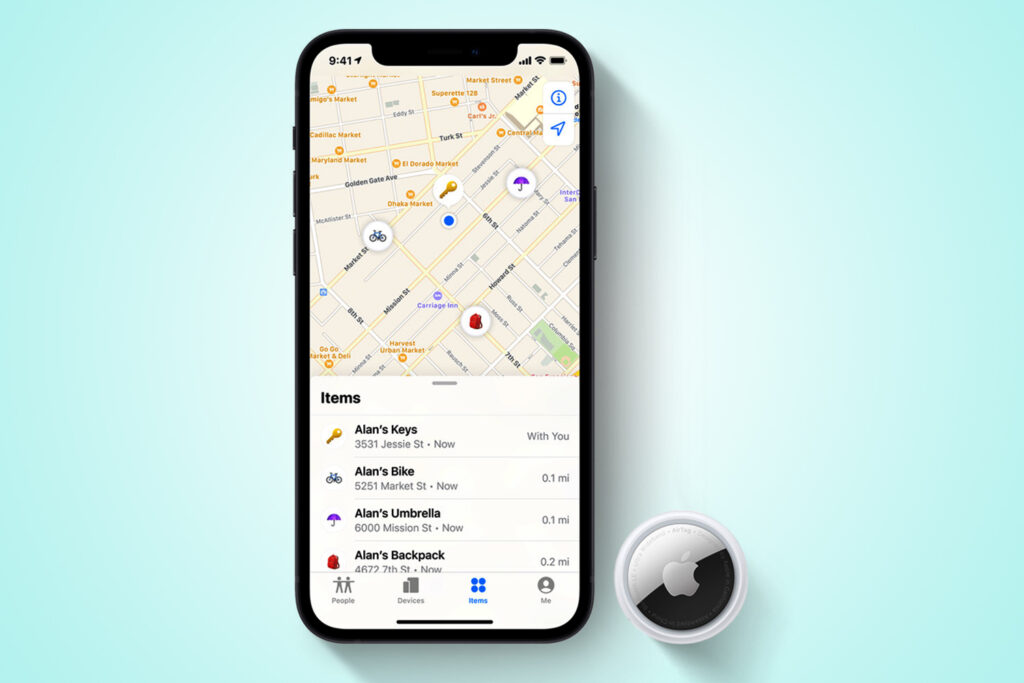
Buy 4 AirTags for £92 on Amazon
The AirTag is marketed by Apple as a solution for tracking down lost belongings using the ‘Find My’ app on Apple devices.
So, why should you consider attaching an AirTag to your bike? Although it’s not an anti-theft device, it can help you locate your bike if it’s stolen, or tell you where it is to give you peace of mind. By enabling ‘Lost Mode’, you’ll receive a notification and see its location on a map when it’s detected by another device within the Apple network. However, keep in mind that this relies on nearby users for up-to-date location data.
Bicycle insurance: compare quotes and find yourself a great deal to get your bike covered

To use an AirTag, you’ll need iOS 14.5 or later. It works by emitting a Bluetooth signal detected by devices within the Find My network. These devices then relay the AirTag’s location to iCloud, which you can access through the Find My app.
Let’s get into the pros and cons of using it as a bike tracker.
Pros
1. Long battery life
Since AirTags don’t rely GPS, they have a very long battery life of about a year. This means that if your bike does ever go missing, you won’t have the extra panic of worrying whether your tracker has enough charge or not.
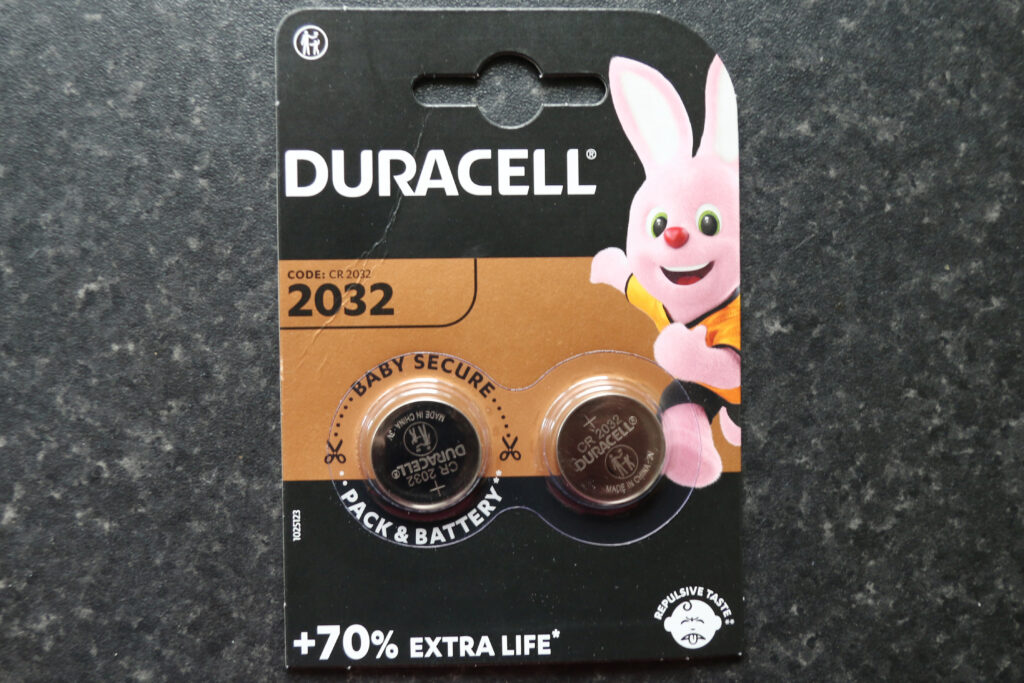
The battery is replaceable with a CR2032 coin cell battery, and your AirTag will send a low-battery alert to your iPhone when the time does come to change it.
2. Relatively inexpensive
At £35 individually, or £119 for a four-pack (£29.75 each), Airtags are a relatively cheap way to track your bike. There aren’t any subscription fees or additional costs after purchase, aside from the occasional replacement of the CR2032 battery.

3. Easy to mount and hide
At 1.26 inches x 1.26 inches and weighing only 11 grams, an AirTag measures about the size of a £2 coin. This makes it particularly easy to find a safe and discreet location for the device on your bike.
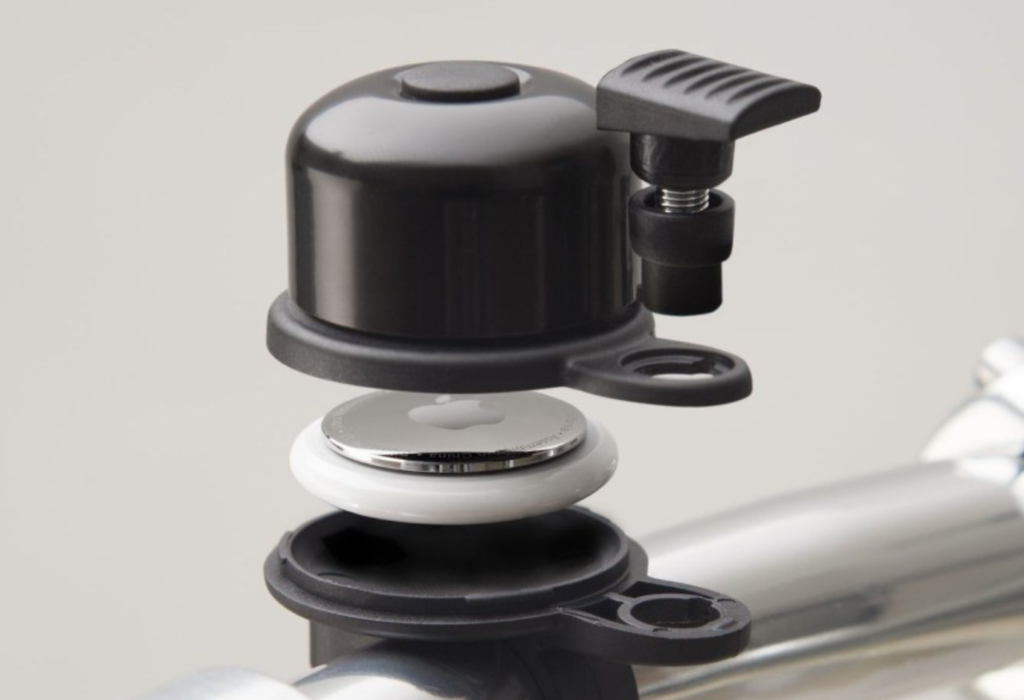
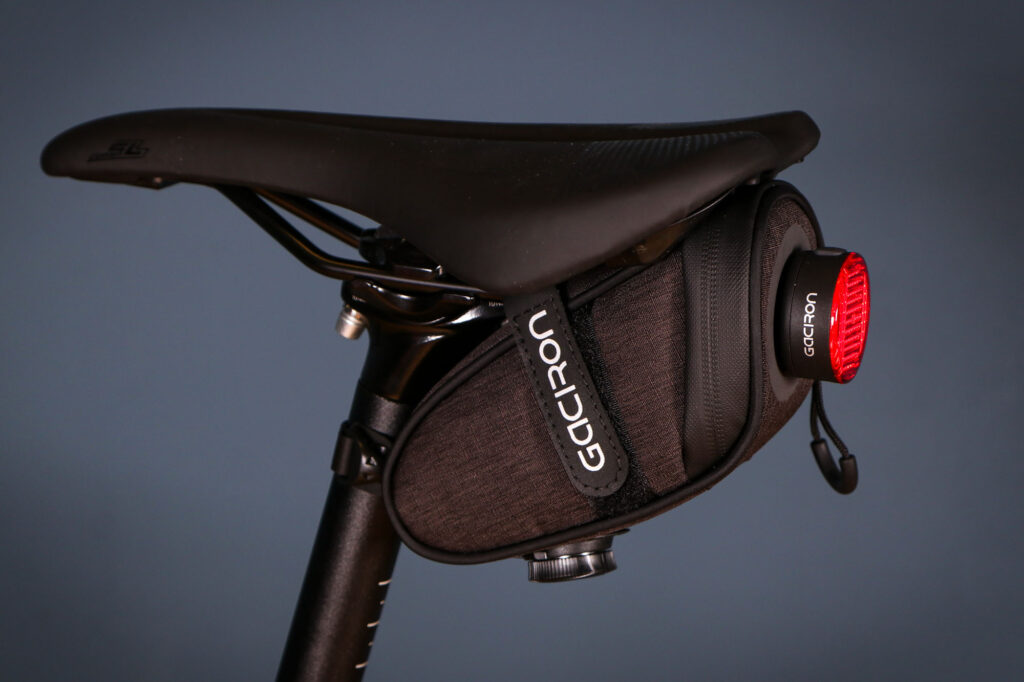
There are also plenty of mounts available through a range of third-party manufacturers, many of which use clever hiding methods, like the AirBell shown above, which hides the AirTag inside a functioning bell.
4. Handy for travelling with your bike
If you’re flying with your bike or transporting it long distances, popping an AirTag in your bike box or case can offer extra peace of mind. If the airline misplaces your bike or it ends up in the wrong country, you’ll be able to see its last known location via the Find My app.
5. Water resistant

AirTags have an IP67 rating, meaning they’re protected against dust and can withstand being submerged in water for up to 30 minutes. In real-world cycling terms, that means you should have no issues with road spray flicking up onto it.
The cons
1. Less accurate than GPS
Instead of providing a specific location through GPS, the AirTag relies on nearby iPhones to detect its signal, which makes it less accurate than a dedicated GPS tracker. Its effectiveness relies on other people being near to the AirTag for it to work. However, since the iPhone is the most popular phone in the world, it’s less of an issue.
In the video above from our archives, we found that in an urban area the tracker worked surprisingly well, even on quiet river paths. But again, it is ultimately reliant on getting a ping from a nearby device, which isn’t as reliable or consistent as satellite tracking and navigation.
2. Anti-tracking feature
One downside of using an AirTag as a bike tracker is its ‘anti-stalking’ feature. If the AirTag is separated from its paired device and detected as moving with a thief, their iPhone (if they have one) will send a notification alerting them to its presence, and after a while, will start playing a sound, giving them the opportunity to locate and discard it.
3. Less useful in rural areas

Again, because the AirTag depends on nearby iPhones to relay its location, it is most effective in areas with a high concentration of Apple devices, like towns and cities, rather than out in the middle of nowhere.
4. Requires an iOS device
AirTags integrate seamlessly with Apple’s ecosystem, so if you’re already using an iPhone, setup is simple. However, they require an iOS device to function properly, meaning they’re of little use if you don’t have one.
So, is it worth using an AirTag on your bike?

While not originally designed for bikes, the AirTag has become a popular option thanks to its affordability, ease of use and long battery life. If you’re already an iPhone user, it’s a great way to keep tabs on your bike, especially in urban areas or while travelling.
Bicycle insurance: compare quotes and find yourself a great deal to get your bike covered
That said, it does have limitations. It relies on nearby Apple devices to work effectively, and it’s not an anti-theft device so won’t alert you if your bike’s being tampered with.
You find out more about the tech details of the Apple AirTag here.
Would you use an AirTag as a bike tracker? Let us know in the comments section below.









18 thoughts on “Are AirTags really worth it for cyclists? The pros and cons of using Apple’s mini security device or other trackers to locate your bike”
For 5 years ive been waiting
For 5 years ive been waiting on SeeSense’ Knowhere ‘ same thing as airtag but FIVE years later not delivered.. kickstarter eh..
“One downside of using an
“One downside of using an AirTag as a bike tracker is its ‘anti-stalking’ feature. If the AirTag is separated from its paired device and detected as moving with a thief, their iPhone (if they have one) will send a notification alerting them to its presence, and after a while, will start playing a sound, giving them the opportunity to locate and discard it.”
This more than anything makes it a bit useless, unless you’re going out of your way to hide it in the BB or something 🙂
They are specifically
They are specifically designed not to be useful for covert tracking. Apple have done all that they can to defeat this use, for obvious reasons. So, it might help find a lost bike, but don’t count on it.
Yeah, I can’t argue against
Yeah, I can’t argue against the anti-stalking measures being there but that’s not the reason I wouldn’t use one.
For me, it’s one of those products where it depends on what you’re going to do with it. If you find the location, are you going to go and get your bike? At some point at least, your bike is with criminals with at least portable angle grinders.
It sucks to think you just let your bike go and give up. But I much prefer to get home to my child and be a victim of theft than not get home and be a victim of something worse.
One of my bikes has a power
One of my bikes has a power meter with Find My integration embedded into it. It’s doesn’t have the beeper so a thief won’t immediately know where there’s an AirTag on the bike, despite the fact that their phone will be telling them they’re being tracked.
So your airtag shows you
So your airtag shows you where it is, nearly. Now what? The police won’t be interested, even if you know which flat or lockup, nearly. They’ll give you a crime number and even when you know the bike, tag, parts are on the way to Bulgaria, the police still won’t be interested
That’s changing, https://www
That’s changing, https://www.eta.co.uk/news/new-law-to-help-police-recover-stolen-bikes-with-gps-trackers
We’ll see. I doubt “not
We’ll see. I doubt “not enough law” is really the issue. Plenty of laws out there which police aren’t bothering to enforce as articles and posts on road.cc is testament to.
I bet it isn’t! Providing
I bet it isn’t! Providing ‘laws’ that state the police ‘can’ take some action is no indication that they ‘will’. They won’t – there is more than enough evidence on here to show that!
Tile trackers have anti theft
Tile trackers have anti theft mode. Much more appropriate for bike security than airtags.
Also works with both android and iPhone.
“At 1.26 inches x 1.26 inches
“At 1.26 inches x 1.26 inches and weighing only 11 grams …” – I love how the Brits can never choose between systems of measurement and even mix them within the same sentence. So cute!
That’s what Brexit was for *
That’s what Brexit was for * – so we could retain / bring back some of our sensible and familiar units!
And also – just like how the UK removed street signs and imposed a blackout during the second World War – to better expose any suspicious non-locals and keep any possible invaders confused.
Of course it also confused locals and caused a spike in crashes and injuries – but thanks to the Blitz / Dunkirk spirit people were never more cheerful!
* Fewer and fewer people are certain what Brexit *was* for – both pro and anti…
chrisonabike wrote:
Nonsense – we all know perfectly well that Brexit was for Brexit.
mdavidford wrote:
Nonsense – we all know perfectly well that Brexit was for Brexit.— chrisonabike
And so that we could Get It Done!
I demand groats, furlongs,
I demand groats, furlongs, perches and squares.
mattw wrote:
How rood! You’ve an ell of a nerve!
My android phone will also
My android phone will also bleep about unknown air tags stalking you, so no chance a thief won’t be alerted.
It’s very easy to open an
It’s very easy to open an AirTag and remove the magnet, thereby silencing the wee chirp that alerts a thief to the location. They’ll still know there’s a tracker *somewhere* but it won’t make any noise.