E-bike conversion kits are an often overlooked option. If you have a bike ready to fit one, they can certainly be an economical choice. But it’s not all about saving money as the best kits can also pack a punch in performance terms. Those options may be pricier, but they can give you something that measures up against the best electric bikes for lower overall cost.
- Best hub motor kit – Cytronex (from £1,043)
- Best mid-motor kit – CYC Photon (from £1,595)
- Best lightweight kit – Swytch (from £359)
- Best kit for Bromptons – Nano (from £820)
- Best kit for hill climbing – Bafang BBSO1 (£799)
- Best value – Neodrives (from £399)
- Best of the rest…
- E-bike conversion kit FAQs
There might be other compelling reasons to think about retrofitting. Your old bike might fit you like a glove or you might just be sentimentally attached to it but feel an electric boost will get you out and about on it more often.
Similarly, if you have a relatively unusual bike, like a recumbent or a trike, then ‘off-the-peg’ electric options to replace it may be limited which means a conversion kit could be a good way to go.
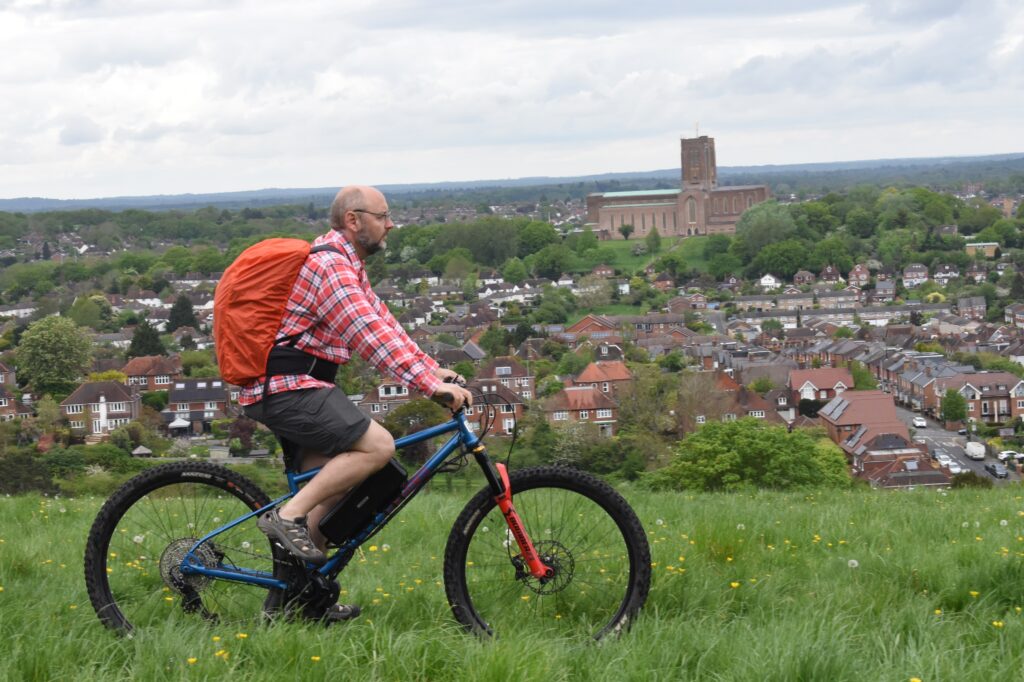
Are e-bike conversion kits safe though? The short is answer is ‘not all of them’ and even those that are properly constructed will of course need to be fitted correctly. We’ve covered this in a bit more detail in the FAQs below.
Best hub motor kit – Cytronex (from £1,043)
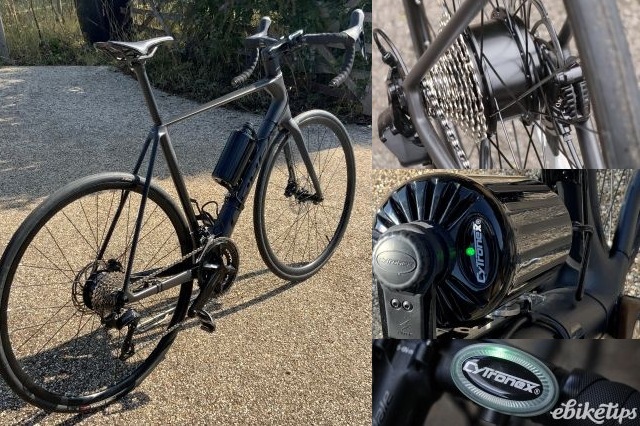
The higher price of the Cytronex kit reflects the fact that it is designed from the ground up to produce a lightweight and high tech solution that will feel extremely smooth to ride and which will offer incredible range considering the 198Wh battery. Our tests on earlier versions of the kit (here and here) show the British company has largely succeeded.
The Cytronex battery is designed with two independent battery packs inside which means that the original 180Wh battery (as reviewed by us, now updated to 198Wh) can be transported by air (because it is classed as two batteries of up to 100Wh installed in equipment).
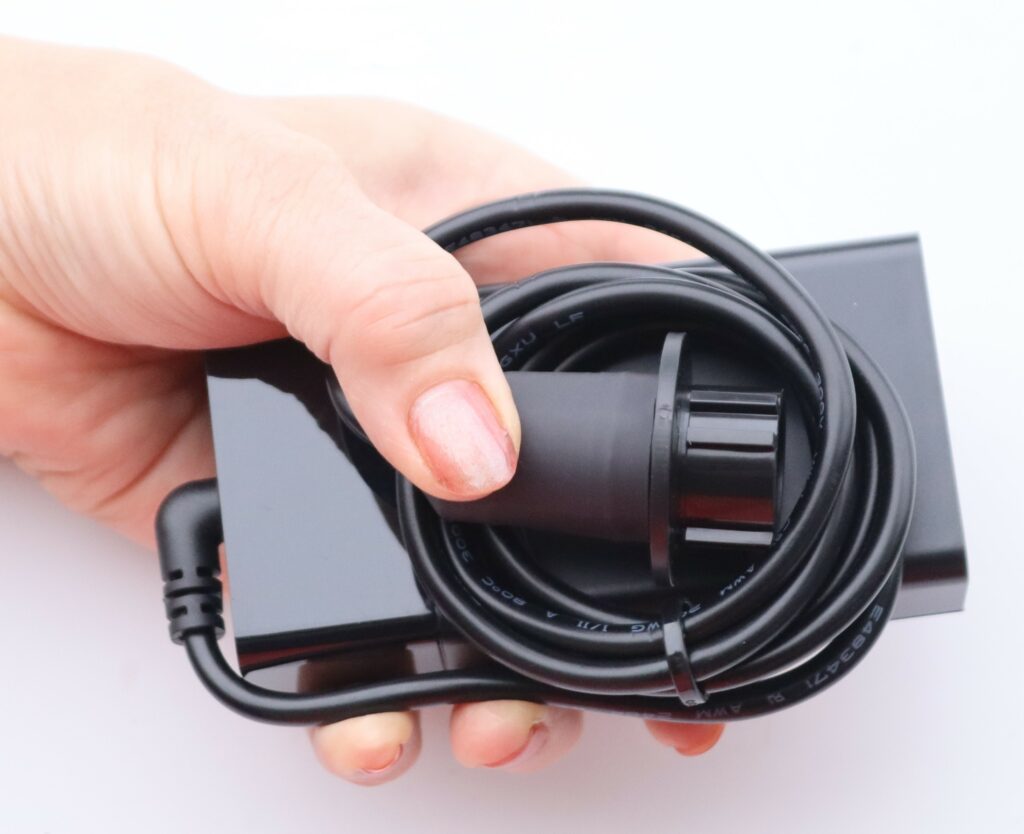
In addition to their fast charger (which charges 80 per cent in about one hour), Cytronex also offers as its standard option a new Micro GaN charger which will charge to 80 per cent in two hours and which will fit in most seat packs.
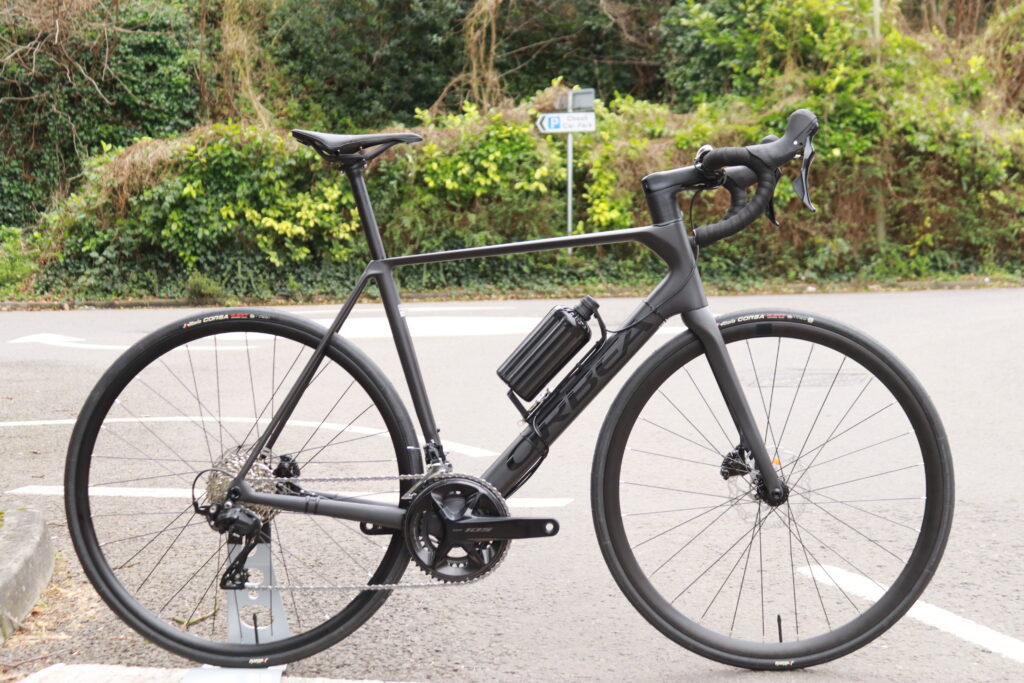
Cytronex’s approach is to combine the benefits of a conversion kit with those of high-end purpose built e-bike brands. Cables are custom made to provide the neatest fit to your bike and there are options like their new stealthy rear thru-axle motor, which comes fitted with a cassette to match the one on your bike.
-1024x683.jpg)
A plethora of original design features includes a quick release bottle battery, a simple but highly functional handlebar mounted ‘Boost Button’ and a sprocket movement sensor which is mounted out of the way on the chainstay.
The Boost Button has been improved since our review and now offers five power levels which can be changed by pressing left or right.
The unique patented Cytronex sensor senses the sprocket gear teeth, which means that no brake switches or speed sensors are required and it is secured by a neat and compact chainstay fixing.
Other impressive details include a marine-grade stainless steel battery mounting mechanism and Bluetooth functionality that, via the new smartphone/tablet app, lets you not only alter the power profiles of the five motor assistance levels but also monitor the exact charge of the battery even when it is off the bike – a very useful feature at a coffee or lunch stop. Diagnostics in the smartphone app also allows Cytronex to diagnose an issue from a log sent from anywhere in the world.
At 3.2-3.6kg, depending on spec, the Cytronex kit is also one of the lightest retrofit options out there.
In addition to the kit, Cytronex offers complete bikes from the likes of Cannondale and Orbea. There are also Brompton specific options (including one for the superlight all-titanium T-Line) and a tandem option.
Check out our review of the Cytronex e-bike conversion kit and also our review of the Cytronex Brompton e-bike conversion kit as well as the T-Line version
Best mid-motor kit – CYC Photon (from £1,595)
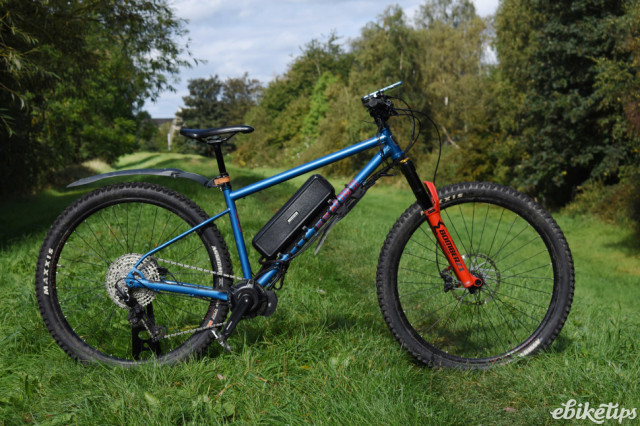
Starting at £1,595 (assuming you install the Photon yourself) this high quality mid-drive offering looks to step ahead of the likes of the Bafang BBSO1 and Tongsin kits in terms of sophistication and quality.
We liked the smooth torque sensing, light weight (the Gen 1 motor was 3.3kg – though note the beefed up Gen 2 is around 3.7kg) and the fact the Photon will fit a wide range of bottom bracket widths, making it suitable for many more bike designs (e.g. some fat bikes).
In our test riding, fitted to a Marin El Roy mountain bike, it certainly did what it claimed to do, and we found it compared favourably to Bosch’s more powerful mid-drives.
-1024x683.jpg)
We also liked the software aspects of the system, with CYC producing a UK compliant version of their kit and the CYC app allowing you to measure motor power versus your own contribution. It even has two temperature readings for the motor and controller so you can monitor that things are working as they should. Self-fitting or bike shop fitting is available but you should be a competent bike mechanic if planning on the former.
Since our original review, the Gen 2 version of the kit has been released, which claims to offer more torque. This features a redesigned freewheel clutch and better motor cooling to handle the significant heat the powerful motor can output under extreme load, along with a clearer, more sophisticated display. The electronic system that allows components to communicate with each other has also been upgraded to be faster and more flexible (electronics nerds might be interested to know it now uses the CAN-BUS protocol).
Take a look at our review of the CYC Photon kit.
Buy the CYC Photon from Electric Bike Conversions
Best lightweight kit – Swytch (from £359)
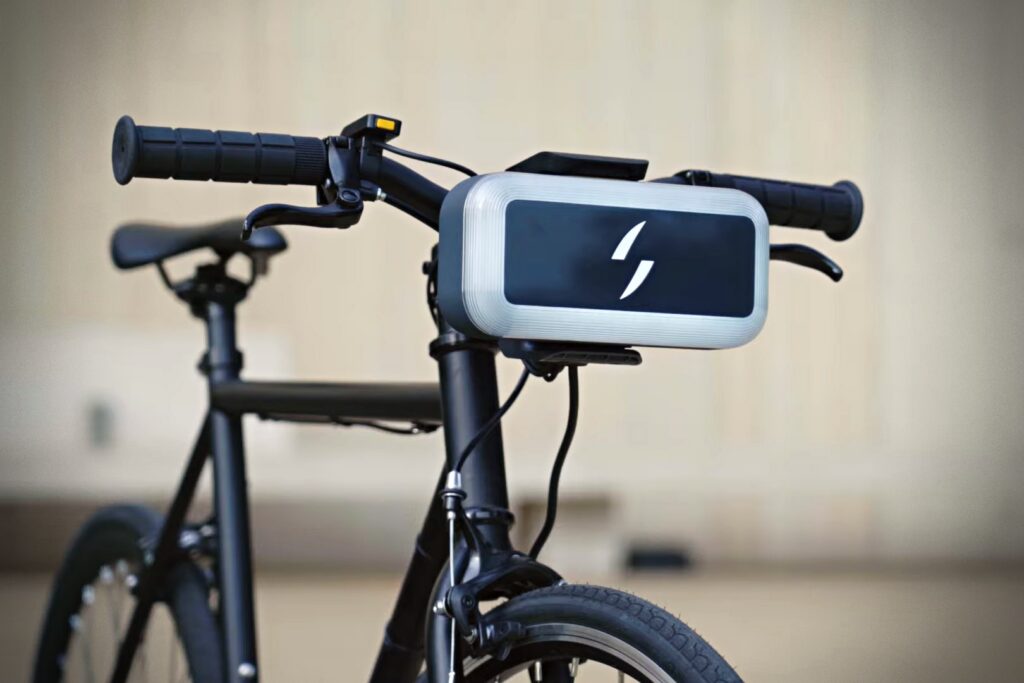
UK-based Swytch are known for their small and sprightly front hub motor, which is allied with a pedal sensor that fits around the pedal crank and batteries of varying capacities mounted in differing positions over subsequent iterations of the kit.
Swytch’s remarkable success has been due to a combination of an attractive price (the most heavily discounted price means you have to wait a few months to get a ‘bulk discount’ rate) and a claim of almost ‘universal’ fitting. (It’s certainly one of easiest and most widely compatible kits available.)
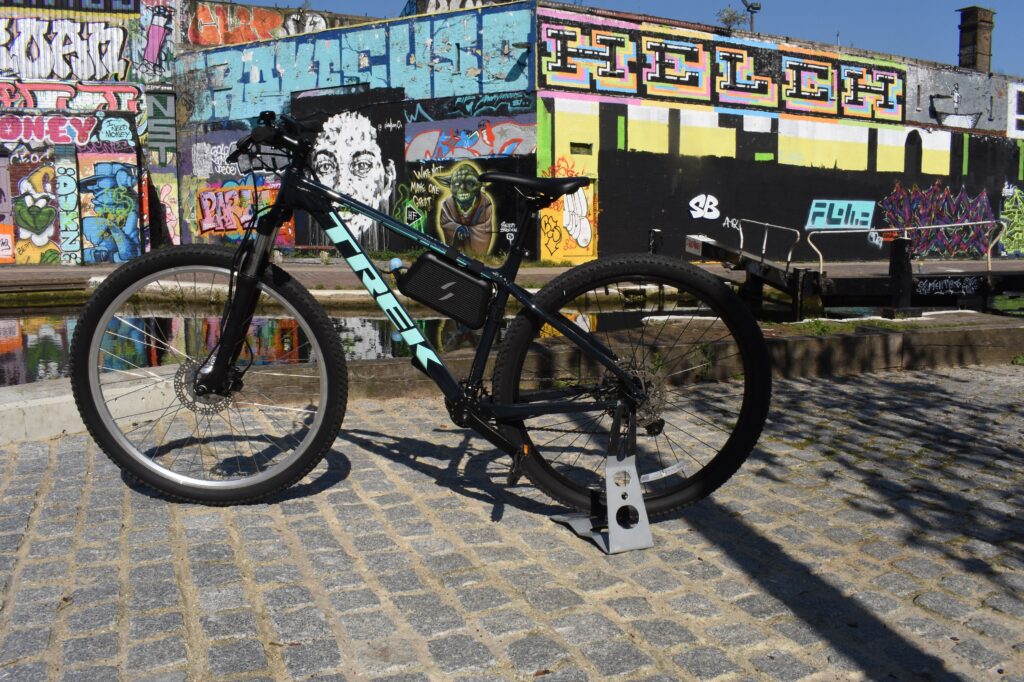
The Swytch GO kit was launched in 2024 with a new battery design and mounting system, available for wheel sizes from 26in to 29in. The GO system comes in three battery sizes: 180Wh, 280Wh and 378Wh and is available from online retailers from £429. By pre-ordering directly via their website you can get a 180Wh GO system for £359, provided you are prepared to wait.
As we noted in our pre-launch look at the kit, the main difference to previous Swytch kits is that the Go uses a frame-mounted battery – you just velcro it on and off. This means there’s less engineering involved than with the clever quick release system on the Swytch Max+ (see below), and consequently it’s a bit cheaper. It’s not quite as easy to get the battery on and off, but it’s not exactly hard: unplug one lead and undo three straps and you’re there.
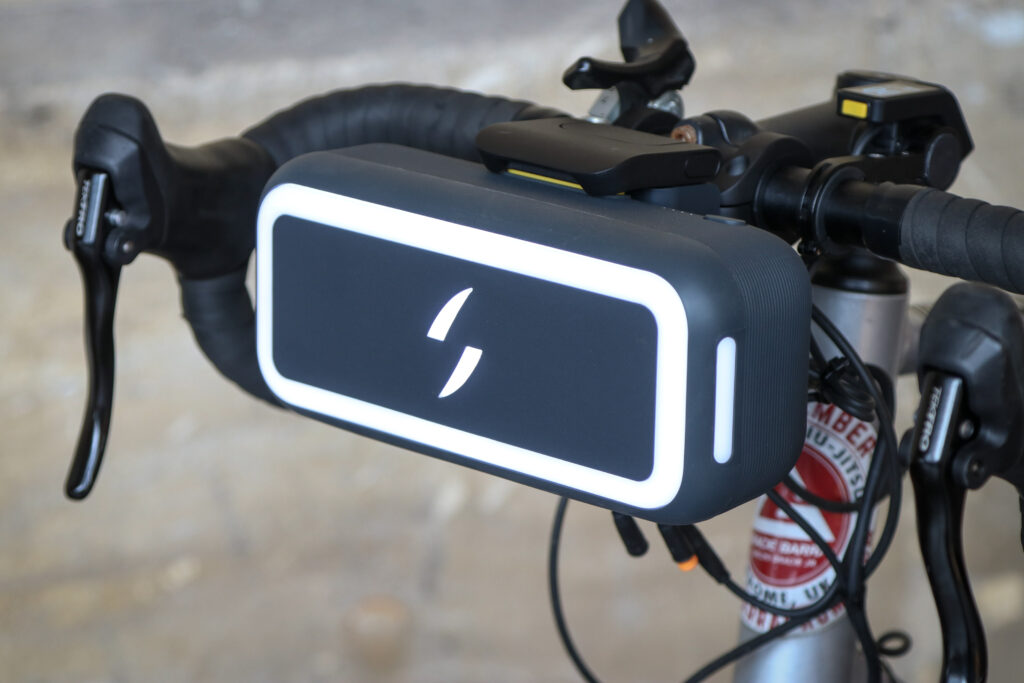
The more sophisticated and pricier Max+ kit was announced late 2024 and rolled out in early 2025 and is the latest iteration employing the brand’s high quality clamp style mounting battery system. Dealer Electric Life appear to be offering good deals on this with prices from £579 whilst we obtained a price of £529 from Swytch’s order page.
Aside from the more solidly made quick release battery mounting system, the Max system battery itself also features a ‘be seen’ omni light and a USB-C phone charging port.
Performance has been pretty impressive across the board over the many iterations of Swytch kits we’ve tried over the years as they offer a successful combination of ease of install, smooth and economic power with decent hill climbing for a small motor and keen pricing. Swytch says older kits should be compatible with the latest batteries.
A rear hub motor version was announced in late 2024 though you need to navigate through the order page for the Max+ system and place a deposit in order to specify this.
Best kit for Bromptons – Nano (from £820)
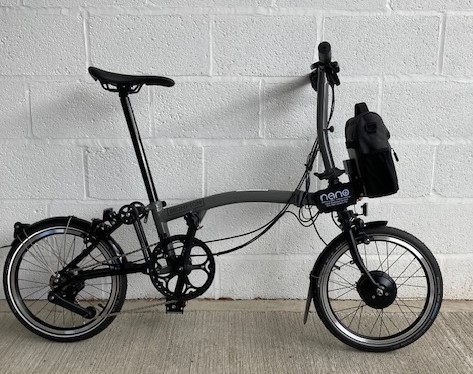
Nano has longstanding expertise in the field of e-bike conversions and specialises in the Nano-Brompton kit.
After 15 years in operation, in 2024 they closed their Leamington Spa base after serving some 2,700 customers, but the business remains in the hands of the original founder, Tony Castles, who continues to operate from Marlborough.
Bromptons have narrower front forks than most bikes and Nano’s Brompton-specific kit is based around a 74mm wide brushless, front hub 36V, 250W, 328rpm motor with a weight of 1.3kg. This comes already built into a new double-walled rim.
Nano has long experience of providing e-bike kits for Bromptons and the latest iteration adds around 3.3kg total to the weight of the recipient bike. In its 4th generation, the Nano-Brompton kit is controlled by an LCD display on the handlebar. The large rubber buttons are near your thumb and the display has bold characters and a backlight.
For expert users, the system has several parameters that can be adjusted. Power assist is controlled by a sensor added on the bottom bracket which has 12 magnets for fast response.
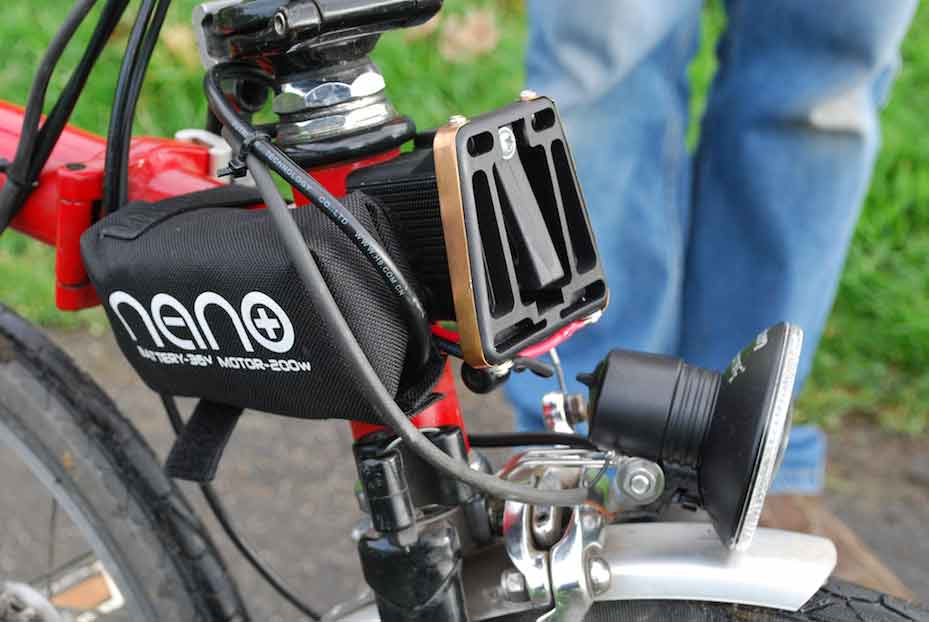
It features a single 144Wh ‘in bag’ battery, but larger batteries are available – ‘bottle’ and ‘frame’ batteries with Samsung cells in various capacities up to a sizeable 720Wh. Nano also has kit options for Brompton G-Line and T-Line models.
The really clever part is that the Brompton luggage mounting block acts as a contact from the battery to the motor system, so if you have the in-bag battery it’s a very quick and easy system to use. There is the option to fit yourself or have Nano fit the kit for you.
Incremental improvements over the years have included improved anti-rotation features on the motors and an ‘easy-fit’ pedal sensor that just slips onto the pedal axle. There are a number of other options and accessories available, including adaptors for a range of 36V and 18V power tool batteries – Makita, Ryobi, Milwaukee, Bosch and DeWalt – that can double as your e-bike battery. There is also the option of adding lights.
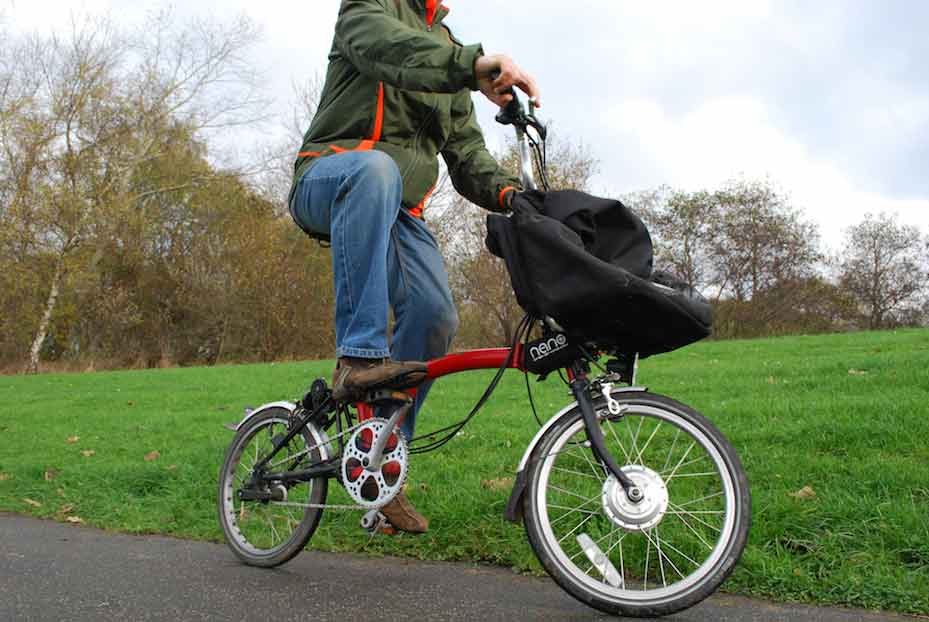
With Brompton’s own electric versions (not retrofittable) generally sporting price tags north of £3,000, the Nano option fitted to a second-hand superlight or P-Line Brompton could well undercut a new model by several hundred pounds and also end up lighter into the bargain.
Nano says it can also offer options for other small wheelers such as Moultons, Terns and Dahons.
Best kit for hill climbing – Bafang BBSO1 (£799)
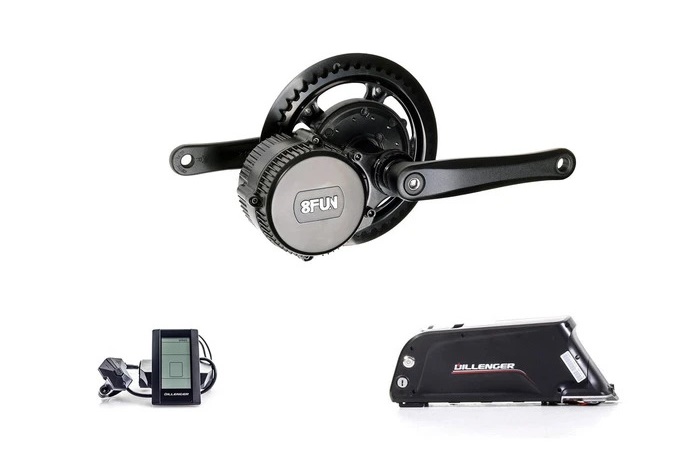
Undoubtedly the most popular mid-drive e-bike conversion kit in the western world – where mid-drive kits are rare indeed. The BBSO1 is rated at the UK/European motor output level of 250W whilst the BBSO2 is produced for the US market at 750W.
The Dillenger version comes with a 522Wh battery, so the sub-£1,000 price tag looks attractive. Like Dillenger’s front hub motor kit, the battery has a 5V USB socket handy for recharging.
You need to be happy removing and reinstalling components in the bottom bracket area of the bike for this one, but if you are, you should get all the benefits of a much more expensive mid-drive e-bike (currently most mid-drives cost well over £2,000).
The kit weight is stated as 7kg, which is pretty heavy, but the weight is nice and low down and produces a good handling bike that’s easier to pick up than you might think. The motor position also means your front and rear wheel setup can remain just as it is.
Best value – Neodrives (from £399)
-1024x683.jpg)
As we noted in our review of this German-made offering, this kit from Ebikeoutlet combines a heavy duty looking Neodrives rear hub with a BMZ battery integrated in a rear pannier rack.
Both Neodrives and BMZ are quality names in the e-bike world. By offering premium features – like torque sensing in the powerful rear hub motor and a decent-sized battery from a renowned maker – for a sub-£400 price tag, this kit really stands out from the crowd.
Fitted to a recipient Marin mountain bike, the kit made mincemeat of our two standard hill climb tests – long and demanding and short and ultra steep respectively.
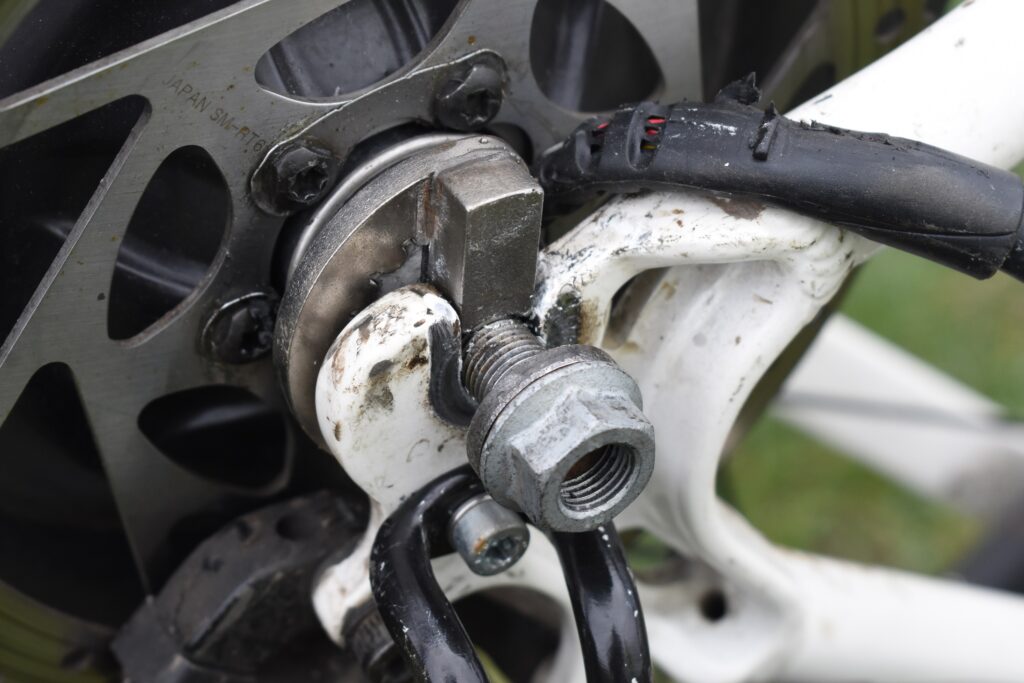
However, do note our warning on having the kit fitted properly in the rear axle to prevent the high torque twisting the axle out of the frame.
Note the Ebikeoutlet version is only available ready-spoked into 26” and 27.5” rims. If you want to check out the full Neodrives offering for a bespoke conversion, contact Bicycles by Design.
Read our review of the Neodrives conversion kit
Best of the rest…
Boost (£649)
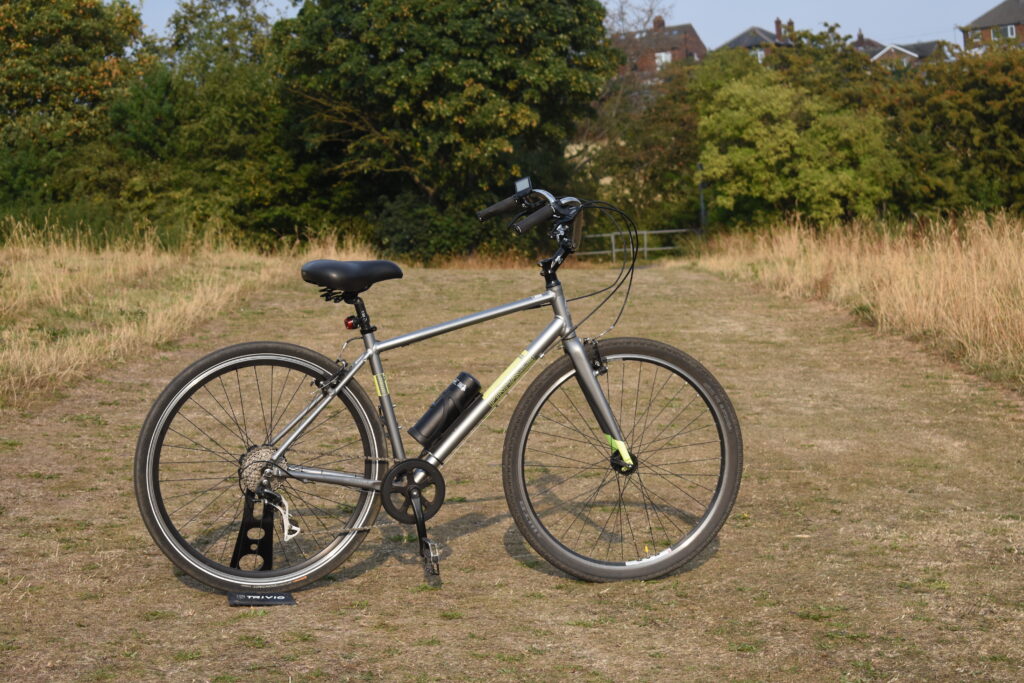
Launched in 2022, the Boost rear wheel hub motor system is both one of the easiest to fit and also one results in very smooth assistance. It achieves that by integrating the sensor into the rear wheel, using a wireless handlebar display and by keeping the kit’s weight in the optimal position on the bike so that it doesn’t affect handling. There is just a single wire run from the frame mounted ‘bottle battery’ to the rear hub motor. The 252Wh battery is removable.
The overall weight added is around 4kg (or around 2.5kg for the Brompton-specific version – see below).
The motor comes ready-spoked into 26in, 27.5in and 29in/700c wheels – both rim and disc brake in silver or black. A thru-axle version has been available for a while now too, compatible with 12x142mm rear dropouts.
As it is a rear hub motor, it is not compatible with hub gear bikes and you should check with Boost if any derailleur gears on the recipient bike will be compatible.
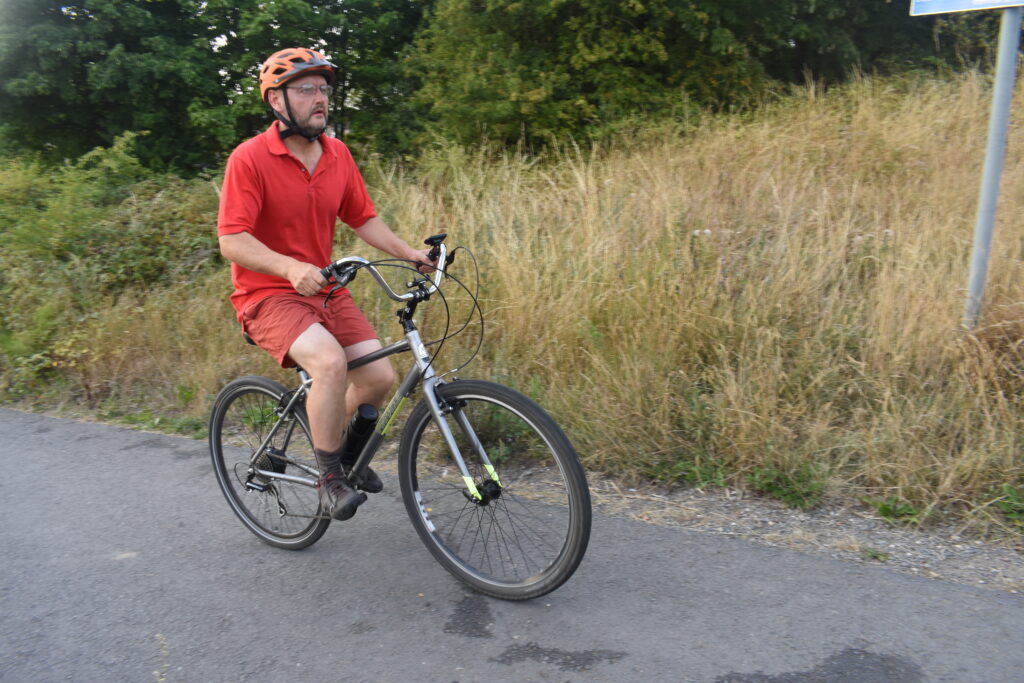
We found the semi-automatic power delivery was generally smooth and effective. The want of a bit more power up steeper hills was our only real criticism. There is a ‘boost’ button to get instant full power for a limited time, but a system where it could be turned on or off as required would be much preferable. Boost says that since that review, “Boost mode has been updated now so that it can detect when you are climbing, and does not apply the speed related power banding that you referenced in your review, so as your speed drops you still get good assistance from the motor down to around 3.5mph” – although note we haven’t tested this newer system.
.JPG)
.JPG)
.JPG)
.JPG)
.JPG)
.JPG)
.JPG)
.JPG)
.JPG)
.JPG)
.JPG)
.JPG)
.JPG)
.JPG)
.JPG)
.JPG)
.JPG)
.JPG)
.JPG)
We also took a look at the 16in wheeled Brompton-specific version, which has a smaller 126Wh battery. We concluded that, whilst it’s a superbly neat design, the battery can’t be removed for charging and it is significantly pricier than the original Boost for larger wheeled bikes, which also has a bigger battery. Boost says there are single speed and two and four derailleur gear options.
Still, Boost is a uniquely simple offering, ideal for both leisure and sport riders who want a bit of assistance whilst keeping their bike light and with riding characteristics as little affected as possible by the addition of the kit.
Read the full LaVita Boost review
Dillenger Samsung Power 2.0 (£499)
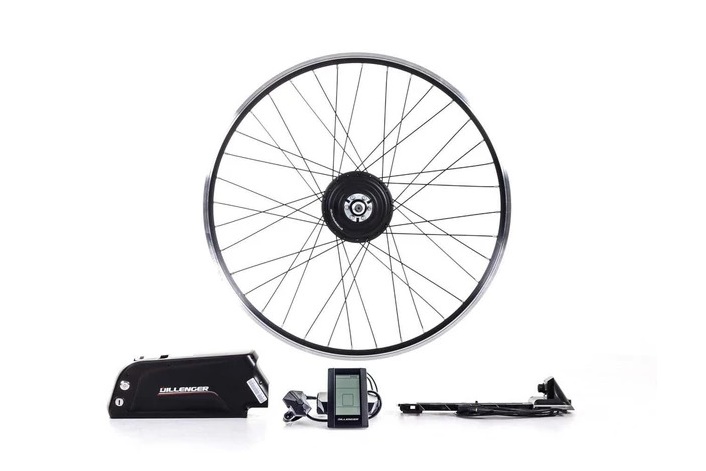
The internet is awash with cheap hub motor kits from sellers you are unlikely to have heard of, but Australian-based Dillenger sells in a number of countries and has done so over a number of years, building up a good track record in the process. Its website also offers good info on compatibility and fitting and the firm offers a clearly set out one-year warranty.
Dillenger’s Samsung Power 2.0 front hub motor kit packs a lot of value in given the budget price so it’s perhaps not surprising it claims to have sold over 10,000 worldwide.
It’s disc brake compatible (standard six-bolt mounting), comes ready-spoked into a wide range of wheel sizes (20in, 24in, 26in, 27.5in and 29in) and has a decent sized 468Wh battery (with USB socket for charging devices) with cells from a recognised maker (Samsung). The overall weight of the kit is quoted as 7.7kg.
Heinzmann DirectPower (£1,495)
This longstanding German manufacturer produces electric drives for everything from tracked snow vehicles to electric boats, so e-bike motor technology should pose few problems.
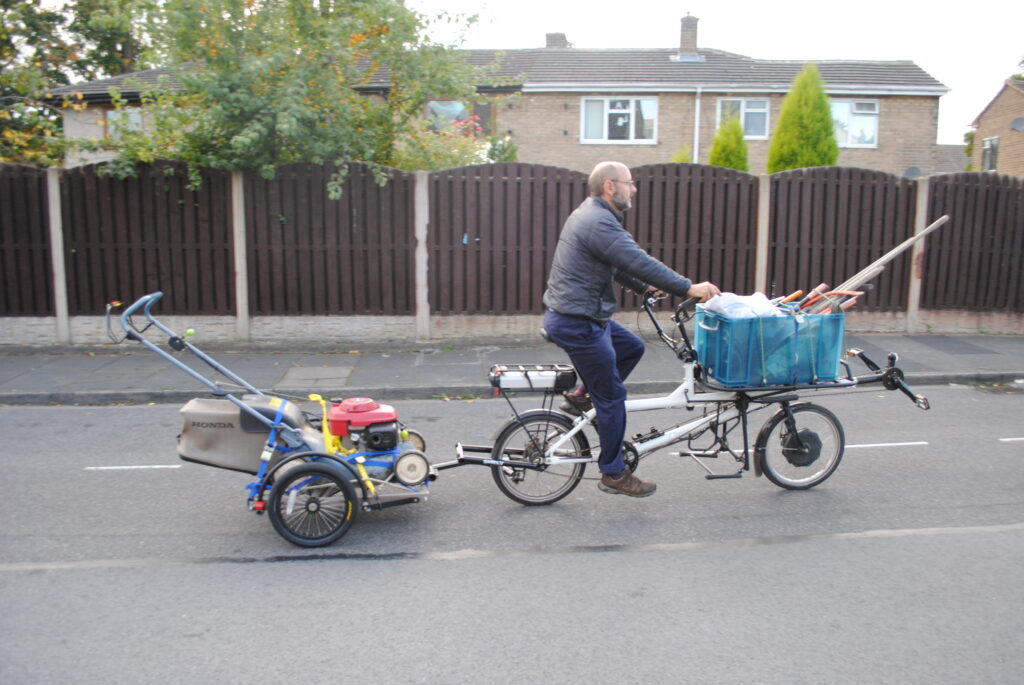
EV Solutions supplies the DirectPower gearless motor. This is a quiet and very high quality motor with a good amount of power, but at 4.5kg for the front wheel version, this is certainly going to be one of the heavier kits out there. This is motor weight only too – the standard 500Wh battery will add several more kilograms. But if solid construction and high reliability (and the possibility of regenerative braking) are high on your list, this certainly could be an option.
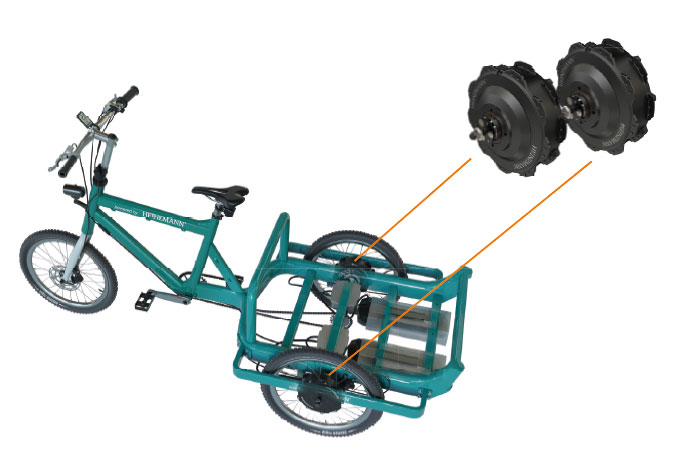
EV Solutions also supplies the specialist and even heavier duty CargoPower system that can be configured for trikes with two hub motors.
Buy Heinzmann BBS01 from £1,495 from EV Solutions
Pendix (from £1,700)
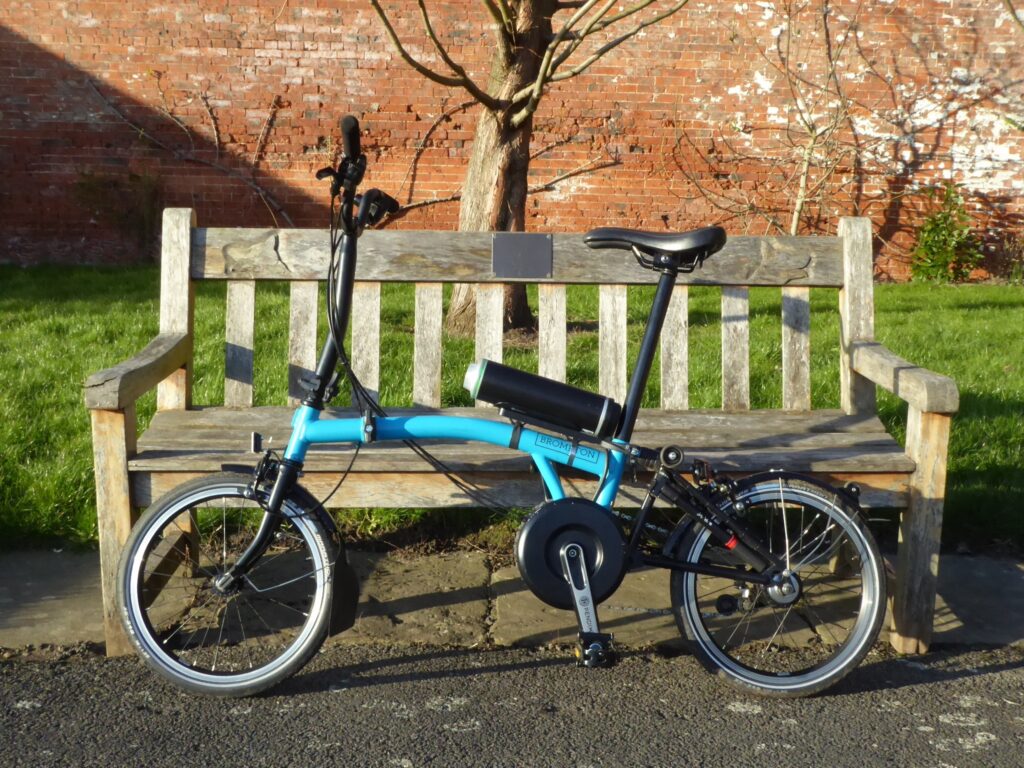
Pendix is a German-designed, high quality kit, this time one that places a gearless motor in the non-drive side of the cranks. Again it’s a very pricey but very high quality system. There are two battery capacity options – 300Wh and 500Wh. Power control is via a knob on top of the cleverly designed 48V battery.
It will fit a wide variety of bikes as the whole kit sits together near the bike’s bottom bracket, so it is not wheel size dependent, and there is a single wire run from battery to motor. As long as you have a BSA 68/73 standard bottom bracket the Pendix should be compatible. There is no display but the Pendix smartphone app can give you remote control of the system settings.
It’s pretty heavy – Pendix quotes the kit as adding 6.9kg to 7.3kg depending on what battery option you choose. Pendix doesn’t give out detailed fitting instructions as it insists the kit is fitted at a dealer. It is distributed in the UK by Velobrands and there is a dealer page on the website.
ARCC (£2,199)
ARCC, like Cytronex, produces a small, lightweight and high tech kit based around a geared front hub motor. The whole assembly is known as the Intelligent Drive System (IDS). Also like Cytronex, it actually UK-manufactures many of the components it has designed itself.
ARCC uses small capacity Bosch powertool batteries which are mounted in the ‘Intelligent Drive Unit’ that is permanently fixed to the head tube, minimising the cable run to the front wheel motor (though this does make the bike rather front heavy). An extra battery can be frame mounted using ARCC’s own bespoke battery holder. Perhaps the most impressive element of the kit is the wireless handlebar unit used to control power settings.
There are Brompton, Moulton and Airnimal specific-options, disc and rim brake options and the system comes with a five-year warranty on the ARCC system and a three year warranty on the batteries. The £2,199 price includes fitting and delivery.
ARCC does not allow ‘home fitting’ so you need to send or take the recipient bike to them in Cambridge. If you want a complete bike then ARCC sells a small range of these too, including Brompton, Moulton and their own-manufactured Abington and Rosemont town bikes. We have reviewed their electric version of the Abington.
The kit itself adds just under 4kg to the overall weight of the bike, including a 144Wh battery (216Wh batteries are also available).
Although we said in 2021 that a new app (on both iOS and Android) and a new version of the handlebar control unit with a screen and more ride data was due the following year, we are still awaiting the Android app and also a hardwired light system that has been promised for a number of years.
Read our review of the ARCC e²-pod Brompton here
GRIN – Something completely different
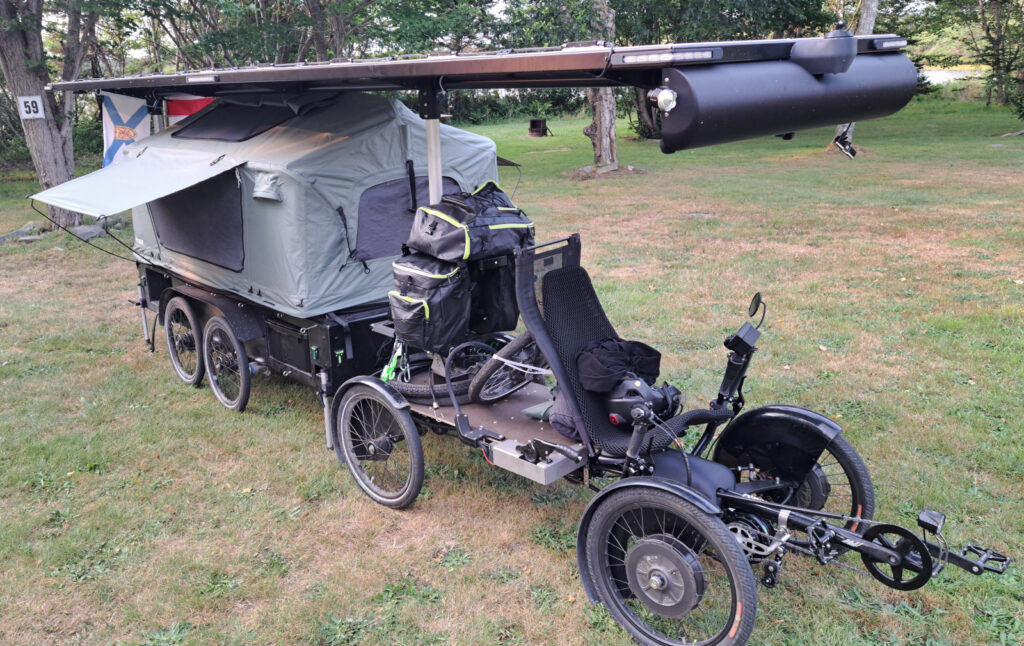
Canada’s GRIN is a true pioneer and has an incredible record of knowledge and product development in e-bike kits. Whilst e-bike kits are its main business, it has put electric motors on everything from sizeable boats to wheelbarrows in its time.
If you have an unusual electrification project, GRIN may well be able to help – and it is now closer to the UK with the opening of GRIN EU in southern France.
E-bike conversion kit FAQs
Are e-bike conversion kits safe?
In 2023, e-bike conversion kits came in for particular scrutiny in a report put together by safety charity Electrical Safety First (ESF). This pointed out that, “Many conversion kits that are available from less scrupulous dealers are more powerful. They push a DIY-built e-bike beyond the legal safeguards of [electrically assisted pedal cycle] rules and leave the user and pedestrians vulnerable to serious injury, and the former liable to prosecution.”
Erring on the side of caution, official government advice warns that, “buying a complete e-bike is generally safer,” than buying a conversion kit – in large part because carrying out the work introduces additional variables when it comes to safety.
Many e-bike conversion kits are however perfectly legal and entirely safe, provided they are well-fitted. ESF’s report also states, “Notwithstanding the rise in incidents and the warnings being issued, correctly designed and fitted conversion kits sourced from reputable manufacturers and retailers, fitted professionally to a suitable cycle, are not inherently dangerous.”
Our selection above comprises longstanding conversion kit brands with a very solid reputation for both manufacturing and supplying kits.
Will a conversion kit fit my bike?
Hub motors not only need the correct width dropouts but also the profile of the forks in the area of the hub motor should not foul its smooth running. The better kit providers have motor templates or measurements, so you can check before purchase if the kit will fit. Will the battery fit where it is supposed to? With conventionally designed recipient bikes batteries will usually fit, but the farther away from common frame designs you go (e.g. recumbents, trikes etc) then the more likely it is you might at least have to be a bit creative in where you install the battery.
Sometimes things can be modified to fit – e.g. fork dropouts or motor axles filed down slightly to ensure hub motor fitting – but some kits just won’t fit to some designs of bike.
Mid-drive kits are more widely compatible but require a higher level of bike maintenance skill. We have previously fitted one, so you can see just what is involved here.
A good kit provider should have a list of relevant questions that will allow you to tell whether the kit it is selling will fit your bike. If it is unable to say whether the kit will fit or not, it may be best to look elsewhere.
How complicated and time consuming is it to fit an e-bike conversion kit?
All kit fitting requires at least basic bike DIY skills, such as swapping out a wheel and refitting a tyre. At the more complicated end are mid-drive kits that require you to remove the bottom bracket, perhaps to fit a torque-sensing bottom bracket or even a mid-drive motor.
Check how many separate, interconnected wired elements there are. Some of the budget-priced kits may come with brake cut-out levers (though often it isn’t necessary to fit them) and both cadence and speed sensors (simpler kits feature cadence or movement sensors only). You also need to ensure the cable runs between components will reach to where they are supposed to, so again if this info is not available, check how many cables there are and what their lengths are.
Simply put, the more interconnected elements there are, the fiddlier the kit will be to fit, the more potential problems there will be and the less ‘clean’ the converted bike will look. The LaVita Boost is the simplest kit to fit that we have tried.
Note that a minority of e-bike kit producers (eg ARCC and Pendix) will only allow their kits to be fitted by themselves or accredited bike shops.
Can e-bike conversion kits be removed?
Kits can of course be removed to give you your old bike back – you might even want to try out another kit. They can be swapped between bikes too, adding further versatility.
As stated, installation of most kits requires at least some basic DIY skills, whilst some require more advanced ability, but generally never anything too daunting. The summaries above highlight the skill required and the reviews will provide further detail on what may be involved.
How much weight will an e-bike conversion kit add?
Conversion kits can be a surprisingly effective way to own a lightweight e-bike. They range from around 3.2kg (e.g. Cytronex, Swytch and Nano) all the way up to 9kg or more for a very beefy motor with an extra large battery.
This means that if you’re looking for the most economical way to get a bike with power assistance, a high quality e-bike weighing 10-12kg may now be within your financial reach.
Is there a ‘best’ design of conversion kit?
Not really – it all depends what’s important to you. Mid-drives are generally more powerful but add more weight. Rear hub motors give a better balanced bike than front hub motors but will fit a smaller range of donor bikes. Bigger batteries add more weight but also more range. Listing your design priorities in order will help you choose.
Are all e-bike conversion kits legal?
No! Be careful as it’s an area rife for selling kits that don’t comply with UK regulations. Beware in particular kits described as ‘high performance’ or ‘off-road only’. As with legal ‘off-the-peg’ e-bikes, conversion kits should be limited to 15.5mph assistance with a 250W rated motor (though more peak power is allowed) and no ‘twist and go’ throttles are allowed. If the kit is described as complying with EN15194, it should be legal.
For more on e-bike conversion kits, keep an eye on our reviews section.
For more general info on e-bikes check out our beginner’s guide to electric bikes, as many of the basic points made here apply to kits too.