bike lights
bike lights (Image Credit: Farrelly Atkinson)

Your ultimate guide to bike lights for road cycling — see and be seen with our selection of the best for your bike

A set of quality bike lights will help you see and be seen at the front and rear. Browse our selection to decide which lights are ideal for you and your riding
Tue, Jan 27, 2026 16:13
This article contains links to retailers. Purchases made after clicking on those links may help support road.cc by earning us a commission but all of our reviews are fully independent. Find out more about road.cc buyer’s guides.

Even if you rarely ride in the dark, a set of decent bike lights is a must for all cyclists. In this guide, we’ll help you choose from the best front and rear bike lights, and offer some handy tips for picking the right type and price point for your needs. 

Cycliq Fly12 Sport front bike light
Best front light with a camera: Cycliq Fly12 Sport
Ravemen CR450 USB Rechargeable front light
Best front bike light under £50: Ravemen CR450 USB Rechargeable front light
Exposure Joystick
Best helmet/bar front light: Exposure Joystick
Knog Bilby
Best headlamp-style front bike light: Knog Bilby Headlamp
Supernova E3 Pro 2 dynamo front light
Best dynamo front bike light: Supernova E3 Pro 2 dynamo front light
Lezyne Strip Pro Ai Alert 400+
Best rear light with braking detection: Lezyne Strip Pro Ai Alert 400+ Rear Light
Exposure Boost-R with ReAKT
Best rear bike light: Exposure Boost-R with ReAKT
Lezyne Strip Drive 300+ LED Rear Light
Best super bright rear bike light: Lezyne Strip Drive 300+ LED Rear Light
Giant Recon TL 200
Best value rear bike light: Giant Recon TL 200 rear light
Best rear light with radar: Garmin Varia RTL515
Cycliq Fly6
Best rear light with a camera: Cycliq Fly6 Pro Bundle
Exposure Link+ Front and Rear Combo with DayBright
Best helmet-mounted light for extra visibility: Exposure Link+ Mk3 Front and Rear Combo with DayBright
Lezyne Strip Drive+ Pair
Best light set to get you seen: Lezyne Strip Drive+ Pair

If you’re returning to cycling after a very long hiatus, you’ll be pleased to know that bike lights have come a long way this century! The rechargeable LED light is now king, and unlike the notorious Ever Ready lights that were popular in the ’70s and ’80s, you don’t need to spend a fortune on batteries to get your feeble beam to work for a couple of hours. 

Nowadays, you can pick up front lights that can illuminate an unlit path like it’s daytime, rear lights with various settings that can be as bright as car tail lights, and they’re all relatively inexpensive. There’s also dynamo lighting, which converts the energy from your wheel into charge for your lights so you never need to recharge them from the grid, and even lights that double up as action cameras.

Though most modern bike lights are versatile, there are a couple of things to think about to make sure the ones you choose are suitable and compatible with your bike. 

Mounting options

First, you might want to check how they mount: does your bike have a non-standard seatpost that is aero-shaped, or anything other than round? If so, go for a rear light with a flexible mounting system, as a hard plastic, round mount won’t fit. The same goes for the front; if your handlebars are integrated and flat in the middle, it could be difficult to mount many front bike lights. 

Brightness

You should also consider what environments you will be riding in and how much power you’ll need (more on that in a minute). If you only ride on roads and never really stray onto unlit paths, you won’t need to splash out on any front lights that are suitable for trail use. The sheer number of lumens isn’t everything, as beam shapes have a big influence on how useful lights can be, but you’re unlikely to need a front light with more than 800 lumens as the max setting if you only ride in town. Even then, you’ll rarely need to deploy the highest setting. 

Modes and features

Consider the settings you will need. Most modern bike lights come with a number of steady, flashing and pulse modes, so go for a setup with options if you’re not sure what is best. A popular combination is a steady front light with a rear light on flash mode in urban environments; although use your judgement to decide on how bright your rear light needs to be if you’re running it on flash. Dazzling drivers and other cyclists doesn’t improve anyone’s safety, so get a second opinion from friends or family if you’re in doubt about how bright your beams are to others. 

Make sure the lights you choose are intuitive and easy to use, particularly if you anticipate you might need to switch settings on your front light quite often. If you ride year-round, you’ll want the buttons to be easy to use even when you’re wearing thick gloves, and lights that allow you to toggle between high and low modes easily are a good option if you want to pass other cyclists politely without dazzling them. 

Battery life

Any light worth buying nowadays is rechargeable via USB (we only recommend rechargeable and dynamo lights in this guide), so runtime is less important for most cyclists nowadays; but if you plan on doing multi-day adventures without access to electricity very often, you’ll want lights with decent runtimes, unless you go down the dynamo route. 

Bear in mind these are our top picks, front and rear, from a large archive of bike lights we’ve reviewed and beam tested over the years. If you want to refine your search, you can always check out our more detailed guides to the best front bike lights and best rear bike lights, as well as our reviews section on front lights and rear lights. 

Explore our handpicked selection of the best bike lights available right now below, along with a helpful Q&A section to answer some of your bike light questions. Want to know more about how we review products and put our buyer’s guides together? Check out this article for a full explanation, so you can feel confident in our recommendations. 

To help you inform your choice when deciding on a front light, we’d also recommend checking out the very handy road.cc Beam Comparison Engine, which allows you to see still images of the beam shapes as they would look when mounted to your bike. 

Right then, let there be light(s)! 

Ravemen K1800
Ravemen K1800 (Image Credit: Farrelly Atkinson)

Ravemen K1800

Best front bike light

Wireless remote switch

Can be used while charging

Doubles as powerbank

Good battery life

IPX7 waterproof rating

Bright modes

Sleek design

Mount can move over rough ground

The Ravemen K1800 is a seriously punchy front light for riders who spend a lot of time in the dark. With a claimed 1,800 lumens on tap, it lights up lanes and trails with confidence, while the lower modes offer plenty of usable brightness and solid runtimes.

Seven modes, IPX7 waterproofing and a chunky, easy-to-hit power button make it user-friendly, and the wireless remote is a genuinely handy touch. The mount can be a bit fiddly and the unit gets hot, but the K1800 packs impressive power, features and value into a tough package.

Cycliq Fly12 Sport front bike light
Cycliq Fly12 Sport (Image Credit: Farrelly Atkinson)

Cycliq Fly12 Sport

Best front light with a camera

Not too bulky

Decent daytime light

Easy to use

Quality footage

Non-replaceable battery

Run-times not outstanding, particularly in cold weather

The third generation of the Fly12 Sport from Aussie brand Cycliq is easy to use with quality footage and almost everything you’d want for an ‘incident capture’ camera. 

The light is slightly less powerful than the previous generation, but it’s still fine for road riding at 400 lumens, and this means the Fly12 Sport is now lighter and more compact than ever, at just 151g. 

Mounting above or below then handlebar, mounting is easy and operation is simple enough via three side buttons. It comes with a 64GB card for storing footage, and you can also take photos with the touch of a button as well as record your footage. 

The run-times and battery life aren’t outstanding, but if you want a camera to record your rides and capture any incidents, the Fly12 Sport is among the best out there currently. 

Front bike lights

Ravemen CR450 USB Rechargeable front light
Ravemen CR450 USB Rechargeable front light (Image Credit: Farrelly Atkinson)

Ravemen CR450 USB Rechargeable front light

Best front bike light under £50

Long burn-times on pulse settings

Remote switch

Small and light

Remote switch doesn’t allow you to switch the light on or off

Short burn-time on high

Ravemen’s CR450 is small, light and runs for a long time on the lower lumen setting and flashing/pulsing settings. It has a rather useful remote switch and you can even keep using it while it charges from a battery pack. 

It weighs in at just 105g, and the wired remote switch attaches to your handlebar with a rubber o-ring. While it’s certainly not the brightest light you can buy, for being seen this light is well worth it for the reasonable price, and is bright enough on high to see by on dark lanes. As mentioned already, it also has useful extra features, and it’s now been brought bang up to date with USB-C charging instead of micro-USB. 

Exposure Joystick
Exposure Joystick (Image Credit: Farrelly Atkinson)

Exposure Joystick

Best helmet/bar front light

Repairability

Program modes

Size and weight

Beam pattern

Price

If there were ever a jack-of-all-trades light, it would be the Exposure Joystick, and while there are cheaper options, we think it’s well worth the money. 

We’ve been reviewing Joysticks since at least 2012 when the Mk6 got 4.5/5 stars for its 325 lumens, £165 cost and three-hour run-time and at 98g. We’re up to Mk 18 now – slightly heavier at 105g, but it’s packing a much higher light output. This sort of inflation I like.

Overall, the Joystick is solid, rugged, beautifully made and performs brilliantly out on the trail or road, day or night.

Giant Recon HL 350
Giant Recon HL 350 (Image Credit: Farrelly Atkinson)

Giant Recon HL 350

Good run and charge times

Lightweight and compact

Easy to attach and remove

Inexpensive

Battery level display not great

Doesn’t integrate with Garmin

The Giant Recon HL 350 is a brilliant front commuter light to ‘be seen’ while also delivering a decent level of brightness on its highest setting. The light really comes into its own in towns and suburbs but the full-power beam is sufficient to see even on dark roads if you end up going the long route on your commute home. 

It has three steady modes and two flashing ones all with good run times. Full power at 350 lumens lasts close to two hours, the lowest steady mode of 100 lumens lasts around 6 hours and flashing mode takes it up to about 12 hours. 

The Recon HL 350 is USB rechargeable, IPX7 waterproof and mounts to the bar with a straightforward strap. Side windows spill light for visibility at junctions too, all in a compact lightweight package. 

Knog Bilby
Knog Bilby Headlamp (Image Credit: Farrelly Atkinson)

Knog Bilby Headlamp

Best headlamp-style front bike light

Huge range of options

Long run-times

Bright

Lightweight

Fun design

Recharging tab position

Overcomplicated

This head torch from Knog is feature-loaded, rechargeable and has plenty of features and functions.

Weighing just 88g, the Bilby is super comfortable to wear and easy to adjust. Our reviewer found he could sneak it on his forehead just below a helmet, although it’s important not to compromise your helmet’s position here. On the max 400 lumens output it should last you over five hours, although we found it could run for as long as nine hours. 

The ‘world’s most powerful silicone headlamp’ according to Knog definitely impressed us. It’s light, bright and typically Knog-ish in that it comes in various bright colours (or grey or black if you’d prefer) and is a bit different to the norm. The sheer range of lighting options can make it bewildering, but once you get to grips with it, it’s impressive. 

Magicshine EVO 1300
Magicshine EVO 1300 (Image Credit: Farrelly Atkinson)

Magicshine EVO 1300

App lets you customise modes

Well priced

Great battery life

High beam function

Good brightness

Battery level display not great

Doesn’t integrate with Garmin

The Magicshine EVO 1300 is ferociously bright, well-made and rock-solid on the bike, with a clever dipped/high beam setup that works rather than feeling like a gimmick. The under-bar mount is neat and secure, the optional wireless remote is handy, and the app lets you fine-tune modes exactly how you want them – no more settling for “nearly right”.

The beam shape is excellent, the battery life is impressive, and the price feels spot on. Simply put, this is a really, really strong option for well under 100 quid.

Ravemen PR2400
Ravemen PR2400 USB Rechargeable DuaLens Front Light with Remote (Image Credit: Farrelly Atkinson)

Ravemen PR2400 USB Rechargeable DuaLens Front Light with Remote

Excellent build quality

Easy to navigate modes

Good burn times

Awesome beam shape

Having to scroll through flash mode on the road

If your riding takes in mountain biking and/or gravel as well as road, the Ravemen PR2400 makes a compelling case for light monogamy. This is a genuinely versatile front light, thanks to its clever switchable optics: a road-friendly cut-off beam to make sure you don’t dazzle oncoming road-users, and a full-fat 2,400-lumen blast for off-road shenanigans.

The beam patterns are excellent and the aluminium body is reassuringly bombproof. Add in a wireless remote, clear OLED runtime display, solid burn times and USB-C charging, and it’s hard to fault.

The Ravemen PR2400 isn’t cheap, but the value is good for a single-unit light that nails both road and trail duties. This is seriously impressive.

Supernova E3 Pro 2 dynamo front light
Supernova E3 Pro 2 dynamo front light (Image Credit: Farrelly Atkinson)

Supernova E3 Pro 2 dynamo front light

Best dynamo front bike light

Easy to fit

Fit and forget

Near-perfect beam pattern

Remote switch doesn’t allow you to switch the light on or off

The ES Pro 2 hasn’t really changed in a decade, and neither should it: this is probably still one of the most reliable dynamo lights we’ve come across, and if you’re into long-distance bikepacking or audax riding it should be high up your wishlist when choosing a light that works off your own steam. 

The beam is a German road-legal one that directs 95% of the light downwards to avoid blinding oncoming traffic, and once you’re over about 5mph the beam holds steady. We found the beam pattern to be more or less ideal for road riding, with the majority of the light concentrated directly ahead of you but still enough throw for picking out turns and suicidal rodents in the verges.

If you don’t care for worrying about whether or not your light is charged, this is a great option. 

Outbound Lighting Detour
Outbound Lighting Detour Bike Light (Image Credit: Farrelly Atkinson)

Outbound Lighting Detour Bike Light

Clever quick-release mount

Beefy construction

Can be run or charged from external battery pack

Long run-times

Fast USB-C charging

Very flat beam shape

Costly shipping from US

Tricky angle adjustment

The Outbound Lighting Detour is a very clever front light for road and gravel riding, making you wonder why more brands haven’t done this already. Its twin LEDs fire into custom reflectors, throwing out a wide beam with a crisp cut-off that lights the road without frying the retinas of oncoming riders or drivers.

It’s properly bright when you need it, sensibly civilised when you don’t (six modes cover pretty much any situation you can imagine), and the adaptive mode is genuinely smart rather than gimmicky, gradually reducing output so your eyes can get dark-adapted.

Add fast USB-C charging, useful commuter flash modes and a superb quick-release mount, and you’ve got a front light that feels thoughtfully engineered throughout. Pricey and mail-order only, yes – but it’s a class act for night riders.

Igaro C1 Dynamo Light
Igaro C1 Dynamo Light and USB Power Converter (Image Credit: Farrelly Atkinson)

Igaro C1 Dynamo Light and USB Power Converter

Huge adjustment potential

Fast USB charging and customisable distribution

Flicker-free, bright lighting

Exposed port area is difficult to keep clean

Dark spots in beam shape

The Igaro C1 is a bold take on the dynamo light, pairing a flicker-free front beam with rapid USB charging in a tidy aluminium package. It’s impressively bright, adjustable via a companion app, and works with common dynamo hubs, making it a dream for bikepackers and ultra-distance riders.

On the road, the StVZO-style beam (it meets German StVZO requirements, although it isn’t officially certified) is wide and reliable, though some dark patches make it less suited to technical off-road use. The app adds customisation and real-time power info, though it won’t appeal to purists who like mechanical simplicity.

The C1 is a versatile, self-sufficient system: part light, part power bank, and it maintains excellent brightness even at low speeds.

More of our favourite rear bike lights

Cateye Viz 450 Rear Light
Cateye Viz 450 Rear Light (Image Credit: Farrelly Atkinson)

Cateye Viz 450 Rear Light

Generally easy to use, fit and live with

…other effective (and less offensive) modes for when you don’t

Very high output when you really need that…

Cateye lights tend to be solidly made and last for years

Overkill for most use-cases, and most will find all the illumination they need in cheaper models

While 450 lumens might be too bright for a rear light, the Cateye Viz 450 is only this powerful on the daytime ‘Hyperflash’ setting, and has plenty of other moes with decent run times. 

The unit is well made, easy to use and has an extremely bright beam if you want to deploy the high settings. It combines the all-round visibility from Cateye’s earlier Rapid models with a focused beam that should mean drivers can see you from hundreds of metres away. 

You’ll get up to 65 hours of run time in the 40 watt flash mode, and the light only weighs 45g. Overall, this is a very impressive, super bright rear light option. 

Lezyne Saddle Ai
Lezyne Saddle Ai Alert 250 Rear Light (Image Credit: Farrelly Atkinson)

Lezyne Saddle Ai Alert 250 Rear Light

Mount works really well

IPX7 waterproofing

Numerous modes

Excellent visibility

Expensive

AI brake light you say?

Saddle rail position only

The Lezyne Saddle AI Alert 250 Rear Light is bright, and comes with brake-sensing technology to warn other road users when you’re slowing down – but don’t expect actual AI chit-chat.

Mounting is secure, the CNC-machined aluminium looks very cool indeed, and the bracket doubles as a waterproof charging port cover. Seven modes allow you to choose from a 10-lumen blinking mode (that’ll last a claimed 60 hours) to an 80-lumen always-on ‘blast’ mode, and it is IPX7-rated, so it’ll stand up to a soaking.

The Lezyne Saddle AI Alert 250 isn’t cheap, but if you want a bright, worry-free rear light, and you’re attracted to the braking function, this one earns every penny.

Lezyne Strip Pro Ai Alert 400+
Lezyne Strip Pro Ai Alert 400+ Rear Light (Image Credit: Farrelly Atkinson)

Lezyne Strip Pro Ai Alert 400+ Rear Light

Best rear light with braking detection

Great waterproofing

Excellent run times

Easy to mount

Bright

Brake sensing quite angle-specific

AI? Kind of, I guess

The Lezyne Strip Pro AI Alert 400 is a very good rear light that’s seriously bright for a long time.

Fit is a breeze thanks to a versatile silicone strap, and it detects braking better than your average accelerometer, working well on seatposts or seatstays (though upright is best).

The 400-lumen daytime flash is unmissable, 270° visibility is excellent, and the 1900mAh battery just keeps on going – reviewer Dave Atkinson rode 400km (250 miles) in the dark without worry.

Waterproof to IPX7, with seven modes including an 80-hour low-power option, the Lezyne Strip Pro AI Alert 400 is ideal for anything from audax to commuter chaos. This is a top-tier rear light.

Knog Plus Rear Light
Knog Plus Rear Light (Image Credit: Farrelly Atkinson)

Knog Plus Rear Light

Cable-free charging

Highly visible

Easy to detach

Light and slim

A bit wobbly on aero posts

It might be called the Knog Plus, but this rear light is anything but plus-size as it weighs a tiny 18g! 
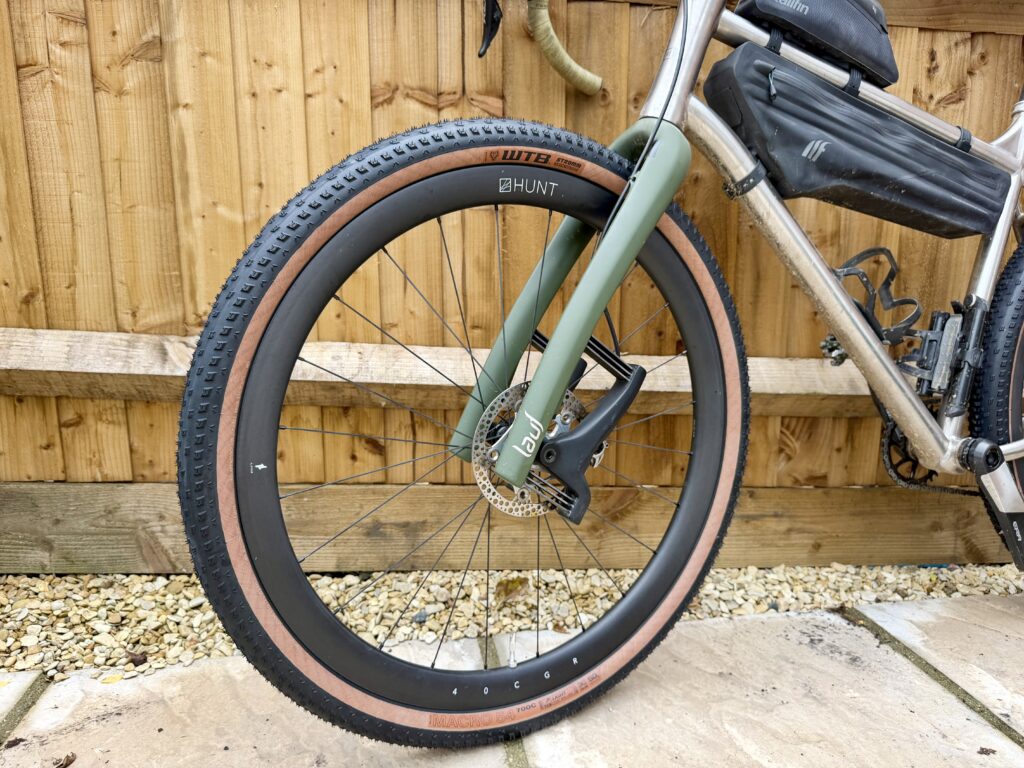
Described as “an impressively simple light that weighs almost nothing” by our reviewer, the 20 lumens it pumps out is bright enough for a useful visibility boost. The mount is magnetic and, like most Knog lights, there’s a USB port built into it so you don’t need a cable to charge. 

Burn time isn’t the greatest in steady mode at two hours, but on eco flash you can get a huge 40 hours out of it according to Knog. There are five modes to choose from, and at well under the 20 quid mark you can’t really go wrong. 

Exposure Boost-R with ReAKT
Exposure Boost-R with ReAKT (Image Credit: Farrelly Atkinson)

Exposure Boost-R with ReAKT

Best rear bike light

Great build quality

Good runtimes

Several modes

Bright

Pricey

The latest smart rear light from Exposure has taken the highly regarded Trace-R and doubled the runtimes, while adding just 10g in weight. 

You get a big 80 lumens on the max setting, plus six modes with run times ranging from six to 48 hours. 

The ‘ReAKT’ feature is excellent, adapting to the light conditions and flaring up when it senses that the rider is braking. Additionally, the Peloton feature recognises when there is a front bike light behind you and dims itself to save dazzling the following rider. 

If you have the cash to invest in this light, you won’t be disappointed.

Bryton Gardia R300L Rear View Bike Radar Tail Light
Bryton Gardia R300L Rear View Bike Radar Tail Light (Image Credit: road. cc)

Bryton Gardia R300L Rear View Bike Radar Tail Light

Smart light functions

Simple to operate

Easy pairing with head units

Effective radar coverage

‘Loses’ vehicles when they’re moving at your speed

Not 100% on picking up motorbikes

For considerably less money than Garmin’s Varia rear smart light, the Bryton Gardia R300L does an impressive job of detecting cars from an impressive distance away, and the beam is decent. 

As well as these featurrs, you get extras such as a simple smartphone app and smart light capabilities. The unit pairs with most head units and should detect vehicles up to 150m away. Our reviewer found it could pick up from even further away than that, about 180-200m on straight roads. 

The light is also very effective, with five settings and just a quick press to flick between them. The light also detects changes in speed and can deploy a brake light, and a flashing light pattern that changes when a car is approaching to increase the chances of you being seen.

It can struggle to pick up motorbikes and vehicles moving at speed, but overall this is a decent light and radar system in one affordable package. 

Lezyne Strip Drive 300+ LED Rear Light
Lezyne Strip Drive 300+ LED Rear Light (Image Credit: Farrelly Atkinson)

Lezyne Strip Drive 300+ LED Rear Light

Best super bright rear bike light

Easy to use

IPX7 waterproofing

Huge run-times

Wide range of powerful modes

It’s quite chunky

No-nonsense, easy-to-use and highly capable – that’s how our reviewer summarised Lezyne’s revamped Strip Drive with a huge 300 lumens in its max setting, and loads of other useful modes for all use cases at a sensible price. 

You get a huge 80 hours out of this light in the lowest 5-lumen mode, and in the 60-lumen ‘always on’ mode, it’s still over five hours – enough for a week of commuting or more for most of us. It’s easy to use and fits almost any seatpost with the flexible back and stretchy rubber strap to attach it. 

If you want to go even brighter still, there’s always the Lezyne Zecto Drive Max 400+ that also scored well in its road.cc review – but the Strip Drive edges it for the huge run times and ease of use. You don’t get any smart braking tech or extras beyond the super bright light, but the very good price reflects that. 

Giant Recon TL 200
Giant Recon TL 200 rear light (Image Credit: Farrelly Atkinson)

Giant Recon TL 200 rear light

Best value rear bike light

Easy to use

Waterproof, reliable and durable

Good run-times

Compact

Bright

Tricky to separate light from bracket (but at least you won’t lose it on bumpy ground)

Giant might not be the first name you think of for bike lights, but the Recon TL 200 makes a convincing case for reconsidering. This chunky rear light fires out a genuinely eye-catching 200 lumens, with 270° visibility that’s brilliant for getting you seen at junctions.

It’s easy to mount, rock-solid once fitted, and packed with useful modes, including smart day and night settings. High flash lasts a claimed six hours – and in real life we found that it survived full 100-mile rides without blinking out.

Add USB charging, mode memory, a low-battery indicator and IPX7 waterproofing, and you’ve got a rear light that does a great job and provides very good value.

Garmin Varia RTL515 (Image Credit: road. cc)

Garmin Varia RTL515

Best rear light with radar

Alerts you about overtaking objects well before you can see or hear them

Great rear light

Expensive

The Garmin Varia RTL515 is one of those gadgets you don’t think you need… until you’ve ridden with it. It pairs a bright rear light with a radar that spots approaching traffic up to about 140 metres behind you – before you can hear it – delivering a clear, windproof beep and a handy on-screen alert.

Yes, you can look over your shoulder, and yes, mirrors are cheaper – but this warns you without taking your eyes off the road. Detection range is up to about 140 metres, alerts are reliable, and the light itself is among the best in class in terms of flash pattern and brightness. The price is undeniably premium, but after riding with one, going back feels oddly uncomfortable.

Cycliq Fly6
Cycliq Fly6 Pro Bundle (Image Credit: Farrelly Atkinson)

Cycliq Fly6 Pro Bundle

Best rear light with a camera

Good rear light

Weatherproof

Easy to use

USB-C charging

Excellent quality footage

Buttons are flat and hard to find

It’s a big unit

Price

The Cycliq Fly6 Pro combines a rear-facing camera and bike light, offering video recording in 4K and 100-lumen output. The video resolution is excellent for capturing details in case of an incident, and the device is easy to use with Wi-Fi transfer simplifying footage viewing. 

The bundled package being reviewed here includes the Fly6 Pro unit with a 64GB microSD card, a USB-C cable for charging and transferring files, a safety tether, mounting bracket, two mounting straps, and four bracket adapters. The Fly6 Pro unit is also available to purchase on its own, currently priced at £329.

Oxford Ultratorch Slimline R50 Rear LED
Oxford Ultratorch Slimline R50 Rear LED (Image Credit: Farrelly Atkinson)

Oxford Ultratorch Slimline R50 Rear LED

Easy fitting

Decent performance

Great value

Not as bright as some

If it’s simplicity you want and you want a good deal, look no further than the Oxford Ultratorch Slimline R50. It’s easy to fit, great value and offers decent performance for the money.  

The bracket is a simple rubber wedge that fits to the back of the unit, held on by a rubber band. It won’t fit aero seatposts, but for the rest of us it’ll work just fine. 50 lumens is quite a lot for a rear light, and plenty to use it as your main rear light. The weight is just 27g, and battery life is from two hours on the highest steady setting up to 23 hours on the lowest pulse mode. 

This simple rear light does the job of making sure you’re seen, with ample light output, good mode choices and easy operation. 

Helmet lights, 2-in-1s and light sets

Exposure Link+ Front and Rear Combo with DayBright
Exposure Link+ Mk3 Front and Rear Combo with DayBright (Image Credit: Farrelly Atkinson)

Exposure Link+ Mk3 Front and Rear Combo with DayBright

Best helmet-mounted light for extra visibility

High-quality construction

Powerful front light

360 degree visibility

Not cheap

With 360-degree visibility, a powerful front and rear light and high-quality construction, the Link+ is a great light combo that made our reviewer feel safer on the commute (we reviewed the Mk3; Exposure is now up to Mk5)

Now with 400 lumens at the front and 50 at the rear in constant modes, the light is more than bright enough and it’s very simple to operate with a single button to control brightness and modes. You can also use it on your bars as a front light with an additional mount. 

This light is very well made and versatile, offering cyclists lots of extra visibility front and rear if used as a helmet light. 

Our favourite bike light sets

Lezyne Strip Drive+ Pair
Lezyne Strip Drive+ Pair (Image Credit: Farrelly Atkinson)

Lezyne Strip Drive+ Pair

Best light set to get you seen

Wide angle of visibility

Simple functionality

Good battery life

USB-C charging

Really well made

Simple rubber strap mount isn’t as robust feeling as some

Front light better suited to being mounted vertically, which limits fitting options

A little bulky

Lezyne’s Strip Drive+ Pair is a solid set of lights to get you seen, the front one kicking out 700 lumens, the rear 300 lumens to make dusk rides and traffic-heavy commutes far safer.

They’re a little chunky, but the plastic casings are durable, and the IPX7 rating means that rain isn’t a problem. The wide 270° visibility is brilliant for getting you noticed, though the front one can be a little distracting in your peripheral vision.

USB-C charging is quick, and the mode memory – meaning the lights will start up in the same mode you were last using – is a neat touch, albeit one that’s commonplace now. The silicone straps could be sturdier, but they work just fine.

Tough, bright, and reliable, these are a perfect option for commuting or road riding, and they’re well-priced too.

Lezyne Femto USB C
Lezyne Femto USB C Drive Light Set (Image Credit: Farrelly Atkinson)

Lezyne Femto USB C Drive Light Set

Decent run-times

Water-tight port cover

Light & compact

Unforgiving mount

The Lezyne Femto USB C Drive Light Set is a tiny powerhouse for urban commuting and other forms of functional riding. Upgraded with USB-C charging, the lights go from flat to full in under three hours, and a red light turns green to let you know they’ve reached capacity.

Blast mode delivers 50 lumens up front and 15 at the rear (both for 90 minutes), and that’s enough to get noticed, even in mist or fog. The lenses give 270° visibility, and the operating button is easy to use with gloves on – perfect for winter commuters.

Mounting is simple – two hooks in the plastic shell and a silicone band – but it works fine for round posts and bars.

Compact, waterproof and reliable, the Femto set proves that good things really do come in small packages.

How to choose from the best bike lights

Do I need bike lights?

If you’re going to be riding in any conditions other than bright sunshine, then yes, it’s essential to own a set of bike lights. In the UK and many other countries, it’s illegal to ride on public roads between sunset and sunrise without lights (and pedal reflectors in the UK, although this is rarely enforced or understood by most police officers).  

Some cyclists swear by running lights at all times to add extra visibility and alert less competent drivers around them to their presence. In the UK and pretty much everywhere else in the world, it isn’t a legal requirement to use lights before dusk or after sunrise, so this is up to you. 

How bright should my bike lights be?

As a very rough rule, you front light needs to be at least three times the brightness of your rear light, and a lot more than that if you plan to ride on unlit trails. Lumens isn’t the only thing that tells you the total brightness of your light, but generally you’ll want something that is advertised as having at least 100 lumens on the front to be visible to other road users, preferably 200 or more. General feedback we’ve had from the road.cc team tells us that most lights with round beams advertised as kicking out 800 lumens or more can be dazzling on their highest setting; but again, use your judgement and choose a front light that is easy to toggle between high and lower settings if you’re switching between lit and unlit sections on your ride. 

Lights for riding off-road at night need to be much brighter, and thanks to modern technology you can get front lights that will illuminate a trail almost like it’s daytime. Trail lights will often have beams advertised at well over 1,000 lumens, sometimes as high as 5,000. 

Rear lights don’t need to illuminate your path and red/orange beams require less power than white ones, so the number of lumens you need will be far lower. A 20-lumen rear light is usually more than adequate for riding on the road and can be seen from quite some distance.

What is the difference between lumens and lux?

In short, lumens is the total amount of light emitted from the source in all directions, while lux measures the total amount of light that falls on a surface, taking area into account. To give a brief example, if you shine a beam that has a total of 1,000 lumens at the wall, at its max brightness but on a setting where the beam spreads 80 degrees wide, there will be far less lux on the wall than if you had the same brightness but with a beam that spreads 40 degrees wide. It’s because of this that we use lux in our Beam Comparison Engine, measuring the lux value of the beam at a distance of two metres, in 10cm increments from the centre of the beam to 1m from the centre, which gives a total of eleven readings.

To clarify: most brands will advertise how bright their lights are using lumens and this is a decent indicator of how bright they can be, but it doesn’t tell the full story.

What is an StVZO-compliant bike light? Do I need one?

In Germany, front lights have to be StVZO-compliant, which means they have a beam that is cut off to avoid dazzling other road users; these are often square as opposed to round. The legislation also requires that front lights must be on constant and not flashing, which means Germans are forbidden from using flashing or pulsing settings. The reasoning for this is because flashing or pulsing lights are distracting, according to the StVZO rules.  

Do you need to abide by these rules? If you live in Germany then yes, of course. For the rest of us, we can use our own judgment to decide which beam shape and style is best for us. It is perhaps polite and common sense to use front and rear lights that don’t dazzle other cyclists, motorists and pedestrians, and if you want to make sure of this then you can look for beams that are StVZO-compliant. The problem is that not many manufacturers outside of Germany make them, with Lezyne and Cateye being two rare examples of brands that sell StVZO-compliant lights in the UK. Some brands such as Ravemen and Moon use refractive lenses to shape the beam so less of it’s going into the sky, and we’ve found Ravemen’s version with refractive elements to spread and lower the beam to be especially effective. 

In short, do what’s best for you and your riding, but be considerate of others. You might feel the need to up your beam strength momentarily to alert someone of your presence if you think they have not spotted you, so in this case a quick, strong flash of light might achieve this without causing any harm. 

Are LED bike lights best?

The very short answer to this question is yes, bike lights that use LEDs in some form or another will be your best option in most situations! 

LED lights have improved massively in the last two to three decades and are pretty inexpensive to make and to buy. They’re tiny, they last forever, they’re rugged, they run fairly cool and they’re easy on the juice, so it’s a no-brainer. Any lights that don’t run off LEDs are not really worth bothering with nowadays when you can pick up rechargeable LED bike lights for under 15 quid. 

Emily is our track and road racing specialist, having represented Great Britain at the World and European Track Championships. With a National Title up her sleeve, Emily has just completed her Master’s in Sports Psychology at Loughborough University where she raced for Elite Development Team, Loughborough Lightning. Emily is our go-to for all things training and when not riding or racing bikes, you can find her online shopping or booking flights…the rest of the office is now considering painting their nails to see if that’s the secret to going fast…  

14 Comments

14 thoughts on “Your ultimate guide to bike lights for road cycling — see and be seen with our selection of the best for your bike”

  1. The way most of these lights

    The way most of these lights attach to your bike is appallingly bad design. Clearly an afterthought in most cases. …we need a review of bike mounts. 

    • andystow wrote:

      No love for dynamo powered lights? I have more of those installed than battery lights

      — andystow

      No thank you. One issue is that they stop working when you stop moving, unless it’s a dynamo with a battery in which case you might as well have the battery and not the dynamo.

      It’s usually a poor idea to generate electricity from human power – it’s so much easier and more cost effective to slap in a solar panel instead.

      • hawkinspeter wrote:

        unless it’s a dynamo with a battery in which case you might as well have the battery and not the dynamo.

        — hawkinspeter

        Not really, because the battery is only being used when there’s not sufficient charge from you moving, and gets recharged when there is, so you don’t have the business of recharging between rides, or low battery issues.

        It’s usually a poor idea to generate electricity from human power – it’s so much easier and more cost effective to slap in a solar panel instead.

        — hawkinspeter

        But then it’ll get obstructed when I put my helmet on…

      • Quote:

        No thank you. One issue is that they stop working when you stop moving, unless it’s a dynamo with a battery in which case you might as well have the battery and not the dynamo.

        Not if you get a “standlight” version. Just fitted a set to my round town utility bike. Brilliant so far. The light stays on for a few minutes after you stop moving. Haven’t actually timed it yet but it seems more than enough. Not bright enough where there are no street lights (although better then nothing) so I take another front light if needed.

      • Well you dont seem to have
        Well you dont seem to have used dynamo lights in the last few decades.so let’s clarify some things.

        1. Front and rear lights have capacitors in them to keep them on for anything between 5 and 10 minutes when you stop.

        2. The lenses are designed to focus the light where it is needed. With a front light, thats on the road. Rear lights are normally diffused slightly. This maximises light efficiency, and doesn’t blind other road users unlike many battery lights.

        3. Unlike battery lights, they won’t die on you cos you forgot to charge them. They’re always available.

        4. They are bolted to the bike so you dont need to unclip them when you go into the shop so they won’t get nicked.

        5. A lot of them come with light sensors so they turn on and off as the light changes. That’s really useful.

        6. With modern dynamos there is almost no drag, and with hub dynos it isnt noticable at all.

        • gazza_d wrote:

          Well you dont seem to have used dynamo lights in the last few decades.so let’s clarify some things.

          1. Front and rear lights have capacitors in them to keep them on for anything between 5 and 10 minutes when you stop.

          2. The lenses are designed to focus the light where it is needed. With a front light, thats on the road. Rear lights are normally diffused slightly. This maximises light efficiency, and doesn’t blind other road users unlike many battery lights.

          3. Unlike battery lights, they won’t die on you cos you forgot to charge them. They’re always available.

          4. They are bolted to the bike so you dont need to unclip them when you go into the shop so they won’t get nicked.

          5. A lot of them come with light sensors so they turn on and off as the light changes. That’s really useful.

          6. With modern dynamos there is almost no drag, and with hub dynos it isnt noticable at all.

          — gazza_d

          Yep, I can’t recall ever using dynamo lights. You make some good points, but I still prefer battery powered lights (cheaper, lighter, more powerful, zero drag, quickly removable, usable off the bike etc.).

          I did back a KickStarter years ago for a bike light that you could lock in place on the bike (i.e. theft resistant), but it was heavy for its performance, so I ended up not using it.

          I think ultimately, having to recharge from human power limits how powerful lights can be, and as a Cycliq user, running a couple of cameras too probably isn’t feasible from just a dynamo. Maybe battery and solar power would work better, but that means either leaving the bike and lights outside in the day to recharge or remembering to charge up the light in the sunshine.

          • I run a Fly6 on the rear in

            I run a Fly6 on the rear in addition to the dynamo lights, but if it dies I still have lights.

            It’s very freeing not to worry about keeping lights charged ever. There is some resistance to pedalling, of course, but I literally cannot feel it unless I try to turn the wheel by hand. Theoretically it’s about 3% of my power, which would be 1.1% of my speed, or less than 0.2 MPH.

          • andystow wrote:

            I run a Fly6 on the rear in addition to the dynamo lights, but if it dies I still have lights.

            It’s very freeing not to worry about keeping lights charged ever. There is some resistance to pedalling, of course, but I literally cannot feel it unless I try to turn the wheel by hand. Theoretically it’s about 3% of my power, which would be 1.1% of my speed, or less than 0.2 MPH.

            — andystow

            Ironically, my front Fly12 just died on a cycle ride leaving me with no front light. I had to go out again later, so used a powerful head torch instead. Only two and a half years old, so I’m hoping that Cycliq will be helpful.

    • I’ve got them on all bikes
      I’ve got them on all bikes ATM.

      There are great options for all kinds of bike riding now of course. But unless you race / are a fanatical weight-and-watt weenie for some other reason, or are doing lots of fast riding in pitch-dark (midnight cyclocross / MTB downhill?) or have sworn never to be or after sunset or they seem an obvious choice. (Or if you have an ebike so will be charging that anyway?)

      I’m the “I’ve a bike not a car” use-case so like a car I don’t want to have to remember to take lights or charge them up.

      I’m amazed what a light can squeeze out of 3W of dynamo (or is it magneto) power, which I don’t notice generating. Of course I grew up in the age of the Everready D-cell light – and dynamo lights were also poor… so everything is amazing!

      Dynamo power to the rear light should cover all use cases (unless you’ve learned to reverse?) For the front physics still applies – if you’re going pretty fast in an unlit place the front dynamo light is likely not going to reach as far as you want. You also might want a wider coverage. But for me those will always be rides I know I’m doing in advance, so I can just slap on a rechargeable (and a back up).

    • I bought a cheap secondhand
      I bought a cheap secondhand sp front wheel and a £10 dynamo light set off alixepress recently, absolutely brilliant. I love having a bright light with a shaped beam that I can’t lose or forget to charge. For commuter bikes they’re a no brainer. If it’s properly wet I’ll supplement with a flashing be seen light front and rear but for 99% of the riding I do on that bike (pub, town, school run, work) it’s great.

Leave a Comment


Read more...

Read more...

Read more...