




Fitbit faces a class action lawsuit in California alleging it falsely claims its PurePhase activity trackers record heart rate accurately.
Plaintiffs say, “The PurePulse Trackers do not work, and their heart rate readings are wildly inaccurate.”
In a suit filed on 5 January with the United Stated District Court, Northern District of California, San Francisco Division, the plaintiffs allege (in the words of the class action complaint):
• Fitbit falsely claims the PurePluse trackers consistently record accurate heart rate.
• The PurePulse trackers fail to consistently record accurate heart rate as promised and warranted.
• Fitbit attempted to keep class members out of court through an unconscionable post-purchase agreement, which class members were required to accept in order to render operational the PurePulse trackers they already purchased.
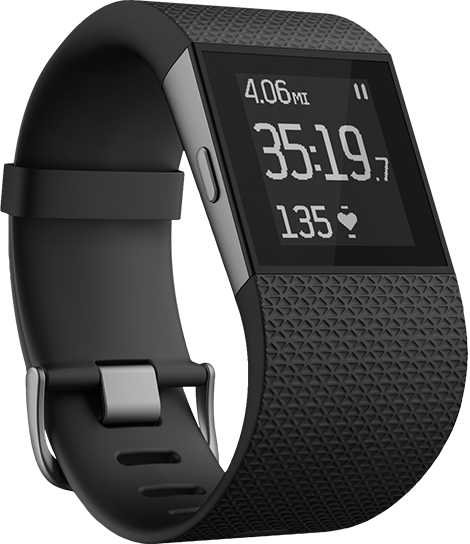
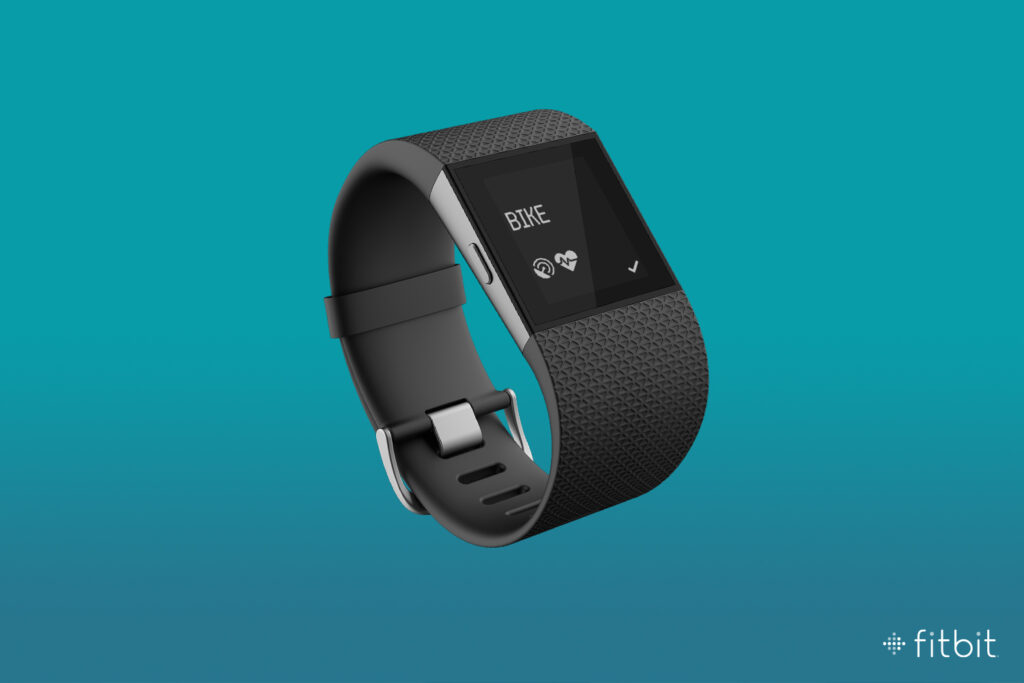
The allegations relate to the Charge HR (£119.99) and Surge (£199.99) fitness watches. Both of these products measure your heart rate at your wrist; there’s no chest strap.
“When the heart beats, your capillaries expand and contract,” says Fitbit. “PurePulse LED lights reflect off the skin to detect that change. Finely tuned algorithms are applied to measure heart rate automatically and continuously.”
However, the class action lawsuit says, “The PurePulse Trackers do not and cannot consistently and accurately record wearers’ heart rates during the intense physical activity for which Fitbit expressly markets them.
“The PurePulse trackers consistently mis-record heart rates by a very significant margin, particularly during exercise.
“Not only are accurate heart readings important for all of those engaging in fitness, they are critical to the health and well-being of those Class members whose medical conditions require them to maintain (or not to exceed) a certain heart rate.”
The suit also asserts that a clause banning class actions, contained in the agreement Fitbit users have to agree to before they can set up an online account and use the product, is invalid.
One plaintiff, Teresa Black, says that her Charge HR gave a reading of 82 beats per minute (BPM) when a manual recording of her heart rate said it was 160.
Another plaintiff, David Urban, says that his PurePulse Tracker consistently under-recorded his heart rate at high intensities, often by 15-25BPM.
Fitbit strongly disagrees with the statements made in the complaint, saying the case has no merit. It plans to defend the lawsuit.





















23 thoughts on “Fitbit heart rate tracking dangerously flawed, lawsuit alleges”
“Finely tuned algorithms are
“Finely tuned algorithms are applied to measure heart rate automatically and continuously”
Why do you need an algorithm to measure a heart rate?
Duncann wrote:
I don’t know if you’re being obtuse, but how would you automatically determine a heart rate using (what is essentially) a simple video camera without using some sort of software algorithm?
DrJDog wrote:
Not obtuse but possibly ignorant. My limited understanding is that the device uses formulae and assumptions to estimate heart rate. But the pulse is right there, physically and accurately measurable. Surely the sensible option is to measure it directly? Perhaps there’s more to it than that.
Duncann wrote:
A wristband that pressed on the artery in the way you do to measure a pulse with a finger would be uncomfortable to wear all the time. (And the ncessary pressure sensor would possibly use more battery than the LEDs currently used.)
A clip on fingertip device would be awkward (as is a separate chest-band monitor).
https://en.wikipedia.org/wiki/Pulse_oximetry#/media/File:Wrist-oximeter.jpg
My new Garmin Vivosmart HR is
My new Garmin Vivosmart HR is the same.
Wildly inaccurate HR when riding the bike low and high. Have had to go back to using a chest strap.
Not impressed.
gazzaputt wrote:
That’s good to know – I was planning on getting one of those in the near future to use instead of a chest strap, but I won’t bother now…
The hardware will provide
The hardware will provide certain data – perhaps a list of 5,00 numbers representing light levels coming back out of the skin for each of the last 5,000 miliseconds. The user wants to a single number representing their average heart rate over that time. Taking that list of 5,000 numbers and coming up with one number to display takes an algorithm.
Have been dubious of these
Have been dubious of these optical devices since their inception. Chest strap ecg for me thanks.
Why is everyone so crazy
Why is everyone so crazy about measuring thier heartbeat? I don’t get it.
I read a study recently (on a
I read a study recently (on a cycling related website but I can’t remember which one…) where they got an athlete hooked up to an ECG by a cardiologist and also made him wear one of the ‘on the wrist using leds’ type monitors and ran him through a load of cycling tests.
Net result? The wrist based one was hopelessly inaccurate.
Until the ambulance service
Until the ambulance service start using them to monitor patient heart rates, they are little more than gimmicks, a lifestyle fashion statement. But hey, which of us is not also guilty of such self indulgent frippery? And if wearing one encourages people to do a bit more exercise that is no bad outcome.
FWIW The algorithm would be the application of a formula to the raw data (presumably hundreds of infra red absorbtion measurements per second) being streamed from the sensor to turn that into meaningful information, in this case a heart rate and possibly an O2 saturation? If you are interested I’m sure Google has hundreds of articles about pulse and pulse oximetry meters and how they work.
Mungecrundle wrote:
I could be wrong – I was pretty out of it for a lot of the time – but when I was in hospital last summer (I really can’t remember the ambulance being any different) while my pulse was being monitored, they used an LED-based sensor that went on the finger. So it works. But when it was absolutely necessary to know what my heart was doing (during the op), they used more sophisticated ECG gear using pads stuck to my chest. They were right sods to get off, too. Much stickier than most hospital adhesives.
FWIW, when I get back on my bike I’ll be using my chest strap heart rate monitor because it works a lot more reliably. But the LED-based monitors aren’t a waste of time – when asked to measure rates that aren’t changing rapidly.
Mungecrundle wrote:
The medical profession already use the technology and have done for years. Where do you think it cascaded down from? The little probe slipped over a patients finger is an optical sensor, the only different with a wrist based unit is position of application to enable the user to be active.
FWIW i have the new Garmin VivoSmart and have found it to be very accurate. The very odd blip here and there when a bead of sweat fouls the sensor but nothing to complain about. I read many reviews before purchase and all indicated that wrist based units were for the most part as accurate. Alot of reviewers had wrist and chest systems working side by side with no difference. I had more issues with poor performance of the chest strap units as they would not stay in position no matter how loose/ tight i had the strap.
Not every system is going to be good for every potential user. I’m lucky in that i am very lean so i guess that the optical system does not have to try too hard to find blood vessels under my skin. Therefore this type of product works for me.
Martyn_K wrote:
The medical profession has been using them to monitor heart rate for the past 30+ years! The technology is primarily used to measure the oxygen saturation of haemoglobin, but most if not all units also display a measure of the pulse.
This is not always the same as the heart rate as measured by the ECG, which records the electrical activity of the heart. It is perfectly possible for the heart to be firing off electrical action potentials at a particular rate but produce a completely different pulse rate, for example in fast atrial fibrillation. In extremis there can be regular ECG complexes but no forward movement of blood so therefore no pulse, a condition known as pulseless electrical activity.
The problem with pulse oximeters is that they are very susceptible to movement artefact, so bugger all use if you’re jiggling around on a bike!
I have the Charge HR and have
I have the Charge HR and have noted that the HR reads very low compared to my strap when on a bike ride/run. I am not too bothered about this though as the reading is relative and I use it as a comparitor to previous activities.
FitBit should not claim it to be very accurate, but I also think users should see this as a transient solution until we start using a holistic approach to health monitoring. The Internet of Things which will allow many health related devices to accurately measure multiple facets of our health, and provide an integrated dashboard to be used by our doctors, hospitals, gym, insurance companies, pharmacists etc, is not too fare away-I’d guess in around 5 years-at which point this will be a long forgotten issue.
Always pays to be specific.
Always pays to be specific.
Until the ambulance service start using FitBit to monitor patient heart rates…..
There’s some question over
There’s some question over the technology used here and whether it’s fit(bit?) for purpose. The tech is good, but as with many things, the application is done in a cheaper fashion than you would find in medical grade applications. I would also hazard a guess that the measuring frequency is more widely spaced than a device with as much power as it needs. The fitbit needs to eek out it’s battery so this may well have an impact on the accuracy in order to last the 5 days it promises. Relating to the IoT, once we crack battery life through materials such as graphene this will no longer be an issue, until then it’s going to be a compromise.
I’ve been telling this to
I’ve been telling this to clients and customers for years – they look at me like I have horns growing out of my head. It use to be the finger tip based monitors on exercising equipment. Chest strap units are the most accurate in the consumer based products.
Finally I have some written proof to show them.
I’ve got a Charge HR and seem
I’ve got a Charge HR and seem to remember reading before getting one that it was not accurate for intense excercise although they recommend wearing it higher up the arm to try and give slightly more accurate results. I think anybody who uses one of these to monitor their heart rate because of a medical condition is a bit of a fool. They are not sold for that purpose but more as a motivational tool and a bit of fun.
Every pulse oximeter I’ve
Every pulse oximeter I’ve used in my 20 years as an anaesthetist has been very susceptible to movement artefact. This technology is therefore totally unsuitable for this application.
As an aside, what is the point of all these activity trackers? If you’re engaged in some specific fitness activity, whether it’s training or racing, then I can see the merit of monitoring HR, power, etc, and that’s what I do.
But to wear something like this to record “every day activities” is just mental. What is the point? So you can justify eating that extra donut?
Great to see some qualified
Great to see some qualified comments from the medical community here. I bow to your superior knowledge on artefact movement and the like, but is this accentuated by general movement or movement in relation to the wrist itself?
Also, the question from Gasman Jim as to why bother in the first place? I would say that this is the direction that the world is moving towards. Some people like myself just love stats, but, many people would not be happy to monitor their vital stats 24/7 right now. I think this is going to be advantageous in the future, though. People will, IMHO, be given better premiums on things ranging from gym membership to all forms of personal insurance and healthcare if they wear a device. This is similar to car insurance companies putting trackers on young driver’s cars as they do today. We all have a choice on this for now, but for those that deny they will ever succuumb to this, remember that 10 years ago people were very suspicious about purchasing anything online.
jimbo2112 wrote:
I would say movement of the device itself is the main problem. So pedalling , seated, on a turbo would be fine I think. But out on the road, vibration, steering movements, and the wrist movement when climbing out of the saddle would be problematic.
Your second point is interesting, but I really do think these devices are just a fad.
How accurate are they when
How accurate are they when you’re not doing exercise? I’m quite interested in getting one for general health monitoring (and cos I’m a geek and I like health stats) – I could see it being quite handy for checking resting HR as a sign of possible overtraining, for example. Knowing it’s not accurate during hard exercise isn’t an issue, I’ve got a Suunto for that!