



In the technology world, most of which is currently gathered in Las Vegas for the annual Consumer Electronics Show (CES), there’s a huge amount of buzz about wearable technology, and many companies have the fitness market in their sights.
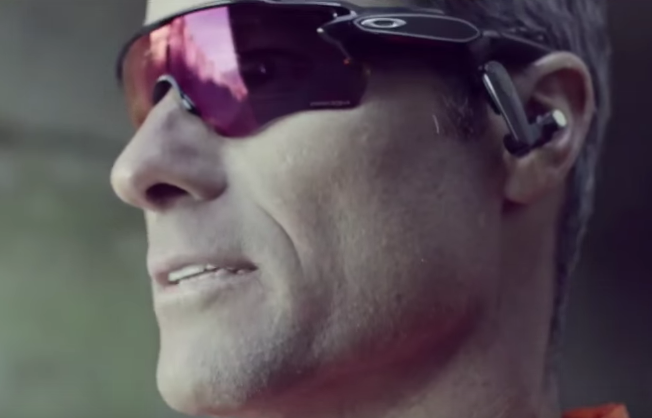
Cyclists are being targeted too – Intel and Oakley have unveiled Radar Pace, smart glasses with voice-control that can provide real-time data about your progress and performance.
There’s very little information currently available, and they are clearly a prototype at this stage, although they look pretty much finished to us. According to Business Insider, the glasses, made by Oakley and featuring Intel technology, will allow a cyclist to get updates about speed, distance and power output. We assume the glasses will be able to connect to compatible sensors via either Bluetooth or ANT+.
The glasses use earphones (which means you couldn’t now use the Radar Pace in California as wearing of headphones while cycling has been outlawed) to relay information from the sensors. A microphone is used to issue commands, not unlike similar services offered by Apple and Android smartphones.

The potential is to have a coach in your ear all the time providing real-time data about your performance, without having to take your eyes off the road. Compared to the recently announced Garmin Varia Vision heads-up device, there’s no obstruction to your field of view.
Intel recently bought the company behind the Recon Jet so it’s clearly keen to get a foothold in this emerging market. It’ll be interesting to see if the two products are merged or whether it will look to offer distinctly different products with different features.
The Radar Pace glasses won’t be available until late 2016. We’ll hopefully get some more information before then.
It does raise the question, is this the sort of product you would use on a bicycle ride or race? Tech companies are pouring a lot of development money into these premium priced products, so they’re clearly confident there’s a market for these devices. Do you want something saying “keep it up” in your eye all the time? Or could it revolutionise how many people ride a bike?


















8 thoughts on “Intel and Oakley unveil Radar Pace smart glasses that provide real-time performance feedback”
Really? Maybe just getting
Really? Maybe just getting on and riding the bike might be an idea.
A fool and his money…
Presumably, Oakley’s expertise in eyewear allows them to see mugs coming from a great distance.
Really? Maybe just getting
Really? Maybe just getting on and riding the bike might be an idea.
A fool and his money…
Presumably, Oakley’s expertise in eyewear allows them to see mugs coming from a great distance.
Really? Maybe just getting
Really? Maybe just getting on and riding the bike might be an idea.
A fool and his money…
Presumably, Oakley’s expertise in eyewear allows them to see mugs coming from a great distance.
Really? Maybe just getting
Really? Maybe just getting on and riding the bike might be an idea.
A fool and his money…
Presumably, Oakley’s expertise in eyewear allows them to see mugs coming from a great distance.
Bugger me, don’t I go on?
Bugger me, don’t I go on?
Hmm, recreate that ‘spinning
Hmm, recreate that ‘spinning class’ experience out on the open road….
Dave, I’m afraid you just
Dave, I’m afraid you just don’t have enough power to win this Strava KOM.
Companies are queuing up to
Companies are queuing up to create a tool that will provide Chris Froome his power data at eye level and stop him looking down all the time.
However, there is a rumour that Sky have sold advertising space on the top of CF’s helmet (ooo er!) to maximise revenue streams 🙂