




A body representing independent cycling retailers in the UK has demanded “immediate” changes to what it describes as the government’s “flawed” Cycle to Work scheme, arguing that the initiative is dominated by providers who “put business profits well ahead of cycling development” and describing Cyclescheme’s decision to prevent retailers from charging additional fees as “the straw that broke the camel’s back”.
The Association of Cycle Traders (ACT) released a statement this week calling for reform of how the Cycle to Work employee benefit scheme, the government’s tax-friendly initiative which enables people to buy a bike and accessories through salary sacrifice, is implemented, in order to enable the scheme to “engage all parties in the supply chain” and to grow the initiative “in a manner that allows the cycle trade to make some retained profit”.
The ACT – along with its parent company, the British Independent Retailers Association (BIRA) – also said it has been approached by a “large volume” of cycling retailers throughout the UK calling for change to Cycle to Work, the majority of whom they claim “are unwilling to speak publicly for fear of being excluded from business opportunities” by the scheme’s established providers.
The association’s proposed changes, it claims, will “help realise the full potential of Cycle to Work and most critically, by working together, get many, many more employees cycling to work”.
The call for reform comes in the wake of the decision by Cyclescheme, the UK’s largest provider of access to Cycle to Work, to update its retailer partner agreement, preventing retailers from charging additional fees on bikes purchased under the scheme – a decision described by traders as “incredibly short-sighted” and “infuriating”, and one that could lead to bike shop owners losing money.
Cyclescheme announced at the end of November that it is updating its policies in order to, it claims, “ensure fairer pricing for Cyclescheme customers” and guarantee that “participant experience is in line with their expectations”.
The changes, which will come into effect on 22 December, will see Cyclescheme ask their retailer partners to “commit to a policy of no additional fees and full availability as advertised when a customer redeems a Cyclescheme certificate”. The updates, Cyclescheme says, also reflect the most recent FCA regulatory requirements and compliance policies.
“We are committed to getting more UK employees cycling to work, by removing the financial and accessibility barriers associated with getting a new bike,” Adrian Warren, senior product director at BHN Extras, Cyclescheme’s parent company, said when announcing the new policy.
“This update to our retailer agreement ensures that Cyclescheme customers are being met with consistent and transparent pricing, reducing confusion for retailers and participants, and aligning with regulatory guidance.
“With a shared goal between retailers and Cyclescheme to get more people cycling, these changes will create a more positive and fair experience for all participants.”

> How to save money on a bike with a Cycle to Work scheme
The changes, however, have been criticised by ACT, who argue that independent retailers have “wrongly been the cash cow of Cycle to Work for over two decades”.
“The Cycle to Work employee benefit scheme introduced by the UK Government over 23 years ago has never reached its full potential and is at risk of losing further momentum at a critical time for the industry and cycle usage in the UK,” ACT said in a statement, launching its campaign for reform of Cycle to Work.
“The delivery structure of Cycle to Work is flawed primarily due to the lack of direct engagement by the larger entities within the UK trade and the drive for commercial income by the established players in the delivery of the employee benefit.
“There are two dominant players in the market: Halfords and Cyclescheme and an ‘alliance’ of providers that appear to put business profits well ahead of cycling development.”
ACT also pointed out that, “as an entity within a large US corporate business”, Cyclescheme’s published accounts from 2010 to 2022 “report profits before tax of over 58 percent of revenue”.
“That’s c.£55m that could have been re-invested into the UK cycle industry and which has largely been drawn from the £90m plus of revenue from the UK independent cycle retail sector,” the association said.
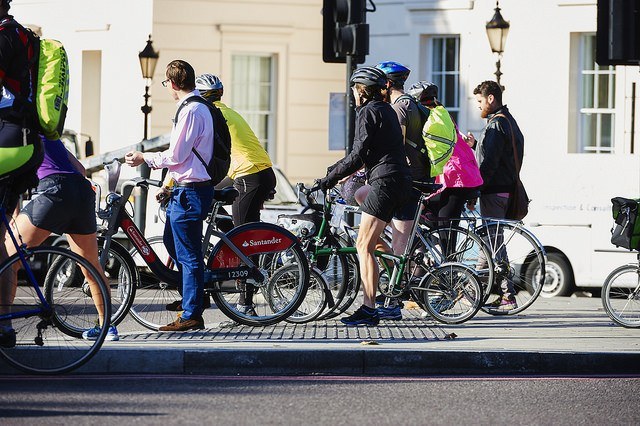
> Cycle to Work scheme not working for London, says Labour
The statement continued: “The independent retail cycle sector has wrongly been the cash cow of Cycle to Work for over two decades and this has to change now.
“The recent enforced changes in pricing policy applied by some parties and blamed erratically upon FCA legislation is simply the ‘straw that broke the camel’s back’.
“Wider industry fears in tackling this long-term issue have been fired by industry lethargy, limited financial exposure for many, and the bogey man threat that Cycle to Work legislation might be withdrawn, a fear that an increasing number of IBDs are now viewing as an ‘opportunity’.
“At a time when the industry is actively seeking greater support from government for cycling – including a call for more cycle incentive subsidies – one of the most obvious actions that the industry should take itself is reform of the Cycle to Work employee benefit.
“Once we have a united, fully participating industry in this area, the ACT believes that there is lots of room for further development with government, especially around electric incentives that the car industry benefits from with government support in the UK.”
The ACT concluded by noting that “alternative schemes are in place charging as little as 3 percent commission, but the industry needs to come together to win employer schemes, put aside brand competition, and focus on collectively winning more cyclists and make more of Cycle to Work together.”
When asked about the critical response to their recent policy update, Cyclescheme’s Warren told road.cc that the changes were made as a result of customers complaining about being hit with “unexpected charges” when buying bikes or equipment under the scheme, and that the updates would improve the customer experience and lead to more people taking advantage of the scheme.
“At Cyclescheme, we are proud to partner with over 2,600 cycle retailers across the UK and recognise the importance of our network,” Warren told road.cc.
“The considered retailer update is rooted in united commitment and passion to get more people cycling.
“Feedback from our scheme participants has shown that there has been some frustration when faced with unexpected charges to obtain selected bikes and/or equipment.
“We are confident that by creating a consistent and transparent set of guidelines for retailers, this will improve the user experience for our shared customers, and therefore increase the uptake of the Cycle to Work scheme in the long term.”


















18 thoughts on “Cycling retailers demand changes to “flawed” Cycle to Work scheme that puts “business profits well ahead of cycling development””
The biggest problem for cycle
The biggest problem for cycle to work scemes is the increase in the national minimum wage which is overtaking many peoples salaries and effectively barring them from taking part.
ChasP wrote:
Umm…I’ve looked at this statement from every angle I can think of and can’t get it to make sense, could you kindly elucidate?
I think it means that you can
I think it means that you can’t participate in such schemes if the payments taken from your monthly pay cheque mean you are taking home less than the national minimum wage, which is more likely if the minimum wage increases and people wages aren’t rising much above it.
Ah thanks, understand now.
Ah thanks, understand now.
Absolutely Correct. As one
Absolutely Correct. As one with an interest in Women Fatalities and HGVs, I once had a chat with some Coors Draymen (who looked like they needed some physical exercise) after their final drop off, who explained exactly this dilemma: effectively, the working class are barred from the Cycle to Work Schemes. Goes a long way to explaining the UK we live in: cycling is really for the privileged, giving the working classes something to “aim” at.
Simon NZ cyclist wrote:
Hit the nail on the head right there.
Car Delenda Est wrote:
Or could it be that the data shows that sedentary office workers are where the best public health benefits are to be gained saving taxpayers generally…
lonpfrb wrote:
I would dispute that office workers are necessarily paid more than manual workers. Just compare a call centre agent with a builder and I’d expect the builder would be earning a LOT more.
I’ve just googled “BHN Extras
I’ve just googled “BHN Extras” – what a fascinating company of excess consumption. And Cycle to Work Scheme makes up half their business….
that was a great acquisition! Makes Halfords look attractive! But I guess that’s what happens to a disparate, independent retail sector. Sorry I have no solutions to offer.
Discounted Gym membership anyone? Ahh, try BHN Extras!
I earn a good wage and have
I earn a good wage and have cycled to work for nearly 40 years, which has maximised my disposable income because I’ve saved on fuel. But I have never bought a bike on C2W because I always buy a used bike which I get serviced regularly. The amount of money I’ve spent on buying bikes is small compared to what I have spent on servicing, parts, cycle clothing etc. to keep riding. I don’t think buying a new bike is what will maximise people riding to work, I know many colleagues that buy a new bike on the scheme every year but they still drive to work. Its the poor policing of bad drivers that stops them riding during rush hour, their sparkly new bike only getting out on club rides on quiet roads. A cycle to work scheme would be better if it helped keep all bikes/riders on the road, not just purchasing a new bike, and sponsored pressure groups like CUK to make the roads safer for commuters.
You can get both components
You can get both components and clothing on Cyclescheme https://help.cyclescheme.co.uk/article/53-what-can-i-get-on-the-cycle-to-work-scheme
Cycle to work needs to be a
Cycle to work needs to be a voucher scheme that you can take to any retailer.
Controlling the whole thing with a couple of large players who decide which shops are allowed to enter will obviously lead to price gouging.
the scheme is flawed full
the scheme is flawed full stop, the issue is no-one has ever come up with a better way of doing it. Take VAT off bike sales you just boost sales of n+1, which wont encourage people to buy a bike to cycle to work on or people who cant afford the full upfront sale cost, instead of the 12month interest free loan monthly payment cost they get on C2W.
all ACT are interested in is maximising profits & revenue for their trade members, which is fine thats their purpose, but its not some noble quest to remove inequity in C2W.
and in any case the barriers to cycling to work are rarely about the cost & purchasing of the bike, even if people obsess about 1k limits and cant buy their dream bikes on C2W, there are plenty of low cost bike options around if they were committed to doing it.
The real barriers come back to the topics constantly brought up about safe cycle routes, suitable storage & facilities for bikes in the workplace & home and breaking the mindset that cycling is either physically too hard, too cold, too wet or too complicated to fit in with peoples lifestyles. None of which C2W, or ACT for that matter, even attempts to tackle.
You could have the first e.g.
You could have the first e.g. £500 of a bike VAT free. This would be the biggest benefit to people buying relative cheap bikes but more than enough to get something functional. It would still benefit people buying expensive n+1 bikes, but proportionally less so as the price becomes increasingly high (it would effectivey be a flat discount of £100 on bikes >£500).
I would also note the current Cycle to Work scheme also benefits people buying an n+1 bike. Whilst technically you are required to use the bike for work-related purposes, that rule is entirely unenforced and routinely ignored. After all, no-one is interested in enforcing it: employees get a cheap bike; employers get happy employees and save on employer NI contributions; providers get their commission; retailers get a customer. Obviously society as a whole loses out due to less tax revenue, but HMRC have shown zero inclination to enforce the rules. So plenty of people use the scheme to buy bikes that they never use for work.
For people who can’t afford the whole payment upfront, there could be alternative loan schemes – the Scottish government ran one previously: https://bikebiz.com/new-scheme-offering-interest-free-loans-to-help-people-in-scotland-buy-bikes/ (it was bit of a flop in practice, but the principle could work).
A rather large majority of
A rather large majority of the ones bought under whatever scheme my work operates with, which has limited numbers on it, for some reason, are obtained by those in the higher tax band and are rarely used even when the weather is excellent.
I’m sorry but this comment is
I’m sorry but this comment is so full of inaccuracies it’s painful.
Cycle to work is about removing income tax and NI from the purchase not VAT
There is no 1000GBP limit on purchases
Bike shops aren’t concerned with ‘maximising profits’ they are concerned with making a profit at all. The conditions that these near monopolies have placed upon their contracts mean that bike shops can’t charge an additional fee for taking a cycle scheme voucher that can cost them as much as 15% of the price of the bike. You clearly aren’t in the industry so you won’t know that margins have been squeezed by the manufacturers for a decade meaning that some bikes will be barely 25% margin- full price. The conditions mean that bikes *already* on sale( margin already thinner), need to be sold without a fee, meaning that to stay as a cycle scheme ratified bike shop you may have to sell a bike at a loss. This is understandably worrying to the industry who are seeing vast amounts of insolvencies already. Someone is making a mint here but it ain’t bike shops.
Some may ask how 15% of the retail price of a bike is fair when it’s the same figure for a 500GBP bike and a 5000GBP one. Is the admin burden 10 times higher? Surely the paperwork isn’t taking an office worker billed at 60 quid an hour 12.5 hours to fill out?
So perhaps it’s not directly about getting people riding bikes but without bike shops that can make a profit, there’s no industry to speak of.
rubbernekker wrote:
They didn’t say it was about removing VAT, they were saying that’s an alternative which won’t work either.
There are C2W providers that
There are C2W providers that still enforce a 1k limit on purchases
And removing VAT on bike sales is often proposed as a viable alternative to C2W.
Both things someone in the bike shop industry ought to know.