



The Merida Silex 400 is one of the aluminium alloy models in Merida’s gravel and adventure lineup, and while it uses geometry that comes more from the mountain biking side of things, this 2x Shimano GRX-equipped version with multiple mounting points makes a lot of sense for the roadie too. It’s a do-it-all allroad machine, commuter, light tourer, winter trainer and anything else you want to ask it to do.
Merida Silex 400: Ride
As this is primarily a road bike website, the first thing I’d say is don’t be put off by the Silex’s very relaxed (compared with general road/gravel) front-end geometry. The numbers may look well off what you are used to, but as a package the Silex rides very well indeed; it’s very easy to ride on all terrains.
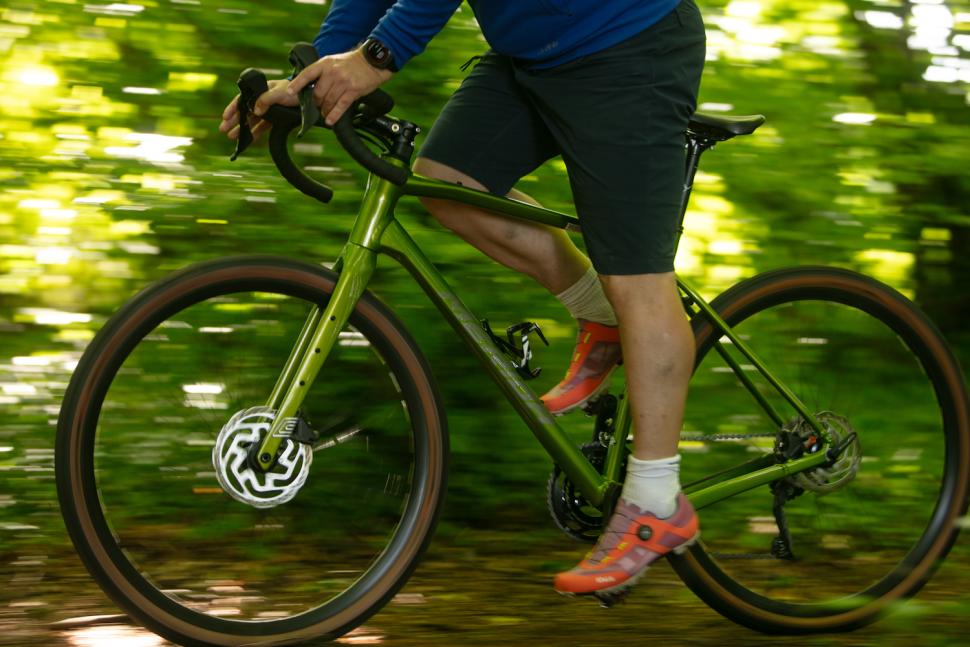
The handling is smooth and well balanced, and while the steering isn’t as quick as more aggressively designed gravel bikes, it’s still quick enough to have some fun on the descents while on the road, and gives a real sense of composure and control on looser surfaces.
With a longer fork than a road bike would have, paired to a tall head tube, the front end is quite high, and the long top tube adds to the reach figure (although that is offset by the short stem). But I found the riding position overall very comfortable – perfect for long hours in the saddle – and never feeling too upright.
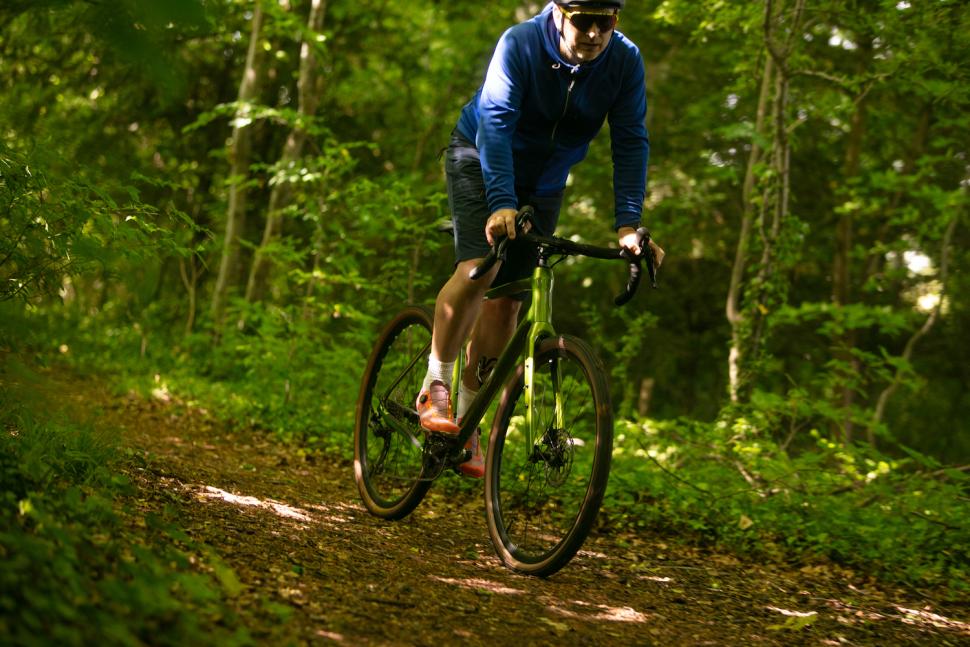
With a pair of 38mm slick Panaracer GravelKings fitted, the Merida felt efficient on the road and would definitely work as a tourer where you want the ability to mix up terrains. It has quite a steep seat angle, which let me get into a forward position and push the power out through my legs. That worked well on long, steep drags as I could remain seated while still getting plenty of power out.
At 10.69kg it’s not exactly a lightweight bike, but it still feels nippy and rewarding if you want to get a lick on. The aluminium frame is stiff, which helps, and it copes well with being loaded up as well. I tried the Silex out with a large saddle pack, bar bag and some packs fitted to the fork legs, and the frame and fork coped with no issues whatsoever.
In fact, as an allroad kind of bike it works really well. It’s comfortable on poor road surfaces, and rides well on the smooth stuff too.

Obviously, it’s away from the road that the Silex really comes into its own thanks to the geometry, bolstered by the 45mm tyre clearance.
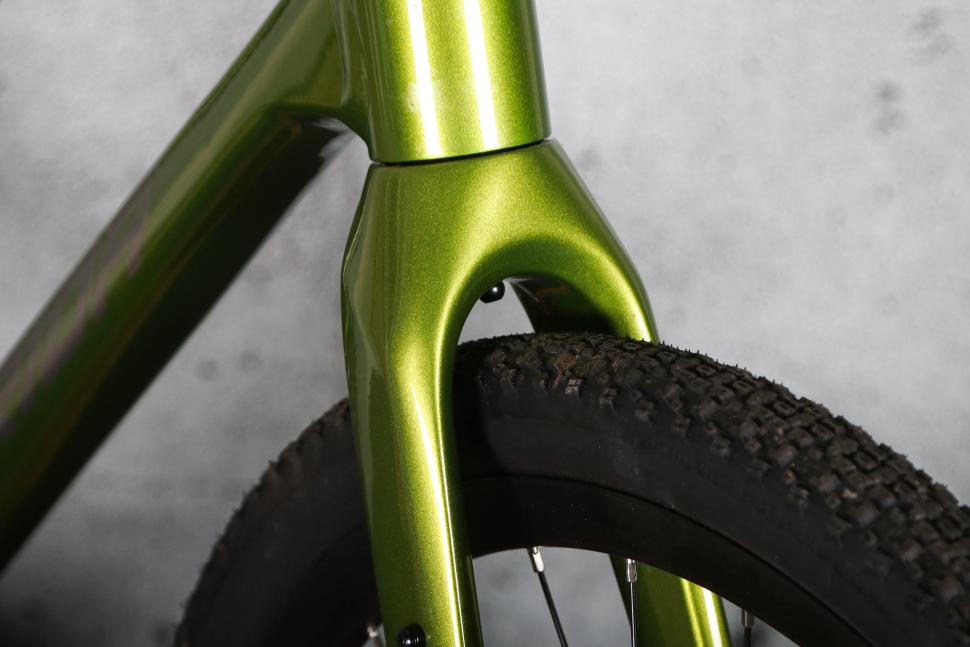
My main testing route is a mixture of hardpacked gravel tracks, chalk and grass-covered routes plus a bit of singletrack thrown in for good measure. The Silex worked brilliantly across all of these, and with the trails running very fast due to the dry weather, I felt comfortable in really letting the bike go and just enjoying how easy it was to ride.
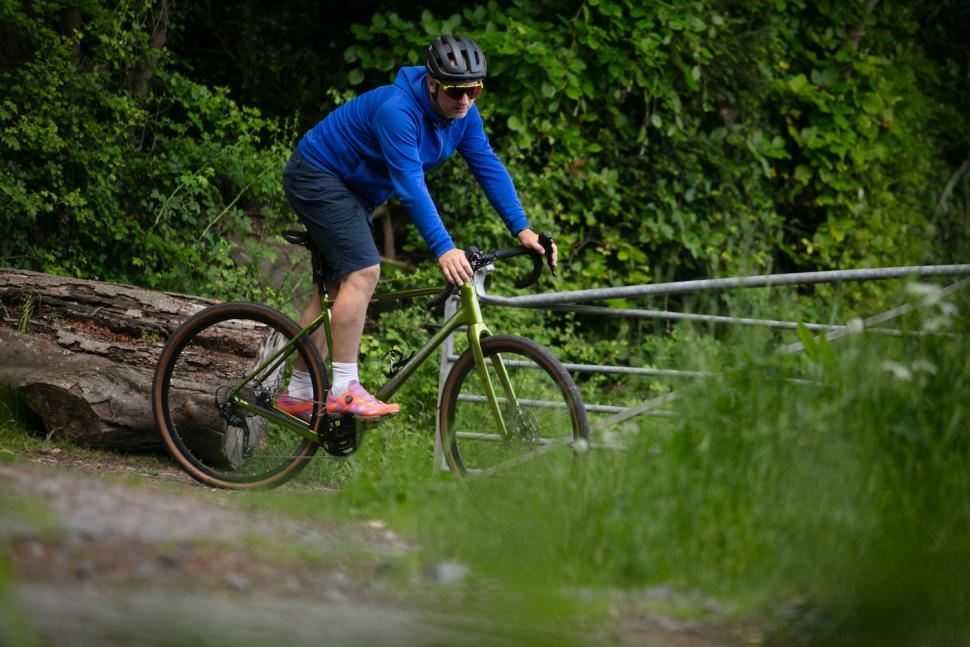
The stability and easy nature of the frame means that even those new to gravel, or who aren’t comfortable on technical descents, would get on well with this bike. It responds well to small inputs from the rider and the geometry means it never feels twitchy or out of control, even when technically it is as it slides on some loose gravel.

On rocky, technical section I think the geometry helps it feel more poised than a road-based gravel bike, especially at very slow speeds when trying to pick your line. It feels kind of like a drop-bar cross-country bike.
The gearing is lower than a road bike, but the 2x option gives some close ratios which makes for plenty of efficiency and offsets some of the weight for use on the road compared with a 1x.

With the standard tyres fitted there is plenty of mud clearance, so this is an all-round machine too, perfect for the winter months when the conditions are wet and slippery.
On the whole, in terms of the ride, the Silex is a capable machine, primarily as a gravel bike but also as an allroad bike with extra tyre clearance.
Merida Silex 400: Frame & Fork
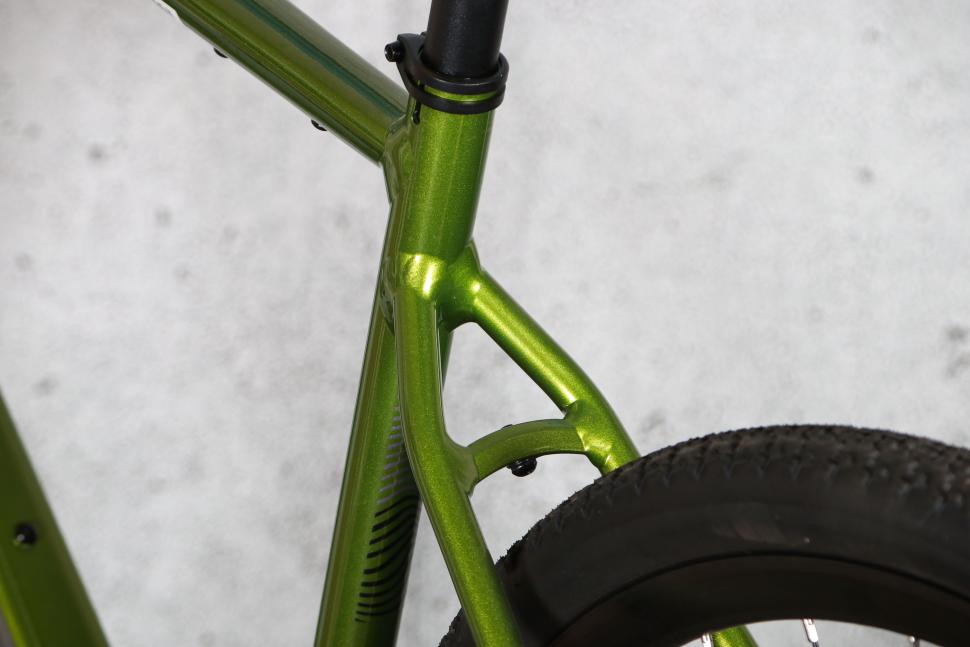
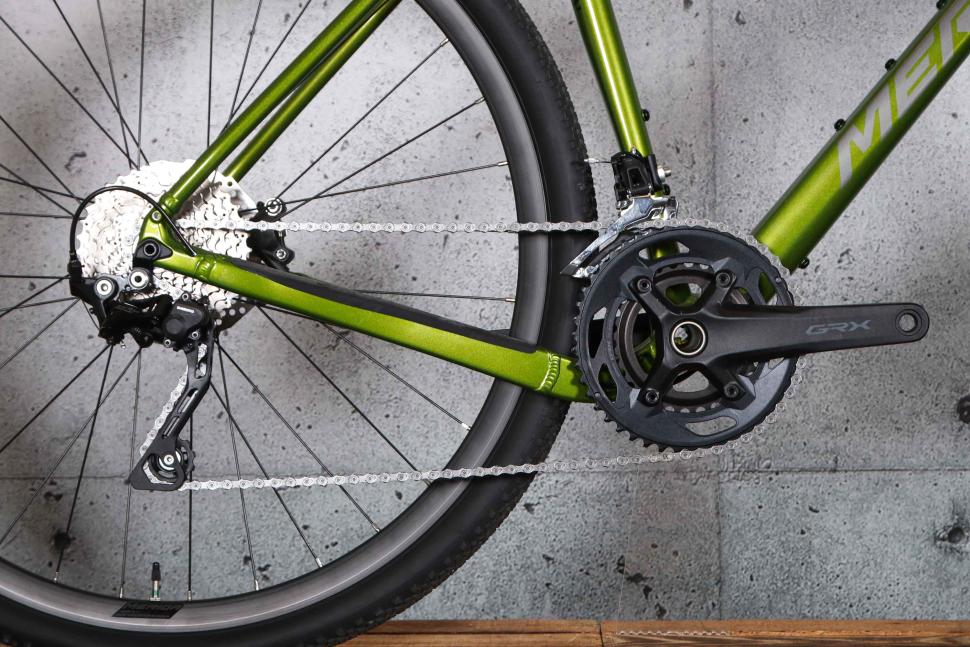
The Silex range was first released about seven years ago and had an update last year to some of the geometry and tube lengths, and an increase in tyre clearance from 42mm up to 45mm on a 700C wheel – helped at the rear by the use of a dropped chainstay. This allows it to run either a 1x or 2x chainset, and it’ll still take 42mm tyres with full mudguards fitted; the fork will actually take a 47mm tyre.

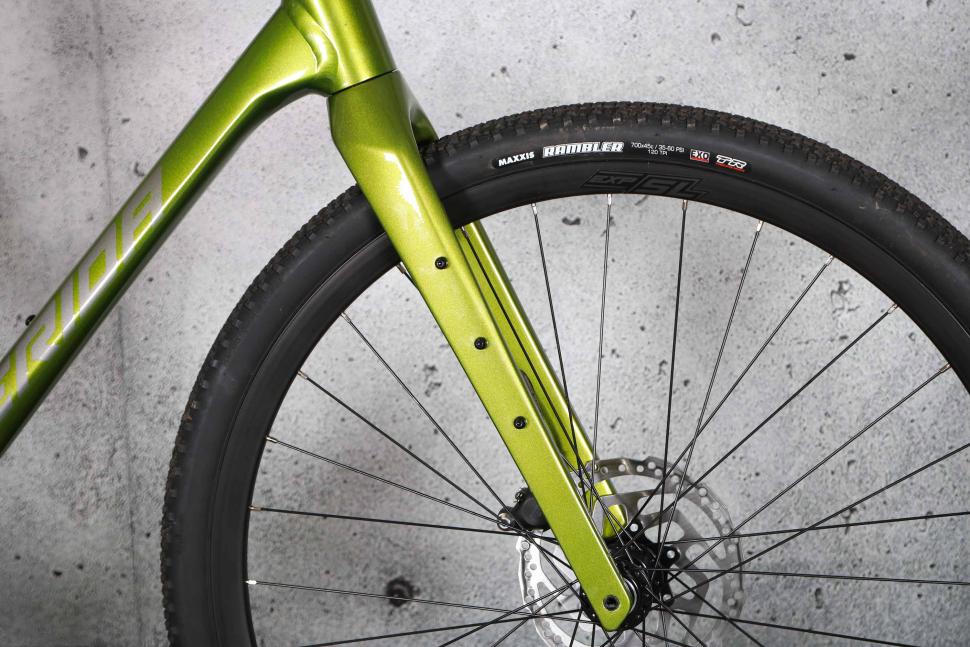
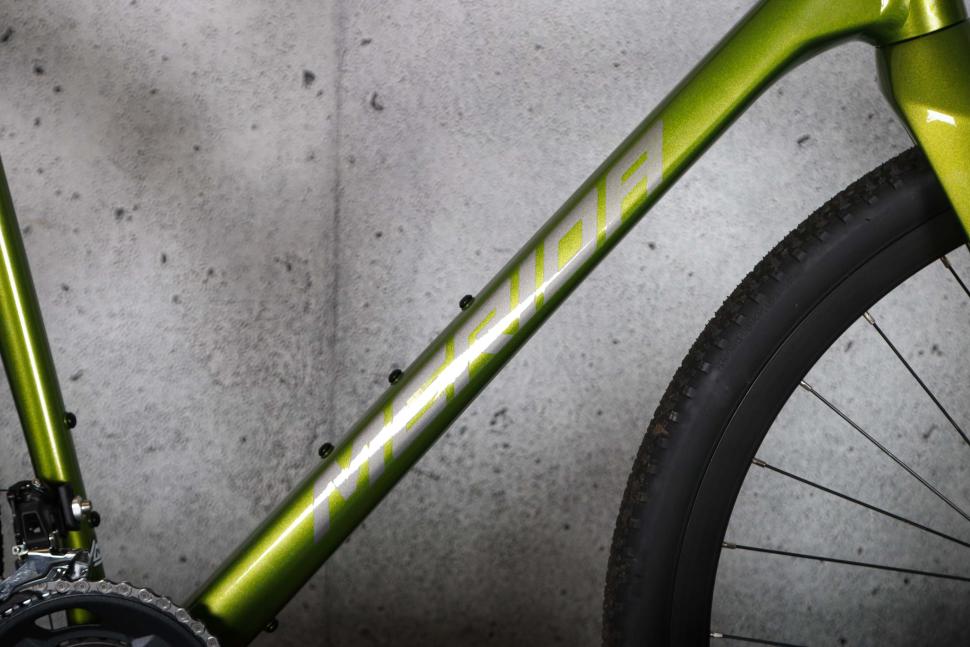
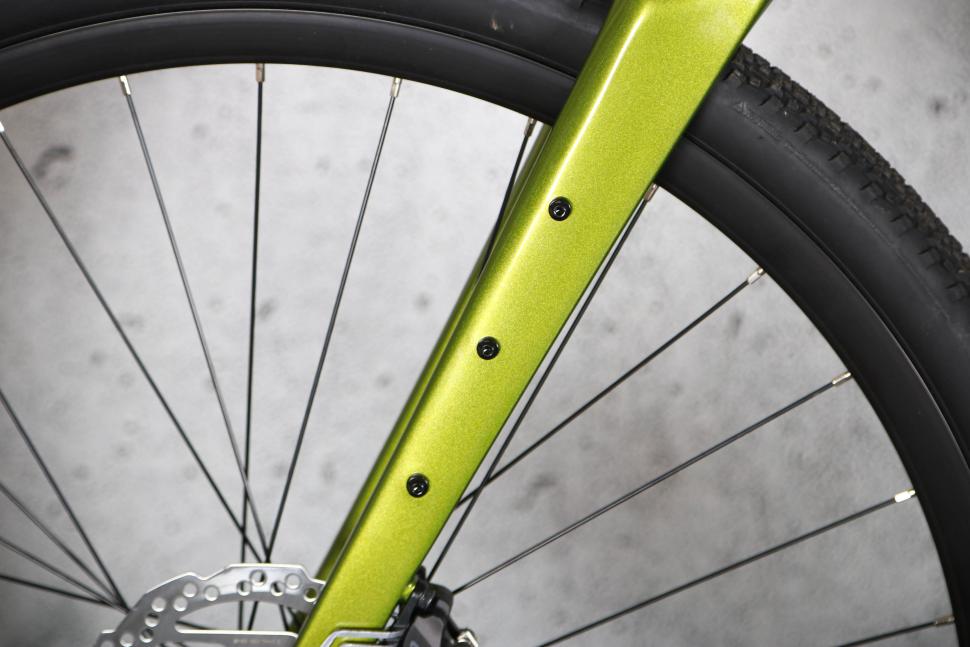
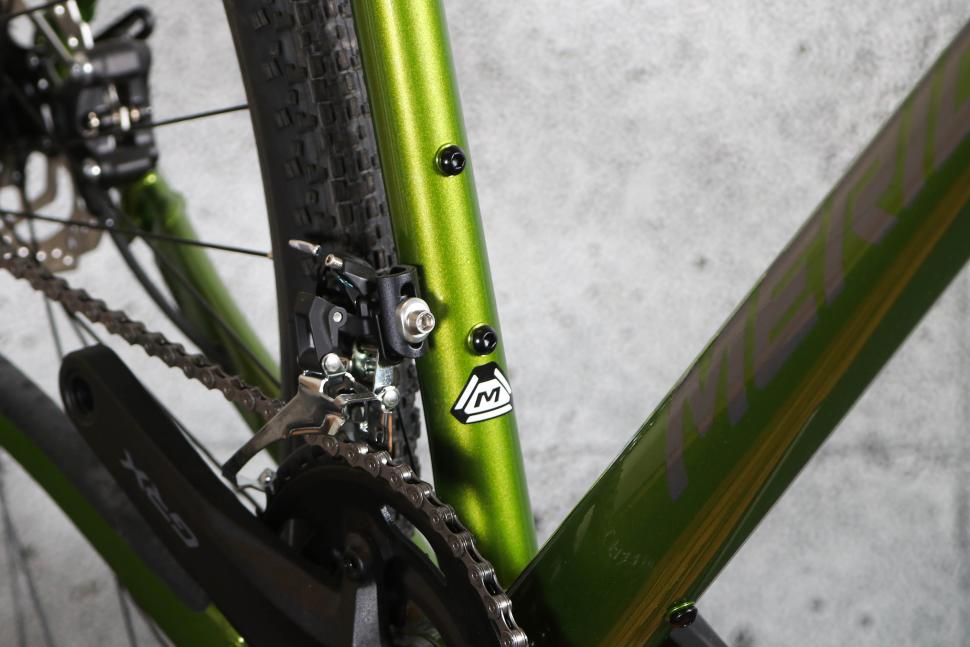
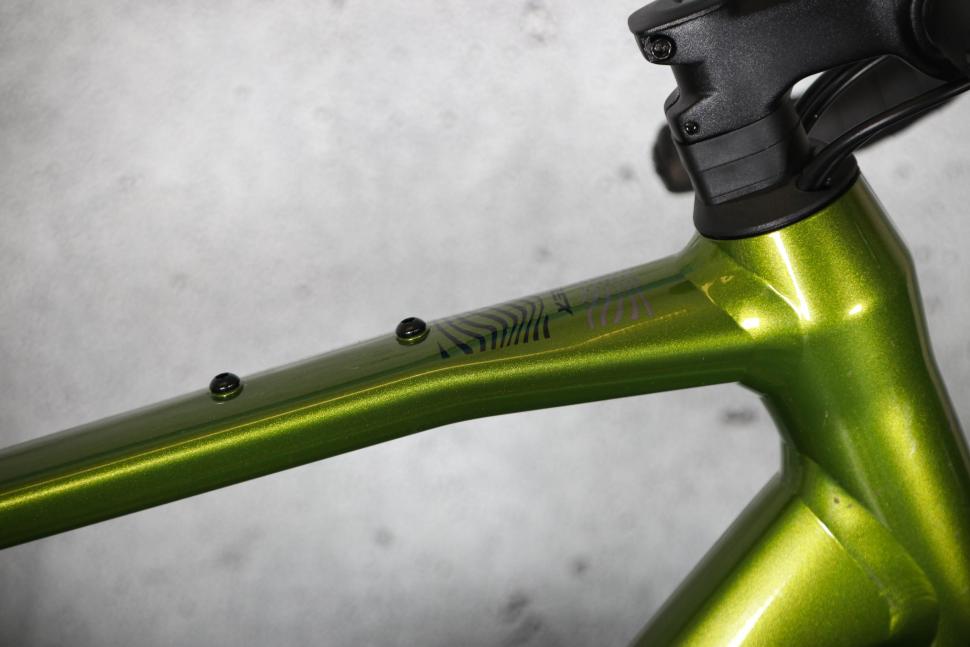
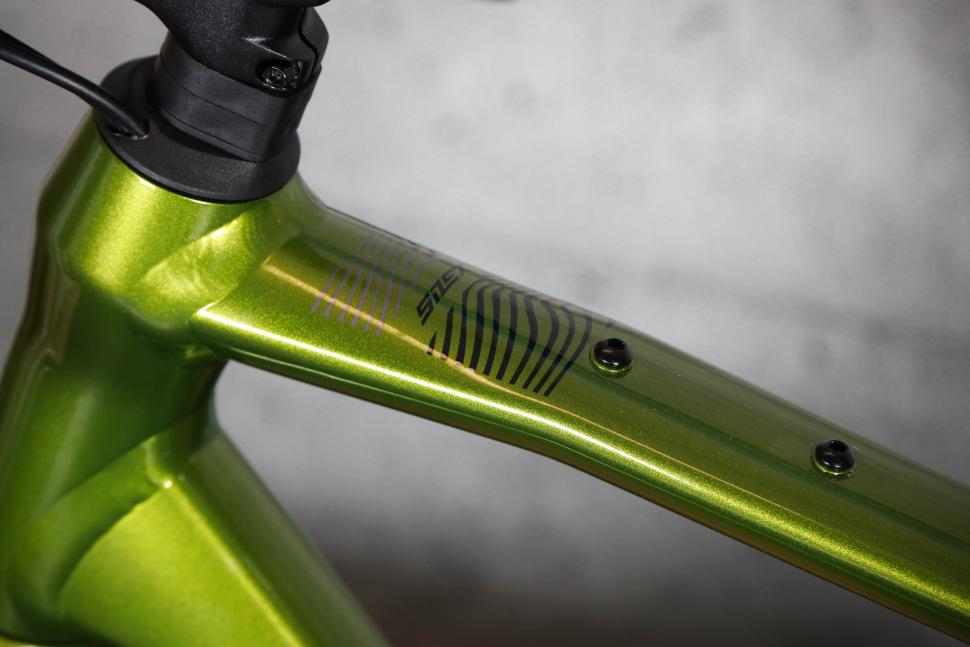
There is no option for a rear rack, but considering the amount of saddle-mounted bags on the market, they aren’t really necessary. There are plenty of other ‘extra’ mounts too: two sets on the top tube, one under the down tube, and three bolts on each fork leg.
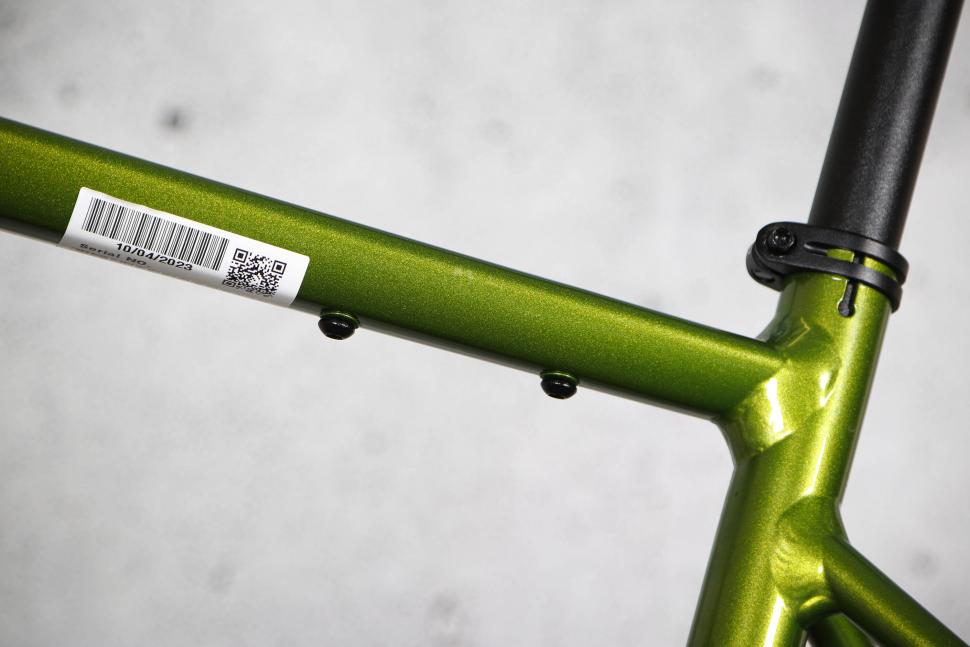
There are also bottle cage bolts in the usual place, but you get three on the down tube to give you some flexibility when running a frame bag inside the main triangle.
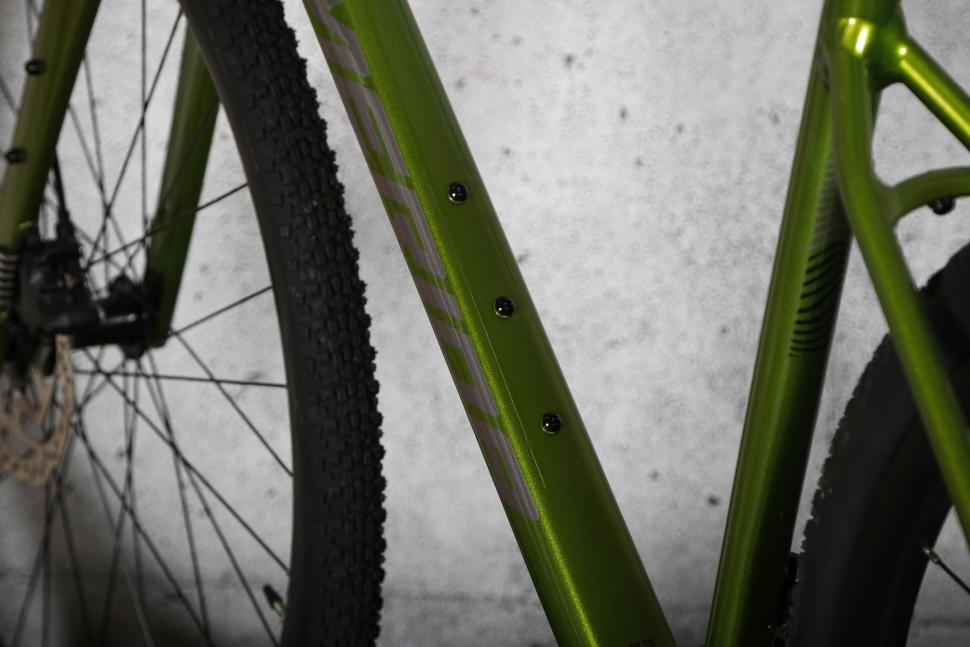
The full-carbon fork also has routing for a dynamo hub, and Merida has now run all of the gear cables and brake hoses internally from the top of the head tube.
The Lite II frame is manufactured from Merida’s ProLite 66, which is a 6066 grade of aluminium alloy whose tubes have been hydroformed as well as triple butted, manipulating them for strength or comfort. Larger cross-sectional areas are used at the head tube junctions, while things are much more slender at the rear for some compliance.
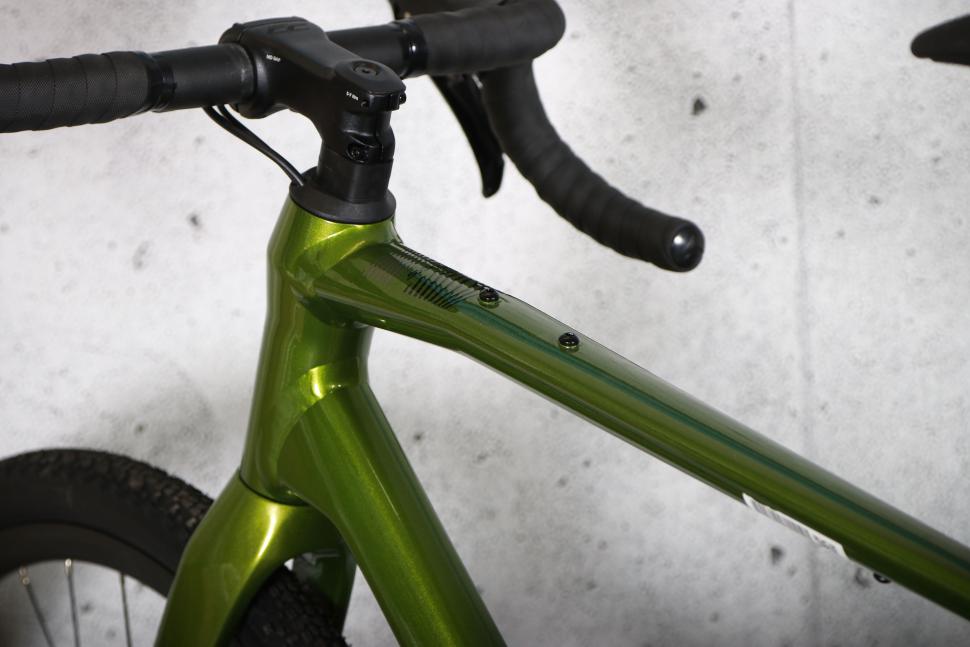
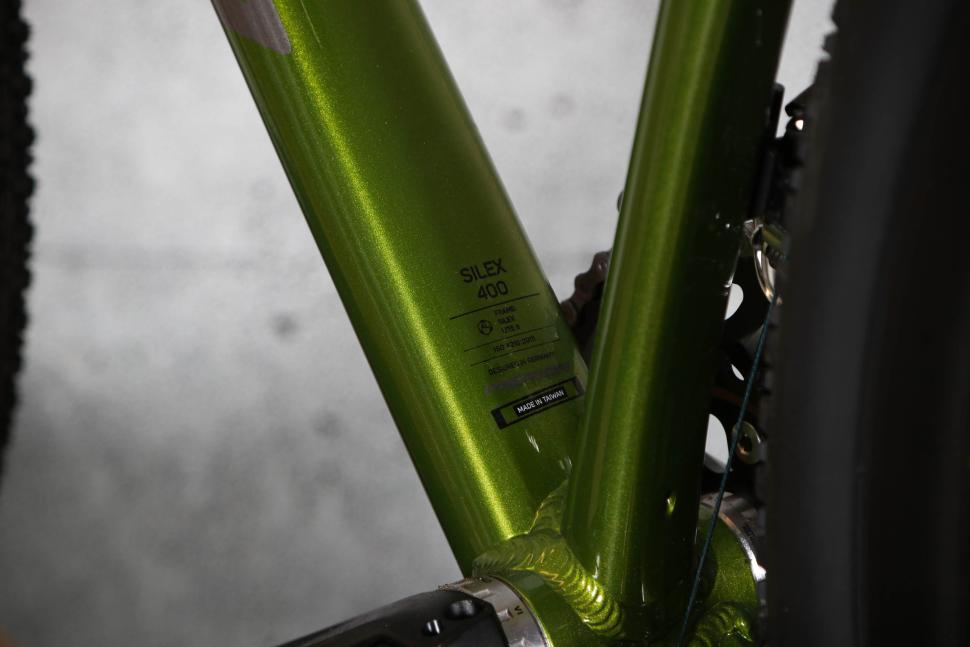
If I’m being really picky, the welding isn’t the smoothest looking, but I do think the paintjob here offsets it well.
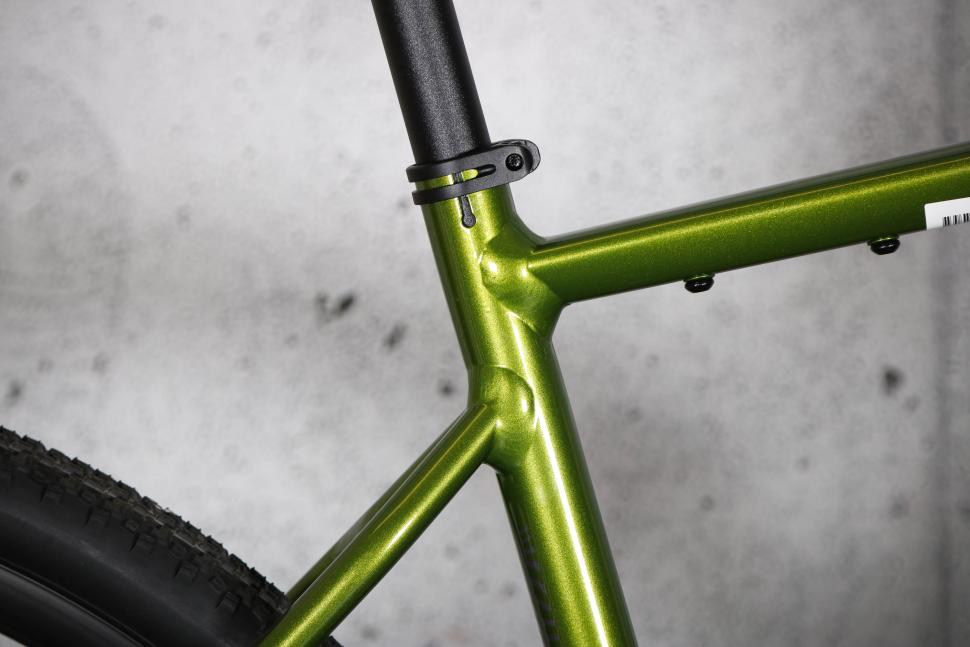
The Silex uses a standard round seatpost and seat clamp, which makes any upgrades easy, plus this latest design now uses a BSA threaded bottom bracket as opposed to press-fit.
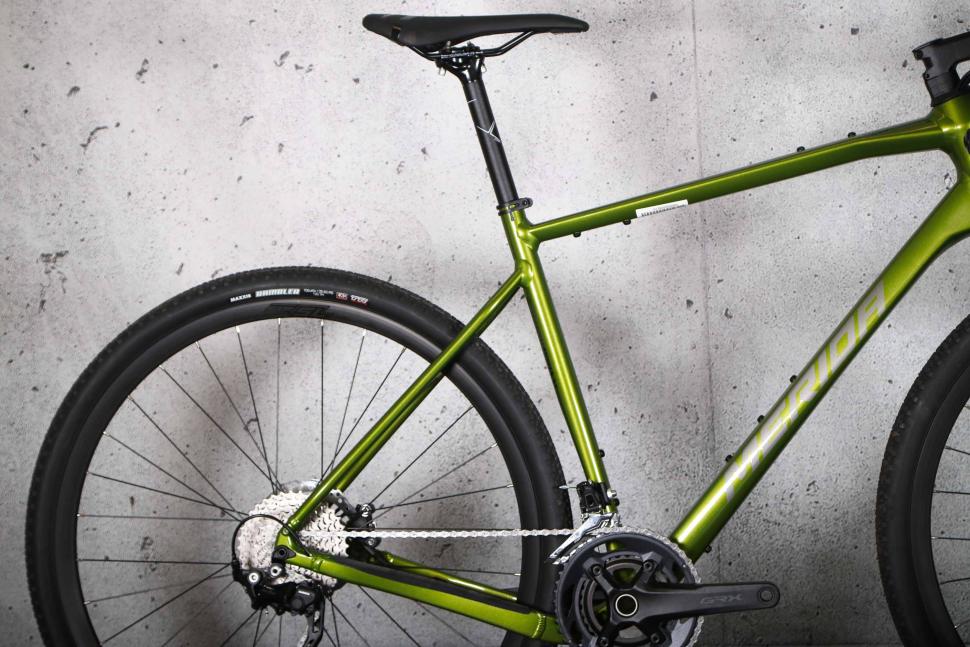
As I mentioned earlier, the Silex uses geometry that is based on mountain bikes, which makes it quite long and tall. The model I’ve been reviewing has the newer frame, which was updated in 2024, but overall the riding position is very similar. Compared with earlier examples, the head tube is shorter by 30mm, but Merida has lengthened the fork from 397mm to 415mm, which offsets some of that. This not only allows the larger tyre clearance, but also the fact that the Silex can run a gravel suspension fork without it affecting the handling.
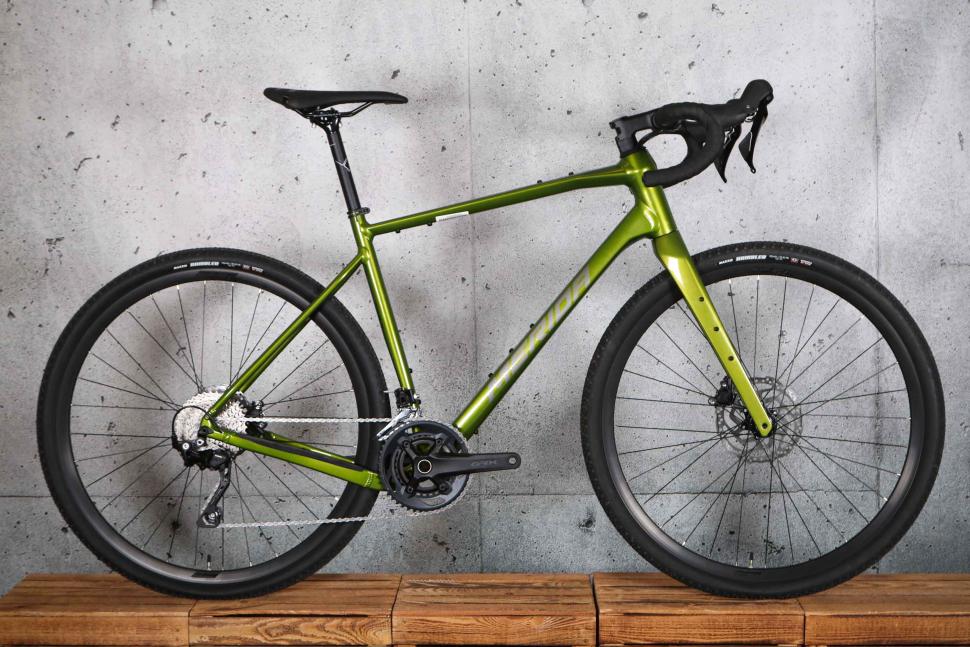
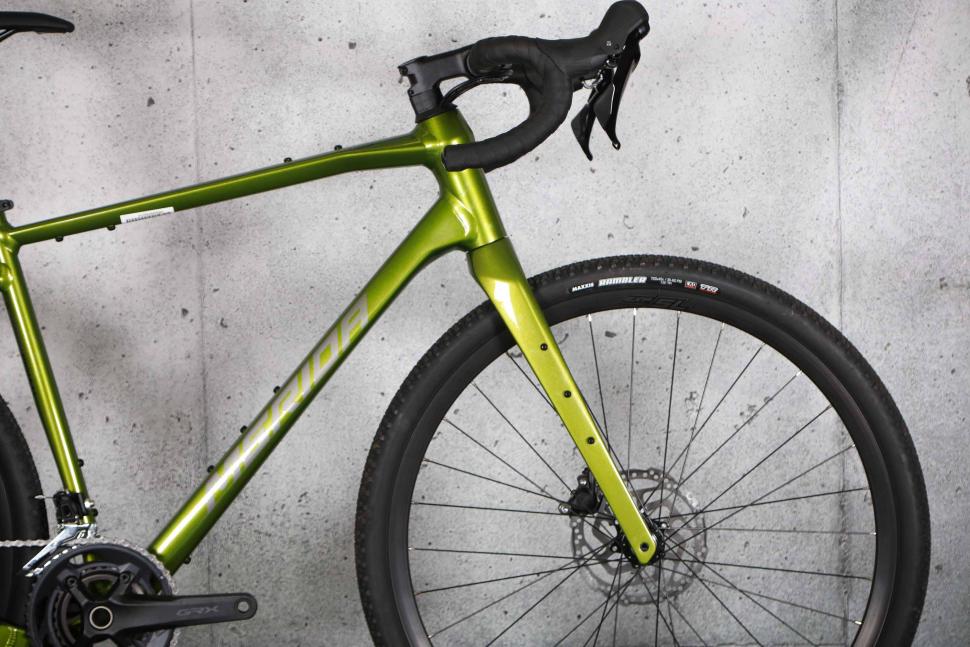
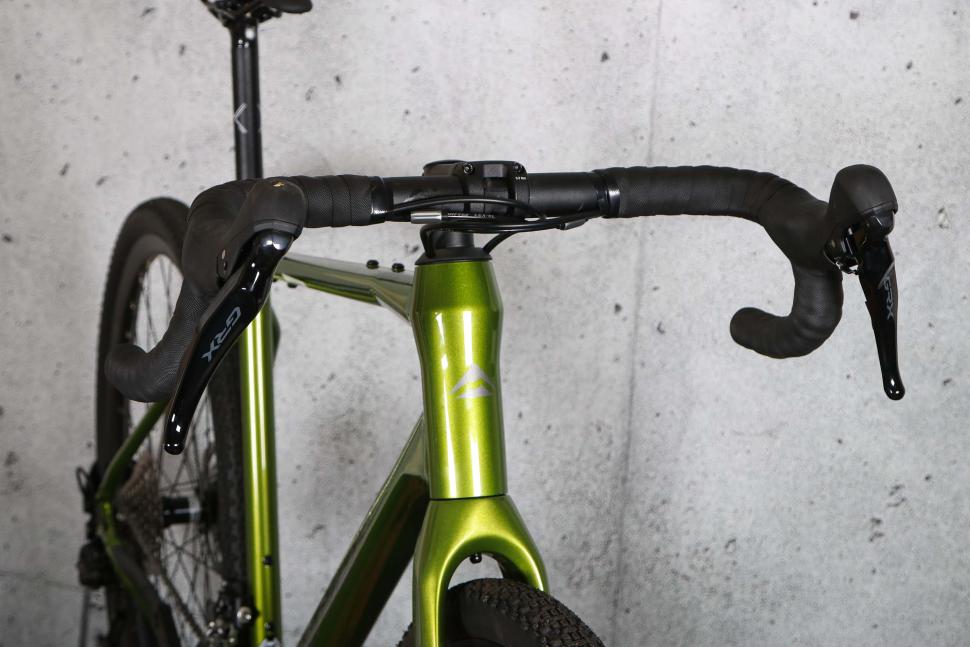
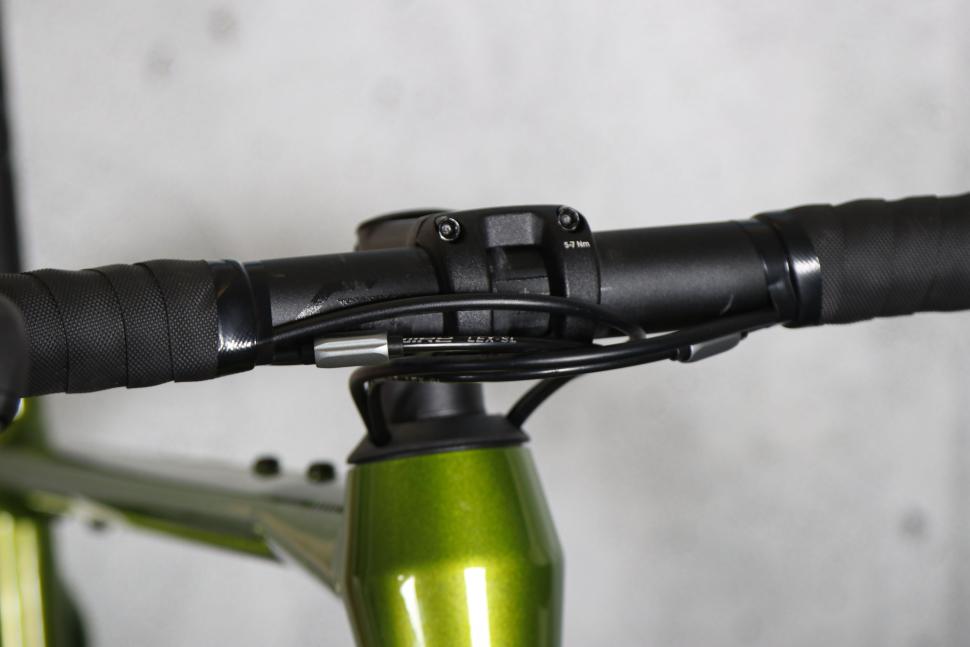
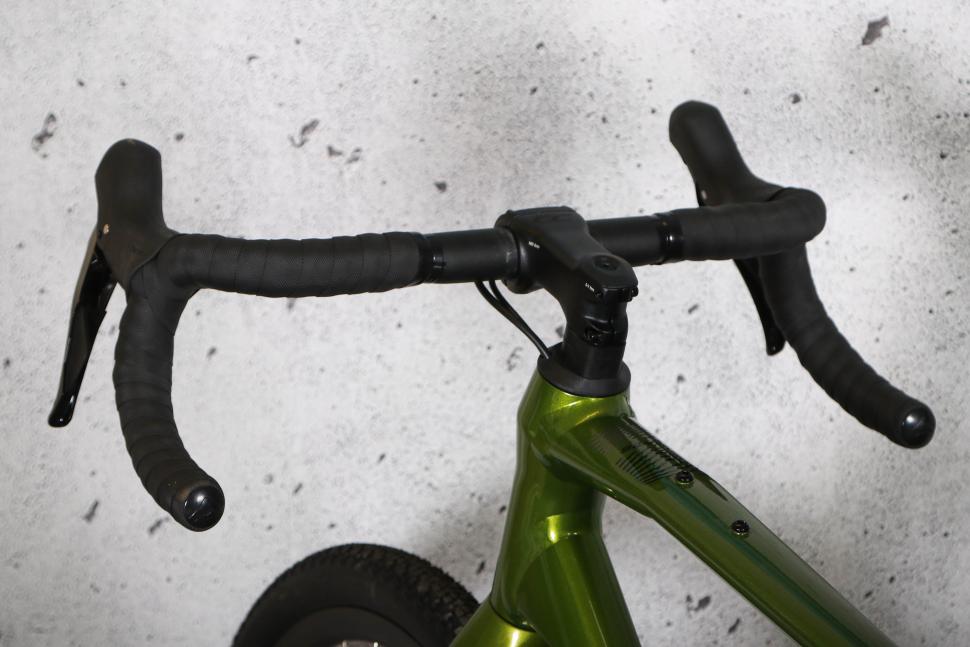
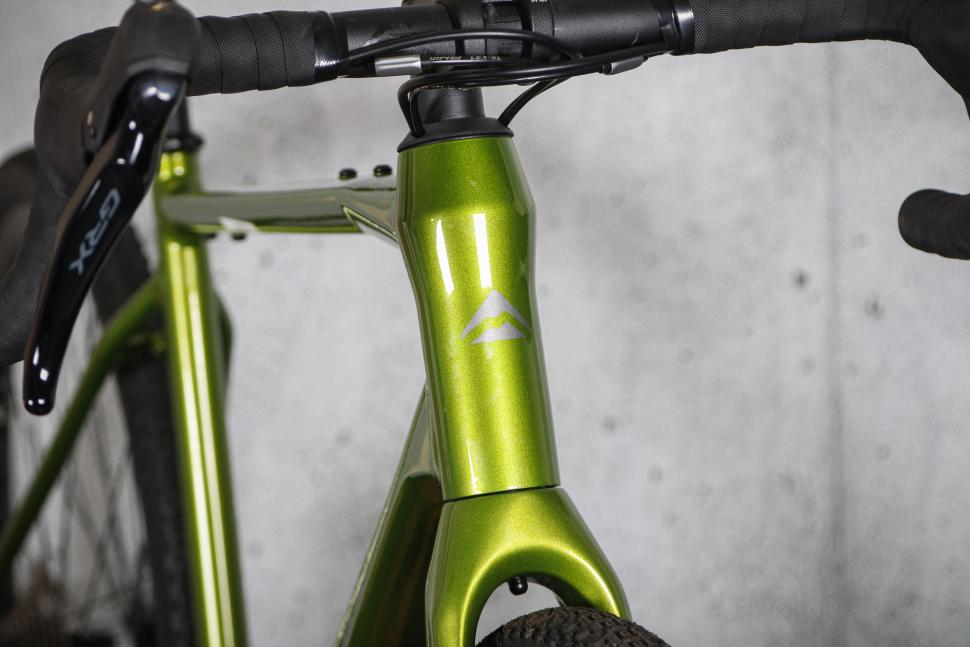
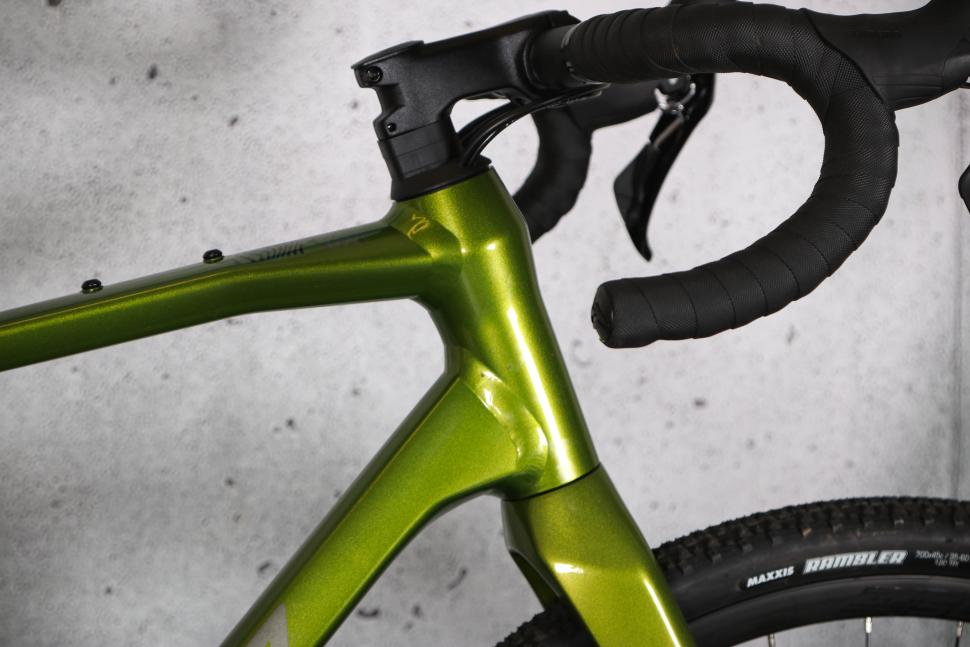


On this medium model (the middle of five sizes – an XS was added this year) the head tube is 170mm long and sits at an angle of 69.5 degrees, slacker than the previous version’s 71 degrees, and the top tube is 580mm in length, 1mm longer than it was before.
Stack and reach figures are 607mm and 412mm respectively. All bike sizes use an 80mm stem.
The seat tube sits at a steep 74.5 degrees and the overall wheelbase length is 1,082mm. The bottom bracket drop is 75mm.
Merida Silex 400: Finishing kit
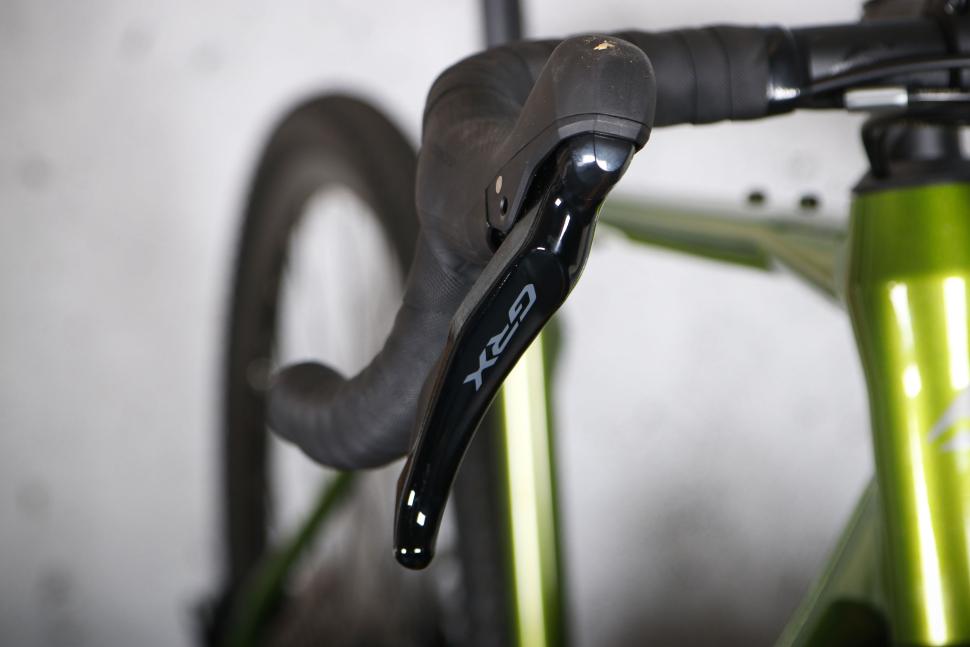
There are six models in the Silex lineup, three carbon fibre (we also have the £4,800 range-topping 8000 model in for review), and three aluminium, starting with the 200 at £1,200. This Silex 400 sits next in the hierarchy, costing £1,650, and comes fitted with Shimano’s GRX 400 2×10-speed groupset and alloy Merida wheels.
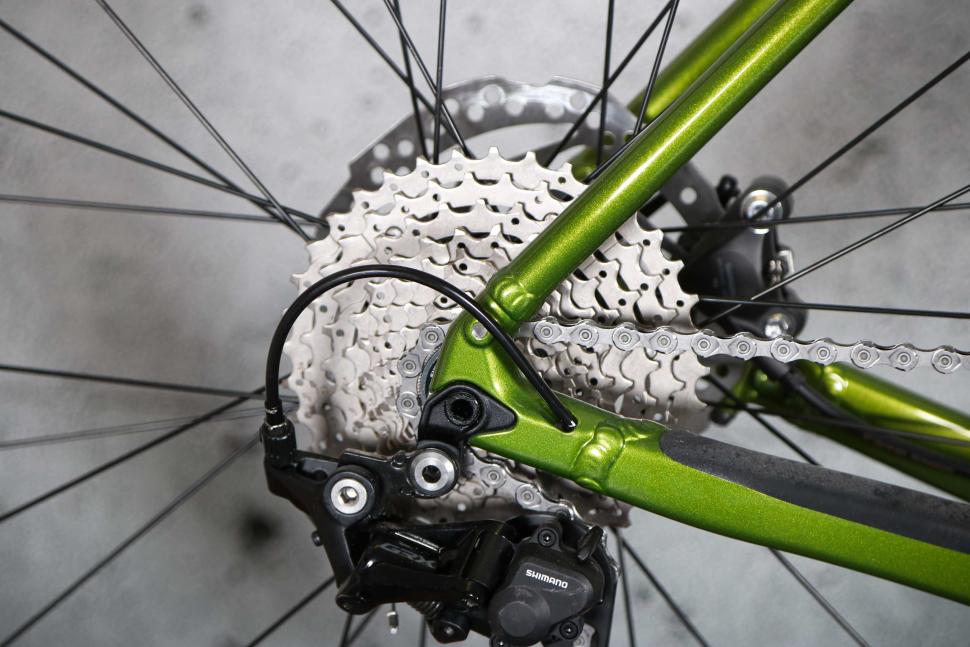
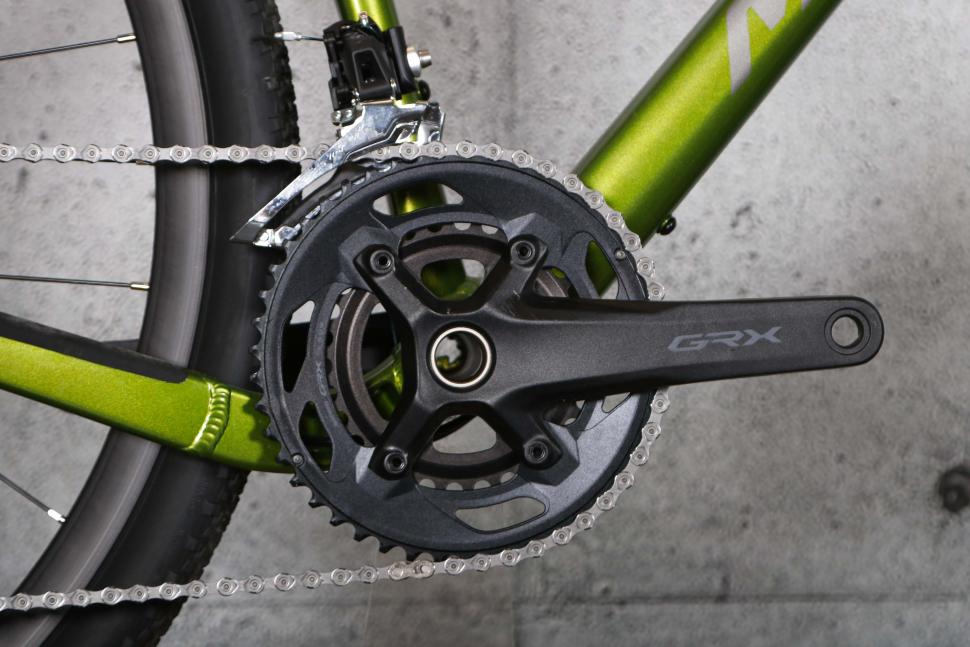
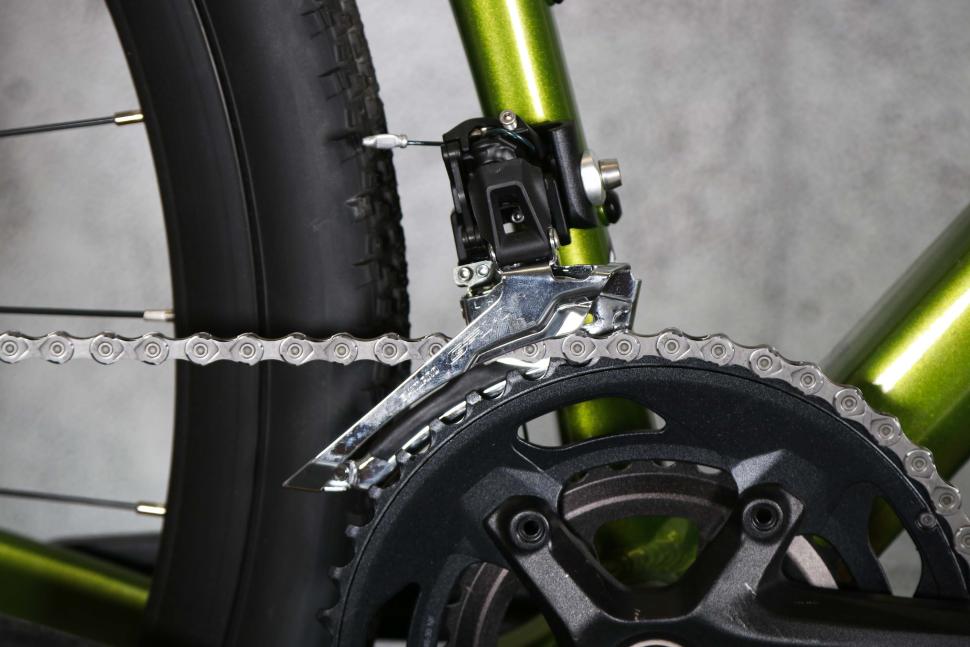
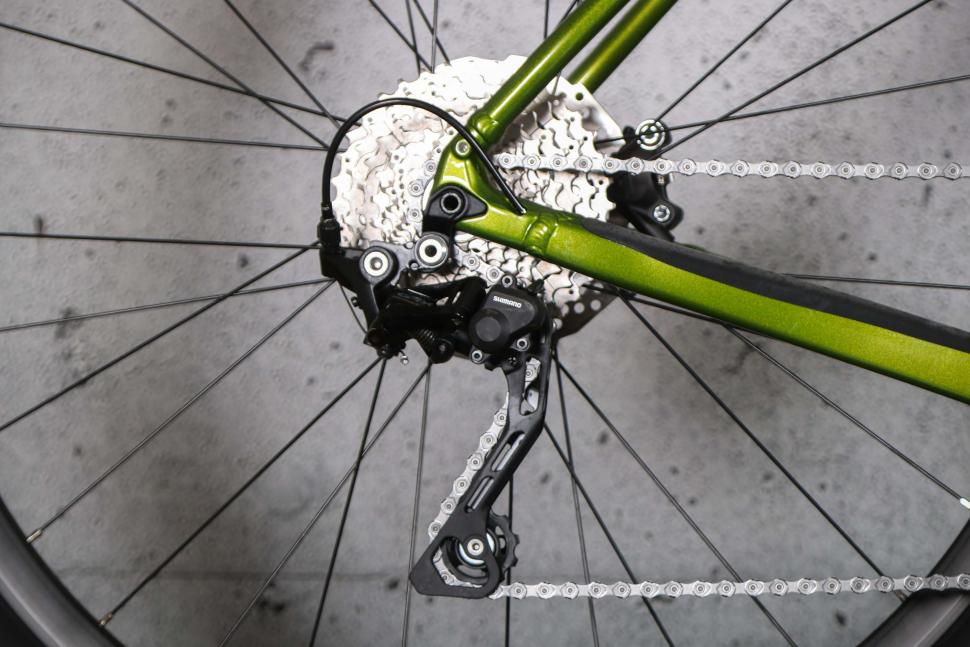
The Silex 400 actually uses a GRX 600 crankset, which has a 46/30-tooth combination paired to the 11-36T cassette. It’s a good spread of gears for all kinds of terrain, and the system works well in terms of gear shifting and braking.
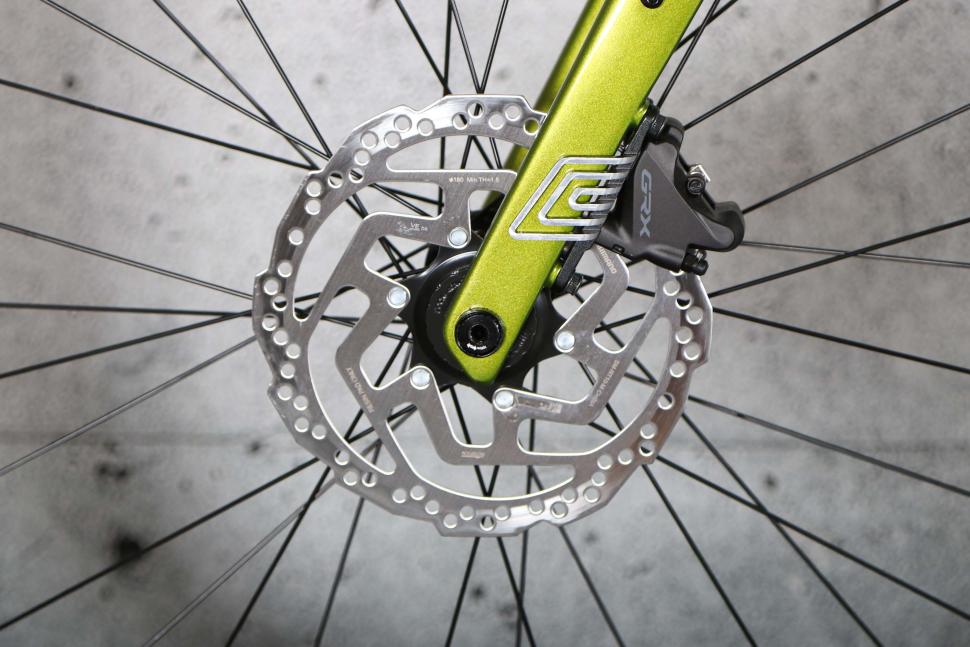
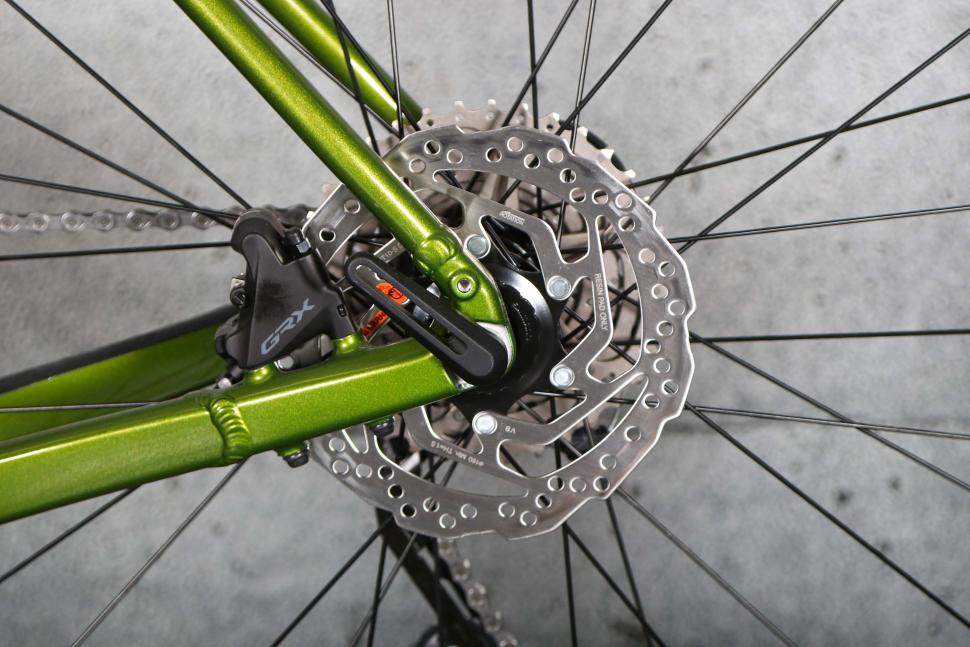
Another thing it has inherited from mountain bikes is the size of the rotors, with the front sporting a 180mm rather than the usual 160mm. The rear is a 160mm.
You can read our full review of the 11-speed GRX 600 groupset if you’d like to know more.
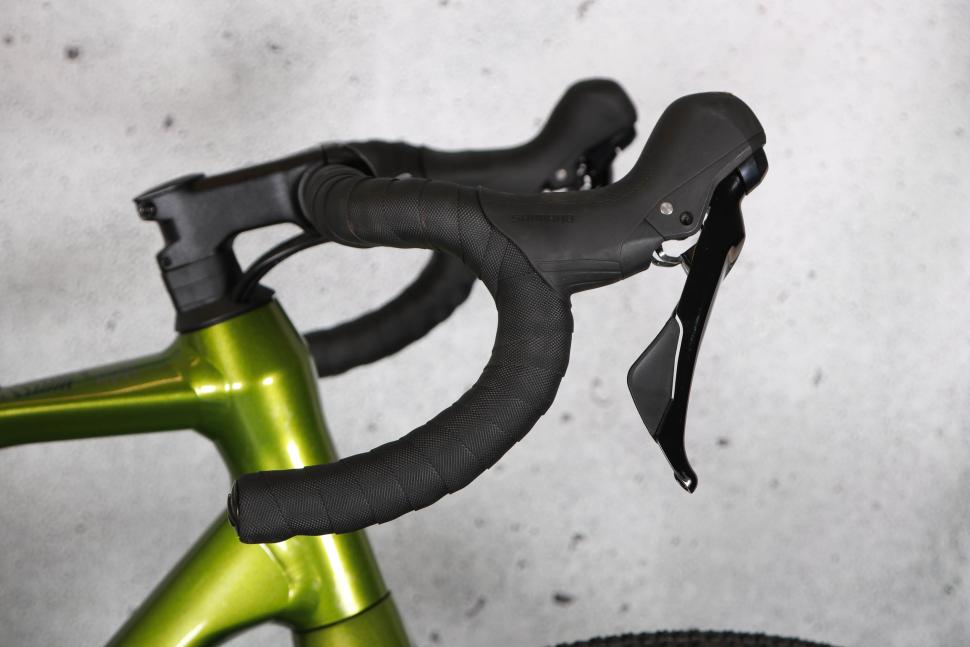
The rest of the components are from the GRX 400 stable including the mechs, shifters and brake callipers.
Merida has a large parts catalogue so it’s no surprise that the Silex 400 is adorned with own-brand kit. The Expert GRII alloy handlebar comes in 40cm, 42cm and 44cm widths depending on frame size, and is comfortable in use. Like many gravel bars it has a gentle flare, with the bottom of the drops wider than the hoods. This allows a wider stance for more control on looser surfaces.
The Team CC III stem is also alloy and is designed to run the cables discreetly into the frame.
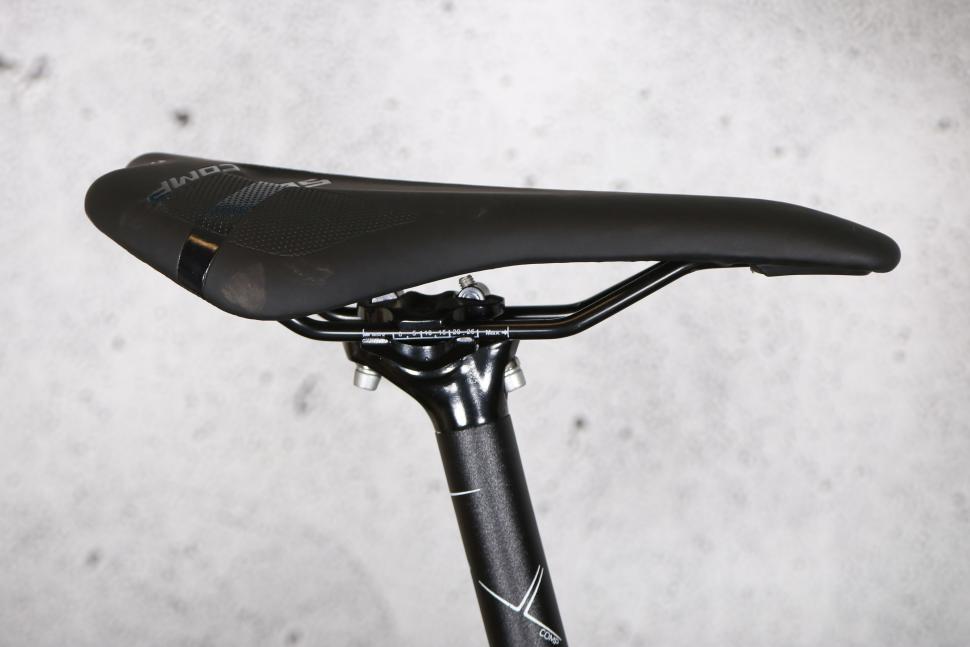
The seatpost is also aluminium, with a 5mm setback, and at 27.2mm diameter it’s a standard size, so easy to upgrade should you wish. The Merida Expert saddle has a decent shape, and I found it comfortable overall. A neat touch is that Merida includes a multi-tool underneath it.
This model also uses Merida rims and hubs for the wheel build. Again, they performed well, and I had no issues with them whatsoever. They seem reliable enough, and while they’re a bit weighty I wouldn’t be in too much of a hurry to swap them out.
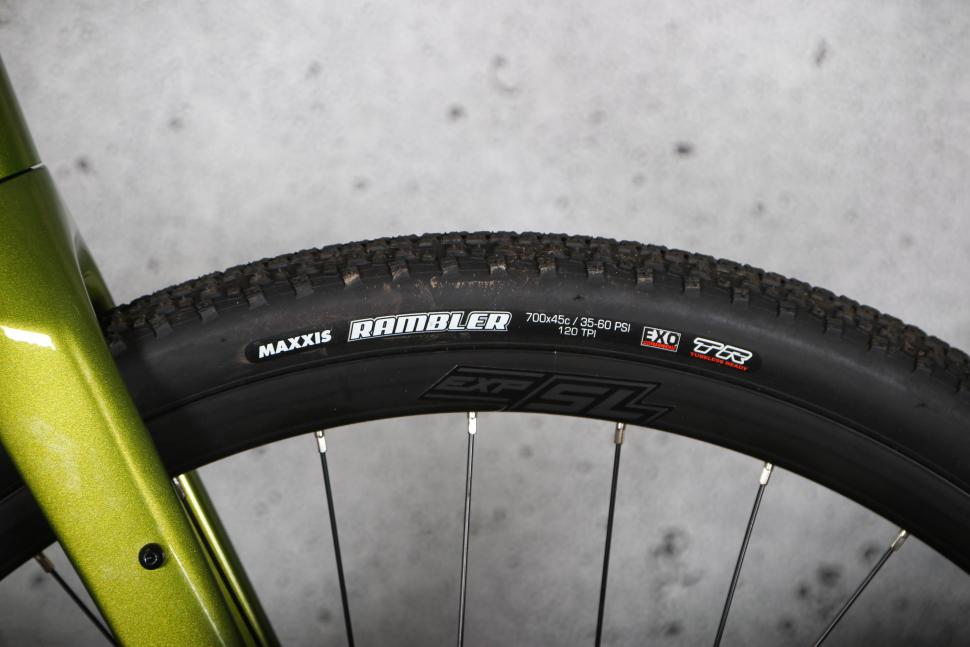
They are wrapped in Maxxis Rambler tyres in a 45mm width, which are set up with inner tubes from the factory, but the rims are tubeless ready so you’d just need to add tubeless tape and valves to complete the setup.
The Ramblers are good for mixed conditions, with enough tread to cope with softish mud and loose gravel as long as things aren’t too extreme. They should suit the spring/summer/autumn months, with something with deeper tread required for the winter. Puncture protection looks to be good, and they roll on the road okay as well.
Merida Silex 400: Value
For a gravel bike with a good quality aluminium frame and this specification, the Silex 400 looks to be decent value, although there are some similarly specced options out there that slightly undercut it.
If you want a gravel bike that’s more on the mountain bike side of things then an alternative could be one of Boardman’s new TRVLs. All three bikes in the range are designed to work with a 40mm RockShox Rudy suspension fork and come with a 6061 grade aluminium frame. I reviewed the 8.9 DB model recently, which has clearance for 50mm tyres and a SRAM Apex 1x groupset, and is priced at £1,800.
The rigid fork option is the new ADV, which has more road-orientated geometry and 42mm tyre clearance. The ADV 8.9 uses the same groupset as the Silex 400 and also has an alloy frame, so it’s quite the bargain at just £1,200. (I reviewed the ADV 9.2 Carbon at the end of last year.)
Marin’s Gestalt 2 is an alloy gravel bike with 45mm tyre clearance. It, too, uses the same groupset as the Silex and costs £1,449. (There’s a review of the Gestalt XR from 2023 on our sister site, off.road.cc.)
Ribble’s new Allgrit gravel bike range has clearance for 50mm tyres and multiple mounting points, like the Silex. We are yet to review one, but the aluminium option has a SRAM Apex XPLR groupset, DT Swiss G1800 wheels and Schwalbe G-One R tyres, and costs £1,699.
For more options, check out our guides to the best gravel bikes and the best gravel bikes under £2,000.
Merida Silex 400: Conclusion
Overall, the Silex 400 is a quality all-rounder. A bit of an allroad bike but with much greater capabilities. It’s best suited to gravel and off-road stuff, as you’d expect, but it’s very easy to live with on the road, and in this spec I’d say it makes the ideal all-season commuter or long distance machine too. It’s a great bike to ride, and at £1,650 it’s a decent price too.
Verdict
Very capable machine blending mountain bike geometry with drop bars and a rigid setup, an allroad bike on steroids!
All the deals displayed on our review pages are pulled from a constantly updating database feed of the best affiliate deals available. The criteria for deciding on what are the best deals is who is offering the lowest, delivered price. In most cases we will be showing the very best deal available online, but sometimes you may be able to find an item cheaper. If you can please feel free to post a link in the comments box below. To find out more about affiliate links on road.cc click here.
road.cc test report
Make and model: Merida Silex 400
Size tested: Medium, 580mm
About the bike
List the components used to build up the bike.
Rims: MERIDA EXPERT SL II- 23mm inner width, 25mm height, aluminium
Tubeless ready (tubeless tape and valves not included)
Tyre: Maxxis Rambler 700x45C TR EXO
Hubs: MERIDA EXPERT TR
Crankset: Shimano GRX600 46-30 teeth
170 mm (XS/S), 172,5 mm (M), 175 mm (L/XL)
Cassette: Shimano Claris HG50, 11-36 teeth, 10 speed
Chain: KMC X10
Shifters: Shimano GRX400
Front derailleur: Shimano GRX400
Rear derailleur: Shimano GRX400
Rotors: Shimano RT10 180mm F/160mm R
Headset: Acros ICR MERIDA EXTERNAL
Stem: MERIDA TEAM CC III
material: 31.8mm diameter, 6° stem angle, 80 mm all sizes
Handlebar: MERIDA EXPERT GRII, 400mm (XS-S) , 420mm (M) , 440mm (L/XL)
Bar tape: MERIDA ROAD Expert
Seat post: MERIDA COMP CC, 27.2mm diameter, 5mm setback
Saddle: MERIDA COMP SL
Seat clamp: MERIDA EXPERT
Tell us what the bike is for and who it’s aimed at. What do the manufacturers say about it? How does that compare to your own feelings about the bike?
Merida says, “Everyday versatility paired with an adventure-ready attitude. Our quality aluminium frame and carbon fork pair off-road ready handling with all-road versatility, while the robust Shimano groupset has you covered.”
The Silex is a capable gravel bike, but also lends itself well to long distance road usage too.
Where does this model sit in the range? Tell us briefly about the cheaper options and the more expensive options
There are three carbon fibre-framed models in the range, and three aluminium. This 400 sits second in the aluminium lineup, with just the 200 beneath it.
Frame and fork
Tell us about the build quality and finish of the frame and fork?
The welding isn’t the neatest I’ve seen, but for this price point it is well made and well finished. I really like the bright green paintjob.
Tell us about the materials used in the frame and fork?
The frame is made from Merida’s LITE II aluminium alloy tubing which has been hydroformed and triple butted.
Tell us about the geometry of the frame and fork?
The geometry is more mountain bike focused than many gravel bikes.
How was the bike in terms of height and reach? How did it compare to other bikes of the same stated size?
The stack and reach figures are generally larger than most gravel bikes of this size because of the tall front end. But this has been offset by the short 80mm stem.
Riding the bike
Was the bike comfortable to ride? Tell us how you felt about the ride quality.
The ride quality is good with no harshness to the frame.
Did the bike feel stiff in the right places? Did any part of the bike feel too stiff or too flexible?
I found the stiffness of the frame and fork impressive, with no noticeable flex anywhere.
How did the bike transfer power? Did it feel efficient?
Power transfer is good thanks to the stiff frame.
Was there any toe-clip overlap with the front wheel? If so was it a problem?
No.
How would you describe the steering? Was it lively neutral or unresponsive? Neutral.
Tell us some more about the handling. How did the bike feel overall? Did it do particular things well or badly?
The slacker head tube on this new model gives more neutrality to the handling, but it remains fun overall.
Which components had the most effect (good or bad) on the bike’s comfort? would you recommend any changes?
I got on well with the saddle, and the Maxxis Rambler tyres have a decent suppleness to them.
Which components had the most effect (good or bad) on the bike’s stiffness? would you recommend any changes?
The wheels showed good lateral stiffness, and neither the stem nor the handlebar had any issues with flex when riding hard out of the saddle.
Which components had the most effect (good or bad) on the bike’s efficiency? would you recommend any changes?
The 2x groupset gives a good spread of gears which helped efficiency, and the tyres are good all-rounders for wet and dry conditions.
The drivetrain
Tell us some more about the drivetrain. Anything you particularly did or didn’t like? Any components which didn’t work well together?
Dependable shifting and powerful braking when required.
Wheels and tyres
Tell us some more about the wheels.Did they work well in the conditions you encountered? Would you change the wheels? If so what for?
A decent set of wheels for the budget.
Tell us some more about the tyres. Did they work well in the conditions you encountered? Would you change the tyres? If so what for?
Good all-round tyres that’ll cope with all but the muddiest of conditions.
Controls
Tell us some more about the controls. Any particularly good or bad components? How would the controls work for larger or smaller riders?
Nothing flash, but all of the components did a good job.
Your summary
Did you enjoy riding the bike? Yes
Would you consider buying the bike? Yes
Would you recommend the bike to a friend? Yes
How does the price compare to that of similar bikes in the market, including ones recently tested on road.cc?
It is in the right sort of ball park for the spec and build, although there are some (more road focused) gravel bikes out there for less.
Use this box to explain your overall score
It’s very good – a great entry-level choice for gravel biking thanks to its easy handling and spread of gears. Everything also works well on the road too, so it’s a capable commuter or tourer.
About the tester
Age: 46 Height: 180cm Weight: 76kg
I usually ride: This month’s test bike My best bike is: B’Twin Ultra CF draped in the latest bling test components
I’ve been riding for: Over 20 years I ride: Every day I would class myself as: Expert
I regularly do the following types of riding: time trialling, commuting, club rides, sportives, fixed/singlespeed,


