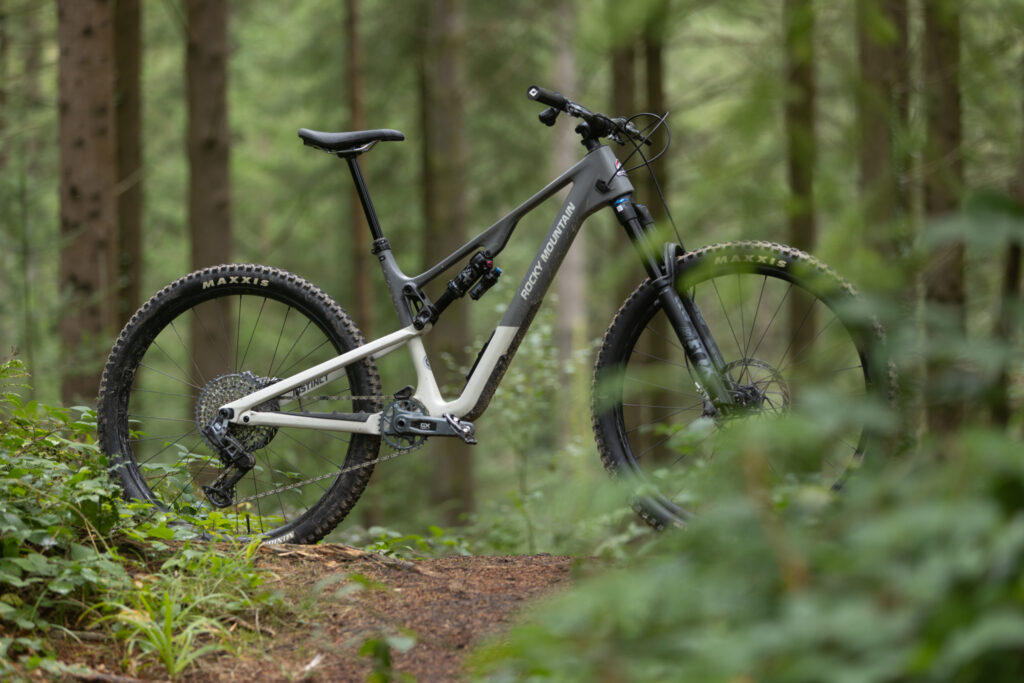

We’ve had the Merida Ninety-Six RC 9000 in for testing, and now we’ve got its relaxed sibling, the Ninety-Six 8000. Why? I hear you ask, well because it gets a bump up in suspension travel, a slacker geometry, and a more aggressive kit list. We’re curious to see how its down-country lean effects the ride.
- Big Read: Can you spend a night in the hills and still make it into work on time?
- Five ways to tell your shock needs a service
- Best mountain bikes for under £3,000 – capable trail bikes that won’t break the bank
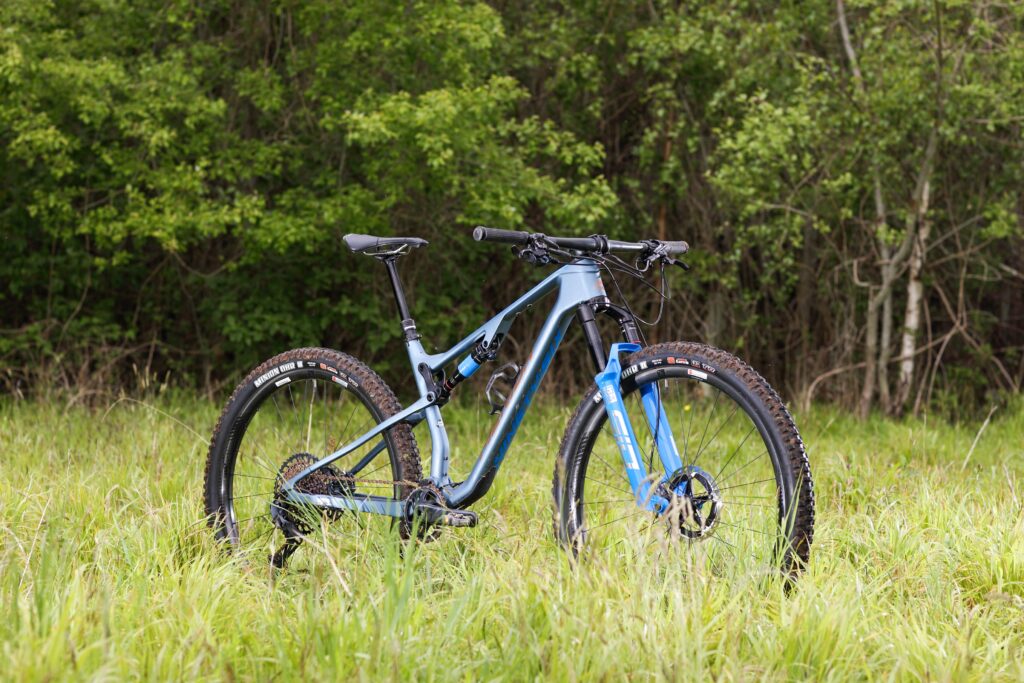
The Ninety-Six 8000 is built around a very similar frame as the XC focussed RC 9000 offering up 100mm of squish at the rear and it’s got space for a 29×2.3″ wheel. However, the 8000’s frame uses Merida’s CF4 III frame, rather than the CF5 III on the RC 9000.

The bike’s frame is internally cable routed with cables exiting neatly through a specially designed headset cap. There’s also Merida’s Trail Mount which is an additional fixing point behind the head tube for any extra spares and space in the front triangle for two bottle cages.

Just like the cross-country thoroughbred, this bike gets Merida’s P-Flex Pivot which has been designed to save weight and improve stiffness by doing away with the seat/chainstay pivot point. Instead, Merida has made use of the carbon frame’s properties to allow for a sufficient amount of flex.
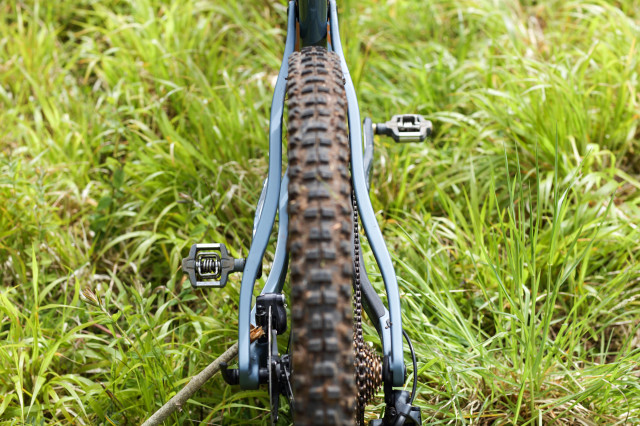
While the Ninety-Six 8000 shares a similar frame, that’s where a lot of the similarities end.
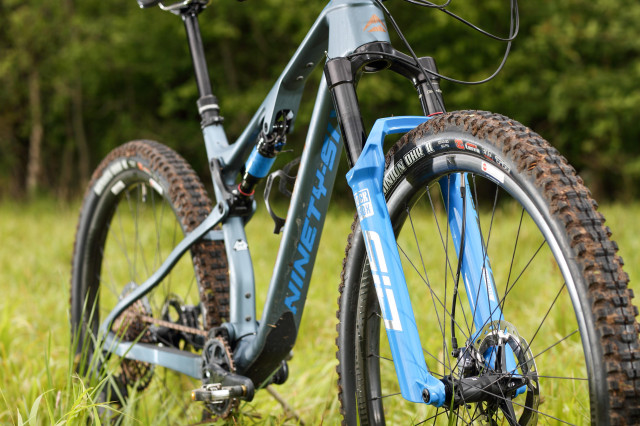
At the front of the bike, there’s a RockShox SID Ultimate fork with 120mm of travel and a remote lockout. It has enough space to fit a 29×2.8″ tyre if super fat rubber is your thing. Then, at the rear, there’s a matching RockShox SIDLuxe Ultimate shock damping the 100mm of travel.
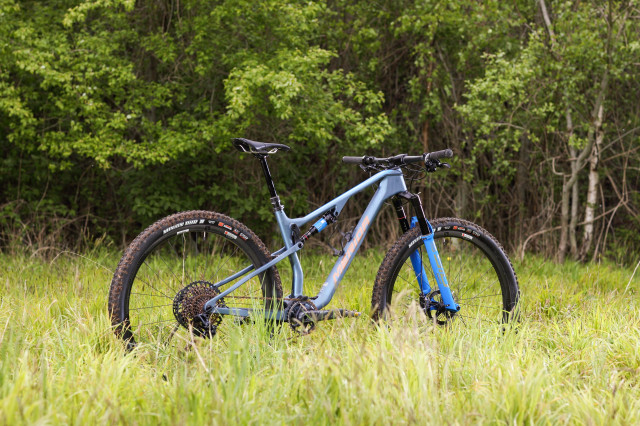
That extra 10mm of fork travel slackens the head angle by .5° to 67°. The change also slackens the seat tube to 75° and raises the bottom bracket drop to 36mm rather than 45mm on the 100mm traveled RC 9000 build.
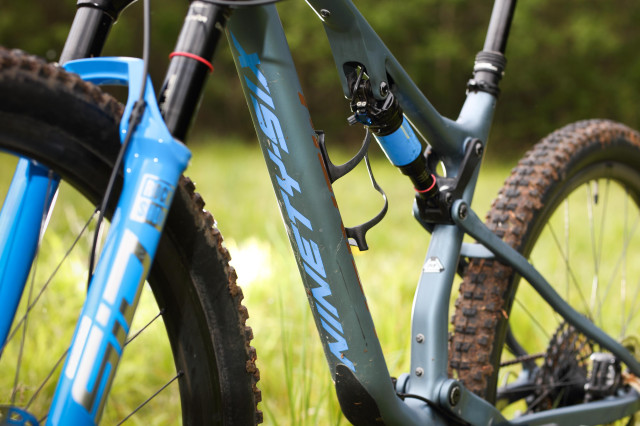
Though reach on the Ninety-Six 8000 gets shrunk by 13mm to 440mm on this medium frame. Then, there’s a 435mm chainstay and an 1156mm wheelbase.

Another big change is the move over to chunky rubber from Maxxis in the form of the DHR II at both ends of the bike. These are tyres that are most commonly found on full-fat enduro bikes, so it’s impressive to see such aggressive tread patterns on a bike like this.

This bike also gets its brakes from Shimano and the XT line-up, coming kitted with a four-pot caliper at the front for extra braking power.

Though, a bit of a curveball, the Ninety-Six 8000 is driven by a SRAM GX Eagle drivetrain with the 10-52t cassette offering an extended range.
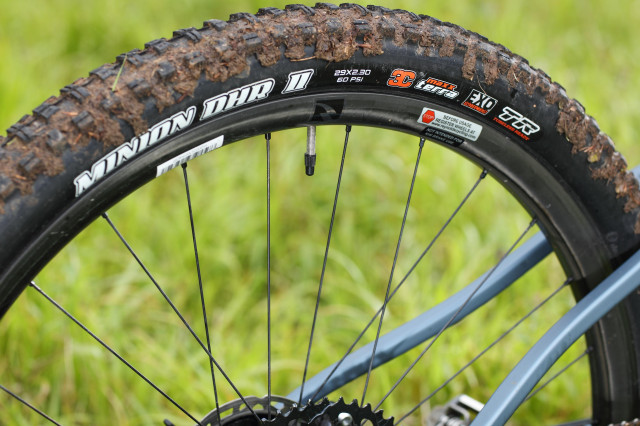
Moving onto the wheels, we get a pair of carbon Reynolds TR 309’s with a 30mm internal width.

Finishing off the bike, there’s a Merida Expert TR dropper post and on our medium frame we get 150mm of travel. A small will see 125 and the large and extra-large frames get 170mm of drop.

Then, there’s a 740mm bar from Merida, along with a 60mm stem, also from Merida.
So, that’s the kit that we get on the Merida Ninety-Six 8000 and for all of that, it’s priced at £6,200. Now it’s off to Justin to find out what all of these changes have done to the ride. Keep an eye out on the site for the full review coming soon.