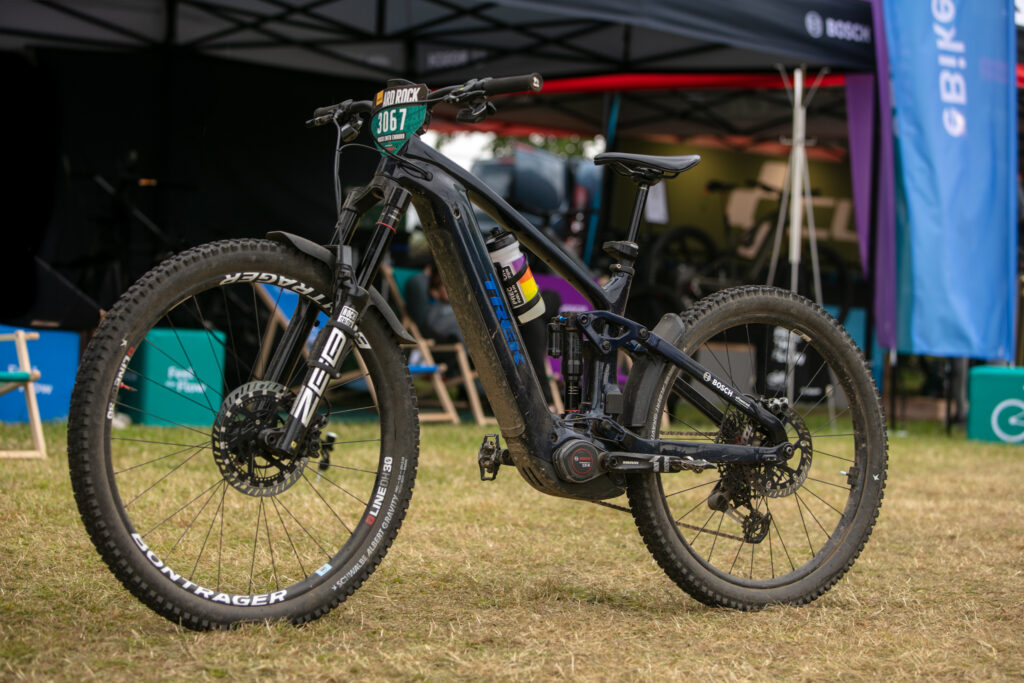

Tracy Moseley needs absolutely no introduction. A mainstay on the race scene in 1997, she has achieved huge success amongst the downhill and enduro circuits. More recently, she’s turned her hand to e-mountain bike racing, where she’s proved that she’s still a force to be reckoned with. We caught up with her at Ard Rock to chat over her e-MTB, the Trek Rail 9.7.
- 500g of added weight and 160mm cranks: Laurie Greenland tells all about his custom Santa Cruz V10 downhill superbike
- Retro vibes meet modern refinement: Doddy talks us through his YT Industries/Manitou mashup
- The daily driver of the UK’s most exciting DH World Cup rider — we speak to Phoebe Gale about her new Orbea Rallon
Throughout her 28-year span racing mountain bikes, Moseley has ridden for a good handful of teams, starting her career with Volvo Cannondale, moving onto Kona, and now settling with Trek, having ridden on the brand’s bikes on a long-term basis since 2009.
Not only is Moseley now synonymous with riding Trek bikes, but she is also a brand ambassador for Bosch, so it comes as no surprise that she’s currently riding the Trek Rail 9.7 in a size medium around Europe’s e-MTB race series. However, it comes with a number of upgrades, one of which you won’t find on a production model Rail+.
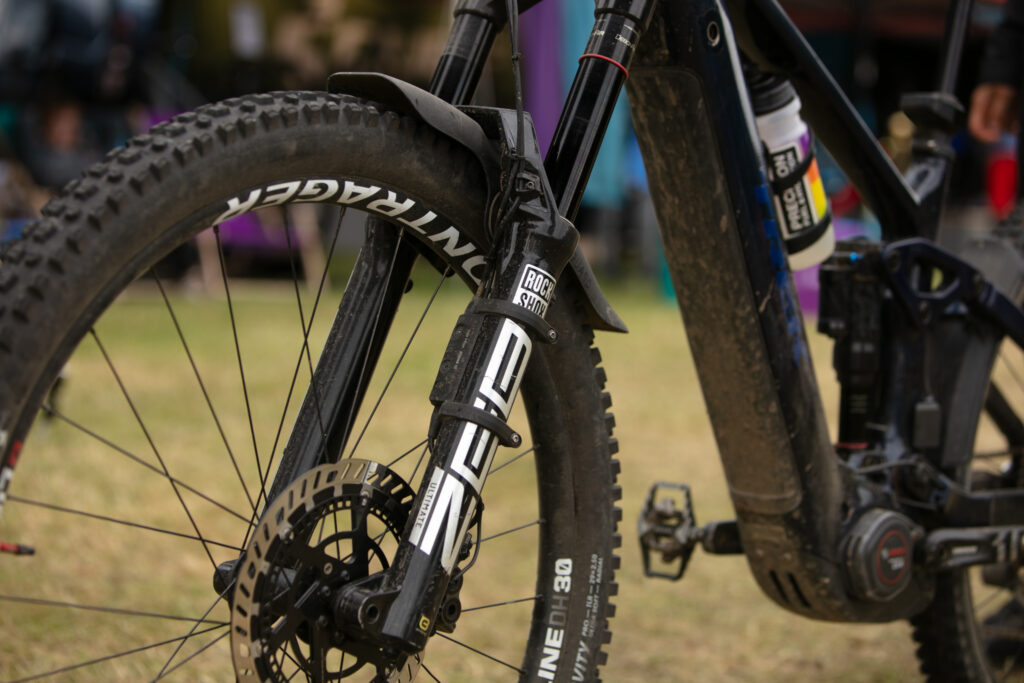
With 170mm of suspension up front and 160mm at the rear provided by RockShox, Tracy’s Rail+ 9.7 looks pretty normal. That is apart from the fact that the ZEB fork and Super Deluxe shock have been upgraded to the Ultimate-level models, so it gets all of the adjustments and the latest in RockShox tech.
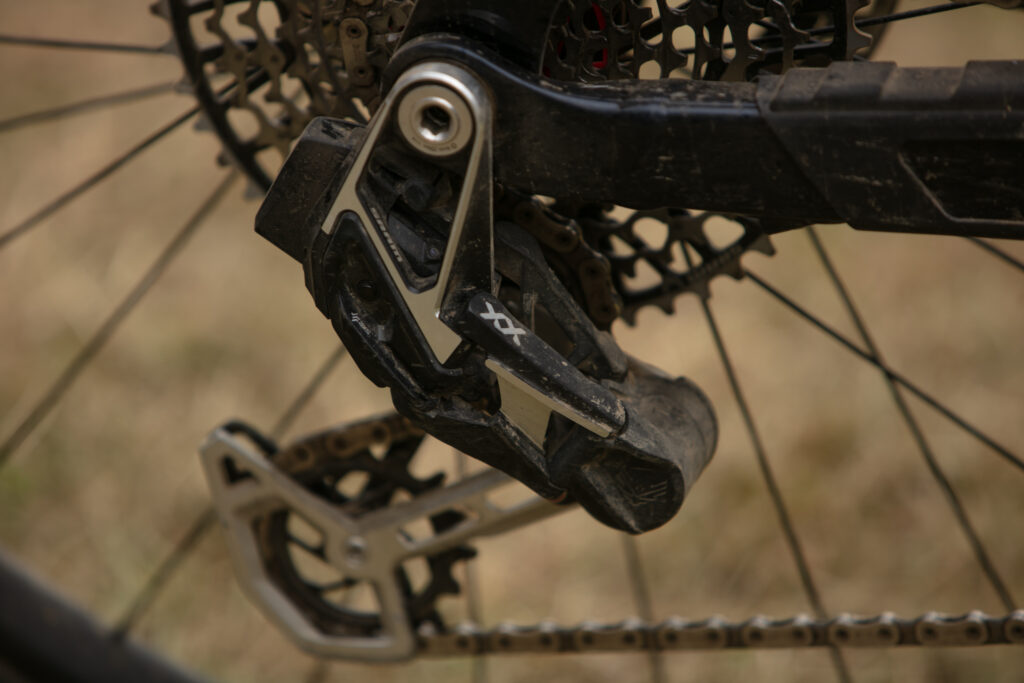
SRAM has the shifting covered and comes as another deviation from the standard 9.7 spec. Rather than the Shimano SLX/XT mix, Moseley’s running SRAM’s top-of-the-line XX Transmission kit.
But where the bike gets extra special is that it’s equipped with ABS brakes, which is something that’s still slowly growing in popularity. That system comes off the back of a collaboration between Magura and Bosch.
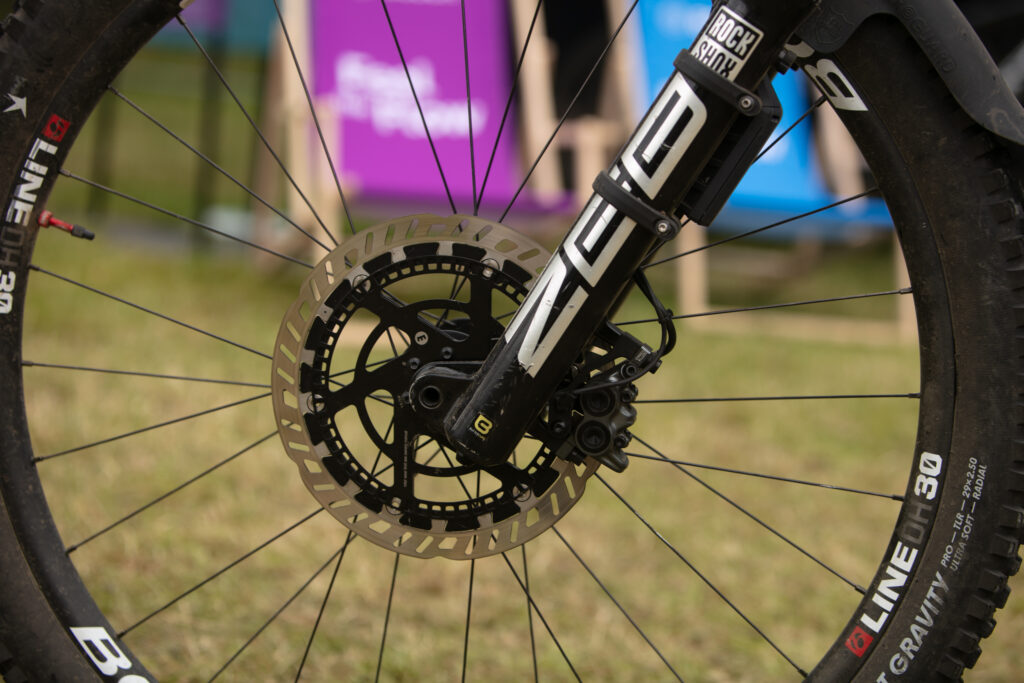
“It’s really obvious in straight line braking in gravel, where normally the bike deflects and you lose the front wheel. It just, basically, just held a straight line and braked. So I’ve been using that for the last three of four races and it’s one of those things that you don’t notice it’s working, which is a good thing in many ways and I did have a couple of races where I was going to do one day with it on and turn it off to see if I could really feel the difference now I’ve got used to it. But I kind of got sketchy on the first stage and thought, “you know what? I’m going to put it back on as kind of a safety blanket.”
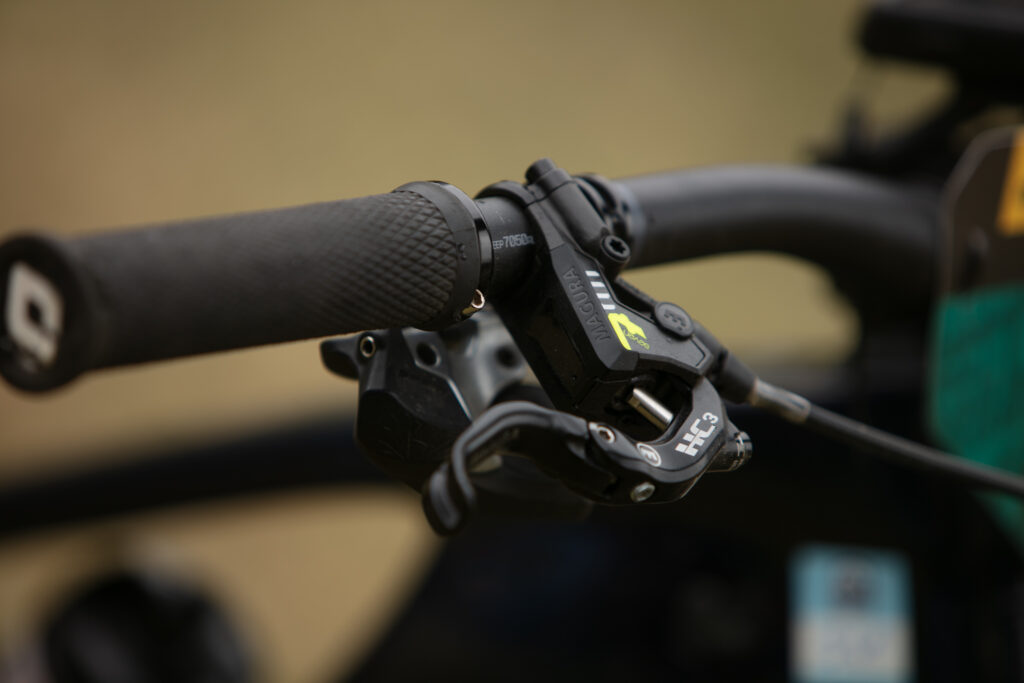
“I do think it’s working. There were 21 activations [today – Ard Rock 2025] where it’s taken over the front wheel sliding today. People are quite sceptical about it because they say you can’t lift the rear wheel and you can’t do an endo with it, but you can if you go into the settings, as there’s a Trail mode and a Race mode. The Trail mode definitely stops you from lifting the rear wheel too high and releases the front brake. With the race mode, I’m finding that it’s working really well. There are a few things that we’re still working through. I think it’s still quite new for the racing application, but I’m definitely enjoying it.”
Tracey is riding on the very latest Performance Line CX Race motor from Bosch that was revealed at Eurobike earlier this year, which comes with specific race software, 100Nm, and a maximum of 750W.
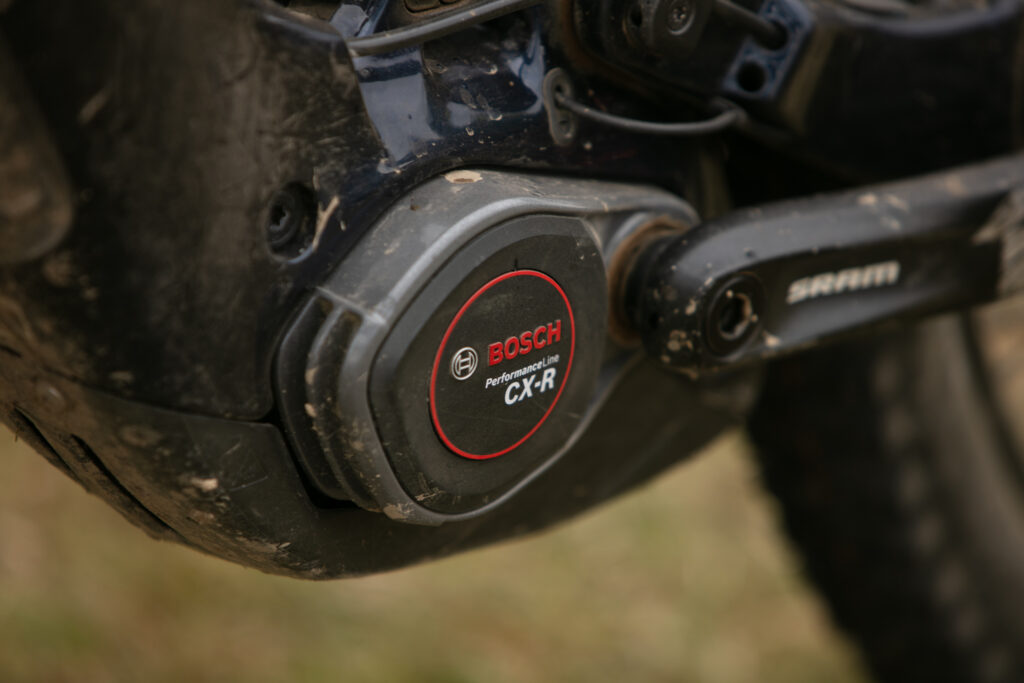
“I’ve got a bit of a different setup as I’ve got Tour+ mode, E mode, which is Bosch’s new MTB+, but a bit more powerful, and it gives you a bit more assistance, but with a nice, natural feel. And then I’ve got two Race modes set up. Ultimately, they’re the same thing, but I’ve got a standard Race and a Race 2 that’s basically plus five and plus five, so it’s a fully maximum assistance dynamic. I can adjust between those modes, so on a technical climbing stage, I might not want that absolute power.”
As well as the newest Bosch motor, Moseley’s bike is equipped with the brand’s new display. That display delivers all of the information she needs
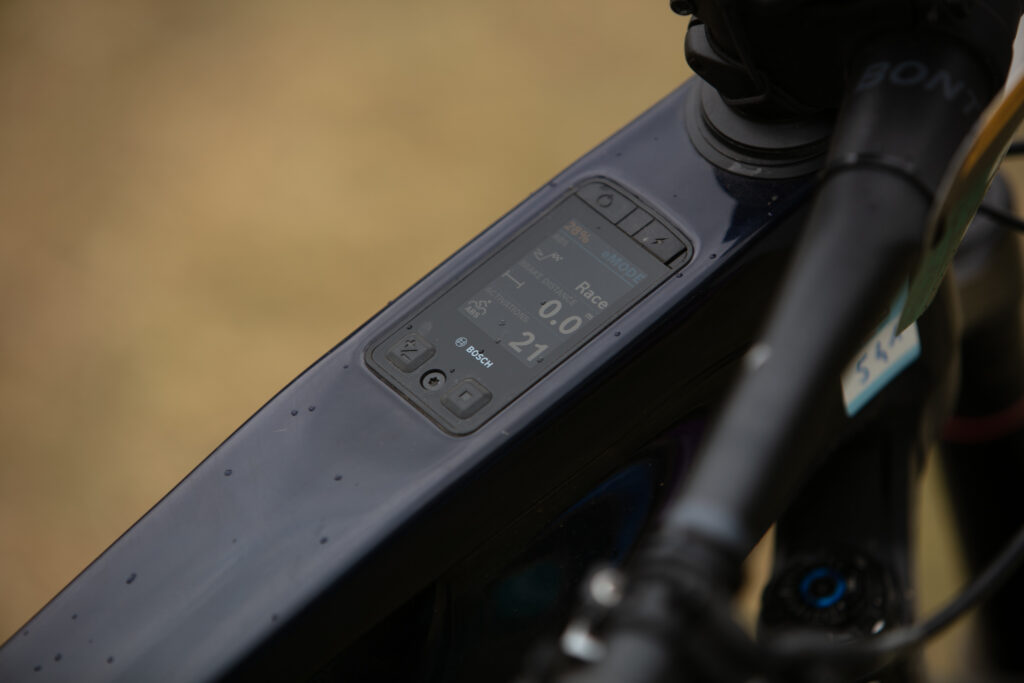
“I quite like a few details, without getting too nerdy about it, and it means that I don’t have to run a Garmin.”
Tracy’s not a rider who’s adverse to change. Rather, she embraces it as displayed by her move from downhill to enduro, and the same goes with her outlook towards wheel sizes, having famously won the first EWS season on a 29er, and continuing to use the larger wheels before retiring. Now, she’s all about mullet wheels, having used them for the first time this year.
“The Rails now come with a 650b rear wheel, but for me, it’s the first time I’ve ridden a mullet. So I went straight from 26 wheels to 29 in 2013, and I’ve never gone back. [With mullet bikes] I did wonder about the lack of traction, but I quite like the maneuverability with it. I haven’t noticed it on the climbs, which is a good thing.”
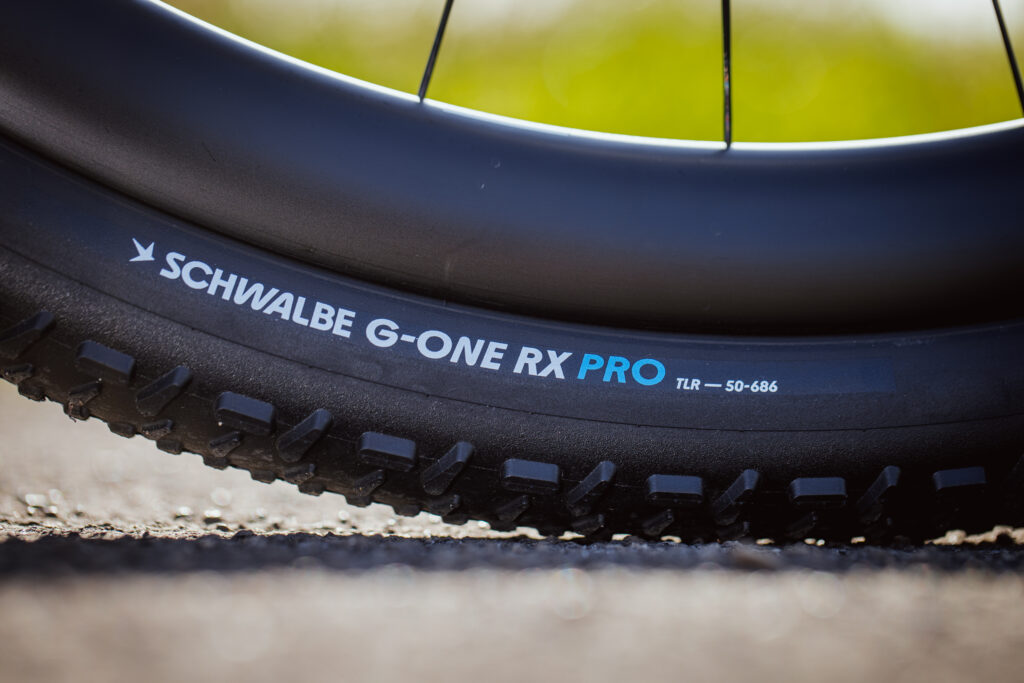
Another new move for Moseley is the shift towards Schwalbe tyres, and she’s running the Albert Gravity tyres with Radial casings.
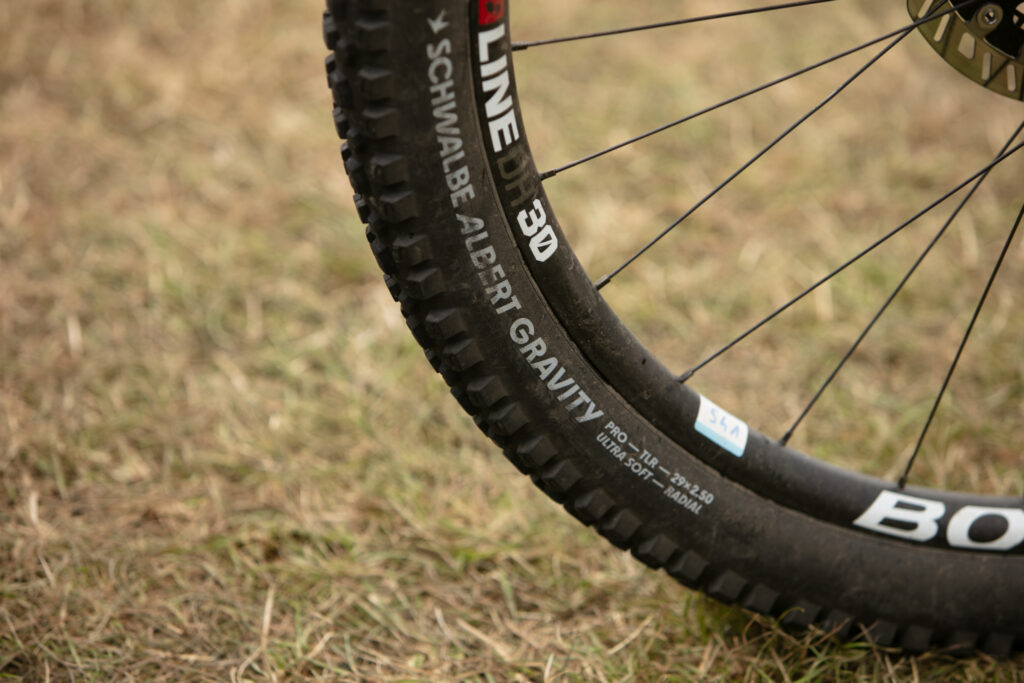
“I’m really enjoying this damping sensation, especially over roots and rocks. It’s absorbing and taking away all those little impacts that slow you down. I am running higher pressures, which I think that, somewhere like this [Ard Rock, Yorkshire Dales], it’s great for that puncture protection and that feeling of security, because I’ve definitely hit the rear wheel pretty hard today. I’ve had no issues with them so far.
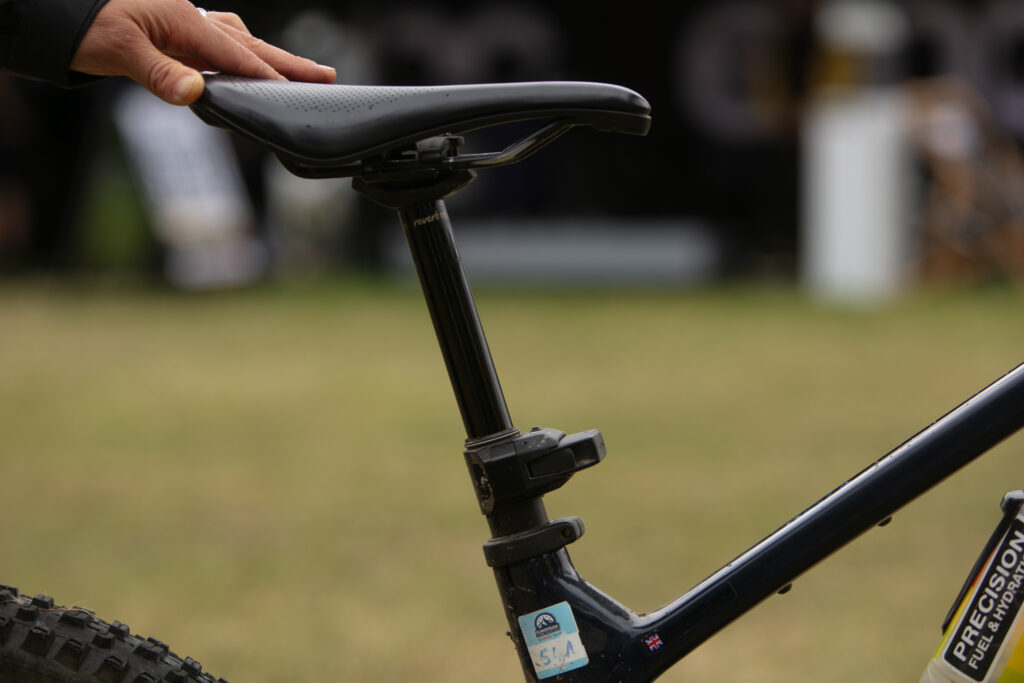
As for the dropper post, there’s RockShox’s most recent Reverb AXS, and thanks to the Rail’s straight seat tube, Moseley has managed to squeeze 170mm of travel into the dropper.