The European Union’s Battery Regulation 2023/1542 is coming! Alright, that might not be the catchiest opening sentence for an article, but if I told you it could herald the right to repair your own e-bike battery (or to have it repaired), your ears might just prick up.
From August 18, 2025, the regulation will become the main EU legislation covering a huge range of batteries with various aspects of the legislation being introduced at different dates over the next couple of years. As this Bike Europe article explains, the overarching aim is to ensure batteries are not just powerful and efficient, but also sustainable, ethical and safe throughout their entire lifecycle. This will cover everything from the sourcing of raw materials through to recycling.
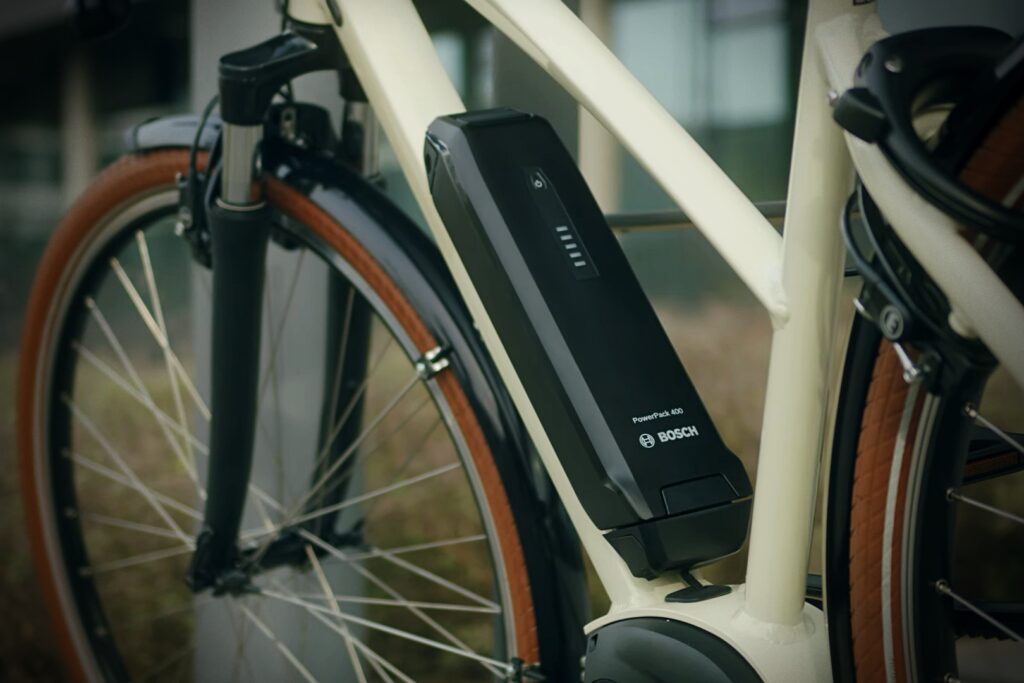
As it is no longer in the EU, technically the UK might be exempt, but in reality it seems highly likely it will accept European e-bike standards. Our market is tiny compared to continental sales, so few if any firms are likely to make models to different UK standards.
Whilst much of the legislation looks to affect supply chains and labelling – arguably more of an industry concern than a radical shakeup for the avid e-biker – one part of it certainly looks like it could revolutionise e-biking (and indeed all portable consumer batteries).
That element is Article 11, due to come into force from February 18, 2027. It will mandate that both the entire battery and individual cells within the battery pack are designed to be removable and replaceable.
Having a battery that your local e-bike shop could repair rather than replace sounds great from a cost-conscious, sustainability-minded e-biker’s point of view. However, there is also a counter argument that Article 11 could be a step backwards rather than forwards. Let’s look at potential pros and cons of replaceable cells in a little more detail.
For replaceable cells – Infinite Battery are ready for the future
To quote directly from French manufacturer Infinite Battery (formerly Gouach) “Infinite Battery is the world’s first fully repairable e-bike battery, designed for ultimate safety, sustainability, and ease of use. Unlike traditional batteries, it allows you to replace cells in minutes with just a screwdriver, eliminating the need for costly full replacements. Built with a fireproof aluminum casing, it offers maximum protection against lithium battery hazards, ensuring peace of mind for every rider.”
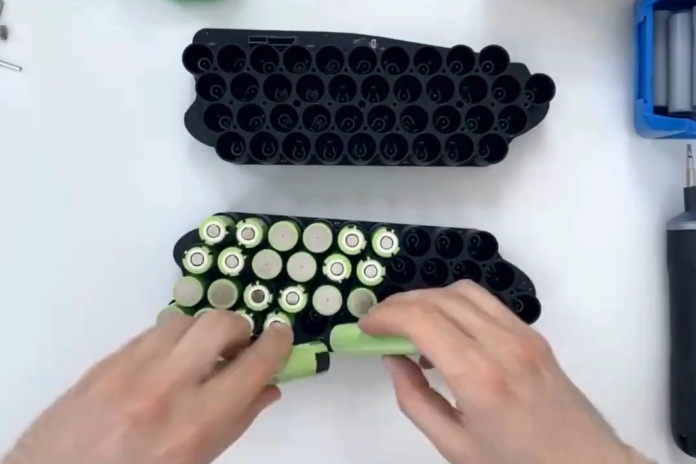
We spoke directly to Infinite Battery founder Alexandre Vallette who commented directly on the importance of cell replaceability: “The main part of this regulation that I think is interesting is Article 11 that states that batteries should be repairable to the level of the cell.
“We have fought quite a bit for this and big brands are really fighting back trying to remove it. For us, that is the key thing as when you make batteries in the way they are made now – by spot welding all the cells – you just implement planned obsolescence. Cells represent only about €40-50 of battery pack cost, so we shouldn’t ditch the whole battery when one cell is failing. We should be able to replace all the cells easily. That is what we implemented in our Infinite Batteries.”
Once you have paid the initial cost of the Infinite Battery, the lifetime cost should be lower says Vallette: “It costs €700 for a replacement ‘premium’ proprietary battery of these high end batteries when they fail. Since these batteries cost less than €100 to produce, the situation is really good for these big brands that do everything possible to close their system and create incompatibility. The more models, the more incompatibilities, the more references, the more waste.
“We are trying to be more democratic and to empower people that want to regain their autonomy by knowledge. My father in law has never been to a garage to service his car. It is his choice, but I think we need a world where this choice is possible.
“The main feature about the Infinite Battery is that it breaks the locks that these companies have put into place to make their system closed. We are already compatible with Bosch, Bafang, Rad, and some Shimano models and we are working to make it universal. Since the battery is connected, each firmware update unlocks new brands so that more users can free from the closed systems.”
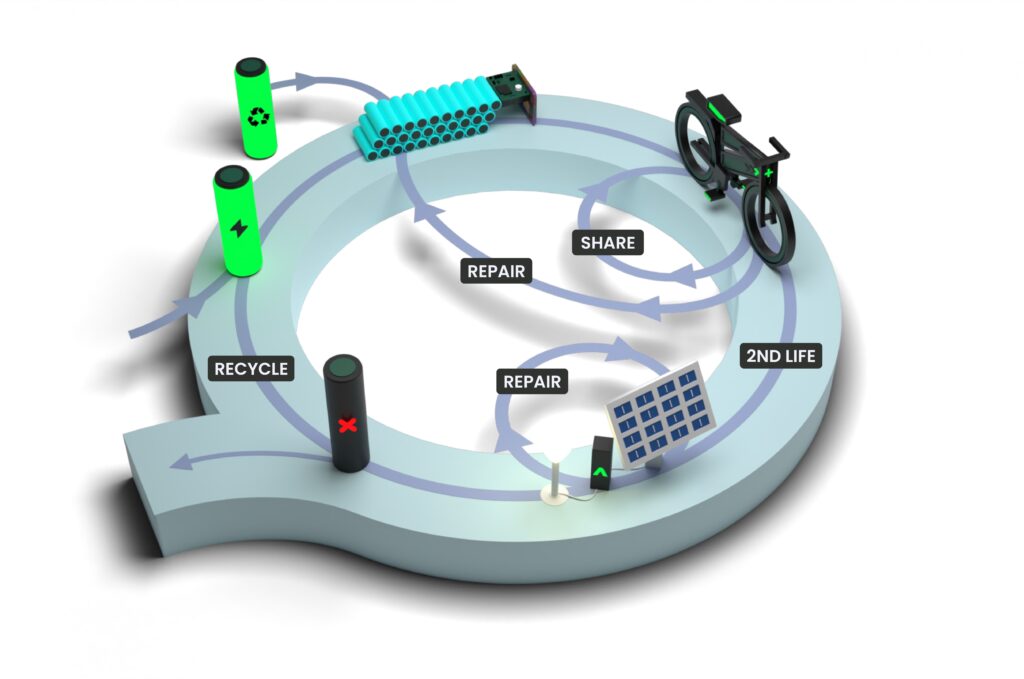
Clearly though, Infinite Battery’s work has only just begun as Vallette adds ‘we have shown that the battery can be safely and economically repaired, but now there is the whole ecosystem of local repair to setup and this is going to take some time.’
For practical reasons the company is starting with the kit market and announced recently it has started shipping its ‘battery kits’ to crowdfunding backers and new customers. The kit is shipped with a charger and support to fix on the bike frame but without cells. Cells cost between 40 and 60 euros.
Infinite Battery say regulations make it easier and cheaper for end users to order cells themselves. The end user – shop or kit enthusiast – can then configure them according to whether their kit is 36V or 48V.
The logic of the new law is that repairable batteries will be the new norm – though as we outline below, there is significant opposition to it from within the industry. Certainly, as Infinite Battery has discovered, producing a repairable battery is no easy task.
> Battery repair vs replacement is ‘David vs Goliath’ say Gouach
Vallette said: “We started in 2019 and it has been very difficult since then as battery is the most difficult place to start a business. We need to deal with hardware, electronics, embedded code, server code, dangerous goods logistics, certification process etc – so it is very difficult to stay focused on the product.”

However persistence and real world testing seem now to be paying off.
“Since 2021, we have equipped fleets of shared e-bikes because this is the most difficult environment for batteries (all year long outside, swapped a lot etc). Since 2024 we have finally achieved a level of safety and durability that is satisfactory without compromising on repairability.
“This is why we decided to propose this to a broader audience worldwide. We are initially targeting the DIY community and the product has gained numerous fans since its launch a few weeks ago.”
It should also be noted that Infinite Battery says not only is its battery repairable but that it features Bluetooth and Wi-Fi connectivity for remote diagnosis. It also claims it has a carbon footprint up to four times smaller than a typical e-bike battery.
The counter arguments – cost, safety and reliability
Gouach aside, the majority of e-bike battery manufacturers have been on a totally different tack the last few years, focusing on safety and reliability over repairability. Opening up the battery casing to effect repairs has been viewed as a potential safety issue and an extra after sales cost.
As we have already explored at length, official advice has been to replace an old battery, despite the fact that could lead to the scrapping of older e-bikes if no economically viable replacement battery can offered to the end user – namely you, the e-biker.

The above referenced Bike-EU article extensively quotes Petr Grzegorz, head of business development and marketing at European battery manufacturer EMBS.
“In theory, this sounds very positive,” Grzegorz said of Article 11 replaceability. “However, when we consider the specific context of high-performance e-bike batteries, some significant challenges and questions arise.”
Grzegorz says designing batteries where individual cells can easily be replaced is “not a trivial task”.
He says it typically requires:
- Larger, heavier batteries – more space is required for access to individual cells and their replacements within the battery pack.
- More robust mechanical structures – including additional wiring and potentially more complex connection systems. This can also lead to bulkier and heavier batteries.
- Higher production costs – such batteries would potentially be more intricate and therefore more complex to design and manufacture.
- More complex battery management systems (BMS) – more readable information would be required and it would need to allow single cell exchange.
More than this though, Grzegorz stresses the safety and reliability record of modern premium quality e-bike batteries. As we note in our battery safety article, despite widespread media coverage of e-bike fires, they barely ever catch fire, and there is a vast difference in quality between the better brands and the cheapest.
“But here’s the crucial point for e-bike users, said Grzegorz. “High-quality lithium-ion batteries used in reputable e-bikes are incredibly reliable. Thanks to advanced BMS and rigorous quality control, single cell failures in these batteries are statistically very rare within their expected lifespan.
“When failures do occur, they are often due to broader issues like physical damage, deep discharge abuse, or end-of-life degradation across all cells, rather than isolated cell faults. Therefore, while Article 11 aims to improve repairability, the value it adds for premium e-bike batteries is questionable.”
Gregorz concludes: “The cost increase may therefore outweigh the environmental gains, especially when considering the well-established and ever-improving recycling infrastructure for lithium-ion batteries. This could also put European manufacturers at a disadvantage compared to global competitors who may not face the same design constraints.”
Safety, reliability and sustainability
Whatever the future of repairability, it seems safety, sustainability and reliability are at the forefront of the minds of all reputable e-bike battery manufacturers. To give just one example, last summer Giant introduced a new and safer battery design with a honeycomb of fire retardant plastic which would melt around each cell in the event of a fire.
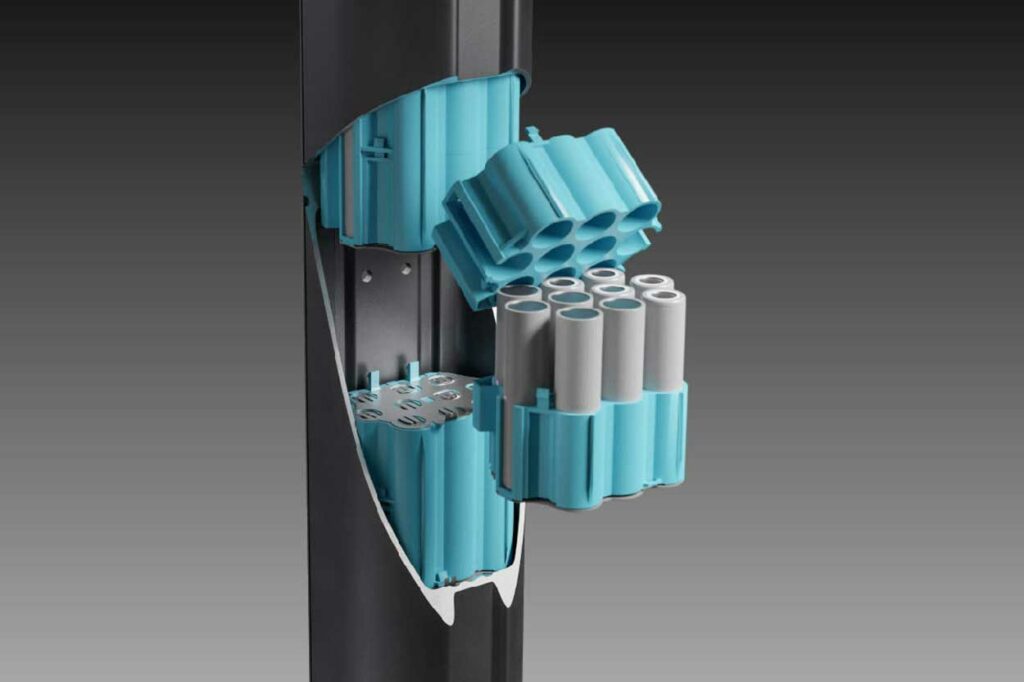
From 2026, consumers can expect to see more information on performance and durability as standard with all new e-bike batteries, including information on expected lifespan and capacity. From 2027, information will be available via a QR code and will include a so-called Battery Passport.
From 2028, carbon footprint info will appear in e-bike batteries – manufacturers will have to show the energy consumed and emissions generated during battery manufacture.
So where does all this leave repairability – a key component of the battery policy of the EU’s Green Deal strategy? Despite the fact time is steadily ticking away before the repairability clause becomes compulsory, you can’t help but feel there are more twists and turns to the story ahead.
> Old worn-out e-bike batteries: repair, recycle, refurbish or replace?