



New Forest MPs have once again called for statutory regulation of sportives — and it appears that cycle sports's national governing body, British Cycling, agrees.
The New Forest National Park Authority (NFNPA) yesterday approved a cycling events framework that includes a 1000-rider limit on rides in the forest. Representatives of cycling bodies strongly opposed this move, and the only event organiser to have run events on this scale in the park has said he will not comply.
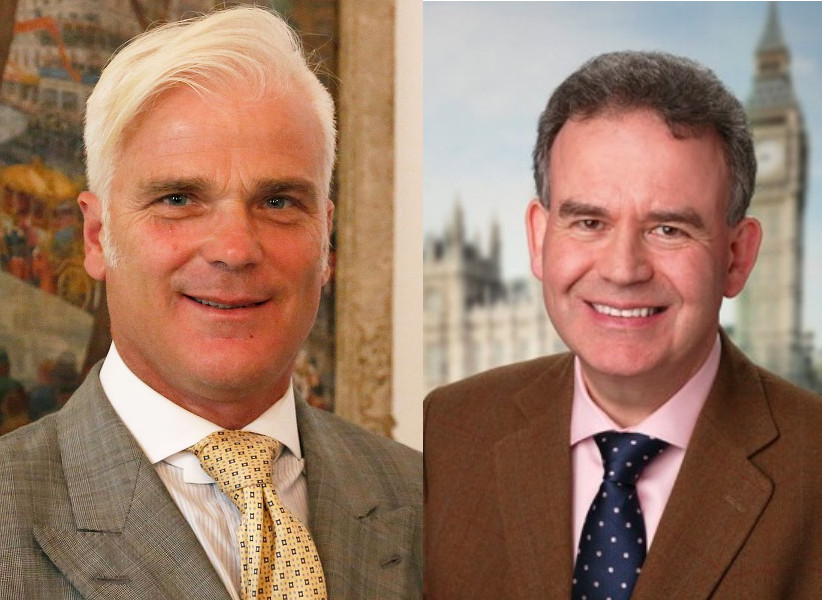
Faced with that opposition New Forest East MP Julian Lewis and fellow Tory Desmond Swayne, MP for New Forest West, say they will press for legal restrictions on sportives.
Mr Swayne told the Southern Daily Echo: "The charter is a step in the right direction but it’s voluntary.
“A limit on numbers is an important element. That is why we will continue to try to get enforceable regulations.”
The call for legal regulation of sportives has support from an unexpected corner: British Cycling.
A British Cycling spokesman said that an "arbitrary cap on rider numbers wouldn’t work" but the organisation believes regulation and calendar coordination of sportives "needs to be urgently addressed."
He said: "We’re asking the government to take action to ensure that all formal cycling events on the public highway are better co-ordinated and regulated through an agreed process. Unlike road races, sportives sit outside of any formal regulation process and given the high volume of events and participants it is a serious cause for concern."
But according to the Echo, Hampshire county councillor David Harrison, Lib-Dem representative for the New Forest ward of Totton, told yesterday's NFNPA meeting there was “zero chance” of the Government introducing new laws to regulate mass cycle rides.
He said: “Let’s stop victimising cyclists.
“To paint them all as anti-social menaces just plays into the hands of a small minority of local people who have developed a visceral hatred of anyone wearing Lycra.
“Recent large-scale cycling events have taken place with barely a problem. They involved hundreds of people visiting the area, enjoying themselves, benefiting the economy and raising thousands of pounds for charitable causes.
“I want the organisers to be around the table when events are planned. I want co-operation, not confrontation.”
Cycling charity CTC also sees no need for regulation. Sam Jones, CTC Campaigns Coordinator said: "There is a need to manage cycle events in honeypot locations such as the New Forest but we remained unconvinced that there is a need for regulation. We believe there needs to be a flexibility in approach which can work in different circumstances."
“Arbitrary caps based on no evidence, like the New Forest now has, serve no purpose but to infuriate cyclists and inflame conflict. A ‘catch-all cap’ like this, can never be anything more than discriminatory.
“There is a case to be made for rider limits in mass events, but these should be light touch and limited to known areas of conflict. So much depends on what is happening on any route on that day. Therefore any limitations should be based on a case by case assessment that takes into account safety and potential for disruption in the local area. This is what we called for in the Charter, and this is what was ignored.
“Yesterday we saw the Government take a historic step towards achieving David Cameron’s ‘cycling revolution’, while the New Forest authorities took a massive step backwards.”
We've requested clarification of British Cycling's position, in case it gets interpreted as exploiting the situation in order to grab the legal authority to run a regulatory system for sportives. Meanwhile, here's the full statement.
“An arbitrary cap on rider numbers wouldn’t work because it doesn’t deal with the underlying issue – the lack of regulation and calendar coordination of sportives, which is a serious concern that needs to be urgently addressed.
“The growth in sportives has been unprecedented, British Cycling has seen a 240% increase in the number of registered events in the last five years. This is why we’re asking the government to take action to ensure that all formal cycling events on the public highway are better co-ordinated and regulated through an agreed process. Unlike road races, sportives sit outside of any formal regulation process and given the high volume of events and participants it is a serious cause for concern.
“It is important that we introduce measures to reduce the risk of highway based cycling events taking place on the same day and in the same area, as well as ensuring that events do not conflict with other forms of highway based activity. Regulatory measures should also improve event standards and provide an environment where both competitive and non-competitive events can run in harmony to meet increased demand. Improved calendar coordination should also result in less disruption in some of those communities that continue to experience problems.
“Mass participation cycling events should be embraced as they are hugely beneficial to the local economy and provide tremendous health benefits to participants, although we fully understand that local residents and road users require clarity and awareness of road cycling events in their local area.”


















51 thoughts on “New Forest MPs call for legal regulation of sportives — and British Cycling agrees”
Desmond has got lovely hair!
Desmond has got lovely hair!
And a Desperate Dan chin.
And a Desperate Dan chin.
yes it makes sense to
yes it makes sense to co-ordinate events, but is this simply a land grab by British Cycling? Are we going to end up with groups wearing black jerseys and using codes to identify where they are riding?
As an aside how healthy is road racing in the UK, I seem to recall a number of events have been abandoned/blocked/etc because of and by police in recent years.
Take the NFNPA, the verderers and the local constabulary, how independent of each other are they…..
This isn’t just sportives, what about Audax? Are BC trying to land grab that as well.
And what about the real problem on the roads? cars? Where are the calls to regulate car rallies, shows, events etc? What about the load Glastonbury places on local roads? How about Sunday drivers in Richmond Park? What about the Motorcyclists on the Horseshoe at the Ponderosa?
If you look at one group in isolation what do you actually achieve?
mrmo wrote:yes it makes sense
Yep I agree. British Cycling are in overreach here and I am BC member. Yes I definitely agree that sportives should be coordinated and that there should be some guidelines agreed about the routes, the numbers, the frequency etc. But this should be voluntary and the sort of thing that amounts to just good sense, courtesy and manners.
BC needs to be very careful that they’re not backing a bill that someone then adds an amendement to that suts down some of their activities. It’s easily done and this bill could well become a Trojan Horse bill for lots of anti-cycling (or more particularly anti freedom to cycle on the roads by right )legislation.
mrmo wrote:yes it makes sense
I suspect the latter may be part of the reason for the former..
Nah, that’s ‘cos some Audaxers ride recumbents 😀
On a more serious note – that’s probably one reason not to have BC, as they stand, have anything to do with events outside racing. RideLondon (not sure that it was originally planned for, or followed badgering by various people) are trialling ‘bents this year after trialling tandems last year.
Velothon Wales – a UCI sanctioned event IIRC – allow tandems, but don’t allow recumbents. (Just checked, seems Velothon Berlin has the same head-up-it’s-arse regulation *rollseyes*)
Unbelievable. They’ll be
Unbelievable. They’ll be after people having to join BC to take part in a sportive.
Leaving aside all that
Leaving aside all that whataboutery, cycling is different in many ways. Use of public roads for any event requires some form of consultation and inevitably some form of compromise. The growth of sportives does need some form of regulation be it voluntary or leglislative because large groups of cyclists of varying abilities spread out over a large distance and can cause other road users problems.
It should be a two way street; if sportives become regulated, they should gain some rights and some recognition as well as the less palatable restriction.
From a personal point of view, I don’t want the roads near me to be subject to groups of 1000 cyclists for 4 or 5 weekends a year, largely because of the delays and subsequent disdain for cyclists which will have a knock on effect for me.
British Cycling: alienating
British Cycling: alienating swathes and blowing smoke up their own arse since, oh, forever.
As an event organiser I say this to British Cycling: Join the Far Queue.
I refuse to sign my participation-oriented event up to BC because BC insist on helmets. BC insurance is expensive. The cut they take from entry fees is high.
This is like the F1 Governing body insisting all vintage car rallies be overseen by them. The idea that in accepting regulation that removes the common law right to travel on the public highway, that somehow ‘we’ would be afforded *extra* rights is laughable.
Every county has existing SAG (Safety Advisory Group) processes for dealing with events on the public highway. Event organisers already have insurers and venue managers insisting on consultation with local SAG prior to events. Any organiser worth his/her salt does so regardless, to ensure their customers are not put at risk / into conflict.
We have fundamental rights to free movement on the public highway. We have existing processes that work very well. We have examples of massive delays being caused by non-cycling events that go totally unremarked-upon whilst a few bikes get slammed.
Thanks British cycling for helping nefarious powers with hidden agendas undermine that.
Arses.
Problem with the New Forest
Problem with the New Forest stuff is that you’ve got a vaguely elected group of NIMBYs setting their own very dangerous agenda. Far better for an overall body to be pushing for a form of nationwide legislation than various “biased parties” making their own local rules.
I don’t think BC would ever call for things like numbers front & rear, caps on rider numbers etc. but there does need to be something to aid calendar coordination so that you don’t end up with situations of Sportives and/or road races attempting to use the same bit of road on the same day or over-using one area and pissing off the locals.
At the moment, I could go out and put on a Sportive and not tell anyone – Police, Highways, BC… None of them need to know and that is surely wrong? You get 3 people doing that on the same weekend with no control or “looking at the bigger picture” and it’s a recipe for disaster (and that leads to NIMBYs bashing cycling). If there’s a clear procedure for events to go through, people can’t really complain. Well, they can but it won’t go any further, it’ll simply be a case of “they obeyed the law, now shut up”.
crazy-legs wrote:Problem with
James, do you still work for British Cycling ?
As a parent with a young
As a parent with a young family, we like to holiday in the UK and ideally somewhere with good riding close by. However, I can’t see myself spending any time in the Nimby, I mean New Forest.
I suppose I don’t blame the NFNPA for representing residents to a certain degree but the MP’s are by and large, jumping on this as a hobby horse for political gain. I suppose they have to been seen to be doing something. It’s not like they have major employment or crime problems down there.
arrieredupeleton wrote:As a
Trouble is, NFNPA doesn’t really represent “residents”. It is heavily in thrall to the Verderers. This group is elected after a fashion – their electorate comprises New Forest “Commoners” who have registered to vote, but the number of those is less than 1,000. If you live in a bungalow in Lyndhurst or Brockenhurst you are almost certainly not a commoner, so you don’t get a vote.
NFNPA claims significant opposition to large cycle events in the Forest, but there is no admissible evidence for this claim – their own officers conducted a proper opinion survey, with multiple points of delivery (drop in centres, online, the New Forest Show) in which only a small single figure percentage of respondents even mentioned the size of events being an issue for them. All they actually have to go on is the ear-poundings they get from lippy nimbies across the bar at their local golf club or the Conservative Association. they almost certainly hear nothing whatever from anyone who isn’t a member of the Tory Party, or who doesn’t play golf, or who doesn’t graze a few ponies on the Forest (and those last should know that their animals are only at risk from speeding cars – there is not one recorded instance of a pony or donkey being killed by a bicycle).
Truth is that the New Forest is run like the feudal fiefdom that it always has been since the day in the 11th century when William Rufus established it as his personal hunting ground.
Where is Walter Tirel when you need him?
From the BC statement: “given
From the BC statement: “given the high volume of events and participants it is a serious cause for concern.”
Why is it a serious cause for concern? This is a very generic, blocking, type of statement. Very fuzzy.
Also, for whom is it a concern? NFNPA and a few rabid but influential looney NIMBYs, I got that, but they should not matter for BC one bit.
Stinks. I’m cancelling my membership, there are alternatives for getting the commuting insurance and legal assistance covered.
jacknorell wrote:
Stinks. I’m
Indeed. I’ve got the cheapest BC membership simply for buying advance tickets for events, but haven’t even done that this year.
Despite grumbles about the CTC and their charity-chasing fiasco, I guess they’ll be keeping my membership money..
I lost all faith in BC when
I lost all faith in BC when they started backing bids for the Grand depart.
1,000 official entrants and
1,000 official entrants and 20,000 day visitors (on bikes) … now there’s an idea.
I do think that Sportives
I do think that Sportives should be better coordinated – it seems as though there is a sportive going up box hill every other weekend, and that is frankly too much.
So – who to regulate? Surly a pro-bike organization such as BC are going to be better than the New Forest lot?
Must be Mad wrote:I do think
Why should it be a cycling organisation though? If a local motorbike club holds an event, which co-incidentally has overlapped quite frequently with HONC, what is achieved by a cycling only organisation being in control?
Isn’t this where SAGs and the like come in???? Get the interested parties in a room and talk?
Must be Mad wrote:I do think
There’s cyclists going up box hill every day of the week – not to mention motorists. What’s ‘too much’ ?
The M25 is frequently at a standstill at peak commute time. Is that ‘too much’ or something else ?
Must be Mad wrote:I do think
Sympathy with you guys in The South, although I can’t help thinking that there are probably less popular and easily accesible sportives that are keeping their heads down in The South whilst those over-hyping New Forest argument generate negative publicity for all sportives.
Try this – not that many entrants and very few cars:
http://www.handsonevents.co.uk/?page_id=343
or practically anywhere else that isn’t the New Forest…
Calendar coordination should
Calendar coordination should happen but surely any event organiser would look into that anyway? Races and sportives mixing has got to be a bad idea obvious to anyone.
Obviously this could be done without statutory regulation i saw a comment above about BC requiring riders to wear helmets which doesn’t seem the most outrageous rule. What are they doing that’s preventing organisers registering with them other than that? The insurance costs are higher but some of the cheapest sportives on BC are around £16 so not that expensive.
I don’t get it? Are sportive organisers puting profit before common sense especially the larger events? Most of the smaller ones are organised by clubs or for the love and profit isn’t the motive.
The best suggestion I’ve seen
The best suggestion I’ve seen so far as to how to deal with this is for everybody who fancys a ride the NF(or just want to fuck with some nimbys) is to ring the New Forest National Park Authority every time your going for a ride there and ask if it’s ok and also ask them what number you need to display front and rear to comply with they regulations.
Number is 01590 646600 if anyone wants to spend 5 mins getting the message to them.
I understand they’ve been receiving calls about it most of the day.
I agree with Pablo with
I agree with Pablo with regards to co-ordinaries calender. Something very similar happened with mtb racing before foot n mouth. Many of us liked to see what series or venue was going that weekend. Ultimately the scene exploded and many venues and series shut down. From the six or so series, last time I raced it was either BC or Nutcraker. Both aimed at pros/ licence point chasers.
Something needs to be done to maintain the health of the sportive scene. Entries have spiralled from £10 to £25 us over the last five years. It’s a real shame that the roads can not be shared.
Quote:Something needs to be
Unfortunately, it’s a lack of regulation that has led to this point; if anyone can put a sportive on, anyone will. A lack of any sensible regulation means that the money making opportunity is taken by local enthusiasts, by larger commercial concerns, by charities, by bigger companies all without any nod towards the areas and residents and general day to day ‘just trying to get things done’.
Great for cycling? No, because lack of regulation leads to differing standards of provision, differing standards of support, differing standards of safety and very little return for the communities that put up with the hassle of 1000 plus cyclists turning up, riding and contributing little to the local economy.
The establishment and support of the 7 Stanes mountain biking areas in Scotland are a great example of a sustainable, regulated and sensibly thought out approach to using cycling as a benefit for communities. Popping up and putting on sportives in the same old areas for a population based around London and the South East doesn’t do the same.
This is frankly crap.
This is frankly crap. Sportives are regulated themselves by H&S laws and the organisers I have taken part in (NOT IN THE SOUTH) have been very very good.
Totally with the LD MP this is pandering to UKIP Nimby types and frankly, excuse my language, they can fuck right off.
Every single one I have ridden have been for charities and normally have their own limits because believe or not the organisers themselves know what to do.
Guess what UKIP and Tory types it is about market demand, you know the thing you love, more and more people want to do them and thus more appear.
I would say the health of a lot of middle aged men and women has improved vastly 🙂
Quote:Guess what UKIP and
…and now this popular thing is at the point where some people think it needs regulating…
I’ve ridden sportives here and abroad and they can offer a good time out on a bike, but I don’t want them every weekend where I live, nor do I want anyone to be able to put them on without adhering to a set of sensible regulations.
but Crukey from what we have
but Crukey from what we have been told it is only a small number complaining. Like the one in Wales where one person put tacks down. How many actual sportives are there in the New forest and how many complaints from different people ?
BC can join the Far Queue. I
BC can join the Far Queue. I thought they were finally showing some sense and then this…
shouldn’t British cycling
shouldn’t British cycling ignore Sportives and get back to grass roots racing, which its killing off with its ridiculous costs to organisers!
Or can it milk the sportives to prop up racing? Not likely, more to fund larger middle management
Interesting narrative from
Interesting narrative from Road.CC that again lacks rounded perspective – “Be careful what you wish for” ???
Its NOT about condemning sportives – its not about a land grab ( for example road races are run under BC, TLI and LVRC all under the same legislation – its about ensuring that there is parity in the legal framework.
Speaking as a Road Race organiser and commisaire, the current legal situation is a joke.
On one hand you have a well organised, compact road race with a field of 80 riders max, junctions controlled by accredited marshals with legal powers to stop traffic, NEG motorbike outriders, minimal impact on the local community on a small generally traffic free circuit for usually a max of 3 hours that we have to apply to the police for permission to run.
On the other you have a mass participation event, potentially with 1000’s of riders, which creates more disruption to the general public over a greater area, and duration that needs no permission from the police.
Regulation will ensure parity between road races, mass participation events and i would imagine time trials would also be brought into line by 2 way notification as opposed to the current one way.
It makes PERFECT sense.
Only two years ago i almost had to cancel my clubs road race because of a calendar clash that even BC had to hold their hands up and say was an area that needed improvement. Allowing the police complete visibilty of all events will allow them to guide promoters on both sides of the coin to avoid situations like the one which arose, which was frankly scary – ever tried driving the lead car of a race into an oncoming stream riders who clearly ignore the two abreast rule, who ignore the plea’s of police trained NEG riders, orange flashing lights and ” CYCLE RACE APPROACHING ” signs ???
I’m not going to suggest that one event should have priority over another with respect to use of the public roads, but anything which allows holistic reviewing of both calendars is a huge improvement.
About time!
Quote:How many actual
The numbers are largely immaterial, because the New Forest Nimby Elves have roped in local MPs to support their cause, and regardless of the protestations of cycling types, cycling isn’t a mainstream thing and so can be treated as a nuisance.
All the ‘we’ll all go and ride about with silly numbers on’ or ‘we can all go and take all our friends’ stuff is silly; you won’t.
I knew what was coming as
I knew what was coming as soon as BC jumped aboard sportives.
I can ride and enjoy a bike ride without forking out cash to greedy fast buck organisers.
I can donate as and when I can afford to my local hospice charity.
I can enjoy organised weekly bike rides with my local bike club for the sum of £14.00. per annum, and that includes membership of the large and fast growing, (now over 1500 members) National Clarion cycling club.
yes all that is true Antonio
yes all that is true Antonio but organised ones are good though as it is nice to ride with like minded people. Usually the ones I do are cheaper than any BC event despite having far fewer people on them.
“To paint them all as
“To paint them all as anti-social menaces just plays into the hands of a small minority of local people who have developed a visceral hatred of anyone wearing Lycra.”
SO MANY Cyclists will tell you , of being passed TOO CLOSELY by that minority that ” Could not give a f##k ” for anyone other than themselves !
Added to this behaviour , is the passenger displaying a ” digit “!
Needed are More Stringent Laws , whereby the Driver , can lose their licence because of the behaviour of their passenger ! The ” Safe Pass Laws ” passed in Oz , are ONLY a ” bandaid solution”, what is required is ” Presumed Liabilikty Laws ” IN ALL English Speaking Countries !
NOW !
Until ” M.P.s ” of the Westminster Sysrem , set aside their “Legal Background ( too many were Lawyers before ) ” , AND, start acting as Human Kind , we will continue to see Cyclists making a pitstop at A. & E. , if not the morturary !
Government calling for People to take more care of their Health , then ignoring the UNNECESSARY Dangers posed on the roads , is NOT a contradiction , it is the Business as usual mentality of the BRAIN DEAD !
I have raced time trials, I
I have raced time trials, I have raced Road races. The racers don’t stop. In a sportive over longer distance with riders starting in groups of around 20 in most cases spread over a few hours it seems ok. I can see halfway through a lot of people are riding and it’s getting more popular. Yes thousands of people are getting fitter and less likely to be in A&E through lack of exercise. isn’t this what we all wanted. a green, CO2 free, healthy bunch of nice quiet people not disturbing city centres.
sure have a calendar and register your ride with the police so they know. there are enough sportive websites to see what is happening,
I’m sure that BC would like to be king of it, so they could charge for compulsory licences, and then ban your bike for being too aero, yes I speak from experience. look at those UCI stickers on your bike, bumping up the cost by 10 pounds already.. what did you get for that; that a british standard kite mark did not give you? Give it to the CTC to regulate, they don’t have an all expenses paid world HQ in Switzerland.
I took up sportives to have fun and enjoy riding. I don’t see the RAC saying ” sorry too many cars are driving in the new forrest today, we have to have a limit.. so what’s in it for BC you wonder.. what is their motivation? safety?
Makes absolute sense to me.
Makes absolute sense to me.
A couple of comments.
Every
A couple of comments.
Every local authority has a SAG. If you want to make sure you don’t get timetabling clashes, BC are useless, because they won’t know about sponsored walks, barrels races, the village duck race and all the other stuff that might go through the SAG.
A simplified SAG process, with public calendars linked to accurate geomapping, using the same open source software across the country, would be a simple solution. Everything else is just a landgrab by various interest groups, allying themselves to gatekeepers and nimbys.
I got into cycling because a local VCS group runs leisure rides on a Sunday morning – I’ve gone from doing occasional leisure rides to sportives and time trials with a local club. Should that VCS group have to register with BC and obey their rules? If not, who’s going to set the minimum numbers for events before you need BC to work their expensive magic? Should the rules be different depending on the roads you use?
The current system works -all the objections that aren’t about NiMBY ism can be fixed with proper date co-ordination and some agreed work on SAG practices.
I know you shouldn’t judge
I know you shouldn’t judge people by the way they look, but Desmond Swayne just looks such a smug bastard. I wouldn’t vote for him if my life depended on it.
BC just lost a member.
BC just lost a member.
paulrbarnard wrote:BC just
No that’s what it was using when it thought up this idea 😉
Do sportives need regulating?
Do sportives need regulating? YES.
Is BC the best organisation to regulate them? Probably not.
Both of the above, solely in my opinion.
As a self appointed (not rich) MAMIL, I ride too many sportives for my own good. And, unlike some of my other sportiver mates, am not averse to trying out new, not very well known outside the local area ones. This has resulted in some delightful finds, like PUNCHEUR in Ditchling Sussex, and some terrible ones, like the Spring Onion in Cobham/Oxshot Surrey. Having suffered through, and enjoyed events at both ends, as well as widely predictable ones like the Evans and Wiggle rides, I really welcome some regulation that ensures every sportive organiser meets a basic (not low) organisation standard.
The other area, apart from standards, that I feel requires attention is calendar coordination. This, is trickier though. Given most popular riding areas in the SE have multiple sportives running many weekends, who decides which sportive (or race) gets preference in case of a conflict? Priority based on who-notified-earlier, who-has-more-money and who-has-more-locals-involved all cause various kinds of discrimination.
Further, I’d prefer every sportive organiser to submit their dates, times and routes to local police authorities – not for approval, but for information. The police in the area must know if there would be an additional 2500 riders on their roads, so they can be alert to any potential impact.
But this too could easily spiral into a police force, backed by NIMBY politicians, land grabbing the authority to allow or block sportives.
Finally, why don’t I want BC regulating sportives? Diffusion of responsibilities.
BC needs to define whether it’s in the business of developing cycling as a competitive sport, aimed at winning as many medals as it can.
Or is it a body geared to promoting more, general cycling – casual, commuter, sportive, trail, audax, etc.
Given its clout in government and media, it can grab all it wants, but will end up delivering zilch on most (the 2nd, unglamorous bit above).
Sorry, but the police are
Sorry, but the police are useless at this sort of stuff. Local councils do all the SAG (Safety Advice Group ) work and generally hope the police turn up…
If you need advice on whether your event is a risk, the police are your last stop not the first.
I am in the same boat as a
I am in the same boat as a Redsport.
Sportives I have seen, other then right at the the start, are so strung out they cause less disruption than the average club run. More akin to a TT, only with riders mainly looking where they are going.
Errant riders to be dealt with by the law, those playing at being a pro in a sportive probably do the same when not entered.
BC are right to a certain
BC are right to a certain degree, dunno about legality, but there should be some kind of body that oversees all leisure events on the roads. We are a small island really and our roads are at breaking point in places.
Our country lanes are empty for the most part but on occasion in the summer months, there can be a little too much going on.
For example I remember on least two occassions I’ve ridden sportives when there have been other sportives going on on the same roads, confusing and I know people that have ended up on the wrong ride!
I’ve seen events conflicting, with road races, Triathlons, running races, with sporting events on the roads in general gaining massively in popularity as someone who takes part in time trials, triathlons, sportives and running races, I can see that we are in danger of causing a rift in certain areas. Its going to be very easy for locals to say “what the hell s going on?” “weve got runners going one way, riders all over the place and drivers not knowing whats hit em!”
With the amount of new events some form of control needs implementing. Maybe some events will have to share, on a bi-annual basis and such forth.
pmr wrote:BC are right to a
ALL events, which is why BC aren’t the right body, running races, football matches, horse racing, car rallies, etc etc etc. They all use the roads, and if you are going to co-ordinate events you need to consider them all.
Does anyone have a definition
Does anyone have a definition of Sportives that would/could be used? Will it also include Audax rides? How about Reliability Rides organised by local clubs? If yes, then what about Club rides – eg a large club organised multiple rides along same route at different speeds based on the different riders ability? ‘Normal club rides’? What about if I go out for a ride with some friends after work? With my family? With my partner? Commute to work on my own and ‘draft’ or just follow someone else going in the same direction? 😉
My point is where would the legal line be drawn?
On my ride today, I passed a large group of vehicles in the local countryside. I see them most weekends in the same area. They seem to be following a ‘hunt’ taking place with horses. I know I must be wrong because that sort of thing is illegal isn’t it? Anyway, there were cars parked all along one side of the road. Now that must constrict traffic flow on a narrow country lane. Under the proposed regulation will they need to obtain permission (from British Cycling?)
‘Does anyone have a
‘Does anyone have a definition of Sportives that would/could be used? Will it also include Audax rides? How about Reliability Rides organised by local clubs? If yes, then what about Club rides’
I think there’s a clue in the use of the word ‘sportives’. It’ll probably apply to sportives, I’d think.
andyp wrote:’Does anyone have
Thanks andyp – in that case let’s have a 3,000 rider, sign posted ‘Reliability Ride’ in the New Forest. What’s all the fuss about then? 8|
Someone hasn’t thought this through….
🙂
andyp wrote:’Does anyone have
Thanks andyp – in that case let’s have a 3,000 rider, sign posted, ‘Reliability Ride’ in the New Forest. What’s all the fuss about then? 8|
Someone hasn’t thought this through….
🙂
I wonder if some riders would
I wonder if some riders would be interested in a coffee meeting we could ride to meet up in the new forest in april? not a sportive, not an organised ride, just all ride in from wherever
just say everyone who fancies a ride to meet for coffee. we could pick a place for coffee and whoever wants to ride could show up? somewhere like http://www.tripadvisor.co.uk/Restaurant_Review-g503849-d4364310-Reviews-Tea_Total_Lyndhust-Lyndhurst_New_Forest_National_Park_Hampshire_England.html
or is having tea and cake being banned and controlled by BC and MP’s?
Stop doing events there and
Stop doing events there and we can see how the local shopkeepers like it. Have done the events a few times and while nice country side they are neither challenging nor particularly fantastic so would be quite happy to see them off the calendar if it meant the whole registration issues goes away as it seems a big problem for the new forest.