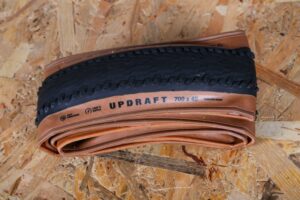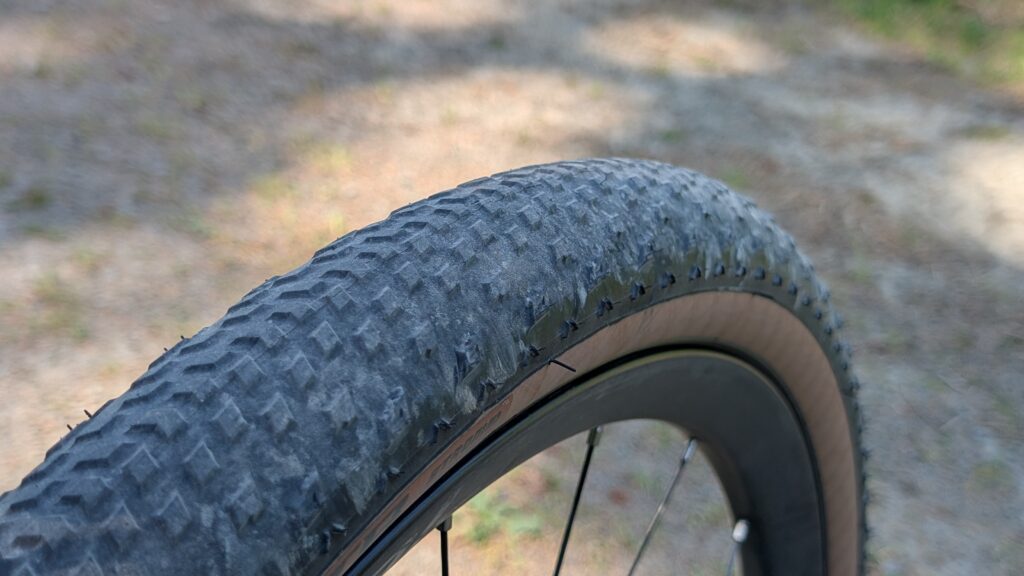

The WTB Course 52 is an aero-optimised gravel tyre that aims to deliver increased speed using trip strips and vortex generators. Partnering with aero expert Stromm, this unlikely collaboration delivers a ride that goes beyond the aero optimisations to produce a strong tyre when the conditions suit. However, with a single size and a low tread profile, it won’t suit all types of British gravel riding.
WTB Course 52 – Technical Information
WTB is perhaps among the last brands you might expect to bring an aero-optimised tyre to market. With a history deeply rooted in the OE market, things have changed significantly in recent years, and the WTB Macro was a perfect example, delivering impressive performance for MTB XC.
Partnering with Stromm Cycles, the company that has developed the “fastest road bike in the world”, according to German Tour Magazine and its own testing, WTB has co-developed the Course 52, and it is one of three new tyres to come to market that share key features designed to improve airflow and reduce drag.
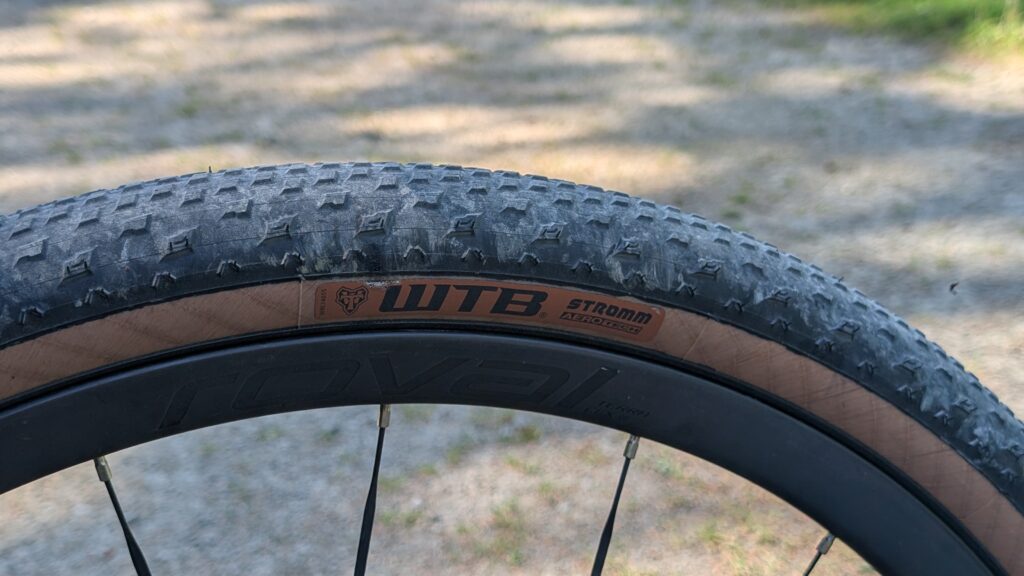
While this might all sound a little crazy for a gravel tyre, speeds at gravel races have been increasing significantly, along with the exposure generated by the UCI Gravel World Championships and Series, as well as the Lifetime Grand Prix in the USA; the priorities at the sharp end of the pack are clearly all-out speed and winning.
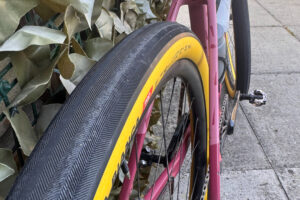
The new tyres, as well as the Course 52, all feature two main areas designed to improve aerodynamics. Those are ‘trip strips’, or raised lips that run around the entire circumference of the tyre, below the angled, V-shaped vortex generators designed to move airflow in a specific way to reduce drag. When you consider that the tyre is the first and last point of contact with the airflow while riding, it helps explain why this could be such a critical area aerodynamically.
Claims from WTB and Stromm, based on real-world and Chung Method testing, suggest the Course 52 with this tech can save 5.8 watts at 30 km/h and up to 13.8 watts at 40 km/h against the same tyres without the trip strip and vortex generator sections. To put those figures into a real-world comparison, Jenson Young won the British Cycling Gravel Championships this year on a challenging 90km course with 1,800 metres of climbing at an average speed of 34 kph, so they are within the realms of possibility for the current races.
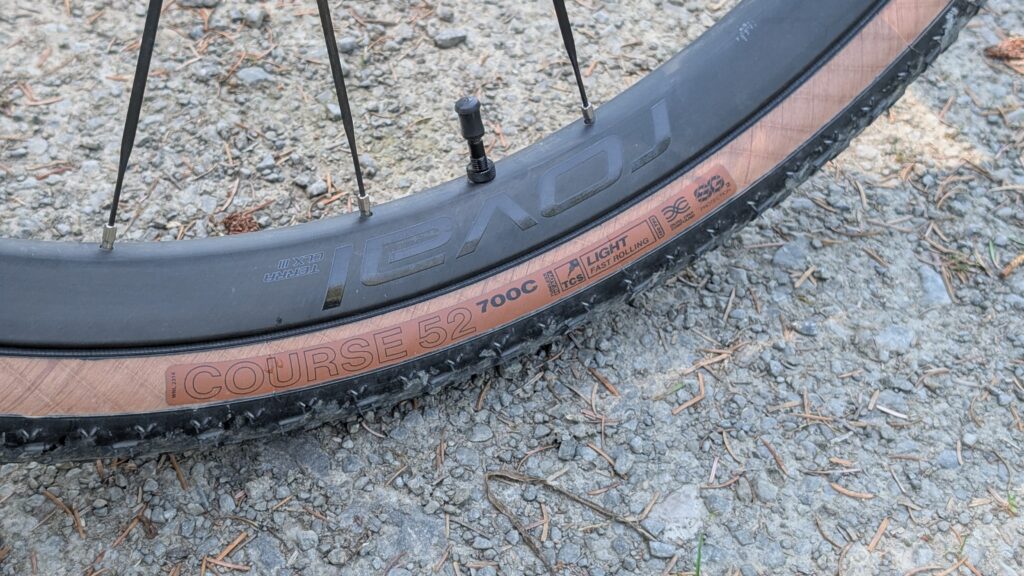
Away from the pure aerodynamic claims, the Course 52 and others in the new range all use WTB’s SG2 carcass, which has a 120 TPI construction and bead-to-bead puncture protection layer. A Dual-DNA rubber compound aims to combine speed and grip, with a harder tread compound along the centre tread for improved rolling resistance and a softer compound on the shoulder for cornering grip.
Available with either black or tan-wall sidewalls, the Course 52 has a claimed weight of 635g. The actual weights of the pair tested were 653g and 649g, both within a few percent of the claimed weight.
WTB Course 52 – Performance
Fitting and inflating a pair of WTB Course 52s were simple, with no tyre levers needed, and they inflated tubeless using nothing more than a basic track pump. The only area where I had issues was slightly greater pressure loss over time compared with other tyres, although this may have been at least partly due to the rim rather than the tyre.
I fitted the WTB Course tyres to a pair of Roval Terra CLX III wheels, which have an internal width of 27mm and an external width of 38mm. The Course 52 is designed and tested to work with a rim with a 28mm internal width and an external width of 35.5mm. The tyre formed into a very tall and rounded shape, which is the intended design, with a measured width of 53mm. This suggests that the profile is exactly what WTB intended, as it closely matches the stated width of the tyre.
While it isn’t a silent tyre when rolling, it is quiet for its large size across all surfaces. As speeds increase and general wind noise builds, the slight hum of the tyre disappears into the background.
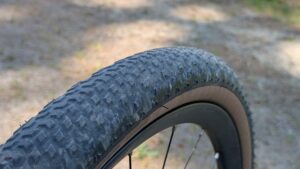
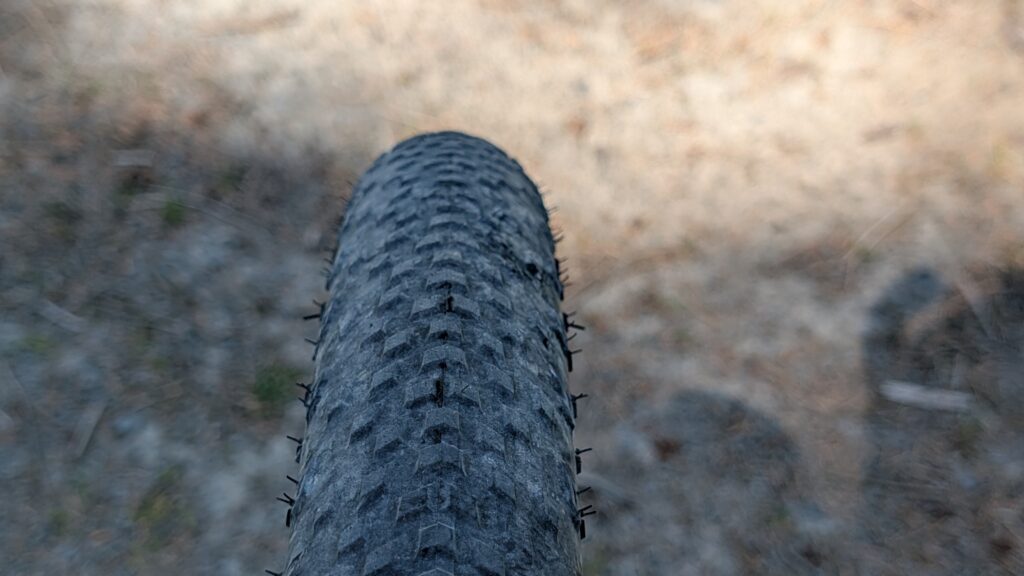
I used the WTB Course on all surfaces and in most weather conditions, although most of the riding took place during a heatwave, which suited the style and design of the tyre. The tread is so minimal that it may as well be a pure slick, and on anything with a slippery surface this becomes noticeable. On wet mud it slides easily, and the same is true on firmer wet surfaces. The Course 52 isn’t designed for wet riding, however, but if you’re mostly riding in the dry, it’s definitely worth considering.
On dry surfaces, things improve considerably, especially on firm, dry dirt, where the levels of grip are good and predictable. Through corners on hard-packed dirt, they provide solid traction, although on loose gravel both tyres tend to drift. This can happen suddenly, despite the tyre’s rounded shape and consistent tread across the top.
I used the WTB Course for several long-distance rides, including a non-stop ride on the Marcher Castles Way. This route had almost every surface you could wish to test it on, including plenty of rougher tracks. I didn’t puncture once throughout the full test, which is promising, and the tyre feels a little more robust than some of the pure race-oriented options, such as the Continental Dubnital and Schwalbe Thunder Burt. Both of those options provide better grip on wetter tracks, although neither is particularly impressive in this area.
Where the WTB Course construction works well is in the balance between suppleness and support, which is something I have found lighter race tyres can struggle with. I found I was able to use slightly lower pressures than with other wide gravel tyres, while still benefiting from good support from the sidewall when climbing. The tyre remains soft and supple enough to provide plenty of comfort for general riding.
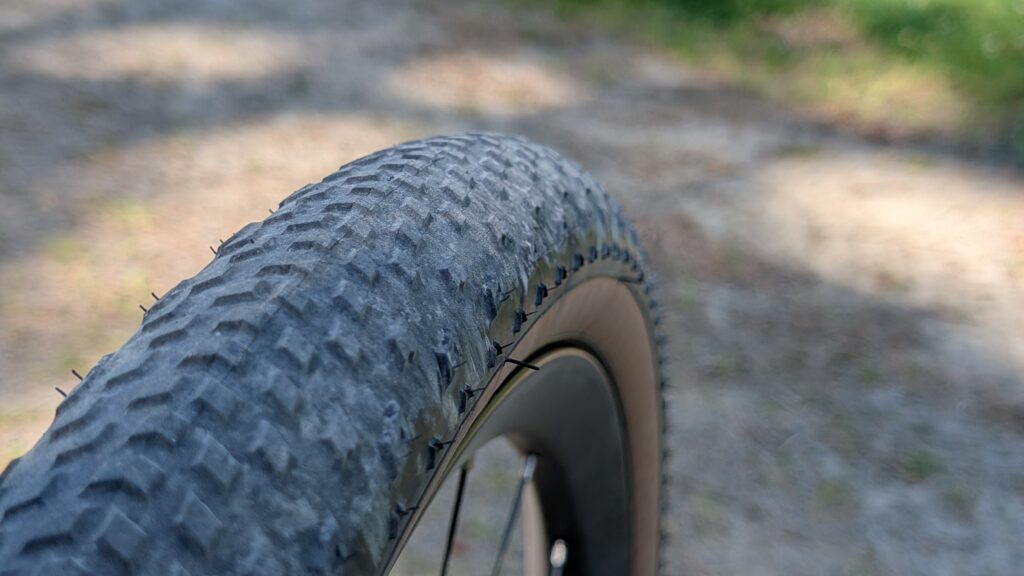
I haven’t mentioned the Stromm aero features on the sidewall until now, and that is simply because I don’t feel they are something that can be properly tested outside a wind tunnel. I am sure the claims are accurate, and Stromm has become a well-respected company for its work in cycling aerodynamics, but the testing information doesn’t provide any direct comparisons against other competitor tyres. How much difference it makes in the real world will depend on where you ride and your typical average speed.
Although it isn’t possible to quantify the claims, what I have seen is how the small vortex generators and trip strips work when riding in dusty conditions that build small accumulations of dust around the angled vortex generators. While this doesn’t substantiate the claims of reduced CdA, it does at least show that they are directing air in certain directions.
Given the performance and characteristics, it feels as if the WTB Course has been designed for riding typical of the US Midwest, or similar places where the surface is dry dirt rather than gravel or stone, and where the average speed is likely to be high enough to warrant the potential aero savings.
For riding in Britain during a heatwave, it felt good across a variety of surfaces, and with a strong sidewall and no punctures throughout testing, it makes a convincing case as a wide but lightweight and durable option. But even with a warming climate, these conditions are still relatively rare in the UK, and there are other tyres that can match it for pure speed or provide more grip.
WTB Course 52 – Verdict
Although you might not expect WTB to be dipping its toe into aero gains, it is great to see the brand experimenting and developing its products in a new direction. The Course 52 is the sort of tyre that might work on a computer screen, but importantly, it also works in the real world, although its aero benefits are yet to be proven in practice.
The updated technology and high-level construction mean the price of the Course 52 is up among the other top options at £69.50 each, with the Continental Dubnital at £66.99 and a Schwalbe Thunder Burt priced at £70.99. Although not cheap, one of my recent favourites, the Hutchinson Touareg Race, costs less at £54.99, and it has proven to be fast both for me and in rolling resistance data.
Where the WTB Course surpasses expectations is in its combination of ride quality and durable casing. There are promises of aerodynamic improvements, and I am sure the claims are genuine, but against a pure race tyre such as the Schwalbe Thunder Burt, it doesn’t feel quite as quick or as supple. It does feel more durable, though, and it is a tyre I would choose where the risk of punctures is higher, but speed is still a key consideration.
WTB has developed a tyre with cutting-edge technology and features that go beyond what many riders would consider or need. While the aerodynamic claims are difficult to substantiate outside controlled testing, the tyre itself is very good when the conditions suit, even with all the aerodynamic features out of the picture. The main problems are that, in the UK at least, those conditions are not common, and with just one 52mm tyre size available, it won’t suit many current gravel bikes.
Test Report
What does the manufacturer say about this product?:
WTB says:
The Course 52 is the sweet spot between outright speed and all-terrain capability. Its versatile tread pattern delivers dependable traction without sacrificing rolling efficiency, making it the ideal choice for varied gravel conditions. International patent-pending aerodynamic technology integrated into the sidewalls manipulates airflow over the wheel and tire system to reduce drag, helping riders conserve valuable energy at higher speeds.
Tell us some more about the technical aspects of this product:
WTB lists:
Product name: Course 52 x 700 TCS Light/Fast Rolling 120tpi Dual DNA SG2 AT tire (tan)
Weight: 635 g
Speed and versatility:
Engineered for riders seeking the perfect blend of outright speed and all-terrain capability, the Course 52 delivers dependable traction without sacrificing rolling efficiency.
Stromm Aerotech:
We partnered with the aero experts at Stromm to counteract aerodynamic drag using Vortex Generators and Trip Strips placed at key intervals along the tyre. This revolutionary international patent pending technology works in stages to draw the airflow close to the wheel system, minimising the low pressure and maximising every pedal stroke.
Fast Centerline:
Tightly packed centre knobs reduce rolling resistance and improve tread longevity, while still offering exceptional braking and climbing traction.
Round Profile:
Overall profile mimics a high-volume road tire, which provides equal cornering confidence in a variety of different terrains and conditions.
Any further comments on quality?:
Recent WTB tyres are significantly different to what you might find on OE bikes. The quality on these is among the best of other brands.
Any further comments on performance?:
They feel quick, but not as agile or supple as the fastest alternative options.
How does the price compare to that of similar products in the market, including ones recently tested?:
Continental Dubnital is £66.99, Schwalbe Thunder Burt is priced at £70.99, and Hutchinson Touareg costs less at £54.99.
Any comments about ride quality? Are they comfortable? Do they feel especially quick, or slow?:
The Course 52 doesn’t quite have the same responsive feel as the lightest and fastest MTB/Gravel crossover options like the Schwalbe Thunder Burt.
What did you find to be the optimal pressure for running these tyres?:
I used them at 20-23 PSI front and rear. Rider weight 62kg, riding style mix of gravel, back roads and some rougher terrain.
How easy were the tyres to fit? If you ran them tubeless, how easy was that to set up?:
Simple to fit and inflate.
Did you have any punctures during testing?:
No
How have the tyres worn? Is there obvious tread wear after testing? How are the sidewalls?:
No significant wear, although the tread is very low, so they are unlikely to be a good long-distance tyre option.
Tell us more about grip. How are the tyres in different conditions?:
On anything like slippery mud or deep loamy tracks, they struggle, as you might expect.
Any further comments on weight?:
Lighter than some of the competitors of similar size, such as the Schwalbe Thunder Burt 2.1” and Continental Dubnital 2.0”.
Did you enjoy using the product?
When the conditions and the tracks being ridden were right, it was good.
Would you consider buying the product?
No, simply due to the limited suitability for the intended riding around my riding area.
Would you recommend the product to a friend?
Only for certain Midwest USA-style riding conditions and tracks.
Use this box to explain your overall score
Combining novel aero technology with a strong, durable construction, the Course 52 offers a good balance of speed, comfort and support. However, the minimal tread and single 52mm size option its versatility, particularly in typical British conditions, while the aero benefits are difficult to quantify outside controlled testing. It is a very good tyre when conditions suit it, but not the fastest or most versatile option available.
About the tester
Age: 42Height: 168cmWeight: 61kg
I usually ride: Road / Gravel / MTBMy best bike is: Cannondale SystemSix (road)
I’ve been riding for: Over 20 yearsI ride: Every dayI would class myself as: Semi-pro or ex-pro
I regularly do the following types of riding: Cyclocross, Gravel riding, Indoor riding, Bikepacking, Audax, Mountain bike XC