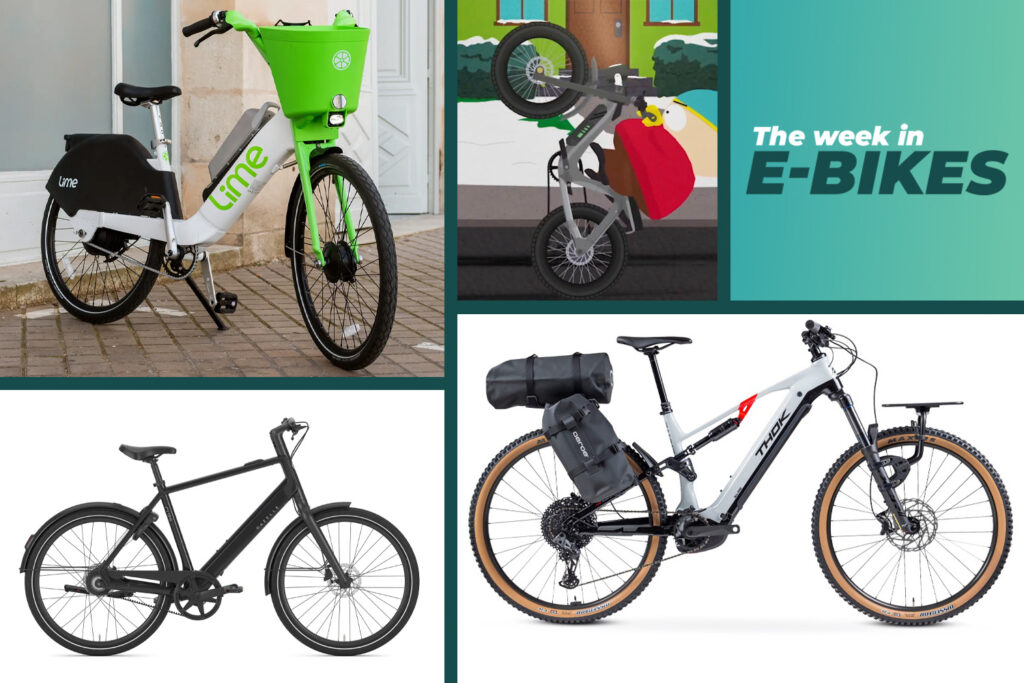
Welcome to another round-up of happenings in the world of motorised velocipedes, including a new bill from California to help distinguish e-motorbikes, a solid-state-battery full-sus e-cargo bike, a small all-in-one e-bike conversion kit, and more.
California bill separates e-bikes and e-motos

One of the biggest battles e-bike advocates face has to do with nomenclature: your granny’s step-through town e-bike is a world away from your 10-year-old son’s high-powered Surron e-motorbike. In California, this distinction is becoming a lot clearer thanks to Senate Bill 1167, which stops e-motorbikes being marketed or sold as e-bikes at the point of sale.
Under the new bill, a legal e-bike in California must feature pedals, an electric motor of 750 watts or less, and capped speeds of 20 mph (with a throttle) or 28 mph (with pedal assist). Any device that exceeds these speed and wattage thresholds can’t be marketed or sold as an e-bike, and legitimate e-bikes must feature a label that identifies their class and maximum speed.
“There are so many examples of essentially motorcycles being driven by kids that are underage and parents buying things that they don’t even know what it is,” Senator Catherine Blakespear, who was behind the new bill, said in a press release. “Bicycle safety starts with knowing what your bike can do and following the safety requirements that come with it.”
The bill will come into effect on 1 January 2027. It’s a more moderated approach than New Jersey’s blanket e-bike ban, and the eyes of the world will be on the Golden State to see how it works out.
European cycling industry body demands enforcement against ‘tampered’ and non-compliant e-bikes
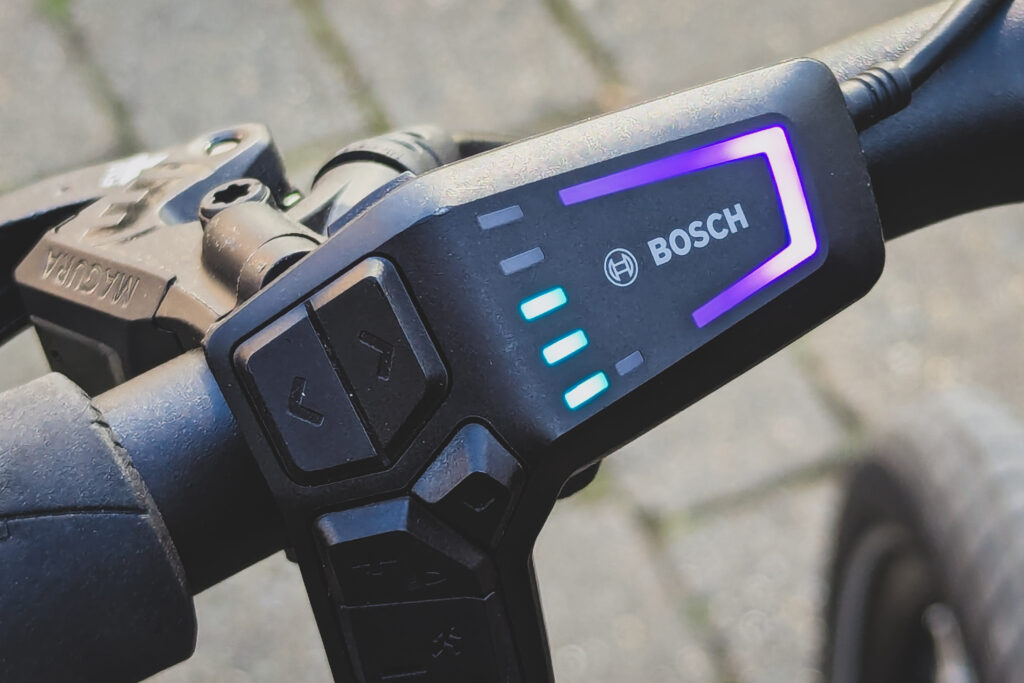
Closer to home, European Cycling Industries has launched its Manifesto for a Safe and Compliant EU Market, which aims to ban the sale ‘tampering kits,’ such as speed chips and tuning dongles. The manifesto also calls for overseas online retailers selling non-compliant e-bikes and tuning hardware direct to consumers to be held to account.
”Compliant European manufacturers, importers, distributors and retailers increasingly compete against products that may not meet the same requirements for safety, performance and regulatory compliance and are usually offered at a lower price”, the manifesto states.
89 bike and retail companies have put their names to the manifesto, including Trek, Tern, Bosch, Bafang, and Amazon. ECI will present the manifesto to European Union policymakers and argue for stricter compliance across the continent.
Full-sus cargo e-bike launches with semi-solid-state battery
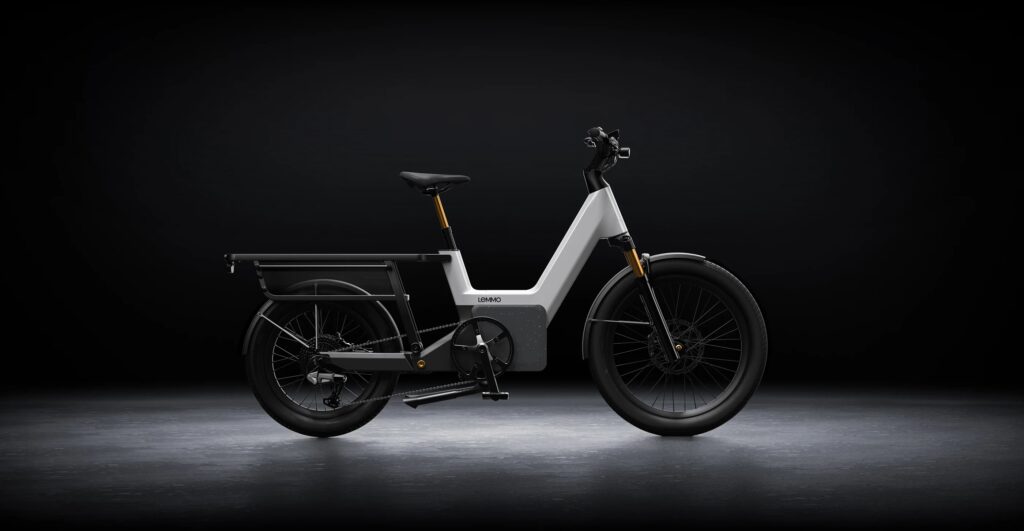
Lemmo’s cargo e-bike has been kicking around for a little while now, but it’s finally seeing the light of day. The German company’s full-suspension longtail is said to smooth the jolts of riding a traditional cargo bike, while providing the versatlility and power to carry your kids and/or shopping.
The bouncy bike is now available to reserve via Lemmo’s official site, and one more detail has come to light: it’s one of the first production bikes we’ve seen that packs a semi-solid-state 960Wh battery which the company reckons is smaller, lighter, and less prone to thermal runaway.
The Lemmo 3 can be reserved with a €39.90 (£34) deposit to secure a €1,890 (£1,610) price, ahead of a Kickstarter campaign which will raise the cost to €3,390 (£2,887).
Dinky e-bike conversion kit hits Kickstarter
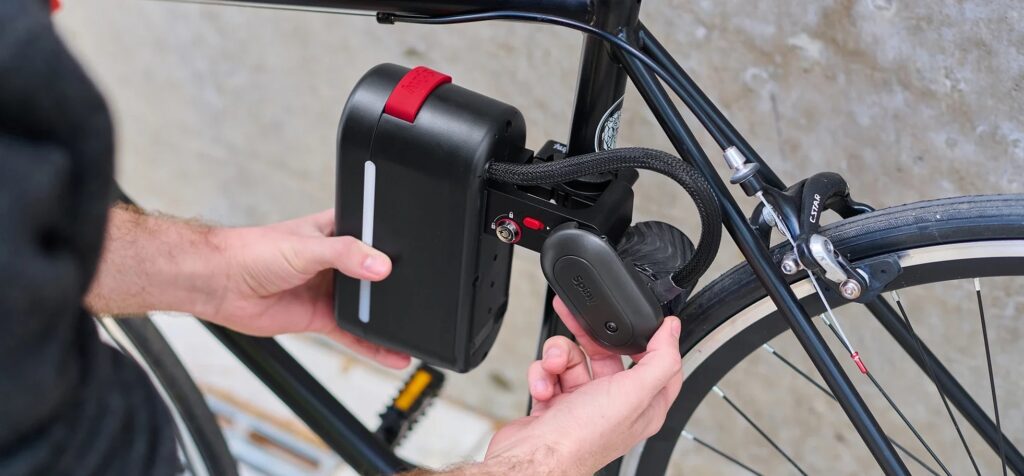
Talking of Kickstarter, there’s a new e-bike conversion kit kicking about on the crowdfunding site. The diminuitive Spiny 2 clip-on motor can potentially make a regular bike electric in less than three seconds, and provide up to 750W power, although this is limited to 250W in UK and EU markets.
The kit connects via a friction drive on your back wheel, which potentially makes it quicker to install and easier to move between bikes than competing Swytch or Skarper kits. However, anyone who’s used a wheel-on bike trainer, which essentially does the same thing in reverse, will know how finickity these systems can be in terms of setup, and how quickly they munch through tyres.
The Spiny 2 is now available to back on Kickstarter. At the time of writing, you’ve got a few hours to bag a $475 (£359) ‘launch special’ which includes the kit plus an extra battery.
Lime now on Cyclescheme

Commuters can now use their cycle-to-work scheme to purchase a Lime subscription. While passes for other operators, including Beryl and Forest, have been available for a little while, a partnership with Lime brings the UK’s most pavement-hogging e-bikes into the hands of more commuters.
While an annual subscription to the service is usually £635, a cycle-to-work scheme brings it down to £38.10 a month (or £457 a year) for basic-rate taxpayers, and £28.05 a month (£336 a year) for higher-rate taxpayers, because that’s the way things are in the UK.
The scheme will come into effect in UK Lime zones including London, Milton Keynes, West Midlands, Nottingham, and Oxford, and it will only apply to e-bikes and not e-scooters.