



The Van Rysel EDR-G GRX is the entry point to the Decathlon brand’s new range of endurance focused gravel bikes and when it comes down to the details, it has done an excellent job of creating an easy to ride, well specced, fun bike that doesn’t break the bank.
Van Rysel EDR-G Shimano GRX – The ride
Van Rysel has launched two new gravel ranges: a race styled version called the RCR-G (which we will be reviewing very soon) and this EDR-G, which has a more relaxed endurance vibe about it – or ‘gravel explore’ as Van Rysel likes to describe it.
So, what have we got?
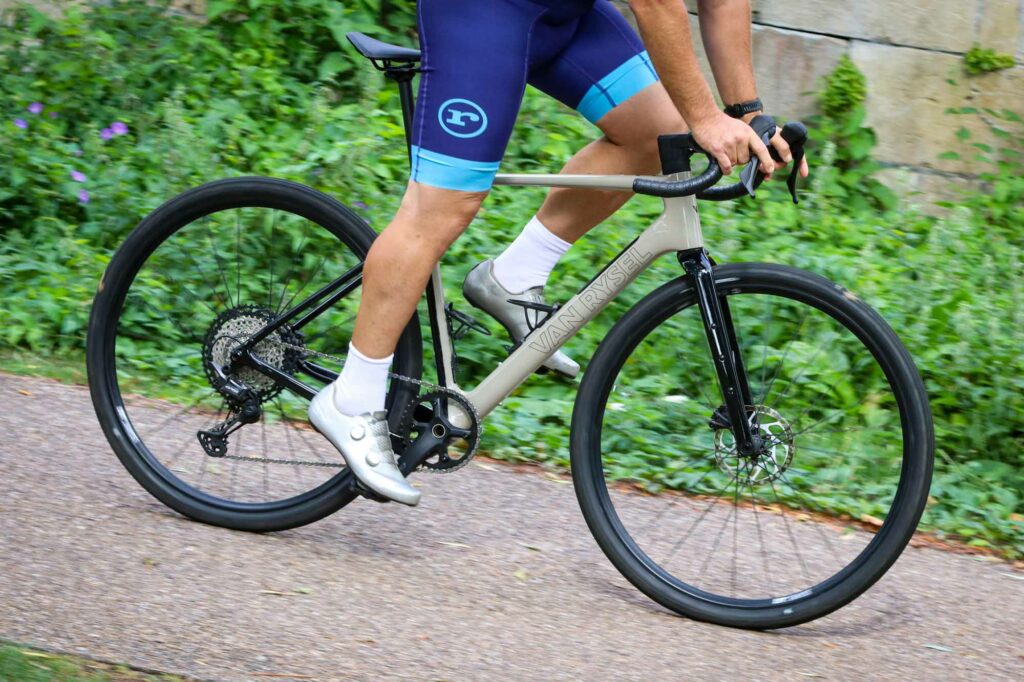
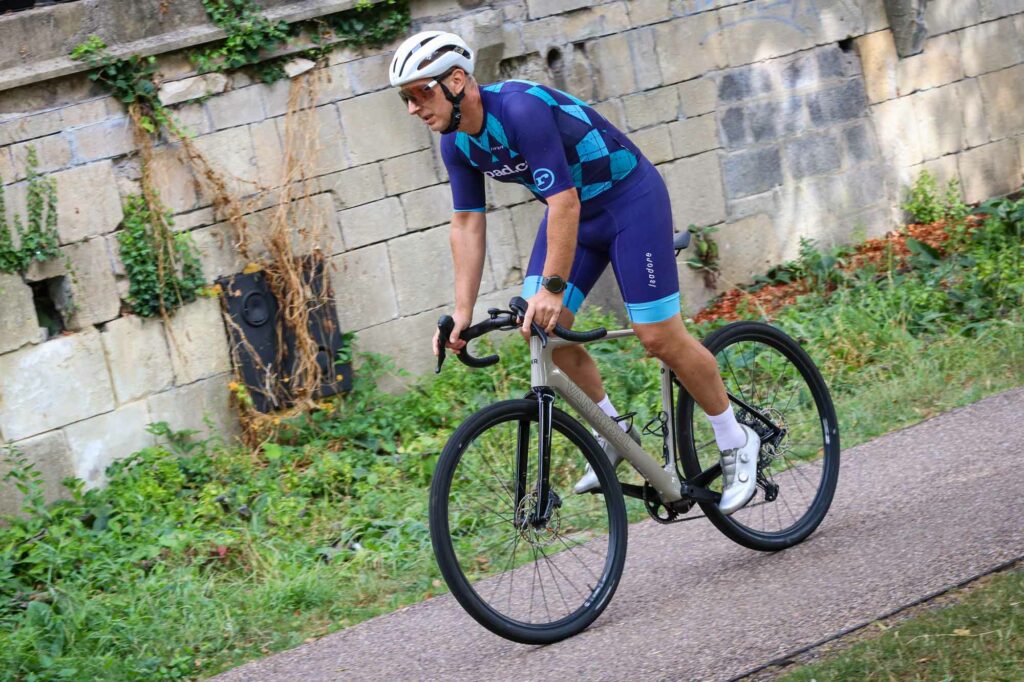
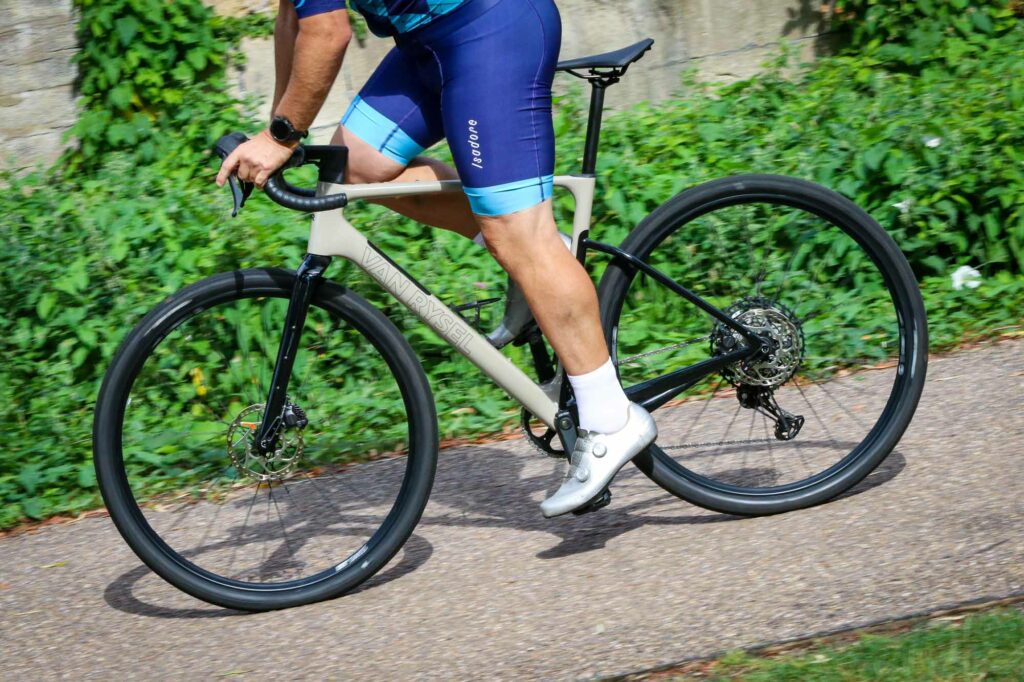
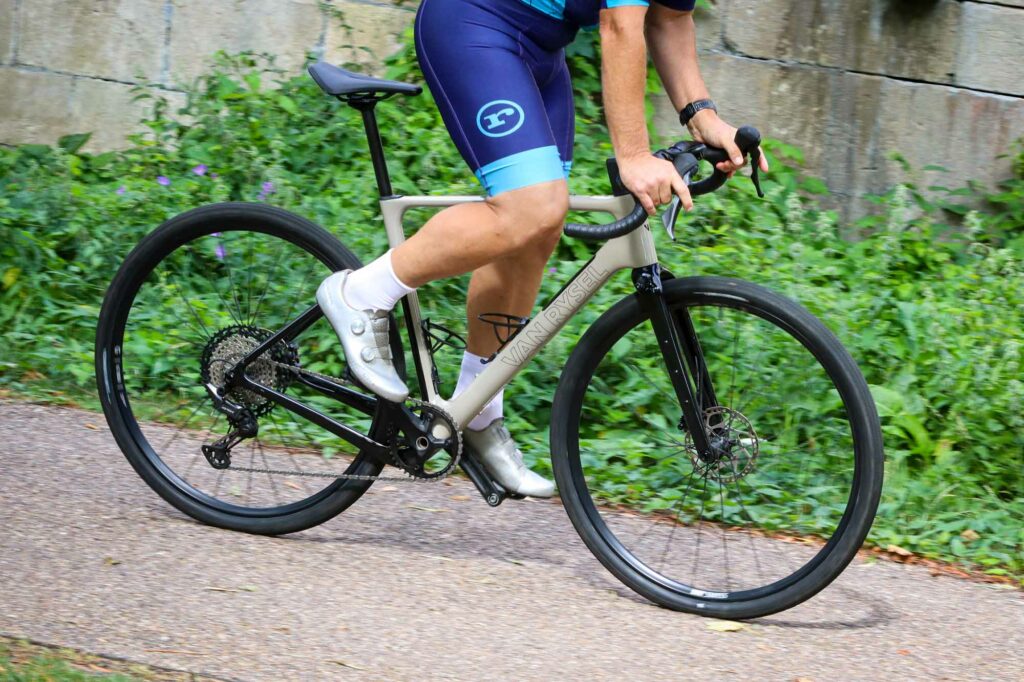
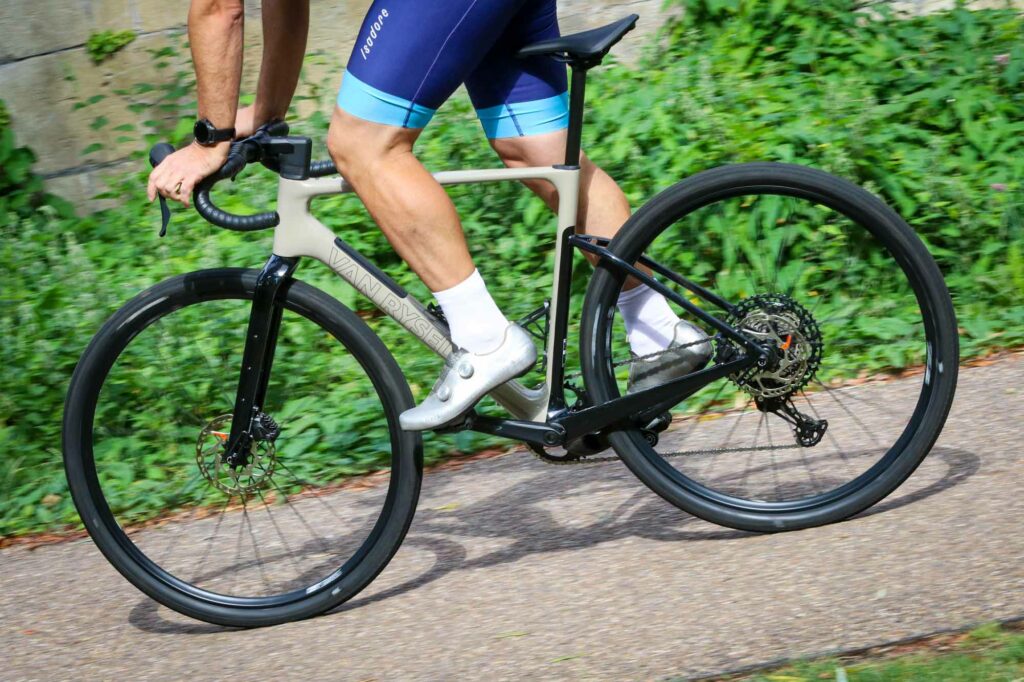
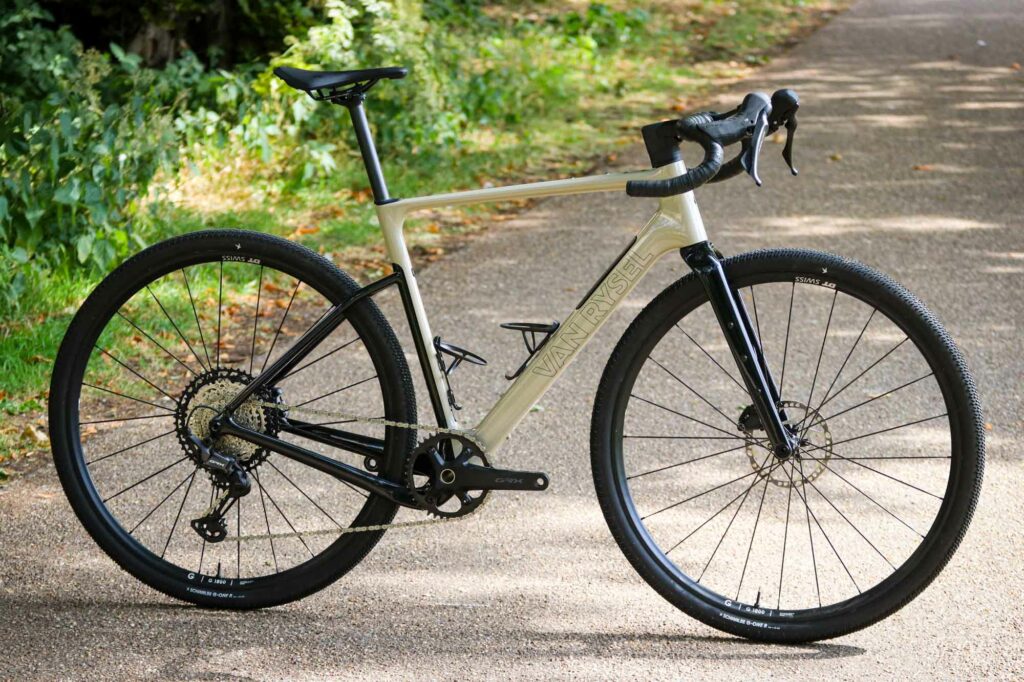
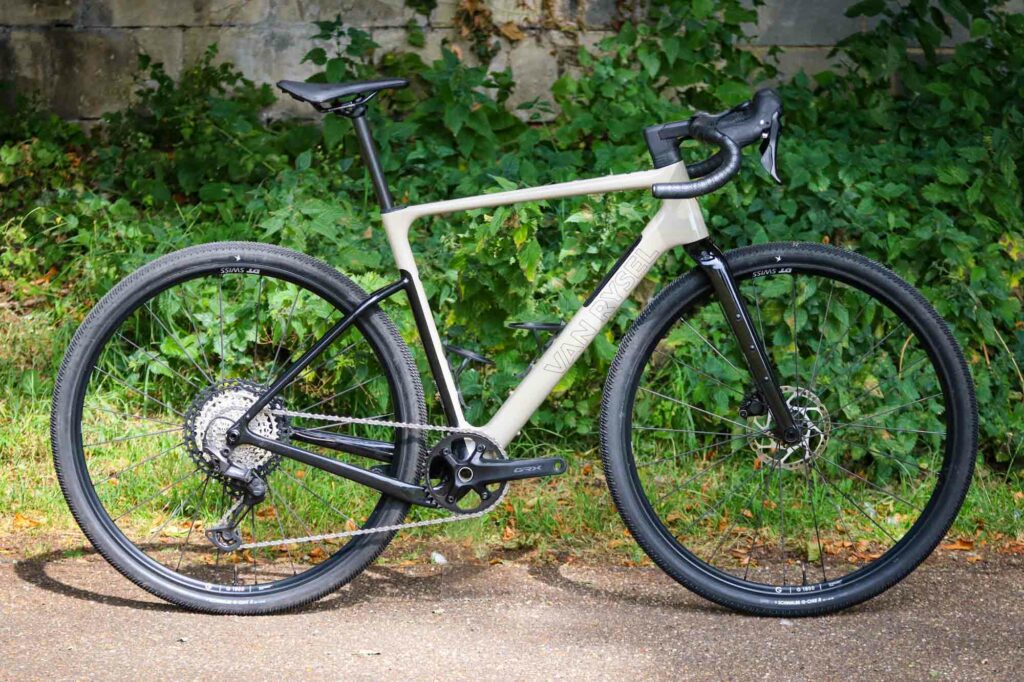
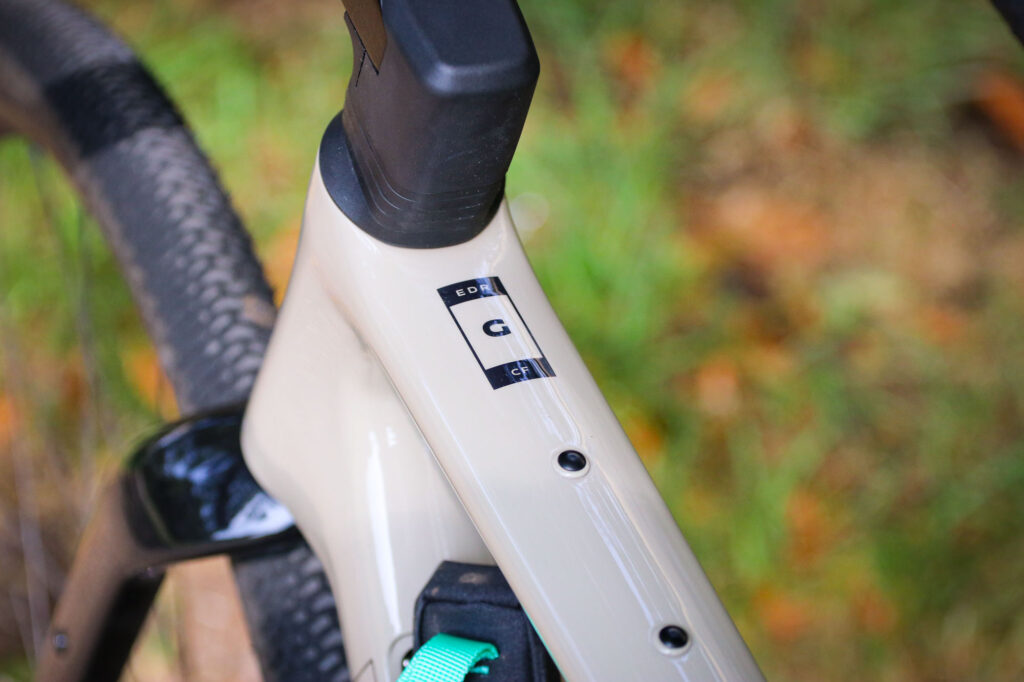
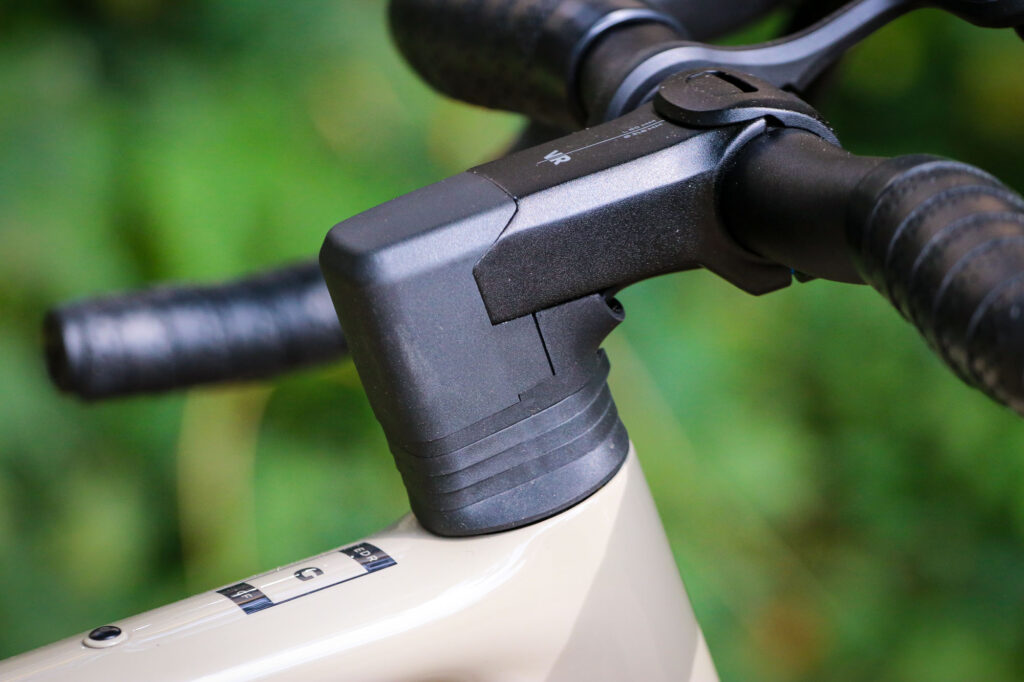
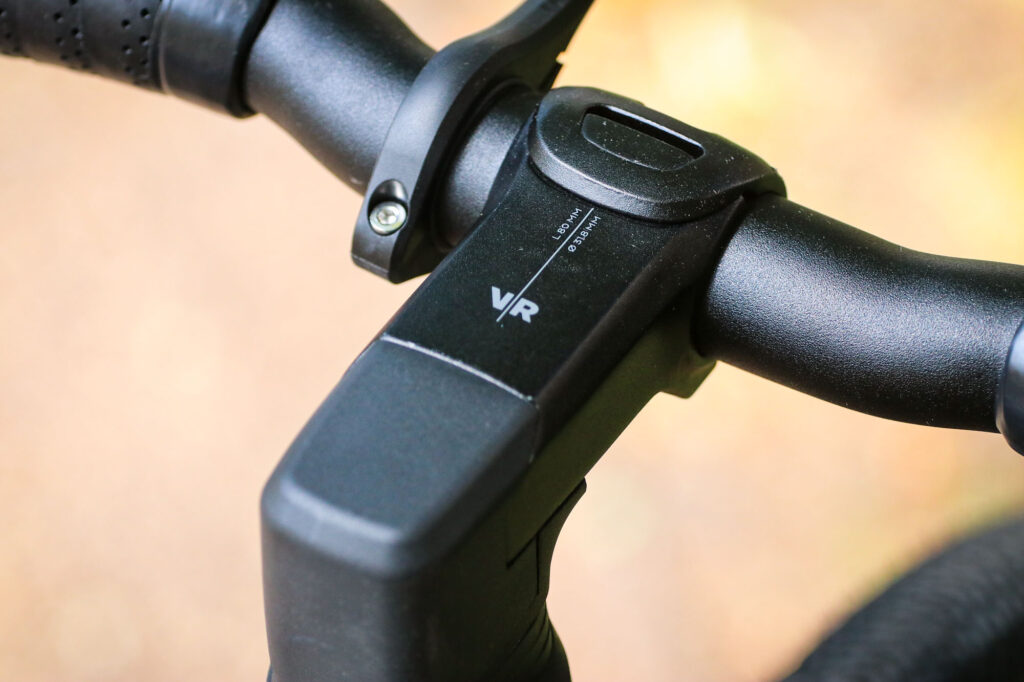
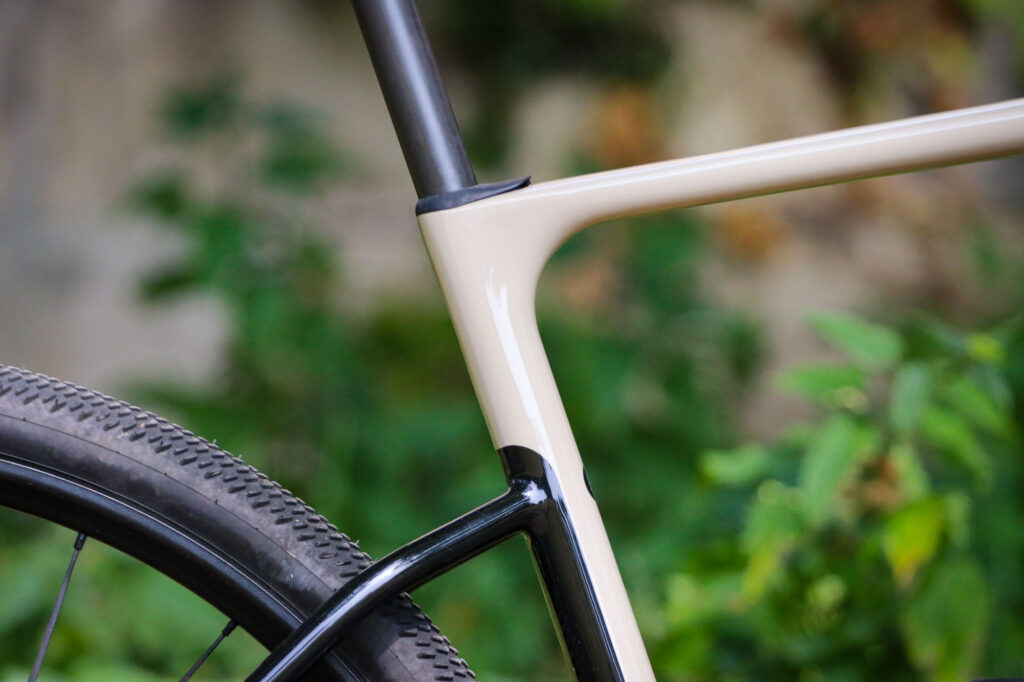
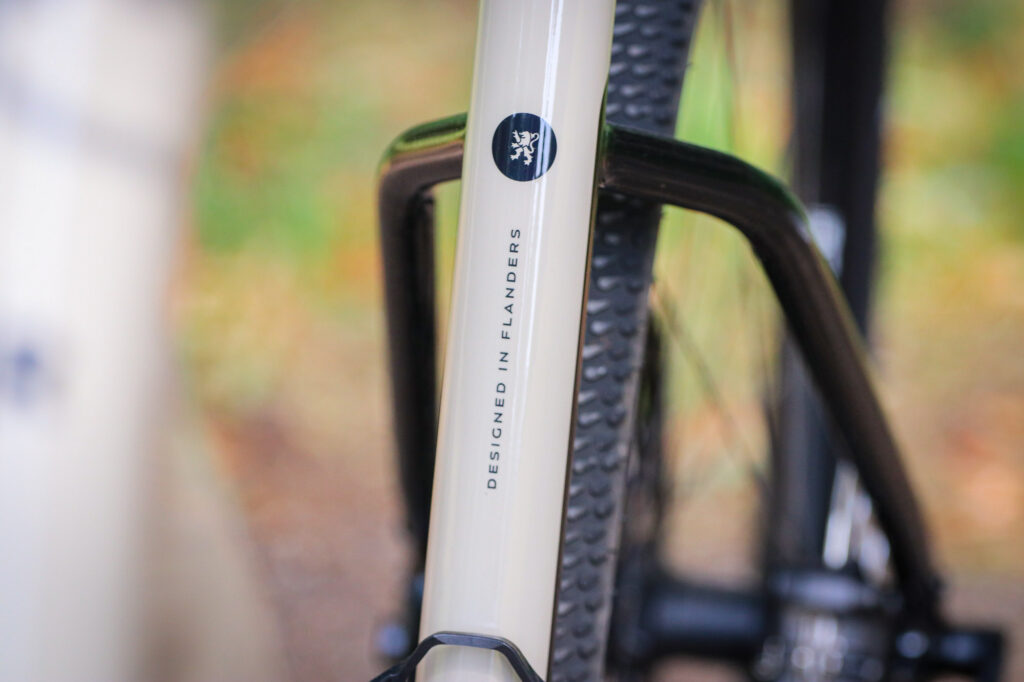
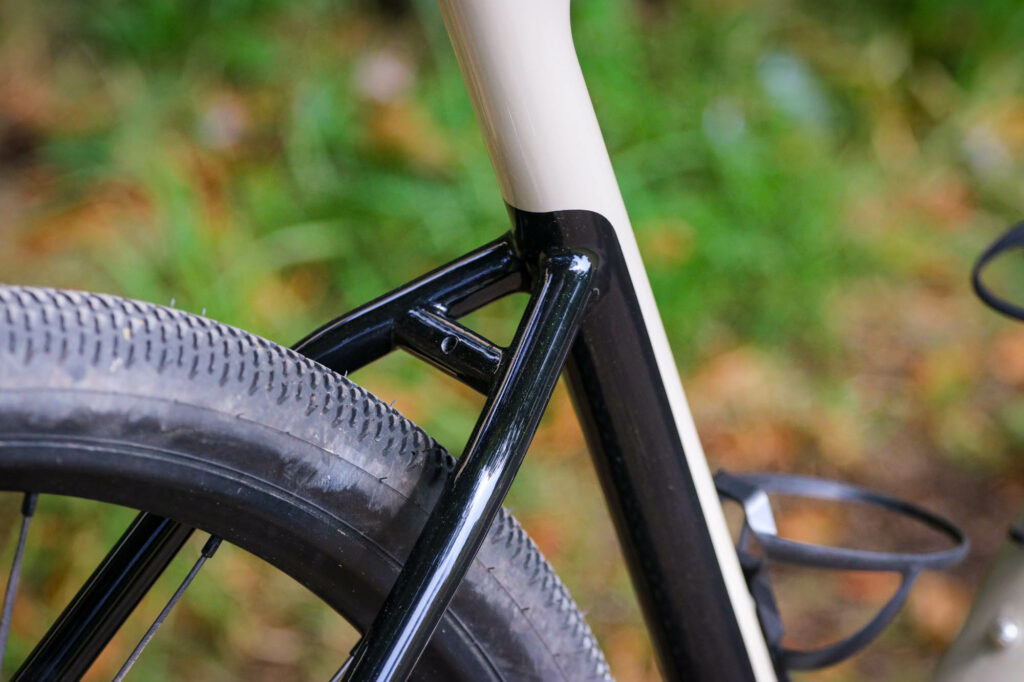
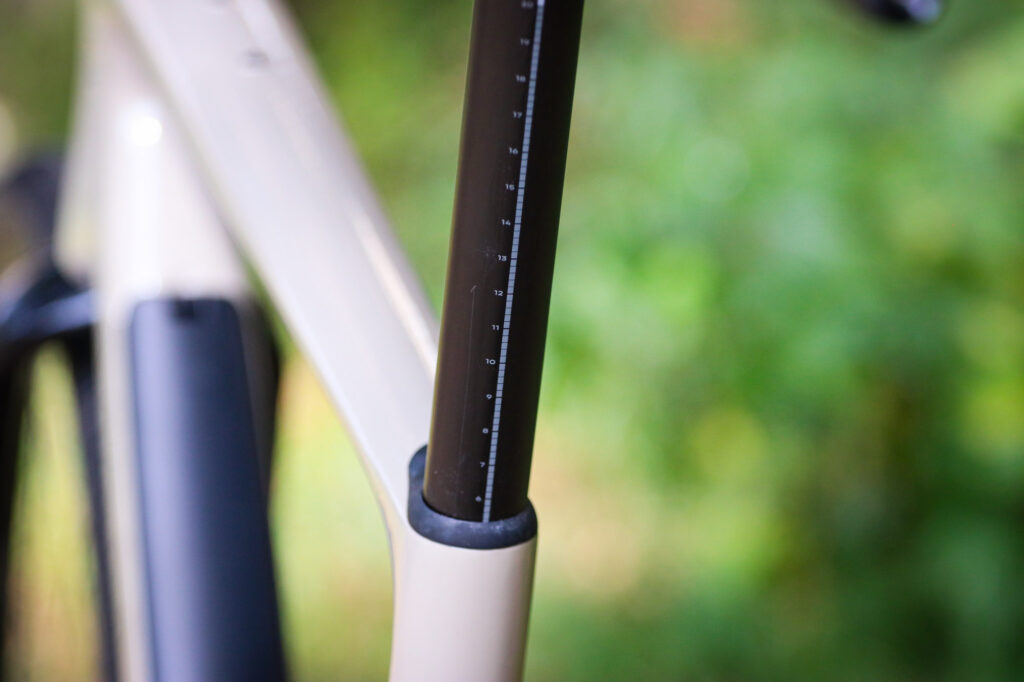
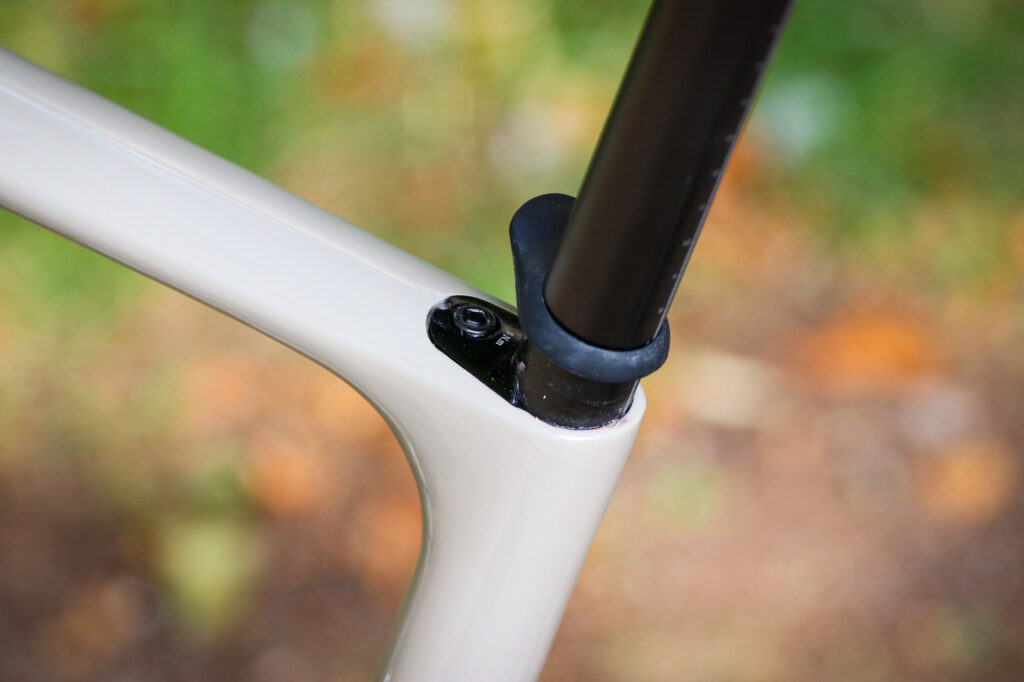
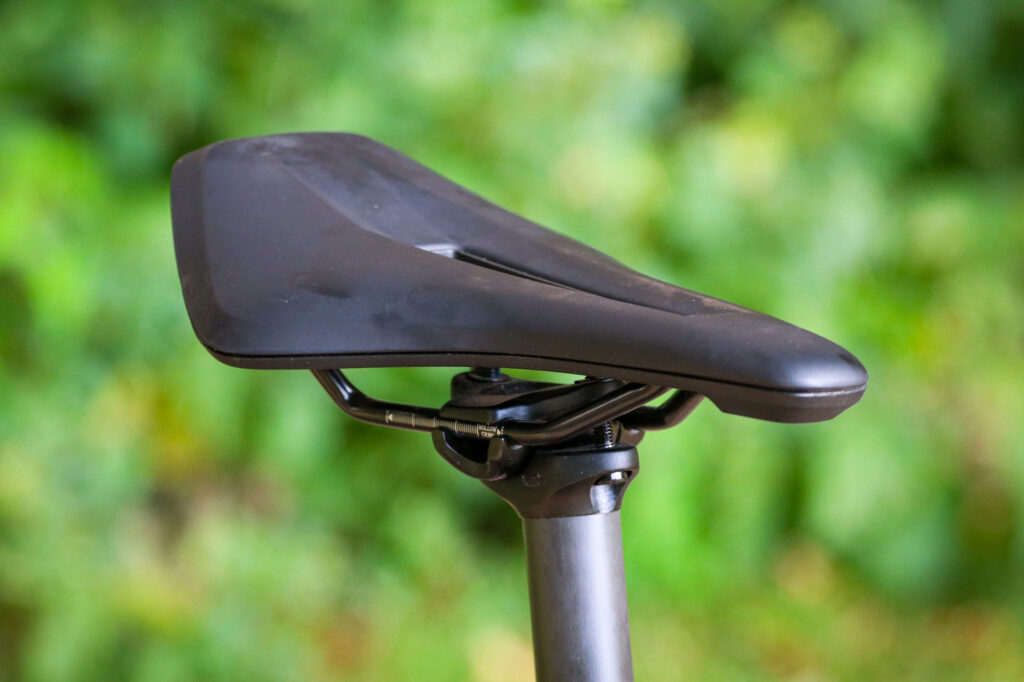
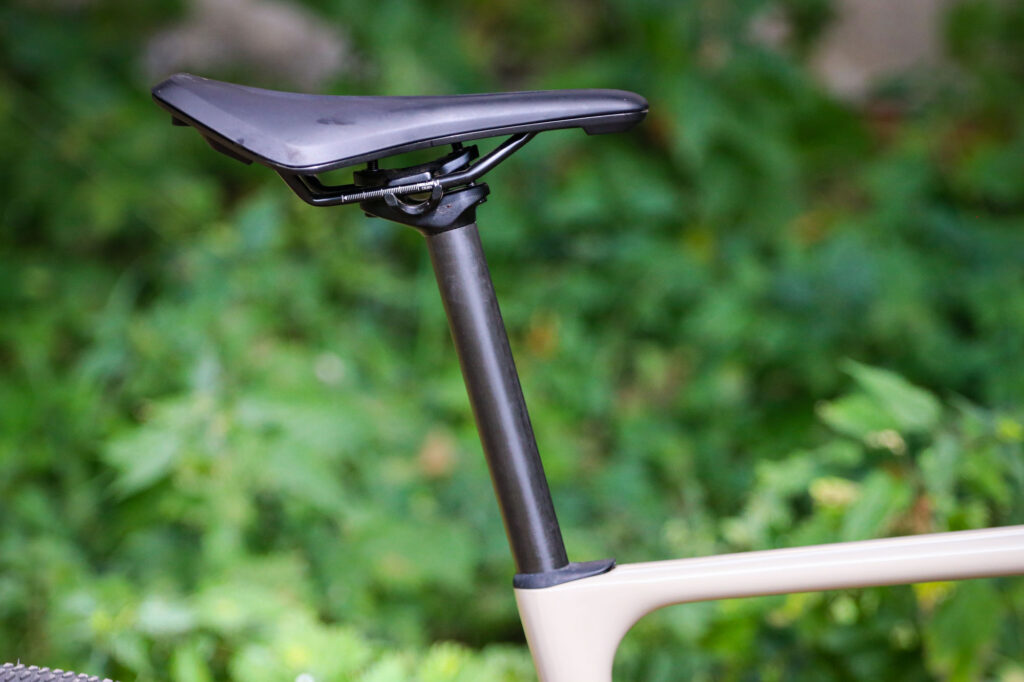
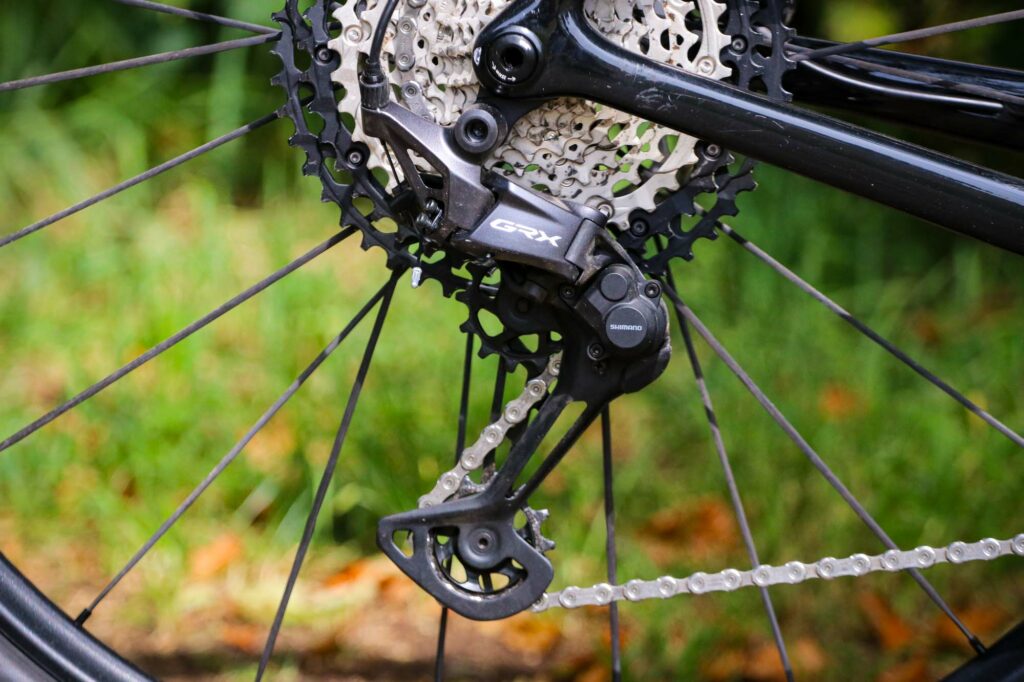
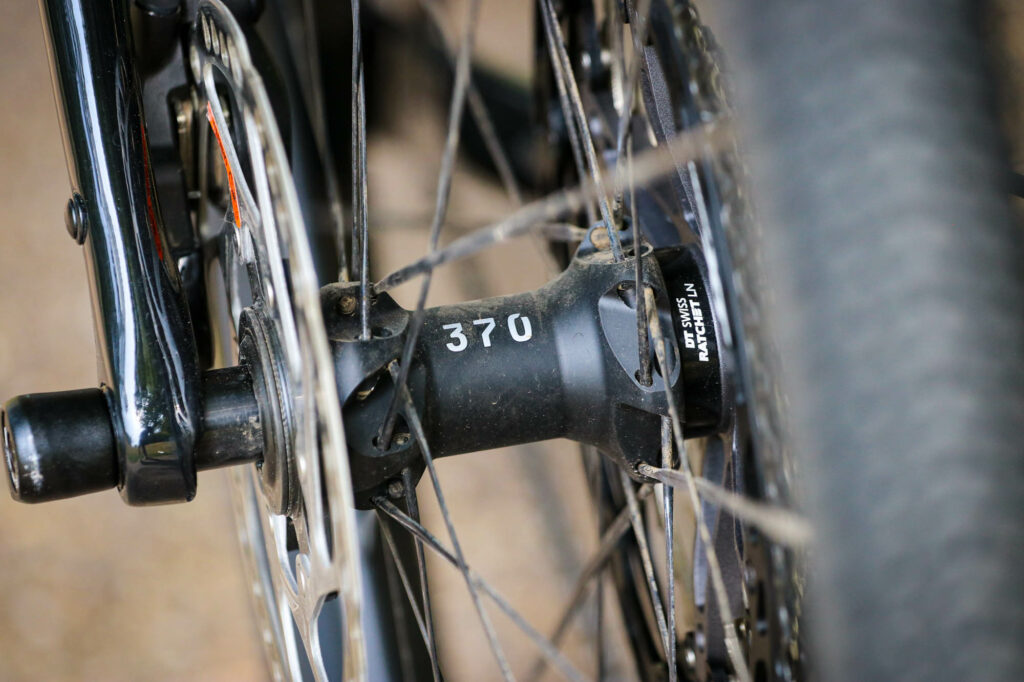
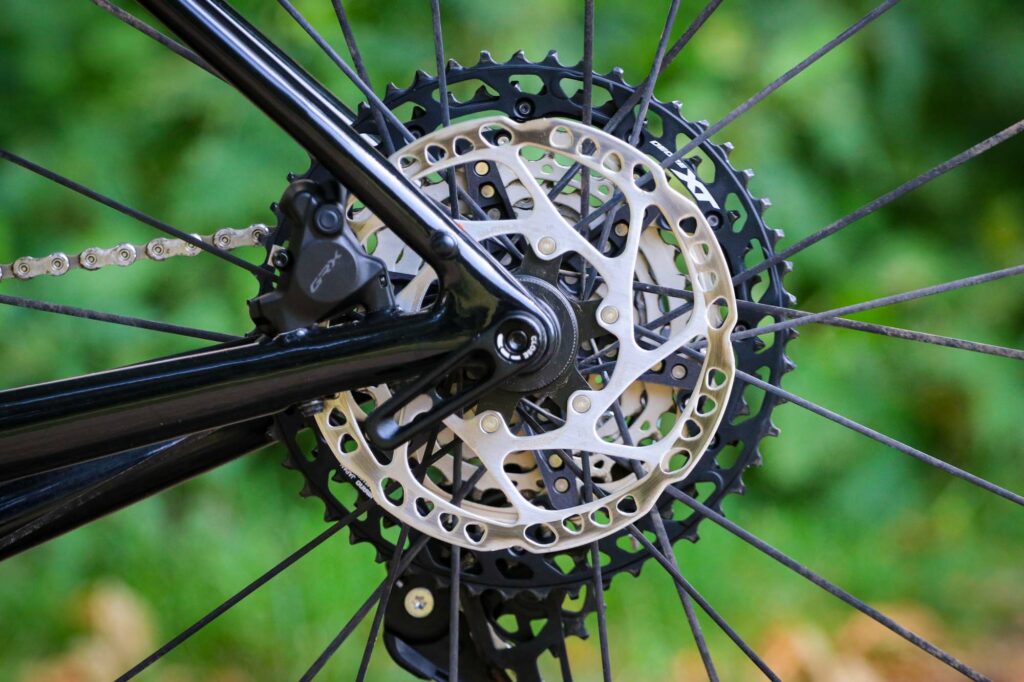
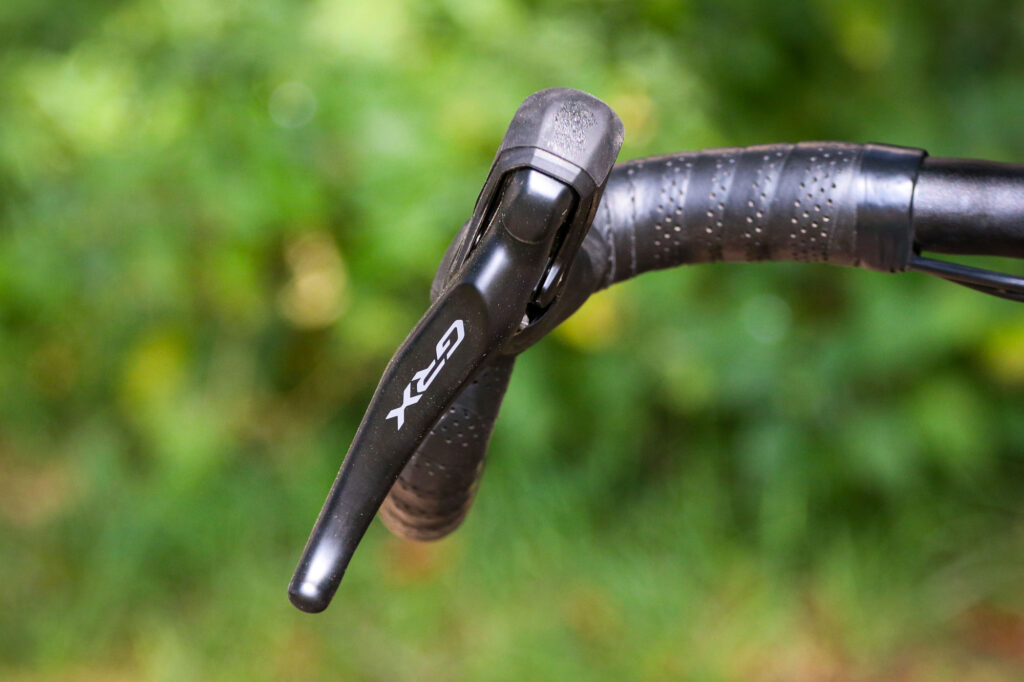
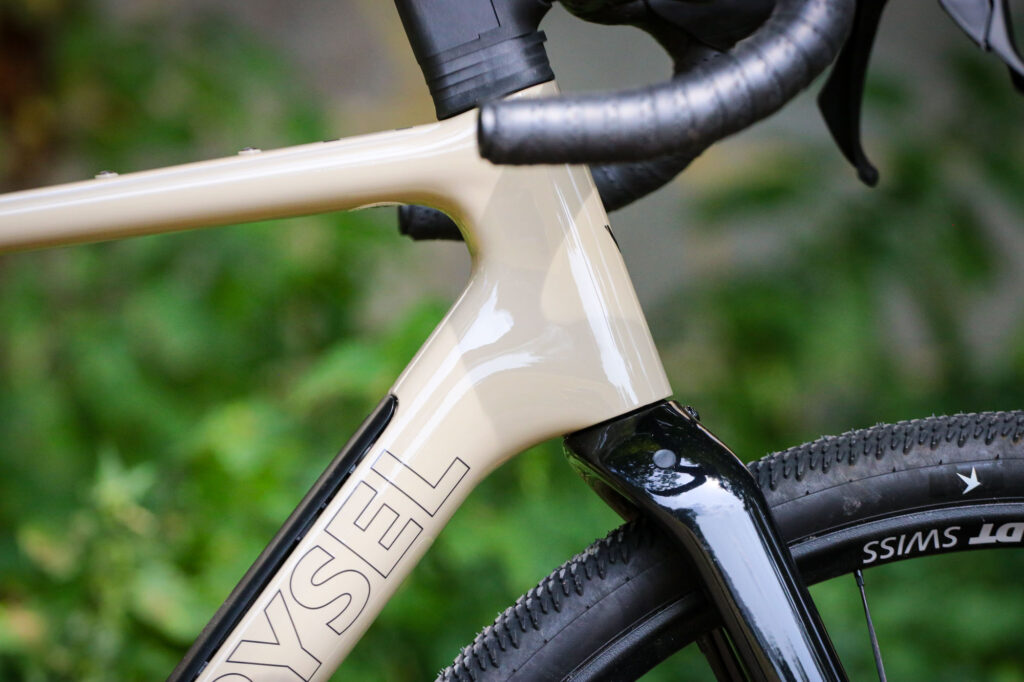
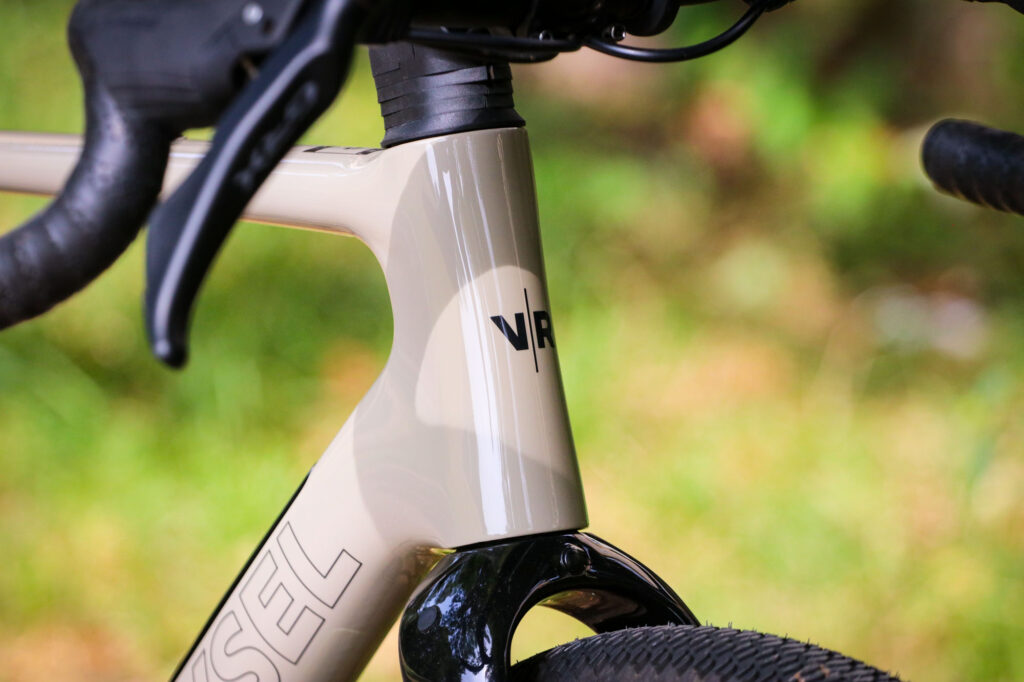
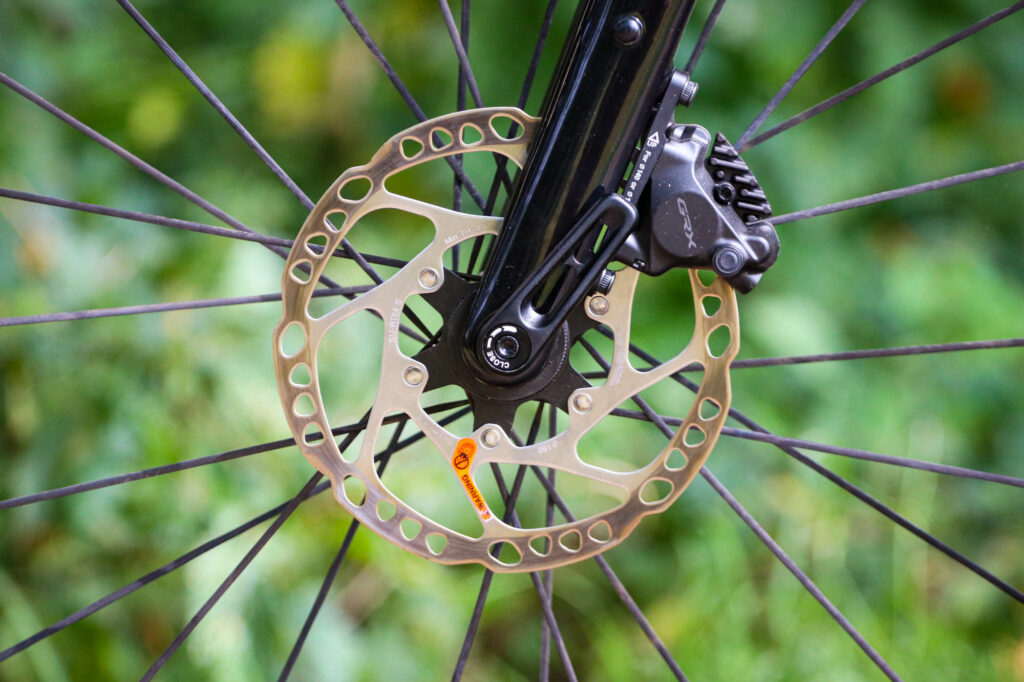
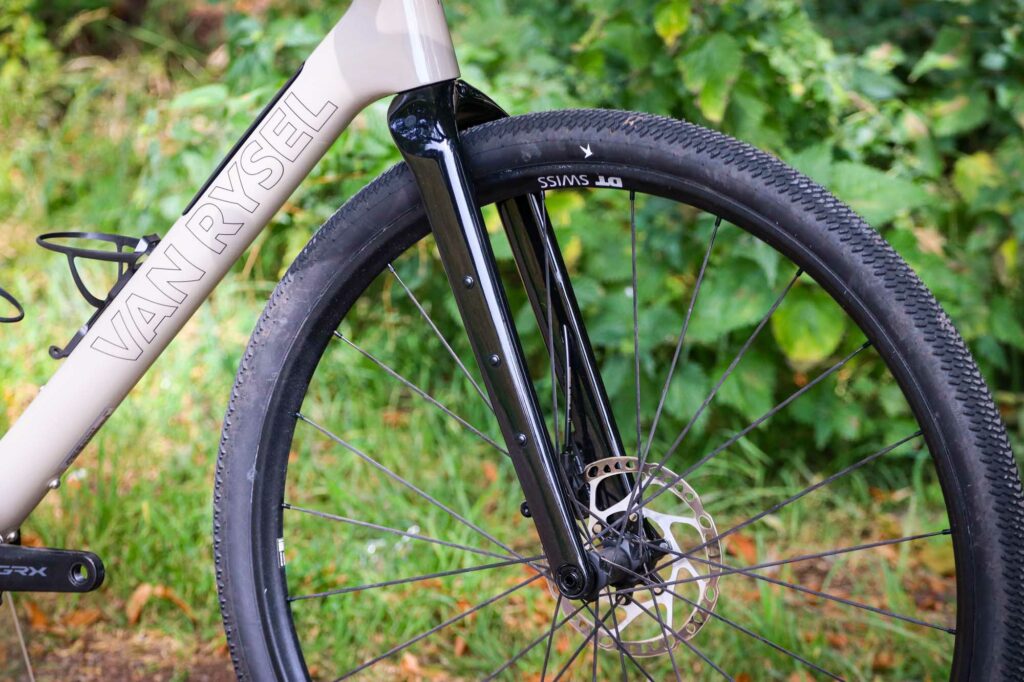
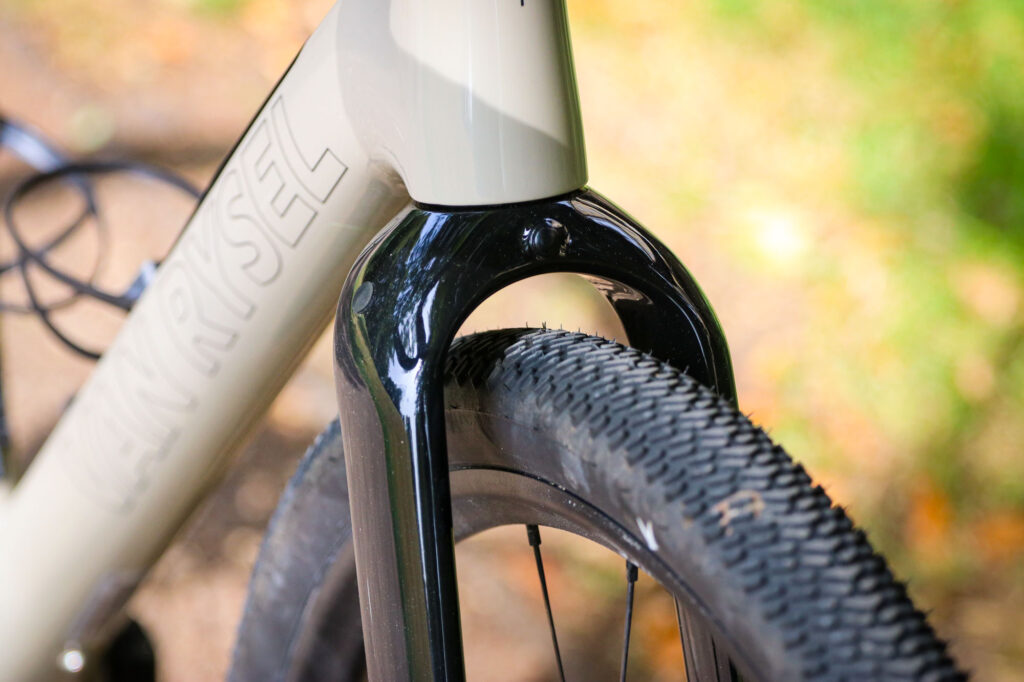
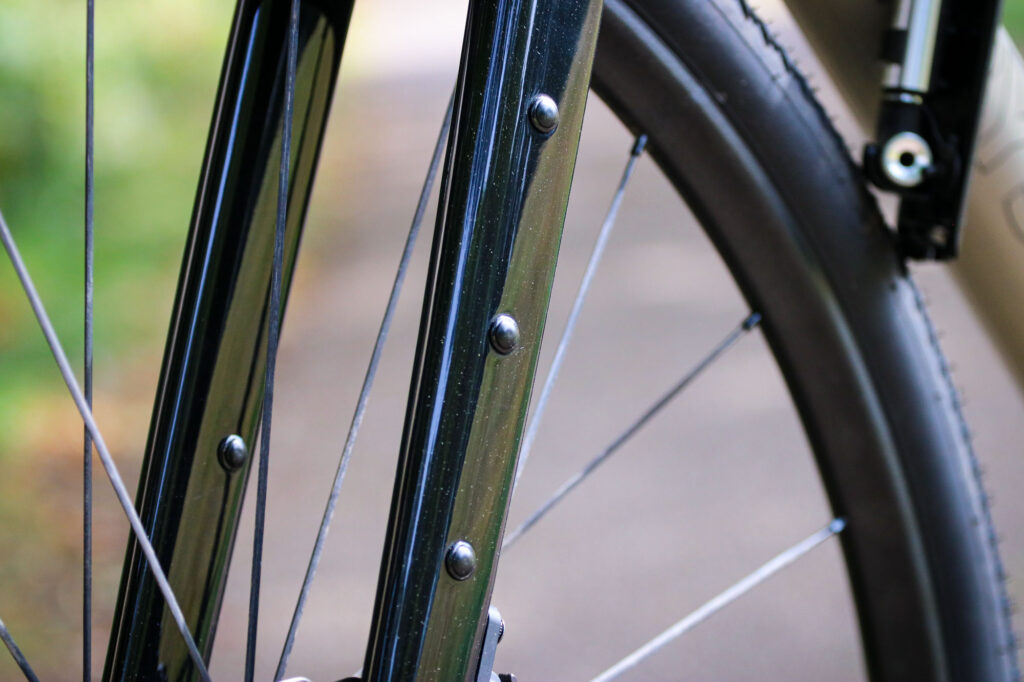
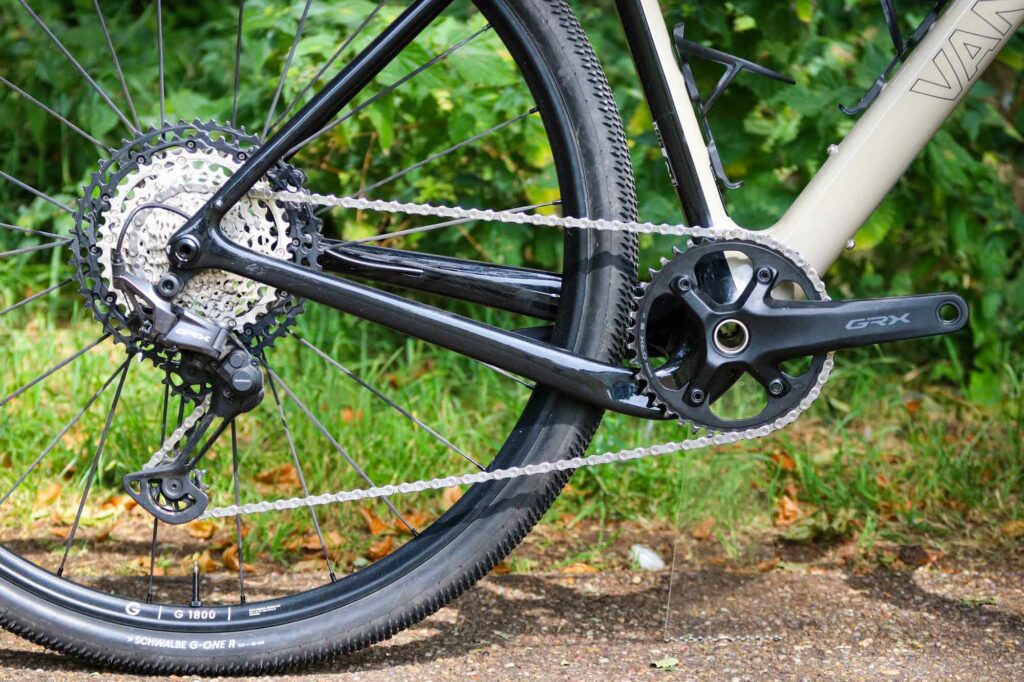
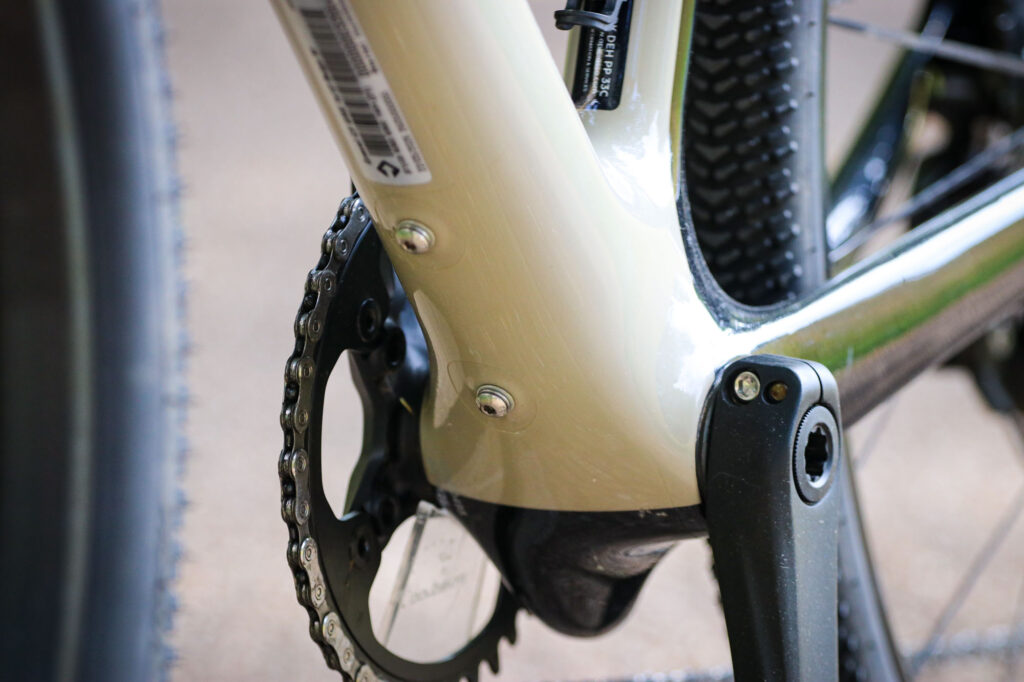
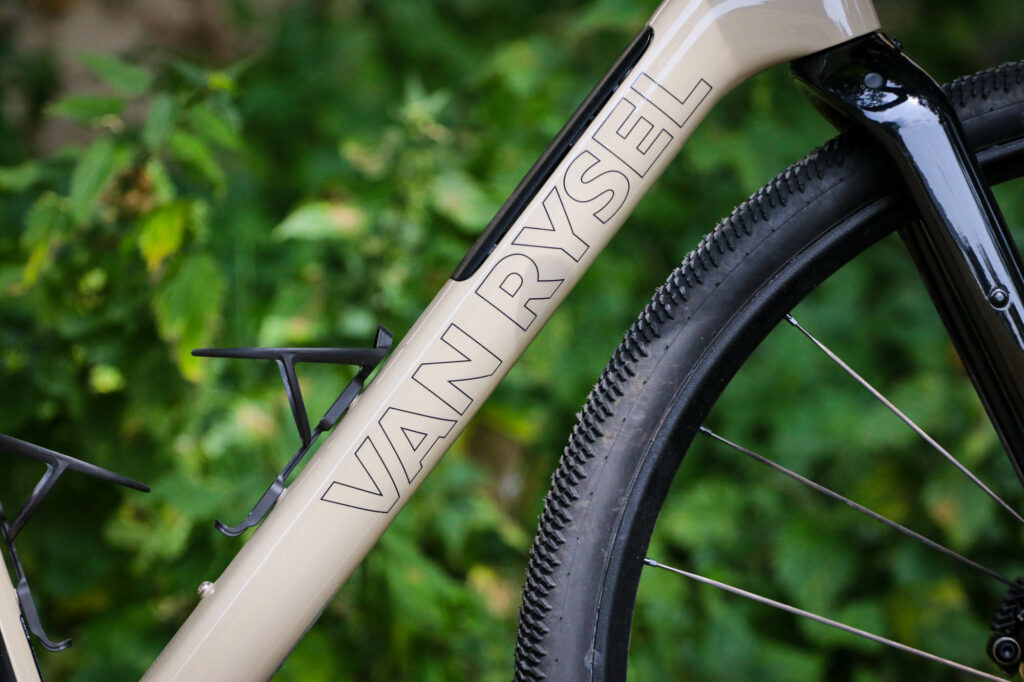
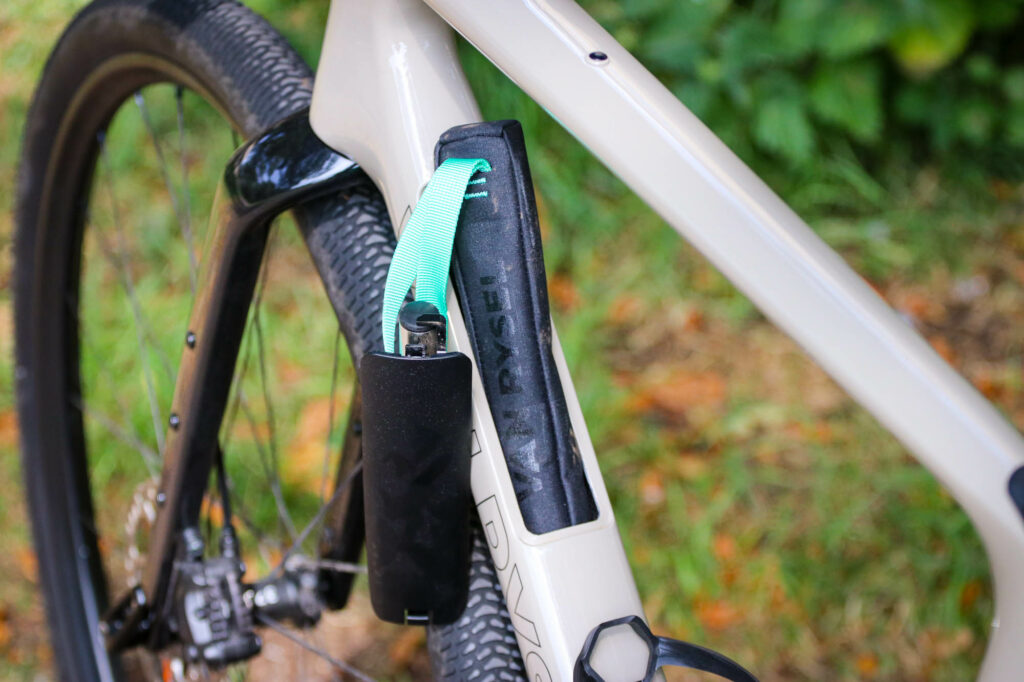
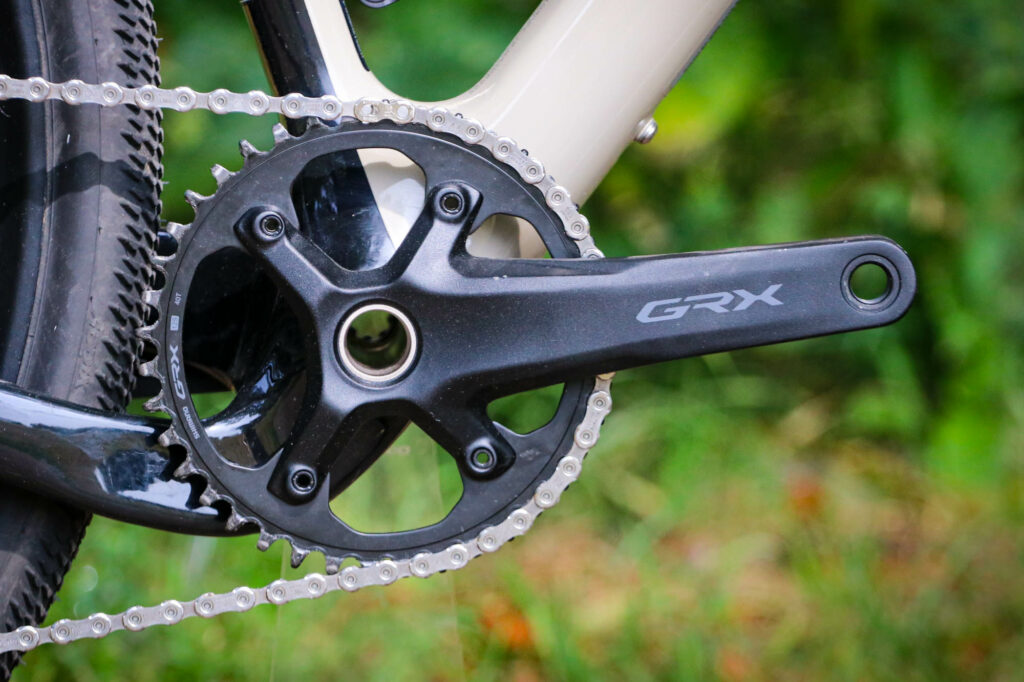
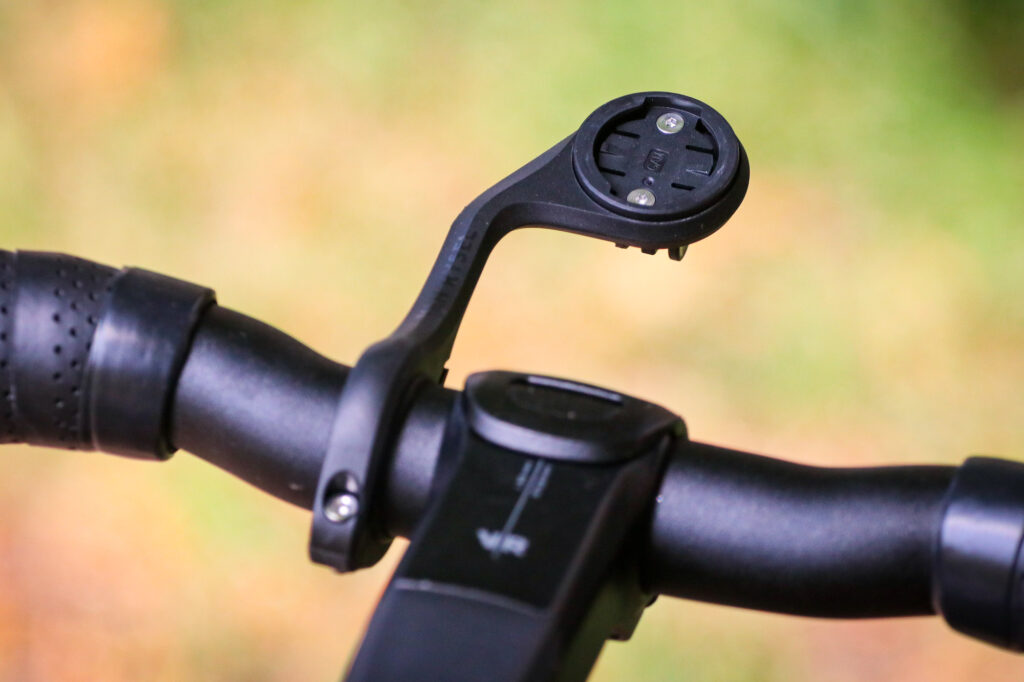
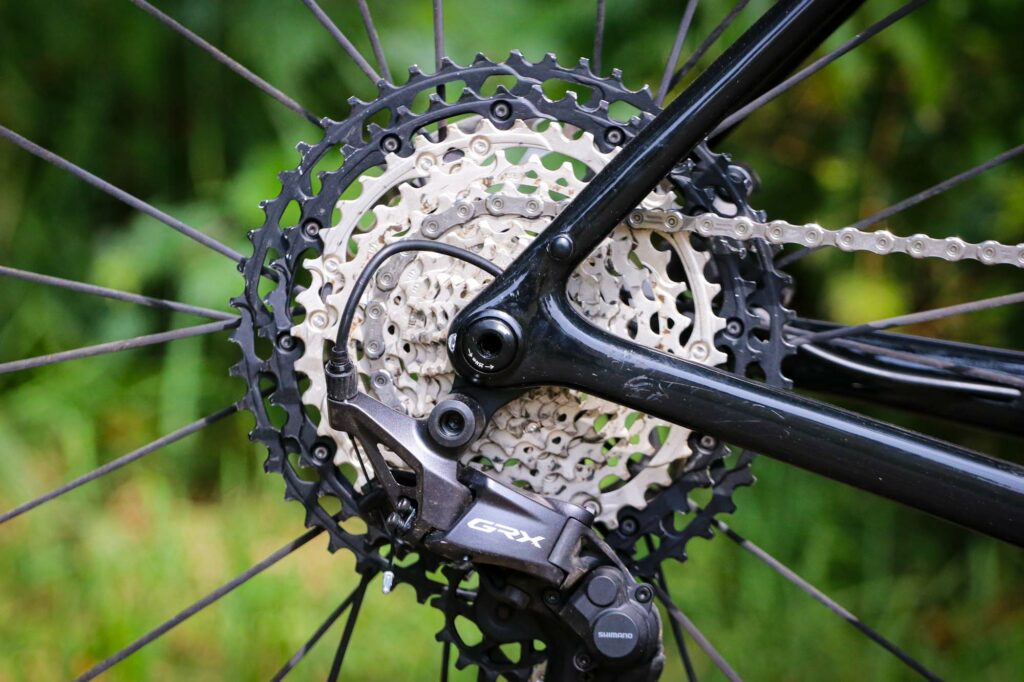
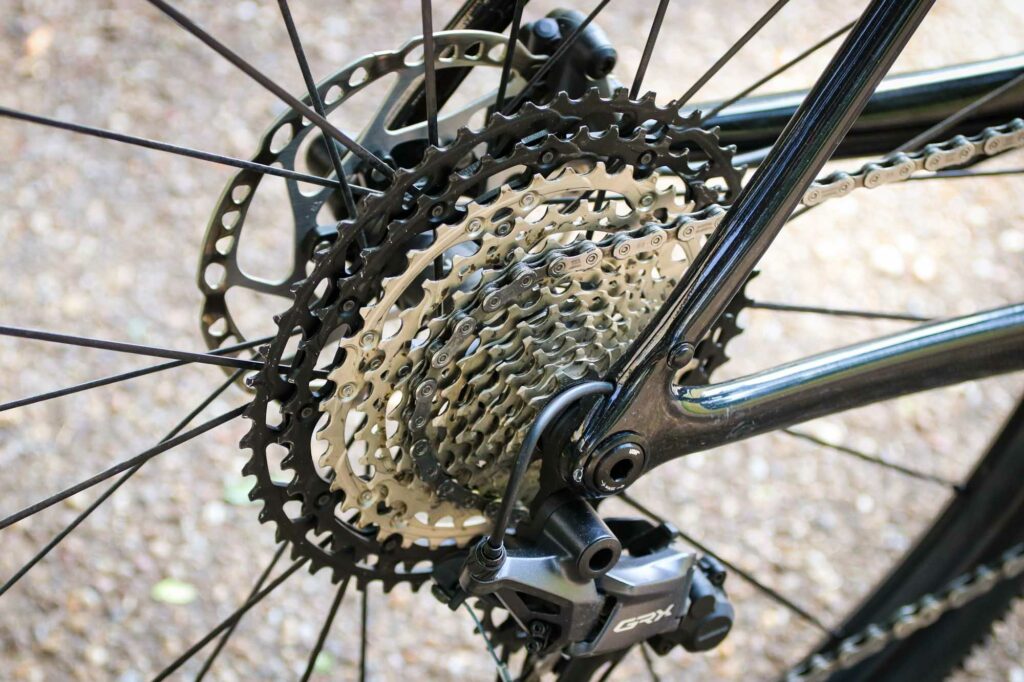
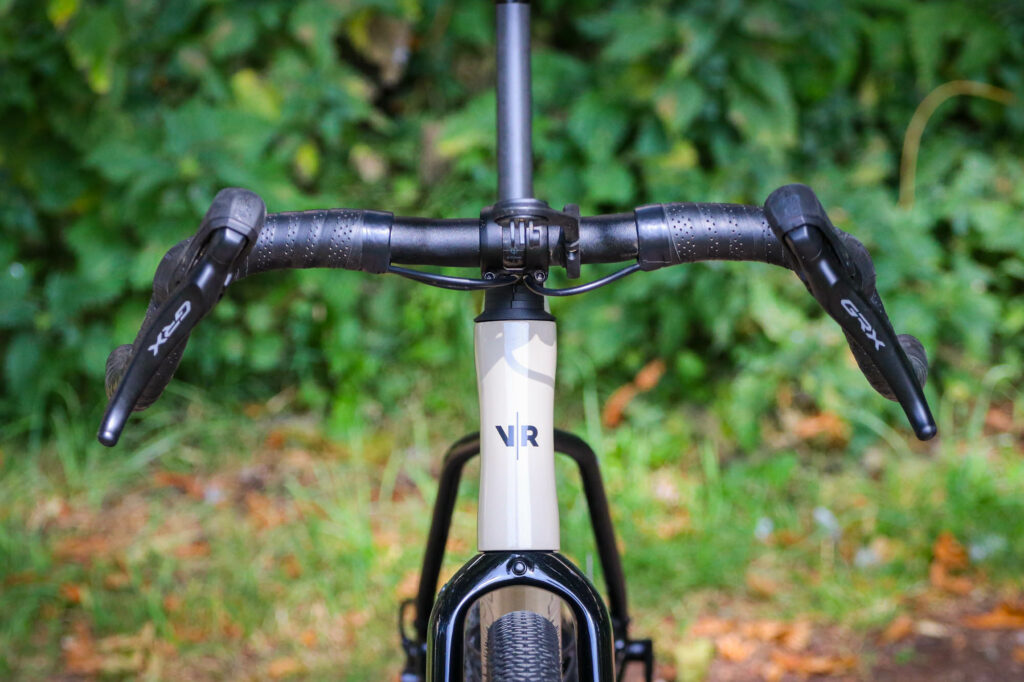
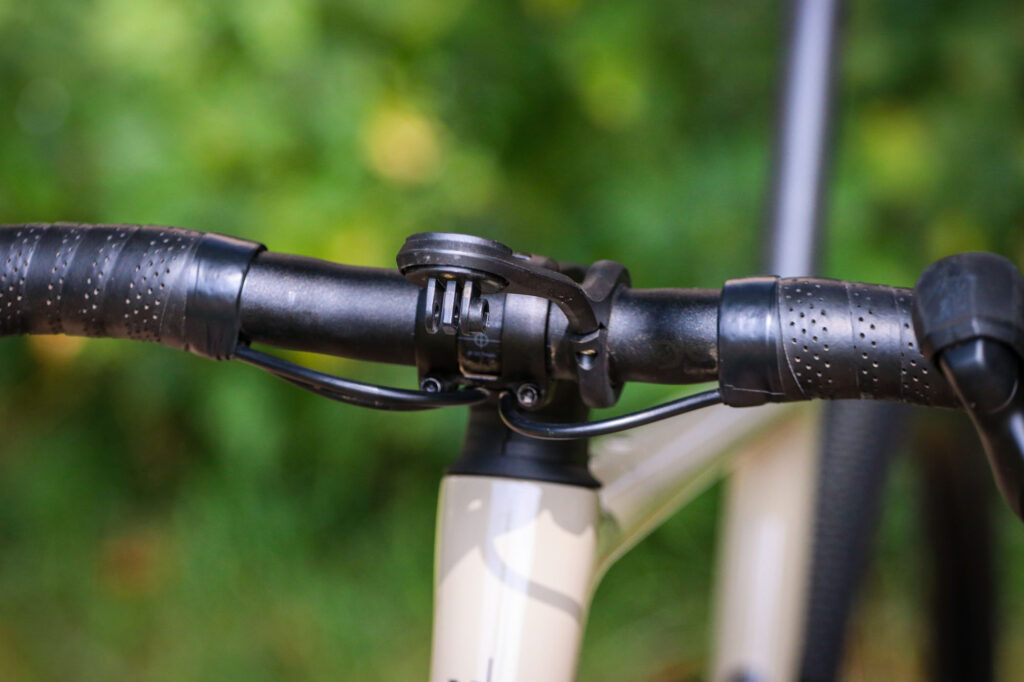
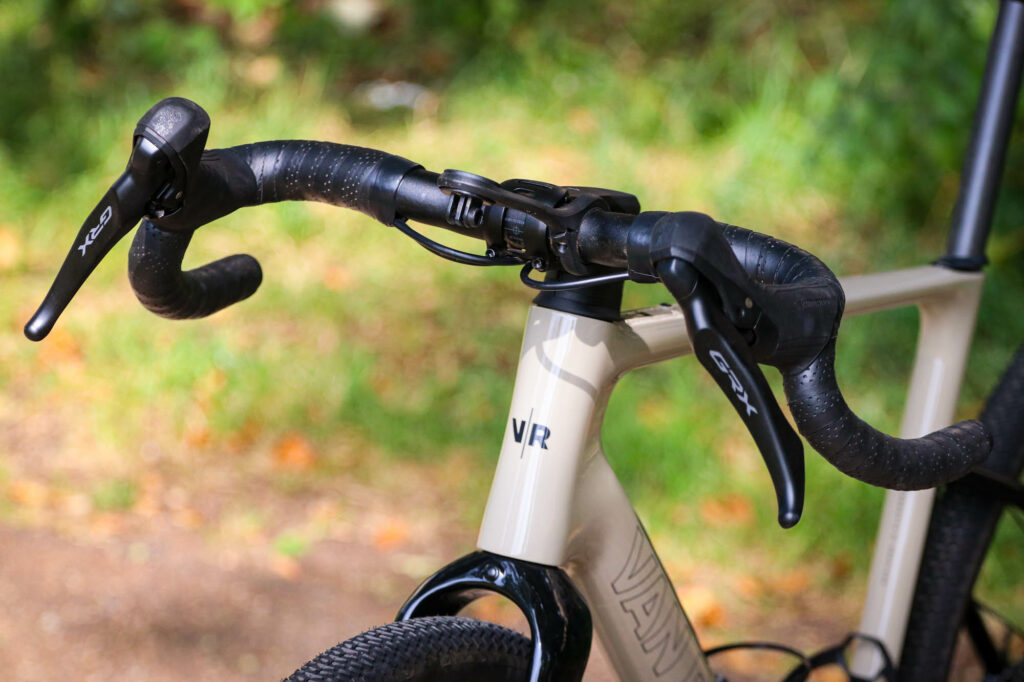
The EDR-G centres on a full carbon fibre frame and fork with endurance geometry, 50mm tyre clearance, interior frame storage and a plethora of mounting points – everything you need for a comfortable day out on the trails basically.
In my experience, Van Rysel (and B’Twin before the rename) has always done a great job of designing carbon frames with excellent ride quality, regardless of the budget. Thankfully, that hasn’t changed here.
The EDR-G has a lovely ride feel from the frame, which I isolated by switching in a set of Pirelli’s 40mm wide P Zero Race TLR road tyres and whacking the pressures up hard. The EDR-G zinged along the road smoothly and isolated me from the worst of the vibrations from the rough and cracked back lanes.
In fact, if you can cope with the 1x gearing on the road, this might not be a bad option for a comfortable commuter, winter trainer or light tourer – especially as it has mounting points for running full mudguards.
Anyway – back to the gravel.
That ride quality, mixed with the relaxed, slightly upright geometry, means that out on the trails the Van Rysel feels incredibly comfortable. They haven’t dampened the vibration so much though that the EDR-G loses out on the feedback front.
It’s a bike that keeps you in touch with what the tyres are up to and that makes it a lot of fun to ride. On fast descents or technical sections, I felt confident in the bike’s ability to stay off the brakes and just let it go.
It’s actually a very rewarding bike to ride. It flatters you if you aren’t the greatest bike handler around, but if you know your way around a bit of off-roading it doesn’t make you feel like you are under-biked either.
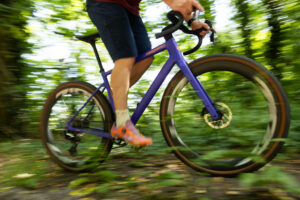
It’s just a really fun, involving bike to ride and I had some proper grin-inducing moments while blasting it through the woods on dry, twisty singletrack.
The handling is well balanced, quick enough to have some fun, and when I pushed a little too hard into a corner and found the front tyre’s limits, the EDR-G was easy to bring back under control without too much fuss.
What the Van Rysel is really designed to do though is absorb those big miles, and it does a very good job of this.
The geometry is well designed for it, with a lengthy wheelbase bringing stability along with the slack front end, while the stack and reach figures are such that they allowed me an upright, relaxed ride position while also maintaining good weight distribution.
This is definitely a bike I could cover significant mileage on, all while meandering along enjoying the scenery, knowing full well that when I see a cheeky little singletrack out of the corner of my eye, I could dart down it and have a bit of a blast.
At 9.25kg it would be easy to consider the EDR-G as a bit of a chunker, but it doesn’t feel like that from the saddle. It actually feels responsive and even on the climbs, it doesn’t feel like it’s carrying a weight penalty on all but the steepest of ascents.
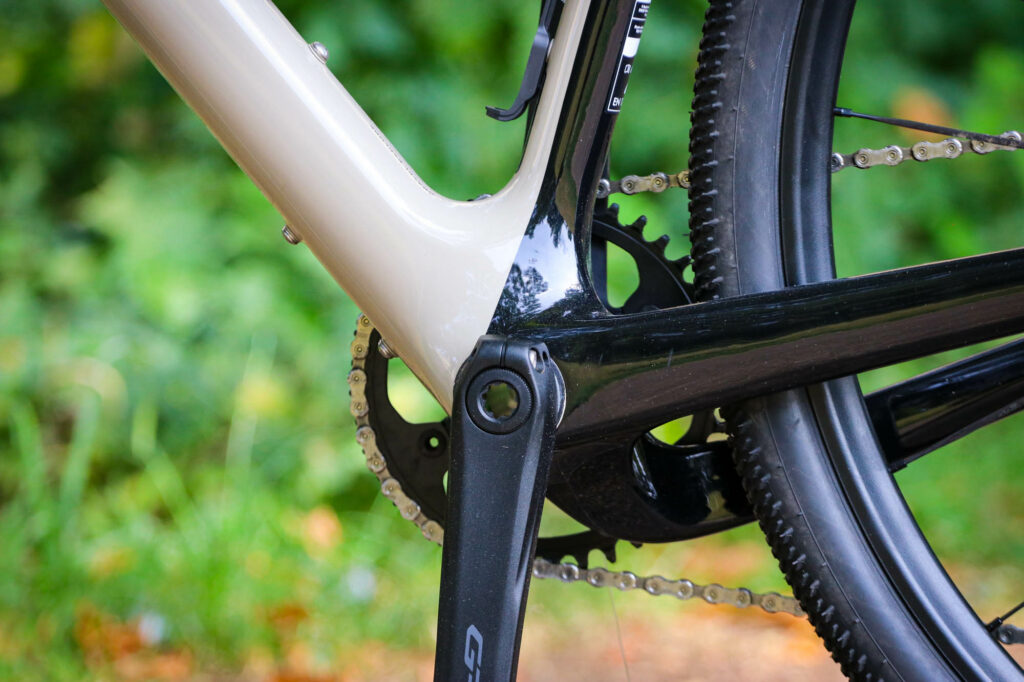
Stiffness certainly isn’t an issue thanks to a massive bottom bracket area and the resulting wide chainstays. Even hauling up a 20% climb loaded up with bikepacking bags didn’t see any flex coming from the lower half of this frame.
Overall, when it comes to the ride, the EDR-G is a little belter.
Van Rysel EDR-G Shimano GRX: Frame and fork
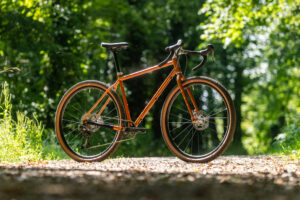
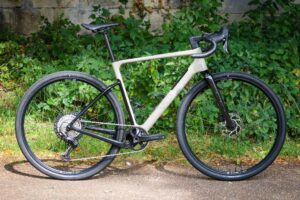
In my eyes, the EDR-G’s frame has quite an interesting look to it with the front triangle being a selection of varying tube shapes all running seamlessly into each other, whereas the rear triangle looks more utilitarian. In fact, I had to double check that the seatstays weren’t aluminium bonded into the rest of the frame as they have that old-school perfectly round design to them.
It’s a blend of aesthetics and functionality that I like.
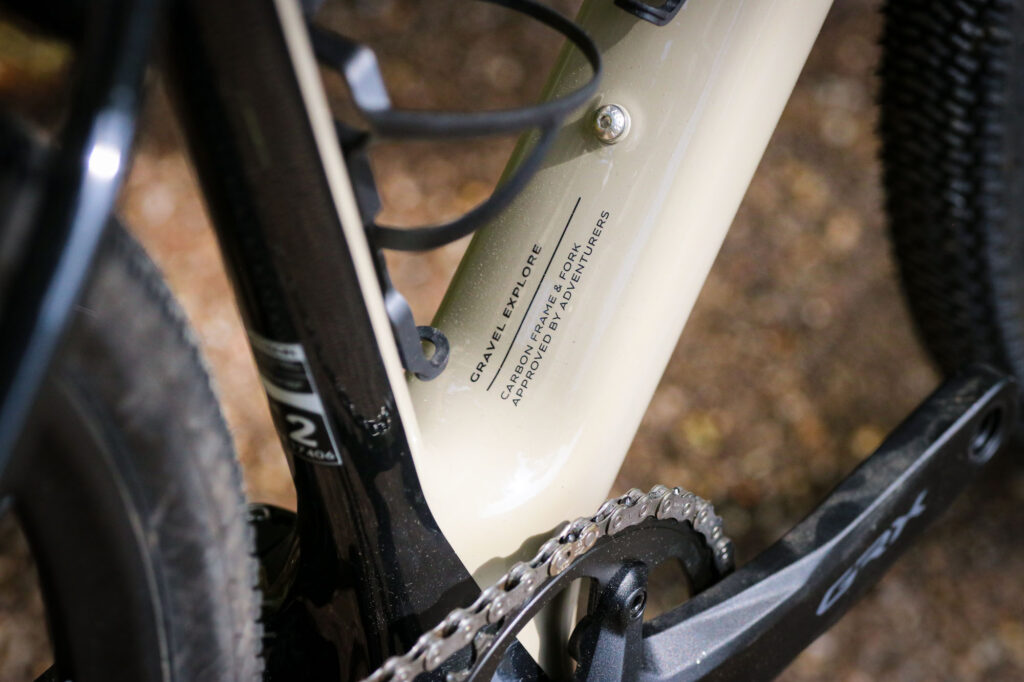
To give that 50mm tyre clearance and room for the chainset, Van Rysel has gone for a dropped chainstay on the drive side, and it has maximised bottom bracket shell width by opting for a press fit design too.
Pretty much everything is integrated as well, with all of the gear cables and brake hoses running internally from the stem back, while the seatpost uses an internal clamp design.
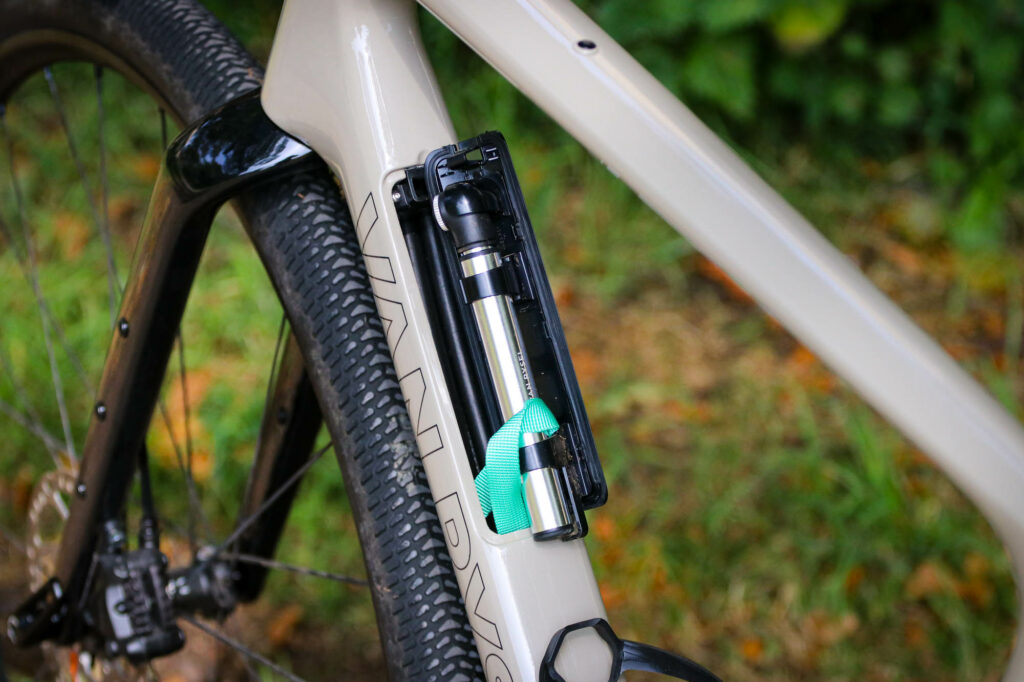
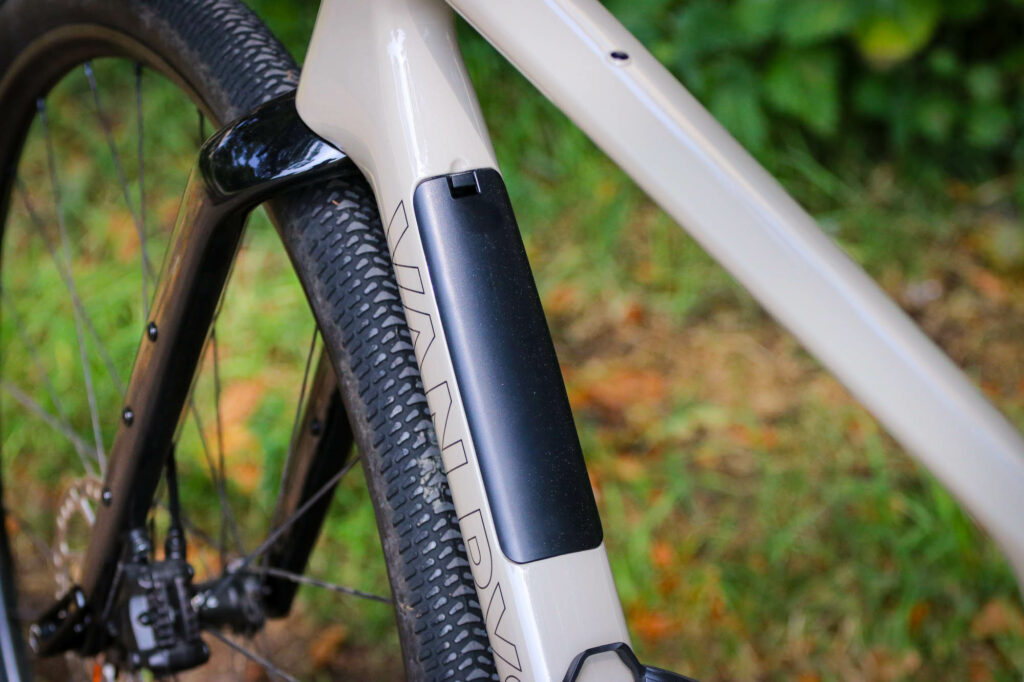
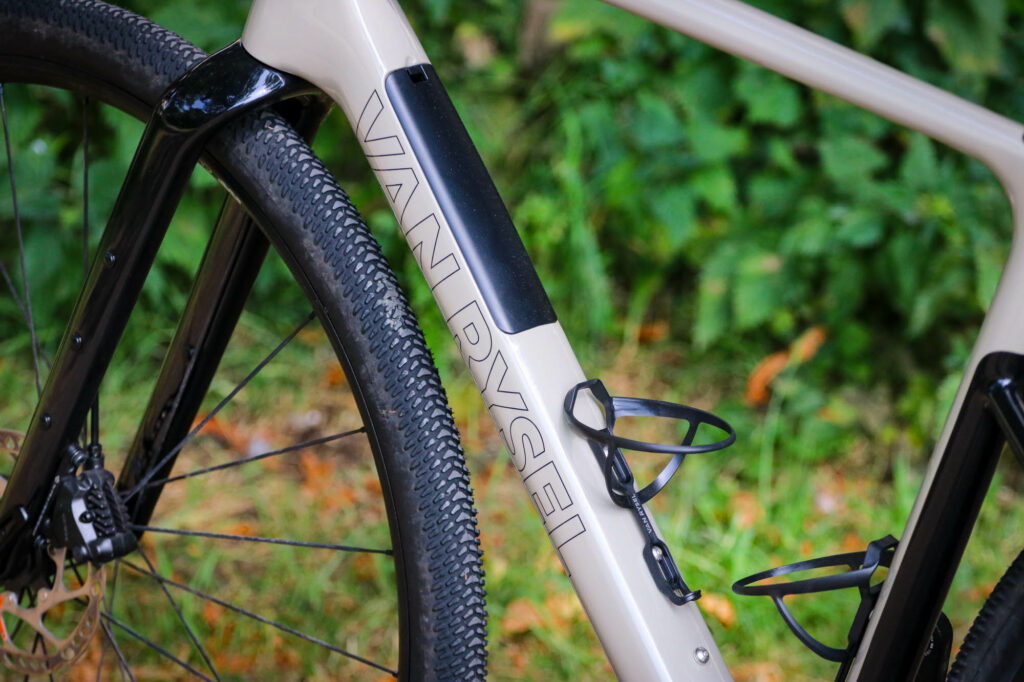
Van Rysel has positioned the bike’s internal storage slightly different to most brands with it sitting up closer to the head tube rather than under the bottle cage. I think I prefer this design, as on rough terrain I didn’t have to worry about the weight of a full bottle putting pressure on a small plastic clip holding the storage cover in place.
Van Rysel provides the EDR-G with a small tool kit in a bag which includes an inner tube, multi-tool and two tyre levers. Clipped into the base of the cover you’ll also find a small pump. To stop it sliding about, it has a strap which you loop around the mini pump.
The overall weight of the bike, as weighed by us, includes this kit. Without it the EDR-G was a more competitive 8.77kg on our scales.
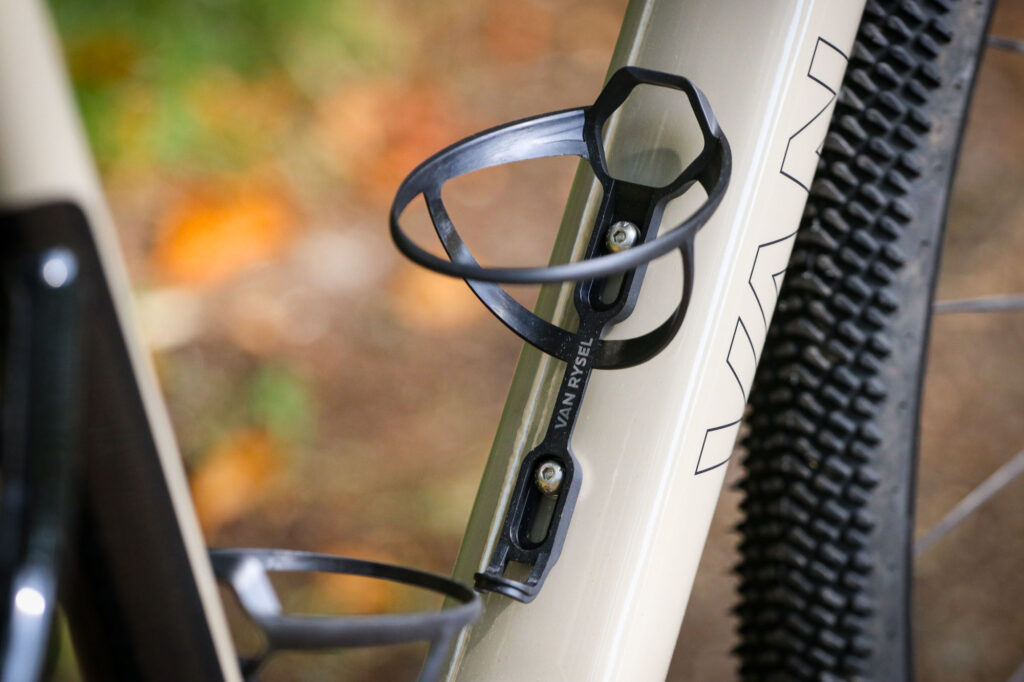
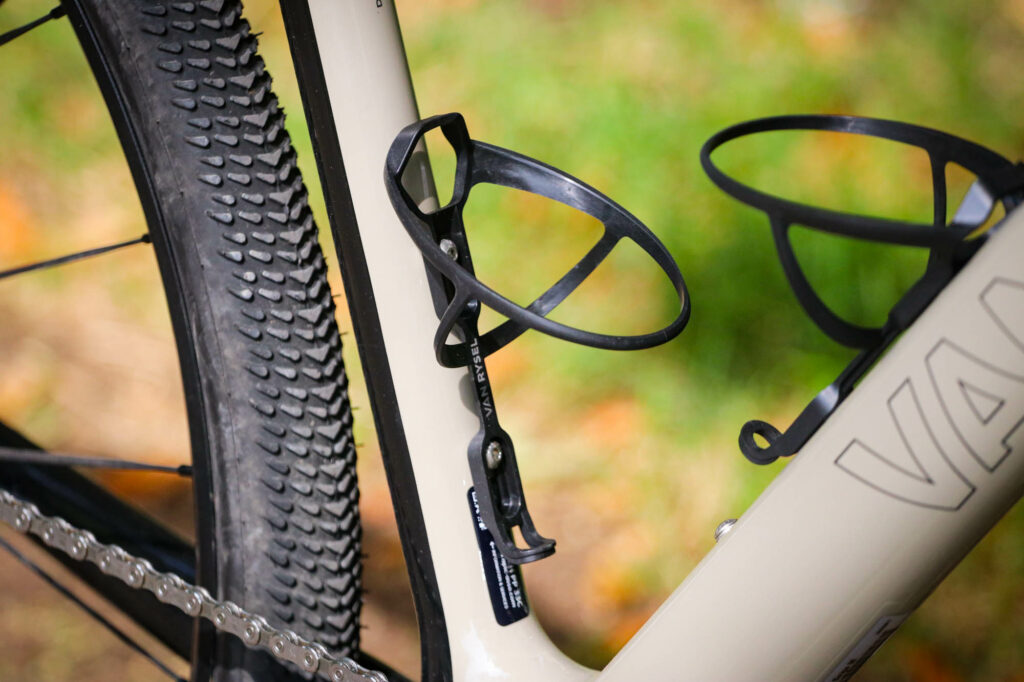
Van Rysel hasn’t scrimped on mounting points either with a bento box position on the top tube and a bottle cage mount under the down tube, with two bottle positions in the normal layout. The down tube one has three bolt options to give some adjustment for bottle size and/or frame bags.
There are also mudguard mounts on the rear triangle, although they aren’t in the traditional position so some fettling of the mudguard stays will be required.
It’s the same story with the fork. There are mounts but not where you’d expect to find them.
You also get an internal routing for a front dynamo hub, which is a neat touch.
While we’re on the subject of the fork, it’s as you’d expect in this day and age: full carbon fibre including the steerer. There is an option to have an EDR-G model fitted with Rockshox’s Rudy XPLR fork with 40mm of travel.
From a geometry point of view, the EDR-G is available in a range of five sizes covering XS to XL with corresponding top tube lengths of 510mm to 590mm, with the jump in between each size being 20mm.
The medium I have been riding here has a 550mm top tube and a 150mm head tube which sits at 71.5 degrees, paired with a fork rake of 50mm.
These measurements give stack and reach figures of 574mm and 380mm respectively.
The wheelbase is 1,034mm including 429mm chainstays, and you get 74mm of bottom bracket drop.
Van Rysel EDR-G Shimano GRX: Finishing kit and pricing
The EDR-G range is available in three builds with the top model costing £3,500 with a SRAM Force XPLR AXS groupset, Van Rysel’s own carbon wheels and that Rockshox fork I mentioned earlier.
There is also a Force equipped model with the standard carbon fork, which at the time of writing I don’t have a UK price for, only euros, at €3,199.
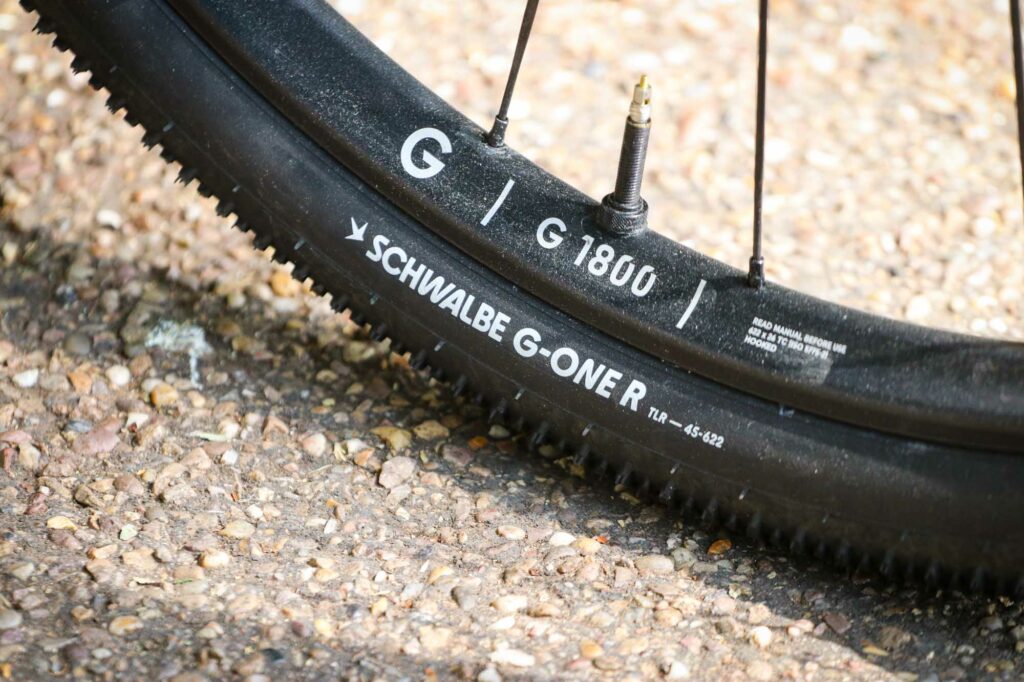
This model – which comes with Shimano’s GRX 610 12-speed groupset, DT Swiss 1800 wheels and Schwalbe’s G-One R Perf tyres – is priced competitively at £2,100.
It’s a 1x groupset with a 40t chainring and a 10/51t cassette. This gives a wide range of gearing, and I didn’t feel it was overly gappy which can lead me to feel I’m not quite in the correct gear for my preferred cadence.
It’s a solid all round groupset with slick shifting, comfortable ergonomics and plenty of braking power. I’m still a fan of mechanical groupsets and it really suits this kind of bike where you could head out on a tour or adventure and either pack a single gear cable or know that if you need to find a bike shop stocking one, that shouldn’t be too much of a challenge.
Moving onto the wheels, I also approve of Van Rysel’s choice of hoops. There’s nothing exciting about the DT Swiss G1800s, but they are a decent weight for an entry set of aluminium alloy wheels (circa. 1,680g) and from riding loads of them on various bikes I can vouch for their reliability.
The rims are shallow at 20mm and come with an inner width of 26mm, making them comfortably wide enough to work with the 50mm max tyre size the EDR-G can accommodate. The rims are hooked, tubeless ready, and are built with DT’s Aero Comp spokes and an LN 36 SL ratchet hub.
The overall weight limit is decent too at 130kg.
The Schwalbe G-One R tyres have been pretty good over the test period with all of my local trails being so dry, dusty and hard packed. They have a relatively closely packed and shallow tread pattern, but outside of this narrow weather window UK trails will require something a little more beefy.
With that 50mm clearance on offer though, you can choose pretty much any tyre you want, from fast rolling and wide, through to chunky and aggressive for wet winter use.
The Schwalbes roll well enough though, and while they aren’t the most supple of tyres, they don’t detract too much from how good the frame is. I found them to be reliable too.
Van Rysel has gone for an unbranded carbon seatpost and as it’s a traditional round 27.2mm diameter option, it would be easy to swap out if you desired. It’s a shame that Van Rysel hasn’t included internal routing for a dropper post though, as that would open up plenty of post related options.
The saddle is also unbranded, but I got on well with it thanks to a shape that suited me and minimal padding.
The stem wears some Van Rysel logos and is designed to divert the gear and brake cables into the frame via the top of the head tube.
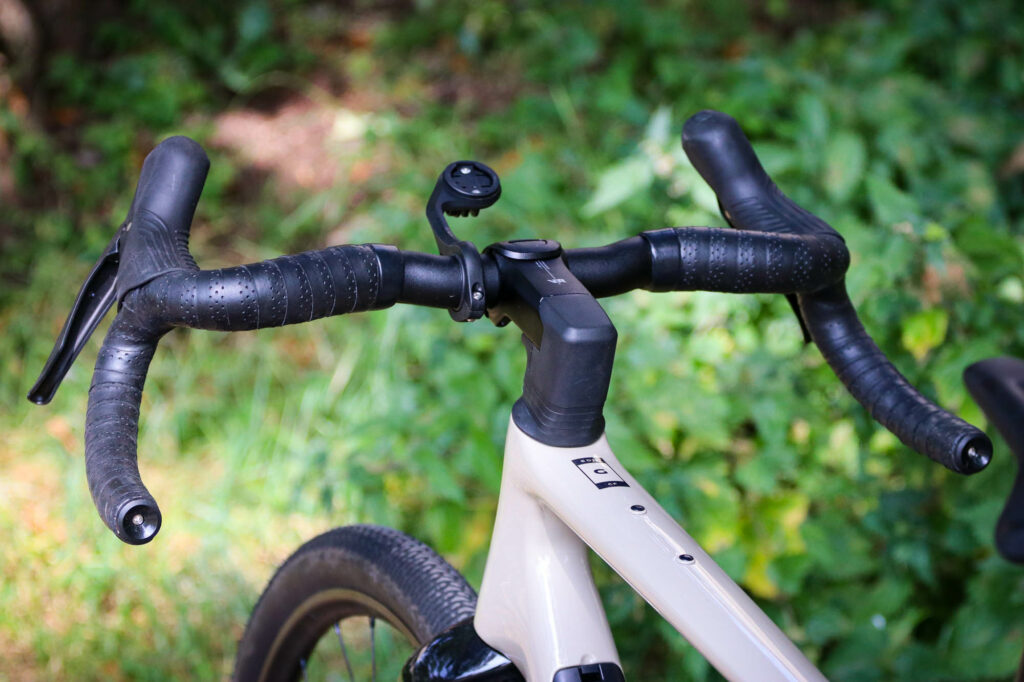
They’ve gone elsewhere for the handlebar though, speccing a Deda Gera Alloy 24°. It’s a bar that I haven’t used before, but I really liked it. It has a subtle rise to it either side of the stem and it also sweeps back towards you as it heads to the lever positions. The drops then have a 24-degree sweep either side to give you a really wide stance when using them – ideal for more control on technical sections.
These are then wrapped in a thick, comfortable bar tape. The combination damps vibrations and provides loads of well thought out hand positions. I think I’m going to be on the look out for a set for my own gravel bike.
Van Rysel EDR-G Shimano GRX: Conclusion
I think this model is priced competitively. For the same money you can get one of Merida’s gravel bikes, the Silex 700. It comes with a higher spec GRX groupset, but it has an aluminium frame and 45mm of tyre clearance. I’m a big fan of the Silex though in both alloy and carbon, having reviewed both recently.
If you specifically wanted a carbon model though, then the Silex 4000 is the entry point. It comes with a 10-speed GRX 400 groupset for £2,250.
Giant’s Revolt Advanced 3 comes with a carbon fork and frame which has a ‘flip-chip’ on the rear dropouts to change the wheelbase length. Max tyre clearance is 53mm for the long setup, and 45mm for the shortest.
For its £1,999 price, it comes with a Shimano Cues 1×11 groupset, but if you want the same 610 GRX groupset as the Van Rysel (albeit a 2x setup) then you’ll need to cough up for the £2,499 Advanced 2.
We have the latest version of the Revolt coming in for review very soon.
Canyon’s Grizl is a well-priced option with the CF 6 coming with a 1x SRAM Apex mechanical drivetrain, DT Swiss wheels and 54mm of tyre clearance for £1,899. It’s a weighty one though at a claimed 9.98kg.
Aaron reviewed the next model up, the CF 7, last year. That comes with a 800 GRX group for £2,349.
So, the EDR-G has got value in the bag, but thankfully that’s not the only feather in its hat, as I’ve described elsewhere in the review. The fact is that it rides really well, and feels very much the complete package. As expected for this price point, the components are at the lower end of suppliers’ ranges, but when I was riding the Van Rysel it didn’t feel like an entry level bike.
I would seriously entertain buying something like this EDR-G, enjoy riding it, and then just upgrade a few components here and there when needed. It’s a little belter.
> Best gravel bikes — off-road and adventure-ready steeds to take you from tarmac to trail
Test Report
What does the manufacturer say about this product?:
Designed for riders who want to stay comfortable and efficient over long distances, the EDR-G reduces vibration-induced fatigue to help riders perform better across everything from tarmac and cobbles to forest tracks, gravel roads and multi-day bikepacking adventures.
Tell us some more about the technical aspects of this product:
Carbon Frame with Endurance Geometry
Tyre Clearance – Up to 50mm
Integrated Frame Toolbox – With repair kit
15+ Frame & Fork Mounting Points
Deda Gera Gravel Handlebar – 24° Flare
How does the price compare to that of similar products in the market, including ones recently tested?:
It undercuts most comparable gravel bikes of this kind on the market, certainly from the big brands.
List the components used to build up the bike:
Groupset: GRX610: 1×12 speed – 40T chainring, 10-51T cassette
160mm rotors front and rear
Wheels: DT Swiss G1800 Spline
Tyres: Schwalbe G-One R Perf 45mm
Handlebar: Deda Gera Alloy 24 Degree
Stem: Van Rysel
Seatpost: Carbon 27.2mm Dia
Tell us what the bike is for and who it’s aimed at. What do the manufacturers say about it?:
Positioned within [our] endurance range, the EDR-G combines responsive handling with confidence-inspiring stability, making it equally suited to riders discovering gravel for the first time and experienced ultra-distance cyclists.
Where does this model sit in the range? Tell us briefly about the cheaper options and the more expensive options:
There are a couple of more expensive models above this one, which is the entry point.
Tell us about the build quality and finish of the frame and fork:
A well finished frame inside and out.
Tell us about the materials used in the frame and fork:
Carbon fibre is used for both the frame and the fork.
Tell us about the geometry of the frame and fork:
The geometry is fairly typical. A higher front end and less reach than a gravel race bike, and a more relaxed front end with a lengthy wheelbase to bring easy control and stability.
How was the bike in terms of stack and reach? How did it compare to other bikes of the same stated size?:
There are no surprises in terms of the geometry.
Was the bike comfortable to ride? Tell us how you felt about the ride quality:
Yes. Ride quality from the carbon lay-up and tube profile design creates an impressive ride quality over multiple surfaces.
Did the bike feel stiff in the right places? Did any part of the bike feel too stiff or too flexible?:
Van Rysel has gone for a large profile down tube and bottom bracket shell which offers loads of stiffness without affecting comfort.
Was there any toe overlap with the front wheel? If so, was it a problem?:
No.
How would you describe the steering? Was it lively, neutral or unresponsive?:
Neutral.
Tell us some more about the handling. How did the bike feel overall? Did it do particular things well or badly?:
The EDR-G has safe handling with plenty of feedback. What it lacks in speed it makes up for in giving confidence.
Which components had the most effect (good or bad) on the bike’s performance? Would you recommend any changes?:
The tyres are good for very dry conditions, but you’ll need something a bit beefier when the weather changes.
Any issues with drivetrain durability?:
No.
Tell us some more about the drivetrain. Anything you particularly did or didn’t like? Any components which didn’t work well together?:
A solid feeling reliable groupset that is comfortable to use thanks to great ergonomics.
Any issues with wheel durability?:
No.
Tell us some more about the wheels. Did they work well in the conditions you encountered? Would you change the wheels? If so, what for?:
A durable set of wheels with enough rim width to make full use of the max tyre clearance available.
Any comments on tyre durability? How much did the tyres wear during testing?:
No.
Tell us some more about the tyres. Did they work well in the conditions you encountered? Would you change the tyres? If so, what for?:
Good all-rounders for the dry test conditions, but only really usable in a narrow weather window in the UK. I’d go for something with wider tread blocks.
Any issues with brake durability?:
No.
Tell us some more about the brakes. Did they work well in the conditions you encountered? Would you change anything? If so, why?:
Loads of power from two finger braking, and lots of modulation on offer too.
Any issues with controls durability?:
No.
Tell us some more about the controls. Any particularly good or bad components? How would the controls work for larger or smaller riders?:
I really like the Deda handlebar as it has loads of hand positions and the ergonomics worked really well for me.
Did you enjoy using the product? Yes.
Would you consider buying the product? Yes.
Would you recommend the product to a friend? Yes.
Use this box to explain your overall score
At its heart is a very good frameset which makes the EDR-G a pleasure to ride, showing that Van Rysel has invested the money where it’s necessary. Saying that though, it has still specced the bike well for the overall cost.

10 thoughts on “Van Rysel EDR-G GRX”
Please remove this from ROAD CC. If I wanted to read about gravel bikes I’d go to GRAVEL or OFF ROAD CC. Stop padding out your content with irrelevant stories. I won’t stop making these comments until you stop this.
Bless…
It’s going to be a long winter, folks…
Poor you! 😂 Humans have been cycling gravel roads since bikes were invented. Tarmac is not the definition of road.
@Surreyrider Maybe just have a wank to relieve some of the tension in your body?
Around the world, most roads are gravel or dirt roads; back to paved.cc with you.
Oh, get over yourself. For many of us, the shit state of UK roads means that a gravel bike IS a road bike now.
It’s just the same on cucumber growers websites. Only last week, a Tuesday I think it was, there was an article on growing courgettes. I don’t grow courgettes. I was livid and thought I was going to spontaneously combust. Luckily my wife knows the signs – steam rising from my boots, speaking in tongues- and was on hand to throw a bucket of water over me. She always seems to have a bucket of water handy. And as for red tomato growers websites? Don’t get me started.
@perce Did you see that article last week about tomatillos? They’re GREEN for God’s sake. I mean, WTF?
Tomatillos.co.ok please!
Can someone nip in and change SurreyRider’s password for us?
Seriously, though, I wonder if these will be available in California any time soon. It would be on my shortlist.