



Here at road.cc, myself and the rest of the test team have ridden and reviewed nearly every gravel tyre going. Even so, when it comes to actually buying a set, it’s surprisingly hard to know what to pick.
So, I’ve pulled together a ranking of some of the most popular gravel tyres in early 2026 to try to make things a bit clearer. Tyre choice makes a huge difference off-road. Unlike road riding, where the surface is fairly consistent, gravel throws up endless variations in terrain and conditions, so getting the right tyre is absolutely crucial.

Like in my road tyre ranking video and article, I’m using the trendy Japanese ranking system here – S-tier is top, followed by A, B, C, and so on. Just call S an A+ if it doesn’t wash with you…
Also like the road tyre ranking, the contents of this are distinct from our buyer’s guides, because it is mostly my opinion along with input from some of our key reviewers. You won’t agree with all of it, and that’s fine. If you’ve got a favourite I’ve missed, or you think I’m wildly wrong, I’d genuinely like to hear it…
Specialized Pathfinder — B

There are loads of versions of the Pathfinder, all built around that distinctive fast-rolling centre strip with more aggressive shoulders. I’ve spent the most time on the S-Works model, and while it’s undeniably quick, I’ve never completely fallen for it.
For me, it’s best kept for drier conditions where that slick-ish centre can really shine. Once things get wet or loose, it starts to feel a bit out of its depth.
Also worth noting: it tops out at 42mm. If you want more volume, you’re better off looking at the Tracer in 50mm.
Schwalbe Thunder Burt — A

This is an interesting one. Recommended to me by road.cc’s own Matt Page, the Schwalbe Thunder Burt is technically an MTB tyre – but it works brilliantly on a gravel bike.
You get a tight, fast-rolling centre tread paired with quite tall shoulder knobs. The result is a tyre that’s quick in a straight line but offers loads of grip when you really lean it over.
That’s the key, though – you have to commit in the corners to unlock that grip.
Continental RaceKing — A
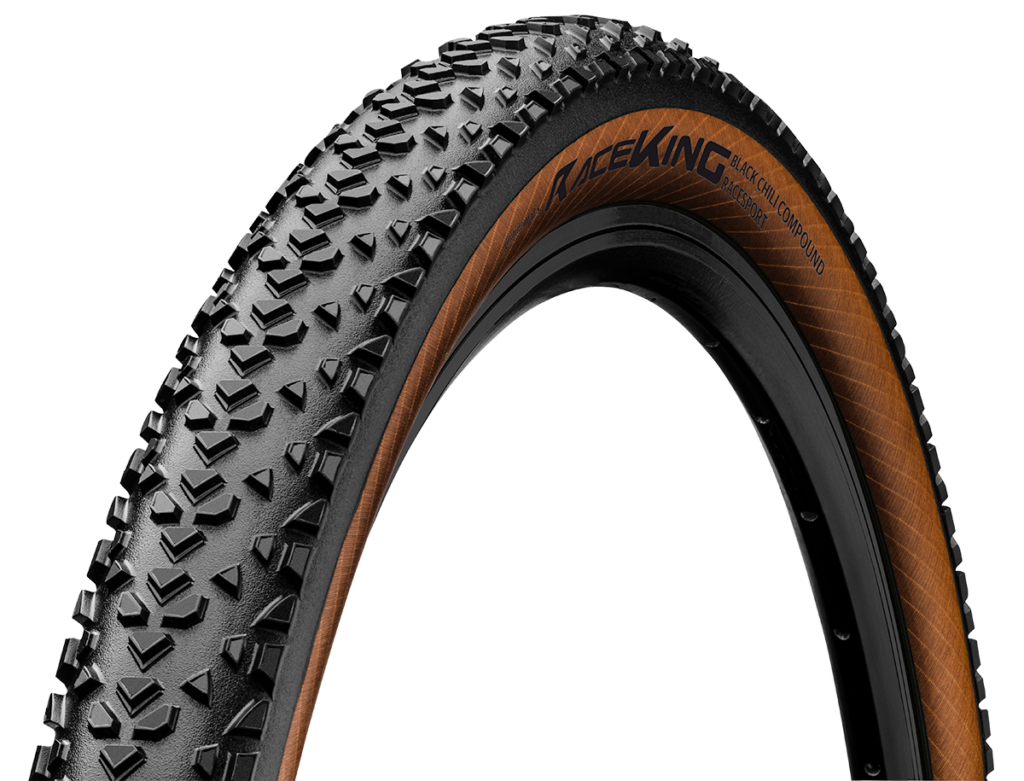
The Continental RaceKing has become something of a go-to for pros running big-volume gravel setups – usually in a 2.2in width.
It’s fast, predictable and surprisingly versatile. It’s now effectively been superseded by the Dubnital, which I’d rank a step down for now based on early impressions.
The main downside? There are some reports of them being a bit prone to punctures, which is worth bearing in mind if you’re riding sharper terrain.
Vittoria Terreno T90 — S
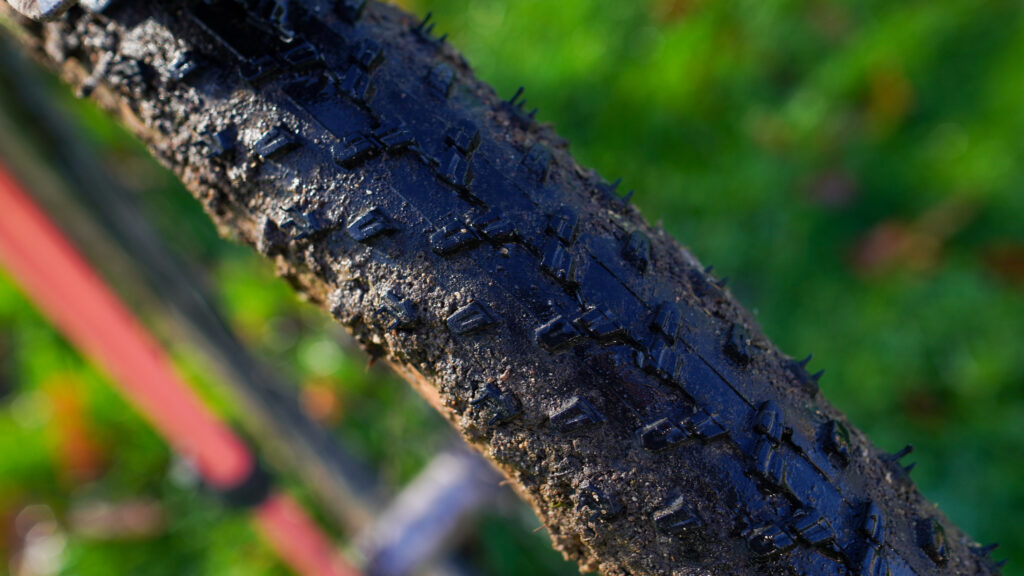
Right now, this is my favourite mud tyre. The Vittoria Terreno T90 in 40mm has been brilliant whenever things get properly sloppy.
It’s not the quickest on road sections – you definitely feel the drag – but off-road in the mud it’s superb.
Matt Page actually prefers the T60, which uses a more mixed-condition tread and rolls faster overall. If you want a one-tyre solution, that’s probably the better shout – but for pure mud, I’m sticking with the T90.
Pirelli Cinturato M — S
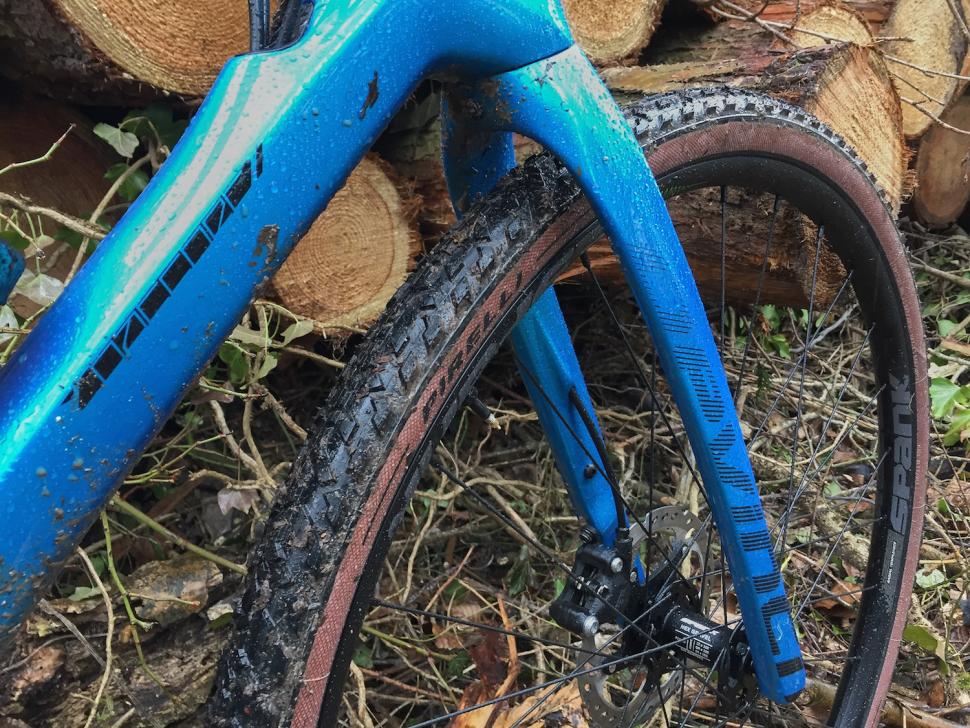
A bit of a sleeper, this one. The Pirelli Cinturato M doesn’t shout about itself, but it quietly delivers in a wide range of conditions.
It’s not lightning-fast, but it’s perfectly acceptable on the road, and once you hit loose gravel or mud it really comes into its own. Grip is excellent and it feels very predictable.
If you’re buying a set, I’d go for the ProWall casing with the 120 TPI construction – it strikes a really nice balance between suppleness and durability.
Schwalbe G-One RS Super Race — A
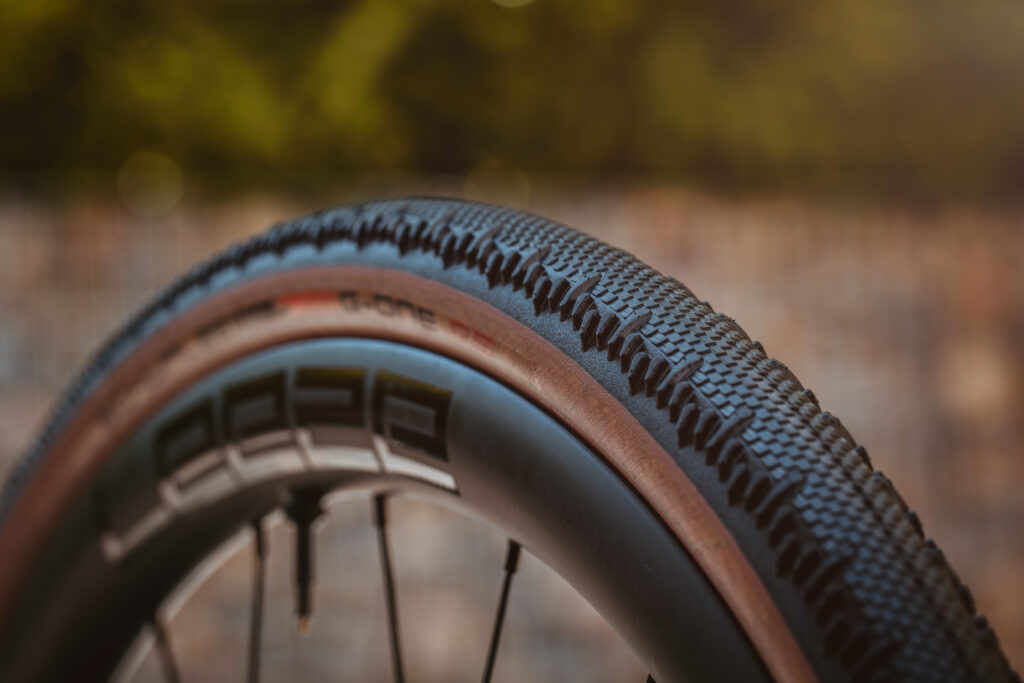
You’ll see these everywhere at pro gravel races, and for good reason. The Schwalbe G-One RS Super Race is rapid.
In dry conditions or hardpack, it’s one of the fastest tyres I’ve used. It just flies.
Take it anywhere near mud, though, and things fall apart quickly. Grip disappears and you’re left wishing you’d fitted something more aggressive. That said, there’s no denying its racing credentials.
WTB Vulpine S — B

The WTB Vulpine S is a bit of a surprise package. I found it to be a really solid all-rounder, with decent traction from the shoulders and a lovely, predictable profile when cornering.
It’s not exceptional in any one area, but it does most things well – which, for a lot of riders, is exactly what you want.
Matt Page still prefers the standard Vulpine, but I’d happily run either.
Hutchinson Caracal Race — B
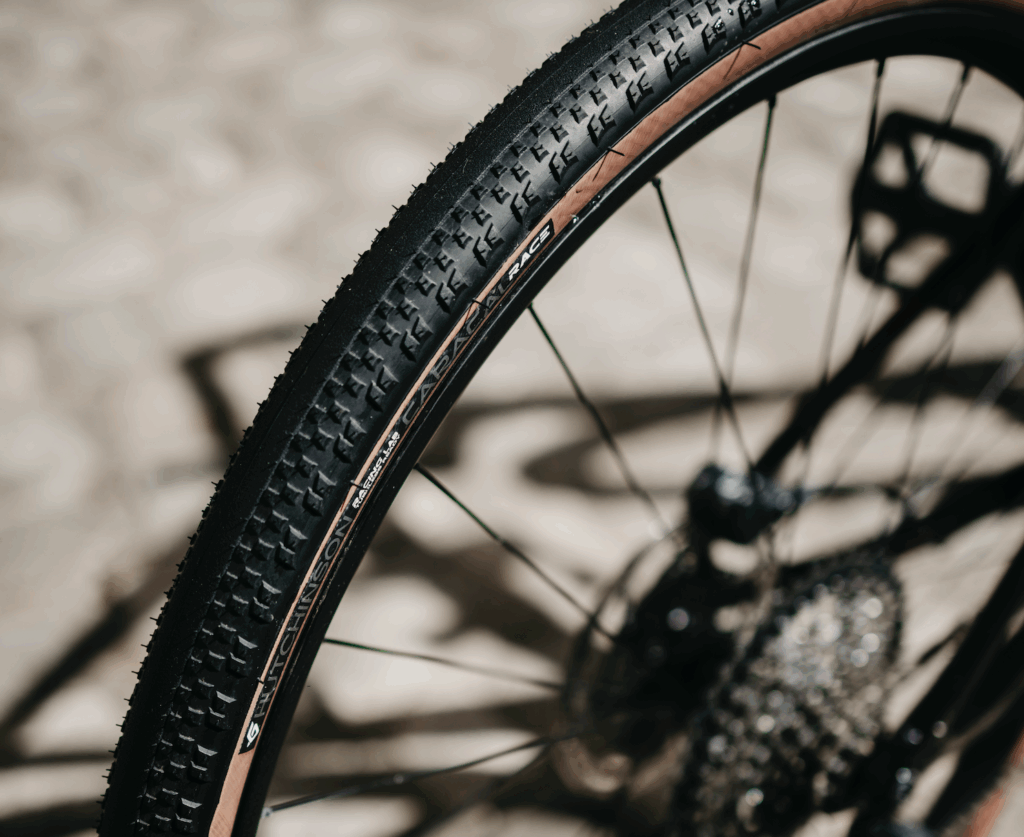
For a while, the Hutchinson Caracal Race was right up there as one of the fastest gravel tyres going.
It’s incredibly supple and feels quick on smoother surfaces, making it a great choice for dry conditions and fast courses.
The trade-off is that it’s not brilliant on loose gravel, where it can feel a bit sketchy.
Hutchinson Caracal Race tyre review
Challenge Strada Bianca Race V — C

The Challenge Strada Bianca Race V is one of the original high-volume slick gravel tyres, and it still has a lot going for it.
I absolutely love the ride feel of Challenge’s Handmade Tubeless-Ready construction – it’s beautifully supple and smooth.
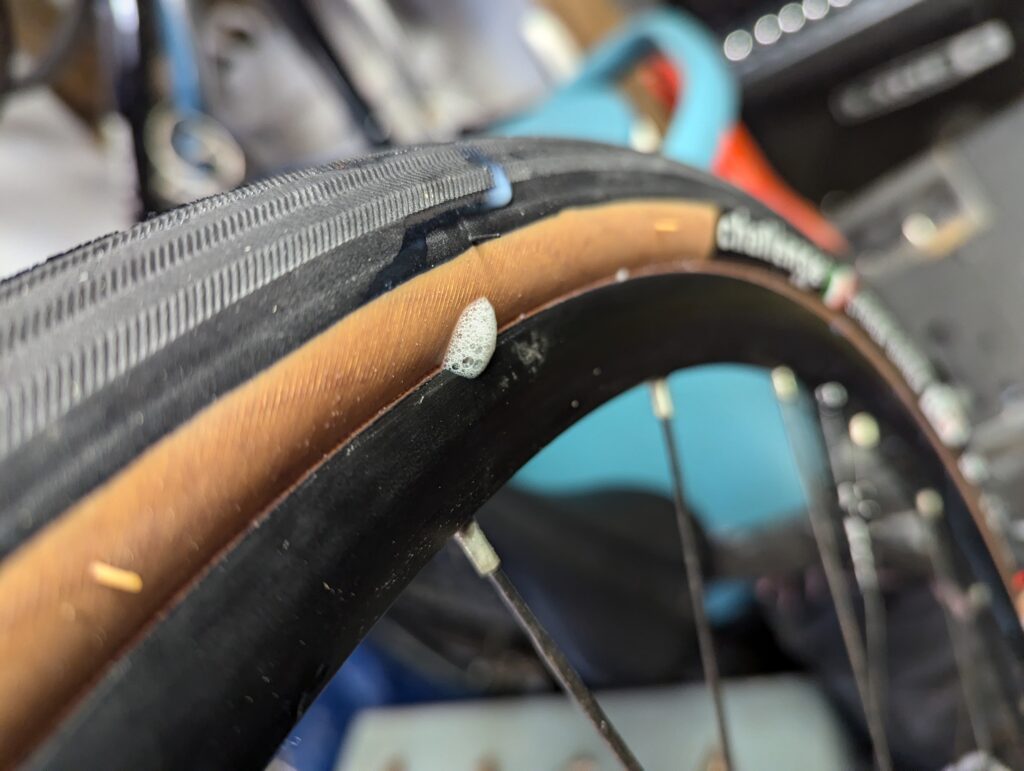
But… setup can be a real pain. If you’re not patient (or experienced with tricky tubeless installs), it can be frustrating.
Challenge Strada Bianca Race V TLR review
Maxxis Rambler — B

The Maxxis Rambler is a solid, dependable gravel tyre that comes in some nice big-volume options.
It offers good grip and a comfortable ride, making it a decent all-rounder. The downside is that it’s not the toughest tyre out there, so durability can be a concern depending on where you ride.
Maxxis Rambler HYPR-X EXO review
If you’re looking at MTB-style sizes, the Aspen ST is also well worth a look.
Should you use MTB tyres?
In short, I’m a big fan.
Off-road, they’re more comfortable and give you loads more control – that extra volume and tread really make a difference. It’s the same reason I like suspension on gravel bikes: more grip, more confidence, more speed where it matters.
On the road, though, they do feel draggy. There’s no getting around that. So it comes down to being honest about your riding. How much time are you really spending off-road? How rough is it? And, crucially, do you actually have the clearance in your frame?
The pros are increasingly squeezing in massive tyres, and there’s a good reason for that. The question is whether it makes sense for your riding. But whether you go for MTB tyres, or stick to slimmer rubber, there are some excellent options available.




















5 thoughts on “Ranking the best gravel tyres in 2026: how wide should you go, and are mountain bike tyres actually better for gravel?”
This is Road CC. Please move this to Gravel CC or whatever it may be called.
Bro, the reality is that ‘Gravel’ is also ‘Road’. It always has been, since the early days of the TDF. There are gravel roads almost everywhere on planet earth. Also, most Gravel riders ride road …not only in order to get to and from the gravel, but on their ‘gravel bikes’. Many Gravel bikes’ are excellent road bikes. In fact, my dedicated ‘road bike’ is a gravel race bike with carbon ‘gravel wheels’ and 32mm road tyres (because when I got the wheels years ago only ‘gravel rims’ were available with 25mm internal width. Now most new ‘road’ wheels are coming out in 25mm internal). Gravel bikes are neo-endurance road too. Gravel bike geometry is better for 90% of road riders (those of us who don’t road race, or who are no longer in our 20’s-30’s).
The tyres we use are for paved roads and gravel roads. Gravel road riding is as old as the hills.
**Surreyrider wrote: This is Road CC. Please move this to Gravel CC or whatever it may be called.**
What a truly bizarre hill to die on. Imagine making it your mission in life to complain when cycling is discussed on a cycling website instead of on another cycling website.
They wouldn’t like it – it would just confuse their customers looking for aggregates.
anything by Rene Herse