


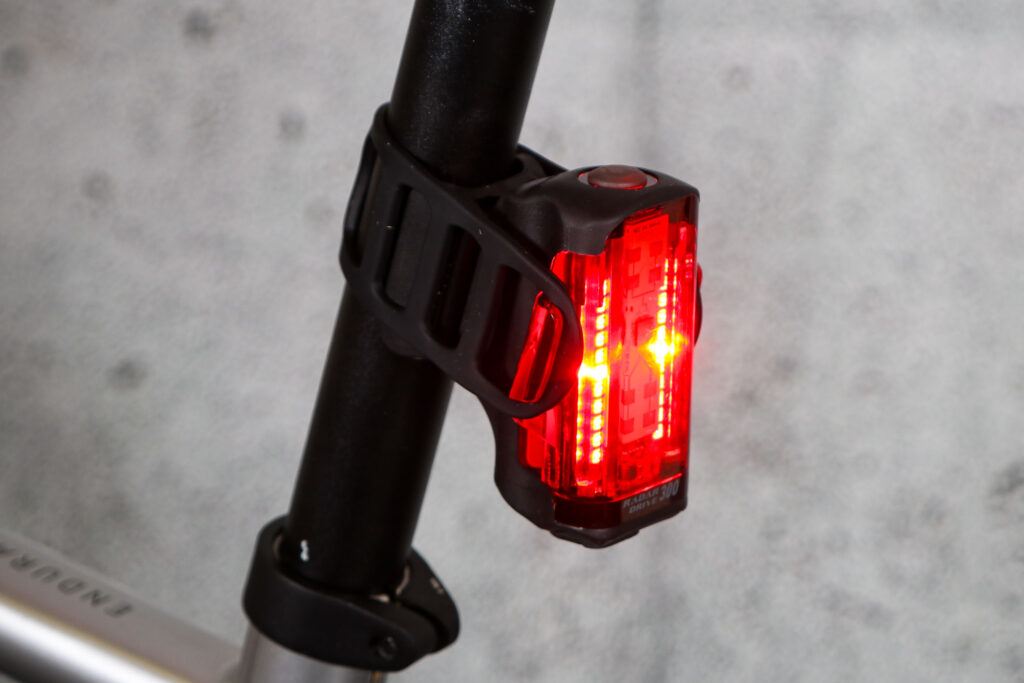

With the Lezyne Radar Drive 300 Rear Light, the versatile components company is the newest entry into the ever-growing radar market. It improves on competitor offerings with excellent side and rear visibility and multiple connection options – you don’t even need a phone or a head unit if you pair it with Lezyne’s React Drive front light. And the radar itself works well, though the mount is a bit disappointing.
Radar lights are nothing new – Garmin launched the first one, the Varia, as far back as 2015. The current, third generation Varia, was introduced in 2020 and is still widely regarded as the best-in-class when it comes to radar detection.
I don’t have personal experience of every radar on the market, but I have spent a fair amount of time with the main contenders: the Garmin Varia RTL515, the Magene L508 – which I own – the Trek Carback and Wahoo’s Trackr.
If you’re reading this, you probably want to know which one you should buy – my aim here is to help you with that. Hint: this one is a strong contender.
Radar
I’m not going to go on too much about what a radar is or what it does. In short, a radar is a rear light that also detects objects travelling towards you from behind. The radar alerts you to the presence of these objects, visually and audibly, via your phone or your head unit, or in the Radar Drive’s case, via the React Drive front light that is optionally available to make up the Radar React System.

I use one all the time, choosing to bring a head unit on rides where I wouldn’t normally, to get the benefit of these alerts.
Radar reliability
Not all radars are created equally. While the actual electronics might be similar, or the same, manufacturers can play with the angle of the field of vision to end up with a radar that detects cars in a wider field of vision or detects cars further away, and therefore earlier.
The Lezyne Radar Drive has a very similar spec to the Wahoo Trackr, detecting objects within a radar beam angle of 35° up to 150 metres away. For comparison, Garmin’s Varia has a slightly wider field of vision of 40°, and therefore a corresponding shorter detection distance. Trek claims a much longer detection distance for its Carback radar unit, but the field of vision is narrower.
That’s the hardware. There’s another important element, the software that determines whether what is detected is a threat, and should be translated into an alert. Lezyne mentions in its manual that the Radar will detect objects approaching at speeds between 8-131kph (5-81mph) relative to the rider. A car coming up to you slowly, where the relative speed difference is low, will not trigger an alert.
These differences in software and hardware determine how well each of these radar detection units perform relative to each other, all else being equal. I say that, because the radar needs to have an unobstructed view of the approaching object, otherwise detection will be compromised. Don’t put a saddle bag or mudguard in the way, and keep it clean.
In practice, Lezyne’s Radar Drive works well and performs at the same level as the Wahoo Trackr, much better than Trek’s Carback, but the Garmin Varia has the edge here, sometimes sounding the alert that little bit earlier. Magene’s L508 works well enough, better than the Trek unit, but the Trackr, Radar Drive and Varia are better.
The Radar Drive and Trackr both alert early enough, and in most cases much earlier than I would notice a car coming up behind me.
Alert connection options
A radar on its own is just a rear light. It needs to be paired with something so that it can raise an alert.
The Radar Drive is a clear winner here, with three pairing options available: Lezyne’s Radar Ally App, a GPS Head Unit and/or Lezyne’s React Drive Front Light.
For comparison, Garmin’s Varia, Magene’s L508 and Trek’s Carback can connect to a GPS head unit or an app, while at the time of writing, your only connection option for the Wahoo Trackr radar is a GPS head unit (or GPS watch).
Lezyne’s Radar Ally app
Available in both Apple and Google flavours, you can use Lezyne’s Radar Ally App to see and hear alerts, but it’s also useful for firmware updates, and to configure both front and rear lights in the Radar React System.
Lezyne has a really in-depth explanation of the app on YouTube.
Connecting the lights to my iPhone, and to each other via the app is straightforward and easy.
GPS head unit connection
Connecting the Radar Drive to your head unit is equally straightforward; the unit supports both ANT+ and Bluetooth standards, which in practice means it should connect to any GPS unit. I used a Karoo Hammerhead 2, and connecting was pleasantly straightforward. Once connected, it works exactly the same as the other radar units I’ve tried.
React Drive connection
As I mentioned above, Lezyne’s React Drive front light can connect to the Radar Drive rear light and display alerts via a red LED on the back of the front light. You can also configure it to sound alerts. This makes the Radar React System a viable way to use a radar in your cycling without the need for a phone or a head unit.
The details of how the React Drive performs will come in a separate review, but you pair the two lights via the app, and that works fine.
I ran the light connected to both the front light and my Hammerhead, and this worked well, although I’d recommend choosing to go with audible alerts either on the GPS head unit or the front light – both together can get a bit much.
With this setup, where the app can control both lights, and with auto-control switched on on the Hammerhead, it took a little while for the configuration to settle and for the rear light to reliably be on the day flash setting that I prefer. It’s entirely possible that I didn’t set it up right in the first place, but I’m going to say that with more options comes more complexity.
Something to be aware of, for me the Radar Drive needed the occasional fiddle with my head unit or with the app to get it to work exactly how I wanted it to. This is not something I experienced with any of the other radar units I’ve tried, but then they didn’t have a front light complement, so that’s not a fair comparison. It’s possible that a future firmware update will fix this niggle. Or that I didn’t do it right. Ahem.
Battery life and charging
I pretty much exclusively use rear lights in a bright flash mode. Lezyne calls this Day Flash for the Radar Drive. Claimed battery life in Day Flash is 18 hours, compared to Garmin’s 16 hours for its Day Flash mode. While I haven’t been out on an 18-hour ride to verify this, I did accompany Dave on his RRTY#8. After the 10.5 hours that took, the LED battery life indicator was orange/green, suggesting battery status was at least 50%.
Comparatively, that suggests the Radar Drive is at the top of the pile for battery life; slightly better than the Varia and much better than the Wahoo and Trek radar units.
Real-world battery life is not straightforward to report on for a radar, as there are quite a few factors at play: temperature, lumen setting and how many objects need detecting. Hence my anecdotal attempt above.
Claimed numbers are as follows: high (80 lumens): 4 hours; medium (30 lumens): 9 hours; low (10 lumens): 16 hours; night flash (80 lumens): 9 hours; flash (50 lumens): 20 hours and day flash (300 lumens): 18 hours.
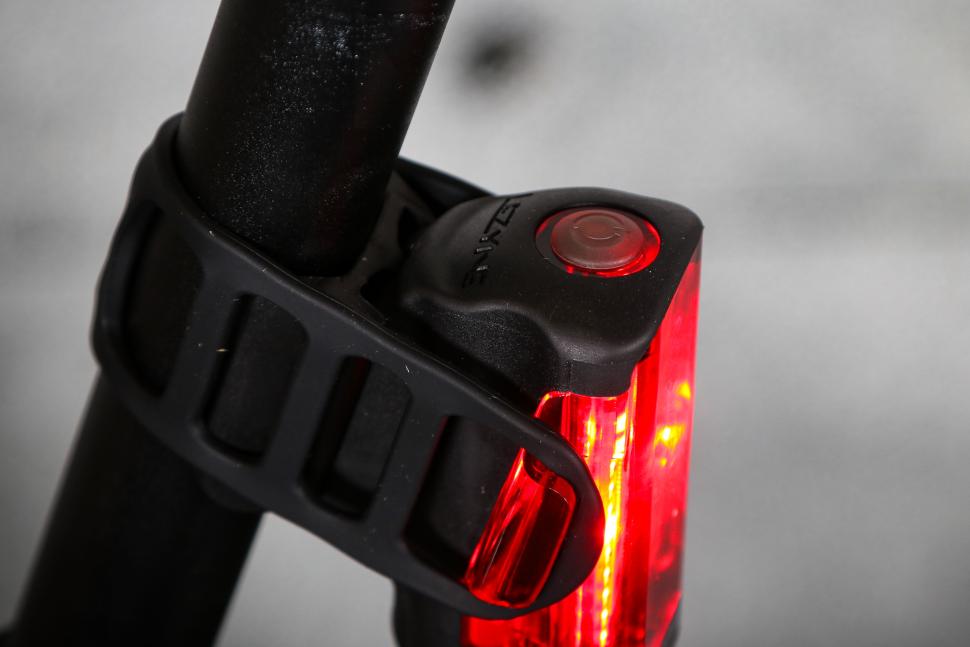
One thing to bear in mind with these lights (both front and rear) is that a two-second press on the button puts them in standby mode. From here, they can be activated by either the app, or starting a ride on your GPS head unit if you have auto-control switched on. If you leave the lights on standby, then obviously they still consume some battery power. That means you can set off on a ride with less than the 100% battery power that you thought you had if you didn’t press the buttons for long enough.
You can switch the lights off completely with a five-second button press, to preserve battery life. Both lights will display a rapid flash if you’ve held the button for long enough, so it’s really not that hard, once you know that this is what you have to do. Maybe I should have read the manual earlier.
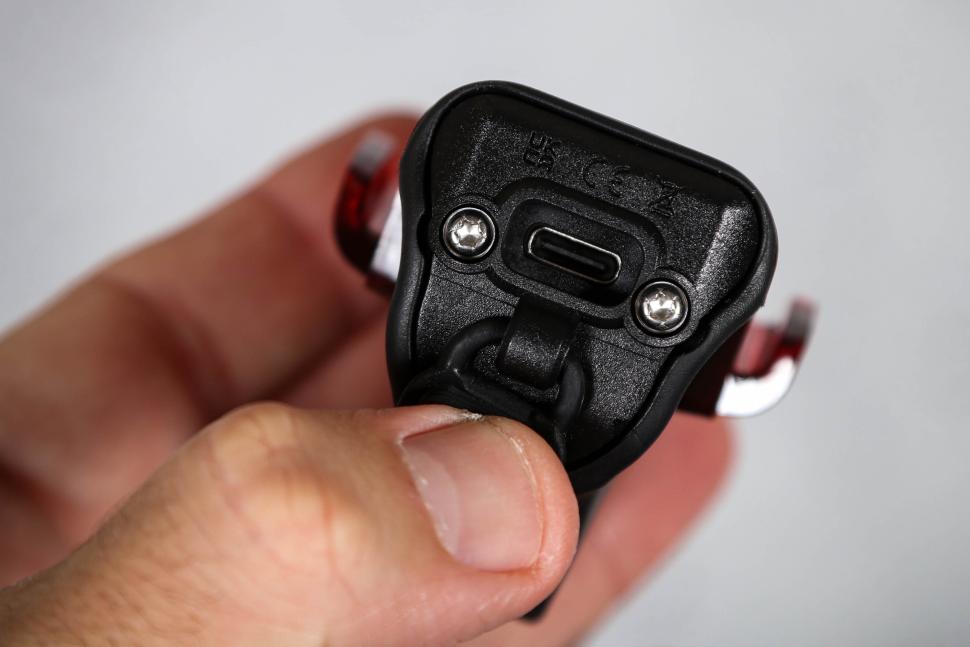
The Radar Drive charges via USB-C as does every other radar unit apart from the Garmin, which is still on micro-USB.

Continuing with our winners and losers theme here: the Radar Drive has it. Best battery life, and USB-C charging.
Rear light
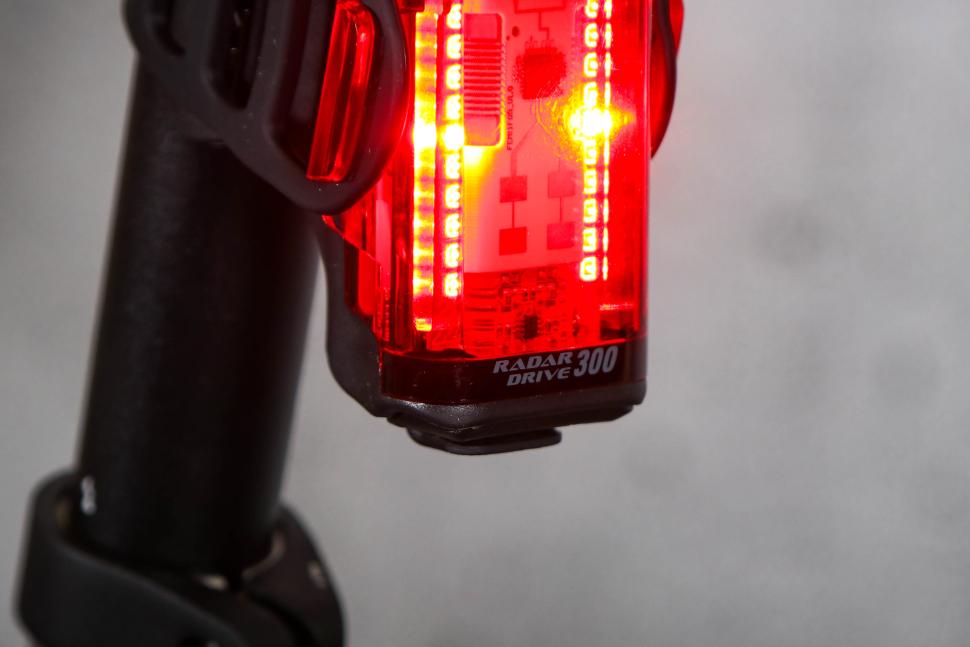
The Radar Drive’s rear light element is excellent. The light itself is extremely bright, and the side visibility is outstanding. It easily outperforms the other radar lights I’m comparing here.
When the Radar Drive detects a car, the flash pattern changes, to a brightness of 150 lumens according to the manual. This isn’t incredibly obvious if you are already in the 300-lumen day flash mode, but noticeably brighter in other modes. This is a setting that you can turn off using the app.
The Radar Drive does not have a brake light function, unlike the Wahoo Trackr, the only radar light that does. Though I don’t rate brake lights particularly, as I think they’re more a gimmick than actually being useful. Making the light brighter when a car is detected regardless of whether you’re braking or not is more useful than making the light brighter when you’re braking, when there might not be anything behind you.
Mounting
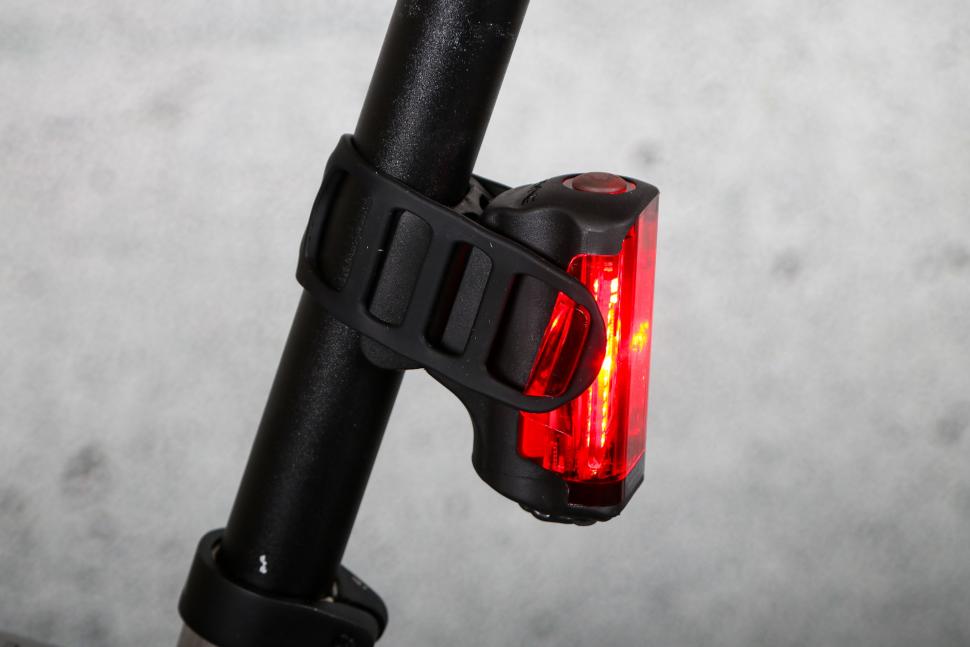
The Lezyne Radar Drive 300 Rear Light comes with a couple of different ladder straps and inserts for square and aero seatposts. While mounting is easy, I much prefer a quarter-turn style mount as used by Garmin and Wahoo. This is especially so with the Garmin, where there is a host of aftermarket brackets to mount the light pretty much anywhere you like.
For me, this is the only area where I feel a bit let down by the Radar Drive. The ladder strap works, but your only option for mounting is a seatpost, which can be problematic if you’re on a smaller frame and/or you want to carry a saddle bag. The ladder strap feels a bit cheap and flimsy as well.
For me the Garmin still wins here, with the Wahoo a close second. While the Radar Drive ladder strap is a bit flimsy, I think it’s still less fiddly, and more versatile, than Trek’s Carback mount.
Value
At £170, the Lezyne Radar Drive costs the same as the Varia and the Carback, with the Wahoo a tenner more.
The Garmin Varia RTL515 has a great rear light and a reliable alert system.
The Trek Carback also has a good rear light and a visible battery gauge – and a great name! – but its radar doesn’t work as well as the alternatives.
If you’re looking to spend less, then the £99 Magene L508 is the one for you. It has a good radar unit and is pleasingly easy to set up. It’s not quite as good as the Wahoo, Varia or Radar Drive, but it’s much better than not having a radar.
Of course, you don’t have to have a radar – you can get a decent rear light for much less – but I wouldn’t be without one.
And if you are just looking for a rear light, check out our best rear bike lights buyer’s guide.
Conclusion
There is a lot to like about Lezyne’s Radar Drive. The rear light itself is excellent with really good side visibility, and the battery life is great. It has more connectivity options than any other radar light, and detection is plenty good, if not quite as good as the Varia, which in this area is still best-in-class. Charging is via USB-C, so no complaints there, and it costs the same as the Varia.
The ladder strap mount is a bit of a let-down, but it’s not that big a deal really, and the occasional fiddle with the app if you’re running the React Drive front light is worth the added alert, in my opinion.
Verdict
Super-bright radar light that outperforms most others – though the mount is a bit of a let-down.
All the deals displayed on our review pages are pulled from a constantly updating database feed of the best affiliate deals available. The criteria for deciding on what are the best deals is who is offering the lowest, delivered price. In most cases we will be showing the very best deal available online, but sometimes you may be able to find an item cheaper. If you can please feel free to post a link in the comments box below. To find out more about affiliate links on road.cc click here.
road.cc test report
Make and model: Lezyne Radar Drive 300 rear light
Size tested: n/a
Tell us what the light is for, and who it’s aimed at. What do the manufacturers say about it? How does that compare to your own feelings about it?
Lezyne says:
“The Lezyne Radar Drive is a high-performance rear bike light designed to enhance rider safety and visibility through advanced radar-based vehicle detection and powerful LED output. Its custom-tuned radar system detects rear-approaching vehicles in real time from up to 150 metres away. The light can operate independently as a taillight featuring its own unique flash pattern that’s triggered when a vehicle is detected.
The Radar Drive can seamlessly pair with the Lezyne React Drive front bike light to create an innovative system. This system can operate independently of a phone app or bike computer, providing audio and visual alerts through the React Drive’s built-in features. Alternatively, when paired with compatible GPS bike computers or the Lezyne Radar Ally smartphone app, it delivers real-time audio and visual alerts.
The light offers seven output modes, including a highly disruptive 300-lumen daytime flash. Its co-molded construction is durable, waterproof (IPX7), compact, and boasts its own unique styling. Additional features include a USB-C charging port, up to 20 hours of battery runtime, and a versatile strap-mount system compatible with round, aero, and D-shaped seatposts.”
Tell us some more about the technical aspects of the light?
Lezyne says:
Innovative, powerful LED rear bike light
Advanced radar technology
150-metres vehicle detection
Disruptive 300-lumen daytime flash
Up to 20 hours of battery runtime
Engineered lens and optics: 270° visibility
Durable, lightweight co-molded construction
IPX7 waterproof with USB-C charging port
Dual Bluetooth and Ant+ wireless system
Multiple device connection options
Pairs with React Drive Front bike light
Part of the first-of-its-kind Radar React System
App-based alerts with Lezyne Radar Ally app (iOS; Android)
Radar alerts with compatible GPS bike computers
Seven outputs modes
Automatic vehicle-detection alert flash
Securely mounts to most seatpost shapes
Includes D-post and aero post adaptors
The light is easy enough to use, but needed reconnecting to my head unit or to the front light every now and again. It is good, but needs the occasional fiddle.
The strap works well enough, but it feels a bit cheap and flimsy for a £170 rear light.
It has an IPX7 rating (meaning it’s totally waterproof) – just like the Garmin and Wahoo radar lights.
The light is exceptionally bright and side visibility is excellent.
It costs the same as the Garmin, though the Garmin’s detection is better, as is its mount.
Tell us how the light performed overall when used for its designed purpose
Once mounted, this light works well. Visibility to other road users is superb, and the detection and alerts are plenty good enough.
Tell us what you particularly liked about the light
The all-round visibility and the battery life.
Tell us what you particularly disliked about the light
The mounting strap is a little flimsy and fiddly for a £170 product.
How does the price compare to that of similar products in the market, including ones recently tested on road.cc?
It costs the same as the Garmin Varia, which for me is still best-in-class. The Magene radar costs considerably less at £99.99, but it’s not quite as good as the Varia.
Did you enjoy using the light? Yes
Would you consider buying the light? Yes
Would you recommend the light to a friend? Yes – if they can live with the mounting strap.
Use this box to explain your overall score
This is a very good radar light, and if detection was as good as the Varia, and it used the Garmin quarter turn mounting bracket I would have given it a clear ten. As it is, it outperforms the Varia in every other category that I care about.
About the tester
Age: 44 Height: 1.78m Weight: 77kg
I usually ride: All of them! My best bike is: Ribble Endurance SL disc
I’ve been riding for: Over 20 years I ride: Most days I would class myself as: Expert
I regularly do the following types of riding: cyclo cross, commuting, touring, club rides, mtb, Zwift


