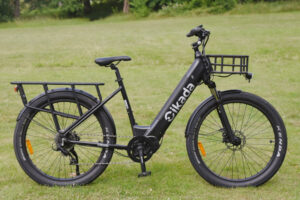
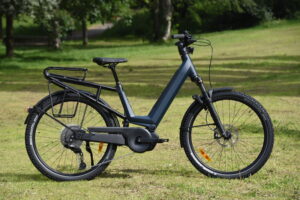
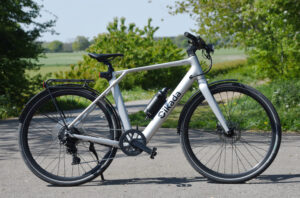
On paper, the Engwe P275 SE looks promising: a virtually silent 250W torque-sensing motor, hydraulic brakes, integrated lights, mudguards, and a sturdy rear rack – all for a whisker over £1,000. It’s aimed squarely at commuters and leisure riders who want a reliable, no-nonsense e-bike that can handle the daily grind without weighing a ton or looking like something from a sci-fi film.
Engwe, a Chinese direct-to-consumer brand, built its name on heavy, fat-tyre e-bikes that were often impractical for everyday use and didn’t always comply with UK e-bike laws. The P275 SE is the latest example of a change in direction. It’s lighter, more refined, and far more commuter-friendly.
It’s part of Engwe’s new generation of sensible e-bikes, moving away from the ‘fat bike’ image towards bikes that actually feel at home in city traffic.
First ride
.jpg)
Unboxing the P275 SE was fairly straightforward, though it does need some minor assembly out of the box. You’ll need to fit the front wheel, mudguard, handlebars, rear rack and light. It’s simple enough if you’ve built bikes before, but those not mechanically minded might find it a bit daunting.
Once assembled, the overall fit and finish looked good, with tidy welds, clean lines, and a well-integrated battery, making it look more upmarket than its price would suggest.
.jpg)
Out on the road, the P275 SE felt solid and composed from the off. The torque sensor, in particular, is a huge step forward compared to older Engwe systems, which often behaved more like basic cadence sensors. On this bike, assistance comes in smoothly and naturally. The power ramps up the moment you start pedalling, then gently fades as you pass the 15.5mph assistance limit.
All five assistance levels reach that same top speed, but with varying degrees of motor power, giving you consistent behaviour across the board.
The 250W rear hub motor is impressively quiet and well-matched to gentle rolling terrain. In town, it’s smooth and predictable, with enough punch to make stop-start traffic feel effortless.
It’s not a hill-climber’s dream, though. On anything above a 10 per cent gradient, you’ll start to feel its limits, and on my local 25 per cent climb, I had to stand on the pedals and huff and puff my way to the top. For flatter commutes and moderate hills, however, it’s absolutely fine.
.jpg)
On mixed roads and cycle paths, the P275 SE handles predictably and inspires confidence. The suspension fork might be basic, but paired with the large 27.5in × 1.95in CST tyres, it gives a surprisingly smooth, almost plush ride. Those tyres deserve a special mention. After two months of regular use, including plenty of urban riding, and thorn-strewn country lanes, I’ve had no punctures. They offer a decent balance of grip and low(ish) rolling resistance, making the bike comfortable on everything from city streets to pot-holed lanes.
Braking is handled by unbranded hydraulic callipers, front and rear. They took a few rides to bed in, but once settled, performance was more than adequate. I did notice a touch of fade on long, steep descents, but for city use and moderate hills, they provide more than enough bite and control. Handling is predictable, the steering is neutral, and the bike tracks nicely through bends without any twitchiness.
.jpg)
Comfort is another strong point. The saddle strikes a good balance between firmness and padding, while the step-through frame, upright riding position, and swept-back handlebars make for relaxing longer rides.
Between the adjustable stem and seatpost, the bike accommodates a wide range of rider heights — I’m 6ft and found it ideal, but my 5ft 6in daughter also felt comfortable and confident riding it.
Specification
The P275 SE’s 6061 aluminium step-through frame feels reassuringly solid without being overly heavy. At around 28kg, it’s no lightweight, but that mass helps give it a planted, stable feel on the road. The finish is tidy, the internal cable routing neat, and nothing rattles – which can’t always be said for bikes at this price point.
As mentioned above, the 250W rear hub motor provides smooth, measured assistance rather than raw torque. What impressed me was the way it interacts with the torque sensor. The power delivery feels intuitive and responsive, making the bike feel far more “connected” than cheaper cadence sensor setups. It’s particularly good in traffic, where you can modulate effort naturally without any jerky surges.
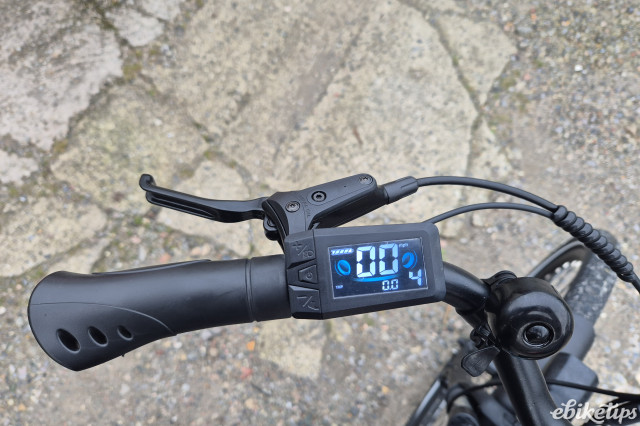
The small colour display is simple but functional, showing speed, assistance level and battery status. It’s easy to read in daylight and refreshingly uncluttered. The companion app works fine for basic settings and ride data, though it’s hardly essential — most riders will be happy using just the display.
Power comes from a 450Wh battery neatly integrated into the down tube. It locks securely, can be removed for charging, and keeps the bike’s balance nicely centred. Engwe claims up to 62 miles of range, but in real world use, I’ve been getting between 25 and 30 miles per charge, depending on terrain and assistance level. That’s plenty for most commutes or errands – in my case, daily shopping trips of a couple of miles each way only needed a weekly top-up.
.jpg)
I have however also used the P275 SE for food-delivery shifts in Plymouth — typically 30 miles and about 3,000ft of climbing – and the battery will just about make it through one shift before conking out.
When the charge drops to two bars, the motor starts cutting out in higher power modes and flashes Error 4 on the display. Initially, I thought this was a fault, but it turns out it’s Engwe’s under-voltage protection system – a built-in safety feature to prevent the battery from over-discharging. It seems slightly odd that it kicks in with two bars still showing, but apparently it’s the way it’s designed.
.jpg)
Should you run out of juice completely, the P275 SE is still rideable. It feels heavier and slower than a regular bike, but pedalling without power is manageable. I’ve done the five-mile ride home from Plymouth without too much effort, which isn’t something I could say about any of their fat tyre models.
The Shimano 7-speed drivetrain is simple but effective. The thumb shifter is crisp, and gear changes are smooth, even under load. It’s a setup that just works — low maintenance, inexpensive to replace parts, and perfectly matched to an e-bike of this style.
The 27.5in wheels paired with those CST 1.95in tyres deserve praise again for their comfort and durability. The combination offers a steady, forgiving ride without feeling sluggish, and the tyres’ semi-slick tread rolls quietly while still gripping well in the wet.
.jpg)
Engwe hasn’t skimped on the finishing kit either. Full-length mudguards do a proper job of keeping muck off your back, and the rear rack feels sturdy enough for a decent-sized pannier or delivery bag. The integrated lights are powered by the main battery and are fine for town use – though you’d want an extra rechargeable front light for unlit country lanes. A chain guard and kickstand finish off the practical touches, giving the bike a genuinely commuter-ready feel.
Value
The ADO Air 28 is a similar sort of urban step-through. It’s a little more expensive with an RRP of £1,399 but is conspicuously discounted to £999 at the time of writing. Note that it’s a single-speed, however, if you’re concerned about hills.
Another single-speed option is the Tenways CGO800S. This is a little more expensive at £1,499, down from £1,699. It also has an 8-speed sibling: the CG800S Plus. Despite similarities in name and appearance, the Plus employs a different motor – the Tenways-branded C9 motor we tested and liked on the CGO600 Plus. This model costs £1,799 though, so we’re moving towards a different price bracket.
Finally, Engwe’s own MapFour N1 Air, now £1,399, impressed us when we tested it earlier this year. It’s a fairly lightweight carbon commuter weighing 18.1kg. It’s fast and nimble, but its smaller 360Wh battery might make it less practical for longer daily commutes.
Conclusion
Having tested countless Engwe bikes over the years, it’s refreshing to see a real shift in direction. The P275 SE is a far cry from the brand’s heavy fat-tyre bikes. It’s a good all-rounder that’s surprisingly refined, comfortable, and genuinely useful as a daily hack.
It’s not perfect: power is inadequate on very steep hills, and the lights aren’t bright enough for dark country lanes. But for the money, you’re getting a well-built, torque-sensor e-bike with real commuting credentials. If you live somewhere hilly, you might be better off with a mid-drive alternative, but for the majority of riders, the P275 SE hits the sweet spot between affordability, comfort, and everyday usability.
All the deals displayed on our review pages are pulled from a constantly updating database feed of the best affiliate deals available. The criteria for deciding on what are the best deals is who is offering the lowest, delivered price. In most cases we will be showing the very best deal available online, but sometimes you may be able to find an item cheaper. If you can please feel free to post a link in the comments box below. To find out more about affiliate links on road.cc click here.