



Hunt has unveiled its new 5AM Limitless Ti_UD Carbon Spoke Wheelset, which it describes as “the fastest all-round road racing wheel system we have ever made or tested” with a 30mm tyre fitted. As well as the aero performance, Hunt reckons its new wheels, designed for flat and rolling terrain, offer “industry-leading” crosswind stability and a low weight (1,212g) that’s partly down to the use of Vonoa Ti_UD carbon spokes.
“This is the third-generation Limitless wheel and we are confident that with a 30mm tyre fitted this is the fastest thing you can buy, and that’s a really cool place to be,” says Hunt’s senior development engineer Paddy Brown.
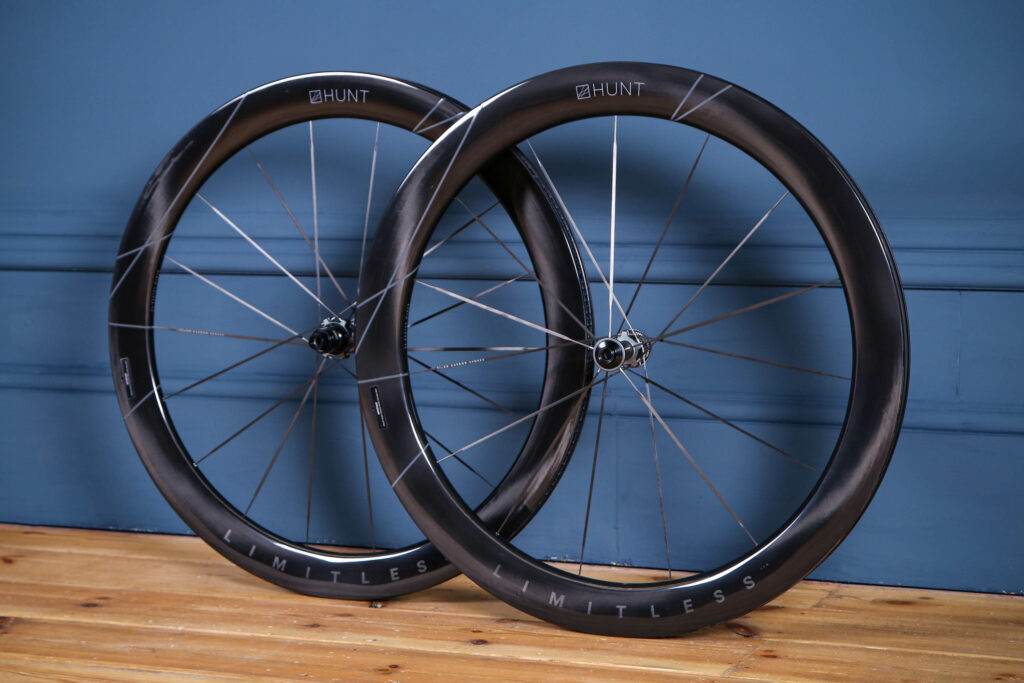
Now, before we start, let’s say that it’s very difficult to compare the aero performance of different wheels in a meaningful way because of variations in rim depths, meaning that you’re rarely comparing like with like. Although it’s certainly not always the case, deeper aero rims tend to perform better than shallower rims in the wind tunnel, so they’ll generally have an advantage (it’s much more complicated than that, but as a rule, all other things being equal, and various other caveats).
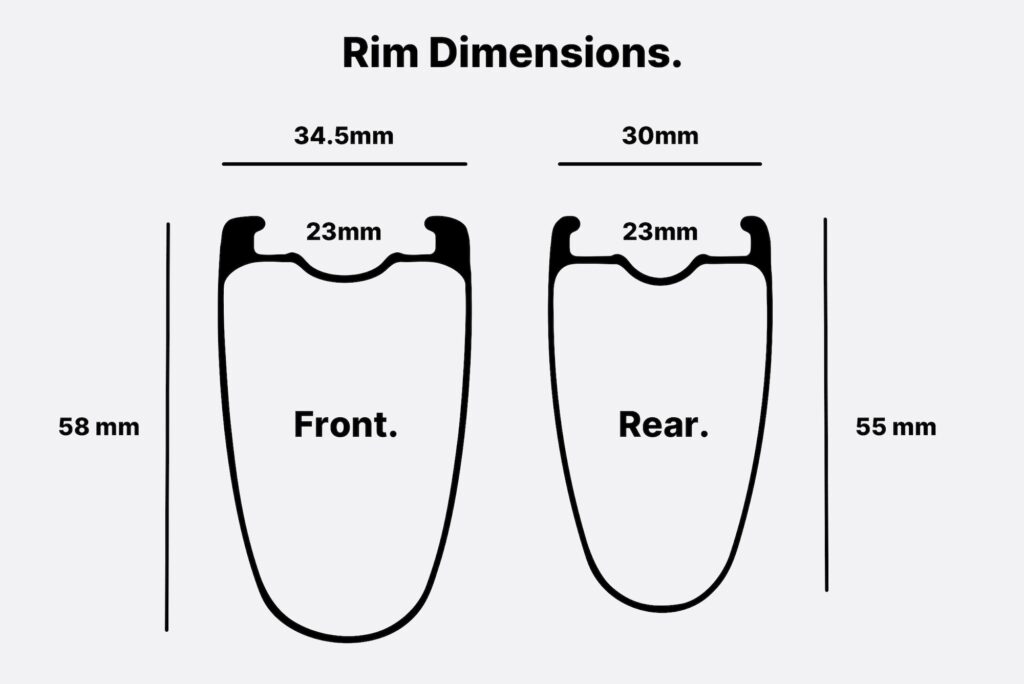
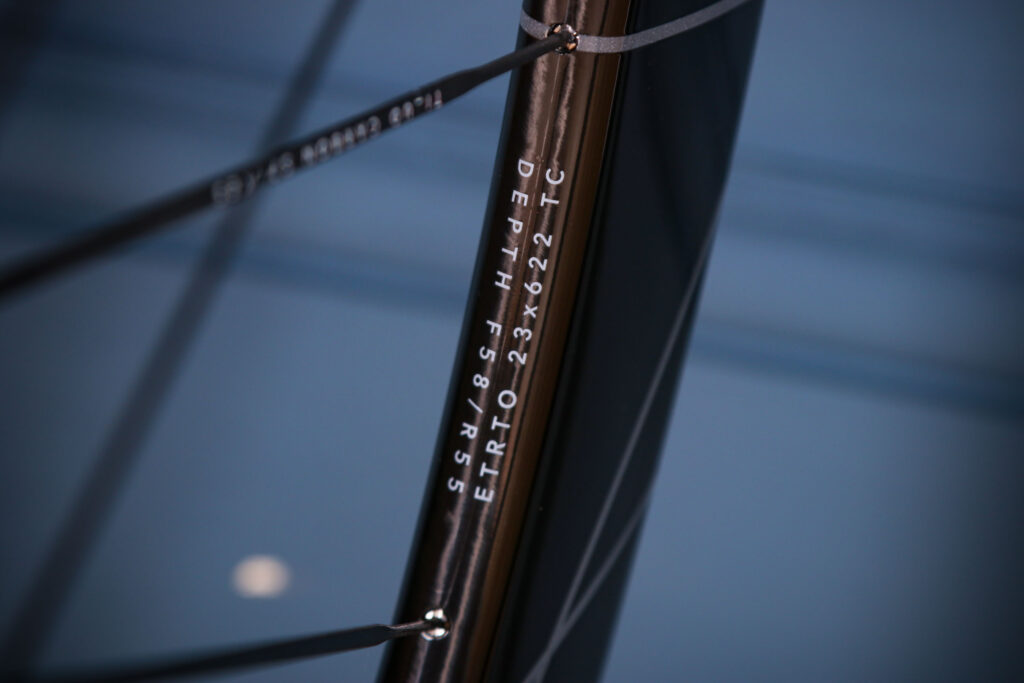
The 5AM Limitless Ti_UD Carbon Spoke Wheelset has a rim depth of 58mm up front, and 55mm at the rear. Hunt figures that it’s more important to have a deeper wheel at the front because that’s where it can have the most aero benefit, while you can save a little weight by having a slightly shallower rim at the rear (Roval, for example, uses a 51mm front rim for its Roval Rapide CLX III wheelset, and 48mm at the rear for similar reasons)
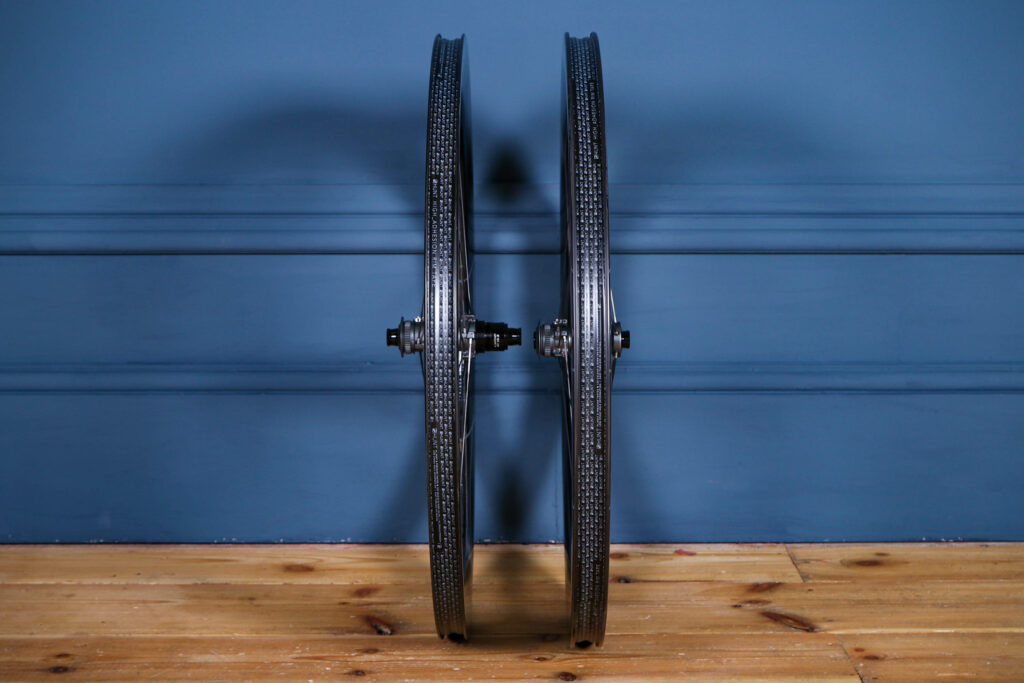
Paddy Brown, Hunt’s senior development engineer, says, “We’ve taken the concept of putting more material in the front rim that we used on the SUB50s, where we had a wider rim but of the same depth on the front.
“Now we’ve taken that a step further and gone to a slightly shallower and narrower rim on the rear. We’re looking at about a 50g lighter rim at the rear than on the front. When you’re talking about a 1,212g pair of nearly-60mm deep wheels with exceptional aero performance and really lightweight, it’s significant. It’s the ideal wheel for something like Milan-San Remo, where you want peak climbing performance and then aero gains that’ll be extremely important in a sprint finish. You can’t have a weak spot.”
A 58mm/55mm combo is pretty deep for a road racing wheelset, but Roval uses 63mm/58mm for its Rapide Sprint, and Scope goes with 65mm/65mm for its Artech 6.
Hunt says that its 5AM Limitless Ti_UD Carbon Spoke Wheelset is more aerodynamically efficient than either of those two models, according to data from testing with a full bike fitted with 30mm Schwalbe Pro One tyres. The 1,212g claimed weight is also impressive compared with competitors of a similar depth.
The aero credentials
Not surprisingly, Hunt is all about telling an aerodynamics story here.
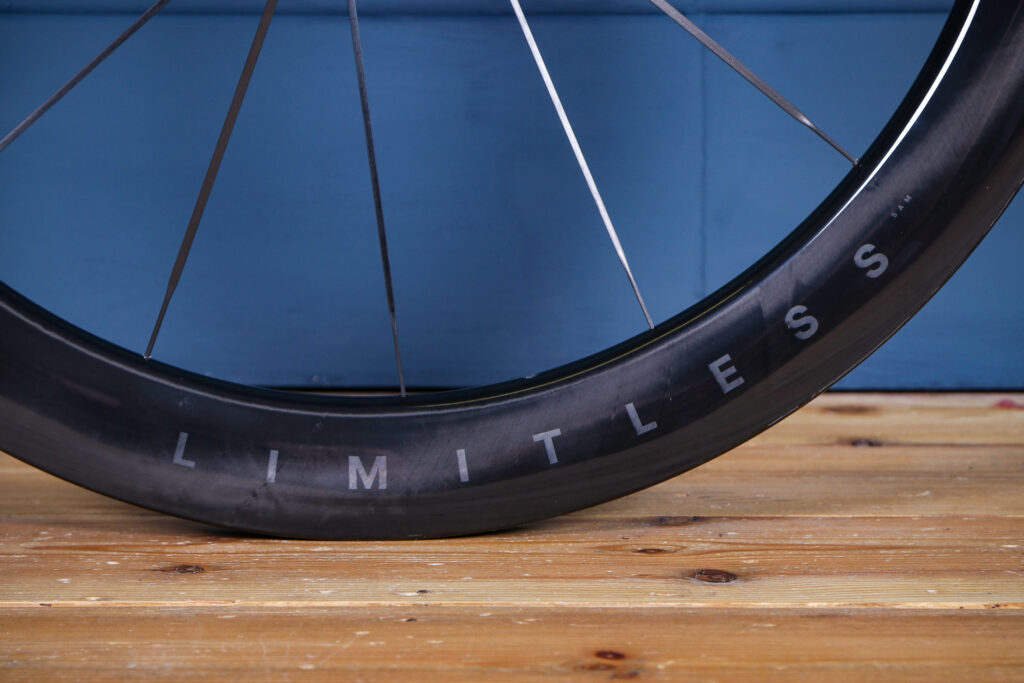
“The front wheel encounters clean air, presenting the greatest opportunity to reduce drag,” says Hunt. “By increasing rim depth and width while minimising hub and spoke drag with a reduced spoke count and hidden spoke nipples, the 5AM system maximises aerodynamic efficiency where it matters most. Patented Limitless Technology in the front wheel enables a wider aerodynamic shape without the weight penalty, by utilising low-density structural polymer (0.7g/cm3) moulded into the rim sidewall between carbon layers (1.6g/cm3). The wider, blunt rim shape maintains laminar airflow (attachment) through higher wind angles, resulting in more stable handling characteristics, as well as preparing the airflow for the wider-than-tyres frame down tube.
“The rear wheel operates in turbulent airflow, downstream of the front wheel, frame and rider movement. In this position, minimising weight and maximising power transfer becomes more important than absolute aerodynamic drag reduction. The rear wheel therefore leverages a shallower, narrower rim paired with additional spokes to deliver responsiveness and efficient transmission of every watt to the road.”
That’s the broad-brush explanation, and you can pick the bones out of Hunt’s findings here:
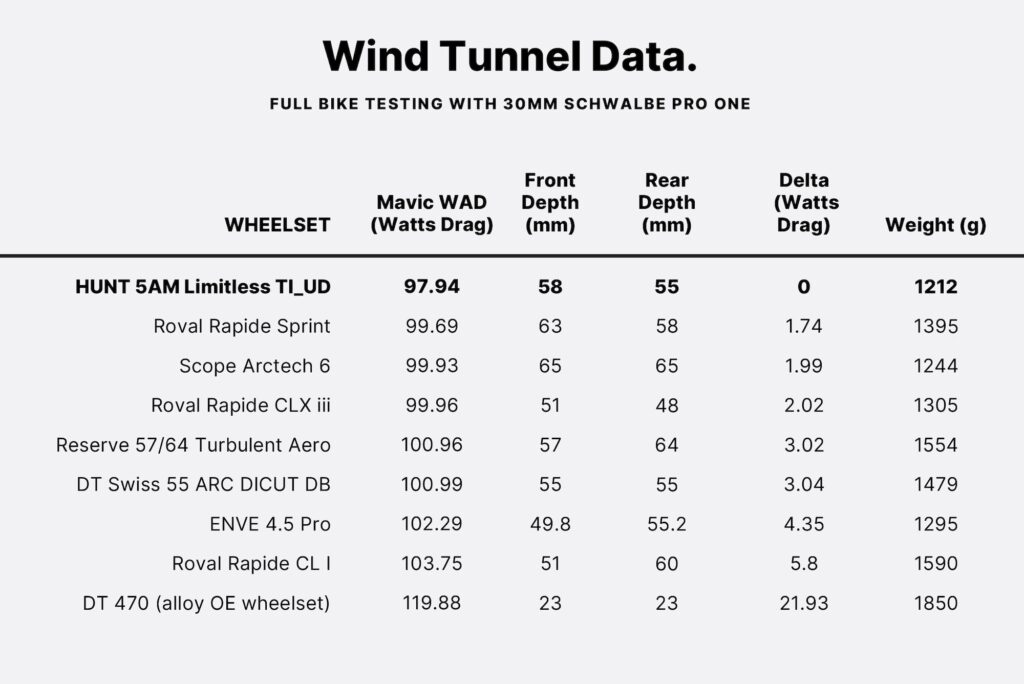
Hunt boasts that the 5AM Limitless Ti_UD is 4.35 watts faster than ENVE 4.5 Pro (as ridden by Tadej Pogacar to win the 2025 Tour de France) in the wind tunnel at 45km/h (28mph) – yaw angles from 20° to -20° – 1.74 watts faster than Roval Rapide Sprint with 30mm tyres, and 1.99 watts faster than Scope Artech 6 – all fitted with 30mm tyres.
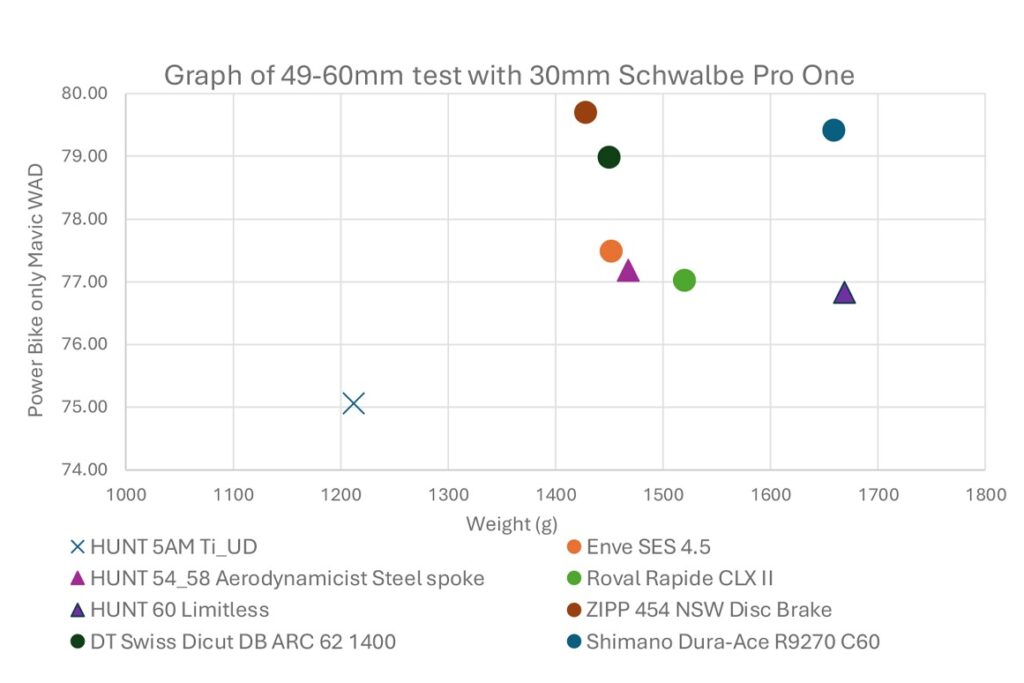
The Enve 4.5 Pro front wheel is considerably shallower than the Hunt 5AM Limitless Ti_UD – 49.8mm versus 58mm – but the wheelset is 83g heavier, according to Hunt’s figures.
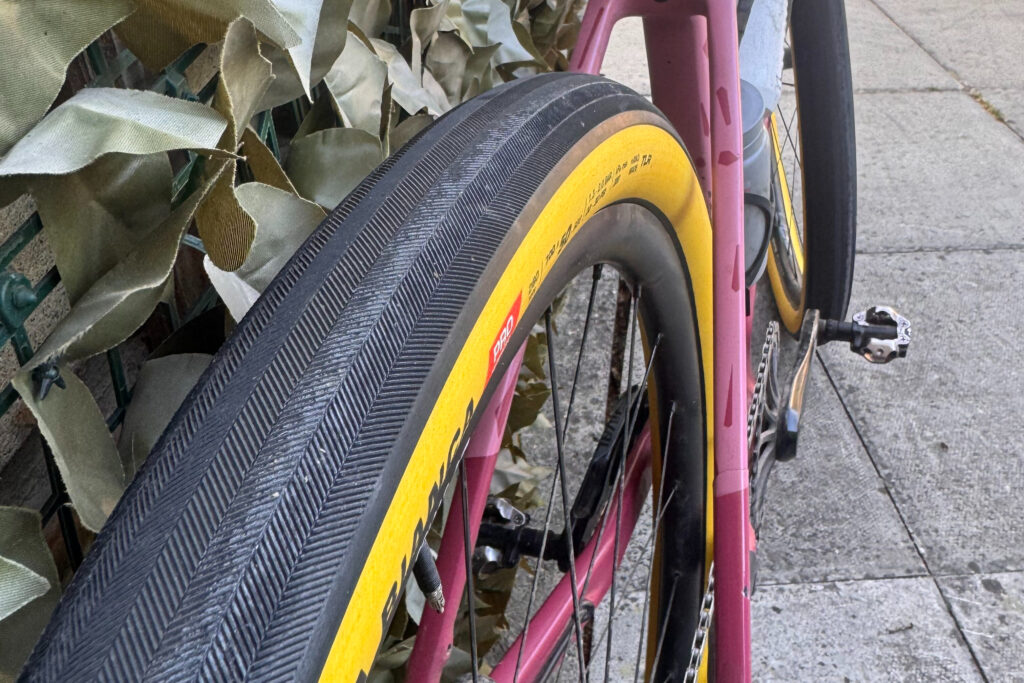
Testing the wheels with 30mm tyres fitted is Hunt’s choice. The other three models are all optimised for 28mm tyres, according to their manufacturers.
For example, Scope says of its Artech 6, “The 23mm internal width hooked tyre bed is aerodynamically optimised for 28mm clincher and tubeless tyres for a perfect balance between rolling resistance and comfort.”

Hunt has tested the wheels with 28mm tyres too (see above), but it is focusing most on performance with 30mm tyres because, it says, most WorldTour teams will be using that size this year.
Hunt has also been testing on an outdoor circuit with Dr Barnaby Garrood at Aerosensor – target speed 41km/h (25.5mph) – and says that concluded the 5AM Limitless Ti_UD is 5.9 watts faster than Scope Artech 6 and 8.5 watts faster than the Zipp 404 Firecrest, again with 30mm tyres fitted. You can check out the testing protocol/conditions in a detailed white paper that Hunt has produced and published on its website. In fact, if you’re in any way interested in the engineering behind these wheels, definitely read the white paper.
5-Stage Aero Development Process
Aerosensor? It’s a portable aerodynamic drag measurement system for cyclists that we covered as long ago as 2022. It allows you to measure your aero efficiency as you ride in real-world conditions, and that brings us on to a new aspect of Hunt’s product development programme.
> Is Aerosensor the best system for reducing drag without a wind tunnel?
As is commonly the case, the process starts with CFD (computational fluid dynamics) simulations. Engineers analyse airflow around simplified wheel, tyre and bike models to understand how changes in rim shape, width and tyre interaction influence aerodynamic drag. Thousands of design variations can be tested rapidly in CFD, guiding which concepts move forward into physical testing.
Then Hunt goes through wind tunnel testing – first wheel-only, then wheel and bike, and finally wheel and pedalling rider. Each stage is more complex and hopefully more realistic than the last. Pedalling legs, moving feet and body position introduce significant turbulence, particularly around the rear wheel, for instance, and testing without a rider won’t tell you about any of that.
Hunt says, “This stage highlights why front and rear wheels behave differently aerodynamically and informs [our] system-based design process where each wheel is optimised for its specific aerodynamic environment.”
It’s the fifth stage – real-world sensor-based validation – that’s more unexpected.
Hunt says, “Final validation takes place outdoors using sensor-based aerodynamic testing with a full rider and bike system, conducted on velodromes, controlled road courses, or runways.”
It is talking about Velosensor and Dunsfold Aerodrome in Surrey, famously known as the Top Gear track.
“Hunt partners with Dr Barnaby Garrood (PhD) at Aerosensor to capture aerodynamic performance in real riding conditions. This stage measures factors that are otherwise difficult to capture in the wind tunnel. For example, wheel system rotational drag is most effectively measured in real-world outdoor testing as all the power inputs and drag outputs can be measured and calculated.”
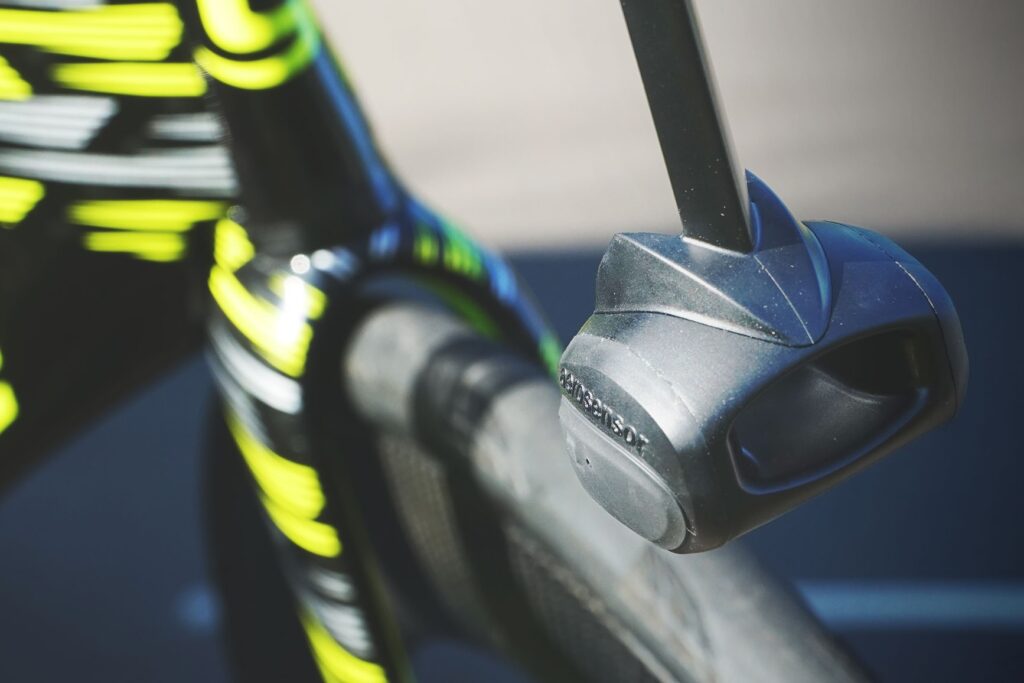
The Aerosensor system measures wind speed with an aerometer and accounts for gusts and variations in conditions over the test period. A laser body position sensor mounted on the stem helps the rider maintain the same position for every run. Hunt says that Aerosensor allows it to get meaningful results in real-world conditions.
“This final stage of validation has allowed us to accurately measure the impact of rotational drag for the first time, showing the impressive reduction we have managed to achieve through reduced front wheel spoke count and hidden spoke nipples,” says Hunt.
Rob Fields, Hunt’s head of engineering, says, “We see a lot of our competition only doing stages one and two. Some do three. I haven’t seen many wheel manufacturers do rider-on testing. Bike manufacturers tend to. They tend to use mannequins, and not many of them are doing outside aero testing. The Tour teams are doing some of that aero testing because we know that Aerosensor has worked with some. We are going to that level because we believe you have to understand all those different things to make people in the real world faster.
“We’ve spent serious time and money learning and experimenting to make sure that what we’re doing is right and relevant and to guide the decisions we make. This is us committing resources, energy and money to producing the best product.
“Wind tunnels are a great tool because they’re repeatable, but they are just a tool that doesn’t show you the entire story. In a wind tunnel, you are not capturing all of the force and energy that goes into riding a bike in the real world.
“In the wind tunnel, you drive the wheels from motors underneath. Now, some of that drag is captured in the balance, but some of it is not. You’re expending energy rotating those spokes through the air, and not all of that is captured in the wind tunnel but it is captured outside.
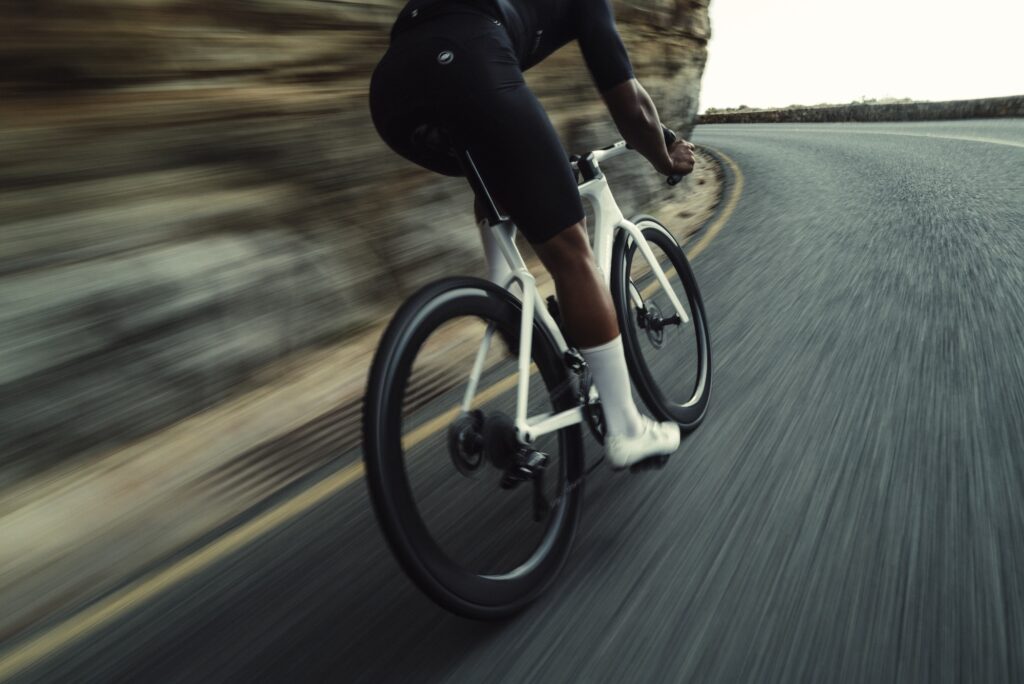
“This is why the outside aero testing is so important to us. The only way to measure how a real human is riding a bike outside is to do it. We’ve invested in the equipment and, more importantly, the time needed to get repeatable figures.
“This fifth stage of our aero testing, the validation: I haven’t seen anyone else doing it, and it feels like the only way to get representative real-world data, with the caveats that it is a bit messier and it is harder to do. We’ve built up the capability because we think it’s really important.”
About those spokes
The spokes are an important part of the puzzle.
Hunt has gone with Vonoa Ti_UD carbon spokes “to cut weight and sharpen responsiveness”. They’re unidirectional carbon fibre with titanium Ti6-4AL-4V hardware.
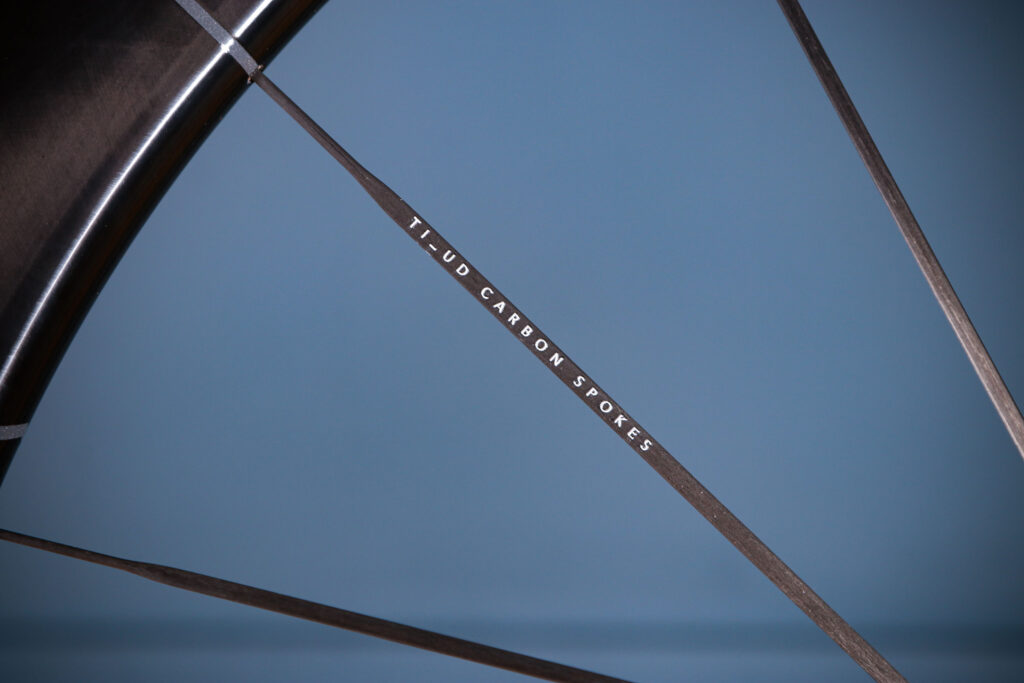
The bladed shape is designed to improve aerodynamic efficiency while maintaining strength and resistance to corrosion. Plus, the Vonoa Ti_UD carbon spokes have a tensile strength of over 400kgf per spoke (high-end steel spokes are around 290-300kgf), and Hunt can use relatively few of them – 15 at the front, 18 at the rear, laced in a 2:1 pattern (two to one side of the hub, one to the other) – to reduce rotational drag. Hunt has gone for internal spoke nipples for the same reason.
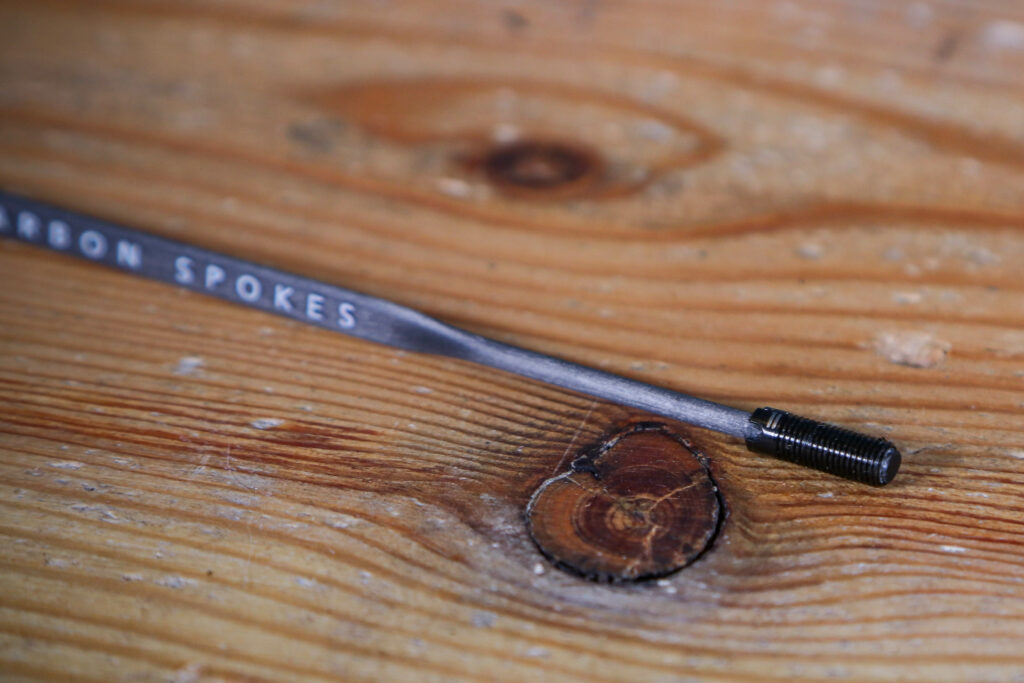
Rob Fields says, “As far as I can tell, we’re the only people playing a game where we want to lower spoke count, because we’ve seen a big aero improvement, particularly on the front wheel, hence we’ve gone to 15 spokes on the front.
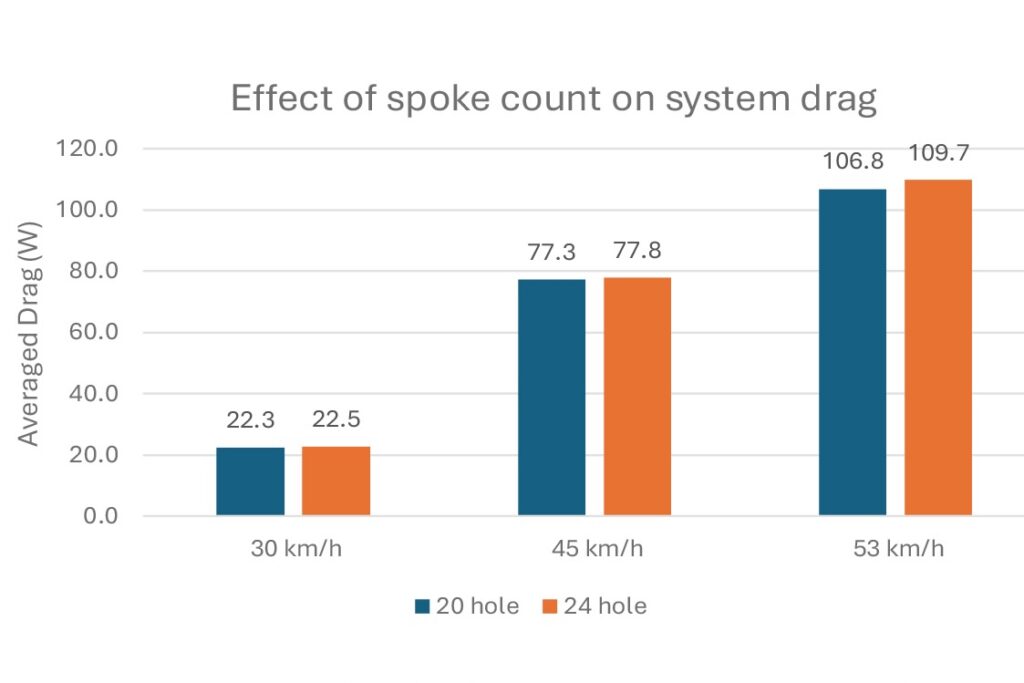
“The two-to-one lacing pattern and the radial [lacing] on one side on the front effectively hides as much of the spokes as close as you possibly can to the centre line of the wheel. You get more spokes out of the air at low yaw angles.
“We’ve also played with different spokes. Where you’ve got two-to-one lacing, we use thicker spokes on the side with fewer of them. A thicker spoke with more carbon balances out two thinner, smaller, lighter and more aerodynamic spokes, so it really is all about system optimisation. We’ve not just thrown all the same spokes at it, we’ve made conscious decisions to try and find all those little gains to make them as aero-efficient as possible. As far as I’m aware, no one is quite playing this level of optimisation.”
Each of the skinny spokes is a claimed 1.7g, the thicker ones slightly more.
What if you break a spoke, though? If you only have five going to one side of the front hub, snapping one of them has to be bad news, right?
Hunt counters that it’s very unlikely that you’ll break a spoke, but if you’re racing and you bust one, it’s likely that your race is over for the day unless you have the chance to swap to a new wheel.
Details and prices
5AM Limitless rims use a blend of T700, T800 and T1000 carbon fibres, combined with high-modulus Mitsubishi Pyrofil HR4012M. They’re hooked with a 23mm internal width. The 58mm deep front rim has a 34.5mm external width, while the 55mm deep rear measures 30mm externally.
They’re designed to support 28-50mm tyres – tubeless or standard clinchers. If you’re after maximum aerodynamic efficiency and stable crosswind handling, Hunt suggests you go for 28–30mm tyres.
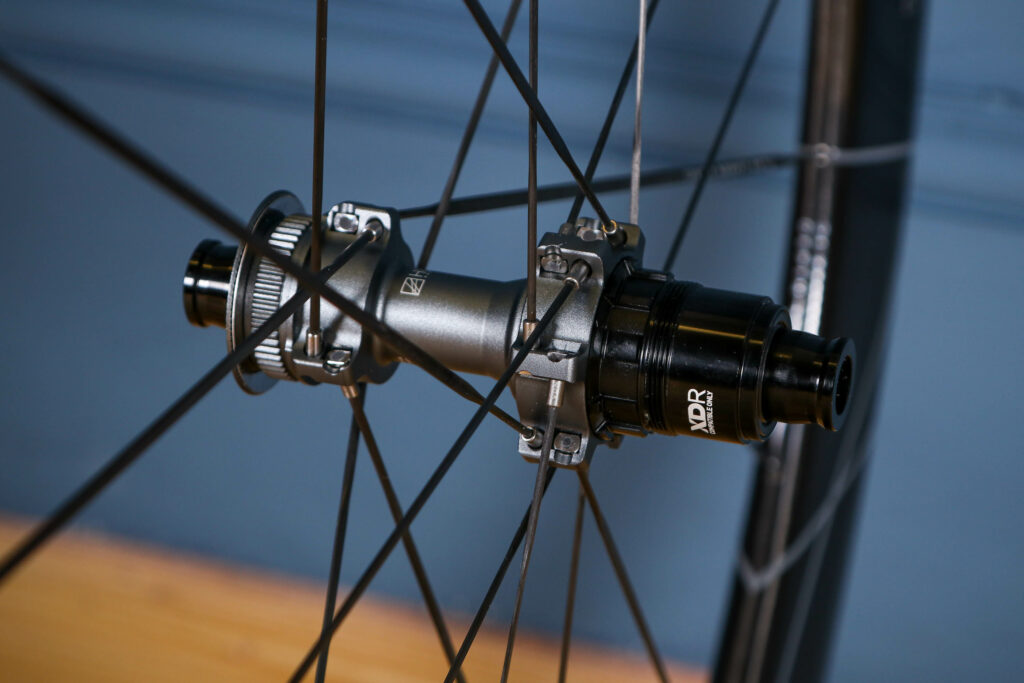
The hubs are Hunt’s own Chase SLC, CNC-machined 7075-T6 aluminium with a H_Ratchet DBL 48T drive system at the back for engagement in 7.5° when you start to pedal. The slim hubshell is designed to reduce aerodynamic drag.
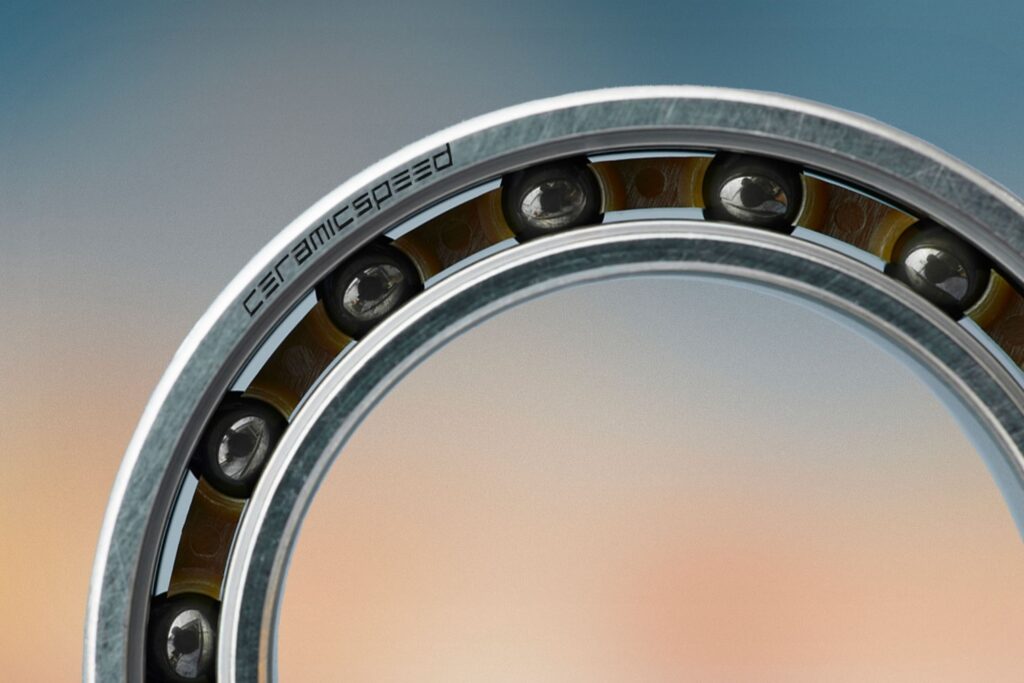
You have the choice of stainless steel or unreleased CeramicSpeed wheel bearings – hybrid-ceramic bearing balls with stainless steel races with “custom light-contact seals for improved protection while maintaining efficiency”. These ones are hand-built in Denmark and come with a lifetime warranty.
The Hunt 5AM Limitless Ti_UD Carbon Spoke Wheelset with stainless steel bearings are £1,999 while the CeramicSpeed version is £2,489.
If you’re interested in a deep dive into the development process and engineering behind the 5AM Limitless Ti_UD Carbon Spoke Wheelset, check out the 23-page white paper to support the launch that’s available on Hunt’s website.











5 thoughts on ““The fastest all-round road racing wheel system Hunt has ever made or tested”: UK brand says new wheels are quicker than the ones Pogacar used to win the Tour de France”
it has been nearly 2 weeks since the scribe fastest wheels in the world.!!
Yup fast must = expensive. …but how can four dozen tiny ceramic balls cost $£500? !!
how can four dozen tiny ceramic balls cost $£500?
When you can persuade people that ‘really expensive’ = ’really good’
I haven’t tried these but -4 years ago- I did try another Hunt wheelset that got the usual glowing review here and found them bad, frankly. There’s a reason why premium wheelset brands like Fulcrum, Princeton etc are expensive and it’s not simply just a higher profit margin.
I get that Hunt are major site sponsors but really…..
how can four dozen tiny ceramic balls cost $£500?
When you can persuade people that ‘really expensive’ = ’really good’