



The Sans Self-Cleaning Water Bottle is an interesting proposition for people who love clean living. It has some interesting tech but some practical drawbacks. The UV-C purification technology is genuinely clever, the insulation works well, and the battery lasts a long time. However, it is expensive with limited use, and needing to unscrew the lid to drink from it makes it difficult to recommend for use on the bike.
The Sans bottle is an interesting concept as it takes a proven technology – UV-C LED cleaning – and adds it to a water bottle.
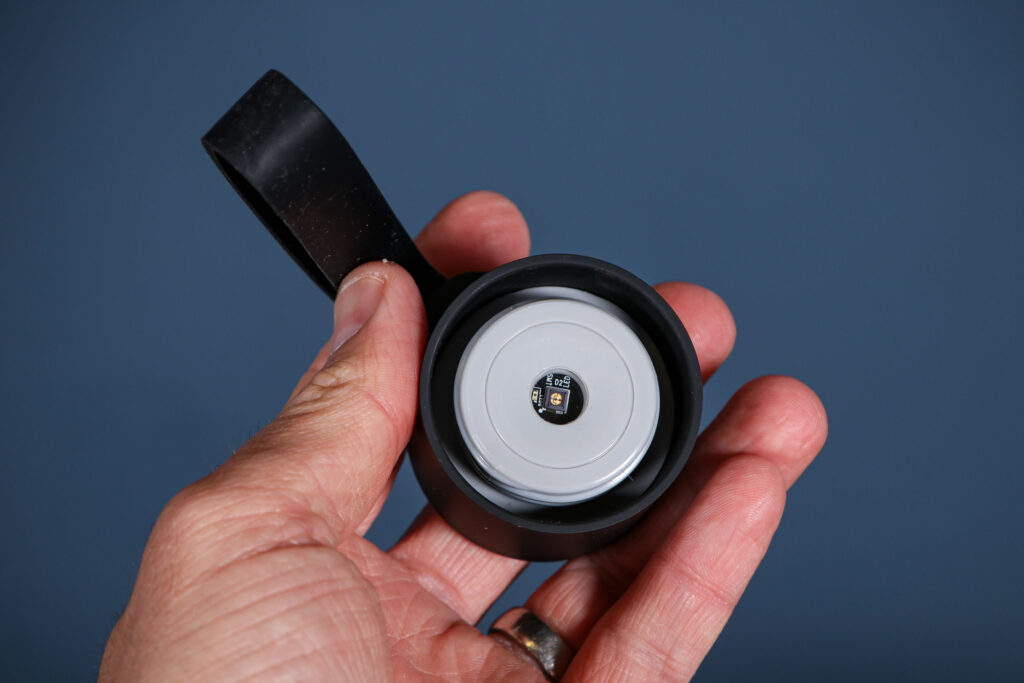
The lid has the LED lights built into the underside and when screwed on they clean the water in the bottle. It’s a clever design and this technology apparently destroys 99.9 per cent of bacteria in water, which may make it useful for wilderness bikepacking.
Build and design
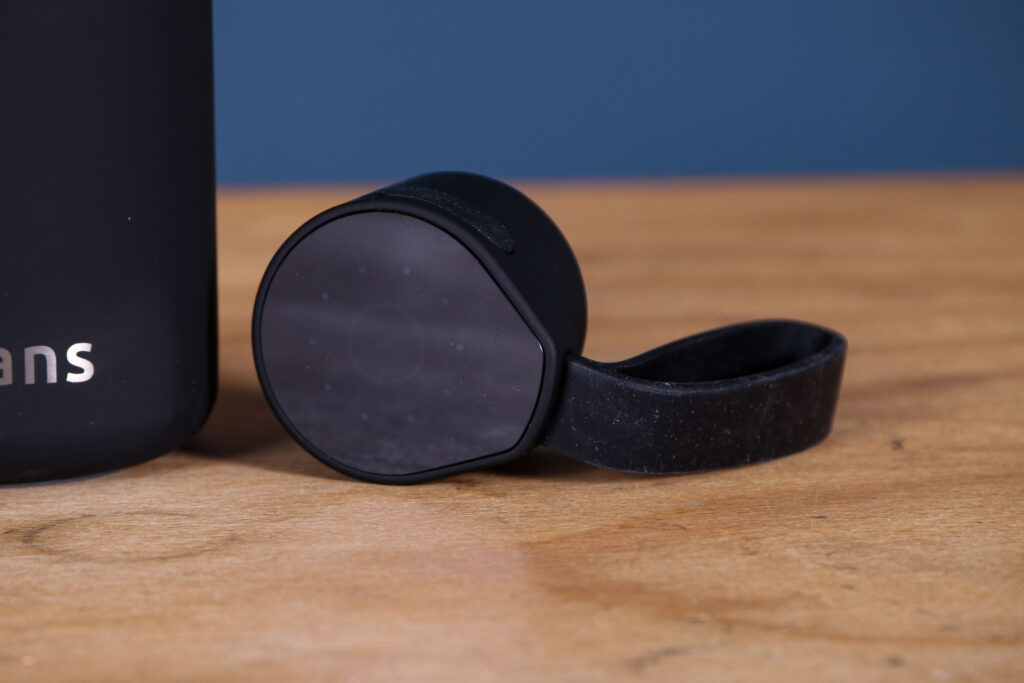
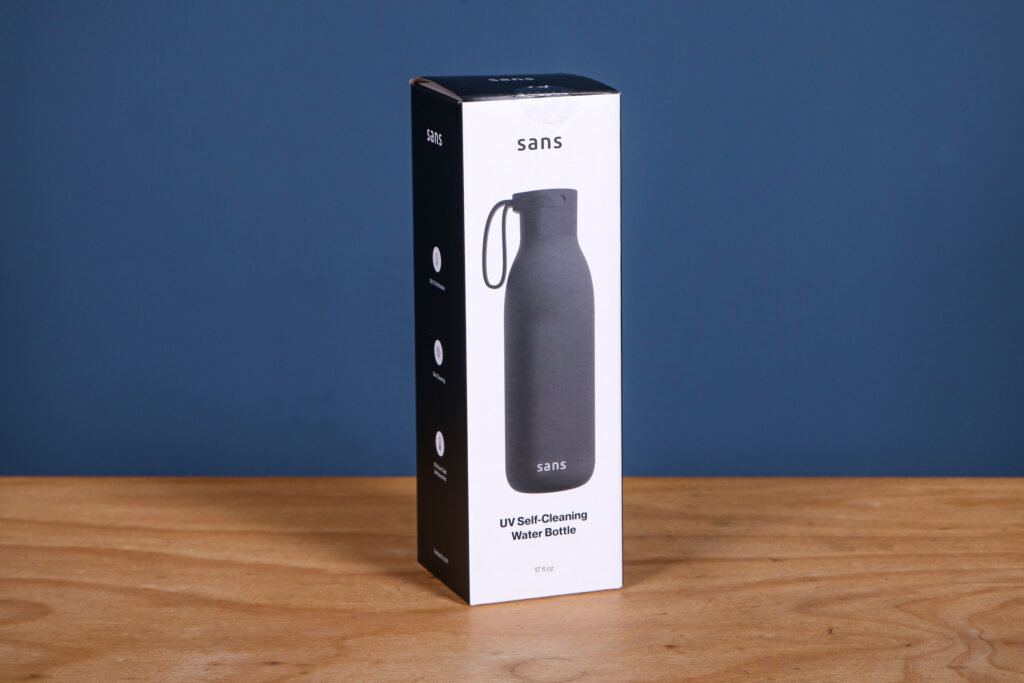
The Sans Self-Cleaning Water Bottle is a stainless steel double-walled bottle that keeps water cold for up to 24hrs and hot for up to 12. It’s solid in the hand, well-made, and comes in white or black with minimal branding. There’s a silicone carry loop at the top and the whole thing has a clean, considered look to it.
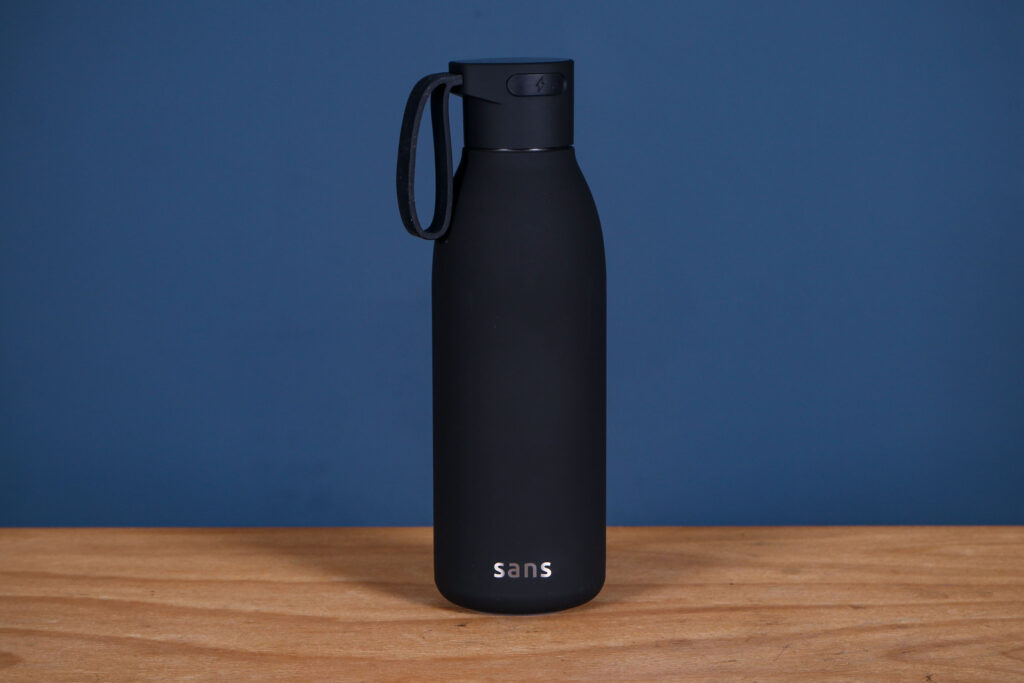
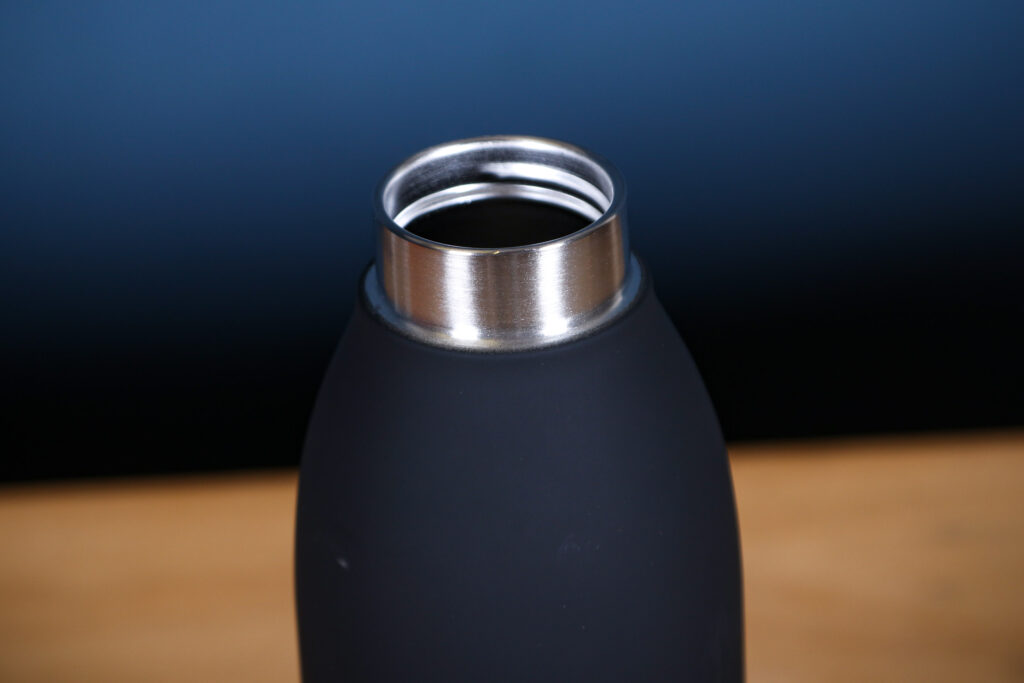
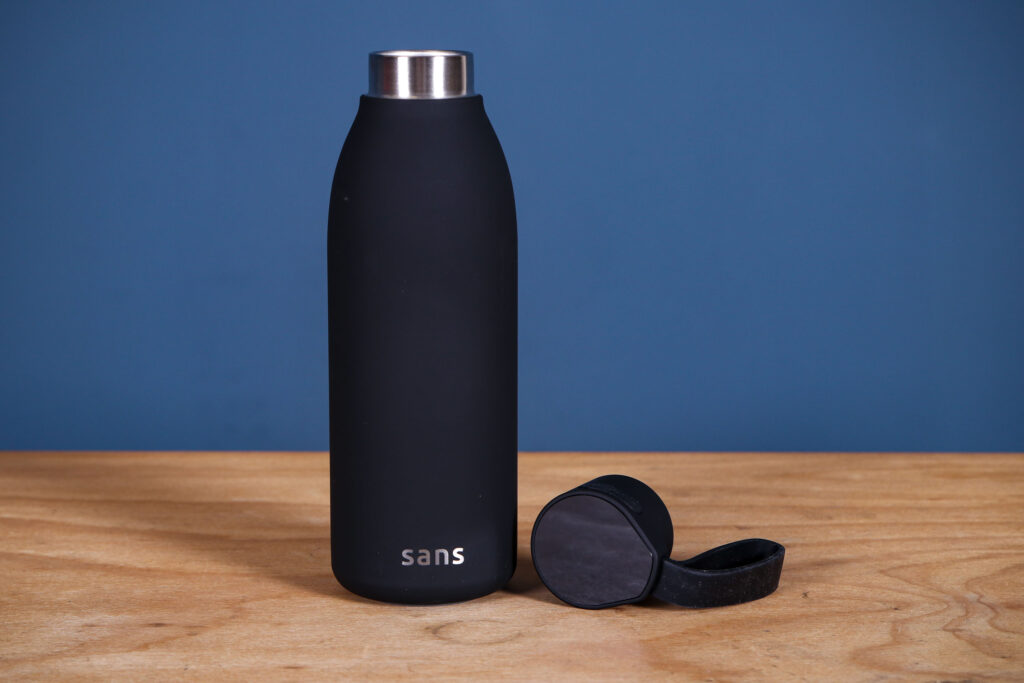
It holds 500ml, which is on the smaller side for cycling. For a short ride that’s fine, but for anything longer you’ll be refilling more often than you would with a standard 750ml bidon. A bigger issue is that it doesn’t sit comfortably in a cage, so it’s not that practical on the bike.
Another major issue for cyclists is the lid. To drink from the Sans you need to untwist the top completely, which is simple enough standing still, but genuinely impractical when you’re riding. A standard cycling bottle can be grabbed, squeezed and replaced in one movement. With the Sans you’re either stopping to drink or taking your attention off the road. It makes much more sense for commuting or café stops than as a bottle you’d reach for mid-ride.
The UV-C technology
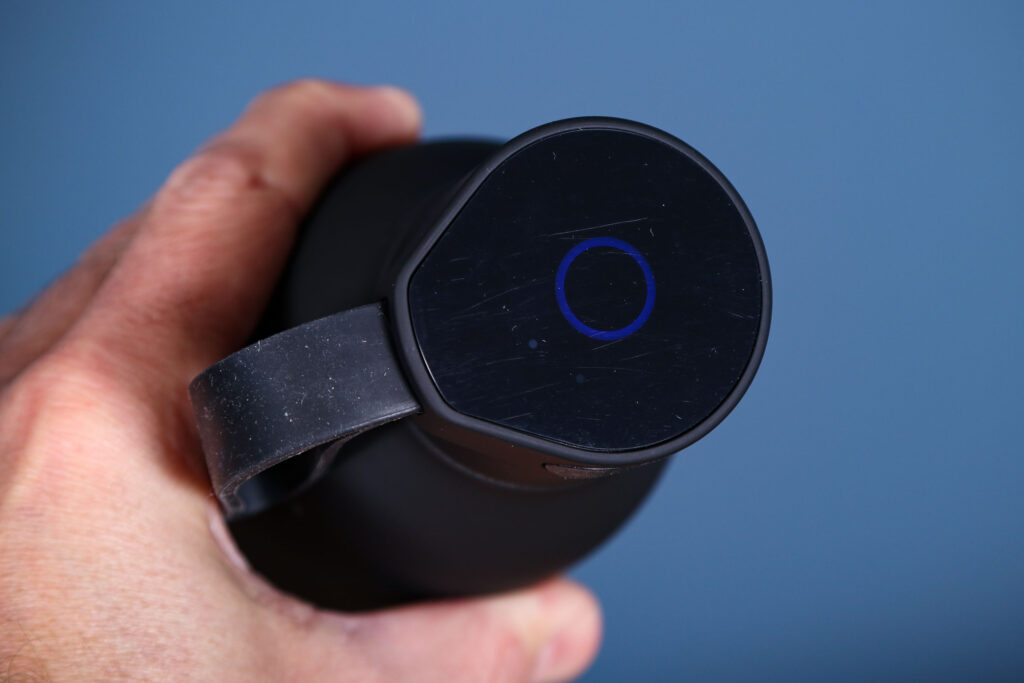
Built into the lid is a UV-C LED that runs a three-minute purification cycle when you double tap the cap. As mentioned, the claim is that this eliminates up to 99.9 per cent of bio-contaminants, including E.coli and Staphylococcus. It’s simple to use and the indicator light shows you when it’s running.
It’s very difficult to know whether it actually works. The water tastes exactly the same before and after a cleaning cycle, which isn’t a criticism exactly, but it does mean you’re taking the claims largely on faith. I have no reason to doubt them and the technology is well established elsewhere, but the benefit is invisible in everyday use.
There is an argument that this would work well for bikepacking when stopping to drink is less of an issue and being able to fill up from a tap isn’t always possible. However, the instructions make it clear that you cannot use this on non-potable water. It should only be used with water that has already been treated, which dramatically limits its usefulness.
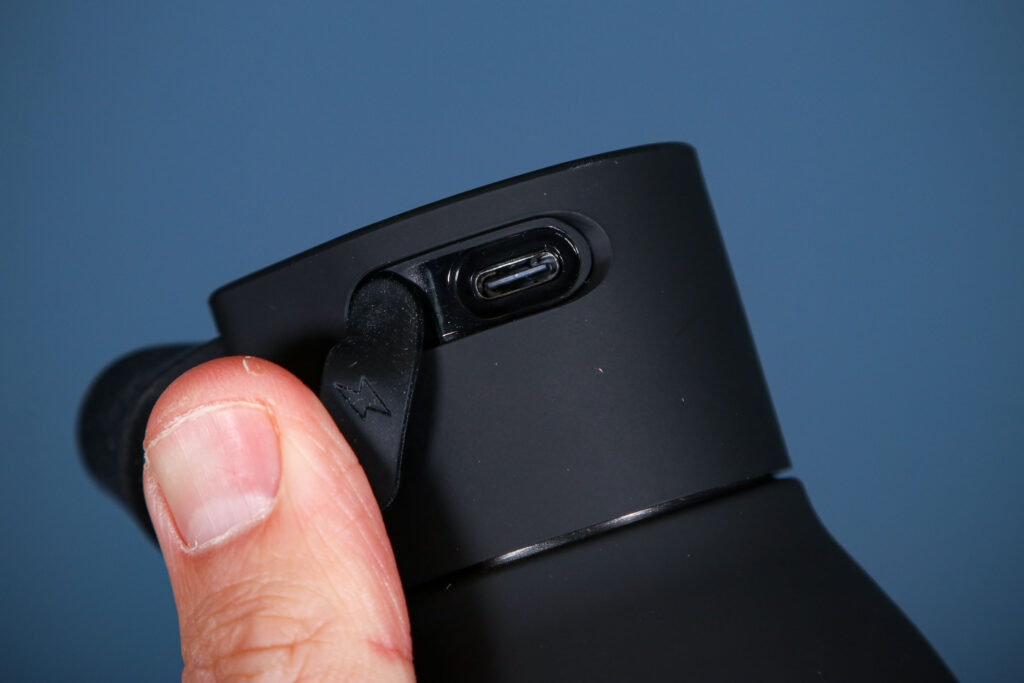
What I can say is that the battery life is genuinely impressive. Sans claims around two weeks of regular use between charges and in testing that held up well. It charges via USB-C and in practice barely registers as something you need to think about.
One element that I found a little annoying was that the bottle runs its purification cycle automatically after use, which means three minutes of the LEDs on the top of the lid spinning. This is fine during the day, but if you keep it on your bedside table, as I ended up doing, it becomes irritating quickly.
Take a sip at 2am in a dark room and for three minutes there’s a laser show blazing away on your bedside table while the bottle quietly does its thing. It’s the kind of detail that would be easy to fix with an option to turn the LEDs off, and I’d hope Sans addresses it.
Value
At £79.99, this is considerably more expensive than anything else I’ve tested in this category. It’s understandable given the technology in it, but it’s worth noting that this is not a cheap bottle by any stretch of the imagination.
The Bivo One that I reviewed last year has an RRP of £34.99 and is a better cycling bottle in almost every practical respect at half the price. It is also metal for the sustainability factor and has possibly the most innovative drinking system I have come across.
The closest competitor we’ve had on road.cc is the Water-to-Go Active bottle that Matt looked at a few years ago. It’s considerably cheaper, with a current RRP of £39.95, and it’s better suited to cycling too. You don’t need to unscrew the lid and it more easily sits in a bottle cage. It is also more of a traditional filter, meaning you can take non-potable water and use it.
Conclusion
The Sans is a well-made bottle with a genuinely interesting idea at its core. However, as a cycling bottle it has significant limitations – the capacity, the cage compatibility and particularly the screw top make it a difficult sell compared to a conventional option.
That said, the purification technology is genuinely innovative and very useful if you’re into clean living. There is no getting around that high price combined with its limited use though.
Test Report
What does the manufacturer say about this product?:
A simple solution for clean water on the go
Tell us some more about the technical aspects of this product:
UV-C Light purification and self-cleaning bottle.
Double-wall vacuum insulation keeps your water hot for 12 hours and cold for 24 hours.
Convenient silicone carry loop.
17 oz capacity
How does the price compare to that of similar products in the market, including ones recently tested?:
Not a cheap bottle by any stretch of the imagination.
Did you enjoy using the product?
I did when off the bike – not so much on it
Would you consider buying the product?
Maybe if I got really into clean living
Would you recommend the product to a friend?
If they were really into clean living. Less so if they were looking to do that on the bike
Use this box to explain your overall score
This is an innovative and interesting bottle with some great tech, but it’s not something to recommend for on-the-bike use and as it is limited to potable water only, it has limited use.
About the tester
Age: 38Height: 182cmWeight: kg
I usually ride: Orro VenturiMy best bike is: Specialized Diverge
I’ve been riding for: 10-20 yearsI ride: A few times a weekI would class myself as: Expert
I regularly do the following types of riding: Gravel riding, Commuting, Club riding, Sportives, Fitness riding, Leisure riding



7 thoughts on “Sans Self-Cleaning Water Bottle”
A litre bottle of Milton costs approximately £4.50. I give my bidons a soak in a Milton solution every couple of weeks. I’m not dead yet. A bottle of Milton probably lasts me the best part of a year. You’d be hard pressed to justify spending just south of eighty quid for this item. But we live in a world of bikes costing many thousands and of £s so perhaps the lycra clad shark will as jumped sometime ago.
…’was jumped’, oh how I miss the edit function!
Leaving aside lots of questions about the purification (I’ve also got by fine so far without purifying my bottle after each sip), it seems curious that this was even reviewed. It doesn’t appear to make any claims to be a cycling water bottle, so was always going to fall short on the fairly important “does it fit in a bottle cage” and “is it easy to drink from on the bike” tests. Looking at road.cc’s other bottle reviews, they all look pretty bidon-like, for good reason. Well, apart from one hip-flask – but at least that came with its own dedicated flask cage.
Presumably that just reflects what they normally get sent in for review, and this just got reviewed because the maker decided to send it.
One of the first few reviews on their site is from someone who uses it for cycling, but they’re using it as storage, and then filling bidons from it when they want to use it.
The technology works, has been in use for decades (e.g. google ‘steripen’). That one got me safely through India over a 3-month period. Trust me, it works. The water has to be potable because if flocculent material is present, all bets are off (should be pre filtered first). Also, the liquid has to be clear (transparent to visible light).
It works not by outright killing micro-organisms but by damaging their DNA/RNA so they can’t replicate anymore.
The idea is good but obviously, this has never been developed for on-bike use.
This is an expensive vacuum flask, and as a water purification system, it’s a non-starter compared to:
https://www.pureclearfilters.co.uk/filters/
This also deals with viruses
@wtjs Yes – surely better to filter out bugs than to eat dead ones or live mostly sterile ones that can’t reproduce.