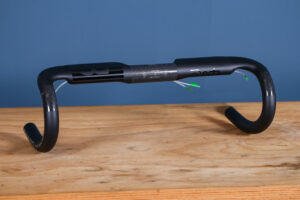

The USE Escape GR 24 Max Carbon Bars will suit a broad range of riders. It combines a natural, road-like position at the brake hoods with a flared, stable spread in the drops that’s great for control. This Max version has extra carbon reinforcement so you can fit aero extensions too – the lighter SL version lacks that – though you’re limited to three widths whichever version you pick.
USE Escape GR 24 Max Carbon Bars – Technical Details
USE produces handlebars across road, gravel and mountain disciplines in both aluminium and carbon, but the gravel-focused Escape GR range is currently carbon-only. There are two main versions: the GR 12 and GR 24, with the number referring to the degree of drop flare. All share a key design feature: the flare doesn’t begin until after the hoods. It’s a rare if not unique approach, and it means the hoods and levers sit in a more conventional road position while you still get a wide, more stable stance in the drops.
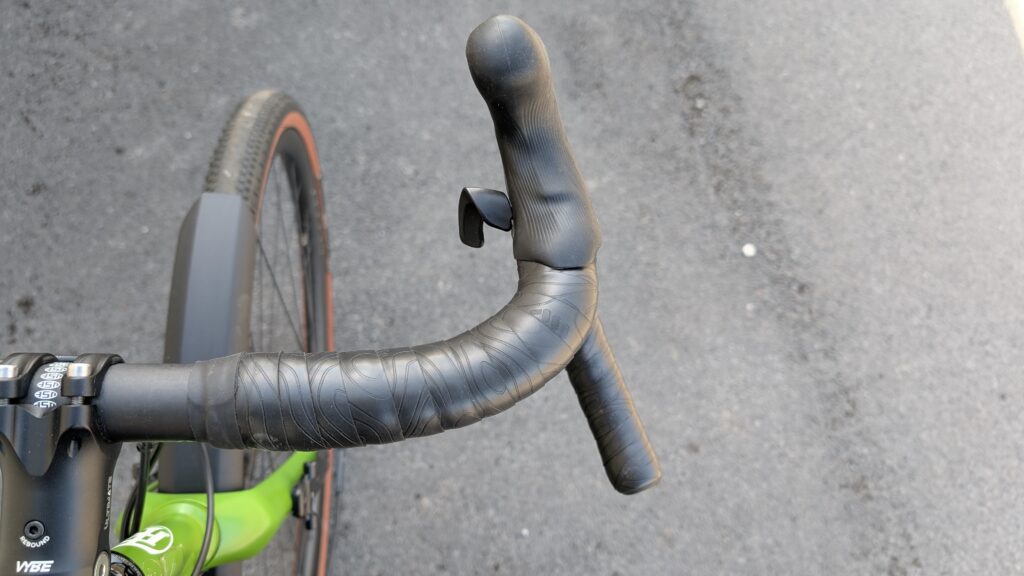
Both the GR 12 and GR 24 are available in MAX or SL versions. The MAX adds extra carbon reinforcement to the flat tops, allowing the use of aero extensions or other clamp-mounted accessories, at a weight penalty of around 40g.
Widths for all versions range from 380mm to 440mm, measured centre-to-centre at the hoods. We tested the GR 24 MAX in 420mm, which weighed 245g on my scales. That’s impressively light.
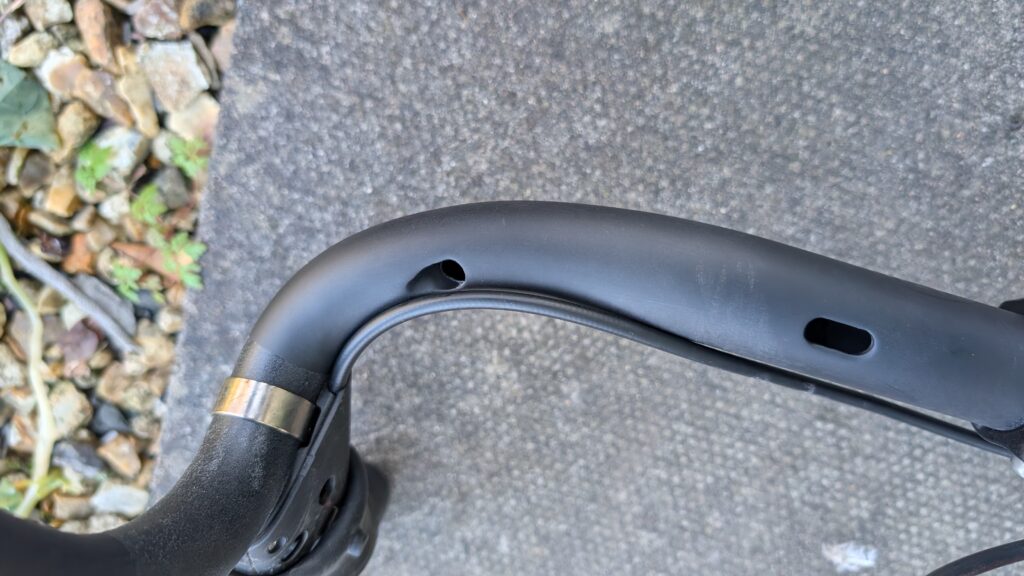
Internal cable routing is standard, with multiple entry and exit ports. There’s compatibility for fully internal routing via the stem, alongside more conventional ports near the hoods or beneath the flat tops for semi-internal setups.
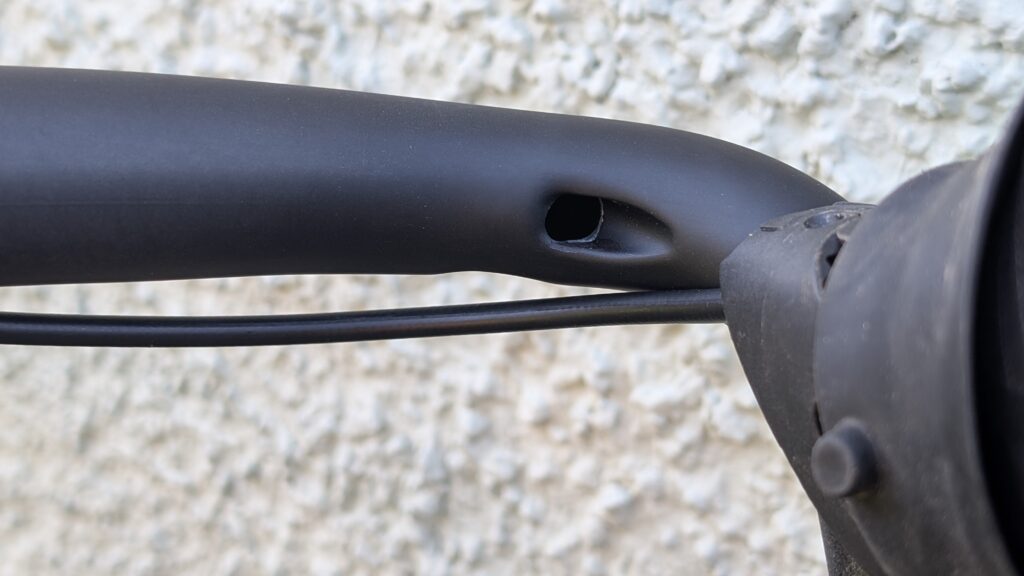
Reach and drop are consistent across the range at 80mm and 132mm respectively. The finish is understated, with a matt UD carbon look and textured clamp areas to reduce slippage.
USE Escape GR 24 Max Carbon Bars – Performance
With such a variety of ports to choose from, internal routing is relatively straightforward, and the generously-sized holes make life easier than many rival bars do. Neverthless, for much of the test I the routed everything externally (as you can see in the pics), allowing future handlebar testing to be carried out without the need for new cables.
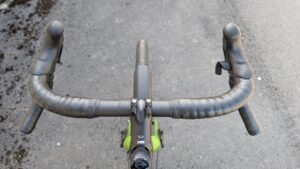
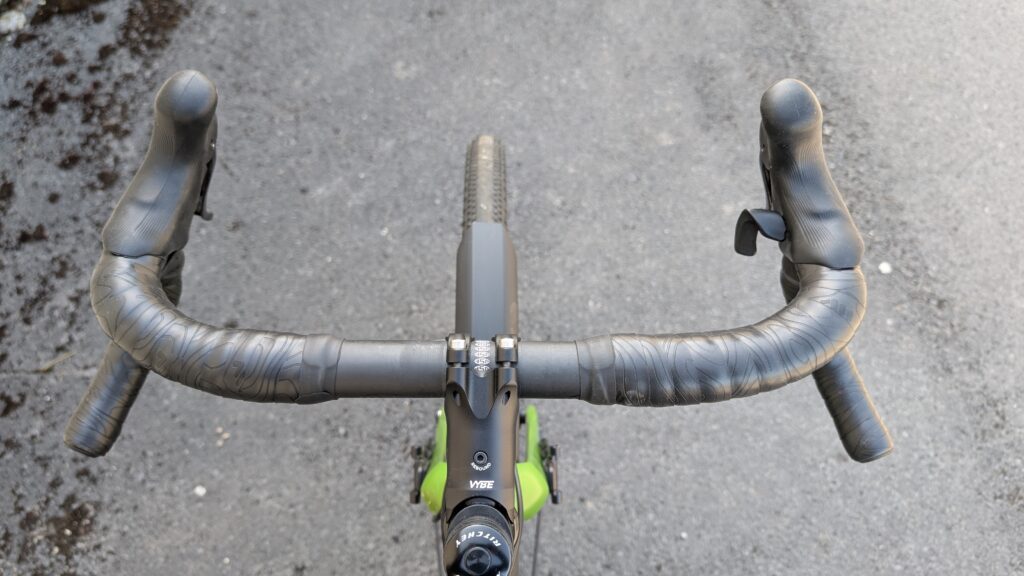
Out on the road and trail, the bar shape stands out quickly. Because the flare starts after the hoods, the lever position remains neutral and upright – bars that sweep out earlier tilt the brake lever outwards too. Some riders like that, but it can feel awkward.
Two aspects of the GR 24 are particularly noticeable: the pronounced drop and the subtle forward sweep of the flat tops. The latter is slight, but it may take a little getting used to if you’re coming from bars with backsweep, which are more common.
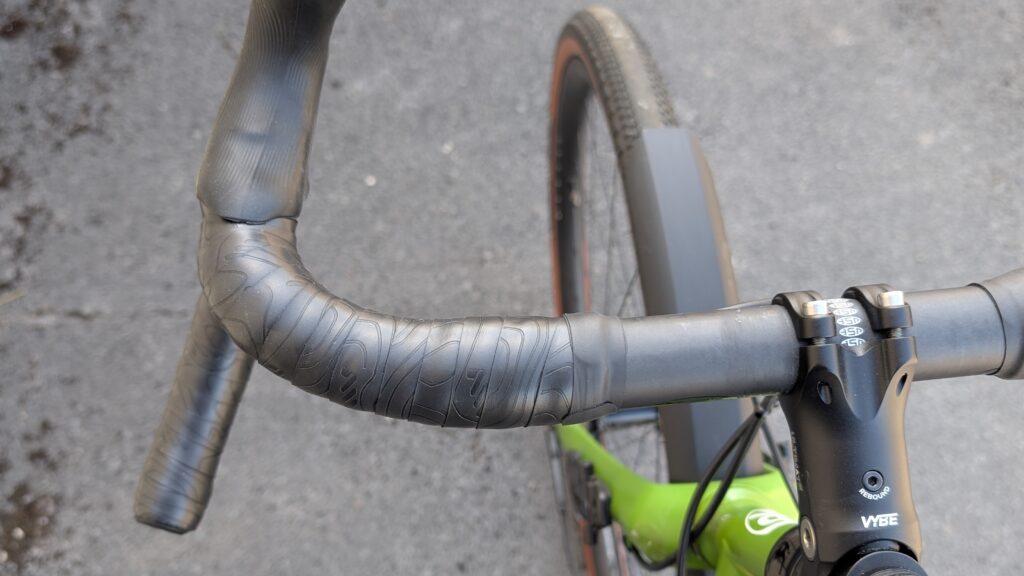
At 132mm, the drop is deeper than many gravel bars. For comparison, the Zipp SL-70 XPLR sits at 115mm, while the Deda Superzero Gravel carbon is 110mm. That extra depth creates a clearer separation between positions, giving a relaxed stance on the tops and a properly aggressive position in the drops when descending.
They’re impressively comfortable. There’s no noticeable flex under load when sprinting or climbing, yet they still take the edge off trail chatter. That balance between stiffness and compliance is one of their standout qualities.
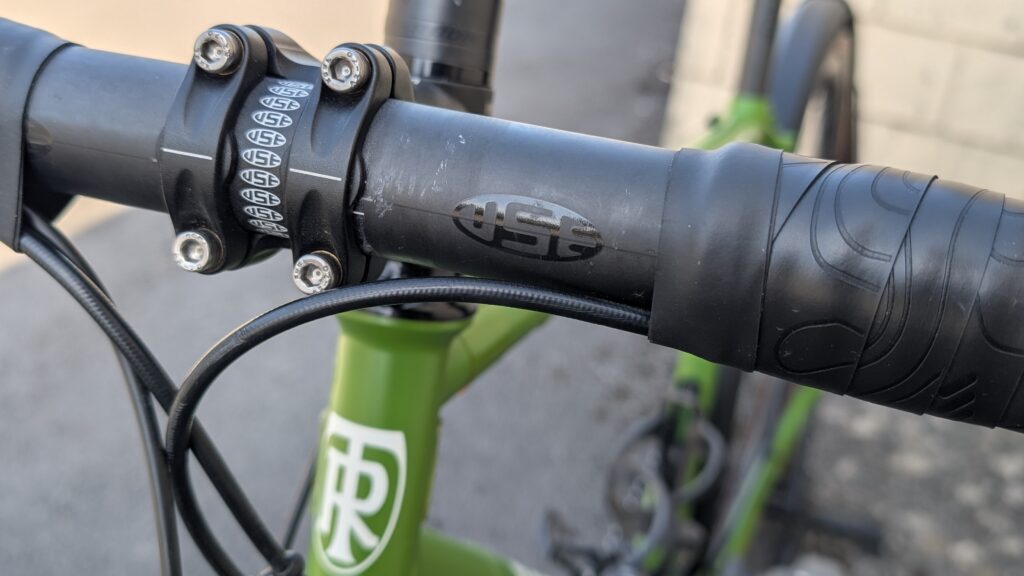
If you’re fitting extensions the wide, straight top section offers plenty of scope for adjustment, and clear markings make alignment easy. USE offers a broad range of extensions in both carbon and alloy, should you want to really match up.
USE Escape GR 24 Max Carbon Bars – Verdict
The shaping here feels genuinely considered rather than just different for the sake of it. Very few handlebars delay the flare until after the hoods, and while 3T offers something similar, it’s with a more exaggerated profile.
Riders wanting a milder setup can look to the GR 12, which reduces the flare angle while retaining identical reach and drop. Meanwhile, the SL versions will appeal to those chasing lower weight and who have no requirement to add extensions.
At £245, the Escape GR 24 sits firmly in the premium bracket without being the most expensive option. The 3T Superghiaia and Aeroghiaia come in at £382, but lack clip-on compatibility. Another alternative is the Deda Elementi Gera DCR Gravel at £275, which has a striking design but proves less comfortable and more fiddly to route.
The USE Escape GR 24 stands out in a crowded field. The delayed flare design is genuinely effective, cable routing is excellent, and the option to run clip-ons adds versatility. Most importantly, it delivers excellent comfort and control across mixed terrain, making it a strong choice for riders after a capable – and slightly different – gravel bar.
Test Report
What does the manufacturer say about this product?:
USE says: “Bars are one of the most important touch points on your bike, that is why ULTIMATE USE ESCAPE GR bars are engineered with a flare that is designed to splay after the hoods, ensuring that the controls are kept in a neutral, ergonomic position minimising wrist issues on gravel trails or roads combined with specific carbon layups AVT to dramatically reduces the vibrations that cause arm pump and hand numbness to improve control and comfort.”
Tell us some more about the technical aspects of this product:
USE says:
Claimed weight (SL models) – 207g (400mm), 209g (420mm), 212g (440mm)
Drop: 132mm
Reach: 80mm
Flare: 24 degrees
Cable Routing: Internal
Material: Carbon
Finish: Matt UD
Any further comments on quality?:
Slick finish and graphics, with internal cable ports that are generous in size and positioned well.
Any further comments on performance?:
I really liked the shape, which keeps the hoods in a typical position but still gives a good sweep in the drops.
How does the price compare to that of similar products in the market, including ones recently tested?:
It’s reasonably priced against its competition. The Ritchey WCS Carbon Ergomax is slightly less at £217.90, while the Deda Elementi Gera DCR Gravel is considerably more expensive at £332.
Did you enjoy using the product? Yes
Would you consider buying the product?
If I wanted extensions, yes.
Would you recommend the product to a friend?
To riders looking to use aero extensions, yes.
Use this box to explain your overall score
The handlebar combines great comfort and well-executed cable routing options with competitive weight and aero-extension compatibility.
About the tester
Age: 41Height: 168cmWeight: 61kg
I usually ride: Road / Gravel / MTBMy best bike is: Cannondale SystemSix
I’ve been riding for: Over 20 yearsI ride: Every dayI would class myself as: Semi-pro or ex-pro
I regularly do the following types of riding: Cyclocross, Gravel riding, Indoor riding, Bikepacking, Audax, Mountain bike XC