The Standert Kieswerk is a versatile gravel machine that sports multiple mounting points and impressive tyre clearance, plus its clean-looking aluminium frame has a bit of a retro vibe running through it. Sadly, it doesn’t ride as well as it looks, with its firm ride being bettered by other machines.
Standert Kieswerk SRAM Apex AXS XPLR – Technical Details
The Kieswerk’s frame is designed in Berlin and manufactured in Southern China from 6061-T6 grade aluminium alloy. Standert says it’s ‘largely’ sourced from recycled materials, though it doesn’t disclose the exact percentage.
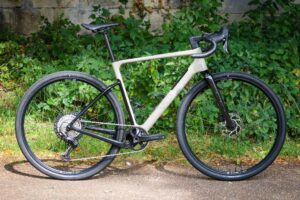
I reckon it’s a good-looking frame, especially with the main triangle being finished in this clear lacquered state to show the raw beauty of the tubing and the welds. Some manufacturers sand and fill the welds before painting for a smooth, almost carbon look, but not Standert. The finish is still clean and tidy.

It manages to keep that classic metal-tubed aesthetic, too, even with the inclusion of full internal hose routing and the now-obligatory disc brakes. Other modern touches are the T47 bottom bracket shell, UDH (universal derailleur hanger) compatibility, and a pretty huge 50 millimetres of tyre clearance.
There are plenty of mounting points on offer, including for a set of full mudguards and a rear rack. Add in the fork leg mounting points, and you have a gravel bike that can be pressed into commuting or winter road training, as well as nailing its intended adventures in the off-road wilderness.

Geometry-wise, this is pretty middle of the road, and when I say road, I mean it literally. Even from an aesthetic point of view, the Kieswerk is a gravel machine from the tarmac side of the spectrum, and the numbers show it too.
On this 54cm model (which sits smack in the middle of the seven options available), I had a 556mm top tube length mated to a 135mm head tube and a standover height of 784mm. The head angle is a fairly typical 71.5 degrees, while the seat tube sits at a much steeper 74 degrees – ideal for getting forward over the bottom bracket to get the power down. This results in stack and reach figures of 563mm and 394mm, respectively. How does that all translate out on the trails? I’ll get to that in a bit…
Standert Kieswerk SRAM Apex AXS XPLR – Componentry
The Kieswerk is available in either a Shimano GRX 600 build or with SRAM’s Apex AXS XPLR, the latter coming with either DT Swiss’ G 1800 wheels or Scope’s R2.0 carbon wheelset.
Standert currently has a single UK dealer (VIA Atelier in London), though more will be added in future. Alternatively, you can order directly from their German-based website, as they deliver to the UK.

The price for this review bike is €2,730.25, which at the time of writing is £2,375.20. You’ll need to add an import duty of 14% on the price of both the bike and delivery (€205/£178.45), though, and then 20% VAT on top of that. So let’s call it £3,493.40.
The full builds are good, with no skimping on big-brand components. The cockpit comes from Deda, with its Superbox DCR stem, which directs the brake hoses into the frame while firmly holding a Superzero Gravel handlebar. The bar tape is from Fizik – Microtex Tacky – as is the saddle, a Terra Argo X5. It sits atop a carbon seatpost.

The Scope R2.0 wheelset brings a bit of extra carbon to the build. The claimed 1,367g makes them very light indeed, while the shallow rims at just 23mm high make them responsive all-rounders. The 25mm internal diameter hookless rims aren’t the widest out there, though. Scope recommends tyres of 35 – 37mm, which is a fair bit narrower than the Kieswerk maxes out at. Still, they were robust through the review period, and I had no issues with them whatsoever.
Wrapped around them are Pirelli’s Cinturato Adventure tyres in a 45mm width. They’re a medium-treaded option, ideal for all kinds of gravel and other hard-packed surfaces, with enough bite to get you through the odd soft, muddy section without much effort too.

The SRAM Apex XPLR groupset is excellent, thanks to a completely wireless setup and long battery life. Here you’re getting a 40T single chainring mated to an 11-44T cassette, which gives a really good spread of gears for pretty much any terrain you’re likely to find yourself on.
The brakes slow 160mm rotors front and rear and create loads of power, while the latest SRAM hydraulic systems offer a great lever feel too – modulating that all that power is easy.
Standert Kieswerk SRAM Apex AXS XPLR – Performance
On paper, the Kieswerk’s geometry was spot on for me and straight away my position on the bike felt very natural, efficient and comfortable. That steep seat tube allowed me to get the power down through the pedals, and the drop to the handlebar was perfect for getting aero when needed, without being so extreme that it wasn’t an unnaturally low position to hold when climbing or on longer rides.
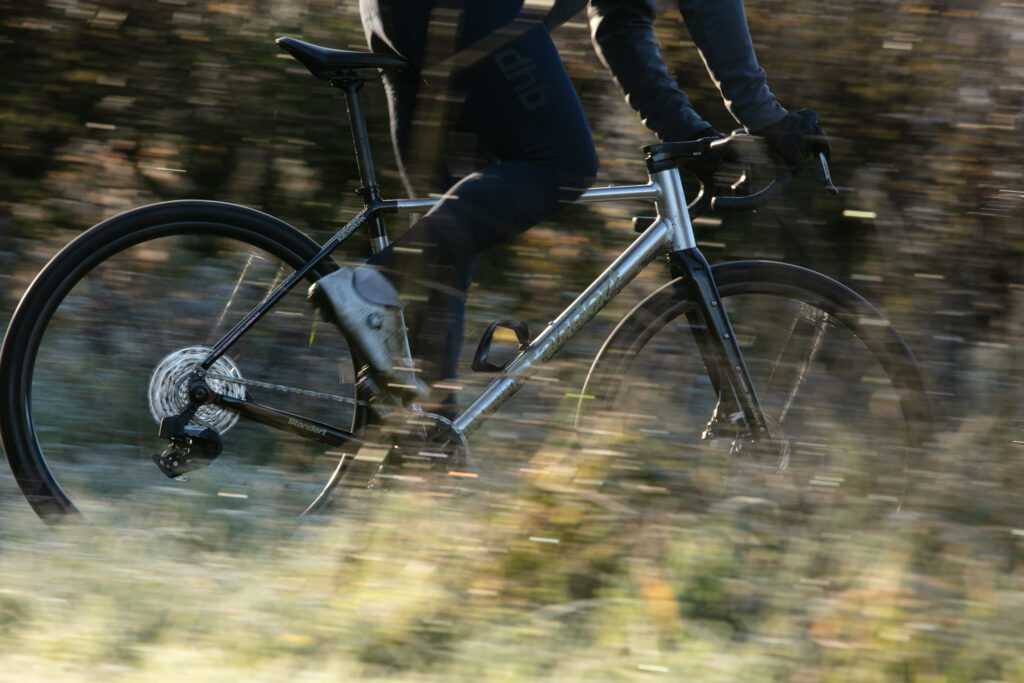
The handling focuses on the neutral side of things. Even on the loosest of trails, the front wheel felt planted and quite confidence-inspiring. On the downhills, I felt comfortable unleashing the Standert, and it felt like it flowed naturally through the corners and technical sections. In fact, it reminded me a lot of the way my Fairlight Secan behaves, which is very high praise for the Kieswerk indeed. Both bikes feel like an extension of the rider. I didn’t feel like I had to manhandle the Standert onto a line through a bend or anything; merely a simple guiding hand was all that was required.
This makes it relaxing to ride, even at speed and efficient too. If you aren’t having to focus on minor adjustments to the handling or your position all of the time, it’ll pay dividends towards the end of a long ride.
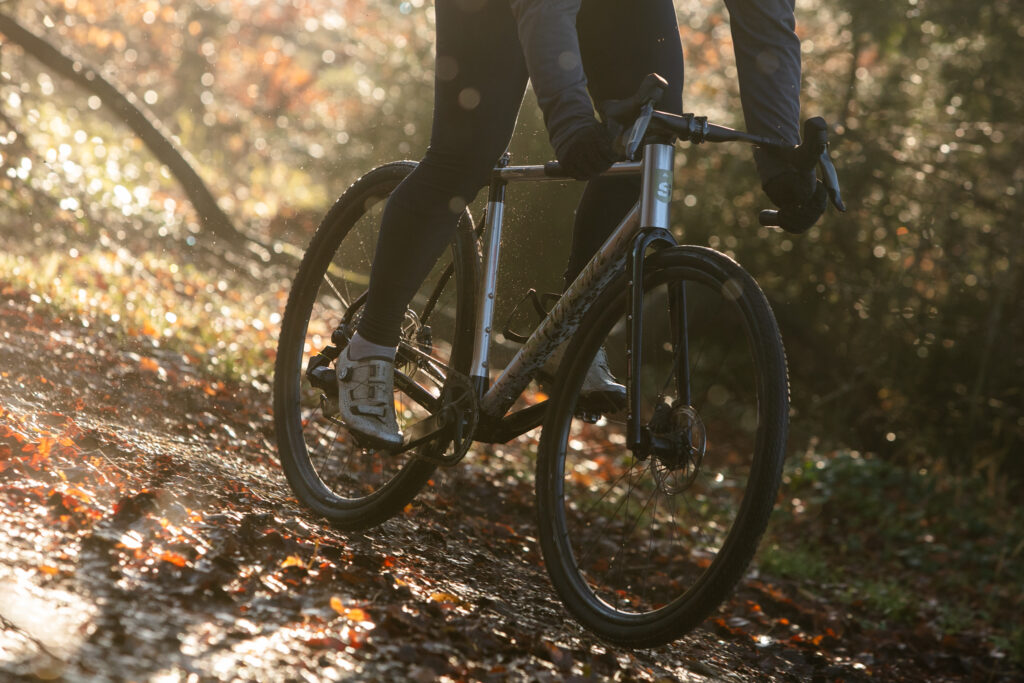
Somewhere where the Standert and Fairlight aren’t similar, though, is the ride quality. I appreciate that the Secan is steel, but with today’s modern manufacturing techniques, aluminium alloy tubing can be designed to offer as good a ride feel as steel. Something like the aforementioned Mason Bokeh 3, for instance, whose Dedacciai aluminium frame has a stunning ride quality, as does the 7005 series aluminium-framed Condor Odyssey..
The Kieswerk has a firm note to the ride, and not only does that impact overall comfort on longer rides, it also takes the edge off the feedback, which, in my opinion, makes it less of a rider’s machine. It doesn’t quite have the finesse of the best-designed alloy frames that I have ridden.
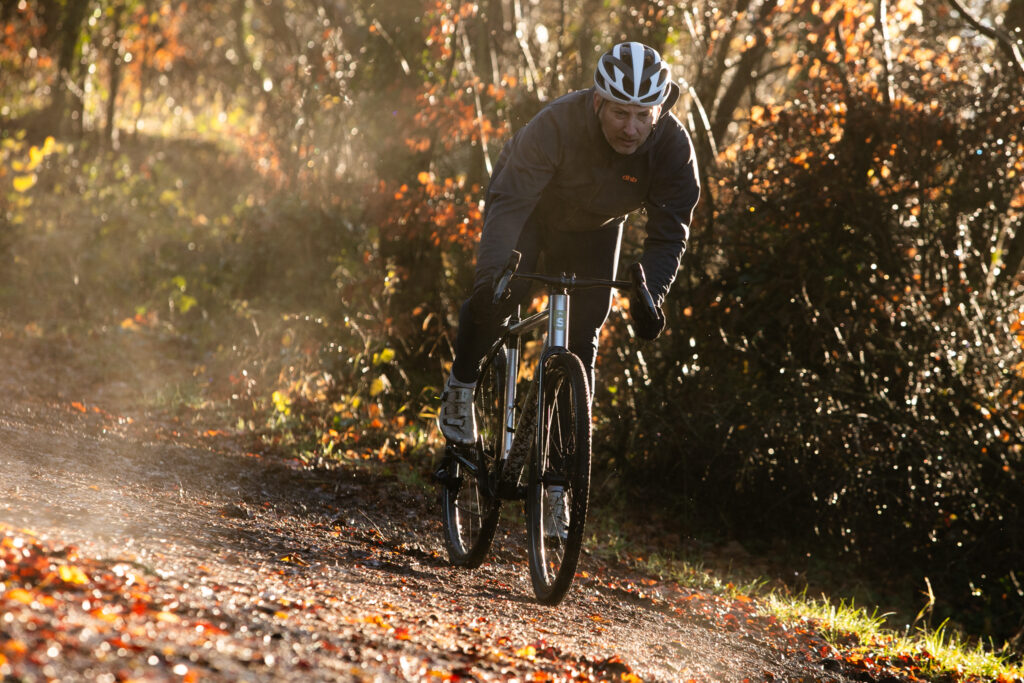
Some of the firmness can be masked by running the tyres at a lower pressure, but I find that won’t stop it eventually transferring through the bottom bracket area and into your feet via the pedals.
Overall, from a ride-side of things, there are better options out there for me, but if that isn’t the be-all and end-all for you, then there is a lot to like here.
Standert says that the Kieswerk is ‘ready for what you are’, and it is a brief that it has hit. It’s one of those bikes that you can just get on and ride however you want. It works for short blasts, mixed surface rides, longer jaunts and even full-on adventures.
Standert’s Kieswerk SRAM Apex AXS XPLR – Verdict
On the whole, the Kiewerk is a good bike overall. It’s well made, and its versatility will certainly help if you want a bike that will cope with a range of riding genres.
As I’ve said above, though, personally it misses the mark for me ride quality-wise, and that is the main component for me when it comes to buying a bike. At just under £3.5k, its price is higher than where I could say that I’d sacrifice the ride quality to save some money on the competition.
For instance, Mason doesn’t offer the Bokeh 3 as a complete build, but I could buy the frameset for £1,450. A 1x Apex XPLR AXS groupset can be bought online for around £900, and a set of Hunt 35 Carbon Gravel wheels is currently selling for £599.33, which leaves over £500 to spend on finishing kit for the same money as the Standert. The same with the Condor Odyssey, where the frameset is £1,499.99.
So, in a nutshell – it’s pretty good, but there are better options for those who prioritise ride quality out there for the money.
Test Report
What does the manufacturer say about this product?:
Standert say, “Ready for whatever you are. From muddy ruts and sandy trails to grassy paths and the Champagne gravel of your dreams, the KIESWERK is your trusty new go-to. With a multitude of mounts, this is your blank canvas ready to be made all yours. For the maximalists who want a rack and bag on every tube, and the minimalists who need nothing more than the air in their tyres. This gravel bike always says yes.”
Tell us some more about the technical aspects of this product:
Frame: Aluminium 6061-T6
Fork: Standert Carbon
Headset: Token Integrated IS52 (Ti coated bearings)
Max. Tyre Clearance: 50mm
How does the price compare to that of similar products in the market, including ones recently tested?:
The Kieswerk is a similar price to the Condor Odyssey and Mason Bokeh 3 mentioned in the review, but bear in mind those are handmade frames from Italy, whereas the Standert is made in China.
List the components used to build up the bike:
Groupset: SRAM Apex AXS XPLR
Crankset: 1x 40t
Cassette: 11-45
Rotors: 160mm (front and rear)
Handlebars: Deda Superzero Gravel – width in geo chart
Stem: Deda Superbox DCR (fully integrated) – length in geo chart
Seatpost: LC Carbon 8mm setback
Saddle: Fizik Terra Argo X5
Bar Tape: Fizik Microtex Tacky Bartape Black (2mm)
Wheelset: DT Swiss G 1800 (Aluminium)
Tyres: Pirelli Cinturato Adventure TLR 45mm
Tell us what the bike is for and who it’s aimed at. What do the manufacturers say about it?:
Standert describes the Kieswerk as being for all kinds of gravel riding, plus in my opinion it works well for commuting or touring thanks to the mudguard and rack mounts.
Where does this model sit in the range? Tell us briefly about the cheaper options and the more expensive options:
The Kieswerk is available in a Shimano GRX build and a SRAM Apex XPLR AXS model. The model we have here – the most expensive – gets an upgrade from DT Swiss aluminium G 1800 wheels to carbon Scope 2.0.
Tell us about the build quality and finish of the frame and fork:
It’s a well made frame, finished to a high standard.
Tell us about the materials used in the frame and fork:
The frame is 6061-T6 aluminium alloy and the fork is carbon fibre.
Tell us about the geometry of the frame and fork:
The geometry is fairly typical for a gravel bike designed for all kinds of things. The front end gives you neutral handling and a head tube which allows a semi-aero position without being too low. The seat tube angle is on the steeper side, which benefits efficiency.
How was the bike in terms of stack and reach? How did it compare to other bikes of the same stated size?:
The stack and reach figures give no surprises.
Was the bike comfortable to ride? Tell us how you felt about the ride quality:
The ride quality is okay, but it’s firmer than some other high-quality aluminium gravel frames on the market.
Did the bike feel stiff in the right places? Did any part of the bike feel too stiff or too flexible?:
Stiffness is good throughout.
Was there any toe overlap with the front wheel? If so, was it a problem?:
No.
How would you describe the steering? Was it lively, neutral or unresponsive?:
Neutral.
Tell us some more about the handling. How did the bike feel overall? Did it do particular things well or badly?:
The Kieswerk is easy to ride in all kinds of conditions thanks to its well-shaped front geometry.
Which components had the most effect (good or bad) on the bike’s performance? Would you recommend any changes?:
The SRAM groupset offers an efficient spread of gears.
Tell us some more about the drivetrain. Anything you particularly did or didn’t like? Any components which didn’t work well together?:
Great spread of gears. It worked for all of the different terrain I rode this on.
Any issues with wheel durability?:
None at all.
Tell us some more about the wheels. Did they work well in the conditions you encountered? Would you change the wheels? If so, what for?:
Lightweight wheels that stood up to plenty of abuse.
Tell us some more about the tyres. Did they work well in the conditions you encountered? Would you change the tyres? If so, what for?:
The Pirellis are all-rounders. They have enough tread depth to cope with softish conditions, while running well on harder packed surfaces.
Any issues with brake durability?:
No.
Tell us some more about the brakes. Did they work well in the conditions you encountered? Would you change anything? If so, why?:
Solid, powerful performance with great modulation.
Any issues with controls durability?:
No.
Tell us some more about the controls. Any particularly good or bad components? How would the controls work for larger or smaller riders?:
A good selection of kit which fitted me well, and the saddle is supportive and comfortable.
Did you enjoy using the product? Yes
Would you consider buying the product?
No – I want the ride quality of the competition, even if it means paying extra for it.
Would you recommend the product to a friend? Yes
Use this box to explain your overall score
The Kieswerk has many of the traits of a great gravel machine, but at this price some of the competition give a better riding experience.
About the tester
Age: 47Height: 180cmWeight: 76kg
I usually ride: This month’s test bikeMy best bike is:
I’ve been riding for: Over 20 yearsI ride: Every dayI would class myself as: Expert
I regularly do the following types of riding: Fitness riding